
“Etherized Victorians,” my doctoral study on American radio plays, had been lying for years in a virtual drawer. A string of rejection letters from publishers made me leave it for dead. Then, when I learned about an opportunity to get it out of that coma at last – with the aid of a reputable academic publisher to boot – I went for it. I have regretted that decision ever since. The anger welled up in me anew when I read “Academics are being hoodwinked into writing books nobody can buy,” an article in the Guardian, which a colleague of mine had shared via Facebook.
It is not that I believe that should have let my study lie, that it did not deserve to be revived. Rather, I feel it deserved a better home than the publisher provided for it. Funeral home is more like it. To send it there, I agreed to pay £1600 for the production of a book that contains no images, except for the cover art that was supplied to me by my artist friend Maria Hayes. Besides, I did all the editing, proofreading and indexing myself. There was no substantial input or support from the publisher, Peter Lang, other than a list of instructions and some rather frustrating feedback on my blurb for the back of the book, which, to my disappointment, has been issued as a paperback only.
Turning “Etherized Victorians” into Immaterial Culture meant cutting back and stripping bare. It was an instructive experience, painful though it was. I renegotiated but was nonetheless obliged to cut about 50,000 words, and I rue the quick decision to get rid of an entire chapter (available online, on my website, but since reworked for a chapter in the anthology Audionarratology: Lessons from Radio Drama). I also had to let go of the list I had compiled of my primary sources, the plays I discussed. When I asked for corrections of errors or inaccuracies I spotted close to the deadline, I was first told that no further changes were possible and then threatened with a £30 per hour editing fee. So much for academic standards.
Peter Lang did nothing, apparently, to promote the Immaterial Culture. Living up to its new name, my study did not even show up on Google books. I was mailed a few ‘complimentary’ copies, some of which I sent to a friend with connections to the BBC. Nothing came of that. I also walked one copy up to the theater, film and television department of Aberystwyth University, where I work for next to no pay, thinking I might give a lecture or make a course out of it. I have not heard from the department since.
And who else besides a library or an institution of higher learning would bother to purchase a text that is overpriced at £ 52.00 ($ 84.95), thus too expensive to attract radio drama aficionados? Not that anyone potentially interested would have even heard of the book. Apart from one long and highly complimentary review (in German), Immaterial Culture received no press, despite my filling out a great number of forms to assist in its promotion.
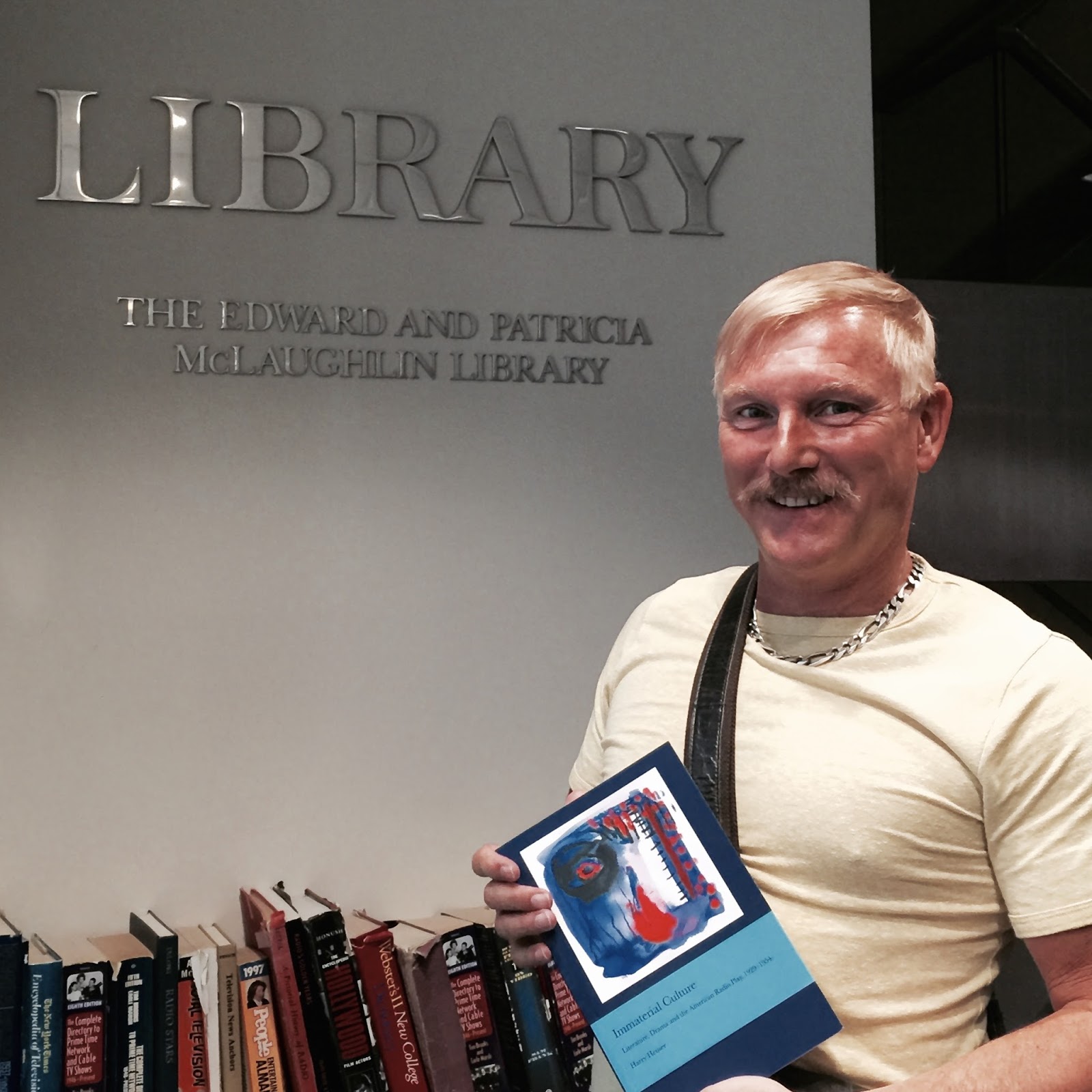
It is disappointing – let’s make that ‘pointless’– to write for an audience that proves allusive and impossible to reach. So, I decided to donate a copy of the book to the Paley Center for Media in New York City, where I conducted research for it. It would be rewarding and reassuring to me if someone made use of or derived pleasure from my work. Why else ‘publish’?
Academic publishing is tantamount to a vanishing act. I much rather carry on a supposed vanity project such as this journal, which is freely accessible to all and sundry, just like the once popular plays for broadcasting about which I go on in Immaterial Culture.
Discover more from Harry Heuser
Subscribe to get the latest posts sent to your email.
 Harry Heuser