

Some years ago, researching the life of the Anglo-Welsh dilettante and collector George Powell of Nanteos (1842-1882), I set out to piece together whatever archival material I could get my hands on to gain access to the heart and mind of an eminently queer Victorian, a man who is now mainly known, if at all, as a friend of—and bad influence on—the poet Algernon Swinburne.
Powell bequeathed “all [he] possess[ed] of bigotry and virtue” to Aberystwyth University, where I teach art history and where, as part of my “Gothic Imagination” module, I screen films in the gothic mode on Wednesday afternoons. For the third entry in “Significant Othering,” the current series, I chose Island of Lost Souls (1932), a pre-code Hollywood creature feature loosely based on The Island of Doctor Moreau (1896) by H. G. Wells.
Venturing into uncharted territory in its exploration of ethics and ethnicity, the Erle C. Kenton-directed film was deemed so far out of bounds that it was banned in Britain for more than a quarter of a century while being deemed off limits for aboriginal audiences in Australia.
You might wonder what, if anything, my fascination with an esthete like George Powell has to do with the fantastically devious Doctor Moreau, a fictional scientist who did not come onto the scene until fourteen years after Powell’s death.
To begin with, Powell’s collection provides access to the late-Victorian imagination of which The Island of Doctor Moreau is a product. Among those items of “bigotry and virtue”—or trinkets and treasures—that Powell left behind, and left to be puzzled over by future generations, are about one hundred leather-bound volumes of articles from periodicals published in the late 1870s and early 1880s, among them journals such as The Fortnightly Review, Gentleman’s Magazine, and The Nineteenth Century.
Rather than bequeathing issues in their entirety, Powell extracted articles from them for binding, with his name embossed on the cover of each leather-bound volume, the content of which is itemized in Powell’s handwritten index.
Part of that archive of British journalism thus curated are writings on subjects as diverse as “The Barbarism of Civilization” (by Francis W. Newman), “Evolution of Magic” (by Elizabeth Robins), “Flogging in the Army” (by Archibald Forbes), “The Beginning of Nerves in the Animal Kingdom” (by G. F. Romanes), “The Cat and Its Folklore” (by T. F. Thiselton Dyer), “Broadmoor and Our Criminal Lunatics” (by D. Tuke), “The Excessive Influence of Women” (by “An Old Fogey”), “Other Worlds and Other Universes” (by R. A Proctor), “A Chapter in the Ethics of Pain” (by Edmund Gurney), and “Suicidal Mania” (by William Knighton).
There are articles on Edgar Allan Poe and Balzac, monkeys and apes, on hallucinations and “How to Grow Mushrooms,” on “Consanguinity in Marriage and “Carnivorous Plants,” on witchcraft and metempsychosis. No subject, however, received more attention by Powell than the debate surrounding vivisection—the experimentation on living animals that Doctor Moreau carries out in his House of Pain.
The source of Wells’s scientific romance—a hybrid of science fiction and gothic romance in the tradition of Frankenstein—is itself a composite. As the author acknowledges, the “substance” of chapter 14, “Doctor Moreau Explains,” which “contains the essential idea of the story,” had appeared in The Saturday Review in January 1895.
Defending his grafting of romance onto an article exploring the possibilities of science—Wells insisted that the argument made in that article had been “entirely recast to adapt it to the narrative form.” And recast indeed it was.
“We overlook only too often the fact that a living being may also be regarded as raw material,” Wells states in the article—“The Limits of Individual Plasticity,” arguing those materials to be “something that may be shaped and altered, that this, possibly, may be added and that eliminated, and the organism as a whole developed far beyond its apparent possibilities.”
Unlike much of the literature on vivisection in the Victorian press, as collected by Powell, Wells makes a case for its appropriate uses. “If we concede the justifications of vivisection,” he wrote,
we may imagine as possible in the future, operators, armed with antiseptic surgery and a growing perfection in the knowledge of the laws of growth, taking living creatures and moulding them into the most amazing forms; it may be, even reviving the monsters of mythology, realizing the fantasies of the taxidermist, his mermaids and what-not, in flesh and blood.
That the novelist’s “justifications of vivisection” are mouthed by Doctor Moreau drives home how Wells himself viewed his literary creation: as a misunderstood visionary whose far-out views made him an outcast.
The adaptation is far shorter on science than the novel; and in its gothic romancing of the “raw materials” provided by Wells, it turns Doctor Moreau into a deranged scientist pitted against the forces of good as personified by the young action hero Richard Arlen, who figures out fairly quickly just what the Doctor is up to: that he is upcycling animals instead of turning humans into beasts, as Edward Prendick, the equivalent character in the novel assumes (“Could it be possible, I thought, that such a thing as the vivisection of men was carried on here?”).
Simplifications notwithstanding, Kenton’s 1932 monster movie is mixing flesh and fur, hands and paws, hoofs and feet, in such a way that the blurring of lines between civilisation and the so-called primitive may be read as a commentary on anxieties about identity and otherness, on colonialism enmeshment and the métissage resulting.

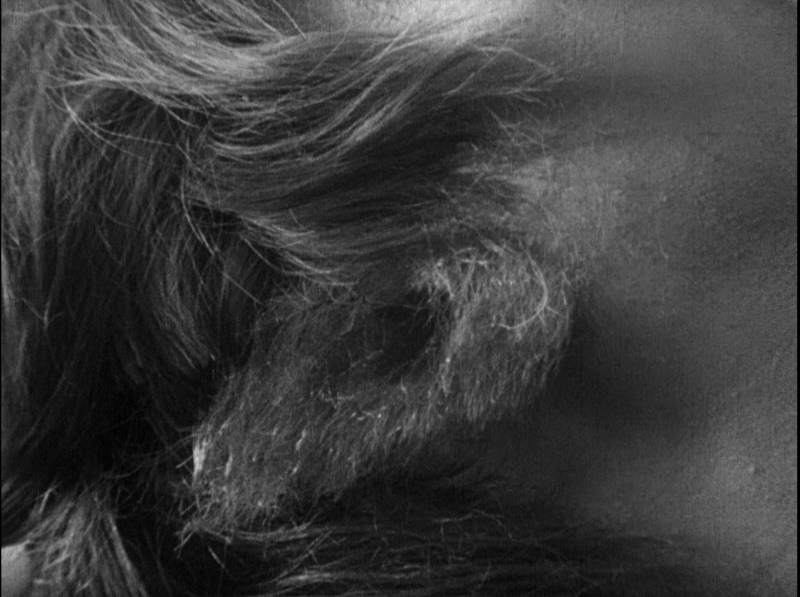
Piquing our curiosity with a close-up of a fur-covered ear, bespeaking otherness, the film narrative confronts us, within the course of an hour, with a scene of sexual longing involving a he-man and the rectified readymade of a panther. That kind of special blend clearly was not every taster’s publicly endorsed cup of tea, as served, perhaps, by Méret Oppenheim. Scoff at such hysteria as we might—or those of us, at least, who are not dwelling among the lost souls unable to grapple with the reality that no one is an island—and delight as we might also in the seemingly dated source of the censors’ outrage, the widespread and spreading unease about bodily fluidity and transnational hybridity on which Island of Lost Souls draws and the blood on which it feeds is a blood still pulsating and pouring out to this day.
The public may thrill to a mixing of flesh and fantasy, but, I suspect, most of us still expect a Venus in Furs to disrobe, eventually, and reveal herself to be a smooth-skinned goddess on display for the pleasure derived from the fatal fantasy of purity.
Tapping into a zeitgeist that has not quite given up the ghost, Island of Lost Souls achieves the kind of “significant othering” deserving of the term “gothic.”
Discover more from Harry Heuser
Subscribe to get the latest posts sent to your email.
 Harry Heuser