
What Those Who Remembered Forgot: Robert Altman (1925-2006) on the Air

Well, news is spreading fast these days; and by now anyone within reach of a computer will have learned that film director Robert Altman has died on Monday, 20 November 2006, at the age of 81. Since my own web journal can do little to propagate this message, it will provide instead an addendum to the small number of long-prepared and oft-copied obituaries currently circulating in the blogosphere. I have attempted as much on previous occasions by sharing a lesser known aspect of the careers of Don Knotts, Shelley Winters, and composer Cy Feuer, all of whom had connections to the world of radio to which broadcastellan is largely dedicated. As it turns out, Robert Altman is no exception. Indeed, his debt to the medium was far more profound than that of the other artists aforementioned.

To be sure, Altman’s name is already being closely linked to the so-called golden age of radio by virtue of what would be his last film, A Prairie Home Companion (2006), a filmic realization of a world evoked by radio romancer Garrison Keillor. Altman was greatly influenced by 1940s radio. He revealed as much in a National Public Radio documentary broadcast in May 1995 (a recording of which you may find here). In a tribute to Corwin’s “On a Note of Triumph,” Altman made the following statement:

“Anything I know about drama today comes more from Norman Corwin than anybody. If I had to list my mentors, I would say Norman Corwin, David Lean, Fellini, Bergman, Kurosawa, and then a countless number of people whose names I forget where I learned what not do.”

Now, what could Altman have learned “about drama” from Corwin, America’s foremost radio playwright (whose first letter to me I cheered recently)? As a film director, Altman did not fare well on the stage. His production of Arthur Miller’s Resurrection Blues earlier this year was widely panned; indeed, the reviews were so unfavorable that, while in London at the time, I decided to pass on it, despite my interest in the career of Miller, a former radio writer (one of whose works I discuss here). Perhaps, what Altman did take from Corwin—and what he could do on film more readily than on a stage—was the idea of an ensemble piece comprised of a large cast, a sprawling drama of many voices (such as The Player and Gosford Park). Everybody‘s in it, you think, when you look at the cast for an Altman production.

The same can be said for the signature pieces written and directed by Norman Corwin—plays with a vast number of characters, their stories intersecting, their voices adding up to something, to an idea, a statement, about Hollywood, for instance, about politics, about the state of American society. Corwin’s seminal On a Note of Triumph was such a piece, a play for voices; not a choir, mind you, but a cacophony; not a traditional drama of linear storytelling, but a fictionalized documentary, a record of a moment. Of this play, Altman said, some fifty years after its initial broadcast: “I can recite 40% of On a Note of Triumph from memory,” having listened to it “time and time again.”

I had not been aware of Altman’s admiration of Corwin’s work, until today. Come to think of it, both Corwin and Altman were belatedly honored at the Academy Awards this year, Altman receiving a lifetime achievement award, and Corwin being the subject of an Oscar-winning documentary about the making of “On a Note of Triumph.” Now, when I watch Altman’s films, I will look for Corwin and “Anything” he might have brought to the craft of the late director.

Now on the Air: Sam Shepard’s True West

Well, it still does what it has been doing for over eighty years now. If you let it. And on this wet and stormy afternoon, I was ready to let it. Take me to a show, I mean. The radio can do that for you, even today. Drama on the air started out like this, back in the early 1920s: broadcasts right from the Broadway stage. In fact, such home entertainment predates wireless technology. As I discussed here, remote theater-going began in the 1880s by way of the telephone. However grateful for the service, those tuning in to wired or wireless theatricals must have realized right away that something was amiss.

Not being there to see what unfold as the curtain rises makes it difficult to follow all that transpires onstage, especially when characters are speechless or when one responds to the silent actions of another. You cannot hear a hand being raised, a cold shoulder being turned, or a door being opened quietly so as to escape the notice of the characters present.

Obviously, some translations are in order to avoid the chaos of an auditory void. This problem was initially dealt with by an announcer or narrator who filled in the blanks as the action progressed. Soon, however, it became clear that stage plays had to be properly adapted if they were to succeed in the non-visual medium. Carefully reworked, radio adaptations can be both culturally significant and aesthetically satisfying, even though those advocating pure audio drama—plays conceived for the airwaves—deem such efforts at translation inferior or downright detrimental to the of true aural arts.

Yesterday, BBC Radio 3 presented an audio version of Sam Shepard’s dark comedy True West (1980), by now a classic of American drama. The Radio Times heralded this very nearly “True West” as a copy that “could well be the drama of the year.” While that may be an overstatement, the radio adaptation, featuring David Soul in the role of Lee, is certainly an event worth catching. For those ready to grab, the Drama on 3 production by Peter Kavanagh is available online for the entire week; you may listen in (by visiting the BBC’s “Listen Again” page and selecting “Drama on 3”).

It is difficult for me to sit through an eighty-minute radio play. Listening to “True West,” I found myself scrubbing pots and pans, which is something I would not have done (and very rarely do) otherwise. It seems I needed to do something and that listening was not activity enough, as reading most certainly is. After years of studying and taking in radio drama, I still lack the attention span to take in a play I might easily follow in a theater, even if there is as little to see as there is in True West.

It is two brothers engaged in the kind of verbal sparring that makes for good radio drama. One of them is a successful (or at any rate, busy) Hollywood screenwriter, the other a seasoned and desert-hardened crook. They couldn’t be more different, it seems, and at first you can’t help but feel sorry for Austin, the writer, who is so rudely interrupted by his no-good sibling; but, while housesitting for their mother, who is away on a trip, the estranged brothers are forced to brush up on and against each other. In the friction that ensues, the tarnish of the one and the polish of the other rub off, muddling the personae and laying bare the common nature of both, their true insecurities and western discontent.

Soul is excellent as the irascible Lee, even though he sounds rather old for the part (especially when compared to Richard Laing as Austin). He reminded me of the cantankerous Arthur Spooner (Jerry Stiller) on The King of Queens. In fact, the entire play comes across like an extended sitcom episode, rather than a profound comment on the human condition. It also pales somewhat when revisited in the shadow of Spike Jonze’s Adaptation (2002), which pushes a very similar situation quite a bit further. That said, “True West” is still an outing to stay in for, an evening (or afternoon, or morning) of free theater, if you are at home and aching for such.

Unfortunately, the BBC Radio Player does not allow you to fast-forward, to skim and skip, which is bad news in case you, like me, need one or two (or more) intermissions to take in an audio drama of this length. So, I recorded it on my laptop and listened to it in instalments—theater chopped up for easy digestion and ready review—the True West of Silicon Valley.

The Candy Man Can’t: "Junk Food" Advertising Outlawed on British Television

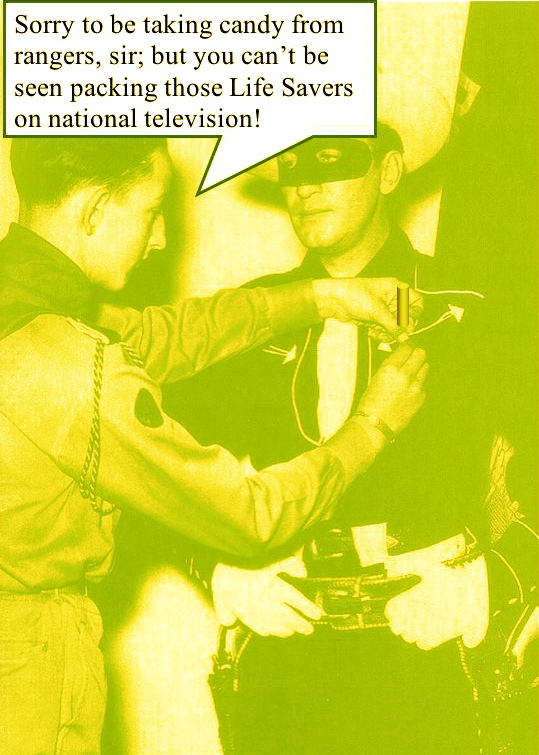
Well, it’s been a bad day for Willy Wonka. The snack manufacturers in the UK are in a state of sugar shock. Sure, the chocolate factories will remain open; but the popsicle peddlers and potato chip pushers have been dealt with a restraining order, forced to keep a low profile when it comes to accosting their most valued customers. The golden ticket—or any such gimmick designed to promote so-called “junk food” on television—is a thing of the past. Count Chocula will have to go underground in search of fresh blood, and millions of hyperactive and hypoglycemic kiddies might have to learn about candy from strangers, now that cable channels are closed to the trans-fat movers and saltshakers that thus far defined and financed much of children’s television.

The ban on “junk food” advertising is to go into effect in January 2007, the BBC reports. The measures are surprisingly far-reaching, considering that such commercials will no longer be permitted on any “pre-school children’s programs,” “programs on mainstream channels aimed at children” or “cable and satellite children’s channels,” “programs aimed at young people,” including those featuring music videos, and “general entertainment programs” that “appeal to” a “higher than average” number of viewers under the age of sixteen.

The decision, presumably on behalf of an obesity-prone or malnourished public, was made by Ofcom (Office of Communications), a new regulatory body established in 2002 and authorized by Britain’s Office of Communications Act in 2003. Will this catch on elsewhere? Are ice cream, soda pop, and French fries going the way of the cigarette, now that health fascism is on the rise in the west?

What might have happened to American action heroes like Buzz Corry, commander in chief of the Space Patrol, had the FCC clamped down on US radio advertising in the 1930s and ’40s (whose jingles you may hear and see discussed here)? Would Buzz have had to load his tank with corn flakes or oatmeal, like most of the competition? Space Patrol, after all, “was brought to you by Nestle’s Eveready, the instant cocoa, and famous Nestle chocolate bars. Remember N-E-S-T-L-E’-S.” And, as the announcer promised, those listening in could get their own “rocket cockpit” and fly “into space” with Buzz Corry if only they sent in those Nestle labels.

Are we, in this happy meal age of movie tie-ins and product placement, really Buzz Lightyears removed from such sponsorship models? No doubt, there’s lots of dough in cookies, and those protective of commercial television foresee great losses in revenue; losses, they argue, that might very well lower the quality of programming in Britain, as advertisers lose interest in a large group of potential viewers previously seen as a target audience, thus decreasing the purchasing power of advertising-dependent cable channels.

So, who is to gain as kiddies trim down (if indeed such a widespread downsizing of pint-sizers will follow)? The outlawing of “junk food” advertising might prove a boon to those with poor parenting skills, those who rely on legal strictures and thrive on lawsuits to raise a new generation of leaner, healthier consumers, sturdier taxpayers with fewer cavities and lower blood sugar, calm little low-sodium dieters deprived of the catchy tunes that used to cheer our everyday.

Live and Let Die: Is It Time to Give Bond the Boot?

Well, I know, it is an old argument. One that is being dusted off every time a new man slips into the suit. Always a man, mind you. And the man in question is Bond, James Bond. With Casino Royale now in theaters, and the less-than-favored Daniel Craig assuming the role of 007, the question arises anew: does Bond still matter, over fifty years after he was introduced to the world in Ian Fleming’s spy stories? Should he die another day, right this minute, or some time tomorrow (which presumably never dies)? What does his resilience tell us about the crumbled British Empire, about the state of international diplomacy, about the ways of the warring world?

A new Bond picture is still a media event, some forty-five years after the release of the first entry in what turned out to be a highly lucrative franchise. For me, it all began with The Spy Who Loved Me, the second movie I ever got to see in a theater; as such, it made quite an impression on me. Okay, he did not love me (little did I know how much he loathed me and my kind). The villain was played by a fellow German (Curt Jurgens); but dubbing, as it is still being practiced in my native country, all but obscured the lingering animosity toward Germany as expressed in such castings. It is easy to watch James Bond thrillers without noticing their cultural and political agenda. It is convenient to do so; but it also renders those films irrelevant.

Bond did much to keep the Cold War alive—or any crisis beneficial to the West. He has always been On Her Majesty’s Secret Service (rather than the people’s)—and a grateful Queen Elizabeth II once again attended the Royal Premiere of the latest 007 mission she thus endorsed. Bond is the anti-diplomat—ultra-conservative, xenophobic, and unapologetically sexist. Dame Judy Dench was brought in as a response to decades of Pussy Galore and the casting cat calls it provoked; but “Octo” never did denote octogenarian and female sidekicks still get the kittenish outfits, the headlines and centerfolds, along with those less than subtle names suggestive of slippery bodies just waiting for a firm . . . well, you know.

Bond is an institution—perhaps one that is ripe for abolishment. Austin Powers may have mocked the machismo, as others have done before him, but left the Bond franchise unshaken if slightly stirred.

The producers of the latest installment could have responded to such claims of obsolescence by turning Casino Royale into a period piece, setting it in the political climate in which it was conceived. It would have been a bold move for Bond, at once an acknowledgment of the datedness of the character and its historical significance, a topical significance long obscured in favor of gadgetry and reduced to pop-cultural nods to celebrities of the day (such as Goldie or Grace Jones, last seen at a Guinness Book-making gathering of the Joneses). Diamonds Are Forever—but traditions? Upon reflection, the Bond image might be as timeless as a rhinestone on an extravagant designer suit: dernier crie one day, but “for crying out loud” thereafter.

That said, I am looking forward to the latest James Bond, if only to take him on. If Freddy Kruger can be confronted with Jason, how about a match-up of Bond versus Shaft, to kick the imperial highness right out of 007’s pants? How about Bond having the living daylights scared out of him by Lara Croft? I’d put my Moneypenny on such a fight. How about, Goldfingers crossed, Shaft and Lara Croft as James Bond? You might get to witness just that . . . if you only live twice.

An Inspector Calls Our Bluff

Yesterday’s gloomy afternoon gave way to a splendidly sinister evening at the theater. The play was J. B. Priestley’s An Inspector Calls, which I had previously seen back in 1995, with 80’s heartthrob Maxwell Caulfield in his Broadway debut. In that production, the set pretty much upset the text—a huge, dark house confronting the audience from behind a curtain of rain. It was an impressive spectacle calculated, it seemed, to veil or countermand Priestley’s directives, the stark simplicity and artifice of his didactic play. Yet, as I realized last night, watching a touring Clwyd Theatr Cymru production directed by Barry Kyle, An Inspector Calls loudest when the lines are clear and the stage bare.

I had prepared for the evening by reviewing the 1934 film adaptation of Priestley’s Dangerous Corner, starring Virginia Bruce and Melvyn Douglas.  The movie struggles to open Priestley’s play to the demands of a dynamic camera.  The cinema audience wants, or is at any rate accustomed to, something other talking heads and sedentary bodies.  Even Martyn Bainbridge’s design, while effectively sparse compared to the melodramatic Broadway treatment of An Inspector Calls, at times displayed a doubt in the sufficiency of Priestley’s script by underscoring his words with visuals, turning walls into movie screens and tilting the stage to demonstrate the downfall of a supercilious and self-centered family.

Do we need images to get the picture? The theater of ideas is best accommodated by radio, a non-visual medium that forces our mind to focus on the spoken word and telling silences. Back in the early 1930s, Priestley may not have been convinced of this. After all, Dangerous Corner is a rather scathing commentary on the wireless as a soundcarpet under which the unspoken and unspeakable can be swept: the receiver has to break down to crack the surface of idle chatter among the civilized yet rotten.

In An Inspector Calls, which reworks the central idea of the earlier play, the part of the radio is performed by a telephone that rings to shut up a group of culpable and contemptible individuals talking themselves back into a state of calm. Unreliable or intrusive, both means of telecommunication are called upon to penetrate the walls of bourgeois conventions, obliging those standing apart to connect and disclose what has been carefully concealed from others.

Priestley could and did rely upon the wireless to spread the word and to popularize his ideas. His novels and plays were often heard on American and British radio during the 1930s and ‘40s, among them adaptations of Angel Pavement and Laburnum Grove, as well as the two works discussed here. The author-dramatist even made an appearance on Rudy Vallee’s show, as I read in a September 1939 issue of the Radio Times, and agreed to let the BBC serialize one of his novels prior to publication, with its author reading the first installment.

While expressing his reservations about the experiment and its effect on book sales, Priestley nonetheless decided to reach out to the populace he was eager to unite. Perhaps, some six years prior to the completion of An Inspector Calls, he had already gotten the call from his inquisitive messenger. It is a call that still resonates strongly today, not so much as socialist propaganda, but as an appeal to think beyond economics, beyond present self-interest, for the sake of turning a Dangerous Corner in the path of the planet we share.

Budd Hulick, the "Man With a Platform"

Well, this would be a perfect day to kick the proverbial bucket, especially one of those in which it has been coming down all day. Most of us seem capable of resisting the impulse, and some wretched creatures are rewarded for their restraint by having to slosh through the muck of life toward senility, whether or not they care to prolong the journey, until they are too fragile to kick at all and waste away ingloriously like an abandoned experiment in resilience. If the Internet Movie Database got it right—and did not merely neglect to keep up with the subject*—one such mortality-resisting mortal might be Budd Hulick, an American radio comedian once known as one of a couple of “gloomchasers.” He was born on this day, 14 November, in 1905.

Hulick was an announcer at station WMAK in Buffalo, New York, where he met his comedy partner, writer-announcer-utility man F. Chase Taylor. Together they became known as Stoopnagle and Budd, an act that sounded fresh and unconventional because the two tossed caution to the wind and did what was generally discouraged on the add-littered airwaves: they ad-libbed.

Indeed, or according to legend, that is just how they got started one October evening in 1930 after a hurricane had caused the network to collapse and CBS affiliates, bereft of their regular transmissions, were temporarily left to send for themselves. Hulick and Budd filled a quarter hour with music and banter, to which impromptu performance the audience responded so favorably that WMAK gave them a regular spot.

While slow to attract a national sponsor, the team proved a popular success on radio in the early to mid-1930s with their show. Together with the big names of vaudeville, wireless and motion pictures, the voices of Stoopnagle and Budd answered the public’s curiosity by appearing alongside W. C. Fields, Rudy Vallée, Burns and Allen, Bela Lugosi, Cab Calloway, and Baby Rose Marie in the Paramount comedy revue International House (1933).

After Stoopnagle and Budd split in 1937, Hulick carried on as a radio quiz show host. It was another unforeseen advent—always dreaded in the big business of unseen entertainment—that turned Hulick into “A Man With a Platform,” the title character of a “musicomedy” by America’s foremost radio playwright, Norman Corwin. Corwin had written this piece “expressly” for Henry Morgan, a caustic radio wit who apparently got his dates mixed up, as the author-director reasoned in his notes on the play, which was broadcast on 2 November 1941. Corwin “quickly revamped the show to accommodate the sly and ingratiating comedy of Budd Hulick.”

As “A Man With a Platform,” Hulick played a know-it-all of the kind we all know: some nobody who thinks that “things should be done about things.” The character sounds familiar today, considering that most people who keep a blog such as this step on the old soap box once in a while (or frequently, even) to advocate and accuse, to bemoan and belittle. We all grab this virtual microphone to voice what we feel passionate about, even though we may be opining without sound argument, in the face of facts we dare others to face.

Mounting his platform, Hulick gets to go on about the inanity of baby talk (as if responding to the phenomenon of the “mommy blogs”) and the need for changes in public education, however questionable his suggestions. Not in favor of “singing the praise of unsung heroes,” the “Man” proposes a “dishonor system,” singling out those “whose annoyance to the public takes the form of chronic overeager optimism” (as if speaking of those who maintain that the war on terror is going well). He even gets to meddle with established broadcasting practices (something that web journalists are wont to do, simply by insisting on doing things their way).

I was glad to have learned about Hulick’s 101st birthday when, rather listless and unsure whether to write anything at all today, I sauntered over to the IMDb, and, after consulting the invaluable GOLDINdex, dug out a recording of Corwin’s play. The “Man” was just the kind of gloomchaser I needed on this miserable November afternoon; indeed, it made me rethink my remarks about kicking the bucket, being that Corwin is still kicking at 96.

*The date of Hulick’s departure has since then been added to the IMDb entry

Note: There’s a War Still On


Well, there were four that fell
On Remembrance Day
As all across Britain
An old armistice was recalled with paper poppies.

And there were more who died
On Remembrance Day
With marching bands passing
And newly wrought wreaths displaying old grief on cold stones.

Note: there’s a war still on
As Remembrance Day
Becomes an occasion
To ready the words of Wilfred Owen for broadcast.

Hear! There are gunshots now
That Remembrance Day
Is gone until next year
While coffins will keep telling time like grandfather clocks.

Mind that the dead come back
On Remembrance Day,
Effects and bones sent home
To force us face that what has come to pass is not past.

On This Day in 1950: The Man to Whom My Dog Owes His Name Makes His Magnificent Debut

Well, this takes me back. All the way to May 2005, when I made up my mind at last and set out to keep the broadcastellan journal. Apprehensive about disclosing my true identity (the name my parents pinned on me), I entered the blogosphere with the fanciful moniker “The Magnificent Montague.” It took me about five months to shove that nominal cloak into the closet and leap out, as it were, in the buff (or as near to that natural state as my virtual modesty permits). Some five months ago, I once again reached for that retired garment and passed it on to my dog. Such an act of questionable charity would doubtless have infuriated the original bearer of said name, who, on this day, 10 November, in 1950, made his radio debut in a sitcom aptly titled The Magnificent Montague.

Truth be told, I’ve got a thing for Monty Woolley, the man who played him. If he were The Man Who Came to Dinner—and if I did not already have both the man and the machine for the job—I might almost stoop to doing the dishes. Mr. Woolley was, of course, The Man Who Came to Dinner, and a lot of other compelling characters besides. Over the years, I’ve seen him in films like Midnight, Since You Went Away, As Young As You Feel, and the delightful if lesser known Molly and Me (opposite Gracie Fields). He also did a bit of campaigning for Roosevelt in 1944, as I found out when I heard him in a line-up of FDR supporters in a recently discussed radio special. Now, Mr. Woolley could almost talk me into anything—and talk he did. His voice was such an integral part of his persona—prickly, pompous, and proud—that it is not surprising he was talked into playing that sort of man in a weekly sitcom written for radio.

His is a beard you could hear on the air. I mean, Woolley was such an iconic figure in American culture that those tuning in did not require a picture. They knew exactly what Woolley looked like—and there was no need to create a new look for Edwin Montague, the character he portrayed. Montague and Woolley were one; or, let’s say that Montague was so ideally suited to the Woolley persona that it was easy to confuse the star and his role. One was an extensions of the other, so that Montague seemed at once caricature and lifelike portrait, as flat and vivid as a Dickensian character, a Mr. Pecksniff or Pickwick or Turveydrop.

Written and produced by Nat Hiken (who had previously worked for comedians Fred Allen and Milton Berle), The Magnificent Montague cast Woolley as an accomplished Shakespearean actor who, luckless of late (indeed, for nearly a decade), accepts a role in a sentimental daytime radio serial. However disdainful, the venerable thespian charms millions of listeners as Uncle Goodheart, a popular success he is anxious to keep from the members of the Proscenium Club who would be offended by such a shameful act of selling out.

It is a perfect setup for a radio sitcom, considering that broadcasting was generally frowned upon by serious or distinguished actors . . . unless, that is, they realized how much money there was to be made and how comparatively easy it was to make it. The Magnificent Montague was radio’s way of ridiculing highbrow culture, of deriding those who dismissed it as vulgar or trivial but were nonetheless envious of its tremendous pull.

In the 1950s, radio was no longer the live medium it had been prior to the development and widespread use of magnetic tape; for the most part, dramatic programs were being recorded for later broadcast, which meant greater flexibility and fewer scheduling conflicts for performers who would otherwise not have committed to a weekly series. Some of the great names in film and theater—Cary Grant, Marlene Dietrich, James Stewart, and Laurence Olivier among them—pulled an “Uncle Goodheart” during those days by becoming radio regulars (rather than being special guests whenever there was some promoting to be done).

Bloodshed: Did Freddy Kruger Slay Cocteau?

It can do serious damage to one’s sensibilities. Popular culture, I mean. I sensed its deadening force tonight when I attended a screening of Jean Cocteau’s first film, Le sang d’un poète (1930). It was shown, together with the Rene Clair short Entr’acte (1924), at the National Library of Wales here in Aberystwyth, where it was presented with live musical accompaniment by composer Charlie Barber, who also conducted. However animated the score, the images left me almost entirely cold. Why? I wondered.

There was a time when I was thrilled—or at least tickled—by surrealism. Reproductions of Magritte’s paintings lined the walls of my room. In my drawings and watercolors, I ransacked the surrealist inventory, ripping off Dali’s shadows and reshaping the landscapes of Tanguy and de Chirico. Getting experimental with the camera, I posed in front of designer-cracked mirrors, something standing in for blood oozing from my cheek or brow. That was just about the time when early 20th-century art was being reprocessed on MTV, in music videos and horror film franchises like Phantasm, A Nightmare on Elm Street, and The Evil Dead. This New Wave swept over and wiped out what was once avantgarde but nowadays generate about as much excitement as a can of Campbell’s soup.

Our jaundiced eyes have stared down a multitude of visual assailants. How many times can you be surprised by a mirror turning into a pool of water, startled by violent juxtapositions, or amazed at facile paradoxes? How long does it take to turn an outrage of images into an outage of imagination? Video, it seems, killed something other than the radio star.

Popular culture can make Cocteau’s Poet look like Mr. Potato Head. It exterminates the life of art in the very process of reproduction. Was it this frustration with the fading power of pictures that made me turn to the non-visual arts, to broadcasting in the pre-television age? If so, video did not kill the radio star after all. When you run those digital pictures until the recycled blood on the screen runs dry, you might begin to hunger for a blank slate on which to give new expression to your personal terrors and intimate desires.

Give the poet in you a blood transfusion by taking your eyes from the plasma screen. Close them a while . . . if you have the sang-froid to open your mind’s eye to such a world of possibilities.

My Anglo-American Diet

Well, I consume plenty of them. Movies, I mean. Almost every night I take one in, along with some potato chips and a tall glass of gin and tonic. Now, looking in the mirror, I pretty much know where the chips and the gin are going, being that the residue lingers prominently around my waste. I don’t mind that much. I’m talking celluloid, not cellulite.

So, how does this motion picture diet affect me? What remains of these pictures after my eyes have lapped them up, my mind downed them? Granted, I don’t always ingest; once in a while I drop off in the very act of feasting (Elia Kazan’s Boomerang didn’t come home some nights back). Sometimes my attention throws in the napkin, losing itself like a crumb in the pleat of a leading lady’s dress or finding itself deserting the table at the sight of a mustachioed villain. Still, I pretty much finish off about three or four movies a week; and I’d sure like to know just where they are going and what they are doing to me once they have rolled off our screen, a large window blind serving as a conveyor belt for digitized treats.

I have been living in the UK for two years now; but, aside from a few British favorites such as Brief Encounter (pictured, and discussed here) or the occasional TV dinner (with the recently reunited Royle Family for instance), I still take in almost exclusively American fare. Last night, for instance, I took out two DVDs: Alfred Hitchcock’s pre-Hollywood melodrama Juno and the Paycock and Orson Welles’s post-Holocaust thriller The Stranger; it was the latter that got a viewing, the former being once again returned to the drawer, yet unwatched. Perhaps I was just not in the mood for Irish stew; but the “go west” pattern in my viewing habits is all too apparent.

In fact, I am so American in my pop-cultural intake that I even missed yesterday’s 15,000 broadcast of The Archers, that British institution of a radio serial. I was too busy thinking about the mid-term elections in the US to devote time to a venerable program that, truth be told, I have never listened to even once, despite my love for radio dramatics. Do I need to point out that I am a German native (something I’d prefer to forget)? What is it, aside from having lived in the US for fifteen years and devoting an inordinate number of them to the study of American radio drama, that makes me embrace American culture of the 1930s, ‘40s and ‘50s yet ignore or outright dismiss so much else, contemporary and internationally?

For one thing, I know what to expect from traditional Hollywood entertainments. I appreciate their formula, accept their limitations. Not unlike Victorian novels, they please me even when they leave me wanting (and Welles’s Stranger is surely a less than satisfying dish of hokum, squandering nearly all its potential to explain what it merely exploits—post-war doubts about a reformed Germany, a policing of thought for the sake of a secure nation, and a global peace founded on democratic principles). They agree with me, even when my mind insists they are nutritionally deficient and dangerously high in sodium, considering that you have to take many of these melodramas with so much more than a grain of salt. And as long as my heart’s still pumping enough blood through those hardening arteries, I keep the transatlantic meals on reels program going.

Sure, watching Hollywood movies does not make you an American. You might as well try to enter the Green Card lottery with a ticket stub. Instead, you keep circling Ellis Island, feasting your eyes on the Statue of Liberty looming in the haze. Marveling at the prospect in light of last night’s election, you can almost imagine yourself chewing the scenery in a Frank Capra feature.