Destinรฉes Imagined: Film Stills and Storylines

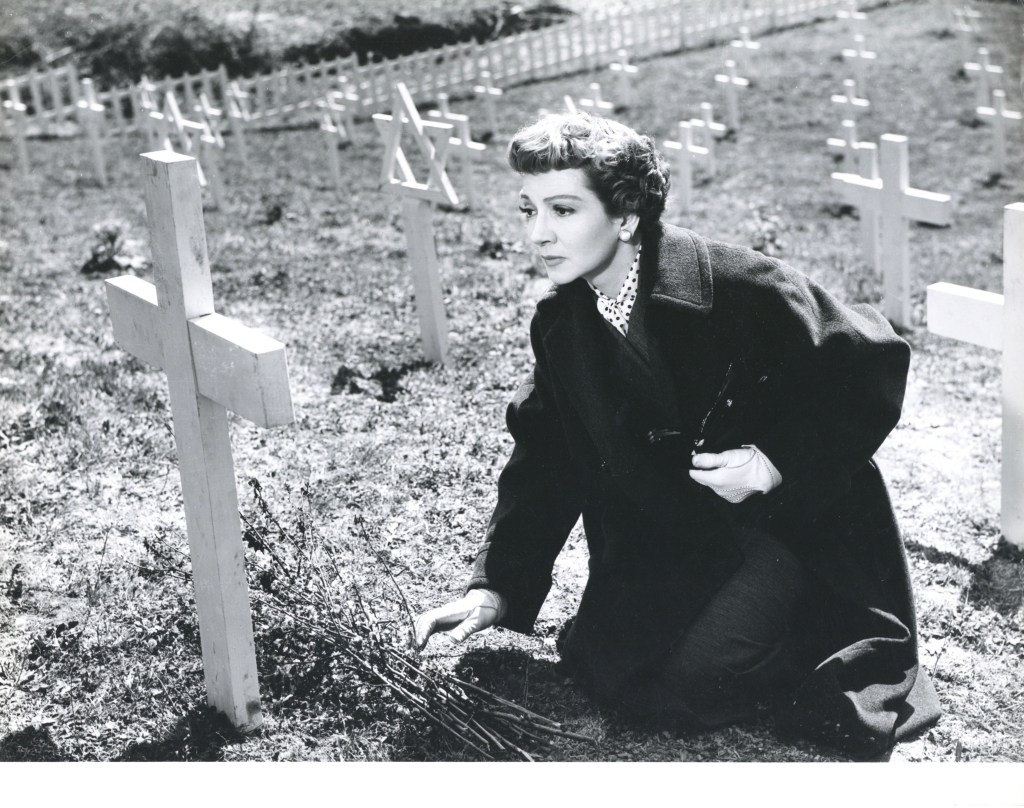
The most recent additions to my collection of movie memorabilia โ€“ and of images featuring the likeness of stage and screen actress Claudette Colbert (1903 โ€“ 1996) in particular โ€“ are stills for the 1954 motion pictureย Destinรฉes.ย ย The French-language film, released in Britain asย Love, Soldiers and Womenย and in the United States asย Daughters of Destiny, is one of the few works in the Colbert canon that I have not yet seen.ย ย Rather than relying entirely on plot synopses provided by Colbert biographers William K. Everson, Lawrence Quirk, and Bernard F. Dick, I am imaging and imagining the film’s story, or, rather, the story told in one of the three vignettes that constituteย Destinรฉes.

Even before I determined on an order for the five film stills, what came across is that this is a story about absent men and relationships between the women they left behind.  From the image I chose to begin my stills-inspired version of the story, I can tell that Destinรฉes is as much about the future as it is about the past: fate, fatality and a fatalism to be challenged.  The number of aligned grave markers, impersonal yet collectively inspiring awe, distinguish this site as a war memorial.  This woman might be a war widow.

What stands out in the field of Christian crosses is the prominently positioned star of David behind her, suggesting a memorial to those who were killed during the Second World War.  Either the narrative of this mid-1950s film is set in the recent past or Colbert’s character, for whatever reason, is only belatedly coming to terms with her loss.  She may have come to bury the past, or else to uncover it.  

Continue reading “Destinรฉes Imagined: Film Stills and Storylines”

‘Mystiqueโ€™ Isnโ€™t the Word for It: The Cool Warmth of Claudette Colbert

‘In the Hollywood of the thirties and forties, dominated by elegance, glamour production expertise and lush escapism,โ€™ the film historian William K. Everson wrote in the 1970s, โ€˜Claudette Colbert was one its most representative stars.  Despite her natural skills and theatrical background, she โ€“ or the images that came to be Claudette Colbert โ€“ was essentially a Hollywood product.โ€™

The reference to her ‘theatrical background’ aside, this could be said about any number of Hollywood stars โ€“ male of female โ€“ of the studio era.ย ย Colbert, who was born on this day, 13 September, in 1903, was a particular โ€˜productโ€™ of an industry committed to generating lucrative multiples by manufacturing the one-of-a-kind: the unique personality that filled screens and auditoria of movie theaters around the world. So what, if anything, distinguishes Colbert from her peers?

Everson goes on to describe Colbert as โ€˜sleek, svelte, sophisticated and chic [โ€ฆ].  But she was also warm, vivacious and possessed of both charm and a sense of humor โ€“ qualities that canโ€™t be mass produced, no matter how complicated the machinery.โ€™

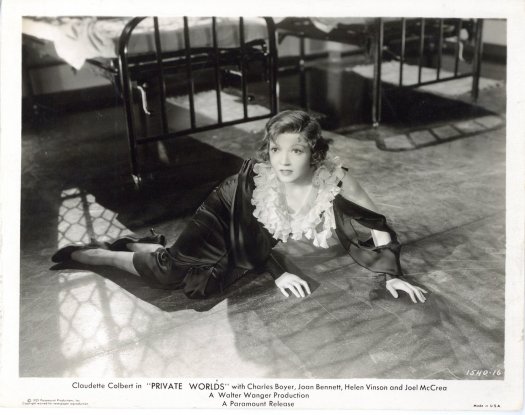
Publicity still, Private Worlds (1935)

To a Colbert enthusiast such as myself, this certainly rings true โ€“ and the attributes ‘warm’ and โ€˜vivaciousโ€™ are especially felicitous when applied to descriptions of the energy with which Colbert invests her roles โ€“ a kind of cocktail party gaiety that, whatever the state or root cause of intoxication, is rarely brash and, however much of an effort it may be, as written into a script or demanded by a director, is so transparently genuine and uncontrived that it makes me feel I am in the presence of the very life of the party, and of belonging, even if Claudette’s character just crashed one, as in Midnight.

The other night, I watchedย Sleep, My Love, a melodrama in which laughs are in short supply, and what struck me as most distinctly Colbert about an otherwise generic thriller of the Gaslight school was seeing her tormented character on a night out with an admirer, getting soused at a wedding, while her husband is plotting to drive her out of her mind by adulterating her cocoa. This woman will lose her man before she loses her marbles.

What Everson refers to as the ‘Colbert Mystiqueโ€™ is really no ‘mystique’ at all.ย ย The quality Colbert brought to the screen was approachability, a glamour that wasn’t a glare.ย ย She is neither aloof nor in your face while out of reach in her improbable but never impossible elegance.ย ย That approachability did not quite amount to vulnerability, however, as most of her performances โ€“ certainly most of her best, exceptingย Three Came Homeย โ€“ are subdued rather than raw.ย ย When asked to lose her cool, to get what used to be called hysterical, as in her none too Secret Fury in the film of that title, she seems to be filling in for another actress; she is simply not Claudette. For the most part, though, when Colbert lets her hair down on the screen, or had reason to tear it out, her bangs require only minor adjustments to be put back in place โ€“ and Hollywood dictated that it, and the woman donning the do, had to be back there in that designated up-to-Production Code place before long.

Sure, there might be a wisp of straw in her hair, but we donโ€™t get access to the hayloft where, her laugh suggests, it happened all right; and we are certainly not encouraged to feel entitled to an entire sheaf of evidence.ย ย Growing up gay โ€“ and knowing I was gay when I was very young without knowing how to let it be known โ€“ I found Colbertโ€™s subtlety more relatable than the sass of dames, the fire of Jezebels, or the lure of sirens whose appeal brought on awkwardness and shame rather than arousal in me.ย ย This woman would not crack like Susan Hayward, snap like Bette Davis or claw for it like Crawford.ย ย She would end up all right, and often owing to her strength, wit and endurance.ย ย Granted, having Hattie McDaniel at hand to massage your tired feet doesnโ€™t hurt.ย ย But, hired help or none, Colbertโ€™s heroines keep their cool while exuding a warmth that no flamethrower can supply.

There really isnโ€™t any โ€˜mystiqueโ€™ there; glamour, yes, and power, but no mystery.  Even in matters of sex, as I found most comforting watching Colbert while coming of age in the era of AIDS, Colbert suggests that there need be no mystery at all.  When Colbert insists that โ€˜sex has everything to do with itโ€™ โ€“ as one of her characters does in The Palm Beach Story, she doesnโ€™t coo it like West or croon it like Dietrich โ€“ she says it flat out, with a conviction born of experience.  Sheโ€™s been there, done that, but she keeps the t-shirt neatly folded in a drawer reserved for her lingerie, which she teaches Miriam Hopkins to โ€˜jazz upโ€™ in The Smiling Lieutenant.

To this day, I collect Claudette Colbert memorabilia, which I display online.ย ย The latest addition to my collection is the above publicity still forย Private Worldsย (1935), for which Colbert received an Academy Award nomination.ย ย This is not the portrait of a fallen woman.ย ย We know Colbertโ€™s character will get up, straighten her hair and return to work โ€“ as long, that is, as Hollywood permits her to have a career, as a ‘lady doctor,’ no less. Yes, that woman on the floor is a psychiatrist.

Colbertโ€™s own private world was just that: private.ย ย Back then, fellow stars could rely on the studio to provide them with a โ€˜privateโ€™ world to parade in public and a cover story to hide behind.ย ย Today’s celebrities, unlike the stars of that bygone system, enjoy no such protection; nor, for the most part, do they seem to seek it.ย ย We have surrendered our privacy, and having done so doesn’t make us feel more real to each other, much less to ourselves, more liberated or more loved.ย ย The illusion Colbert pulls off on the screen is that we, or some of us, might have once had what I now sense lost: a kind of cool warmth that gets us through while drawing others toward us.

“Mike”; for the Love of It

“What is there to say about what one loves except: I love it, and to keep on saying it?” Roland Barthes famously remarked. Sometimes, getting to the stage of saying even that much requires quite a bit of effort; and sometimes you donโ€™t get to say it at all. Love may be where you find it, but it may also be the very act of discovery. The objective rather than the object. The pursuit whose outcome is uncertain. Methodical, systematic, diligent. Sure, research, if it is to bear fruit, should be all that. And yet, it is also a labor of love. It can be ill timed and unappreciated. If nothing comes of it, you might call it unrequited. It may be all-consuming, impolitic and quixotic. Still, itโ€™s a quest. Itโ€™s passion, for the love of Mike!

โ€œMikeโ€ has been given me a tough time. It all began as a wildly improbable romance acted out by my favorite leading lady. It was nearly a decade ago, in the late spring of 2001, that I first encountered the name. โ€œMikeโ€ is a reference in the opening credits of the film Torch Singer, a 1933 melodrama starring Claudette Colbert. Having long been an admirer of Ms. Colbertโ€”who, incidentally made her screen debut in the 1927 comedy For the Love of Mike, a silent film now lostโ€”I was anxious to catch up with another one of her lesser-known efforts when it was screened at New York Cityโ€™s Film Forum, an art house cinema I love for its retrospectives of classicโ€”and not quite so classicโ€”Hollywood fare.

Until its release on DVD in 2009, Alexander Hallโ€™s Torch Singer was pretty much a forgotten film, one of those fascinatingly irregular products of the Pre-Code era, films that strike us, in the Code-mindedness with which we are conditioned to approach old movies, as being about as incongruous, discomfiting and politically incorrect as a blackface routine at a Nelson Mandela tribute or a pecan pie eating contest at a Weight Watchers meeting. Many of these talkies, shot between 1929 and 1934, survive only in heavily censored copies, at times re-cut and refitted with what we now understand to be traditional Hollywood endings.

Torch Singer, which tells the Depression era story of a fallen woman who takes over a childrenโ€™s program and, through it, reestablishes contact with the illegitimate daughter she could not support without falling, has, apart from its scandalous subject matter, such an irresistible radio angle that I was anxious to discuss it in Etherized Victorians, the dissertation on American radio drama I was then in the process of researching.

Intent on presenting radio drama as a literary rather than historical or pop-cultural subject, I was particularly interested in published scripts, articles by noted writers with a past in broadcasting, and fictions documenting the central role the โ€œEnormous Radioโ€ played in American culture during the 1920s, โ€˜30s, and โ€˜40s. I thought about dedicating a chapter of my study to stories in which studios serve as settings, microphones feature as characters, and broadcasts are integral to the plot.

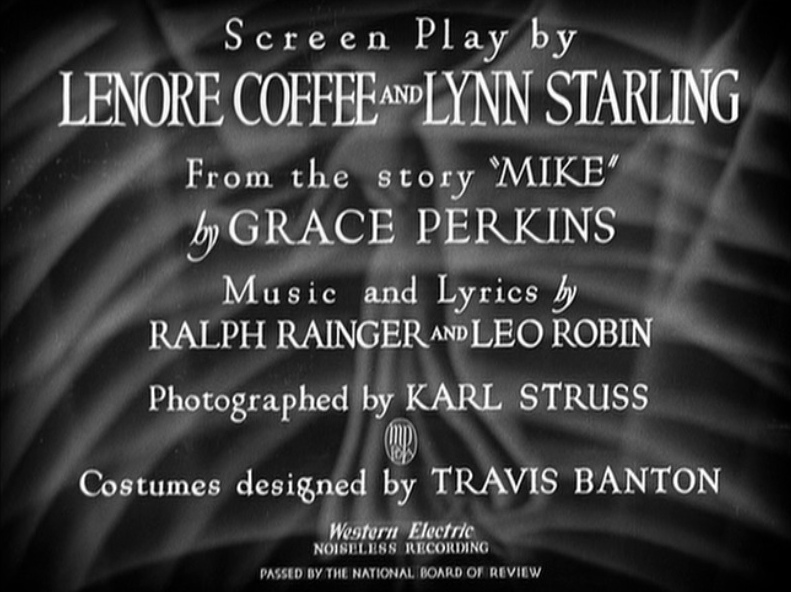
Torch Singer is just such a storyโ€”and, as the opening credits told me, one with a past in print. Written by Lenore Coffee and Lynn Starling, the screenplay is based on the story โ€œMikeโ€ by Grace Perkins; but that was all I had to go on when I began my search. No publisher, no date, no clues at all about the print source in which โ€œMikeโ€ first came before the public.


Little could be gleaned from Perkinsโ€™s New York Times obituaryโ€”somewhat overshadowed by the announcement of the death of Enrico Carusoโ€™s wife Dorothyโ€”other than that she died not long after assisting Madame Chiang Kai-shek in writing The Sure Victory (1955); that she had married Fulton Oursler, senior editor of Readerโ€™s Digest and author of the radio serial The Greatest Story Ever Told; and that she had penned a number of novels published serially in popular magazines of the 1930s. That sure complicated matters as I went on to turn the yellowed pages of many once popular journals of the period in hopes of coming across the elusive โ€œMike.โ€

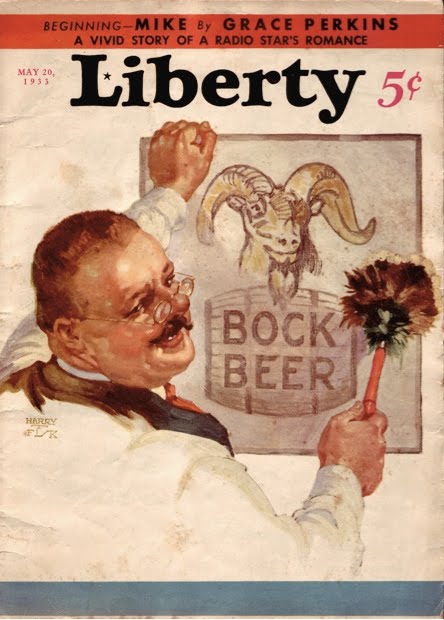
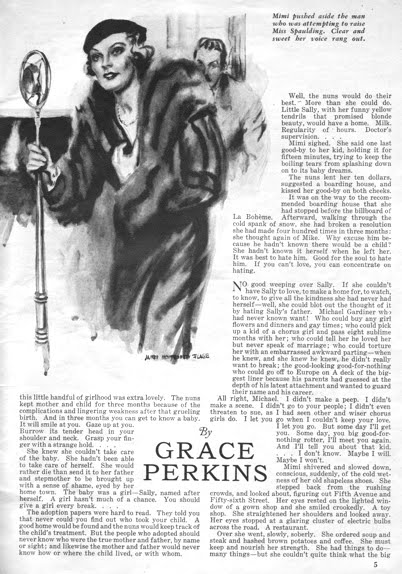
Finally, years after my degree was in the bagโ€”and what a deep receptacle that turned out to beโ€”I found โ€œMikeโ€ between the pages of the 20 May 1933 issue of Liberty; or the better half of โ€œMike,โ€ at least, as this is a serialized narrative. Never mind; I am not that interested anyway in the storyโ€™s other Mike, the man who deserted our heroine and with whom she is reunited in the end. At last, I got my hands on this โ€œRevealing Story of a Radio Starโ€™s Romance,โ€ the story of the โ€œnotorious Mimi Benton,โ€ a hard-drinking mantrap whoโ€™d likely โ€œend up in the gutter,โ€ but went on the air insteadโ€”and โ€œright into your homes! Yes, sir, and talked to your children time and time again!โ€

โ€œMike,โ€ like Torch Singer, is a fiction that speaks to Depression-weary Americans who, dependent on handouts, bereft of status and influence, came to realizeโ€”and romanticizeโ€”what else they lost in the Roaring Twenties when the wireless, initially a means of point-to-point communication, became a medium that, as I put it in my dissertation,

not merely controlled but prevented discourse. Instead of interacting with one another, Depression-era Americans were just sitting around in the parlor, John Dos Passos observed, โ€œlistening drowsily to disconnected voices, stale scraps of last yearโ€™s jazz, unfinished litanies advertising unnamed products that dribble senselessly from the radio,โ€ only to become receptive to President Rooseveltโ€™s deceptively communal โ€œyouandmeโ€ from the fireside.

Rather than โ€œlistening drowsily,โ€ disenfranchised Mimi Benton, anathema to corporate sponsors, reclaims the medium by claiming the microphone for her own quest and, with it, seizes the opportunity to restore an intimate bond that society forced her to sever. These days, Mimi Benton would probably start a campaign on Facebook or blog her heart outโ€”unless she chose to lose herself in virtual realities or clutch a Tamagotchi, giving up a quest in which the medium can only be a means, not an end.


Related writings
โ€œRadio at the Movies: Torch Singer (1933)โ€
โ€œRadio at the Movies: Manslaughter (1922)โ€

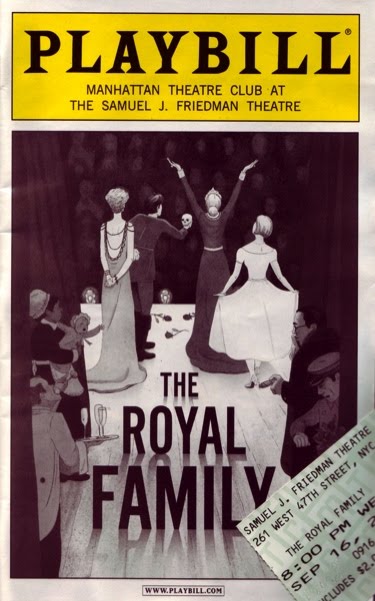
โ€œAnyone we know?โ€: An Absentminded Review of The Royal Family

What a tramp my mind has turned into lately. I would like to think that I still got one of my own, to have and to hold on to, for richer or poorer, and all that; but every now and again, and rather too frequently at that, the willful one takes off without the slightest concern for my state of it. It used to be that I could gather my thoughts like keepsakes to store a mind with; these days, I wonder just whoโ€™s minding the store. And just when I feel that Iโ€™ve lost it completely, there it comes ambling in, disheveled, unruly, and well out of its designated head. With a little luck, the suitcase of mementoes with which it absconded turns up again, similarly disorganized, rarely complete if at times strangely augmented. Perhaps, minds resent being crossed once too often. That has crossed mine, to be sure.

Anyway, where was I going with this? Ah, yes. Straight back to New York City. The Biltmore Theatre. Make that the Samuel J. Friedman, as it is now called. Built in 1925 and steeped in comedy theater tradition, the former Biltmore is just the venue for the current revival of The Royal Family, of which production, scheduled to open 8 October 2009, I had the good fortune to catch the second preview a few weeks ago. Classic crowd-pleasers like Poppa (1929), Brother Rat (1936-38), My Sister Eileen (1940-42), and the long-running Barefoot in the Park (1963-67) were staged here, where Mae West caused a sensation in October 1928 with Pleasure Man, a play they let go on for all of two performances.

While Ethel Barrymore might have wished a similarly compact run for The Royal Family, the play amused rather than scandalized theatergoers who appreciated it as a wildly flamboyant yet precisely cut gem of wit set firmly in a mount of genuine sentimentโ€”which is just what youโ€™d expect from a collaboration of George S. Kaufman and Edna Ferber. Histrionics, theatrical disguises, a bit of swashbucklingโ€”this screwball of a jewel still generates plenty of sparks, even if the preview I attended needed a little polish to show it off it to its full advantage.

Informed that her son may have killed a man, the matriarch of the family inquires: โ€œAnyone we know?โ€ Among the somebodies we know to have slain them with lines like these in the past are Broadway and Hollywood royals like Otto Kruger, Ruth Hussey, Eva Le Gallienne, Fredric March, Rosemary Harris, and . . . Rosemary Harris. As is entirely in keeping with the playโ€™s premiseโ€”three generations of a theatrical family congregating and emoting under one roofโ€”Ms. Harris is now playing the mother of the character she portrayed back in 1975. Regrettably, unlike Estelle Winwood in the cleverly truncated Theatre Guild on the Air production broadcast on 16 December 1945, Ms. Harris as Fanny Cavendish was not quite eccentric or electric enough, although she certainly possesses the curtains-foreshadowing vulnerability her character refuses to acknowledge.

Decidedly more energetic and Barrymore or less ideally cast were the other members of the present production, which includes Jan Maxwell as Julie, Reg Rogers as Tony, Tony Roberts as Oscar, John Glover as Herbert Dean and Saturday Night Live alumna Ana Gasteyer as Kitty. Whenever the pace slackened and the madcap was beginning to resemble a nightcap or some such old hat, I could generally rely on Ms. Gasteyerโ€™s gestures and facial expressions to keep me amused.

There was a moment, though, when my attention span was being put to the testโ€”and promptly failed. I looked at the fresh though not especially fascinating face of Kelli Barrett (as Gwen) and found myself transported to the 1920s, those early days of the Biltmore. I started to think of or hope for a youthful, vivacious Claudette Colbert performing on Broadway at that time, a few years before she left the stage to pursue a career in motion pictures. Why, I wondered, was my mind walking off with her?

Well, eventually it all came home to meโ€”my mind sauntering back in with a duffle bag of stuff I didnโ€™t remember possessingโ€”when I perused the playbill to learn about the history of the Biltmore. Colbert, I learned, had performed on that very stage back in 1927, the year in which The Royal Family was written, enjoying her first major success in The Barker. Decades later, she returned there for The Kingfishers (1978) and A Talent for Murder (1981). So, there was something of a presence of Ms. Colbert on that stage, even though she never played young Gwen.

Today, researching a little to justify what still seemed like a mere digression in a half-hearted review of the play, I discovered (consulting the index of Bernard F. Dickโ€™s recent biography of Colbert) that the actress did get hold of a minor branch of the Royal Family tree when she seized the opportunity to portray Gwenโ€™s mother in a 1954 television adaptation of the play. That version, the opener for CBSโ€™s The Best of Broadway series, was broadcast live on 16 Septemberโ€”which happens to be the day I stepped inside the Biltmore to catch up with The Royal Family.

Perhaps it is just as well that I give in and let my mind go blithely astray. For all the exasperation of momentary lapses, of missed punch lines, plot lines or points my thoughts are beside of, the returns are welcome and oddly reassuring. Besides, the old tramp wouldnโ€™t have it any other way . . .

Radio at the Movies: Torch Singer (1933)

โ€œYoo-hoo, is anybody?โ€ I guess that, from time to time, many of us amateur journalists feel compelled to ask the question so catchily phrased by the matriarch of the Goldbergs. At least Molly Goldberg could hope for a response from her friend and neighbor Mrs. Bloom, to whom her shouts into the dumb waiter shaft were directed. To Mrs. Goldberg, โ€œanybodyโ€ was a certain someone. Many who approached the World Wide Web as their means of telecommuning have given up on waiting for a reply to their โ€œYoo-hoos,โ€ or, instead, have taken the resounding silence for an answer equivalent to โ€œnope.โ€

According to a 2008 survey conducted by Technorati (which, earlier this month, was referred to in a New York Times article on the blogging phenomenon), 95 percent of all online journals have been essentially abandoned. Tens of millions who saw blogging as an opportunity to cast their thoughts broadly and make their voices heard by the multitudes decided that, once this vast crowd of followers did not, well, immaterialize, their words were wasted on the one or another for whose arrival they would not be dumb enough to wait and to whose apparently exclusive tastes they would not lower themselves to cater.

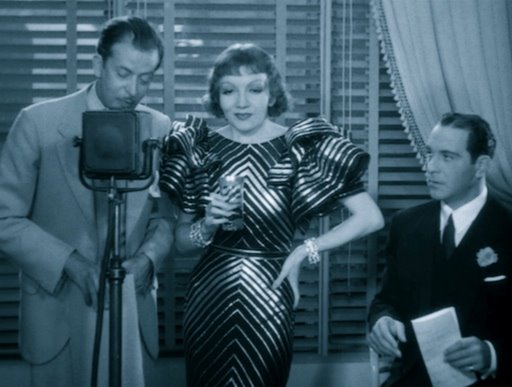
Like broadcasting before it, the blogosphere lures those creative spirits who might otherwise be dispirited nobodies with that one-in-a-million chance at fame while its ability to connect us to the one-in-a-million willing to connect with us frequently goes unappreciated. As public performers, we wonโ€™t settle for โ€œanybodyโ€โ€”but we seem more inclined to aim at the elusive everyone than the dependable someone. One of the most intriguing motion pictures to address our narrow-mindedness about broadcasting is the Depression-era melodrama Torch Singer (1933), one of those startlingly unconventional, non-classic Hollywood pictures referred to as Pre-Code.

Torch Singer stars Claudette Colbert as an unwed mother (that is Pre-Code for you) who, failing to find employment, is forced to give up her infant daughter. After that intimate bond is severed, the motherless child of a childless mother avenges herself on an impersonal, dehumanizing society by tantalizing those who made her suffer, selling the mere appeal of sex to the highest bidder. โ€œGive Me Liberty or Give Me Love,โ€ she warbles, achieving neither. Her body having been robbed of its fruit and the warmth of nestling, she turns her voice into a commodity, first by making a(nother) name for herself a nightclub singer, then by accepting the offer to become a disembodied siren on the radio.

When a newly hired storyteller for a childrenโ€™s program is struck dumb with mike fright, the reckless Torch Singer takes over as the fictitious โ€œAunt Jenny,โ€ comforter by proxy, singing lullabies so far removed from any cradle that they are devoid of sincerity, all the while tickled by her own moxie as she promotes the sponsorโ€™s kiddie beverage, long drink in hand.

This perversion of motherhood comes to an end when she realizes that it is possible to subvert the medium instead and seize the microphone to reach the child she gave up for adoption. Rather than performing for everyone and no one, she now sings directly to her daughter, devising a contest that would compel radio listening kids to call in and claim their birthday surprises, thereby revealing their identity to her. Once taken into her own hands, the very medium that seemed to have promised nothing but the belated fame for which she never cared becomes the means through which she can reestablish the intimacy she long believed to be past recapturing.

Its melodramatic shortcomings notwithstanding, Torch Singer serves as a compelling reminder that the media, as extensions or offshoots of telecommunication, have not lostโ€”and should never be divested ofโ€”their potential to establish point-to-point connections far more meaningful than the often disappointing stabs at mass exposure in which we are apt to lose sight of one another.

Related writings
โ€œBetween You, Molly and Me: Should We Settle for Squirrels?โ€
โ€œWireless Women, Clueless Men (Part Five): Gertrude Berg, Everybody’s Mamaโ€


โ€œHere is your forfeitโ€: Itโ€™s Hopkinsโ€™s Night As Colbert Goes Private

โ€œOur guest stars might well have been tailored for the celebrated parts of Peter and Ellie,โ€ host Orson Welles remarked as he raised the curtain on the Campbell Playhouse production of “It Happened One Night,” heard on this day, 28 January, in 1940. Quite a bold bit of barking, that. After all, the pants once worn by bare-chested Clark Gable were handed down to William Powell, who was debonair rather than brawny. โ€œMr. William Powell surely needs no alteration at all,โ€ Welles insisted, even though the material required considerable trimming. Meanwhile, the part of Ellie, the โ€œspoiled and spirited heiressโ€ whom Peter cuts down to size until he suits her, was inherited by Miriam Hopkins. It had โ€œcertainly never been more faultlessly imagined than tonight,โ€ Welles declared. Indeed, as I was reminded by Andre Soaresโ€™s interview with biographer Allan Ellenberger on Alternative Film Guide, Hopkins numbered among the leading ladies who had turned down the role and, no doubt, came to regret it, given the critical and commercial success of It Happened, which earned Claudette Colbert an Academy Award.

Now, Welles was prone to hyperboles; but, in light of Colbertโ€™s memorable performance, his claim that the part had โ€œnever been more faultlessly imaginedโ€โ€”in a radio adaptation, no lessโ€”sounds rather spurious. As it turns out, raspy-voiced Hopkins (whom last I saw in a BFI screening of Becky Sharp) does not give the spirited performance one might expect from the seasoned comedienne. Her timing is off, her emoting out of character, all of which conspires, along with the imposed acceleration of the script, to render disingenuous what is meant to be her character’s transformation from brat to bride; and while Powell, a few fluffed lines notwithstanding, does quite well as the cocky Peter Grant (it was โ€œWarneโ€ when those pants were worn by Gable), the only โ€œspiritedโ€ performance is delivered by Bernard Herrmann, the composer of the lively score.

In short, there is little to justify Welles’s introductory boast. Was the Wunderkind getting back at Colbert for standing him up two months earlier, when Madeleine Carroll filled her place in โ€œThe Garden of Allahโ€? Whatโ€™s more, Colbert appeared to have passed on the chance to reprise her Oscar-winning role for Campbell Playhouse, something she had previously done, opposite Gable in one of his rare radio engagements, for a Lux Radio Theater reworking of the old โ€œNight Bus” story.

That same night, 28 January 1940, Colbert was heard instead on a Screen Guild broadcast in a production of โ€œPrivate Worlds,โ€ in a role for which she had received her second Academy Award nomination. During the curtain call, Colbert was obliged to “pay a forfeit” after incorrectly replying “The Jazz Singer” to the question “What was the first full-length all-talking picture to come out of Hollywood?” For this, she was ordered to recite a tongue twister; but it wasnโ€™t much of a forfeit, compared to the sense of loss both Colbert and Hopkins must have felt whenever they misjudged the business by rejecting important roles or by risking their careers making questionable choices.

In The Smiling Lieutenant, the two had played rivals who ended their fight over the same man by comparing the state of their undies; now, Hopkins seemed to be rummaging in Colbertโ€™s drawers for the parts she could have had but was not likely to be offered again. Well, however you want to spin it, radio sure was the place for makeshift redressing, for castoffs and knock-offs, for quick alterations and hasty refittings. It catered to the desire of actors and audiences alike to rewrite or at any rate tweak Hollywood history. Go ahead, try it on for size.

Not Every Tome, Dick, and Harry; or, How to Approach Claudette Colbert

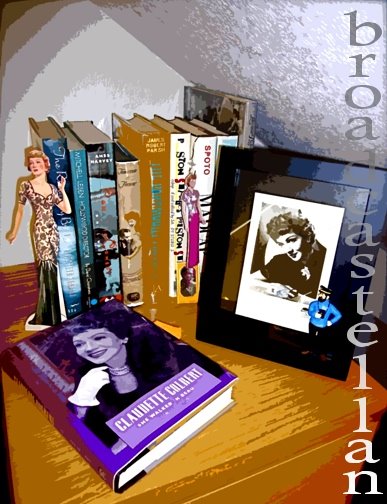
It had been two decades since last a biographer was given the chance to shed light on the life of a woman whose name was written in the bright lights of Broadway and whose radiant presence lit up the silver screen. Considering that the radiant one is my favorite actress, I was eager to clap eyes on Claudette Colbert: She Walked in Beauty (University Press of Mississippi, 2008), a promisingly scholarly tome by Bernard F. Dick. Not that the title inspires clapping, Byronic, bastardized, and bromidic that it is. It sure gave me the first clue, though: whatever it was that Colbert walked inโ€”beauty, grace, witโ€”was being thoroughly trampled in a clumsy and inept performance that brings out the lambastard in me.

As I advised students attending my seminar in Effective Academic Writing yesterday, a gaffe can be so distracting as to drown out an argument in guffaws and undermine a readerโ€™s trust in a professional writer.โ€‚Dickโ€™s editors left us with ample occasions to titter and groan. I put down the book often enough just to get some fresh air; but I had not gotten past page two when I was confronted with โ€œthe Prince of Whales.โ€โ€‚Thatโ€™s a fine kettle of mammals, I thought.

Not that the royalty thus referred to has anything to do with Colbert; Edward VII, along with Oscar Wilde and Theodore Roosevelt, is merely listed as one of the admirers of Lily Langtry after whom Colbert may have been named. Cumbersomely piled up, trivia like this slows the plodding, meandering account of how She Walked down to a crawl. However thorough a detective, Dick is unable to fashion the evidence he compiled into any cohesiveโ€”let alone compellingโ€”narrative. Instead, he rehearses the biographerโ€™s role of examining data:

Without school records, it is impossible to verify whether Claudette was still at Washington Irving in February 1919 [ . . .].โ€‚Although she told Rex Reed that she appeared in Grammar in December 1918, she could have graduated at the end of the fall term, in January 1919. Initially, Washington Irving, which opened its doors in February 1913, did not observe the traditional September-June school year.โ€‚Then, too, there was the matter of Claudetteโ€™s missing at least four months of school, and possibly more, in 1916, which would also have affected her graduation date.

The โ€œmatterโ€ in question was an accident that very nearly crippled his subject. It is commendable that Dick resists being melodramatic; but his idea of bringing an event like Colbertโ€™s immigration to life for us is to check the records revealing that, โ€œfor the end of November, the temperature was a comfortable 45 degrees.โ€ It is difficult to warm to such storytelling.

Fortunate for those who have not burned the book to beat the chill, She Walked gathers momentum once Colbert makes the move from stage to screen. Having watched virtually all of her films, Dick can fill in many of the blanks people are likely to draw when they try to remember any of the films in which Colbert starred before or after It Happened One Night. Most of these movies are not classics; and Dick does not pretend that they are. He nonetheless succeeds in offering a thorough overview of a career that might have been brighter had Colbert not been such a shrewd businesswoman. One of the highest paid actresses, she generally chose projects based on their financial worth to her rather than on their artistic value to us.

Demonstrating that her film career declined in the late 1940s, Dick is faced with an anticlimax that cannot be countered by references to stage performances to which we no longer have access. So, he holds back with the gossip some might have expected from him: was Colbert a lesbian or what? Once again, her biographer lays out the facts with admirable restraint. There is no evidence, besides her childless marriages, the fact that she did not so much as share a house with her first husband, that she had female live-in companions, and that she enjoyed being around gay people. No evidence, in short.

Dick confuses our desire to speculate about an artistโ€™s gender orientation with untoward curiosity. Does it matter whether Colbert (whom Dick refers to as Claudette throughout, while according last names to her male co-stars) ever derived sexual pleasure from the company of another woman? Are those who, like me, are not born heterosexuals, inappropriately trying to appropriate another luminary by pushing her into the dark corner of our longings?

I have often wondered just what attracts me to Colbert, to whose Academy Award-winning performance I was introduced by my grandmother. Even as the pre-adolescent I was then, I sensed that I was gay. It would take nearly two decades more to make me feel cheerful about it. During that time, I rejected most of the gay icons to come out of Hollywood. In the dignified, understated performances of Claudette Colbert I seemed to detect something understood. Her sexuality was not threatening to a boy troubled by the realization that he could not get aroused at the sight of feminine beauty. To me, Colbert was a woman who charmed when others seemed to chide.

When I speculate about Colbertโ€™s intimate life, I do so not with the intention of outing her, but in the hope of learning something about myself. She Walked is designed to put such speculations to rest. Yet no matter how many facts we can gather about others, even those close to us, we never stop wondering about them and our love for them. Once we have people all figured out, they tend to be more dead to us than alive. Such is the effect of setting a queer record straight.

Writing a speech about Colbert in college, I concentrated on her career, of which my fellow students knew little and for which they could not have cared less. That I mentioned the mystique in which her sexuality was shrouded did not seem to have bothered either Colbert or her secretary/companion much. Weeks after sending the only copy of my speech to Colbert’s home in Barbados, I received the autographed image shown here. While I would have liked to engage in conjecture, it was mainly to come out to my own audience, an autobiographical act I ultimately rejected as self-indulgent. A biographer’s predilections and prejudices must not get in the way of the project.

This, I felt, was precisely what kept She Walked from taking flight. Never mind the fanciful title with which Dick tries to evoke the romance he never found or instilled in his subject. Approaching biography with the mind of a bureaucrat, the scholar falls short of meeting the creative challenge at which he balked in duty.

As a failed opportunity to revive interest in someone who, to my great relief, is alive and well in films like the aforementioned Midnight and The Palm Beach Story, She Walked may well put an end to future studies. Yet even if an open-minded publisher can prevent this from being the last word on Colbert, Dickโ€™s eulogy stands out as an act of unpardonable bumbling. Just how graceless a performance it is can be demonstrated by these two consecutive paragraphs, which I have mercifully abridged:

The end came on 30 July. Claudette, barely breathing, said, โ€œI want to go home,โ€ pointing upwards. Oโ€™Hagan stayed with her until the end [. . .]

Claudette was fortunate to have a friend in Helen Oโ€™Hagan, a celebrity in her own right. Widely known as the voice of Saks, she numbered the leading designers among her circle. In 2000, she hosted a retirement party for Bill Blass at the Waldorf, where she presented a slide show of his career, followed by a luncheon consisting of his favorite foods: meat loaf and oat meal cookies.

Not even if such culinary treats had been served at Colbertโ€™s wake do I want to hear about them, especially not in the wake of the deathbed scene. If โ€œThe end came on 20 Julyโ€ brought a tear to my eye, โ€œoat meal cookiesโ€ made me chokeโ€”an unpleasant sensation that even the imminent conclusion of book could not alleviate. “A film actor’s life is a palimpsest,” Dick remarks in his Preface; She Walked in Beauty qualifies as an effacement I would like to see overwritten.

Radio at the Movies: Manslaughter (1922)

Radio was little more than a craze back in 1922; but the radio and the microphone were already prominently featured in Cecil B. DeMille’s Manslaughter, released in September 1922, some ten months after US Secretary of Commerce Herbert Hoover declared the medium to be useless for point-to-point communication, thereby paving the way for broadcasting while leaving hobbyists in the dust of centralized, scheduled entertainment and the big business it was meant to promote. That same year, comedian Ed Wynn made his first foray into radio, the first drama presentation went on the air, and the first commercial went out to anyone equipped with headphones and crystal sets.

The reception was often poor; and critics were not enthusiastic either. One commentator, having just witnessed one of those early broadcast, remarked:

[W]e prefer to stumble downstairs and out again into the silent lanes to meditate on the civilization of 1930, when there will be only one orchestra left on earth, giving nightly world-wide concerts; when all the universities will be combined into one super-institution conducting courses by radio for students in Zanzibar, Kamchatka and Oskaloosa; when instead of newspapers, trained orators will dictate the news of the world day and night, and the bed-time story will be told every evening from Paris to the sleepy children of a weary world; when every person will be instantly accessible day or night to all the bores he knows, and will know them all; when the last vestiges of privacy, solitude and contemplation will have vanished into limbo.

It took a few decades longer for wireless technology to achieve what the reviewer predicted to happen by 1930; but it would not have surprised me if broadcasting had received a similarly unfavorable treatment in one of DeMille’s epics, in which the vices of modern society were frequently likened to the debaucheries of Rome in its fall. Not so.

Manslaughter, as told by DeMille, is a story of redemption in which both Lydia Thorne, the “speed-mad” socialite justly accused of the titular crime and Daniel O’Bannon, the principled District Attorney who sees to it that she pays for same are suffering the consequences of their actions. Rather inexplicably, O’Bannon has fallen in love with the selfish woman he is sending to jail, presumably because he can see her potential for good even though he accepts the duty of showing everyone how bad she really is.

Ultimately, the two are brought back together through the melodramatic expediency of fate and, having confessed everything else, confess their love. She has paid her dues to society and is thoroughly reformed; he has overcome self-destruction and despair. After all, this is a C. B. DeMille picture.

Before the lovers can run off together, the romance is delayed once more by an important announcement. This is where the radio comes in. O’Bannon has decided to run for governor; but one of his rivals for the hand of Lydia Thorne reminds him that she is a convicted criminal and won’t do as the wife of an elected official. Instead of being denounced and exposed by radio, in place to keep the public abreast of election results, O’Bannon grabs the microphone to broadcast a very personal decision.

It seems that DeMille was courting the new medium to prepare for his role as host and ostensible producer of the Lux Radio Theater, for which the story was adapted in 1938, with Fredric March reprising the role of O’Bannon he had played opposite Claudette Colbert, DeMille’s favorite leading lady, in the remake shot in the year so dreaded by the reviewer of that early broadcast back in 1922. Herbert Hoover’s comments notwithstanding, in DeMille’s Manslaughter, the radio is still very much a communication device. O’Bannon broadcasts unannounced and unrehearsed, just as he makes up his mind about Lydia Thorne. Unlike motorcars and their freewheeling owners, radio was fast without being loose.

Does Every Cinderella Project Have Its Midnight?

Well (I am saying โ€œwellโ€ once more, for old timesโ€™ sake), broadcastellan is entering its fourth year today. It all began on 20 May 2005, when I decided to keep an online journal devoted to old times, good or bad, to the culture that, however popular, is no longer mainstreamed, but, as I explained it in my opening post, marginalized or forgotten. Looking at broadastellan through the lens of the Internet Archive’s “Wayback Machine,” you will notice a few changes; but, overall, things are just as they were when I set out. Except that I am much more at ease and far less concerned about my online persona, its definition and reception, more fully aware of my status and the consequences of casting myself in the role of marginalien as I have come to accept and embrace it. No, it wasnโ€™t this way right from the start.

Having earned my doctorate and relocated from New York City to Wales, I felt the want of continuity. I was reluctant to immerse myself in Welsh culture, let alone its language, for fear of not being able to recognize myself as the cosmopolitan I had impersonate with some success for most of my adult life. The dissertation was placed on the shelf; and my career alongside it. Still, I was not done with American popular culture as I had rediscovered it during years of research.

Not having been able to ride my hobbyhorse all the way to the bank, I thought Iโ€™d start parading it here on this busy commons. I sure wasnโ€™t ready to put it out to pasture and wash my hands of it with the soap derived from its carcass. Initially, I might have been confused about the purpose of such a vanity production. I wanted this mare to be petted, even though I was prepared to take it out for others to deride. Nowadays, I am mainly writing for myself, for the kick I get out of being kicked by it into the thicket of research and the paths of (re)discovery.

Whenever I see a show, watch a movie, read a book, or listen to a radio program, broadcastellan encourages me to make it relevant to myself, to investigate and connectโ€”and on the double at that. Right now, I have eight books before me, all designed to warrant my title. After all, it was the aforementioned Eve Peabody who declared that โ€œ[E]very Cinderella has her midnight.โ€

Eve Peabody, the self-proclaimed American blues singer who arrives penniless in Paris, posing as a Hungarian baroness, no less. Iโ€™ve always related to this Cinderellaโ€™s identity crisisโ€”and admired the sheer ingenuity with which she made it all happen all over again. In the words of Ed Sikov, she proves โ€œtremendously elastic,โ€ a quality that prompted New York Times DVD reviewer Dave Kerr to remark on the โ€œunpleasant degreeโ€ to which writer Billy Wilder was obsessed โ€œwith the theme of prostitution.โ€

โ€œI thought that Eve Peabody was a very interesting character,โ€ director Mitchell Leisen remarked. โ€œYou see, thereโ€™s a bit of good and a little bit of bad in all of us.โ€ Yes, Leisenโ€™s Midnight, like all proper Cinderella tales, has an edge; and, at last, it is being brought into digitally sharp focus. Earlier this month, the screwball comedy Elizabeth Kendall referred to as the โ€œultimate girl-on-her-own fairy taleโ€ was released on DVD, perhaps in anticipation of the by me dreaded remake starring one Reese Witherspoon.

Since Britain has not caught up with this gem, it shall be one of my first purchases next week when I shall once again (and probably again and again) take the train down to J&R Music World. What with our UK DVD/VCR recorder refusing to accept my US tapes, I have long waited for this moment to catch up with what Ted Sennett has called โ€œone of the best and brightest romantic comedies of the [1930s].โ€ Of course, there’s always the radio.

On this day, 20 May, in 1940, stars Claudette Colbert (pictured above, in an autographed magazine cover from my collection) and Don Ameche reprised their roles in this Lux Radio Theater adaptation (>which you may enjoy by tuning in the Old Time Radio Network). Perhaps, though, the wireless is not the proper medium in which to appreciate a Leisen picture, distinguished as his work is for what James Harvey calls โ€œthat look of discriminating opulence.โ€

Still, you get to hear some of the best lines in romantic comedy, albeit soften at times to appease the censors. For instance, when confronted with a cabbie eager to take her for a ride, even though she confessed to having nothing but a centime with a hole in it to her name, she offers to pay him for driving her around town while she goes hunting for a job. โ€œWhat kind of work do you want?โ€ he inquires. โ€œWell, look,โ€ Eve replies, โ€œat this time of night and in these clothes Iโ€™m not looking for needlework.โ€

Like Eve, I have gone round in circles (apart from the proverbial block). The ride may not amount to much to many, but this is not why I keep on mounting this hobbyhorse of mine. It is the sheer pleasure of taking my mind for a spin. And, to answer my own question, there is still time for a few jaunts. After all, it is not quite midnight . . .

They [Got] What They Wanted: or, We Postpone This Wedding

Starting next week, I shall once again take in a few shows on and off Broadway. In the meantime, I do what millions of small-townspeople used to do during the 1930s, โ€˜40s, and early โ€˜50sโ€”I listen to theater. Since the 1920, such makeshift-believe had been coming straight from the New York stage, whether as on-air promotion or educational features. Aside from installing an announcer in the wings to translate the goings-on and comings-in, it took the producers of broadcast theatricals some time to figure out what could work for an audience unable to follow the action with their own eyes. When that was accomplished, in came the censors to determine what could come to their ears. The censors were in the business of anticipating what could possibly offend a small minority of self-righteous and sententious tuners-in who would wield their mighty pen to complain, causing radio stations to dread having risked their license for the sake of the arts.

Few established playwrights attempted to re-write for radio. One who dared was Kenyon Nicholson, whose Barker, starring Walter Huston and Claudette Colbert delighted Broadway audiences back in 1927 (and radio audiences nearly a decade later). On this day, 19 May, in 1946, the Theatre Guild on the Air presented his version of Sidney Howardโ€™s They Knew What They Wanted, with John Garfield as Joe, Leo Carillo as Tony, and June Havoc (pictured) as Amy.

Now, I have never seen a stage production of the Pulitzer Prize-winning They Knew; nor have I read it. Like most tuning in that evening, I would not have known about the tinkering that went on so that the story involving a doomed mail-order May-December romance could be delivered into American living roomsโ€”were it not for Nicholsonโ€™s own account of what it entailed to get They Knew past the censors.

Nicholson got to share his experience adapting They Knew, one of his โ€œfavorite plays,โ€ in a foreword to his script, which was published in an anthology of plays produced by the Theatre Guild on the Air. According to the inexperienced adapter, his โ€œenthusiasm for the job lessened somewhatโ€ as soon as he began to undertake the revision:

“Radio is understandably squeamish when it comes to matters of illicit love, cuckolded husbands, illegitimate babies, and such; and, as these taboo subjects are the very core of Mr. Howardโ€™s plot, I realized what a ticklish job I had undertaken.”

After all, Messrs. Chase and Landry remind us, as the result of a single listener complaint about this adaptation of Eugene Oโ€™Neillโ€™s Beyond the Horizon, which retained expressions like โ€œhellโ€ and โ€œfor godโ€™s sake,โ€ several NBC Blue affiliates were cited by the FCC and ordered to defend their decision to air such an offensive program. Nicholson was nonetheless determined โ€œthat there could be no compromise. Distortion of motivation as a concession to Mr. and Mrs. Grundy of the listening public would be a desecration of Mr. Howardโ€™s fine play.โ€

It was with โ€œfear and tremblingโ€ that Nicholson submitted his script. Recalling its reception, he expressed himself โ€œsurprised to find the only alteration suggested by the Censor was that Joe seduce Amy before her marriage to old Tony.โ€

The “only alteration”? Is not the “before” in the remark of the pregnant Amyโ€””I must have been crazy, that night before the wedding”โ€”precisely the kind of โ€œcompromiseโ€ and โ€œ[d]istortionโ€ the playwright determined not to accept? Nicholson dismisses this change altogether too nonchalantly as a โ€œbrave effort to whitewash the guilty pair!โ€ Rather, it is the playwright’s whitewashing of his own guilt in this half-hearted confession about his none too “brave” deed.

The censors sure knew what they did not want those to hear who never knew what they did not get.