
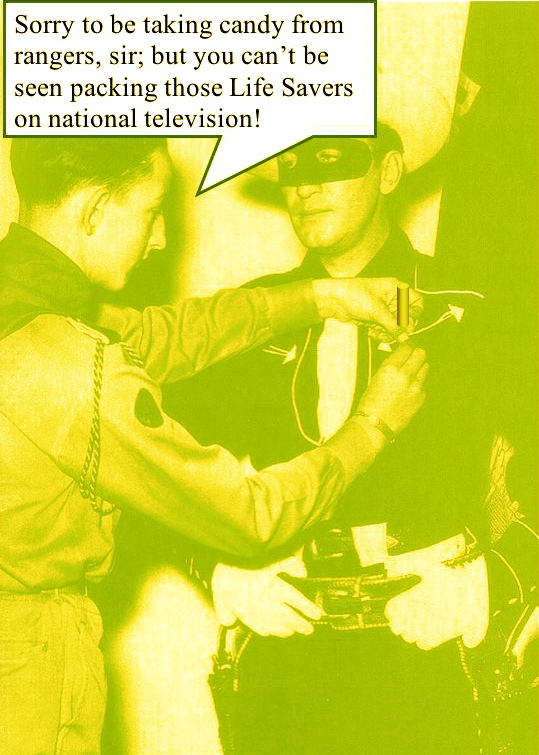
 Well, it’s been a bad day for Willy Wonka. The snack manufacturers in the UK are in a state of sugar shock. Sure, the chocolate factories will remain open; but the popsicle peddlers and potato chip pushers have been dealt with a restraining order, forced to keep a low profile when it comes to accosting their most valued customers. The golden ticket—or any such gimmick designed to promote so-called “junk food” on television—is a thing of the past. Count Chocula will have to go underground in search of fresh blood, and millions of hyperactive and hypoglycemic kiddies might have to learn about candy from strangers, now that cable channels are closed to the trans-fat movers and saltshakers that thus far defined and financed much of children’s television.
The ban on “junk food” advertising is to go into effect in January 2007, the BBC reports. The measures are surprisingly far-reaching, considering that such commercials will no longer be permitted on any “pre-school children’s programs,” “programs on mainstream channels aimed at children” or “cable and satellite children’s channels,” “programs aimed at young people,” including those featuring music videos, and “general entertainment programs” that “appeal to” a “higher than average” number of viewers under the age of sixteen.
The decision, presumably on behalf of an obesity-prone or malnourished public, was made by Ofcom (Office of Communications), a new regulatory body established in 2002 and authorized by Britain’s Office of Communications Act in 2003. Will this catch on elsewhere? Are ice cream, soda pop, and French fries going the way of the cigarette, now that health fascism is on the rise in the west?
What might have happened to American action heroes like Buzz Corry, commander in chief of the Space Patrol, had the FCC clamped down on US radio advertising in the 1930s and ’40s (whose jingles you may hear and see discussed here)? Would Buzz have had to load his tank with corn flakes or oatmeal, like most of the competition? Space Patrol, after all, “was brought to you by Nestle’s Eveready, the instant cocoa, and famous Nestle chocolate bars. Remember N-E-S-T-L-E’-S.” And, as the announcer promised, those listening in could get their own “rocket cockpit” and fly “into space” with Buzz Corry if only they sent in those Nestle labels.
Are we, in this happy meal age of movie tie-ins and product placement, really Buzz Lightyears removed from such sponsorship models? No doubt, there’s lots of dough in cookies, and those protective of commercial television foresee great losses in revenue; losses, they argue, that might very well lower the quality of programming in Britain, as advertisers lose interest in a large group of potential viewers previously seen as a target audience, thus decreasing the purchasing power of advertising-dependent cable channels.
So, who is to gain as kiddies trim down (if indeed such a widespread downsizing of pint-sizers will follow)? The outlawing of “junk food” advertising might prove a boon to those with poor parenting skills, those who rely on legal strictures and thrive on lawsuits to raise a new generation of leaner, healthier consumers, sturdier taxpayers with fewer cavities and lower blood sugar, calm little low-sodium dieters deprived of the catchy tunes that used to cheer our everyday.
 Well, I know, it is an old argument. One that is being dusted off every time a new man slips into the suit. Always a man, mind you. And the man in question is Bond, James Bond. With Casino Royale now in theaters, and the less-than-favored Daniel Craig assuming the role of 007, the question arises anew: does Bond still matter, over fifty years after he was introduced to the world in Ian Fleming’s spy stories? Should he die another day, right this minute, or some time tomorrow (which presumably never dies)? What does his resilience tell us about the crumbled British Empire, about the state of international diplomacy, about the ways of the warring world?
 Well, I don’t know how many voters turned out to re-elect Franklin Delano Roosevelt on this day, 7 November, in 1944 because they had been listening to the radio the night before. Those tuning in to affiliate stations of the four major networks were informed that regular programming was being suspended for a “special political broadcast.” Stepping up to the microphone were Hollywood leading ladies Claudette Colbert, Joan Bennett, Virginia Bruce, Linda Darnell, and Lana Turner, composer Irving Berlin, radio personalities Milton Berle and “Molly Goldberg,” as well as the gangster elite of Tinseltown—Paul Muni, Edward G. Robinson, John Garfield, and James Cagney (pictured). Along with fellow Americans “from a great many walks of life,” Humphrey Bogart explained, they all had a “deep and common interest” in the outcome of the election.
 Well, I didn’t get a pumpkin to carve and, the weather excepting, there is no sign of Halloween around the house. As a German, I did not grow up with the custom; before they realized how to make a killing by marketing this un-holy day, something that did not happen until the 1990s, my country(wo)men skipped the dressing up, parading, and trick-or-treating and went straight to the cemetery to remember the dead, November 1 being a national holiday.
 Well, just how will North Korea react to the threat of “serious repercussions” uttered by the US? What is the nature and extent of the threat? And what is its validity? The current crisis may very well usher in the New Cold War, now that North Korea is said to have tested its first nuclear bomb, a privilege that the US apparently feels compelled and entitled to reserve for itself. Why should any nation intimidating the US with atomic competition feel obliged to heed such a warning? And why should any one second or third or fourth world power (thus labeled and locked in some position of dependency according to a Western system of classification) abandon its scientific efforts, hostile or otherwise, considering how well stocked American arsenals remain these days?
 Harry Heuser