"Much is published": A Silence Surrounding Henry David Thoreau

Sure, his life near Concord, Massachusetts, as he describes it in Walden, was a quiet one. Thoreau “kept neither dog, cat, cow, pig, nor hens, so that you would have said there was a deficiency of domestic sounds; neither the chum, nor the spinning-wheel, nor even the singing of the kettle, nor the hissing of the urn, nor children crying, to comfort one. An old-fashioned man would have lost his senses or died of ennui before this.”

There is violence in the phrase. And for once I can sense it. Silence being “broken,” I mean. For the next two months or so, my life will be less quiet than I have come to live and like it of late. There will be old friends visiting in July and September, there will be travels in good company, and there will be reunions in New York and in New England this August. I shall endeavor to keep my journal all the while; but journals like this are so much easier to keep in the monotone and silence of a retiring life, a life which need not be tired or tiresome as long as there are thoughts to be spun from whatever impulses and impressions there are to be got and gathered in the everyday. Such contemplative quiet, which to some might spell disquietude, was experienced by Henry David Thoreau, who was born on this day, 12 July, in 1817.

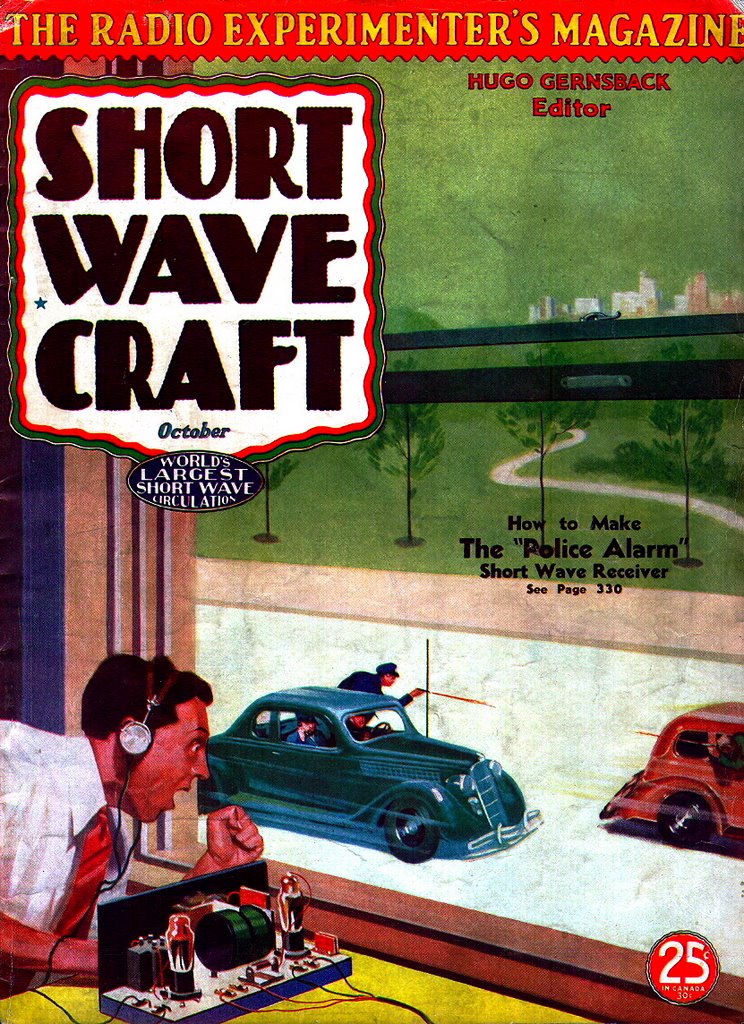
Yet even in its remoteness, his life was still filled with the “Sounds” to which Thoreau dedicated a chapter of Walden. In it, he argues that, while “confined to books,” we are “in danger of forgetting the language which all things and events speak without metaphor, which alone is copious and standard. Much is published, but little printed.” What he found being made public were the sounds that not only surrounded but defined his everyday. During that first summer at Walden, Thoreau did not read. Instead, he looked, listened, and took in:

I had this advantage, at least, in my mode of life, over those who were obliged to look abroad for amusement, to society and the theatre, that my life itself was become my amusement and never ceased to be novel. It was a drama of many scenes and without an end.

Even then, the drama of the scheduled, orderly life of the city was penetrating the quiet woods, sounds that told of a life governed by the ticking of clocks rather than the time told by the elements and the stirrings of nature:

The whistle of the locomotive penetrates my woods summer and winter, sounding like the scream of a hawk sailing over some farmer’s yard, informing me that many restless city merchants are arriving within the circle of the town, or adventurous country traders from the other side. As they come under one horizon, they shout their warning to get off the track to the other, heard sometimes through the circles of two towns. Here come your groceries, country; your rations, countrymen! Nor is there any man so independent on his farm that he can say them nay. And here’s your pay for them! screams the countryman’s whistle; timber like long battering-rams going twenty miles an hour against the city’s walls, and chairs enough to seat all the weary and heavy-laden that dwell within them. With such huge and lumbering civility the country hands a chair to the city. All the Indian huckleberry hills are stripped, all the cranberry meadows are raked into the city. Up comes the cotton, down goes the woven cloth; up comes the silk, down goes the woollen; up come the books, but down goes the wit that writes them.

The wits writing plays for , who often lent Walt Whitman their ear, very rarely listened to Thoreau, even though a sound effects artist might have appreciated the noise that lent rhythm to Thoreau’s seemingly disorderly existence. Perhaps, his civil disobedience went against the grain of those laboring in a mass medium whose commercial sponsors counted on conformity.

An impersonation of Thoreau was heard, however briefly, in “The Heart and the Fountain,” a radio play about his contemporary, Margaret Fuller. Produced by the Cavalcade of America it was presented on 28 April 1941—at a time when it suited American broadcasters to be quiet about the war in Europe, a time when life on a commune like Brook Farm sounded like escapism,” a Blithedale Romance to blot out thoughts of Blighty.

Getting away from modernity need not be an escape; it can be a chance to come to your senses by subjecting yourself to silence and simplicity—a challenge that, in an age of over-stimulation, may very well drive us out of our narrow minds.


Maureen O’Hara Sounds Matter-of-fact about Murder

I can’t seem to get through this romance. It is tempestuous, steeped in mystery, and features a fierce heroine who bears a vague resemblance to Jane Eyre. Daphne du Maurier’s Jamaica Inn, I mean, one of the novels I picked up to set the mood for my trip to Cornwall. That was in April—and I am still not done with Mary’s adventure among the smugglers. I do like Mary, though. She is not the fainting kind, despite the danger she’s in:

A girl of three-and-twenty, in a petticoat and a shawl, with no weapons but her own brain to oppose a fellow twice her age and eight times her strength, who, if he realised she had watched the scene tonight from her window, would encircle her neck with his a hand, and, pressing lightly with finger and thumb, put an end to her questioning.

Now, the woman who portrayed her Hitchcock’s film version of Jamaica Inn, Maureen O’Hara (pictured above, during the production of the 1938 film), was a few weeks from turning twenty-three when she played another character of that mettle. On this day, 6 July, in 1943, she was heard on the US radio series Suspense in a thriller titled “The White Rose Murders.” An adaptation of a story by Cornell Woolrich, it is the sort of yarn Suspense came to be famous for.

“You’ve been reading too many of those romantic stories,” Virginia tells her fiancé, a police officer with so little self-esteem that he thinks he needs a promotion to deserve a well-to-do debutante like the young woman who’s so devoted to him, she sets out to get what he thinks is in the way of their connubial bliss. This woman is serious about marriage. You might say that she’s dying to get hitched. To achieve just that, she sets out to catch the White Rose murderer, a serial killer who strangles young women, apparently incited or inspired by the “Beer Barrel Polka” (also known as “Rosamunde”). As a token of his perverse affection, he leaves behind the bud of a white rose, the symbol, Virginia explains, of “purity, loyality, devotion.”

Virginia carefully dresses to resemble the victims and “tours the low dives,” searching in each “dingy bar” where “Rosamunde” plays, hoping to attract the man the police has been looking for in vain. As it turns out, the tune is practically everyone’s favorite, just as roses prove popular with the men she encounters. She has to smell a lot of red herrings before she meets the one who is eager to offer her that certain rose. It’s the one she least expected, of course, who is out to do her in.

Despite the names attached to this project—O’Hara, Woolrich, and composer Bernard Herrmann—”The White Rose Murders” is less lurid than it is ludicrous. The situation is suitably creepy—the kind of tale of entrapment and prolonged peril fully deserving of the label Suspense. Even the cheerful “Rosamunde” begins to sound ominous as, in the mind of the listener, it becomes associated with impending horror. Yet instead of relying on a suspenseful mood, the producers of the series insisted on adding an element of surprise—a last minute twist meant to startle the audience. It is a surprise, all right, but one that is psychologically so unconvincing as to reduce the play to mere melodramatic claptrap.

Nor does O’Hara fit her voice to the performance. Perfunctory in her reading of the script, she sounds very much like a sophisticated businesswoman out to get a job done. Perhaps, Virginia’s only adventure was to put an end to all thrills by going through the mill of matrimony. Perhaps, O’Hara had “been reading too many of those romantic stories” not to know which ones were played strictly for the money.

They Call Me Montague; or, A Question of Naming

Well, this is our new companion. Earlier today, we picked him up from a farm in South Wales where he had been in foster care after his original keepers (a family falling apart) had handed him over to a charity. I decided to call him Montague, or Monty, after Monty Woolley and his radio character, the Magnificent Montague—irascible, swellheaded, and hopelessly demoted. Now, “Montague” used to be my nom de blog as well; so, I’m only passing it on to the little one now resting next to me.

Will Montague grow into his name? Will he defy it or make it his own, after having been confronted, pell mell, with such an appellation? As yet, he barely responds when thus addressed. After all, until a few hours ago, he used to go by another name.

The act of naming and the meaning of names, the study of which is called onomastics (since every field of scholarly investigation must have a title validating it as such), has always fascinated me. As a child, I sensed naming to be a decided gesture of ownership, an announcement of having brought into being—that is, brought into my life—something that, before I laid claim to it thus definitively, had been vague, obscure or utterly unknown to me.

After I had named the toys in my room, I began to name the fictional characters I drew or wrote about. Could I make up my own life in this arbitrary, willful way, despite being stuck with a name for life? Somehow, I thought the answer must be a resounding “no.” I had already been claimed by others.

My interest in names and naming only intensified when I read the works of Charles Dickens, who had a knack for the game of the name: proper nouns that might not be proper at all, but that keep you wondering, that arouse your suspicion, that conjure up a face in a few syllables. In an essay on the subject, I called this quality in Dickens “Onomancy”—the act of conjuring up the spirit of a character by virtue of a moniker. It is a game in which the reader is invited to guess whether nomen truly is omen.

In Dickens’s Little Dorrit, for instance, you will encounter a rich assortment of suggestive surnames, such as Plornish, Flintwinch, or Stiltstalking, and sobriquets such as Pet, Tip, or Altro. It has its mispronounced names (Biraud for Rigaud, Cavallooro for Cavalletto) and its unpronounced names (A. B., P. Q., and X. Y.). It has its aptonyms (Messrs. Peddle and Pool, solicitors) and eponyms (Barnacleism); its cognominal chameleon (Rigaud, alias Blandois, alias Lagnier) and its renamed renegade (Harriet Beadle, alias Hattey, alias Tattycoram); its allegoric Everyman (Bishop, Bar, or Bench) and its Nobody. After all, it is a story about losing and regaining a reputation—a story of how to make a name a good one.

In old-time radio drama, names were rarely quite this fanciful—but they were called out and repeated far more often than in everyday life. The creators of such plays assumed, and wrongly—that names, heard only once, would not sink in; that it would be confusing for the listener to discern just who was talking to whom. To be sure, some producers, like the Hummerts, went rather too far with such designations; but perhaps this is why Mr. Keen, Tracer of Lost Persons, managed to make such a name for himself, despite the fact that he was dull as . . . , well, let’s not start with the name calling.

As tempting as it might be, there won’t be any mention of names in the radio play I am currently imagining. The listener will have to distinguish between no more than two main characters, individuals who are nothing to one another. Their personalities won’t be pronounced by mere proper nouns; instead, they have to speak for themselves. That is, I have to put words into their mouths first—if Montague, wild and woolly, will permit me to divert my attention. The named one, you see, has already laid claim to me.

Being Gertrude Stein; or, A Matter of Diction

I have done my share of posing and fitting. Of donning hats and slipping into outfits however ill suited. Metaphors—and all language is metaphor—are the garment of thought, whether designed to conceal or disclose, to beguile or render plain. To me, dressing up for the occasion has often been a problem. I am prone to contra-diction, to making my voice stand out and draw attention to itself like a garish tie on a white shirt. “Now that tie makes a statement,” one of my professors once told me, looking at the bit of silk dangling from my neck. He never said what that statement might be.

Now that I am dabbling in radio playwriting, I try to be less flippant and flashy with my words. They are not mine, after all, but belong to my characters. There are two of them; two, not counting the unheard speaker on the telephone and the one-line walk-on who serves chiefly as a framing device, a voice suggesting that the story will repeat itself. I want the two main characters to come across as real, although they might not be flesh and blood even as fictional beings. A slip in diction might rip their dress and expose the unsure hand of the designer. That would be me. And it would be a mistake. One being at times a synonym for the other.

Now, my own voice, which I created for myself, the voice I am using here—and which may be entirely unsuited for the purpose of blogging—must not enter the drama I am creating. I must bring two beings to life and show up their differences. It matters that they are unalike. You should be able to hear that they can never see eye to eye. So, to shed my own diction and slip into theirs, I reminded myself of an exercise I was given in a course on literary theory. I was asked to take on the voice of Gertrude Stein. It was my chance to rid myself of the nagging voice of Thomas Carlyle (pictured) and his famous philosophy of clothes.

I realized that, rather than imitating Stein, I found, through her, a new voice of such minimalism and repetitiveness that it forced me to expose my innermost thoughts. For once, my language was baring all, even though it seemed like a coat, a fabric of code. Here is a moment of that performance, the sharing of which is nearly as difficult as its composition:

Being Curious Fire. That was a moment being curious and that there being a curious man looking was being a curious moment. That was a moment being a curious moment being that that there was that curious looking man being a slow walking curious looking man. That was curious. That moment there was that snow coldness. That moment there was that loneliness cotton warm only. And not that moment only. That was New York and being there and being there only strolling and strolling and strolling there was that loneliness and that being curious being quite worn off. there was that snow coldness and nowhere to go. And then there was posing. That moment there was that longing and looking and that boybeing when being curious only can be a fire and when only being curious can be a fire. Being can be a curious fire and a curious fire can be warming any one in snow coldness. Being before a curious looking man and never before can be warming. Being before a curious looking man being quite curious and quite pointing can be warming. That man was pointing. There was that curious looking man pointing and there was that moment and that never-beforeness and that boybeingness and that coldness and that nowhere-to-goness. At that moment pointing was appointing. At that moment there was that looking at ring fingers. Only that does not always follow. The door was being open for a moment. There was that moment. There was that being curious and not joining. There was that fire and there was that man and this man reposing and that boybeingness broken. There was that shaming finger pointing and that curious looking man quite old and quite lonely and shaking. There was an opening and there was no going. There was pointing and pointing and pointing. And being not joining. That was a man of no moment and no moment counting. Only knowing this does not follow. The only moment counting was before that. Only now the curious fire was no more and being quite out and the one going quite without. Being outside can be a curious fire. Inside being a furious choir. And hollow.

Now it is time to dress up my two characters. I hope the clothes still fit. The picture above, by the way, was taken on my pilgrimage to Carlyle House last year. The old Scotsman is not done with me yet.

Old-time Radio Primer: G Stands for Gravel Box and Glass Crasher

Well, where to begin? Picture this, if you will. You decided to write a play that will never be seen; a play that will be imagined rather than staged; a play that will be taken in as sound alone. In short, something—some immaterial thing—that used to be called radio drama. Audio drama will suffice as a name for it, even though other, more grandiose terms have been suggested. Having studied the history of such performances for years, I might as well try my hands, my ears, and my mind at them. The question remains; where to begin?

This is what I am pondering as I sit here in the relative still of our garden, where life plays itself out in a display of colors, a cool breeze and the rays of the sun stroking my bare skin, and (to borrow from Tennyson) the air stirring to the “murmur of innumerable bees.” Now, audio plays can conjure any number of concrete images and intimate sensations; they may trigger memories of feelings—or desires for them—and thus bring them about. Audio drama. It is certainly not all sound.

Yet sound is the non-matter with which to do the conjuring. And to me, audio play has to be about sound and of sound, rather than a verbal exchange place, sequences of lines uttered and interrupted or augmented by non-verbal noise and moments of silence. I don’t hold with those critics who think of radio drama primarily as an oral medium. It is, more inclusively, aural.

Too often sounds have been relegated to the business of supporting a drama unfolding as dialogue or narration—of setting scenes, creating backdrops, or, at best, enhancing its atmosphere. The sounds of opening or closing doors, for instance, create the space in which characters are heard to move, as do those steps on rocks-strewn earth produced by sound(wo)man playing in the “gravel box.”

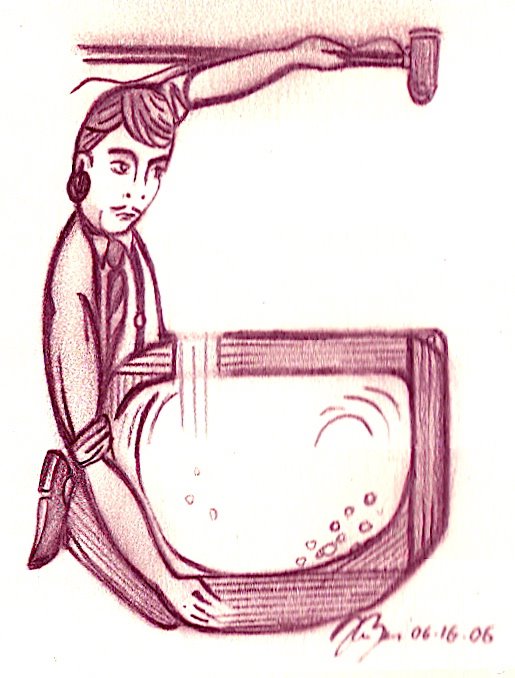
A gravel box, you see, is a container filled with pebbles, a box which used to simulate the ground on which the dramatis personae of the air were heard to tread. Are bodies immaterial without such sandbox sounds? Or does it suffice, after all, to rely on the voice box alone.

Then there are in radio dramatics those stirring noises of shots and sirens, crashing waves or smashed windows. There is the glass crasher, for example, which, as the name suggests, is a device used for creating the sound of breaking glass. G, in this entry in my old-time radio primer, does not stand for gadget or gimmick.

Sounds have a life beyond live support, beyond adding color or concrete markers of space, which merely enhance what is often already expressed in words: “Don’t you just love the ocean?” (biz: sound of waves); “Isn’t it romantic out here in under the stars?” (cue the crickets); “What are you pointing that gun at me for, you thug?” (insert shots here).

To appropriate another line of poetry (from Pope, this time), must sound seem an “echo to the sense”? Must it make sense? Must it be echoing something else? Does it always suggest a body, some certain corporeal entity responsible for such noise? Must sound be a relationship, a communicating passageway between one hearing and one sounding, traceable to an originating source which gives it meaning, as footsteps getting louder might mean “danger” if tracked down to the body of an approaching adversary or “the promise of pleasure” if traced to the form of a lover?

In other word, is sound an echo of the reverberating body producing it? The question, to be sure, is older than the wireless; it is as ancient as the atmosphere and the dark of night begetting such thoughts. Consider this exchange from Thomas Love Peacock’s Nightmare Abbey (1818), which investigates the relationship between (re)sonance and reception, between sounding and sounding out:

“Nonsense, sir,” interrupted Mr. Glowry. “That is not at all like the sound I heard.” 

“But, sir,” said Scythrop, “a key-hole may be so constructed as to act like an acoustic tube, and an acoustic tube, sir, will modify sound in a very remarkable manner. Consider the construction of the ear, and the nature and causes of sound. The external part of the ear is a cartilaginous funnel.” 

“It wo’n’t do, Scythrop. There is a girl concealed in this tower, and find her I will.”

Should I lead the ear to that concealed someone? Or will my play be all architecture, tower and bells, without a body in sight? We shall hear . . .

Leaving His Ears Behind, E. M. Forster Steps Inside a Distant Echo Chamber of the Marabar Caves

Well, I wonder whether they will get here tonight. The troupe of the Johannesburg Market Theatre, I mean. Two weeks ago, they were supposed to take me to The Island; instead, they seemed to have gotten stranded somewhere else. I am all set to go, notwithstanding a lingering headache, brought on by alcohol and technology. As sobering as the experience might have been, I succeeded at last in putting my third podcast online. It conjures up the voices of a number of silent screen actresses; among them Mary Pickford, whose Little Annie Rooney was flickering on our screen this weekend, along with a 1924 production of Peter Pan, featuring the aforementioned Anna May Wong as Tiger Lily.

Both of these films are adaptations; but, whether you are familiar with the original or not, they are engrossingly cinematic so as to draw you in rather than draw your attention to their second-handedness. To me, an adaptation succeeds if it manages to make me forget its lineage, at least upon first inspection. I prefer to take in first and take on thereafter, to give a re-production a chance to stand on its own without forcing it to stand up against a text from which it more or less freely borrows.

Now, so-called old-time radio drama depended even more heavily on borrowed material than the movies. With schedules to be filled for weeks on end, there was great demand for stories, but a relatively short supply. Storytellers were, by and large, not paid enough to be original; given the governing principle of commercial sponsorship and the broadcasters’ insistence on groping for the largest audience possible, radio writers were discouraged from attempting anything new. In fact, they were even conservative in their approach to adaptation.

On this day, 12 June, in 1949, the NBC University Theater presented its version of E. M. Forster’s A Passage to India. Intent on proving its literary fidelity, a little passage was cut right through this play. And out walked none other than E. M. Forster himself. The dramatization, as one critic remarked, bore so little resemblance to the novel as to have “missed the boat completely”; as such, it was as much in need of an endorsement as it was unworthy of it. Yet, the listener might feel tempted to conclude, if Forster did not mind lending his ear and commenting on the play, it surely could not be quite as “cumulatively degrading to all concerned—author, producer, and audience” as the captious critic made it out to be.

In fact, however, Forster did not comment on the adaptation at all; he did not even mention it. Instead, he gave a brief lecture on his novel and its significance—a lecture that was taped and inserted into a performance he had not himself auditioned. Remarking on the partition and independence of India and Pakistan, Forster expressed himself “thankful” that his novel was “out of date.” Listeners to the University Theater might not have noticed at all, considering that there was so little left of the debate with which Forster’s novel is concerned.

Entirely squandered in this uninspired adaptation are the aural potentialities of the Marabar Caves. Unlike film, radio drama is not obliged to impose concrete images on a writer’s vision. Like the novel, it allows its audience to co-create those images or to resist them in order to realize the metaphorical potentialities of language.

The caves are such a metaphor; they are an echo chamber for a clash of cultures, the site of cultural blindness where the false shelter of ignorance caves in on itself. Without resorting to much sound effects trickery, the radio adaptation could have suggested the horrors of Marabar—the reverberation of one’s own voice drowning out all others in a choric recital of an ode to blindness.

On This Day in 1948: Radio Listeners Are Offered Free Delivery of "The Front Page"

Well, it sure was fodder for the tabloids. The case of the German cannibal, I mean, which resulted in a retrial and a life-sentence for the remaining party of one decidedly unconventional dinner date. Now, the so-called civilized world deems itself too far above bestiality to grant citizens the right to end their own lives as they see fit or to lose themselves completely in a consensual act of consuming passion. Widely exempt from the consequent criminalization of cruelty—which outlaws the animalistic it can never truly root out—remain the barbarism of capital punishment and the bane of the yellow press.

I don’t often quote journalist-turned-novelist Theodore Dreiser, mainly because his prose is among the most hideous ever to get past an editor; but this line, ripped from his Sister Carrie, is worth considering: “Our civilisation is still in a middle stage, scarcely beast, in that it is no longer wholly guided by instinct; scarcely human, in that it is not yet wholly guided by reason.”

It seems a perfectly reasonable attack on civilization; yet it is a line of attack defined by and conforming with the standards of the society it questions: a state of humanity based on the assumption that being human should mean being reasonable, the supposition that society should strive to rid individuals of their impulses and emotions—a project altogether unreasonable.

The paper logic of journalism—those well-formed, epigrammatic answers to monstrously complex questions—is as common and comforting as it is dangerous. Journalism itself is not the product of reason, but caters to the instinctual from which it derives: a curiosity at times so mean and perverse that it must be rationalized away by declaring the imagination-fertilizer being spread to constitute “news” or “information” in the public interest.

The famous American play The Front Page by Ben Hecht and Charles MacArthur, a comedy as poignant today as it was back in 1928, addresses this barbarism of the press, a force so powerful that it has been known to incite wars for the purpose of reporting them.

Adapted for the rival medium of radio by noted American critic, editor, and playwright Gilbert Seldes, “The Front Page” was spread out anew, if somewhat reduced in size, on this day, 9 May, in 1948, when it was reproduced by the Ford Theater, a venue named after its sponsor and not to be confused with Ford’s Theater, the center of cultural refinement that once was the site of a Presidential assassination.

Seldes’s edition of The Front Page makes good use of the aural medium by confronting listeners with the sound of the gallows being readied for an execution, a sound overheard in a newsroom whose occupants are paid to cash in on the event.

To those in public office, the timely execution of a cop killer is politically more advantageous than any probings into the mind of the convict. To a journalist like Hildy Johnson—a man torn between the mating instinct and the reasonable goal of making a name for himself—such a hanging not only spells good news, but excitement too great to be traded in for the state of matrimony.

The Front Page is an unflattering portrayal of the newspaper racket; but, unlike Dreiser’s brand of naturalism, it does not simplify what is complex by exposing societal corruptions only to subject them to the either-or morality of didactic fictions that aim at telling us how things are to teach us how they ought to but could not be.

Comedies and melodramas—especially plays that seem aesthetically flawed and morally ambiguous because they are as muddled as our everyday—can be instructive in their willful disorder or bewildering raggedness.

I was reminded of this last night while watching Are You Listening?, a 1932 MGM melodrama in which a young writer gets tangled up in the wireless game, the broadcast medium that offers him employment but that eventually contributes to his being hunted like a social menace and convicted of manslaughter. We, the spectators, are the only witnesses to his supposed crime—but we are sentenced, after promises of romance and gaiety, to follow the fall and disgrace of some latter-day Caleb Williams, an outcast hunted by media hounds interested in something less than justice, driven to the chase by nothing more than a desire to profit from—to feed rather than satisfy—our hunger for the sensational.

Many Happy Reruns: Charlotte Brontë

Well, I am feeling strangely liberated. A few days ago, I learned that my BlogMad account had been wiped out as a result of some database corruption—a common occurrence, if comments from fellow web journalists are any indication. I chose not to sign up anew right away, luxuriating instead in the thought of temporarily forgoing those new-fangled ways in favor of an old-fashioned book. Despite my doctorate in literature, I don’t read nearly as much as I ought to these days. So, I took advantage of the first warm day of the season, ripped off my shirt, and grabbed . . . a Trollope. Anthony Trollope, that is, who happens to be one of my favorite authors. Recently, I picked up his Cousin Henry (my, doesn’t this begin to sound so Carry On!) after discovering that this novel is set in Wales, that strange and wild country west of England I am still struggling to call my home.

Now, Trollope was a decidedly pragmatic novelist. His novels, on the whole, do not concern boys and girls in the throes of love, but—how refreshing!—mature men experiencing various kinds of moral dilemmas or sophisticated quandaries. Elizabeth Bowen wrote a radio play about the author and his characters, but I have yet to come across a production of it. For romance I turn instead to something like Jane Eyre, whose author, Charlotte Brontë, was born on this day, 21 April, in 1816.

What it does not tell you, of course, is that Jane Eyre happens to be one of the most frequently radio-dramatized novels of the Victorian era or, for that matter, of any era. Next to Dickens’s “Christmas Carol,” no other story has aired more often than Jane’s, even though she was often rendered next to unrecognizable in the process.

To those familiar with and fond of the original narrative, the liberties taken by the version-crafters for screen and radio can be rather exasperating. Yet the disdainful sophisticates who dismiss the resulting pop-cultural bastards sight unseen (or sound unheard) sure miss out on some audacious rackets, such as the pitch made by the announcer of the Lux Radio Theatre in the introduction to the 14 June 1948 broadcast of Jane Eyre (or some such gal’s tale)! To accommodate the show’s sponsor, the spokesperson for Lever Brothers was called upon to ponder the question how Ms. Brontë—who, according to one biographer, liked lace—ever managed to wash her clothes without the benefit of Lux Flakes.

Rather more insightful was a radio lecture delivered on 3 April 1949 during the NBC University Theater production of Jane Eyre, in which Deborah Kerr (pictured above, in another kind of commercial dilemma) portrayed the titular heroine. Noted novelist James Hilton provided a brief but smart commentary, touching upon the reception of the novel, its biographical background, its historical significance, and its relevance for twentieth-century audiences.

To be sure, Hilton conceded, Jane Eyre was a “good story with all the popular ingredients—melodrama, romance, and a happy ending”; but

what gave it life is what gave it birth: a quality of passionate imagination which could make a shy spinster governess the equal, in her own mind and by her own showing, of a Sappho or a Cleopatra.

Come to think of it, Hilton’s mentioning of H. G. Wells’s Ann Veronica in this context recently induced me—someone more readily influenced by smart authors than smarmy advertisers—to get hold of a copy of the latter novel as well.

Many cuts and bruises were inflicted upon plain Jane during those supposedly aureate days of radio; and, with an emphasis on romantic melodrama at the expense of narration, more attention was drawn to that screaming madwoman in the attic than to the reflections of the troubled young governess who discovered her secret. In this respect, old-time radio was like a Victorian orphanage: expect to find negligence, exploitation, and very little recognition, let alone respect, for the suffering brainchild.

Through it all, Jane Eyre survived considerable hardship and cruelty to remain, to this day, one of the most robust heroines of all fiction.

On This Day in 1939: Pearl S. Buck Gets Into the “Patriot” Act

I had intended to spend much of today al fresco, our long-neglected garden being in serious need of attention. Dragging the old lawnmower out of hibernal retirement a while ago, I had managed to knock over a can of paint and, the spilled contents being blue, very nearly ended up looking like a Smurf in the process. No sooner had we unleashed the noisy monstrosity, engulfed in a cloud of smoke, than one of its wheels broke off, which immediately put a stop to my horticultural endeavors. It is to the latter mishap on this Not-So-Good Friday and the fact that I am all thumbs (none of which green) that you owe the questionable pleasure of this entry in the broadcastellan journal.

An afternoon’s dilly-dallying among the daffodils may be just as escapist an act as tuning in an old radio program. In either case, however, it is difficult to get very far away from the news of the day, headlines so maddening and haunting that there is little relief even in irreverence, in mocking those among our political leaders who turn a blind eye to the signs of the times or who succeed in nothing more than in making enemies and alienating their allies.

Are we to believe, are we to accept that a nuclear attack from Iran is to be expected and that a pre-emptive raid is therefore necessary? Is it impossible to win a war—on terror, no less—without waging one? Is it possible to win (in) any violent conflict? On this day, 14 April, in 1939, Nobel Prize winning author Pearl S. Buck (pictured above) appeared on the Campbell Playhouse to address this very question.

Orson Welles, the official producer of this weekly radio series featuring adaptations of stories, plays, and motion pictures, had chosen Buck’s latest novel, The Patriot, as the “best new book for April” and presented a dramatization of the narrative starring Anna May Wong. Shaking hands with Welles and Wong during the curtain call, Buck was invited to comment on the “situation in the east,” the Chinese-American war that may have seemed even more remote, incomprehensible, or irrelevant to Americans than the crises in Europe. Welles inquired whether it was possible to sympathize with China and Japan alike in this conflict. To this, Buck responded:

When one has had experience of many wars, one comes to see that the pattern is always the same. No matter who is the aggressor and who is attacked, both are victim and both lose in the end.

To be sure, such a remark would not have been welcomed some two and a half years later, when the US felt compelled to enter the Second World War after the bombing of Pearl Harbor. Yet patriotism might find expression other than jingoist speech and the complexities of war called for responses other than simple slogans. Realizing the significance of radio as a means of connecting (with) the world and addressing far-reaching political and humanitarian crises, Buck decided to become a radio dramatist herself.

As Erik Barnouw relates in his Media Marathon, Buck enrolled incognito in his class (Radio Writing U2) at Columbia University to prepare for a proposed series of plays titled America Speaks to China. During the Second World War, she went on to write a number of propaganda plays about Asian-Americans and the relationship between East and West.

Today, perhaps, more people are beginning to discern the pattern Buck pointed out. And, once again, the definition, the concept of the patriot is changing: the action hero, the go-getter of few words now seems infinitely less desirable and rare than the thinker who not only knows how to use each word effectively but can be trusted to keep it.

Up Frenchman’s Creek; or, How (Not) to Prepare for a Vacation

Well, I’ve been home barely twenty-four hours and already I am packing my suitcase again. After a weekend up north in Manchester, I’ll be off tomorrow on a weeklong trip down south to Cornwall. Instead of flicking through my travel guides this morning, I started reading Daphne du Maurier’s Jamaica Inn. Now, there’s a description of scenery you wouldn’t get from your travel agent:

[There] was a lashing, pitiless rain that stung the windows of the coach, and it soaked into a hard and barren soil. No trees here, save one or two that stretched bare branches to the four winds, bent and twisted from centuries of storm, and so black were they by time and tempest that, even if spring did breathe on such a place, no buds would dare to come to leaf for fear the late frost should kill them. It was a scrubby land, without hedgerow or meadow; a country of stones, black heather, and stunted broom. 

There would never be a gentle season here. [. . .] 

Not much more hospitable is the seascape depicted in the opening chapter of du Maurier’s Frenchman’s Creek:

When the east wind blows up Helford river the shining waters become troubled and disturbed and the little waves beat angrily upon the sandy shores [. . .].

The long rollers of the Channel, travelling from beyond Lizard point, follow hard upon the steep seas at the river mouth, and mingling with the surge and wash of deep sea water comes the brown tide, swollen with the last rains and brackish from the mud, bearing upon its face dead twigs and straws, and strange forgotten things, leaves too early fallen, young birds, and the buds of flowers.

Perhaps reading du Maurier’s Cornish romances is not such an ideal way to get into the spirit of things, especially not when one is hoping for spring and renewal. At least their author was familiar with the locations described. Listening to the 10 February 1947 Lux Radio Theatre version of Frenchman’s Creek, I got no sense of the locale at all; nor, for that matter, much sense of the story. There was too little of it left to suggest the illicit passion of a married woman for a dashing pirate.

The radio version is not so much an adaptation of the novel, but of radio dramatist Talbot Jennings’s screenplay for Paramount’s 1944 technicolor production, which cleaned up du Maurier’s act in accordance with Hollywood’s production code. Mitchell Leisen’s film, of course, was not shot in Cornwall either, but in Jenner, California, which also stood in as Devon in The Uninvited, an old-fashioned ghost story featuring the novelty of a sun rising in the west.

I don’t suppose Alfred Hitchcock’s reworking of Jamaica Inn is any more useful as an introduction to Cornwall; I’ve always confused it with Under Capricorn, another one of Hitchcock’s misguided forays into period piece froufrou (although I confess having enjoyed his Waltzes from Vienna). And since there is little time to dip into the poetry of John Betjeman, I think I’d better get back to my travel guide after all—and finish packing. I will try to relate my impressions upon my return next Wednesday—provided I can find a radio drama angle.