
Hear "What the Boys in the Back Room Will Have"

Well, they should have been slipped a Mickey Finn, for starters. Those boys in the back room scribbling gags for Bud Abbott and Lou Costello, I mean. On this day, 15 October, in 1942, the comedy duo was called upon to accommodate Marlene Dietrich, who stepped behind the mike to promote what would turn out to be yet another dud: Pittsburgh. Like Hollywood’s film producers, the writers went no farther than to hark back to Dietrich’s image-revamping comeback Destry Rides Again, released three years earlier. Once again, Dietrich was heard singing a few notes of the raucous barroom number that had pre-war audiences “Falling in Love Again” with the formerly untouchable and largely humorless goddess.

Just a few notes, mind. After which promising introduction, the echo of good old Frenchy faded and gave way for the undistinguished lines of a Wild West sketch involving an alleged bank robbery, Bud and Lou going in search of the culprit, and Dietrich, taken as far from her German roots and world politics as the sound-only, accent accentuating medium would allow, emerging as the prime suspect. “What a fresh kid!” Lou exclaims. “What a stale plot,” the guest star is permitted to sneer.

Even without much of one, Dietrich could still rely on an asset as great as her “expensive pins,” of which bespoke and highly insured commodities the writers went through great length to remind the listener by having her talk of the “pin money” her character (“Marlene,” AKA “Black Pete”) had stashing away in her stockings.

Dietrich could read out the box office receipts that qualified her as poison and still make you swallow and like whatever “leperous distilment” (to class this up with some soundbites from Hamlet) oozed into the “porches” of the ear from that celebrated throat of hers. Hope lay at the bottom of her voice box. She could wrap you around her little finger with her vocal chords alone. Pardon the mixed bag of metaphors; this writer is having an off night, too.

Not that the censors were particularly awake that day. Discovering where Marlene is hiding her savings, self-confessed “baaaad boy” Costello, who earlier told his pal about being in love with a bow-legged cowgirl who had a “terrible time getting her calves together,” is invited to take a peek at the secret spot, exclaiming: “What a place to make a deposit!”

However tacky, getting any word in between those Camel commercials on the Abbott and Costello very nearly translated into money in the bank back in 1942, the year during which the show reportedly averaged higher Hooper ratings than Al Jolson, Eddie Cantor, and Fred Allen.

“The power of radio to help careers has never been better illustrated than in the case of the Rowdy Boys of Stage, Screen, and Airwaves,” contemporary commentators Jack Gaver and Dave Stanley remarked (in There’s Laughter in the Air! [1945]). In 1938, they got their break from vaudeville on Kate Smith’s variety show, which featured them until 1940. They landed a prominent time slot filling in for Fred Allen during his 1940 summer hiatus, by which time they were well on their way to movie stardom. In 1942, they topped the popularity poll conducted by the Motion Picture Herald.

Stars and studios could not afford to ignore the “power of radio,” especially when Manpower was not enough to draw in the crowds. Earlier that year (as reported here), Dietrich had been told to get into radio. Her advisor, comedian Fred Allen, whose team of writers were sly enough to peddle a dumb script as a spoof on the drivel that passed for melodramatic radio entertainment by offering Dietrich the lead in a soap opera titled “Brave Betty Birnbaum.”

“The jokes that Abbott and Costello use are not really too important,” Gaver and Stanley summed up. “Half of the battle is their loudness and a sense of constant turmoil.” Yes, brave they had to be, those leading ladies, when they were sent out into the cornfield of radio comedy. In Dietrich’s case, the 1942 harvest would be none too rich.

“. . . till the fat lady sings”

It seems that the proverbial one who’s got more curves than the skeletons on the catwalks has not warbled her last.  No, it ain’t over yet.  According to my students, at least, whose rallying cries generated enough interest to keep my rather esoterically titled course “Writing for the Ear” alive, death warrants and prematurely issued certificates notwithstanding. The “fat lady,” of course, is the diva who gets to have the last word in opera. I don’t know where the expression originates; but it seems to be true for much of the operatic canon.  Tonight, I am going to see Mimi expire in a production of La Bohème, performed by the Mid-Wales Opera Company.

Now, I have been going to the opera since I was a teenager, even though prohibitively high prices made for long gaps in my exposure to this kind of melo-drama.  And even though a tenor numbered among my close friends in New York, Opera-going still mostly meant finding an empty space to spread my blanket on the Great Lawn whenever the New York Opera toured the parks, taking the sandwiches out of the basket, and hoping that no cellular device would go off to mar the performance as I lost myself in the night skies in search of that rare star darting its long-delayed light through the smog and light pollution of Gotham.

My tenor friend tried to convince me that opera is the highest form of dramatic storytelling; but, for the most part, I struggled to follow the plot and keep straight just who is who and doing it with whom. Last night, watching the pre-code melodrama Secrets of a Secretary, starring Claudette Colbert and Herbert Marshall, I thought what a great plot for an opera it might have made.  A woman repentant of her follies, a sinister husband, a pining lover (a nobleman, no less), and bloodstained dress.  Perhaps, I’d rather lose track of the plot than the ability to lose myself in the drama of a moment; but I still find it strange to be confronted with a narrative only to ignore it, along with the translations flashing above the stage.

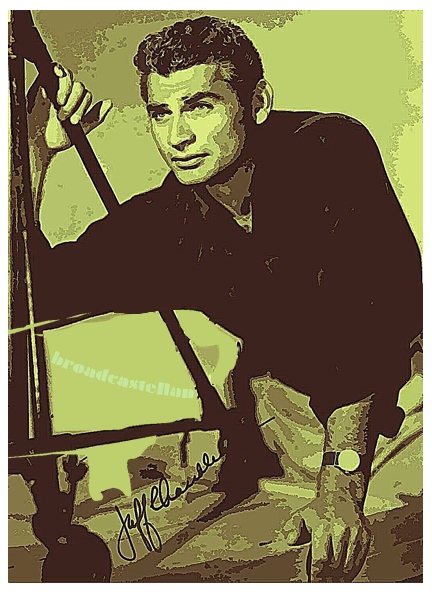
There are few plays I have seen as often as La Bohème, sat through the gloom of Rent and the glamour of Baz Luhrman; but, the music aside, I still recall little else beyond an extinguished candle and a distinct cough.  Not that I believe comedian Ed Wynn to be a reliable translator in matters operatic. Wynn, whom I previously consulted on Carmen, once tried to tell the story of La Boheme (or “La Bum,” as he called it) to tenor James Melton (pictured above), on whose radio program he was featured in the mid-1940s.

It was on the 10 March 1946 broadcast of The James Melton Show that Wynn introduced listeners to Mimi, who, preparing for a ball, had just put on her bustle and was “rearing to go.” In Wynn’s version, Mimi had been named “Miss Soft Drink of the Year” because she was “interested in any guy from seven up.” He had nothing to say about flirtatious Musetta, who had such terrible puns coming.

Now, Mimi lives in the same boarding house as Rodolfo, you see.  One day, she hears the pot, the poet [. . .] reciting.  He says: “There is an old lady who lives in a shoe.”  And Mimi says, “Well, she’s pretty lucky, the way that the room situation is.”

Not Rent-controlled, apparently. Such references to the housing crisis of the mid-1940s pop up frequently in radio entertainment, from Fred Allen to Hercule Poirot (who, as I discussed here, inexplicably relocated to the US and found himself without a flat).

The synopsis is mercifully interrupted by a few notes from the opera, sung by Annamary Dickey.  It is the kind of highhatting of the uplift that was so common an approach to the so-called high arts in the middlebrow medium of 1930s and 1940s radio. It is the working-class re-vision and consequent rejection of culture as imposition, of art as irrelevance, a way of looking without seeing to which I was conditioned as I grew up, my father being hostile toward anything that smacked of the “high classical,” a self-imposed exclusion from the beautiful, transporting and inspiring that expressed itself in crude mockery.

Fortunately, I don’t need to draw on the jovial if misfiring old Fire Chief to enlighten me. The Mid-Wales Opera’s La Bohème is “cenir mewn Saesneg,” which is to say, sung in English. For once I can just face the music, rather than being confronted with my own ignorance . . .

“Whistle a Happy [Birthday]” Tune

Heaven Knows why we assume half a century to be a period spanning From Here to Eternity and think that anyone active or prominent back in the late 1950s must have long since departed. It might be the lack of respect Western cultures have for maturity that renders our elders invisible. No doubt, it is our own fear of old age that makes us close our mind’s eye to the kind of changes over which we have less control than we would like to believe. It is awkward to begin a birthday tribute with such a confession; but, truth be told, I was unaware that Deborah Kerr is still in a position to celebrate this anniversary. In the case of Ms. Kerr’s (previously featured here), birthdays were not always a joyful occasion. “I’m thinking of my birthday in Tobago, in the British West Indies” the actress once recalled for the readers of The New Film Show Annual:

We were on location there for Heaven Knows, Mr. Allison.  John Huston, our director, knowing it was my birthday, decided to give me a party the day before, as it was a day off for the company. It was a wonderful party.  Next day I thought, “There will be a cable from Tony [Bartley, Kerr’s husband],” but by lunch time nothing had arrived from England where he was on business.  I was feeling very neglected, but cheered up a bit when I found Mr. Huston had given orders for the whole unit to have lunch with me at the Blue Haven Hotel instead of on the set.  After a while the company, led by Bob Mitchum, sang ‘Happy Birthday.’  A guitar was heard—it was “Skipper” playing it; he is the famous Calypso singer of the Islands and had been brought from Tobago especially for the occasion.  He started to sing about my husband and children. “Skipper” for some reason transposed [daughter] Francesca’s name to “Manchester” which brought a good laugh from us all.  I was still feeling dispirited behind the show of gaiety I was putting up, when a waiter appeared carrying a gaily decorated tray, while he intoned “with love from Mr. Bartley.”  Now I was all smiles—real ones—and I know everyone felt relieved that I was not forgotten on my birthday.

Bartley later joined Kerr on location, on a day when she was playing a scene in a swamp and, “covered with mud,” was sure she “looked like Dracula’s wife.” Now, Kerr never got to play the bride of the bloodthirsty count; but, aside from appearing in films like The King and I, An Affair to Remember, or Separate Table (a stage production of which I discussed here), Kerr did get to star on Suspense and play the heroines of 19th-century fiction in adaptations of Persuasion and Jane Eyre.

On 17 December 1950, she was cast in a telescoped production of The Women, which was soundstaged on 17 December 1950 for Tallulah Bankhead’s Big Show (the premiere of which I celebrated here). Kerr plays Mary Haines (portrayed by Norma Shearer in the 1939 film adaptation) opposite Dorothy McGuire (as Peggy) and Ms. Bankhead (as Sylvia).

I am going to catch up with Ms. Kerr by watching Major Barbara (1941), the film that started her career in pictures; it was shown somewhat prematurely last Friday on Britain’s Channel 5. In her article for The New Film Show, Kerr (or an appointed amanuensis) expressed her gratitude for having been given the chance to play “the little Salvation Army girl,” a role that led to “bigger and better parts.” As said girl, Shaw’s Jenny, would have put it: “Oh dear! How blessed, how glorious it all [was]!”

Mad Gardener Songs

It is almost time to step into the classroom again and put my PhD to public service. I am scheduled to teach a series of writing courses at the local university this fall (Writing for the Ear, Writing for the Web, and Effective Academic Writing); and, looking through my files while preparing for them, I came across a little snippet of light verse, written in imitation of Lewis Carroll’s “The Mad Gardener’s Song.” I penned it some years back as a caveat to students of my poetry class, suggesting to eager explicators how not to treat poetry, how to let a work live and grow on you rather than cut it down to whatever size matches the reader’s intellect.

In the teaching of literature, the heart is often a more neglected organ than the ear; and in an effort to make sense of everything, we often take leave of our sensibility. As the aforementioned poet and radio dramatist Archibald MacLeish put it, “A poem must not mean/ But be.” It is an approach to art, rather than an attack on it.

Now, where does this leave the reader? Surely a poem must not simply be; it simply cannot be if it were not for the reader who brings it into being by tending to it like a gardener. After all, you cannot just leave an imaginary landscape be, let alone leave alone; you have to give it a chance to flourish before you try to yield the kinds of fruits that, according to the sensible if insensate mind, are just the stuff for good term paper.

I doubt this can happen in silent study or with an eye on the footnotes. It is our breath that brings words to life, which is why I read poetry and much else of literature aloud, feeling its rhythm and hearing it speak through me, in my voice. Call me mad, but if you tend to the imaginary landscape of poetry, you might as well sing.

It has been a while since last I expressed myself in light verse; so, without further rationalizing, hear my “Song”:

They thought they smelled ripe oranges
that teased them, “Follow me!”
They looked instead and found it was
the odd apostrophe.
“We’re proud we know what’s what,” they said,
“And move on happily.”

They thought they heard a waterfall
that shook them with its roar.
They looked instead and found it was
a plain old metaphor.
“We’re thrilled we figured that,” they said,
“Our ears were getting sore.”

They thought they felt a leaf of grass
that dared to disagree.
They looked instead and found it was
pathetic fallacy.
“We’re pleased we got that straight,” they said,
“A mere formality.”

They thought they tasted cakes and jam
that compromised their fast.
They looked instead and found they were
allusions to things past.
“We’re glad to ‘ve cleared that up,” they said,
“It all makes sense at last.”

Since He Went Away; or Ten Came Home

I could have gone on. I enjoy going on here about whatever comes to my ears or opens my mind’s eye; and even the realization that too much else is going on to warrant such going-ons generally won’t stop me from sharing it all in this journal. What did stop me (from going on about my recent trip to Prague, I mean) was our phone line, which is just as unpredictable as the Welsh weather—and apparently under it whenever it gets wet. Once again, we have been without phone or internet, owing to wires that seem to have been gnawed at by soggy sheep or are otherwise rotting away where the valley is green with mold.

What with our satellite TV on strike as well and my partner away overnight, it has been quiet here in our Welsh cottage. Just Montague and I (and an academic paper on pottery and communism I had agreed to edit some time ago). Listening to the blustery wind, the mailbox flapping in it with nothing for me in it, and the dog barking at it just made me feel all the more cut off from the world, as if being around had been postponed because of rain.

Anyway. That was yesterday. In the meantime, life has returned to the old cottage. I got to hear from a former colleague who happened to Google me after over a decade of silence; thank a friend for returning me to Prague by recommending The Amazing Adventures of Kavalier & Clay, the first chapter of which I read today, and was presented with this set of Ross Filmsterne, miniature photographs of my favorite leading lady, Ms. Claudette Colbert. I thought I’d spread them out here before adding them to my Colbert page. And I thought I’d share as well (and for once) just how much glad I am to be in the presence of the slyly (mis)leading man who came home and surprised me with those pictures today.

Now, had I been online yesterday, I might have noted the minor anniversary of Ms. Colbert’s participation in an all-star promotional broadcast titled “Movietime, USA,” a Lux Radio Theater special aired on 24 September 1951, ostensibly designed to commemorate the opening of a movie theater in downtown Los Angeles some fifty years earlier.

“Movietime, USA” features Colbert and co-star Ann Blyth in a scene from Douglas Sirk’s Thunder on the Hill, which had its premiere that month. Producer-host William Keighley sets the scene, which contains one of my favorite lines in movie melodrama:

This is England. The countryside near the North Sea. For two days now, an angry flood has engulfed the lowlands, and the villagers have fled to the only place of safety, the convent and hospital of Our Lady of Reims. Among the new arrivals are a woman and a girl . . .

That girl is rain-drenched Valerie Carns (Blyth), who doesn’t seem to care much about catching cold. When one of the nuns, Colbert’s Sister Mary, expresses her concern, the young woman explains that she was on her way to the gallows. She bursts out hysterically: “Can you see the notices. Hanging postponed . . . because of rain!” Never mind that some folks just can’t seem to find that proverbial silver lining. I settle for a working phone line.

Automatons on the Go; or, Are You R?

Well, I have walked across the cobble-stoned, statue-lined Charles Bridge, among the tilted tombstones in the Jewish Cemetery, and up and down the steps of opera houses, museums, and watchtowers. Yet can I truly say that I have come to know Prague? After all, I had little contact with its people—apart from those going through the motions of vending tickets or opening doors—and have no grasp on their language. Exploring a city per pedes is not necessarily a first-hand experience. So, I am continuing my tour of Prague and make up for my lack of Czech encounters by resorting to the supposedly second-hand experience of reading.

It was in a small cafe in the Little Quarter below Prague Castle that I entered the world of Karel Čapek (1890-1938), whose bust (pictured here) I later spotted at the National Museum. I had just purchased Toward the Radical Center, a collection of Čapek’s writings in an English translation, works including the once tremendously popular R. U. R. (Rossum’s Universal Robots), a play that enjoyed a successful Broadway run in 1922-23 and was more than once produced on US radio. It was one of his shorter pieces, though, that served as an introduction and makes me want to read more of Čapek’s prose, reduced as I am to the second-handedness that is translation.

Now, I have no way of knowing whether Čapek indeed “seems totally Czech,” as aforementioned (radio) playwright Arthur Miller remarked in the foreword to the book. If Mr. Miller’s impressions are anything to go by, I wish I had met and talked to some of his country(wo)men.

Čapek found the wonder in the everyday, the miracle in the mundane. Sure, he wrote fantastic stories and futuristic plays; but his shorter works tell us about the thoughts of his cat, the life of his vacuum cleaner, the common cold. He had “Praise” for “Clumsy People” through whose mishaps inanimate objects come to life and as the result of whose ineptitude the civilized world came into being through the division of labor and the creation of specialists (and robots) it made necessary.

It is to Čapek, or rather his brother and collaborator Josef, that we owe the word “robot,” an early model of which, the Golem, was created in Prague’s Jewish Quarter, later ones (pictured above) being displayed at the city’s Toy Museum. In our approach to travel, we can be rather mechanical; we seem automated rather than animated. So, after long walks on stone, concrete, and cement—among hundreds of travelers seeing the same sights, following the same guide book, and taking the same snapshots—I can finally put my feet up and listen more closely to the heart of Czech culture.

" . . . a natural for pictures": Tomáš Masaryk (1850-1937)

Statue of Tomáš Masaryk at Národní muzeum, Prague

I did not exactly come well informed. To Prague, I mean, and about it. Until recently, if truth must out, I had never heard of the founding father of Czechoslovakia, Tomáš Masaryk. Still, when I spotted it yesterday on the cover of the Prager Zeitung, a German weekly published in the Czech capital I am currently visiting, the name looked awfully familiar. I had just come across it in a novel. A satire on 1930s Hollywood, of all places. Yes, Masaryk’s name is being tossed about in Budd Schulberg’s aforementioned What Makes Sammy Run? (1941), whose narrator, East Coast journalist Al Manheim, goes West after having been recruited for the movies:

I got a good job, the best I ever had [. . .].  After Masaryk died, it struck me that the story of his life ought to be a natural for pictures.  His ties with American democracy gave it special significance for us, and with Mussolini shooting off his big guns in Ethiopia and Hitler his big mouth in Germany, an anti-fascist picture seemed like a good idea.

Now, despite his enthusiasm, shared by an understanding and intelligent producer, the picture never materializes.  He had been warned by an ambitious, opportunist colleague, the eponymous Sammy, that “anti-fascist stuff ha[d]n’t got a prayer.  It’s lousy for the English market. A producer who just got back told me that at lunch the other day.  England doesn’t want to get Hitler and Mussolini sore.”

Today, 14 September 2007, marks the 70th anniversary of his death in 1937. And once again, the former president of former Czechoslovakia is being fondly recalled, his name dropped left and right after years during which it was being dropped altogether from public discourse.

Would there be a market for a Masaryk picture today? As if to insist on it, the old statesman popped up unexpectedly yesterday at a museum devoted to natural history, where I got to take his picture. His politician son, Jan Masaryk, got a bit closer to moving images when he became a voice-over artist of sorts, narrating a film inspired by the Schweik stories of Prague-born humorist Jaroslav Hašek. Jan Masaryk, too, celebrates an anniversary today: he was born on 14 September in 1886.

Somehow, these encounters and reencounters convinced me that it is pretty much impossible to read anything entirely irrelevant. No matter how much we insist on the boundaries of time and space, no matter how strong the walls behind which we seek to escape the present or shelves the past, there are bound to be reverberations to be sensed by all but the most insensitive ear, echoes waiting to be traced to their origins, to be recalled to life in our minds . . .

The Devil Wears Praha . . . Out

Just where did it go—or go wrong—he wonders, as he passes the could-be-anywhere shopping complex to wend his way back after a Mexican meal and a surprisingly good Long Island Iced Tea to the too embarrassingly froufrou and French-sounding to mention hotel they had booked online and chosen for its stylish if less than regionally authentic interiors? Old Praha, I mean, the Eastern European attracting Western European capital I am currently visiting and liberally dispensing.

Earlier today, the East-West clash played itself out before my eyes—however inflamed after beholding hordes of garishly clad Irish soccer fans in town to cheer on what nationalism defines for them as their team in a game against rather than “with” the Czechs—at the local toy museum, where we stopped on our way from the overcrowded Palace. On display in said cultural depository are the Barbie dolls pictured above, lifting their skeletal arms and wriggling their barren hips opposite more traditional playthings of Bohemian manufacture.

To be sure, military toys were not wanting among those mass-produced goods encouraging youngsters to consume . . . mass-produced goods, even though some history lessons might be required for those at play to determine just which garb makes friend sartorially distinguishable from foe.

Sixty years ago, the aforementioned radio playwright and journalist Norman Corwin visited this town on his One World Flight across the globe in the aftermath of the Second World War to report about conditions in Czechoslovakia.

“From Moscow to Prague is a distance of about twelve hundred miles,” Corwin commenced his audio tour. “The land beneath” him, he remarked, looked

as green and innocent as though it had never heard the names of old wars, nor the rumor of new ones. Yet not long ago, over every inch of the distance we were consuming so quickly and comfortably, armies had fought, blood had mixed in the streams and rivers, villages had been sacked, cities bombed. A dead man for every foot of the way.

Corwin expressed himself

naturally anxious to see what betrayal and occupation, and the trials of reconstruction, had done to Czechoslovakia, whether its people were happy and confident, whether they were still friendly to the United States, the country which had done so much to create their republic; how they felt about Russia; whether they were, as we’ve been told along the way, a bridge between East and West; whether they were in a mood to embrace the concept of One World.

Shortly after Corwin’s reportage, the Czechs had little opportunity to realign themselves with the west. Still, I wonder how much of these acts of “betrayal” and states of “occupation” are being remembered now that Prague has gone so thoroughly (so irrevocably?) west, if only in its out-of-the-way way of attracting foreign currencies to be flung across counters all over town by visitors from Europe and the United States. Is capitalism, which swears by competition, staying world conflicts or encouraging them in a way that sports keep the young strong and aggressive so as to make them fit to waste their bodies in international conflicts?

A new kind of megabomb has been cheered in Russia , the news hit me as I settled down after a day of seeing sights. Is this just another sign of healthy competition? Is competition ever healthy, or is it the corruption of the very body it promises to invigorate?

What might be the price and point of removing oneself from the game, he wonders, recalling his inclination to dress up Barbie while other boys his age got dirty chasing and cursing each other on the soccer field, playing the same game that apparently convinced dozens of Irish fanatics in Leprechaun hats to invade this much and oft beleaguered city . . .

Cherchez Lom

Well, I don’t always manage it. Keeping my everyday contained in a single journal devoted to popular culture; or working my life around its keeping. Not that I am being secretive about what else is going on. I am merely trying to stay within the boundaries I defined for broadcastellan; and sometimes the connections between old-time radio and my present can only be got at with considerable stretching. I wonder whether Walter Pater had this problem turning his life into a work of art, which no doubt is the most graceful and fulfilling way of controlling ones existence.

Today, for instance, I am leaving for Prague without much more than this radio program to keep me on track. It is a 1930s travelogue from the obscure series Ports of Call. Then, there is Tom Stoppard’s Rock ‘N’ Roll, a radio dramatization of which aired on BBC Radio 3 earlier this summer. The play is currently on stage in Prague; but I doubt that I am up to watching Stoppard in translation (in a language, no less, that is entirely foreign to me).

According to the Internet Database, my departure for the country I still cannot spell without consulting a pocket dictionary coincides with the 90th birthday of the only major Czech-born actor with a career in English language film I know: Herbert Lom, born (if the Database is to be believed) in Prague on this day, 11 September, in 1917. Lom (looking rather like a Czech Charles Boyer in his pre-Pink Panther period) fled his native country after my fascist forebear invaded and began acting in England in the early 1940s; he was last seen in Marple, the latest television series to dramatize the mysteries of Agatha Christie (last encountered here on her birthday during my trip to Istanbul).

The last time I spotted Mr. Lom in one of his big-screen outings, he was a bad guy after the titular figurine in Brass Monkey (1948), a genre-defying comedy-musical-thriller co-starring The Smiths cover girl Avril Angers set . . . in the world of radio broadcasting. As I said, quite a stretch; I need not have struggled quite this much, considering that, during World War II, Lom was an announcer for the BBC’s Foreign Service.

Now I have got to stretch out a bit before our journey. I hope to be reporting back while on location—with thoughts of Kafka, perhaps, or the Golem—as abject a failure as I am at these on-the-spot updates . . .

Drifting on the Airwaves; or, Getting Carried Away by The Pacific Story

There was no getting through it today, neither for the sun, nor for my eyes. A shroud of mist enveloped our cottage, obscuring the views of the hills and valleys beyond the hedge. With nothing in sight—and certainly no end—I just closed my eyes and drifted off again, sleeping the morning (though not the mist) away. On a murky day like this, when you just “want to get away from it all,” the Internet Archive can be relied upon to “offer you … escape,” if you pardon the belabored radio reference. True, with a trip to Prague in the offing, and the sounds and sights of Budapest and New York still readily retrievable from the ever deepening recesses of my mind, I am not exactly desperate for a virtual getaway; nor is it escapism I am after. It is the thrill of discovering and taking in something new that keeps me turning and returning to that amazing resource, filled as the Archive is with rare recordings waiting to be explored.

One such recent discovery is The Pacific Story, a series of broadcasts that was part of NBC’s Inter-American University of the Air. According to On the Air, John Dunning’s still indispensable encyclopedia of old-time radio, was heard over NBC stations from 1943 to 1947. The program introduced US American listeners at home to the theaters of war and to peoples of faraway countries and continents, from Luzon to Japan, from China to Australia.

Among the authorities on the Far East featured in the series was the aforementioned Pearl S. Buck. Unfortunately, Buck’s remarks on the life of Sun Yat-Sen, heard on the 3 Mary 1944 broadcast, have not been preserved; but I am working myself through the recordings in hopes of coming across other such notable literary commentators.

On this day, 5 September, in 1943, The Pacific Story attempted to put India in a nutshell, wrapping up its history “from Clive to Ghandi.” The dramatic portion of the program, followed by an academic essay on the state and future of India, opens in medias res: a duel between Clive and a subaltern, fought over losses at a card game.

Clive, those attending the duel remind each other, had tried to commit suicide more than once, but had proved a poor shot, as his pistol misfired. Once again, his gun goes off; once again, Clive misfires, missing his opponent. “This,” the narrator sums up, “was Robert Clive, the English clerk, destined to become Lord Robert Clive, founder of the British Indian Empire.”

Hardly the portrait of a hero, “India: From Clive to Ghandi” places the British in a long line of invaders, from Alexander the Great and the Muslims to the establishment of the Mughal Empire. The increasing power of the British over all of India, the story continues, led to the formation of the Indian Nationalist Movement in which Ghandi emerged as a leader.

“Today,” narrator Gayne Whitman reminded the listeners, “both Ghandi and Nehru are in jail because of their call for passive rebellion against Britain.” And yet, the broadcast concluded, only an independent, emancipated India, defending itself, could effectively combat the Japanese. This argument against British imperialism is quite remarkable, considering that the US was closely allied with Britain in the war against Japan, with the designs and dangers of which The Pacific Story was then chiefly concerned.

All the while, as I made my tortuous passage to India in this overloaded vehicle of a public service broadcast, I kept returning to Wales, to a spot I had revisited earlier this year. There, in the former billiard room of Powis Castle (pictured above), the horded riches of Lord Clive—Indian treasures that brought on suspicion, public inquiry and, perhaps, the ultimate suicide of this man—have been on public display since 1987.

Getting your mind to drift on the airwaves sure can take you places. Far from letting you escape, it can also take you straight back into your own backyard by circuitous routes that make it difficult at times to get through a single broadcast.