

Holy Mackerel and Blistering Barnacles! Intrepid boy reporter Tintin is under attack. Recently honored in Belgium and soon to become a Spielberg franchise, the byliner turned video and radio star is now being held accountable for his exploits in the Congo. Tintin in the Congo has been denounced by Britain’s independent but government sponsored Commission for Racial Equality as “racist claptrap.” Some booksellers have responded to such claims by moving the comic to the adult graphic novel section.
Tintin, it should be recalled, forged an interracial friendship during his adventures in Tibet (which I hope to be experiencing in the Old Vic stage production later this year) and fought against ethnic stereotyping while retrieving the Castafiore Emerald. Still, the much revised Tintin in the Congo—which dates back to the time when Amos ‘n’ Andy were on the American wireless, Josephine Baker wore bananas, and Al Jolson cried for his “Mammy”—might tell a different story altogether.
I revisited Hergé’s depiction of what Nigger of the “Narcissus” author Joseph Conrad called the Heart of Darkness to debate with myself whether the book’s read-at-your-own-risk label (“an interpretation that some of today’s readers may find offensive”) should suffice or whether Tintin ought to be canned.
Tintin in the Congo is an imperialist, colonial adventure story; but its hero does not come to conquer a continent. He is merely there to see and capture it in his reports. Along the way, he gets into some terrible scrapes, kills a few wild animals, and saves a few natives (or is saved by them). Sure, the Africa visited by Tintin is a caricature, its inhabitants grotesque. So, for that matter, are the white villains, American gangsters with ties to Al Capone.
Is Tintin in the Congo a story likely to turn its readers into Lynx and Lamb (you know, the white supremacist teen-duo known as Prussian Blue)? Should it be going the way of Enid Blyton’s Three Golliwogs (Golly, Woggie, and Nigger), an un(re)publishable book by a bestselling author? I don’t know what is worse: xenophobia or revisionism, yesterday’s blackface or the whitewashings of the present.
 This is not a trip down memory lane. I prefer not to take such excursions. It is not that I mind the detours or the seeming futility of not arriving at anything worth my time away. It’s the roadblocks that are difficult to face. According to my map, memory lane is as serpentine as Lombard Street. Remembering means climbing it upward; and all too frequently I tumble back down before I reach the address for which I was heading.
 She might have been auditioning for Sunset Blvd. or hoping for some such comeback; then again, she sounded as if acting lay in a distant, silent past. Screen legend Gloria Swanson, I mean, who, on this day, 10 July, in 1947, stepped behind the microphone to make her only appearance on CBS radio’s Suspense series in a thriller titled ”Murder by the Book (a clip of which I appropriated for
  I have been frequently miscast in the story of my life. And matters weren’t always helped by my being in charge of the casting. I was never more out of my element, which is neither quite earth nor air, as during those twenty months of civil service that I spent vaguely resembling a nurse’s aide. The stethoscope dangling around my neck may have fooled some of the patients some of the time; but my half-hearted attempts at hospital corners soon ruined whatever impression such a prop could have made upon them. Not that Hollywood fares any better in its imitations of strife, even though more harm comes to the reputation of the nursing profession than to the sick and injured by giving the so-called White Angel a tint of the Blue. Unless cast in minor roles, Hollywood nurses are as glamorous and rhinestonian as showgirls.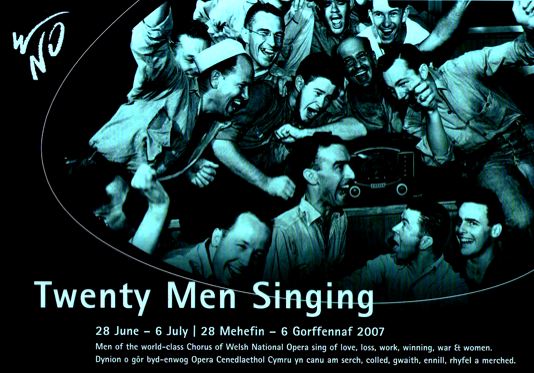
 Don’t tell me. You’ve had a great time at the beach, enjoyed a picnic with friends and family, followed by a splendid fireworks display on a balmy evening. I mean it, don’t tell me! It’s been raining here for, let’s see, about three weeks, ever since my return from New York City; and today I read a
  Well, I’m not a fan of . . . anything. That is to say, I am not a fan of the word. Fan, fanatic, fanaticism. Those lexical expressions of inflexibility, those dictionary indicators of obduracy ought to be reserved for folks who are determined to blow themselves up for what they believe to be their beliefs, for the indiscriminals who are prepared to take the lives of others around them for the sake of an idea or an ostensible ideal (I’ve got
  Meanwhile, I much rather rave than rant. I prefer to reserve my energy—and this little nook in the web—for things I look upon with uncommon fondness (such as radio, whose neglected virtues I extol in this journal) and people I adore in a manner that I, an atheist, refuse to label idolatry. A few decades ago, I decided that, while not fanatic, I fancied a certain leading lady of Hollywood’s aureate days. The lady in question is Claudette Colbert. French-born, no less. My latest acquisition—above poster for the 1947 thriller Sleep, My Love—arrived today and awaits a spot on whatever wall remains to display it. Space, by now, is at a premium; only yesterday, I made room for this announcement for Colbert’s 1941 vehicle Skylark. It is probably not what you’d expect to find in a Welsh cottage—unless, that is, you knew me and knew I had come to live there with someone so willing to humor my foibles and fancies.
 Well, I’m not sure whether I could stomach Lorna Luft and Dallas alumnus Ken Kercheval in a touring production of White Christmas; but Matthew Bourne’s Bizet ballet The Car Man was certainly worth a trip to the splendid Canolfan Mileniwm Cymru (Wales Millennium Centre) in Cardiff Bay. Inspired by James M. Cain’s oft-adapted 1934 novel The Postman Always Rings Twice (revived on 24 January 1952 on Hollywood Sound Stage, starring radio stalwart Richard Widmark), The Car Man is set in mid-20th century small town America (the fictional Harmony, pop. 375), The Car Man tells the story of the titular drifter who falls for the accommodating wife of his new boss (a vixen named Lana, after the actress who played her in the 1946 film version). Though easily duped, the cuckold is bound to find out, eventually, and to be less than accepting of the triangular situation.
 Well, I’m not exactly a “shut-in”; but being visited by a late bout of seasonal allergies and looking out, red eyed and slightly hung over, at what has been declared the rainiest June on record, I sure can relate to The Story of Cheerio, a copy of which 1936 autobiography I picked up at the rare books room at Manhattan’s legendary Strand earlier this month. According to the cover, Cheerio is the “intimate story of radio’s most beloved character who has dedicated his life to the spreading of cheer, hope and kindliness. With inspiring human stories from the homes of his radio audience of ‘shut-ins.”
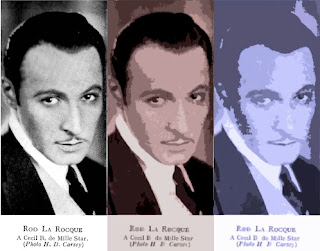 When I read that Lamont Cranston is being resurrected for another big screen adventure scheduled to begin in 2010, I decided to catch up with one of the earlier Shadow plays. The Shadow, of course, always played well on the radio. On this day, 26 June, in 1938, he was again called into action when a “Blind Beggar Dies” after refusing to share his pittance with a gang of racketeers. The blind beggars alive to such melodrama and asking for more were millions of American radio listeners tuning in to follow the exploits of that “wealthy man about town” who was able to “cloud men’s minds” while opening them to the wonders of non-visual storytelling.
 Harry Heuser