Alternative (F)acts: Curating as Creative Response

Our Japanese ‘Merman’ made for a suitable poster boy.
Poster design by Neil Holland, based on an idea by Sarah Selzer
Once a year, with the help of the head curator of the School of Art, Aberystwyth University, I stage an exhibition with a group of students who are enrolled in my undergraduate module “Curating an Exhibition.” The shows draw on the University’s vast collection of art and artefacts. The student curators are given a theme and set out to create a narrative by selecting objects in response to it. That is quite a challenge, considering that the exhibition is put together in just over three months from initial planning to display.
 
Past exhibitions include Untitled by UnknownQueer Tastes, and Matter of Life and Death.  This year, I was all set to use the colour red and its connotations as a theme . . . until the inauguration of Donald Trump and the ensuing dispute about the size of the audience made me see red in a different way.  This gave me the idea for a more urgent, topical show.
 
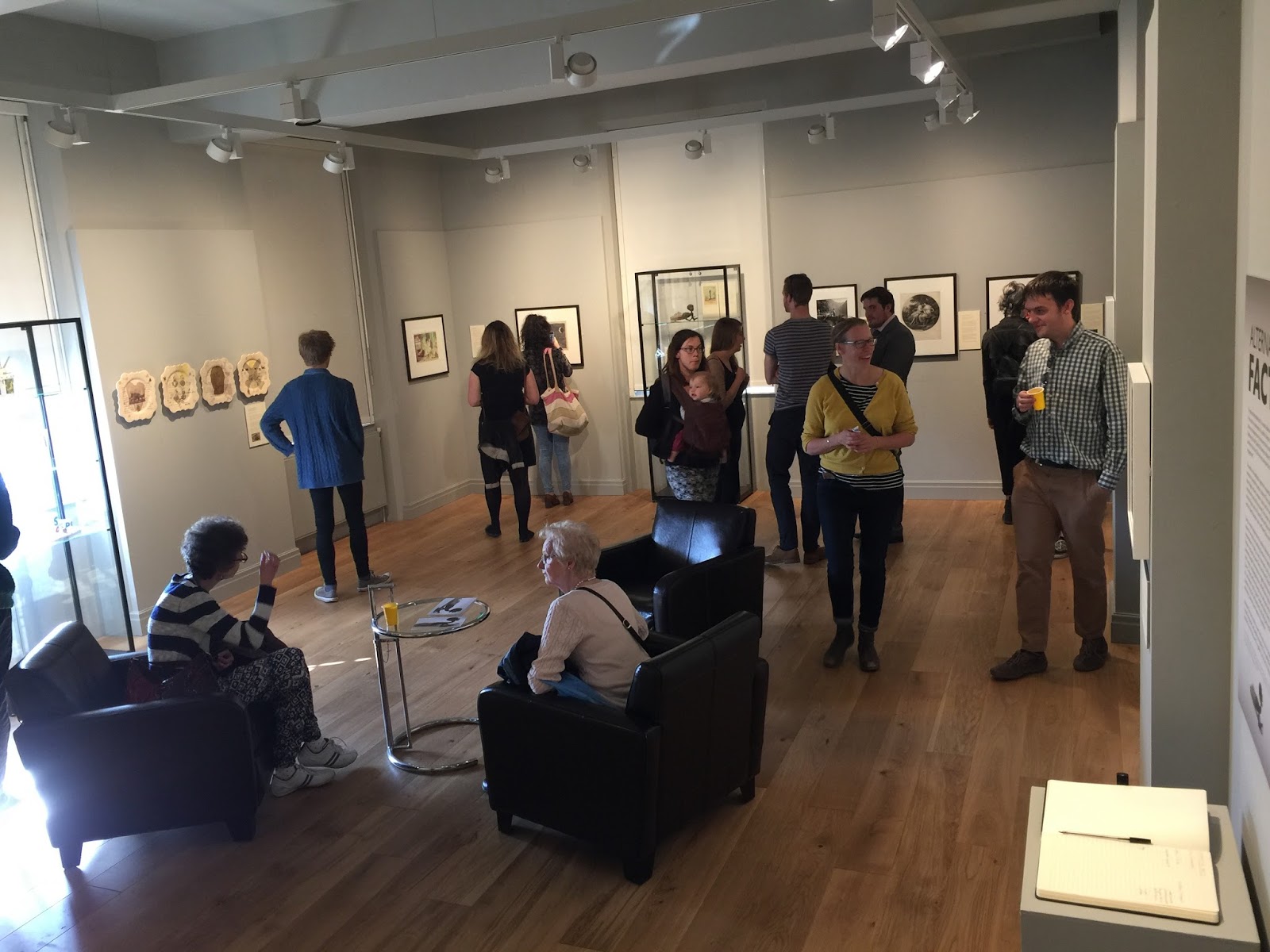
That show is Alternative Facts: Interpreting Works from the School of Art Collection. It opens on 22 May and will be on display until 29 September in one of the School of Art’s galleries in Aberystwyth, Wales.
 
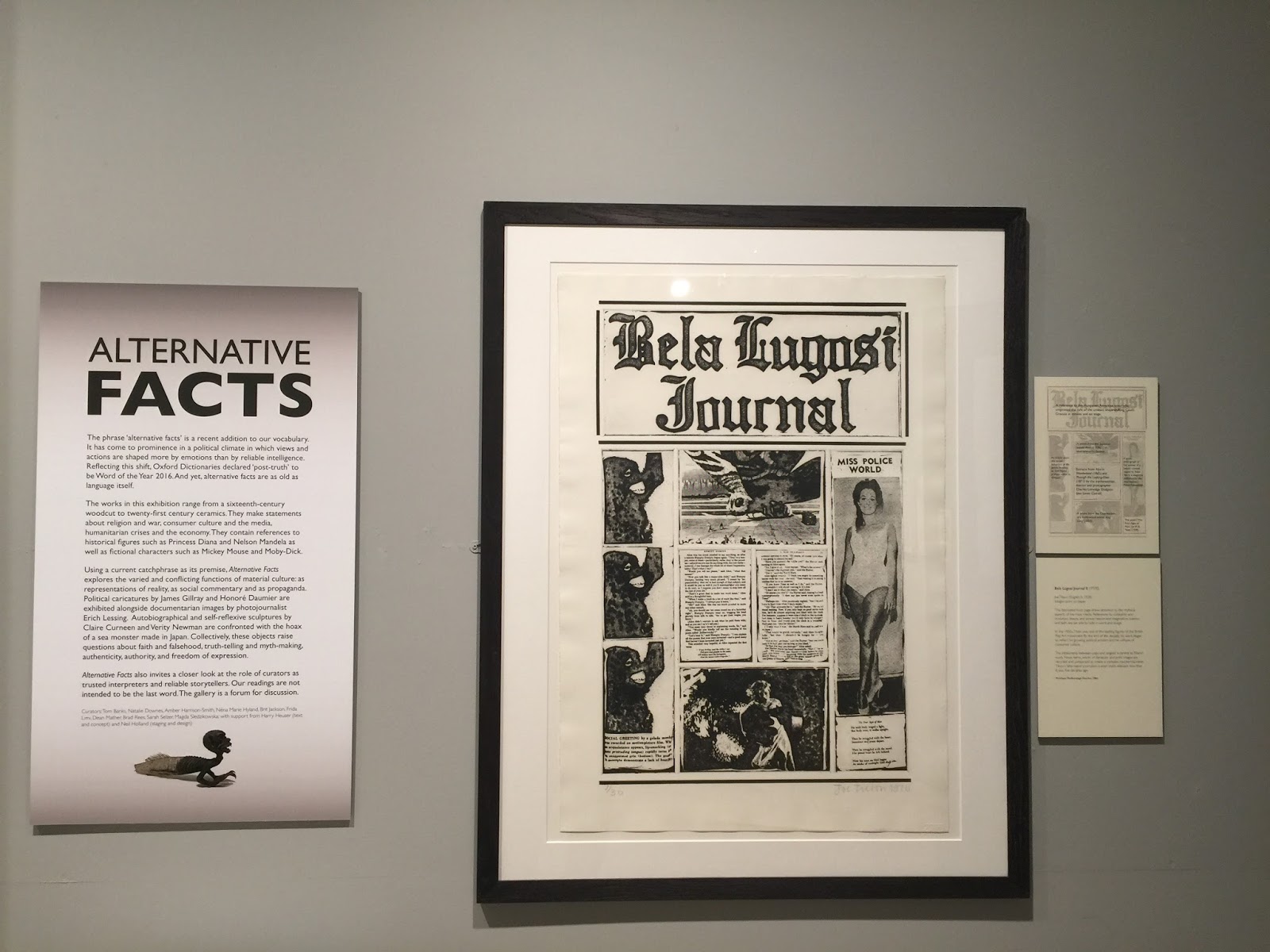
The introductory panel explains the theme as follows:
 
The phrase ‘alternative facts’ is a recent addition to our vocabulary.  It has come to prominence in a political climate in which views and actions are shaped more by emotions than by reliable intelligence.  Reflecting this shift, Oxford Dictionaries declared ‘post-truth’ to be Word of the Year 2016.  And yet, alternative facts are as old as language itself.
 
The works in this exhibition range from a sixteenth-century woodcut to twenty-first century ceramics.   They make statements about religion and war, consumer culture and the media, humanitarian crises and the economy.  They contain references to historical figures such as Princess Diana and Nelson Mandela as well as fictional characters such as Mickey Mouse and Moby-Dick.
 

Using a current catchphrase as its premise, Alternative Facts explores the varied and conflicting functions of material culture: as representations of reality, as social commentary and as propaganda.  Political caricatures by James Gillray and Honoré Daumier are exhibited alongside documentarian images by photojournalist Erich Lessing.  Autobiographical and self-reflexive sculptures by Claire Curneen and Verity Newman are confronted with the hoax of a sea monster made in Japan.  Collectively, these objects raise questions about faith and falsehood, truth-telling and myth-making, authenticity, authority, and freedom of expression.

 
Alternative Facts also invites a closer look at the role of curators as trusted interpreters and reliable storytellers.  Our readings are not intended to be the last word. The gallery is a forum for discussion.
 
Curators: Tom Banks, Natalie Downes, Amber Harrison-Smith, Néna Marie Hyland, Brit Jackson, Frida Limi, Dean Mather, Brad Rees, Sarah Selzer, Magda Sledzikowska; with support from Harry Heuser (text and concept) and Neil Holland (staging and design)

Worth a Shot? Photography as Matter of Life and Death

Today it is easier than ever to produce and share photographs.  Subjects diversify.  Perspectives broaden.  We no longer have to deal with precious materials or finite rolls of film when determining who or what is worth a shot.  Yet images are also more readily manipulated.  Realities are filtered and faked.  The black-and-white photographs in Matter of Life and Death predate our digital age.  Fragile and bold, these infinitely multipliable images of singular moments and individual lives were intended to live and matter as prints.

How do we measure the importance of a life? Who or what is worth remembering? These are some of the questions raised by photographs such as the ones on display in Matter of Life and Death, an exhibition on view from 16 May to 9 September 2016 in the gallery of the School of Art at Aberystwyth University in Wales.

Looking at images of people and places can make us aware of our cultural differences.  But it is not difficult to find universals in photographs produced worlds apart.  Struggling farm workers in 1930s Alabama are shown alongside striking miners in 1980s Sardinia and South Wales.  The town of Aberystwyth, where the exhibition is staged, is featured next to Palermo and Bangkok.  Visitors to our gallery will see the faces of children.  But they will also face the aged, the dying and the dead. 

All of the photographs are from the University’s collection.  They were chosen by School of Art students who then debated how to exhibit them and create a narrative.  Only the medium and the title had been decided beforehand by me, the instructor of Staging an Exhibition, a course in curating that each year culminates in a show like this one.   Previous exhibitions include Queer Tastes, Untitled by Unknown, and Face Value.
 

The selections students made for Matter of Life and Death are journalistic and surrealist, propagandistic and personal, mass marketed and private.  Some photographers – Walker Evans, Mario Giacomelli and Angus McBean among them – are famous.  Others are unknown.  Learning about the identity of a photographer may well influence the way we look at the work that photographer has produced.  A child may look less innocent once we know that the man behind the camera was Erich Retzlaff, a photographer who supported and propagated fascist ideals.

All of the photographs are from the University’s collection.  They were chosen by School of Art students who then debated how to exhibit them and create a narrative.  Only the medium and the title had been decided beforehand by me, the instructor of Staging an Exhibition, a course in curating that each year culminates in a show like this one.   Previous exhibitions include Queer TastesUntitled by Unknown, and Face Value.

There is no particular order in which these photographs should be experienced.  Themes such as dying traditions or endangered environments are suggested, but there are no conclusions.  As in life, material circumstances limit our choices.  The paths we forge are our own.

Matter of Life and Death is open to the public until 9 September 2016.  Admission is free.

Curators: Megan Evans, Rebecca Fletcher, Suzanne Fortey, Emma Game, Emily Griffin, Elizabeth Kay, Kirils Kirijs, Michael Kirton, Maria Lystrup, Kate Osborne, Amy Preece, Georgia Record, Emma Roberts, Samantha Robinson, Emily Smyth, Bethany Williams,  Gemma Woolley; with support from Harry Heuser (text) and Neil Holland (design)

Teaching by Numbers That Don’t Add Up; or, Not in the Mood to Celebrate an Anniversary

On the eve of the tenth anniversary of broadcastellan, I look back at what this blog once was and what it has been reduced to over the years.  The neglect is due in part to the fact that I struggled to engage an audience or generate interest in my study on radio, which, under the title Immaterial Culture, was eventually published as an academic book in 2013.  I think a copy of it still lies in some corner of the Theatre and Television department of Aberystwyth University, the institution that is my current employer.  It attests to the lack of imagination, ingenuity and respect of said institution that my offer to deliver a lecture on the subject has never come to fruition.  But that is only one of my grievances.

Why there is so little going on here at broadcastellan has mainly to do with my being too busy to devote time to what is essentially a hobbyhorse I can no longer ride at leisure.  My life has changed considerably since that first tentative entry in May 2005; in terms of my academic career, it has not changed for the better.

As a zero hour contract employee at Aberystwyth University, I work virtually daily for little or no pay.  No pay, you ask? How can that be? Well, I spent months creating two courses in art history that I delivered at a university in China in October 2014 and March 2015.  I received no compensation for this preparation; the work was simply not time-tabled, nor thought of as deserving of pay.  There is no shortage of examples; so I consider the most recent one.  Today, I was denied pay for work that was expected of me.

Showing my support for the university, I agreed to teach a course that apparently no full-time member of staff would touch.  For this dubious privilege I was to be remunerated on an hourly basis.  On that iffy foundation, I was to prepare a series of lectures and seminars.  No, let me revise that: I received no money for the preparation.  If the hourly lecture rate is meant to reflect preparation, the rate is below minimum wage.  

I am accustomed to this practice, having worked under such conditions for years.  In this case, there was quite a bit of research, the subject being The Language of German Politics.  I have not lived in Germany in about a quarter of a century and have not voted since before the wall came down (which is just about the time I left).  I was told that the instructor who had taught the course previously did not leave behind any notes on which to draw.  If it was a part-time instructor, I can sympathise.

Why leave behind your intellectual property, even though such rights are violated routinely at institutions of higher learning that take everything from you and take credit for anything you do (such as publishing a book or staging an exhibition that happens despite one’s work for the university, not as a result of it).  Anyway, I enjoy a challenge; a member of staff recently referred to my sense of enjoyment as masochism.

Agony it certainly turned out to be, at times.  I did not receive a contract for signing until three weeks into teaching, at which point it was impossible to withdraw.  There is no mention of pay for grading assignments in the contract, and there were to be 63 individual written papers and 21 final exams to grade.

On average, I spent over 40 minutes reading and marking each essay or translation submitted, sometimes considerably longer.  For each piece of writing up to 1000 words I was permitted to claim the staggering amount of £2.53.  This meant that I worked below the minimum wage, and in many cases quite significantly so.

This is so demonstrably unreasonable that I expressed my incredulity to the Human Resource department of Aberystwyth University.  After all, the task of evaluating the effectiveness of a translation is not simply a matter of right or wrong. As someone who has studied translation theories, I regard translation as an interpretative act that is – or should be – to some degree open to debate.  It is a debate I could hardly afford to have with my students, at least not at the rate of £2.53 per 1000-word manuscript.

I was familiar with these appalling pay rates from other teaching assignments at Aberystwyth University and have tolerated them heretofore without comment.  Though assessing a translation is not equivalent to reading a manuscript mainly for its content, the pay rate is the same.

This by-the-numbers approach to remuneration – and education – is detrimental to the quality of teaching that an institution like Aberystwyth University can deliver when it is relying on part-time staff.  I tried not to short-change students by providing fewer comments, as records will bear out.  I read each submission literally word for word in order to assess responsibly and provide detailed and constructive criticism on matters such as word choice and sentence structure.  This, I believe, is as it should be, and I expect neither praise nor gratitude for my conscientiousness.

As a zero contract hour employee at another department of the same university I routinely meet with students for tutorials.  It is an important aspect my teaching.  Anyone’s teaching.  Due to the decision of the European Languages department to pay me only for the hours I spent conducting lectures and seminars, I was unable hold individual meetings with my students there.  This contributed to student dissatisfaction, instances of which were brought to my attention just as I was about to depart for China.

Yes, I had another teaching commitment, on behalf of Aberystwyth University, while three of my courses were going on here in Wales.  I took off for Beijing with a sense of failure in the face of adversity; and, despite the module coordinator’s assurance that she had ‘heard a lot of praise for [my] teaching,’ the message left me disheartened.  Had I been permitted to conduct tutorials, I would have been able not only to address student concerns but also considerably to bridge the gap created by my China assignment.

It had been suggested to me to mark more leniently to ease tension.  However, I reject the notion that the lowering of standards should be considered as a measure to assure or boost student satisfaction.  Instead, I followed the departmental marking guidelines from which my standards were derived.

Being unable to meet with students resulted in spending more time assessing performances so as clearly to explain how each mark was derived.   This effectively lowered my pay for each assignment.  As I told the head of department, I do not think it fair to our students to provide fewer comments as a result of staff members’ time constraints.

Not being able to hold tutorials, I was also forced to spend more time responding to student inquires via email.  This time is not remunerated, either.  That I had to spend time in class detailing marking criteria, for instance, also limited the time allotted to delivering the material (almost all of which I created myself, as no lecture notes or presentations were available from previous years on which to model my own performance).

The department’s decision to cut corners further by denying me payment for a meeting with – and requested by – the module coordinator to finalise work that requires double marking is, apart from being unjust and insulting to me, a shortsighted decision that impacts negatively on the marking and compromises its fairness.  I had assumed it to be a matter of course that I should be paid for such time; I stated in an email to the module coordinator that I would bill the department at the ‘meeting’ rate, upon which the meeting was called off.  I have informed the department that I am unwilling to conduct a discussion about marks via email, thus without pay.

I told the department that I would not accept any further employment under the same conditions.  To do so would mean to accept Aberystwyth University’s exploitative practices.  The contract is phrased in a way that only underscores its inadequacies.  There is mention of time and a half pay and double pay, for instance.  Such a contract can never be honoured when the work in question is teaching.  I routinely work weekends and late into the night.  There is no mention anywhere of remuneration for any time spent designing or preparing for courses or responding to student email.

There is also no mention of marking.  As a long-time zero hour contract employee I might be expected to be familiar and perhaps even reconciled to such terms; but teaching languages is, as I said, vastly different from teaching other subject matter, as language comes – or should come – under closer scrutiny than in other disciplines.  Responsible teaching of languages will therefore almost inevitably result in a pay below the minimum wage for part-time staff.

All the while, my dedication to teaching has made it difficult for me to pursue my career as a writer, from which I derive as yet no income.  For a year’s worth of teaching, I get paid under £10,000.

Queer Tastes: Works from the George Powell Bequest

George Powell
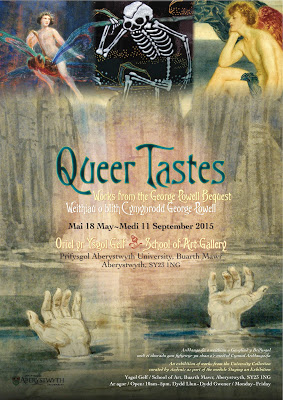
Poster design by Neil Holland

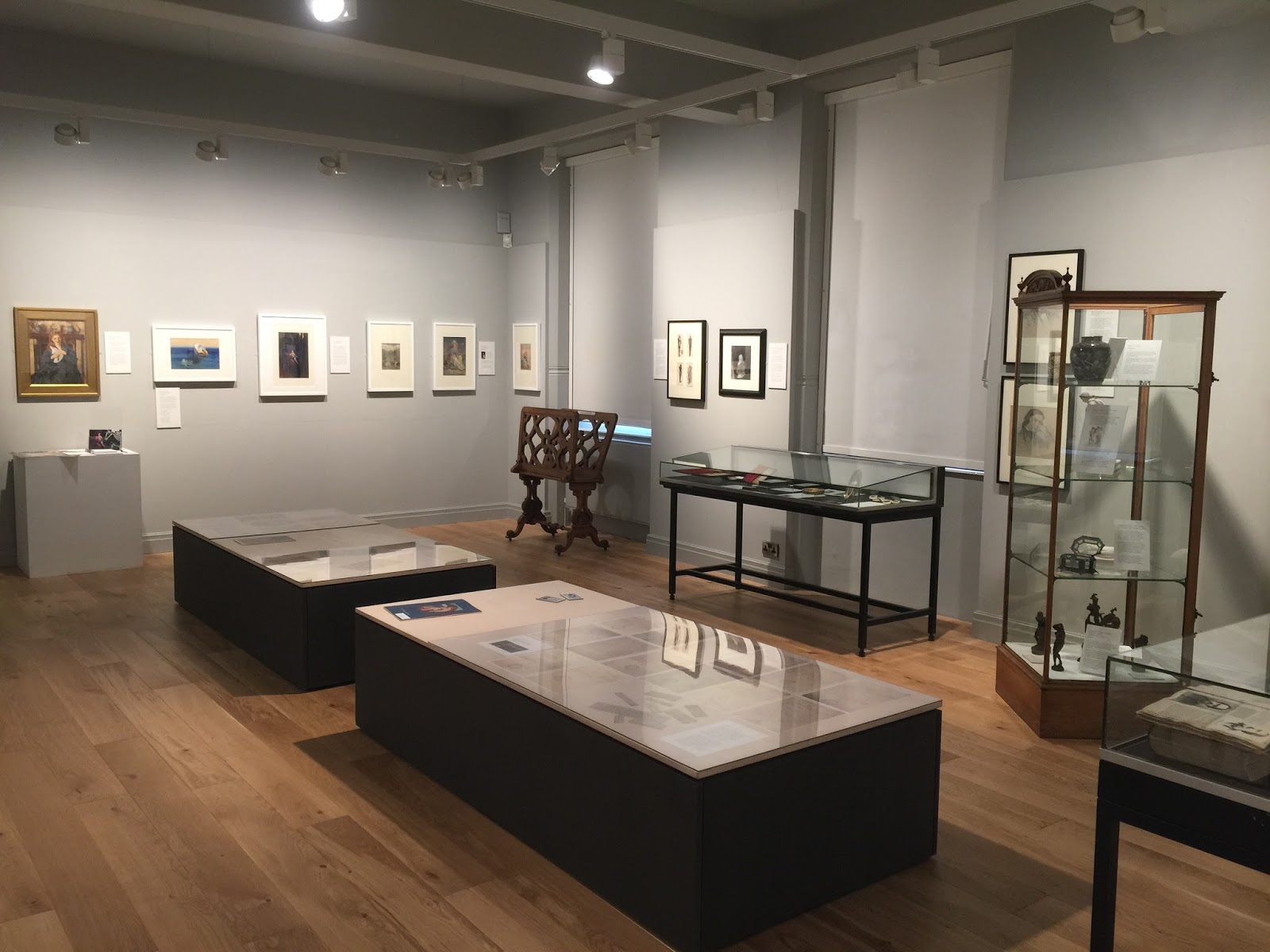
Queer Tastes is an exhibition I curated with students of my undergraduate module Staging an Exhibition at the School of Art, Aberystwyth University. Each year, the module culminates in a student-curated show on a given theme.


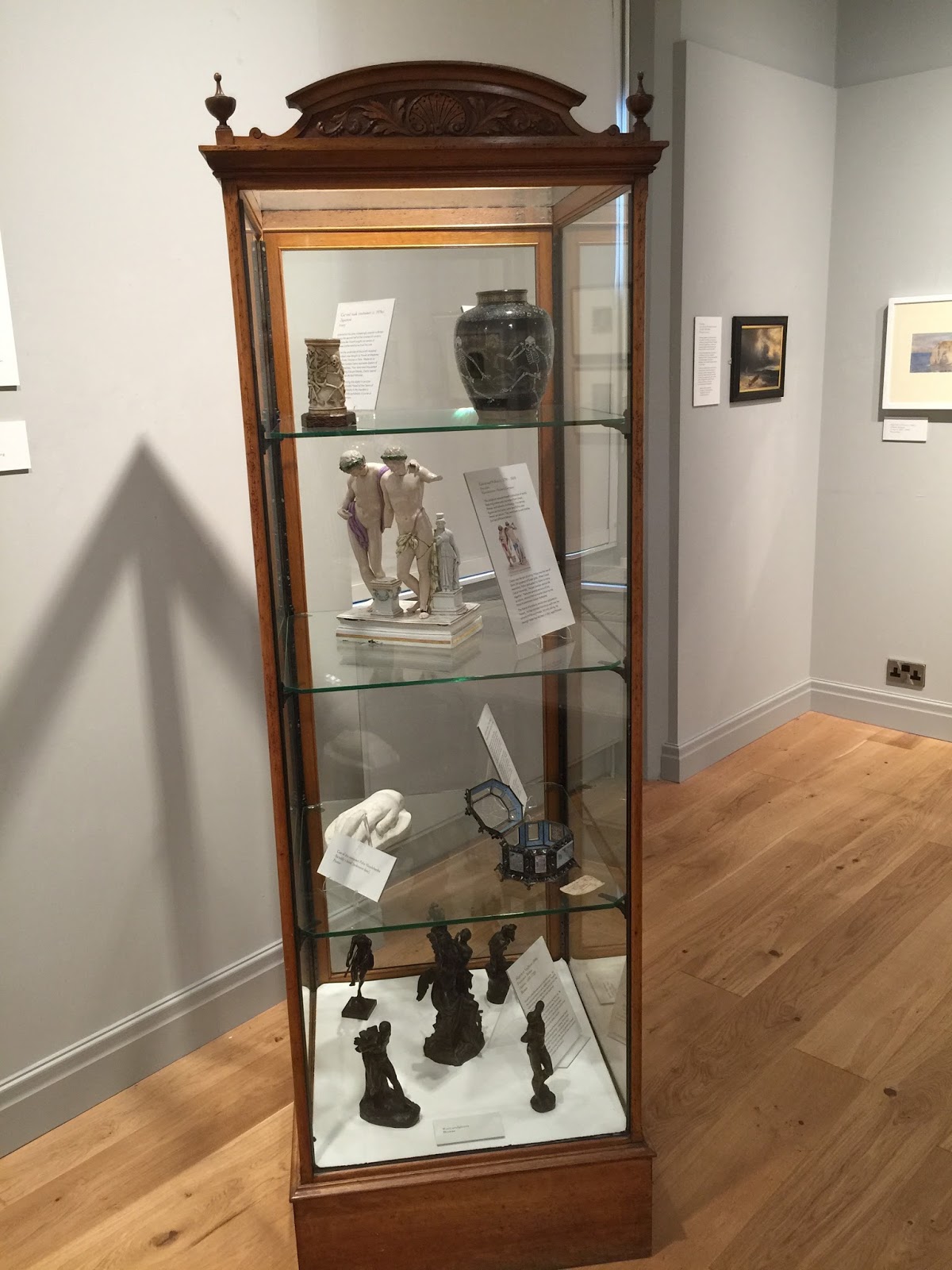
This year’s exhibition, which is open to the public from 18 May to 11 September, explores the identity of the Welsh-English dilettante George Ernest John Powell (1842 – 1882) through the collection that he bequeathed to Aberystwyth University. The objects were selected by students of the School of Art, which holds part of Powell’s bequest.  

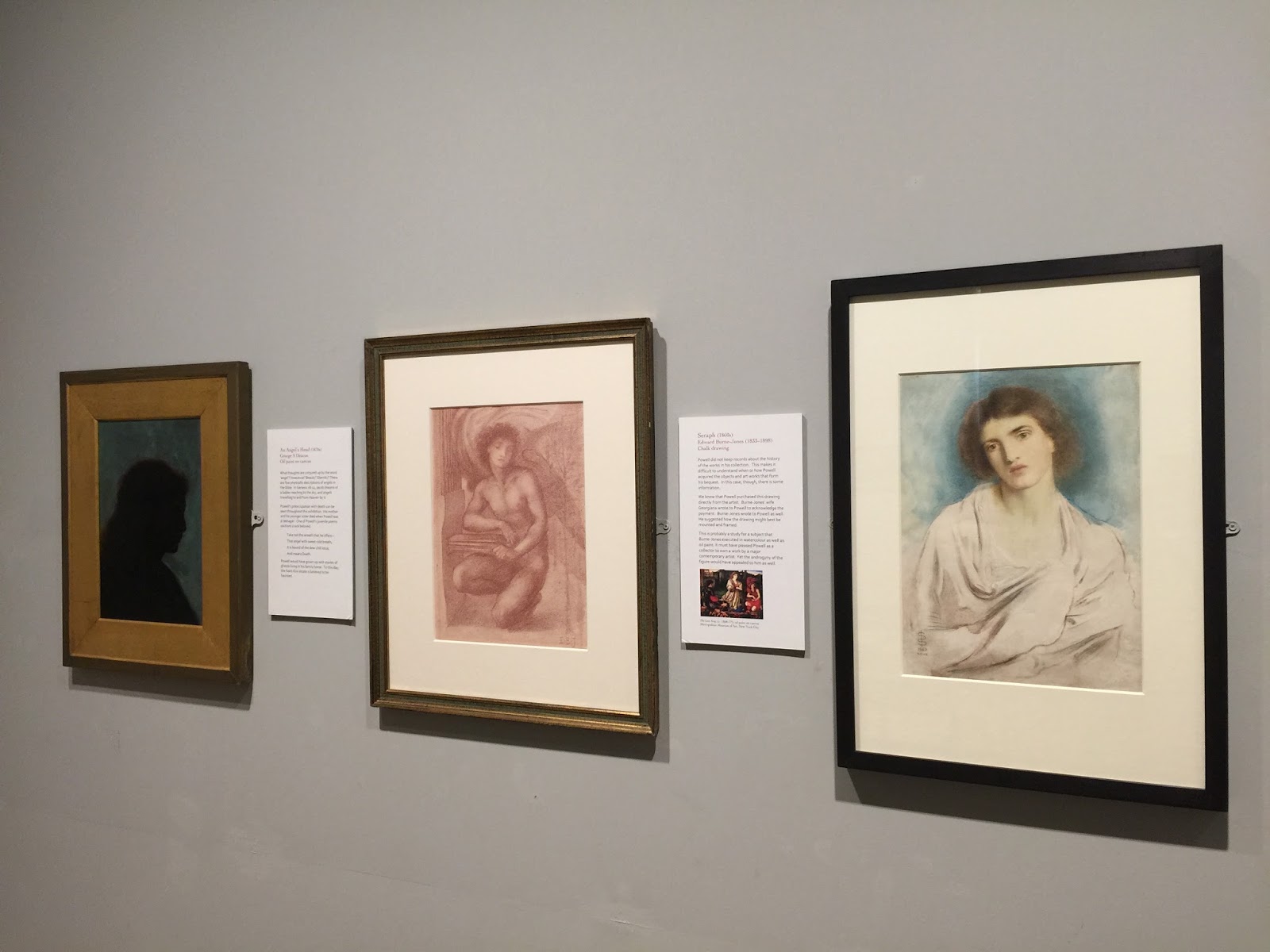
The exhibition includes works by Simeon Solomon, Rebecca Solomon, Edward Burne-Jones, Richard Westall and Hubert von Herkomer as well as artefacts and curios ranging from a plaster cast of Felix Mendelssohn-Bartholdy’s hand and a glass casket that allegedly once contained a splinter from Robert Schumann’s coffin.

The Powell family owned the Nant-Eos estate a few miles inland from Aberystwyth. Educated at Eton and Oxford, George Powell spent little time at Nant-Eos, which he would inherit in 1878. It was an unhappy place for him. His parents were estranged. His mother and younger sister died when Powell was a teenager.


Powell was a dreamer, much to his father’s disappointment. Instead of going hunting, the boy wrote poems about death, loss and betrayed love. Eager to get away, Powell travelled to Europe, Russia, North Africa and Iceland. In the company of the poet Algernon Charles Swinburne, Powell spent summers on the Normandy coast. There, he entertained writers and artists in a cottage he named after a bisexually promiscuous character in de Sade’s Philosophy in the Bedroom.

Powell has been called ‘eccentric’, ‘sinister’ and ‘sad’. He has also been labelled ‘homosexual’, a term not used in his day. ‘Queer’ suggests something – or someone – strange or at odds with our views. It asks that we trace our responses to otherness in ourselves.

A man of the world, Powell wanted to be remembered back in Wales as a patron and benefactor. He offered parts of his collection to Aberystwyth Town Council, on provision that a public gallery be created for their display. When the deal fell through, Powell gave the objects you see here to the University of his ‘dear but benighted town’.

Making our possessions public is in a way a ‘coming out’. It invites others to wonder about our past. It also means saying ‘I matter’. Collections like Powell’s encourage us to question how a person’s worth is determined.
Curators: Danielle Harrison, Kayla McInnes, Alice Morshead, Jenny Skemp, Valerija Zudro, with support from Harry Heuser (text and concept) and Neil Holland (staging and design).
Powell’s life and collection are the subject of my essay “‘Please don’t whip me this time’: The Passions of George Powell of Nant-Eos” in the forthcoming anthology Queer Wales (University of Wales Press).


Face Value?

Time to mingle with the visitors, to watch them stand back, take in the artwork—and read those captions. During the past few months, I have been involved in putting together an art exhibition at the local university. It all started last October. I was given the opportunity to teach an undergraduate course in writing informative and interpretive texts for museums: labels, text panels, promotional material. The class was designed as a workshop. So, rather than just theorizing about such matters as readability and legibility or analyzing prose styles and target audiences, my students and I were faced with the challenge of curating a show.

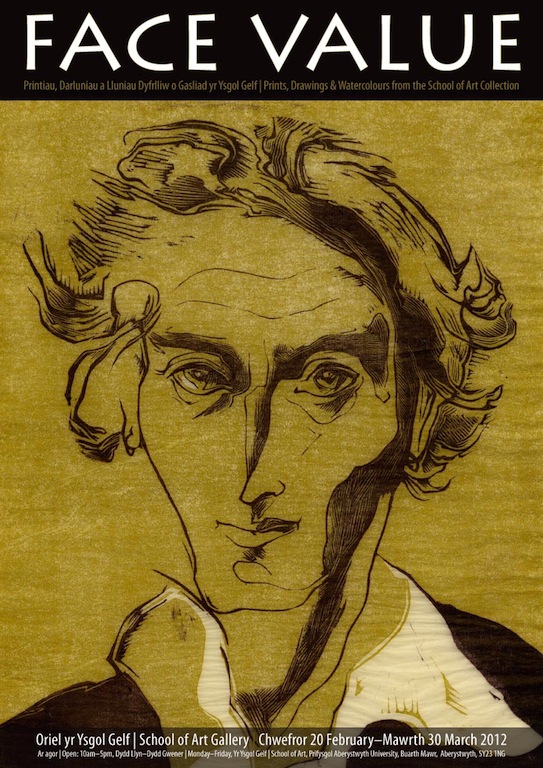
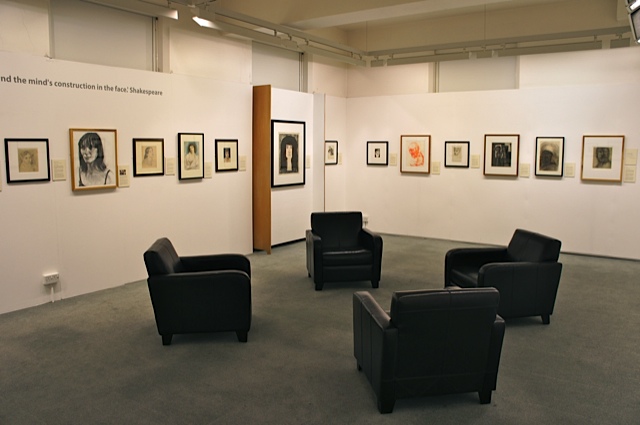
That show, Face Value, is on display and open to the public until 30 March 2012 at the School of Art, Aberystwyth.   It features works on paper (watercolors, etchings, drawings) by artists as diverse as cover girl Gertrude Hermes, Edward Burne-Jones, Fernand Léger, Dante Gabriel Rossetti, Simeon Solomon, William Strang, Stuart Pearson Wright, and Keith Vaughan.  Here is the introductory panel greeting guests at the private view tonight:

‘It is only at the first encounter that a face makes its full impression on us,’ the philosopher Arthur Schopenhauer once remarked. Face Value encourages such chance encounters.  Many of these works on paper from the School of Art collection are presented here for the first time.  Most have never been shown side by side.

This themed exhibition explores various acts of reading: our interpretation of facial features, our attempts to work out the relationships between appearances and mental or emotional states, between character and physical characteristics, as well as between artist, sitter and ourselves.

In 1868, Charles Darwin conducted an experiment to demonstrate that humans have a universal set of facial expressions. An anatomist stimulated a subject’s facial muscles with electrodes to elicit expressions of anxiety, sadness, and joy. He then took a series of photographs with which Darwin presented guests at a dinner party, inviting them to guess the subject’s emotional state. Are our responses predictable? Are faces quite this easy to read?

Face Value is itself the product of an experiment. It was conceived in a classroom, in workshops designed to debate or refute the value of interpretive texts written for museums. Do we look at and judge a self-portrait of a named artist as we do an anonymous, faceless study of a head? Does knowledge about artist or sitter influence our appreciation? What is the curator’s role in aiding or informing our ‘encounter’ with works of art?

‘Who sees the human face correctly,’ Picasso asked, ‘the photographer, the mirror, or the painter?’ Our various guides to interpretation are meant to suggest that there is no ‘correct’ reading and that works of art cannot be taken at face value.

At face value, this is just another art exhibition; but many of the texts on the wall would not read or sound the way they do had I not learned from listening to and reading about radio how to keep sentences simple, short and clear.  It is a lesson I am still learning … and worth learning it is.  Especially for curators.