
Recycling Questions: Just What Is or Ain’t an Adaptation?

As a product of postmodern culture, I lay no claim to originality.  Indeed, I have always been thoroughly unoriginal, and, occasional anxieties of influence notwithstanding, often gleefully so.  As a child, I ripped off comics, tore apart magazines and took whatever images were available to create collages and parodies.  Using an audio tape recorder, I appropriated television programs by inserting my voice into mass-marketed narratives, transforming a saccharine anime like Heidi (1974) into a subversive adolescent fantasy.
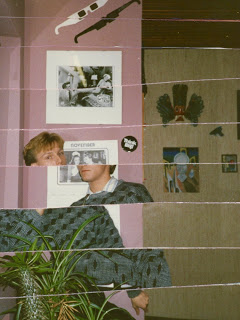
My postmodern past (note my de Chirico take on a mass-produced vase)

No evidence of my early experiments is extant today; but adaptation became an enduring fascination and a field of study.  As a student, I wrote essays on adaptations of Frankenstein and on Brecht’s revisitations of Galileo Galilei – Leben des Galilei (1938/39 and 1955), as well as Galileo (1947).  I produced an MA thesis on translation (“Meister Remastered”) and a PhD dissertation on the relationship between stage, screen, print and radio (“Etherized Victorians”).  The latter I recycled as Immaterial Culture, published in 2013.

Now a lecturer in art history, I have repurposed some of the above and pieced together a Frankenstein’s creature of an undergraduate module I call Adaptation: Versions, Revisions and Cultural Renewal.  In a series of lectures and seminars, the course (at Aberystwyth University) investigates the processes involved in translative practices that range from the reworking of a literary classic into a graphic novel to drawing a moustache on a copy of the Mona Lisa.  It explores relationships between form and content, genre and mode, integrity and hybridity, durability and transience, culture and commerce, as well as art and the environment.

As I state in the syllabus, many products of culture endure by shifting shape: stories are turned into sculptures, plays are reimagined as dramatic canvases and mass-produced ephemera are recycled for art. What survives such transformations? What is lost or gained in translation? What are the connections between – and interdependencies of – so-called originals and the works that keep coming after them?

Given the monstrous scope of the course, another question emerges: Just what is not an adaptation? It is a question that becomes more complex if tackled by anyone who, like me, regards originality as a myth.

Much of what is published on the subject is limited to matters of narrative, of what happens when telling becomes showing, or vice versa.  Linda Hutcheon’s study A Theory of Adaptation opens promisingly – if somewhat patronizingly – with the following statement: “If you think adaptation can be understood by using novels and films alone, you’re wrong.  The Victorians had a habit of adapting just about everything…. We postmoderns have clearly inherited this same habit….”

Hutcheon does not quite deliver on her promise of inclusivity.  Unable or unwilling to break the “habit” of adaptation scholars who came before her, Hutcheon’s study also concentrates on “novels and films,” the word “film” appearing on 229 pages, compared to, say, “painting” on 17 pages, including index and bibliography.   There is no mention at all of collage or assemblage.  Left out are the projects of Dada, Neo-Dada and Pop, as well as the debates about Kitsch, Camp and Pastiche that were central to Postmodernism.

Hutcheon’s definition of “adaptation” is at once too broad and too narrow.  Her brief statements on “What Is Not an Adaptation?” are welcome yet imprecise and contradictory.  What is worse, her definition is at times arbitrary.   She states, for instance, that “fan fiction” is not a form of adaptation, offering no explanation for its exclusion.

I agree with Hutcheon that adaptations need to be readable as a version, an acknowledged take on or taking of something we perceive as same yet different.  Adaptations are not copies, and, as spurious as they may sometimes strike us, they are not fakes, either.

Hutcheon distinguishes between parody and adaptation, claiming that the former does not need to be acknowledged.  If unacknowledged, parodies – or any other form of adaptation – cannot operate qua adaptation.  They are like irony in that respect.  You just can’t be ironic all by yourself.  Any dance of the index fingers needs an audience.

As I see it, adaptations, be they parodies or pastiche, anarchic or reverent, have to exist as concrete products – rather than ideas or themes – that are distinct from yet related to other products with which they engage or from which they openly borrow in more or less creative acts of transformation.
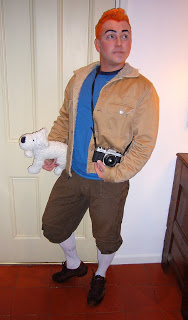
Am I an adaptation?

Hutcheon, who does not insist on a change in medium as a criterion for adaptation, cites a source that identifies as a “new entertainment norm” the “process where integral elements of a fiction get dispersed systematically across multiple delivery channels for the purpose of creating a unified and coordinated entertainment experience.”  The resulting products are not meant to exist independently but serve as a deliberate fragmentation for the sake of maximizing market potential and profits by increasing the potential audience.  Is this still adaptation? Perhaps, if the audience rejects to buy the lot.

Buying the lot is something I rarely do.  I pick and choose, take apart and transform according to my own desires and limitations.  And pick apart I must when I read Hutcheon’s comments on radio drama as a form of “showing” like “all performance media,” at which point her study recommends itself for recycling as pulp.  Anyone who appreciates the hybridity of radio plays would balk at such simplifications.

Trying to make a case for elevating their cultural status, Hutcheon asks: “If adaptations are … such inferior and secondary creations why then are they so omnipresent in our culture and, indeed increasing steadily in number?” Well, junk food is “omnipresent” – and so are feebly argued studies – which does not make either any less “inferior.”  Besides, the question is not whether adaptations are good, bad or indifferent.  The question is: what are and what ain’t they?

Twice Behind the High Wall; or, It’s Not the Sane on the Radio

Every once in a while I catch a sound and solid studio era thriller that has heretofore escaped me. One such welcome find is the Curtis Bernhardt-directed High Wall (1947) starring the dark and deadly serious Robert Taylor as an amnesic who finds himself in an asylum for the criminally insane for a murder he may or may not have committed. Initially refusing treatment for fear of having his guilt confirmed along with a sanity that could prove the death of him, he is soon faced with evidence convincing him that he is not beyond hope and sets out to mount the titular structure and leave no stone unturned in an attempt to emerge a free, upright man and levelheaded parent.

In this process of tearing down the wall that silences him, Taylor’s character is supported by a member of the staff (Audrey Totter), but all the while impeded by the to him unknown schemer who laid those bricks and is determined to make them insurmountable (Herbert Marshall).

In the architecture of High Wall, the three figures operate with the predictability of trained mice. We know—and are meant to know—that Taylor is innocent, that Totter will be so unprofessional as to confess her love for him, and that Marshall has erected the High Wall to cover up his own guilt. Knowing as much makes us the privileged observers of a neat and well-staged rehabilitation drama, a character study of the three mice in a maze that begins to crumble and lose some of its high tension only after the wall has been taken. A solid suspense drama, nonetheless.

Suspense. That is precisely where I had previously hit upon this High Wall, or, as it turned out, some rudiments thereof. The title rang a bell loudly enough to make me check for such a radio connection. Produced on 6 June 1946, eighteen months prior to the release of the film, “High Wall” presents a similar situation but an altogether different outcome.

Both radio version and screen adaptation were based on a story and play by one Bradbury Foote (the motion picture also credits Alan R. Clark). Subsequently, the film that was a radio play that was a stage play and story was reworked anew as a radio play. Starring Van Heflin and Janet Leigh, the remake was soundstaged in Lux Radio Theater on 7 November 1949.

Unlike, say, Sorry, Wrong Number, the property remains sound whether it is thrown onto the big screen or pulverized into thin air. Nothing about the motion picture suggests that what we see has been remodeled from a stage set; likewise, the radio play is so much in keeping with the Suspense formula that it might well have been an original radio drama, written especially for the series.

Those at work in structuring and reconstructing both High Wall, the film, and “High Wall,” the radio play, clearly understood the limitations and potentialities of the media for which the product was headed. Whatever his initial idea, Foote did not insist that his words were written in stone.

So, rather than arguing which version is superior, I noted the differences between the Suspense drama and the screen thriller. On the air, the story is decidedly more noir than on the screen. It is more concerned with the demoralizing than with morals; less involved in the cure than in the kill. It draws us in, behind that wall, without signaling a way out. No outline of romance and redemption; no hope foreshadowed. Just the shadow of which we are puppets.

Whereas High Wall is concerned with a man’s struggle to clear his name, “High Wall” deals with a man who barely remembers it. That he is telling us his own story does not make him any less suspicious. Why did he end up in an asylum? Or is he merely stonewalling? We need to know that before we can feel at ease about taking his side.

The omniscient film narrative provides us with a villain whose workings are clear to us before they become known to the main character. In the radio play, we don’t know any more than an apparent amnesiac whose mental state and progress are uncertain. As it turns out, what he doesn’t know might just kill you!

The Guardsman Takes a Coffee Break

”I am sure that Alfred Lunt and Lynn Fontanne will never forgive me for what I did to this play,” Arthur Miller commented on his radio adaptation of Ferenc Molnar’s The Guardsman. During rehearsals, the celebrated acting twosome stopped reading the to them familiar dialogue and stared at his script “as though a louse had crawled over it. A new series of lines! A whole new scene!” Such is the business of writing for radio, which also involves watching your language and having the curtains lowered for you by those who demanded a prominent spot to push their wares.

On this day, 9 May, in 1937, Molnar’s comedy was being served in the time an ulcers sufferer takes to have a coffee break. Make that a Chase and Sanborn coffee break, considering that the makers of said brew sponsored those weekly visits with Edgar Bergen and Charlie McCarthy, host Don Ameche, and their sundry guests. Stopping by “to say hello” that evening were screen actress Ann Harding and W. C. Fields—one of them on the way out, the other by way of reintroduction.

Ann Harding, then starring with Basil Rathbone in the Agatha Christie-inspired thriller Love from a Stranger (1937) was to play the role of Marie in the Chase and Sanborn Hour’s instant version of The Guardsman. “[I]t was impossible not to recognize it,” Harding remarks; her character, of course, was not referring to the play itself, but to her thespian husband’s attempt at disguising himself so as to act the part of her lover. Considering that the connubial con-man was played by the less than subtle Don Ameche, there wasn’t much chance of catching anyone off guard.

Listeners did not know that Harding would not get—or seize—the opportunity to play anyone’s lover for years to come. Love from a Stranger would be Harding’s last picture for half a decade, and the man responsible for her prolonged absence from the big screen was right there with her in the broadcasting studio: Werner Janssen, a soon-to-be Academy Award nominated composer. Harding and Janssen were married that year.

Of course, it was not Janssen who upstaged Harding during that Chase and Sanborn broadcast. It was his former colleague . . . W. C. Fields. “Mr. Fields, I’m sure you feel at home because here’s your old follies piano player, Werner Janssen,” whose name the grumpy comic did not trouble himself to recall. Fields was making what Ameche announced as “his appearance since his serious illness” that had “kept him off the stage and out of pictures for over a year.” Fields entered into sparkling banter with aforementioned puppet Charlie McCarthy, an act that would translate into You Can’t Cheat an Honest Man (1939).

Fields was invited back the following week; but Ann Harding (pictured above in a scene from Double Harness) was passing The Guardsman on her way to the altar she eventually refused to “recognize” as a signpost for the end of a career. It is one thing to recognize a partner by his kiss (as Molnar’s Marie does); but to accept that contact as the kiss of death is quite another. Before fellow guests Lorenz and Hart sent listeners off on a “honeymoon express” bound for Buffalo, Niagara Falls and “All Points West” (including Ossining, or “Sing Sing”), Fields gave her an idea her what it meant to spend her days as a half-remembered better half. When introduced to her, he declared: “I know Miss Harding very well. How’s your partner, Mr. Laurel?”