“The terror of the unforeseen”; or, Missing The Plot

While not entirely lacking in fancy or imagination, I generally avoid speculating about roads not taken, avoid taking in prospects retrospectively by asking “What if . . . ?” What if I had never gone to America? What if I had not left again some fifteen years later? What if what I had left had not been a country whose majority had just re-elected George W. Bush? While I would not go so far or sink so low as to substitute that “What if” with a nonchalant “So what,” I much rather ask “What now?” or justify whatever decision I made with a defiant “So there!”

I suppose dismissing the value of such speculations by arguing that any alternate of myself would not be myself at all is a way to avoid accusing myself of not always having chosen the best or most sensible path. Perhaps, a little foresight might have worked wonders greater than could ever be performed by getting myself worked up wondering, in hindsight, what I might have been; but to compound the failure to see the future with the failure of facing up to the past as is strikes me as perversely self-destructive . . .

Now, this is not about me sighing for what might have been. Since I don’t ask “What if,” such regrets rarely present themselves—itself ample justification for not indulging in morosely remorseful constructions of alternate biographies. This is about the alternate history I took with me on that trip back in early November 2004, when I left America for a new life in a part of the old world I had never seen let alone set foot on. The book in my hand luggage was Philip Roth’s The Plot Against America—which, I thought, was just the volume for the occasion, just right for the moment of leaving behind what had been home to me and what, owing to the hysterical war-on-terror politics in the shaping of which I had no right to take part, had felt increasingly less like the freest, the friendliest, much less the only place to be.

In The Plot Against America, Roth considers what might have happened if Charles A. Lindbergh had defeated Franklin D. Roosevelt in 1941 to become President, largely on the strength of a persuasive if false—and unfulfillable—promise of “an independent destiny for America.”

Roth conceives of an alternate 22 June 1941, five months after Lindbergh’s inauguration, while yet adhering to the historical fact that it was the day on which the Treaty of Non-Aggression between Germany and the Soviet Union was broken when the former nation embarked upon Operation Barbarossa in an attempt to conquer the latter.

On that 22 June in AR (Anno Roth) 1941, Lindbergh, as President, addresses his countrymen and women by expressing himself “grateful” that Hitler was waging a war against “Soviet Bolshevism,” a war that “would otherwise have had to be fought by American troops.” Listening with dread to that address over the radio are the central characters of Roth’s nightmarish revision, a Jewish family from New Jersey who are terrorized by the thought that the pursuit of an ostensibly “independent destiny for America” means the alignment with a regime engaged in the Holocaust, that putting America first means putting an end to their civil liberties, which means “destroying everything that America stands for.”

“The terror of the unforeseen,” Roth writes, “is what the science of history hides, turning a disaster into an epic.” Good histories, including alternate ones, may yet provoke terror by not swaddling in the paper logic of hindsight causalities what, however palpable, is yet uncertain and unascertainable as events unfold, and by reminding us not to mistake the unforeseen with the unforeseeable.

I remember opening The Plot sitting at a New York airport named after another American president and finding myself distracted by a German family visibly disquieted by the book’s cover art. There, staring at them was a swastika, the symbol of the terror that could have been foreseen. I was so self-conscious of this act of provocation that I was unable to read on; and once I had arrived in Wales, I was too absorbed in my own altered state—the detachment from what I had known and been—to have much use for any engagement with any alternate past one.

This week, for no particular reason, I picked up the book anew, and I read it as a commentary on two historical pasts—1941 and a 2004 (mis)informed by 11 September 2001—that somehow seems too comfortably remote, the anxieties that had given rise to its creation and my purchase of it being past as well. I can now amuse myself by pointing out that the day I read the abovementioned passage in Roth’s book coincided not only with the anniversary of that imaginary radio address but also with the birthday of Lindbergh’s spouse Anne; I can appreciate references to popular radio programs (“You should be on Information Please”) and personalities like Walter Winchell that render The Plot verisimilitudinous, conveniently to extract them for the sake of yet another cursory entry into this essentially escapist journal whose raison d’être was the sense of homelessness and estrangement I felt when I arrived in Britain on the eve of Guy Fawkes, that celebrated plot against King and Parliament.

What if I had not mislaid—and not even missed—The Plot all these years? What if I had avoided the impulse of discontinuity, of creating for myself a virtual space and time capsule of extra-historic hence fictitious isolation and had made more of an effort instead to participate in the real debates that are shaping my future? By refusing to ask myself “What if . . .?” as I belatedly re-enter The Plot I seem to be defusing Roth’s argument, fully aware that, by doing so, I may well expose myself to—rather than becoming exempt from—that certain “terror” of not foreseeing.
(In)au(gu)ral History: Presidential Addresses, Past and Present

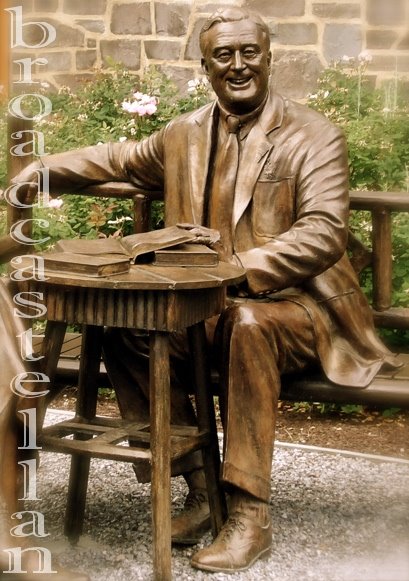
“We observe today not a victory of party, but a celebration of freedom—symbolizing an end, as well as a beginning—signifying renewal, as well as change.” With these words, John F. Kennedy opened his inaugural address on this day, 20 January, in 1961. Twenty years earlier, Franklin D. Roosevelt embarked upon his third term as US President by insisting that democracy was “not dying,” whatever the apparent threats upon it or the wavering trust in its vigor. He urged his fellow citizens to “pause” and “take stock,” to “recall what [their] place in history has been, and to rediscover what [they] are and what [they] may be.” Not to do so, he cautioned, would mean to “risk the real peril of inaction.”

Granted, as Harry S. Truman remarked in 1949, “[e]ach period of [US] history has had its special challenges.” Yet somehow, as I listened to these past auguries and reappraisals, they began to echo and respond to each other as well as to the fears, doubts and hopes of our present day. I do not mean to imply that such reverberations betray a certain hollowness in their ready replication or applicability; rather, they begin to sound familiar in unexpected ways.

Outside the context of its time—though not within the vacuum of ahistoricity in which no political speech can ring true or otherwise—passages from FDR’s 1941 address, for instance, brought to mind those terrifying—and terrifyingly uncertain—early days of the 21st century, particularly the repercussions the so-called war on terror has had for US politics and the way the Republic and all it stands for came to be perceived beyond its borders:

The life of a nation is the fullness of the measure of its will to live.

There are men who doubt this. There are men who believe that democracy, as a form of Government and a frame of life, is limited or measured by a kind of mystical and artificial fate that, for some unexplained reason, tyranny and slavery have become the surging wave of the future—and that freedom is an ebbing tide.

But we Americans know that this is not true.

Eight years ago, when the life of this Republic seemed frozen by a fatalistic terror, we proved that this is not true. We were in the midst of shock—but we acted. We acted quickly, boldly, decisively.

These later years have been living years—fruitful years for the people of this democracy. For they have brought to us greater security and, I hope, a better understanding that life’s ideals are to be measured in other than material things.

No doubt, Roosevelt was being somewhat self-congratulatory. Could a Republican successor to George W. Bush have made such a claim and been believed when suggesting that acting “quickly, boldly, decisively” back in 2001 has brought “greater security” or that the years have been “fruitful” ones for a democracy in which freedoms are being curtailed and surrendered in the dubious act of preserving them?

That “ideals are to be measured in other than material things” is an echo of the sentiments Roosevelt shared in his first inaugural address (4 March 1933), in which he told a Depression-stricken audience that the

[r]ecognition of that falsity of material wealth as the standard of success goes hand in hand with the abandonment of the false belief that public office and high political position are to be valued only by the standards of pride of place and personal profit; and [that]there must be an end to a conduct in banking and in business which too often has given to a sacred trust the likeness of callous and selfish wrongdoing.

The lesson, which each generation must learn anew, is, for the most part, not absorbed voluntarily; but this time around the “ideals” have been threatened along with those “material things” many find themselves divested of, partially as a result of failed policy and unchecked opportunism. It is this confidence in “ideals” as “truths” that the present administration is called upon to strengthen, so that the words of FDR, anno 1941, may once again ring true, namely that

[m[ost vital to our present and our future is this experience of a democracy which successfully survived crisis at home; put away many evil things; built new structures on enduring lines; and, through it all, maintained the fact of its democracy.

Digitally Overmastered: Death of a President

Well, what is your weapon of choice when it comes to making a point? Last night’s television premiere of Death of a President went so far as to fake the assassination of George W. Bush to comment on the civil liberties debate in the current climate of so-called anti-terrorism. Gabriel Range’s controversial film is a shock-u-drama worthy of an Orson Welles or an Arch Oboler, who, with “The War of the Worlds” and “Chicago, Germany” (mentioned here) did on the radio in the late 1930s and early 1940s what Death of a President renders concrete with digital precision: a dark vision of the corruption and collapse of what we have come to think of as civilization.

It took more than a bullet and some digital trickery to get this point across; indeed, the minutes leading to the killing of the president and the deadly assault itself struck me as a pointless exercise in elaborate and laboriously executed fakery.

While the assassination plot unfolded in flashbacks, accompanied by commentaries from various sources involved or caught up in its investigation, I kept asking myself why the death of President Bush (rather than any generic substitute) was desirable to the makers of this film; and, unable to arrive at an immediate answer, whether there was any point to this literal approach of shooting down an iconic figure that is being shot down so often—and not without wit or reason—by pundits and pollsters alike.

Was Range’s effort the cinematic equivalent of a carnival shooting range where Bush could be brought down by simulated armament rather than salient arguments, all with the spectator’s understanding that it amounts to mere show, not an actual showdown? Wouldn’t it be more meaningful to protest or debate instead of indulging in such imaginary exploits?

It would hardly be justifiable to mow down a standing president for the sake of sheer sensationalism. Yet unlike “Abrogate,” Larry Gelbart’s futuristic radio satire on the Bush years broadcast on BBC radio earlier this year (and discussed here), Death of a President is not a crass attempt at revenge fantasy; nor does it stir the emotions with lurid melodrama.

Indeed, I was disconcertingly detached from the spectacle itself. Less than captivated by the scenes leading up to the crime, my scrutinizing eyes registered that the trees looked quite bare to suggest Chicago in mid-October, 19 October 2007 having been chosen as the reappointed one’s appointed hour of departure. Was it proper for me to be counting gaffes as the film counted down the final moments in the life of a world leader?

The assassination itself, as it turns out, is merely a premise, the hook for a compelling debate about the state of post-9/11 political reasoning and makeshift moral righteousness, as well as the consequent risking of individual freedoms in the dealing with global terrorism. If some unidentified assassin were to shoot the president of the United States, the film invited me to think, what assumptions would I have about the perpetrator?

Do the media—or does the government—create or at least favor politically advantageous suspects? Are we not complicit in this hunt for the politically correct culprit? We know that both the press and the president are capable not only of inciting wars but of inventing them. Now, if the killer could be made out to be Syrian, would this provide the US with an opportunity to stage further wars in the Middle East while curtailing the liberties of its diverse citizenry that it claims to be so determined to defend?

Death of a President is a twisted whodunit; but as it fakes such momentous news, it raises questions about the act of fakery, its uses and consequences as we find ourselves rushing to injustice and leaping to deadly conclusions. The character it assassinates is decidedly our own.

Loaded Trifles: Killing Time, Wasting Life, and Assassinating George W. Bush

Well, “It doesn’t matter, does it?” That is a pivotal and oft-repeated line in Pulitzer Prize winning novelist J. P. Marquand’s Thank You, Mr. Moto (1936), the aforementioned thriller I finally put down tonight. Does it matter? The novel, I mean. Was it just a way of passing some dull hours before, in a few minutes from now, the Death of a President—the assassination of George W. Bush, no less—is being televised here in Britain, a media event you may look at as just another opportunity to “kill time”? I have always been revolted by the phrase “killing time.” Sure, I take in plenty of popular culture; but I do not consider my engagement with such alleged trifles to be quite so destructive. Instead of getting away with murder, I try to come away with something rather more meaningful and life affirming.

Last night, after watching another instalment of the four-part adaptation of Jane Eyre, one more glossy take on the classic novel (previously reviewed here) to which I am warming against my better judgment of the original, I had a glance at Reader, I Married Him. It is a documentary that borrows its title from the most famous line of Jane Eyre—the very line denied me by this latest adaptation, since those at work on visualizing the novel decided to drop the first-person narration that served actresses like Ingrid Bergman, Madeleine Carroll, or Deborah Kerr so well in radio versions of this bold if bogus autobiography.

Now, the common argument for (or against) pageturners like Jane Eyre—and the lesser works inspired by or ransacking it—is that they provide vicarious relief. They allow those reading (or viewing or listening) to leave their restricting bodies and circumstances and become fictional characters who are daring and courageous despite the recognizable shortcomings that enable us to identify with them in the first place.

Escapism is often thought of as beneficial or at any rate innocuous. It gives hope to those who deem themselves beyond escaping, those swallowed up by the mundane and too feeble or frightened to realize that the everyday is all we’ve got. Others contend that this losing oneself in make-believe mainly serves the interests of those who would rather preserve the status quo and encourage alternate realities where everyday life ought to be.

What use is any novel, any film or play, if it only leads away from the present like a cul-de-sac littered with dreams deferred? What can we take away from novels before we put them away to grab another? Is a novel or film or radio play worth our while if it does nothing but help us to while away the hours?

Luckily, I am not the kind of person who is ever bored, even though I might spend an entire day doing what many would think of as nothing at all. Early in adulthood I decided that killing time is a deadly pursuit. I left behind my former self, my miserable nine-to-five job, and turned my back on my native country because such a lethal rejection of life began to disturb and depress me. It roused me to move to the United States, where I learned in time to live for the day rather than wait for a presumably better tomorrow, a period consumed by watching diverting films and reading distracting books.

No, I did not gain this courage from reading any piece of fiction; but since escaping home I have stopped perceiving any work of fiction as being escapist. Unless I put it aside as something not worth my while, I generally manage to find something in cultural pop, however devoid of fizz, that reflects or refreshes me. Making time for such works is no longer a fast getaway but a gradual getting at something. Weaving myself in and out of fictions, I no longer find myself sneaking out of what I think of as my own life.

Now, before I witness the assassination of George W. Bush—which I will not accept as wishful thinking—I am going to share a few lines that I took away from Thank You, Mr. Moto, words be thought of long after the plot and characters have become a blur in the vapor of experience pulverized by time. The first lines are uttered by the American narrator, the second by the one who makes him change his “it doesn’t really matter” attitude toward life:

I could see myself as others may have seen me [. . .] a stranger in a strange country, living in a fool’s Paradise; and I could see myself as something uglier than that.  I could see myself as one of those misfits who cumber the earth, like spoiled children, incapable of adjustment to the life where they were placed and indulging instead in illusory futilities of existence which certainly were no part of life.  I could see myself as one of those unfortunates, unable to face incontrovertible fact, constantly escaping from reality, and at the same time endeavouring to gain applause.  That vision of myself made me lonely, empty.  More than that, it filled me with distaste. 

You can be as much of a fatalist as you like, but don’t forget there are times when you can do something.  There are times when anyone can make fate change a little [. . .].  People may be altered by circumstances but they can alter circumstances too. At any rate I’ve taught you that.

The novel hasn’t exactly taught me anything; but the relevance of these lines, so obviously designed to validate the novel as something other than a time-waster, has not escaped me. They have returned me to my own story, my inescapable past, my retreat abroad, and my current remoteness from much that I once believed to be giving life meaning. You’ve got to be prepared to sustain a few injuries when handling such loaded trifles.

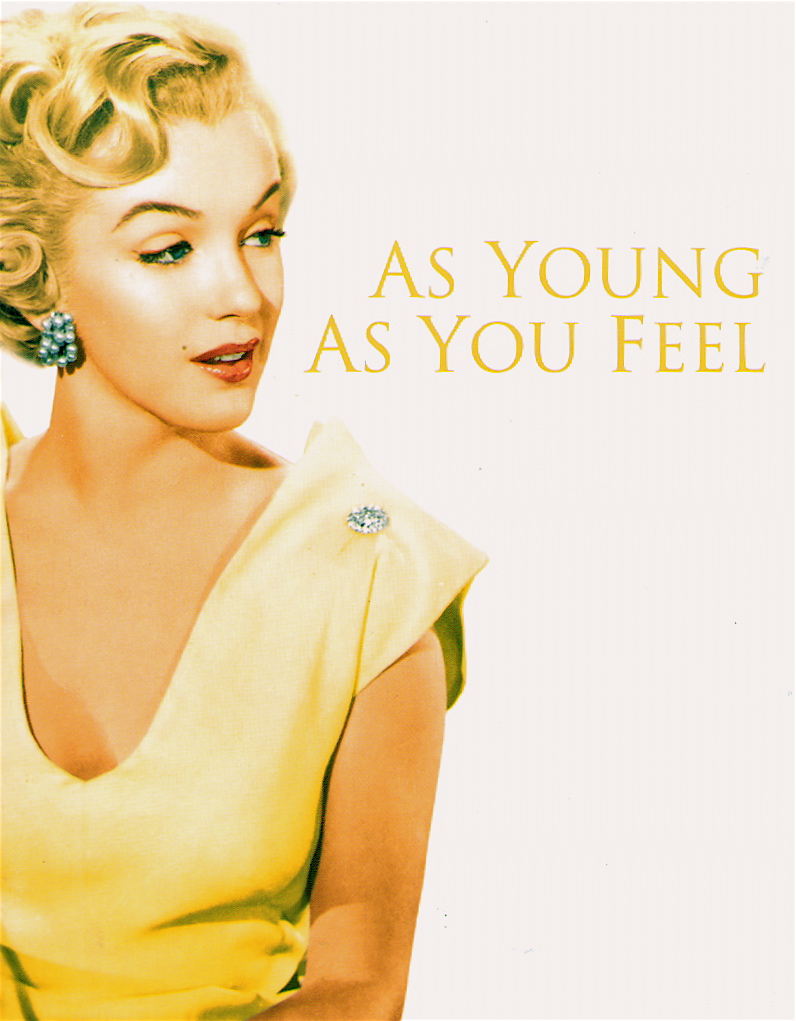
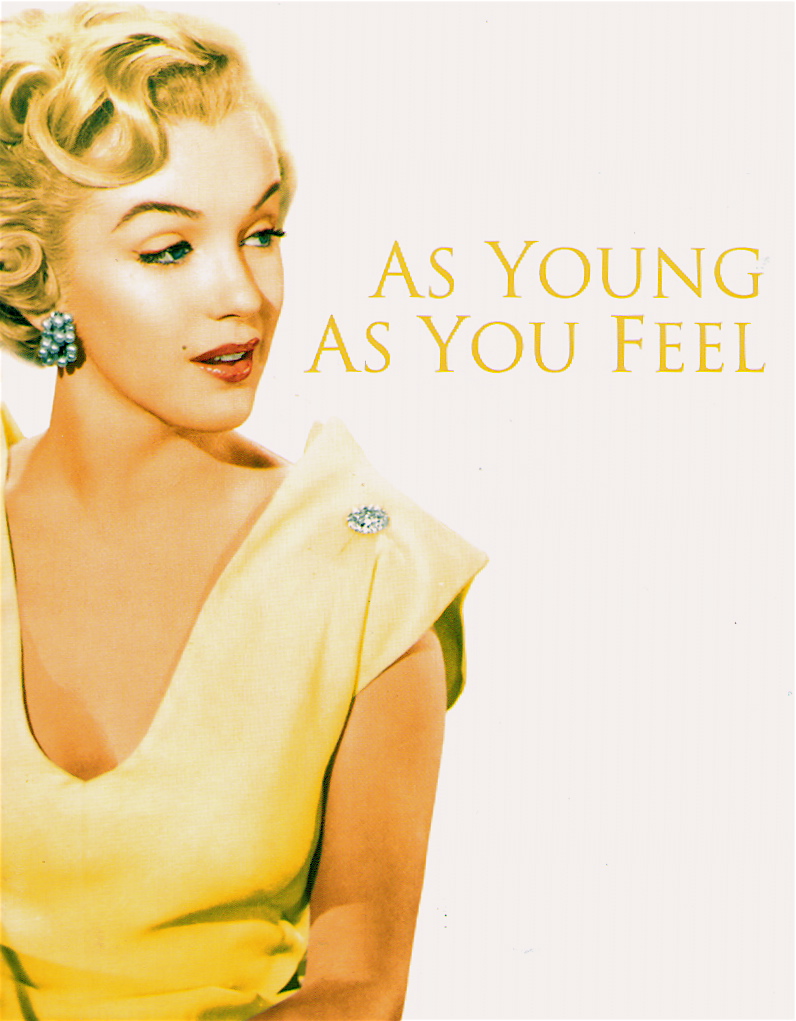
Many Happy Reruns: Marilyn Monroe at Eighty

I have been accused, at times, of exaggerating matters; but this just about proves it: radio, as a storytelling medium, is dead. I’ve conducted searches on Google and Technorati this morning, using the keywords Gelbart and Abrogate. The result: only 28 mentions in well over 40 million blogs! And no more than 444 via Google, the first entry of which refers searchers to broadcastellan. Considering that thousands of web journals are devoted to American politics and thousands more to the media in general, the lack of publicity a broadcast satire about the Bush administration has been receiving is remarkable.

I am referring, of course, to M*A*S*H creator Larry Gelbart’s “Abrogate,” a recording of which is still available on the BBC homepage. Had Barbara Bush been levitating on television (as she is in Gelbart’s utopia), had her son been denounced as the spawn of Satan (as he is in the fictive senate hearing of “Abrogate”), had Condoleezza Rice, Lynn Cheney and Ms. Bush been likened to the three hags in Macbeth (an image suggested by the radio play), there sure would have been some noise about it.

Radio used to popularize products and people, plays and personalities; now it appears to be the black hole of the multi-media universe. A few weeks ago, I recalled how Marilyn Monroe was being sent on the air to promote her studio, Fox, which had so little use for the young contract player during the late 1940s. She got flustered and faltered, delivering her few lines with less than confidence.

Her radio debut on 24 February 1947 (previously discussed here) was less than auspicious. The play presented that night on the Lux Radio Theatre was an adaptation of the costume drama Kitty. Marilyn was not in it, but was heard instead during a commercial break, peddling soap and plugging the latest film of Betty Grable, her future co-star. She had just been subjected to her first Technicolor screen test, but would remain limited to walk-ons in lesser black and white fare for years to come.

Such rare broadcasts reveal something about the personality of a performer that can be obscured on the screen. On live radio, unlike in the movies, there were no second (or twenty-second) takes. There was the microphone, demanding and daunting. There was the crowd of spectators, gawking at the performers in the studio. And there was Monroe, a nervous young woman, not yet twenty-one, clutching the script she had been instructed to read.

Monroe would have become an octogenarian today; not a pretty picture, perhaps—at least to those who see the aging process as a series of cumulative imperfections. How would the girl formerly known as Norma Jean have matured as a performer? Were she alive and among us now, would she be appearing in television dramas? Would she be discussing her latest autobiography with Larry King? Or would she be hiding from prying eyes, living in seclusion and hoping instead to be recalled as young as she was when Fox finally revealed her charms in Technicolor and Cinemascope? Given Western culture’s obsession with youth, she might now be embracing the microphone she once feared.

Recalling her not as she was or was made out to be, but calling her forth as she is to me, I am going to close my eyes now and listen to Marilyn as she returned to radio on 13 December 1952, with somewhat more assurance and considerably more box-office draw. By then she was being romanced by Charlie McCarthy, the first voice thrown into a ring littered with neglected hats.

Going on the air with Edgar Bergen’s wooden friend was risky business, considering what that chip of a chap had done to the broadcasting career of Mae West (as reported here). Not satisfied with fantasizing about her, Charlie was determined to woe and wed her, taking her home on behalf of us. Theirs was a short-lived engagement. Mine is a lasting passion . . .

The Immaculate Misconception of George W. Bush, Ex-President

Well, this is a day to remember the fallen. Perhaps that includes those fallen from grace; and according to M*A*S*H creator Larry Gelbart, the fallen one to be recalled this Memorial Day is none other than George W. Bush, Ex-President. I am referring to Gelbart’s radio play Abrogate, which aired on BBC Radio 4 on Friday, 26 May. Memorial Day roughly coincides with Ascension, which the British insist on celebrating as “Spring Bank Holiday.” I rather resent this government-imposed erasure of traditions, as if the “holi” of this “holiday” were the culture of saving and spending, and the miracle to behold and recall were the power of Mammon.

The holiday-by-any-other-name broadcast of Gelbart’s play is well-timed, considering that the futuristic satire Abrogate not only serves as a memorial to the Bush and Cheney years—which it imagines to have given way to a Hillary Clinton administration—but also serves up a miracle, revealing, in an act of levi(tationali)ty, that Baby W. was the product of Barbara Bush’s immaculate conception, his rise to office being decreed from above. Ascension meets condescension in what is itself a high-spirited, irreverent, but less than immaculate confection.

Abrogate is conceived as a broadcast by the fictional AGN (the All Gates Network), “devoted to the endless scandals and excesses which White House after White House also seem so endlessly devoted to.” Carrying on the tradition of truth-finding lowered to the level of scandalmongering, AGN presents

highlights of the recent hearings held by the Special Senate Committee that was charged by the present administration with the investigation of the extent to which the former administration was engaged in a campaign of secrecy and deception, as well as a thorough disdain for the law, the result of which was tantamount to a virtual second American Revolution that threatened to undo the first, a nullification no less of over two hundred years of this nation’s civil and social progress, as well as the alarming arbitrary banishment of recognizable order or, as it has come to be known throughout and within the media, Abrogate.

Or, as the Committee Chair puts it “at the onslaught” of the hearing, to answer the “sixty- four trillion dollar question”: “Did the powers that then were, the previous Bush administration, pursue with both malice and perhaps some aforethought certain actions which served to violate the letters and spirit of the laws of this land in a way never here before thought possible? And do the sum of these reactionary actions equal a total that smacks of a conspiracy [. . .]?” In other words, “What did the President know, aside from what the Vice President told him he already did?”

From Senator Fulsome (played by Vincent Spano), for instance, you will learn about the Secretive Service, the Center for Shame and Public Apology, and Bush’s POOP (Photo-op Operations Program). “[I]t has become more and less common knowledge that anyone who was everyone was a spy in those days,” Fulsome declares, excusing the administration’s errors in judgment by arguing that “Terrible times create terrible thinking.” Among those called to the microphone during the hearing are Condoleezza Rice (played by Theresa Randle), Lynn Cheney (Joanne Baron), and Barbara Bush (Pat Carroll), whose motherly defense of her heavenly-fathered child provides the outrageous climax of Abrogate.

It all may have sounded rather more radiogenic as it turned out: a series of voices denouncing and defending the present-turned-former president and his actions, criminal or otherwise. As a radio production, Abrogate does not quite come off, however. It is too verbose, for one, squandering many of its inspired oneliners (while drowning out some less than subtle puns). My prose, for instance, barely suited to a blog, would have no chance on the air. On the air, lines need to be snappy, delivered slowly and forcefully enough in well-timed intervals to be absorbed in a single sitting.

Nor does Abrogate succeed in sounding verisimilitudinous, in coming across like a real newscast, an actual Senate committee hearing, which is the setting of this satire. What exactly is being sent up here, other than the heavens-bound Ms. Bush? Is Abrogate deriding the former President, his family and staff; the subsequent (and presumably Democrat White House) that indulges in this fault-finding mission; or the media, for leaping at every opportunity to undermine the authority of a much-maligned administration? And while it is true that the speakers implicated themselves in their ineptitude, the dizzy spin of Gelbart’s fictive broadcast seems to be taking too many turns, ridiculing the medium of which it avails itself and thereby negating the valid (op)positions to which it gives voice.

Such shortcomings notwithstanding, Abrogate is worth a listen, especially since attempts at contemporary radio drama, let alone timely politically relevant plays, are so rare these days. For inconsequential folly, you can always tune in to my podcast, a new feature of broadcastellan about which I will have more to say in the near future.