
For the Record: Lindbergh and the Electrola

Announcer Graham McNamee called it the “most terrific broadcast [he] ever took part in.” He was referring to NBC’s on-the-spot coverage of Colonel Charles L. Lindbergh’s return from France to the United States on this day, 11 June, in 1927. It certainly was a technical achievement worthy of “this new world hero, this new ambassador of America to all other countries,” as McNamee heralded the “unassuming, quiet boy” who was anxiously awaited “not only the crowd of us ordinary folks but the cabinet of the President of the United States, high officials of the army and of the navy [. . .].”

According to the September 1927 issue of Radio Broadcast, NBC’s coverage of the event set a “new record,” requiring fourteen thousand miles of “wire line” and involved three-hundred and fifty engineers.

Now, the figures differ depending on who does the counting and recounting. In Empire of the Air, for instance, Tom Lewis claims it took twelve thousand miles of wire and four hundred engineers. But never mind those figures now—or the fact that the figure of Lindbergh itself differs now that the man must be held accountable for his fascist views and Third Reich sympathies. It was an historical event on and in the air, in aviation and broadcasting alike.

Awarding him with the Flying Cross, President Coolidge called Lindbergh a “[c]onqueror of the air and strengthener of the ties which bind us to our sister nations across the sea.” When it came to strengthening ties, the public-conquering airwaves were second to none. Not only was NBC’s coverage of Lindbergh’s return home the biggest network hookup to date, it was also, as McNamee reminded listeners, “the first time band music or music has been transmitted from the Atlantic coast to the Pacific coast, which is another epoch.”

As columnist John Wallace argued in the September 1927 issue of Radio Broadcast, the

making known of great national events, while they are actually taking place is, after all, radio’s unique contribution, and the one field in which it reigns supreme without competition from phonographs, theaters, churches, or newspapers.  And it is greatly to radio’s credit that it does this job so thoroughly and well.

Seizing the day, NBC may have rather overdone its coverage of the “hullabaloo incidental to Lindbergh’s arrival.” Commenting on the banquet given in the aviator’s honor, Wallace remarked that he

would have been quite content had all the speeches of eulogy been omitted and only that of the flyer broadcast.  Never have we heard worse blah sprung at a banquet, and sprung by such eminent leaders, divines and statesmen!

Aware that his was no doubt a minority report, the journalist added that “the nation as a whole was interested in every and any detail of the flyer’s reception and credit must be given to the National Broadcasting Company for slipping up on no smallest part.”

What, though, of all those who were unable to be part of that moment because they were away both from Washington, D. C., where the celebrations took place, and from the wireless? Able to annihilate space, radio was nonetheless time-bound. Given the “ephemeral” nature of broadcasting, the effort and money set aside to capture and yet not hold this historic moment seemed almost perverse:

Thousands of dollars are spent to engage talent, wires covering half a continent are hired, advertising is scheduled in newspapers, several studio rehearsals are held, and finally the elaborate program is put on the air. For an hour it lasts but it can never be repeated. If you did not hear it, all the king’s horses and all the king’s men couldn’t put it into your loud speaker again.

For some time, radio listeners had been able to appreciate the voices of their radio favorites on their phonographs. Not only could they take home Sam ‘n’ Henry, Vaughn De Leath, or the Happiness Boys—radio had made that happen—but they could hold and keep them there. “A very great number of well-known radio artists are regularly recording for each of the important phonograph companies,” Radio Broadcast pointed out—and supplied a list of

fine recordings made by the favorites of the Atwater Kent hour, and the famous artists of the Victor, Brunswick and Columbia hours. As for the jazz bands, the comedy duos, and other entertainers with a more local fame, they, too, are forever at your beck and call on the black discs.

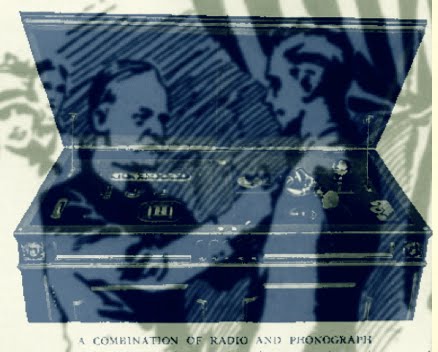
What makes the festivities in honor of Lindbergh’s return to America another milestone in the history of radio is that, for the first time, phonograph records of the live broadcast were made available for sale. As Radio Broadcast reported,

Victor has the distinction of pioneering and they offer three double-face records of the national welcome to Colonel Charles A. Lindbergh at Washington. On these three records you have the voice of President Coolidge, the interspersed announcements of Graham McNamee, a short address by Colonel Lindbergh, and his longer speech at the National Press Club. It’s all there and if you close your eyes, it isn’t hard to imagine that the events are just taking place.

True, what has been preserved for us is an edited copy of the live event; the “ceremonies were recorded on forty-six record surfaces” and “edited down” to six. True, editing is judging what matters; it is, to a degree, falsification, intentional or otherwise. Still, without the technology available back then, without the efforts of those broadcasting pioneers, I would not be writing about radio today.

As much as I at times deplore my second-hand experiences, my removal in time and space from thrilling events and fascinating personages, I, as a belated auditor, am indebted to those records. And I am grateful, too, for the “new record” in aviation that marked the beginning of an age in which sound was no barrier.

Related recording
Graham McNamee on Lindbergh’s return to America (11 June 1927)
Recollections at 30, featuring the 11 June 1927 broadcast (26 December 1956)

The “Invisible Rudolf”: Behind the Mike of a Radio Criminal

“As you know, in many countries in Europe the people are only permitted to hear what their government wishes them to hear through government controlled radio stations.” With that reason to be grateful for being an American, uttered on 8 June 1941, veteran announcer Graham McNamee introduced listeners who might have tuned in to Behind the Mike to hear the “sound effect of the week” or learn how radio series were readied for commercial sponsorship to a kind of broadcasting unlike anything heard over NBC, CBS, or Mutual stations. Despite imposed strictures, McNamee continued, there operated “within these countries or near their borders courageous men and women who, opposing the government, broadcast at the risk of their lives the truth as they see it to their fellow men.” Recusant, daring, and hazardous—such were the cloak-and-dagger operations known as “freedom stations.”
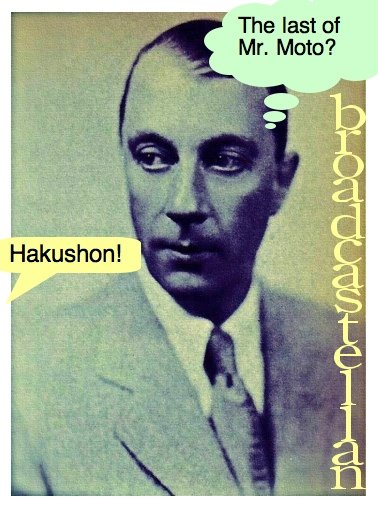
For anyone broadcasting—indeed, for anyone lending an ear to those broadcasts—the German government had a word: “Runkfunkverbrecher” (radio criminal). It also insisted on having the last word: a decree to silence those opposing the regime that would turn the cornerstones of democracy into gravestones.

Just how dangerous was it to turn off the Volksempfänger and tune in those secret stations instead? In Voices in the Darkness (1943), British historian Edward Tangye Lean (brother of film director David Lean), offered this piece of evidence from the Strassburger Neueste Nachrichten, dated 15 March 1941:

The Nuremberg Special Court has sentenced the traitor Johann Wild of Nuremberg to death for two serious radio crimes. Both before and after the coming into effect of the radio decree he behaved as an enemy of state and people by continually listening to hostile broadcasts from abroad. Not content with that, he composed insulting tirades whose source was the enemy station.

As Lean points out, propaganda minister Goebbels issued a “list of stations to which listening was allowed.” Along with their ration cards, German citizens received a “little red card with a hole punched in the middle of it so that it might be hung on the station-dial of a radio set.” The card read: “Racial Comrades! You are Germans! It is your duty not to listen to foreign stations. Those who do so will be mercilessly punished.”

Warnings were not always heeded and what was “verboten” on the air became increasingly sought-after. So, the radio-savvy Nazis devised a method to catch “Rundfunkverbrecher” in the act. Explaining how that was done was one of the “criminals” who, along with McNamee stood Behind the Mike that afternoon.

Introduced as “Rudolf,” a “young man who [had been] in charge of one of these freedom stations,” the guest speaker, having first explained how such cloak-and-dagger operations were originated by stray Nazi Otto Strasser, went on to explain:

Well, the Germans would set up mobile stations in automobiles. These stations were on the same wavelength as the freedom stations. They would play loud records as they drove through the streets. If you were listening to a freedom station and the mobile transmitter playing loud records would pass your door, your radio would pick up their broadcast and blare. Following this mobile transmitter was another car, full of Gestapo, the secret police. They traced the blare and you’d be under arrest and in a concentration camp.

“Rudolf,” who now lived in the US, proudly announced that he was “becoming an American citizen”—a “citizen of a country that needs no freedom stations,” because “here,” he reasoned, “you can hear the truth.”

The United States would not enter the war for another six months; and even though commercial broadcasters were reluctant to embrace the kind of “important messages” that were not designed to hawk a sponsor’s wares, propagandists were gradually emerging from Behind the Mike—though it would be considered rather unorthodox to have the “truth” delivered in a Germanic voice.

Still, American broadcasters could learn a lot from “Rudolf”—if, indeed, McNamee’s guest was the man whom a British newspaper had dubbed “Invisible Rudolf—the Voice of Austria.” As a contemporary historian, Charles Rolo, describes him in Radio Goes to War (1942), Rudolf was an “ex-Viennese lawyer” whose gravest “Verbrechen” it had been to impersonate Hitler on the air, making the kind of Versprechen (promises) for which the Führer was best known around the world—those he had no intention to keep . . .

A Nose for Business; or, This Woman Has Issues

You know you’ve got money to spare when you can afford to hire someone to do the sneezing for you. Save your nostrils, keep the tissue! Just call Hildegarde Halliday. That is what NBC did back in the 1930s and ‘40s, when Halliday was the Durante of sound effect artists. Radio actors were fortunate to have their proboscis blown by proxy whenever the script demanded the feigning of a common cold or an attack of hay fever. On this day, 20 October, in 1940, stage actress Halliday demonstrated her skill on Behind the Mike, a weekly half-hour that promised to take listeners inside the studio to reveal some of the tricks of the radio dramatic trade. Billed as “radio’s own show,” the aforementioned Behind the Mike dramatized and promoted the business by telling audiences what was involved in putting together a national broadcast, in selling it to a sponsor, or in prepping a studio audience.

“We’ve had many people on this program who make their living from radio in strange ways” announcer Graham McNamee opened the 20 October 1940 broadcast, referring to assorted animal imitators and baby criers (like my fictional Aunt Ilse). “But our next guest makes her living in radio in a way that tops all of them.” Halliday claimed to have “done all kinds of sneezes,” making herself heard on the variety programs headed by Rudy Vallee and Robert Benchley, as well as on daytime serials like Aunt Jenny.

“Oh, I can sneeze like all get-out if I just imagine very hard that I have a cold and chill,” the jovial Halliday tells the host (pictured above). To illustrate the afflatus the afflicted are to her, Halliday enacts in monologue a scene at a cocktail party she attended. Listeners are treated to a severe allergy attack, the sounds of which I know only too well. The sufferer lets out a few terrifying atchoos (a rather feeble onomatopoeic substitute, as it turns out), along with some choice words of political wisdom.

“I hope he doesn’t get besmirched,” the none-too-ladylike sneezer tells her friend, the wife of a congressman. “I always say politics are so common, what with letting everybody vote. No, I don’t know a thing about politics, but I do know what I like.”

Such sentiments are uttered more frequently than “Gesundheit,” no doubt, which is why elected governments are rarely as healthy and sound as they ought to be. And however poorly we are represented due to our lack of care at the sickbed of our democracies, we cannot rely on someone like Hildegarde Halliday to perform the suffering on our behalf . . .

On Not Being Cross

Yesterday, standing before a small group of professionals at a writing seminar conducted by yours truly, I introduced myself by listing my credentials (a slight record, to be sure) and . . . accounting for my diction. I always feel that I ought to do so, rather than letting my voice speak volumes for itself and raising the eyebrow of doubt in the process. There I was, in that conference room in Mid-Wales, teaching English imported from America but first gathered at a German high school. However smooth, my spoken English is like a lumpy couch. You can tell where it came from, but there are obvious dents and tears suggesting a few uneasy relocations. Plenty of people have left their impression on it. It has been patched up a few times, but never properly upholstered. No matter how many adjustments have been made to it, for the comfort and convenience of others, it never quite fits into any place. Unfortunately, it is too old now to be traded in for another model.

What I wouldn’t give to sound like Halls of Ivy-leaguer Ronald Colman (last overheard here); or like Milton Cross, perhaps, the famed radio announcer born on this day, 16 April, in 1897. A former tenor, he was originally known to listeners as AJN, such acro-pseudonyms being the convention when he started out in broadcasting back in the early 1920s. By the mid-1920s, though, announcers had made a name for themselves. They were as familiar as the brands they were paid quite handsomely to praise. Cross’s voice, for instance, became associated with prestigious NBC programs like Information, Please (on the air on this day in 1940) and the Metropolitan Opera broadcasts (which, on this day, in 1938, was introducing thousands of listeners to Tristan and Isolde).

The closest I ever got to announcing was being a voice-over recordings reader in New York City; but the texts I read were in German, my native tongue having softened over the years so as to have lost some of its screen villain edge. Apparently, my sought-after melting pot blend was smooth enough not to evoke Stalag 17. Now, I have tried said tongue at podcasting; but it probably would have been unwise for me to pursue a career in network radio during those aureate days of broadcasting in the 1930s and ’40s. Listeners might have thought me a second-rate Baron Munchausen (“Vas you dere, Sharlie?”). Sure, I could have attended Everett Mitchell’s announcer school (above picture of which I found in an issue of Radio Guide for the week ending on this day in 1938). Designed to give students a chance at that $100/week job, the course included lessons in elocution and script reading.

Forget it. There was only one Cross, and I’ve to bear it. I’ll just sit back and listen to the second half of this Recollections broadcast, which features a recording of a speed-reading contest between Cross and fellow announcers Graham McNamee and Ben Grauer, with Rudy Vallee serving as referee. The script: stanzas from the aforementioned “Walrus and the Carpenter.” The tongue workout aside, it is an appropriate choice, given the Walrus’s advice to the men behind the mike called upon to say very little very swiftly, slickly to sell you anything:

“The time has come,” the Walrus said,
“To talk of many things:
Of shoes—and ships—and sealing-wax—
Of cabbages—and kings—
And why the sea is boiling hot—
And whether pigs have wings.”

Zo, vhen do the picks get zer vings? This is Harry Heuser, signing off on a sunny afternoon half-way up in the Welsh hills.