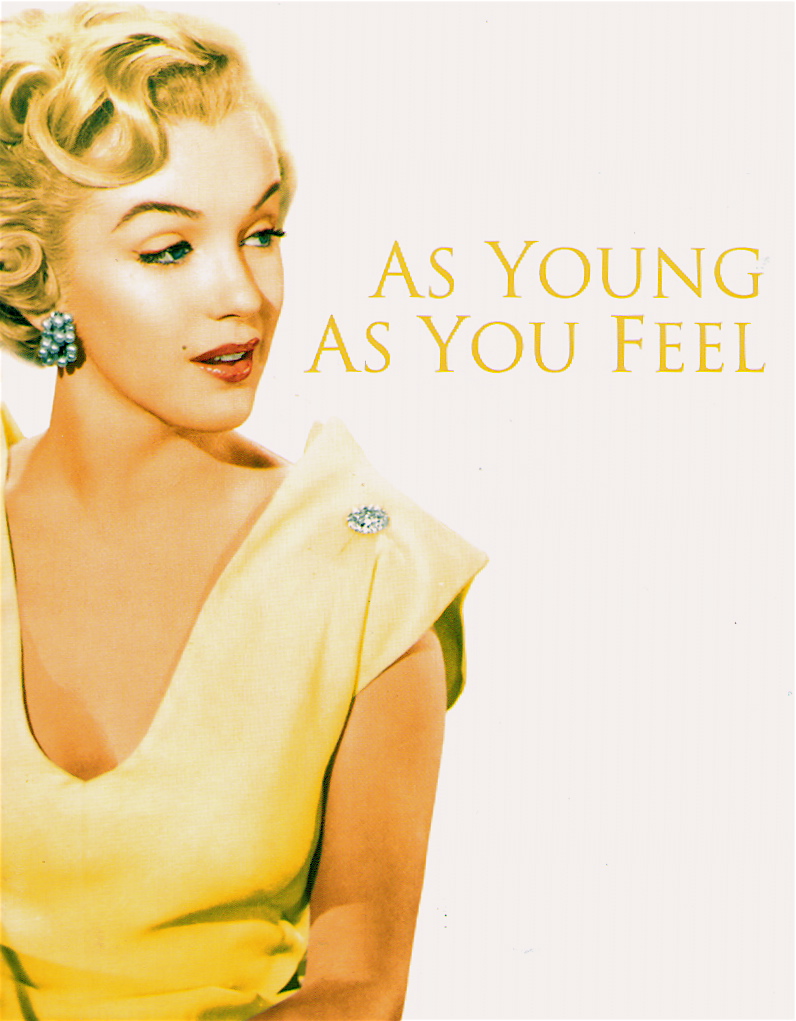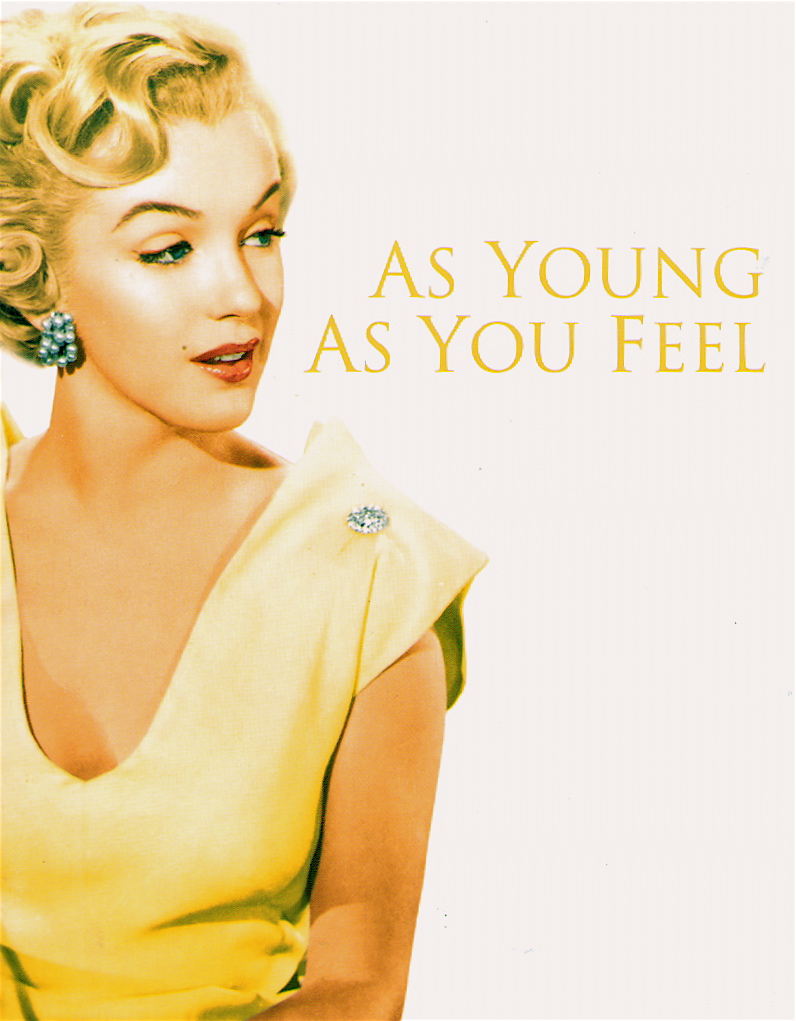
Many Happy Reruns: Marilyn Monroe at Eighty

I have been accused, at times, of exaggerating matters; but this just about proves it: radio, as a storytelling medium, is dead. I’ve conducted searches on Google and Technorati this morning, using the keywords Gelbart and Abrogate. The result: only 28 mentions in well over 40 million blogs! And no more than 444 via Google, the first entry of which refers searchers to broadcastellan. Considering that thousands of web journals are devoted to American politics and thousands more to the media in general, the lack of publicity a broadcast satire about the Bush administration has been receiving is remarkable.

I am referring, of course, to M*A*S*H creator Larry Gelbart’s “Abrogate,” a recording of which is still available on the BBC homepage. Had Barbara Bush been levitating on television (as she is in Gelbart’s utopia), had her son been denounced as the spawn of Satan (as he is in the fictive senate hearing of “Abrogate”), had Condoleezza Rice, Lynn Cheney and Ms. Bush been likened to the three hags in Macbeth (an image suggested by the radio play), there sure would have been some noise about it.

Radio used to popularize products and people, plays and personalities; now it appears to be the black hole of the multi-media universe. A few weeks ago, I recalled how Marilyn Monroe was being sent on the air to promote her studio, Fox, which had so little use for the young contract player during the late 1940s. She got flustered and faltered, delivering her few lines with less than confidence.

Her radio debut on 24 February 1947 (previously discussed here) was less than auspicious. The play presented that night on the Lux Radio Theatre was an adaptation of the costume drama Kitty. Marilyn was not in it, but was heard instead during a commercial break, peddling soap and plugging the latest film of Betty Grable, her future co-star. She had just been subjected to her first Technicolor screen test, but would remain limited to walk-ons in lesser black and white fare for years to come.

Such rare broadcasts reveal something about the personality of a performer that can be obscured on the screen. On live radio, unlike in the movies, there were no second (or twenty-second) takes. There was the microphone, demanding and daunting. There was the crowd of spectators, gawking at the performers in the studio. And there was Monroe, a nervous young woman, not yet twenty-one, clutching the script she had been instructed to read.

Monroe would have become an octogenarian today; not a pretty picture, perhaps—at least to those who see the aging process as a series of cumulative imperfections. How would the girl formerly known as Norma Jean have matured as a performer? Were she alive and among us now, would she be appearing in television dramas? Would she be discussing her latest autobiography with Larry King? Or would she be hiding from prying eyes, living in seclusion and hoping instead to be recalled as young as she was when Fox finally revealed her charms in Technicolor and Cinemascope? Given Western culture’s obsession with youth, she might now be embracing the microphone she once feared.

Recalling her not as she was or was made out to be, but calling her forth as she is to me, I am going to close my eyes now and listen to Marilyn as she returned to radio on 13 December 1952, with somewhat more assurance and considerably more box-office draw. By then she was being romanced by Charlie McCarthy, the first voice thrown into a ring littered with neglected hats.

Going on the air with Edgar Bergen’s wooden friend was risky business, considering what that chip of a chap had done to the broadcasting career of Mae West (as reported here). Not satisfied with fantasizing about her, Charlie was determined to woe and wed her, taking her home on behalf of us. Theirs was a short-lived engagement. Mine is a lasting passion . . .

The Immaculate Misconception of George W. Bush, Ex-President

Well, this is a day to remember the fallen. Perhaps that includes those fallen from grace; and according to M*A*S*H creator Larry Gelbart, the fallen one to be recalled this Memorial Day is none other than George W. Bush, Ex-President. I am referring to Gelbart’s radio play Abrogate, which aired on BBC Radio 4 on Friday, 26 May. Memorial Day roughly coincides with Ascension, which the British insist on celebrating as “Spring Bank Holiday.” I rather resent this government-imposed erasure of traditions, as if the “holi” of this “holiday” were the culture of saving and spending, and the miracle to behold and recall were the power of Mammon.

The holiday-by-any-other-name broadcast of Gelbart’s play is well-timed, considering that the futuristic satire Abrogate not only serves as a memorial to the Bush and Cheney years—which it imagines to have given way to a Hillary Clinton administration—but also serves up a miracle, revealing, in an act of levi(tationali)ty, that Baby W. was the product of Barbara Bush’s immaculate conception, his rise to office being decreed from above. Ascension meets condescension in what is itself a high-spirited, irreverent, but less than immaculate confection.

Abrogate is conceived as a broadcast by the fictional AGN (the All Gates Network), “devoted to the endless scandals and excesses which White House after White House also seem so endlessly devoted to.” Carrying on the tradition of truth-finding lowered to the level of scandalmongering, AGN presents

highlights of the recent hearings held by the Special Senate Committee that was charged by the present administration with the investigation of the extent to which the former administration was engaged in a campaign of secrecy and deception, as well as a thorough disdain for the law, the result of which was tantamount to a virtual second American Revolution that threatened to undo the first, a nullification no less of over two hundred years of this nation’s civil and social progress, as well as the alarming arbitrary banishment of recognizable order or, as it has come to be known throughout and within the media, Abrogate.

Or, as the Committee Chair puts it “at the onslaught” of the hearing, to answer the “sixty- four trillion dollar question”: “Did the powers that then were, the previous Bush administration, pursue with both malice and perhaps some aforethought certain actions which served to violate the letters and spirit of the laws of this land in a way never here before thought possible? And do the sum of these reactionary actions equal a total that smacks of a conspiracy [. . .]?” In other words, “What did the President know, aside from what the Vice President told him he already did?”

From Senator Fulsome (played by Vincent Spano), for instance, you will learn about the Secretive Service, the Center for Shame and Public Apology, and Bush’s POOP (Photo-op Operations Program). “[I]t has become more and less common knowledge that anyone who was everyone was a spy in those days,” Fulsome declares, excusing the administration’s errors in judgment by arguing that “Terrible times create terrible thinking.” Among those called to the microphone during the hearing are Condoleezza Rice (played by Theresa Randle), Lynn Cheney (Joanne Baron), and Barbara Bush (Pat Carroll), whose motherly defense of her heavenly-fathered child provides the outrageous climax of Abrogate.

It all may have sounded rather more radiogenic as it turned out: a series of voices denouncing and defending the present-turned-former president and his actions, criminal or otherwise. As a radio production, Abrogate does not quite come off, however. It is too verbose, for one, squandering many of its inspired oneliners (while drowning out some less than subtle puns). My prose, for instance, barely suited to a blog, would have no chance on the air. On the air, lines need to be snappy, delivered slowly and forcefully enough in well-timed intervals to be absorbed in a single sitting.

Nor does Abrogate succeed in sounding verisimilitudinous, in coming across like a real newscast, an actual Senate committee hearing, which is the setting of this satire. What exactly is being sent up here, other than the heavens-bound Ms. Bush? Is Abrogate deriding the former President, his family and staff; the subsequent (and presumably Democrat White House) that indulges in this fault-finding mission; or the media, for leaping at every opportunity to undermine the authority of a much-maligned administration? And while it is true that the speakers implicated themselves in their ineptitude, the dizzy spin of Gelbart’s fictive broadcast seems to be taking too many turns, ridiculing the medium of which it avails itself and thereby negating the valid (op)positions to which it gives voice.

Such shortcomings notwithstanding, Abrogate is worth a listen, especially since attempts at contemporary radio drama, let alone timely politically relevant plays, are so rare these days. For inconsequential folly, you can always tune in to my podcast, a new feature of broadcastellan about which I will have more to say in the near future.