Of Two Minds: Can The Best Man Win?

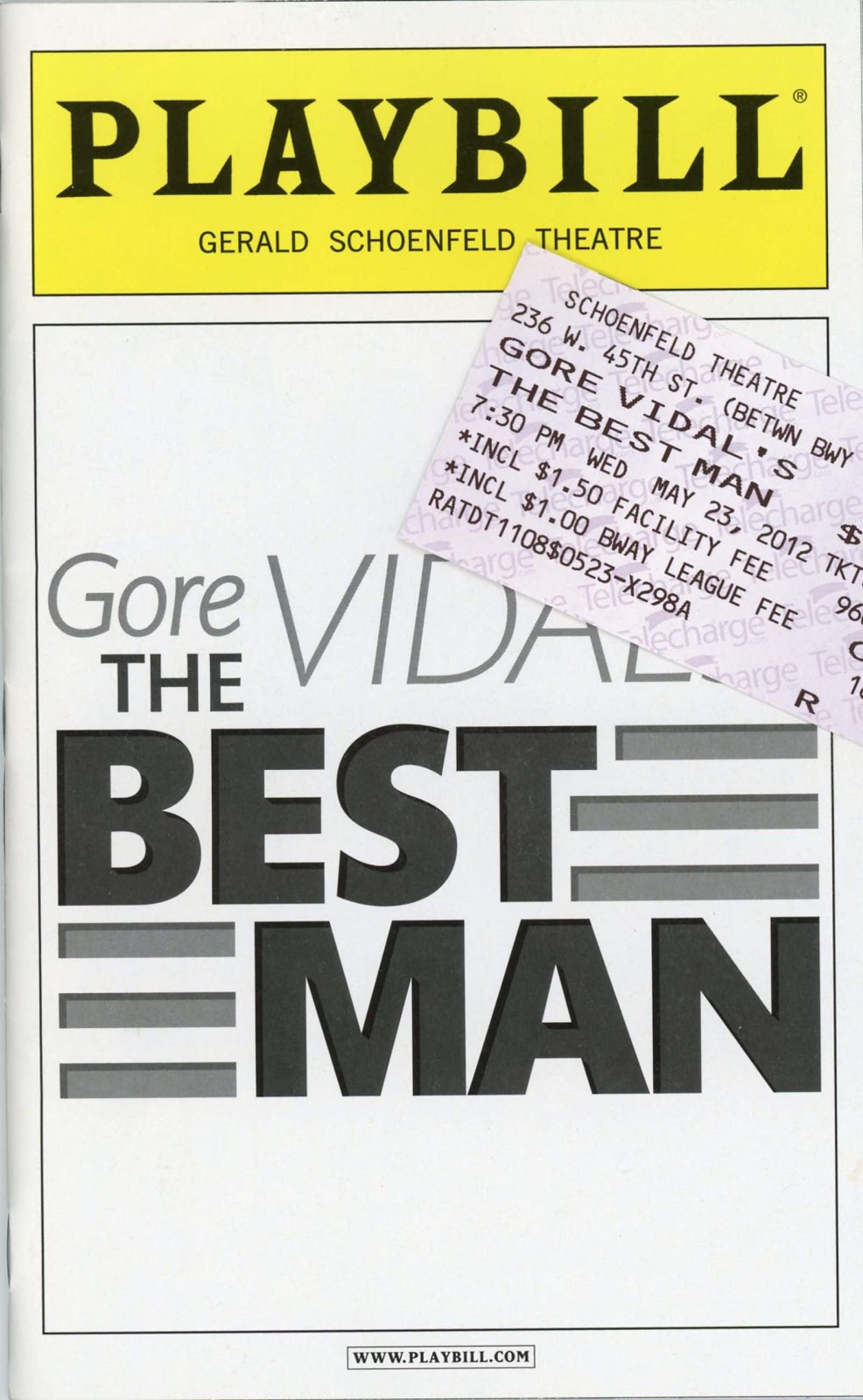
Anyone who has as much respect and appreciation for the niceties of the English language as Gore Vidal has will realize, if perhaps only after the final curtain has fallen on The Best Man, that the title is not simply ironic but prognostic: the best man, whoever he may be, cannot be declared if the fight and choice is between just two candidates.  The ostensibly โ€œbetterโ€ one of them might win, but not, grammatically speaking, the โ€œbest.โ€  Now, the man whom Vidal favorsโ€”and expects the audience of his political comedy The Best Man to root for in the playโ€™s fictional contest for Presidential nominationโ€”is not just a man of his word, he is a man who uses each word properly.  The political banter is no mere wordplay: in The Best Man, grammar and morals are one.

Like any wit, Vidalโ€™s central character, William Russell, takes language seriously.  He is not beyond lecturing and flinging the grammar at anyone who doesnโ€™t play by the rules of that book, a volume that the upright man carries in his head.

 
Russell, proper right down to that noun, is proud to have the last name of a noted philosopher; and, as a thinker, it strikes him as morally wrong to allow others to put words in his mouth.  He would rather write his own speechesโ€”โ€œItโ€™s a shameful business, speech by committee,โ€ he declaresโ€”but has come to terms with the fact that his busy schedule dictates otherwise.  What he will not brook, though, is ungrammatical speech. โ€œPlease tell the writers again that the word โ€˜alternativeโ€™ is always singular.  There is only one alternative per situation.โ€
 
In the dramatic situation of The Best Man, โ€œalternativeโ€ is clearly the wrong word, just as choosing the supposedly lesser evil is the wrong approach to casting votes.  Like the dilemma of the two-party system, the either-or decision to which the unquestioning responder is restricted calls for something better: the rejection of the supposed choice as spurious and misleadingly restrictive.
 
โ€œMay the best man win!โ€ is the choice platitude of Russellโ€™s opponent, Joseph Cantwell, whose last name, more than the name of Russell, suggests that the playwright cares less about his characters than about the philosophies for which he makes them stand and fall: they are metaphors for what politics can reduce us to when all we care about is making a name for ourselves.  Both Russell and Cantwell are stand-ins for the figures we imagineโ€”hope and fearโ€”politicians to be; beyond that, they arenโ€™t at all.  “A candidate should not mean but be,โ€ the literary playwright has Russell quip; as a character, Russell is not meant to be anything other than the mouthpiece Vidal means him to be in this verbal play of true versus nominal values.
 
Asked whether he thought that โ€œa president ought to ignore what people want,โ€ Russell replies โ€œIf the people want the wrong thing, [. . .] then I think a president should ignore their opinion and try to convince them that his way is the right way.โ€  How to do right and what is โ€œrightโ€ are the questions The Best Man aims at encouraging us to ponder.  Russell answers by taking his opponent by his clichรฉd expression and extricating himself from the either-or bind that threatens to turn him into a man no better than Cantwell.
 
Vidal, too, attempts a way out here, a synthesis of satire and sentimentality, cynicism and hopefulness, as he demonstrates Russell to be the โ€œbestโ€ man, after all, by proving him to be the better one.  The solution is as noble as it is grammaticalโ€”but it is rather too neat and ponderous, especially since the alternative โ€œmessageโ€ Vidal communicates is more tired than the dirty politics from which he derives a modicum of dramatic tension.
 
โ€œAnd if I may bore you with one of my little sermons,โ€ Russell and Vidal tell reporters and audiences early on:

Life is not a popularity contest; neither is politics.  The important thing for any government is educating the people about issues, not following the ups and downs of popular opinion.

Who, today, would buy that little nugget of shopworn sentiment?

Few, no doubt, even bother, as they are more likely to have come to sample the wares on display in the latest Broadway production at the Gerald Schoenfeld Theatre.  The cast is headed by two sentimental favoritesโ€”Angela Lansbury and James Earl Jonesโ€”whose presence, however lively, takes some of the bite out of the 1960 play, which now provokes nothing more effectively than nostalgia: a longing for politics that never were.  Like politics, the business of staging a show is too much of a โ€œpopularity contestโ€ to rely on a playwright’s words to win us over.  Reading the script now without seeing the assembled personalitiesโ€”Candice Bergen, John Larroquette, Eric McCormackโ€”before me on that evening in May, I can better appreciate Vidal’s best linesโ€”but, as a play, The Best Man remains ultimately unconvincing.

 
Sizing up his competition, Victorian novelist Anthony Trollope once interrupted one of his narratives by attempting witty remarks about Thomas Carlyle and Charles Dickens, labeling  the latter โ€œMr. Popular Sentimentโ€ and the former โ€œDr. Pessimist Anticant.โ€  With his showdown between โ€œPopularโ€ Cantwell and โ€œAnticantโ€ Russell, Vidal demonstrates that wanting to be both satirical and sentimental means doing justice to neither; the sentiment feels calculated, the wit pointless. In the noble experiment of making dirty politics cleaner, everything comes out rather muddy in the wash.

Come On Up, Eileen; or, Wonderful Yorkville

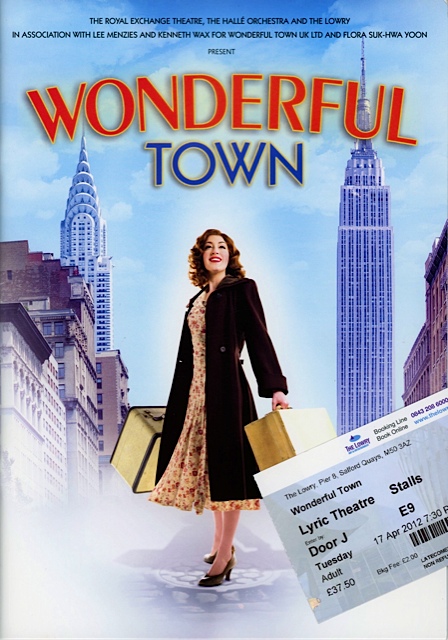
A few weeks ago, my better half and I were up in Manchester, England, to do research for an upcoming exhibition.ย  While there, we had the good fortune of catching a production of Leonard Bernsteinโ€™sย Wonderful Townย starring Welsh girl gone West End Connie Fisher as Ruth.ย  Though not quite the real thing, this revival of a Broadway musical version of a play (turned movie, turned sitcom) based on a series of magazine stories inspired by the personal recollections of an Ohioan in Gotham did manage to evoke some of the magic and the madness of life in the titular burg.ย  And now that Iโ€™m back, the residential misadventures of Eileen and her sister come to mind each time I walk down Second Avenue in my old Upper East Side neighborhood.ย  Like the McKenney siblings, whose Greenwich Village basement flat was shaken by blasts heralding a subway line then under construction, folks up here in Yorkville have been dealing for years with the pre-math of just such a subterranean project: the noise, the dirt, the traffic jams, the shut down stores, the narrowed sidewalks, the fenced in pedestrian passageways that make you feel like a laboratory rat . . . and the rats themselves.


Yes, Second Avenue (pictured) is looking rather worseโ€”and far less flashyโ€”than it did when the street was lined not with gold, but with gals who may or may not have a ticker made of that precious metal; you know, ladies whose line, like the subwayโ€™s, is well below. ย Wonderful Townย is not without hints of darkness, but, as in many musicals of the 1940 and ’50s, the shadier urbanites are colorful caricatures rather than delicately shaded characters. ย And if Wonderfulย is now not as well liked as it was when it premiered, this may be owing to the fact that, even though the characters are based on real people, the assembled Christopher Street portraits are cleaned up so thoroughly as to make them look like stock figures in a formulaic pastiche. ย That said, the musical still offers a glimpse at life during the Great Depression and remains translatableโ€”and relatableโ€”to anyone who can read between all those half erased lines of none-of-your-business.

Not that I need to step out of my old apartment to get that sinking Ruth and Eileen feeling.ย  The two women struggled to find work and put up with a lot while waiting for a break, a wait that, in Eileenโ€™s case, ended at the age of 26 in a fatal car crash.ย  Journalist Ruth McKenney immortalized her sister and sawโ€”orย made us seeโ€”the bright side of their hardship and the squalor down in their dingy, downstairs domicile. ย Indeed, when I first caught up withย My Sister Eileen, sitting in an Upper East Side park listening to a 1948 radio production starring Shirley Booth, I assumed it to be a comment in the post-Second World War housing crisis. ย And it is this crisis that hits home today.

If ever I write another autobiographyโ€”the one I penned somewhat prematurely at age 14 was discarded once it had served its purpose of communicating my pubescent angst to the girls in my class, whom I knew it was pointless for me to pursueโ€”I might take a lesson from Ruth and look on the proverbial if sometimes elusive silver lining when I reflect on this morningโ€™s knock on the door. ย An eviction notice was posted on it and my old apartment is once again contested territory.ย  I am writing thisโ€”whileย culture beckons unheededโ€”sitting at the shaky dinner table that, for many years, was stacked with books, student essays, and the drafts of my MA thesis and PhD dissertation. ย No, this town would not feel half as wonderful to me if it werenโ€™t for that table, this apartment, and for the friendship that made it possibleโ€”and indeed desirableโ€”to come back for a visit, year after year . . .

โ€œAnyone we know?โ€: An Absentminded Review of The Royal Family

What a tramp my mind has turned into lately. I would like to think that I still got one of my own, to have and to hold on to, for richer or poorer, and all that; but every now and again, and rather too frequently at that, the willful one takes off without the slightest concern for my state of it. It used to be that I could gather my thoughts like keepsakes to store a mind with; these days, I wonder just whoโ€™s minding the store. And just when I feel that Iโ€™ve lost it completely, there it comes ambling in, disheveled, unruly, and well out of its designated head. With a little luck, the suitcase of mementoes with which it absconded turns up again, similarly disorganized, rarely complete if at times strangely augmented. Perhaps, minds resent being crossed once too often. That has crossed mine, to be sure.

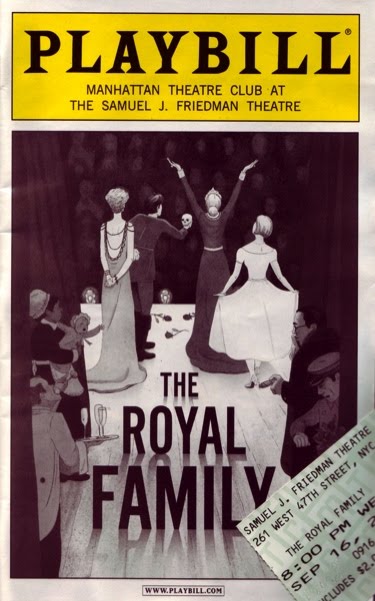
Anyway, where was I going with this? Ah, yes. Straight back to New York City. The Biltmore Theatre. Make that the Samuel J. Friedman, as it is now called. Built in 1925 and steeped in comedy theater tradition, the former Biltmore is just the venue for the current revival of The Royal Family, of which production, scheduled to open 8 October 2009, I had the good fortune to catch the second preview a few weeks ago. Classic crowd-pleasers like Poppa (1929), Brother Rat (1936-38), My Sister Eileen (1940-42), and the long-running Barefoot in the Park (1963-67) were staged here, where Mae West caused a sensation in October 1928 with Pleasure Man, a play they let go on for all of two performances.

While Ethel Barrymore might have wished a similarly compact run for The Royal Family, the play amused rather than scandalized theatergoers who appreciated it as a wildly flamboyant yet precisely cut gem of wit set firmly in a mount of genuine sentimentโ€”which is just what youโ€™d expect from a collaboration of George S. Kaufman and Edna Ferber. Histrionics, theatrical disguises, a bit of swashbucklingโ€”this screwball of a jewel still generates plenty of sparks, even if the preview I attended needed a little polish to show it off it to its full advantage.

Informed that her son may have killed a man, the matriarch of the family inquires: โ€œAnyone we know?โ€ Among the somebodies we know to have slain them with lines like these in the past are Broadway and Hollywood royals like Otto Kruger, Ruth Hussey, Eva Le Gallienne, Fredric March, Rosemary Harris, and . . . Rosemary Harris. As is entirely in keeping with the playโ€™s premiseโ€”three generations of a theatrical family congregating and emoting under one roofโ€”Ms. Harris is now playing the mother of the character she portrayed back in 1975. Regrettably, unlike Estelle Winwood in the cleverly truncated Theatre Guild on the Air production broadcast on 16 December 1945, Ms. Harris as Fanny Cavendish was not quite eccentric or electric enough, although she certainly possesses the curtains-foreshadowing vulnerability her character refuses to acknowledge.

Decidedly more energetic and Barrymore or less ideally cast were the other members of the present production, which includes Jan Maxwell as Julie, Reg Rogers as Tony, Tony Roberts as Oscar, John Glover as Herbert Dean and Saturday Night Live alumna Ana Gasteyer as Kitty. Whenever the pace slackened and the madcap was beginning to resemble a nightcap or some such old hat, I could generally rely on Ms. Gasteyerโ€™s gestures and facial expressions to keep me amused.

There was a moment, though, when my attention span was being put to the testโ€”and promptly failed. I looked at the fresh though not especially fascinating face of Kelli Barrett (as Gwen) and found myself transported to the 1920s, those early days of the Biltmore. I started to think of or hope for a youthful, vivacious Claudette Colbert performing on Broadway at that time, a few years before she left the stage to pursue a career in motion pictures. Why, I wondered, was my mind walking off with her?

Well, eventually it all came home to meโ€”my mind sauntering back in with a duffle bag of stuff I didnโ€™t remember possessingโ€”when I perused the playbill to learn about the history of the Biltmore. Colbert, I learned, had performed on that very stage back in 1927, the year in which The Royal Family was written, enjoying her first major success in The Barker. Decades later, she returned there for The Kingfishers (1978) and A Talent for Murder (1981). So, there was something of a presence of Ms. Colbert on that stage, even though she never played young Gwen.

Today, researching a little to justify what still seemed like a mere digression in a half-hearted review of the play, I discovered (consulting the index of Bernard F. Dickโ€™s recent biography of Colbert) that the actress did get hold of a minor branch of the Royal Family tree when she seized the opportunity to portray Gwenโ€™s mother in a 1954 television adaptation of the play. That version, the opener for CBSโ€™s The Best of Broadway series, was broadcast live on 16 Septemberโ€”which happens to be the day I stepped inside the Biltmore to catch up with The Royal Family.

Perhaps it is just as well that I give in and let my mind go blithely astray. For all the exasperation of momentary lapses, of missed punch lines, plot lines or points my thoughts are beside of, the returns are welcome and oddly reassuring. Besides, the old tramp wouldnโ€™t have it any other way . . .
They Also Sell Books: W-WOW! at Partners & Crime

Legend has it that, when asked what Cecil B. DeMille was doing for a living, his five-year-old grand-daughter replied: โ€œHe sells soap.โ€ Back then, in 1944, the famous Hollywood director-producer was known to million of Americans as host and nominal producer of the Lux Radio Theater, from the squeaky clean boards of which venue he was heard slipping (or forcefully squeezing) many a none-too-subtle reference to the sponsorโ€™s products into the behind-the-scenes addresses and rehearsed chats with Tinseltownโ€™s luminaries, lines scripted for him by unsung writers selling out in the business of making radio sell.

No doubt, the program generated sizeable business for Lever Brothers; otherwise, the theatrical spin cycle conceived to bang the drum for those Lads of the Lather would not have stayed afloat for two decades, much to the delight of the great (and only proverbially) unwashed. For all its entertainment value, commercial radio was designed to hawk, peddle and tout; and although the spiel heard between the acts of wireless theatricals like Lux has long been superseded by the show and sell of television and the Internet, old radio programs still pay off, no matter how freely they are now shared on the web. In a manner of speaking, they still sell, albeit on a far smaller and downright intimate scale.

Take W-WOW! Radio. Now in its fourteenth season, the opening of which I attended last month, the W-WOW! Mystery Hour can be spentโ€”heard and seenโ€”on the first Saturday of every month (July and August excepting) from a glorified store room at the back of one of the few remaining independent and specialty booksellers in Manhattan: Partners & Crime down on Greenwich Avenue in the West Village. The commercials recited by the cast are by now the stuff of nostalgia, hilarity, and contention (“In a coast-to-coast test of hundreds of people who smoked only Camels for thirty days, noted throat specialists noted not one single case of throat irritation due to smoking Camels“); but the readings continue to draw prospective customers like myself.

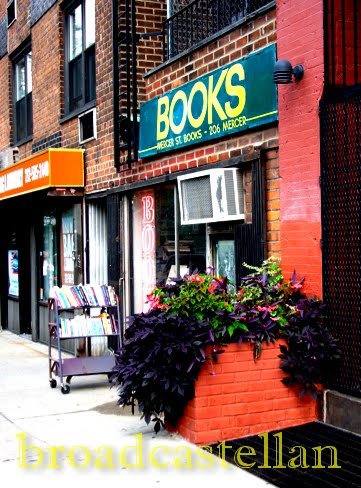
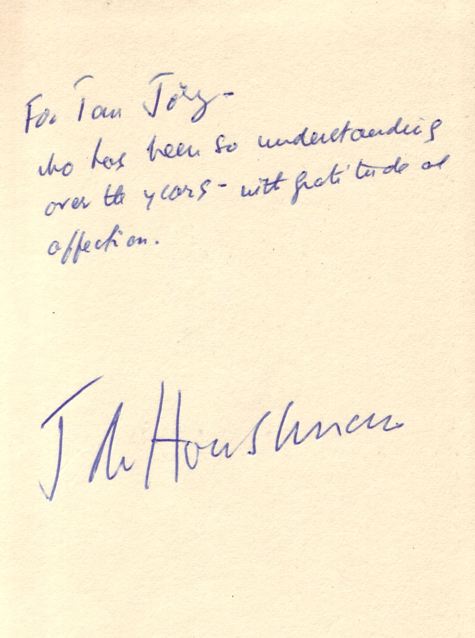
Whenever I am in town, I make a point of making a tour of those stores, even though said tour is getting shorter and more sentimental every year. There are rewards, nonetheless. Two of my latest acquisitions, Susan Wareโ€™s 2005 โ€œradio biographyโ€ of the shrewdly if winningly commercial Mary Margaret McBride and John Housemanโ€™s 1972 autobiography Run-through (signed by the author, no less) were sitting on the shelves of Mercer Street Books (pictured) and brought home for about $8 apiece. The latter volume is likely to be of interest to anyone attending the W-WOW! production scheduled for this Saturday, 3 October, when the W-WOW! players are presenting the Mercury Theatre on the Air version of Dracula as adapted by none other than John Houseman.

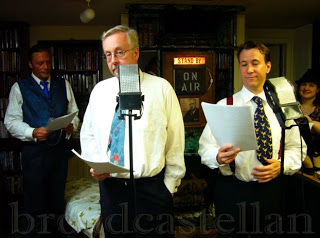
As Houseman puts it, the Mercuryโ€™s โ€œDraculaโ€โ€”the seriesโ€™s inaugural broadcastโ€”is โ€œnot the corrupt movie version but the original Bram Stoker novel in its full Gothic horror.โ€ Indeed, Housemanโ€™s outstanding adaptation is a challenge worthy of W-WOW!โ€™s voice talent and just the kind of material special effects artist DeLisa White (pictured above, on the right and to the back of those she so ably backs) will sink her teeth into, or whatever sharp and blunt instruments she has at her disposal to make your hair stand on end.

Rather more run-of-the-mill were the scripts chosen for W-WOW!โ€™s September production, which, regrettably, was devoid of vamps. You know, those double-crossing, tough-talking dames that enliven tongue-in-cheek thrillers like The Saint (โ€œLadies Never Lie . . . Muchโ€ or โ€œThe Alive Dead Husband,โ€ 7 January 1951) and Richard Diamond (โ€œThe Butcher Shop Case,โ€ 7 March 1951 and 9 March 1952), a story penned by Blake “Pink Panther” Edwards and involving a protection racket. The former opened encouragingly, with a wife pretending to have killed a husband who turned out to be yet living, if not for long; but, as it turned out, the dame had less lines than any of the ladies currently in prime time, or any other time for that matter. Sure, crime paid on the air; but sex, or any vague promise of same, sells even better.

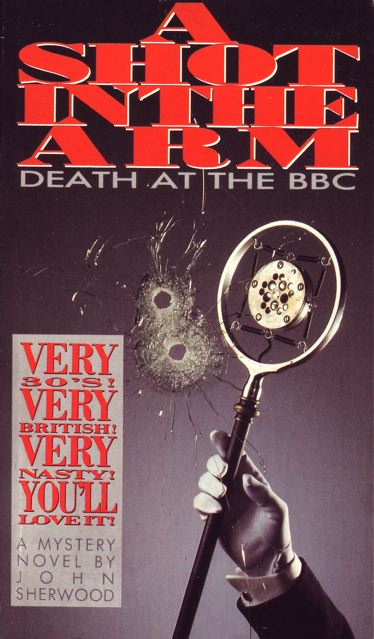
That said, I still walked out of Partners & Crime with a book in my hand. As I passed through the store on my way out, an out-of-print copy of A Shot in the Arm caught my eye and refused to let go. Subtitled โ€œDeath at the BBC,โ€ John Sherwoodโ€™s 1982 mystery novel, set in Broadcasting House anno 1937 and featuring Lord Reith, the dictatorial Baron who ran the place, is just the kind of stuff I am so readily sold on, as I am on browsing in whatever bookstores are still standing offlineโ€”if only to give those who are still in the business of vending rare volumes a much-deserved shot in the open and outstretched arm.

Related recordings
“Ladies Never Lie . . . Much,” The Saint (7 January 1951)
“The Butcher Case,” Richard Diamond (7 January 1950)
“The Butcher Case,” Richard Diamond (9 March 1951)

Gone South . . . and Very Pacific: Broadway on an Off Day

I suppose I am back in my element (earth, mingled with dust), being that I can reminisce at last about my recent trip to New York City from the comfort of my own patch of terra firma across the pond. Okay, so I never managed to turn writing into a living; but I sure can turn life into writingโ€”provided I can go on about past experiences once I am good and ready, once that which has been going on and gone through my mind is bona fide bygone. Not one to multitask, I somehow cannot both be living and writing simultaneously, which is why Twitter is not for me. I am not cut out to be an on-the-spot correspondent. You wonโ€™t catch me with my finger on the pulse of anything yet living other than in my thoughts where, quickened by imagination, anything presumably dead and gone is readily revived.

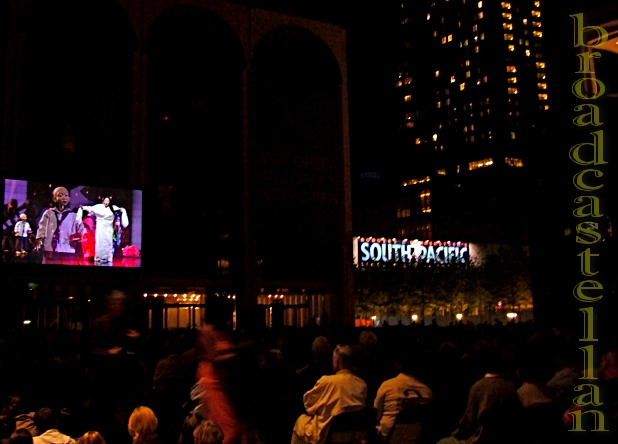
Perhaps, going live is not the same as being in the moment; at least, performances need not be, by virtue of being live, worth a moment of my time. For the record (and this is a new record to me, for I am about to change my tune): canned performances are not necessarily inferior to live ones. At least I thought so a few weeks ago while watching a recorded broadcast of a dazzling Metropolitan Opera production of Madama Butterfly, screened on the plaza in front of the building housing that venerable institution.

There I was (leaning against a trash can, no less), joined by hundreds of strangers, to take in, free of charge, the musical equivalent of cured meat, a pickled delicacy shared out to lure those partaking into the venue to shell out serious money for the supposedly real thing. Maybe Iโ€™ll think differently tomorrow at the local cinema, where I will be catching a high definition broadcast of the current National Theatre production of Shakespeareโ€™s Allโ€™s Well That Ends Well, live from London; but I sure realized that live is not to be confused with lively when I went to see South Pacific at New Yorkโ€™s Lincoln Center Theater, just a few feet from the screen where Madama Butterfly had flickered before my teary eyes.

South Pacific left my peepers dry, even though I was on the brink of welling up when I reminded myself that I had let go of more than $90 for a discount ticket to for the dubious privilege of beholding said spectacle. What I witnessed was Broadway on an off night, some less than โ€œEnchanted Eveningโ€ during which the cast went through the motions like Zombies on sabbatical. I knew as much when I opened my playbill to discover one of those white slips that, on the Great White Way, are equivalent to a pink one: Paulo Szot, the celebrated lead, had been replaced for the evening (and several weeks to come) by one William Michals.

Turns out, Mr. Michals had all the charm and thespian animation of a Bela Lugosi. Not that Laura Osnes (as Nellie Forbush) was out-Mitziying Ms. Gaynor. She did not as much try to wash that man right outa her hair as dispose of him with a purple rinse. As I remarked to my fellow onlooker, the pair had less going on between them as might be generated by a preschoolerโ€™s chemistry set.

Almost everything about this potentially engrossing play seemed to have been rehashed on a desperately reduced flame. I, for one, was boiling; it wasnโ€™t โ€œHappy Talkโ€ youโ€™d have overheard had you been eavesdropping on us as we left the theater. Sure, the production had been running for a year and a half and wasnโ€™t exactly โ€œYounger Than Springtimeโ€; but the Pacific, never more deserving of the name, has rarely felt quite this tepid. A rousing rendition of โ€œThere Is Nothinโ€™ Like a Dameโ€ and the still-spirited performance of Danny Burstein (as Billis) aside, the promise of Bali Haโ€™i never left anyone feeling quite this low . . .

“Chew that bacon good and slow”: Our Town Like You’ve Never Seen It

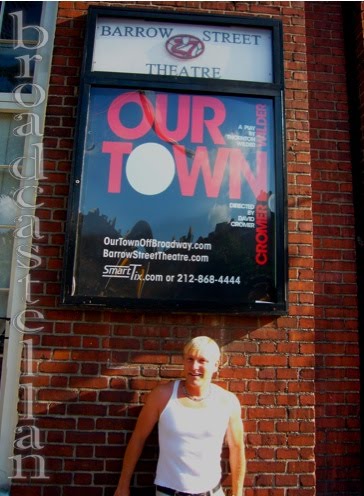
Okay, so Iโ€™ve been cutting a few corners during my present, month-long stay in New York City; but I wasnโ€™t about to cut Groverโ€™s Corners. Our Town, that is, a new production of which is playing at the Barrow Street Theatre in Greenwich Village. These days, there isnโ€™t much on Broadway to tempt me into letting go of whatever is left in my wallet. I mean, Shrek the Musical? Whatโ€™s next, Pac-Man of the Opera? A concert version of Saved by the Bell? Secret Squirrel on Ice? I am all for revisiting the familiarโ€”a tendency to which this journal attestsโ€”as long as I feel that such recyclings are worth my impecunious (hence increasingly persnickety) whileโ€”and theatrical retreads of The Addams Family, 9 to 5 or Spider-Man are not. Come to think of it, I had never seen a performance of Thornton Wilderโ€™s Pulitzer Prize-winning Our Town, which I always thought of as the ideal radio play. Well, let me tell you, David Cromer sure made me see it differently.

Our Town was produced on the air at least three times, even though the Lux Radio Theatre version (6 May 1940) is a reworking of the screenplay, replete with a tacky, tagged-on Hollywood ending and ample space for commercial copy between the acts. Wilderโ€™s 1938 play is decidedly radiogenic in its installation of a narrator (or Stage Manager) and its insistence of doing away with props or scenery. The Barrow Street Theater production seemed to be in keeping with the playwrightโ€™s instructions; and I was all prepared to watch it with my eyes closed.

There are two tables on the small stage; and the props do not amount to more than a hill of string beans. The Stage Manager points into the audience, inviting us to envision a small town in New Hampshire, anno 1901:

Along here’s a row of stores. ย Hitching posts and horse blocks in front of them. First automobile’s going to come along in about five years belonged to Banker Cartwright, our richest citizen . . . lives in the big white house up on the hill.

Here’s the grocery store and here’s Mr. Morgan’s drugstore. ย Most everybody in town manages to look into those two stores once a day.

Public School’s over yonder. ย High School’s still farther over. ย Quarter of nine mornings, noontimes, and three o’clock afternoons, the hull town can hear the yelling and screaming from those schoolyards.

Some eyes followed the pointed finger in my direction, faces in the crowd briefly looking past me in hopes of making out the Methodist and Unitarian churches just behind my back. Now, Iโ€™m not saying that the actors were not worth looking at, Jennifer Grace as Emily Webb being particularly charming. Still, at the end of the first act, I could not figure out what Frank Scheck of the New York Post referred to as โ€œrevolutionary staging.โ€ Two tables, eight chairs, string beans?

By act three, I understood. David Cromer defies Wilderโ€™s instructions (โ€œNo curtain. No sceneryโ€)โ€”and to startling effect. I never thought that the smell of bacon could be so overwhelming, so urgent and direct. Sure, it has often made my mouth waterโ€”but my eyes? Whether or not you are a staunch vegetarian, there is reality in the scent, just as there is a revelation behind that curtain. Our Town may be a wonderful piece of pantomime; but Cromer deserves some props.

โ€œOh, Mama, just look me one minute though you really saw me,โ€ the dead Emily implores the unseeing childhood vision of her mother. โ€œMama, just for a moment we’re happy. Let’s look at one another.โ€ Seeing this fragrant scene acted out made me realize anew the importance of coming to all of oneโ€™s senses, of partaking by taking in, of grabbing hold of the moment (which we Germans call an Augenblick, a glance) by beholding what could be gone at the blink of an eye.


Related recordings
“Our Town,” Campbell Playhouse (12 May 1939)
“Our Town,” Lux Radio Theatre (6 May 1940)

Crosstown Stitch: Embroidering on a Favorite Subject

โ€œSalut au monde!โ€ That is a greeting the narrator of Norman Corwinโ€™s โ€œNew York: A Tapestry for Radioโ€ extended to the never quite statistically average American listenerโ€”anybody tuning in to the nationally broadcast play cycle Columbia Presents Corwin back during World War II. And that is how I, returned again to my old yet ever changing neighborhood in uptown Manhattan, am reaching out to the potentially even more multifarious roamers of the World Wide Web.

Why Salut, though? Why go for the highfalutin when something lowbrow like hiya would do? After all, French is not among the languages most closely associated with the Big Pomme. Sure, there is that French lady who greeted the multitudes who came across the big pond to get a bite out of it; but only because sheโ€™s made of copper doesnโ€™t make her a coined phrase.

Corwin was not going for the definitiveโ€”the single, representative tongue with which to tie up an argument only to contradict it. Symbolic of the promises and failures of the Versailles treaty, the imported salutation is part of a pattern designed for a sonic romancing of immigration central, where nations become nabes and the worldโ€™s people are โ€œliving side by side so effortlessly, no one calls it peaceโ€โ€”a cosmopolitan locale to which nothing could be more foreign than the homogenous or the homo-logos.

As LeRoy Bannerman describes it, Corwinโ€™s voice collage
advocated world unity, exemplified in the polyglot harmony of New Yorkโ€™s people. It possessed threads taut with the strain of war and the urgency of an all-out effort, symptoms of concern that greatly colored Corwinโ€™s work with tints of patriotism.

The colors in Corwinโ€™s fabricโ€”that crowd-pleasing fabrication of Gotham (what do you call it? Gothamer)โ€”are red, white and blue all right; but when Corwin waves the flag, he does not make difference stand out like a blot on Old Glory. Corwinโ€™s aural tapestry is rich in the variations that the theme demands, distinguished by the โ€œspeakers of the foreign and the ancient tongues,โ€ the โ€œconjoined creedsโ€”the Jew, the Christian, the Mohammedan.โ€

The speech is American, which is to say that it is not exclusively, let alone officially, English or any variation thereof. โ€œDo not mistrust [folks] because of their accent,โ€ the narrator cautions those who stand their ground by calling it common, โ€œfor we ourselves might be incomprehensible in Oxford.โ€ The Queenโ€™s English ainโ€™t the English of Queens, New York.

โ€œThe people of the city are the main design,โ€ the narrator insists. Seemingly random utterances by speakers nameless to the audience constitute the โ€œindividual threadsโ€ of an intricately woven fabric whose pattern, unlike the grid formed by the cityโ€™s streets, cannot be visually apprehended. โ€œHow can you tell, from Seat No. 5 on the plane from Pittsburgh, what goes on here?โ€ Nor can it be comprehended by the unaided earโ€”at least not by anyone well out of earshot. As I put it in Etherized Victorians, the way to arrive at the design is microphonic, not macroscopic.

The narrator invites โ€œAmericans on this wave lengthโ€ to follow the threads of โ€œinterwoven hopesโ€ by โ€œlistening acutelyโ€ to the peoples of New York City, be they from โ€œGerman Yorkvilleโ€ or the โ€œoutlying Latin quarters.โ€ Their voices are brought into a meaningful relation through the aid of the radio, of which the main speaker as receiver, amplifier and transmitter is an abstraction.

At the momentโ€”and being in itโ€”it is easy to lose sight of the wireless, even as I walk past Radio City. I feel no need for a hearing aid or a translator. I am a part of a grand, Whitmanesque design, which is both spoken and understood.

Audiophile, My Eye!

Has my ear been giving me the evil eye? For weeks now, I have been sightseeing and snapping pictures. I have seen a few shows (to be reviewed here in whatever the fullness of time might be), caught up with old friends I hadn’t laid eyes on in years, or simply watched the world coming to New York go byโ€”all the while ignoring what I set out to do in this journal; that is, to insist on equal opportunity for the ear as channel through which to take in dramatic performances so often thought of requiring visuals. When. in passing, I came across this message on the facade of the Whitney Museum, my mindโ€™s eye kept rereading what seems to be such a common phrase” โ€œAs far as the eye can see.โ€

It is the article that began to overshadow the empty nest below the dead eye of the cyclopean window in the austere faรงade, features that might well be to some what Roland Barthes referred to as the punctumโ€”the point(s) to which the eye is drawn, the dot(s) that end up in the question marks we make of art that engages us.

What might that be, โ€œthe eyeโ€? Are we to assume that one eye looks out into the world as any other, that the act of seeing is objective, divorced from outlook, range and perspective? Does โ€œthe eyeโ€โ€”untrained or jaundiced or unfocusedโ€”invariably begin to see things as it seeks what lies beyond perceiving, such as an imaginary bird returning to the nest of our senses?

A few days ago, I suffered an eye infection (come to think of it, the second one since my arrival here in late May), which brought the above picture back to mind. I am not sure just how it happened, but my right eye became alarmingly inflamed, my lid swelled up and my cornea buckled. It is still pounding now, even though there no longer exists any ocular proof of my discomfort. Perhaps, my eyes are aching for a break upon which they now begin to insist.

A day after the incident I ran into a former neighbor of mine. I had seen him only a few days earlier. This time around, he was wearing an eye patch. As I later learned, he had just lost his sight in one eye, yet too distressed to explain or share his grief. What would I do without my vision, imperfect as it has become over the years? I could not help pondering. Suddenly, my insistence on rooting for the ear as a sensory underdog began to sound rather hollow. I want to keep going out in public and see the world before I allow myself to be dragged away by the ear into the privacy of my inner visions . . .

Shoes Across the Table

Call it the Case of the Wayward Blogger. I am having a swell time here in sweltering Manhattan; and for once the eyes have it. Today, I vowed to make amends by returning to the aforementioned Partners & Crime bookstore in the West Village, where on the first Saturday of every month (July and August excepting) a capable group of players, musicians and sound effects artists recreate American radio thrillers of the 1940s and 1950s.

On tap this evening were Sam Spade’s muddled “SQP Caper” (originally broadcast on 7 November 1948) and the lively “Taps,” a comedy thriller involving a tap-dancing sister act catching crooks in a rather more sinister act. Outstanding in the cast were David Kester (below, far right and channelling Ned Sparks) and Karla Hendrick (center) who played both Spade’s secretary Effie and Edith “Candy” Kane in “Taps.”

If you count the balloons next to the sound effects table at which DeLisa White (pictured above) worked her earful magic by slamming doors, ringing bells, and keeping shoes a-tapping, you can figure out just how violent (and piercing) the offering for the evening was going to be, each popped rubber sac representing a gun just fired. Yet, to the delight of the audienceโ€”and without recourse to the willful misreading known as “camp”โ€”the plays for the evening were light on heavy melodramatics.

Now, this is too hot a night for research and I’m off to enjoy a few ice-cold gin and tonics in a moment; but I am not sure just when “Taps” originally aired. Supposedly, its broadcast date coincided with the date of the reenactment (7 June), even though the program states 2008 as the obviously erroneous year of production. The notes also state that “Taps” was performed as part of the anthology series Suspense; but there is no such play in the program’s twenty-year spanning history.

The Beech-Nut gum commercial so zestfully delivered might be a clue as to the date of the broadcast. I shall have to investigate . . .

You Are There: Crane Collapse on Manhattan’s Upper East Side

I am not cut out to be a reporter; but since this just happened around the corner, in my old Manhattan neighborhood, where Yorkville meets Harlem, I thought I’d go out to snap this shot. Not that some of the more professional photographers were treated with respect. Two were chased away by an apparently high ranking police officer (one beyond donning a uniform). Ever since I got a ticket and was summoned to court for allegedly sleeping on a New York City park bench (I was struggling to stay awake reading Henry James) and dared to complain about the treatment I received, I am still more wary of the police in the at times insensitively carried out acts of policing our lives. They rarely make me feel protected. Not that the evacuation currently under way is particularly comforting to those living on the block.

Buildings go up at a remarkable speed here in the city; and some constructions sites are as dangerous as they look. You Are There, of course, refers to a radio program that promised to take listeners on location by dramatizing rather more momentous events of the past, from the Last Day of Pompeii to the Assassination of Abraham Lincoln. I am far more at ease looking backward, at my own pace. Still, as I walk through Manhattan on this latest visit visit of my former home, I shall take my camera along and share my impressions here. As long as there’s a radio connection somewhere . . .

Speaking of Henry James: look what they have done to Washington Square. You’d think the place had inspired Death on the Nile.