
 Well, I really ought to have it checked. My memory, I mean. Here I am celebrating the wonders of old-time radio and plum forgot the birthday of the medium’s foremost writer. Poet-journalist Norman Corwin turned 96 yesterday. He had been on my mind, however, since today, 4 May, marks the 65th anniversary of one of his most enjoyable pieces for microphone and antennae: his Radio Primer. Here is how it opens:
Soloist: This is a Radio Primer.
Quartet: Fa la, fa la, fa la.
Soloist: The most elementary show you’ve heard
Quartet: By far, by far, by far.
Soloist: An alphabetical primer.
Quartet: A, B C, D; F, E;
Soloist: Degree by degree,
From A to Z
Our Primer will prim
The radio industry!
Quartet: The ra-di-o in-dust-ry!
In Corwin’s “Primer,” the letter A stands for “announcers” (the suave voices that cajoled listeners with invitations like “Why not try? Have you ever wondered? Won’t you ask?”). Announcers were the most highly paid men in the business, precisely because radio was business, and the announcer served as a mediator between the sponsor footing the bill for entertainment and the listeners who were expected to express their gratitude by buying the products advertised. The announcer’s spiel linked the commercial, which he read, with the play he introduced or narrated.
Manipulative, you say? Sure, but at least the audience was given a choice to resist such temptations, free of charge, whereas today, in the post-broadcasting age of cable and satellite, we are forced to pay for it all—including the dubious privilege of receiving the commercials.
B, according to Corwin’s “Primer,” stands for “Breakfast food.” What’s that got to do with radio, you ask? Clearly, after 65 years, some footnotes are in order. The radio industry was practically running on soap suds and cereals back then. After their mothers (and quite a few male listeners who may not have had the guts to admit to it) had tuned in for another chapter of their favorite daytime soap operas, the kids returned home from school for their daily bowlful of serial adventure, which, with some justice, might have been called afternoon cereals. Thanks to the sponsor’s spokesmen, Corwin’s “Definer” reminds us, children all across America knew that “Breakfast food is what you have to eat before you can be a hero.”
Another entry in the “Primer” is a gentle mockery of radio’s most notable ham. Yes, “O stands for Orson”: “Who is Orson? What is he, / That all the critics hail him? / Holy terror of the Mercury, / Publicity doth trail him.” And V, of course, stands for the trade paper that was a must for everyone in the industry. I’ve read it myself for years—or tried to decipher it—until I came to the conclusion that, not being in the biz, I really couldn’t justify my weekly fix of nixed polysyllabics like this:
The cinema is Pix.
The hinterland is Stix,
The people there are Hix,
And critics all are Crix.
Fa la, fa la, fa la. I’ve got it in my ears now, that eminently hummable score by Lyn Murray, one of radio’s most versatile composers. Indeed, I am so cheered and inspired by Corwin’s musical perusal of the dictionary that I will inaugurate my own “Old-time Radio Primer” tomorrow. I shall endeavor to go through the alphabet, letter by letter (if not as a daily, so perhaps as a weekly feature of the broadcastellan journal), and looking forward to the lexical challenge. Any suggestions? A and B are already accounted for, but there are a lot of letters left to mull over . . .

 I have often found comfort in the notion that the dead may survive in the minds of those who recall them. It is no mere vanity to desire such afterlives. Indeed, the concept of lingering in each other’s thoughts by virtue of some worthy deed or memorable word can be a significant motivational force in our lives. I am not sure, however, whether the self-images we try to instill in the minds of others as potential extensions of our corporeal existence are to be considered a noble attempt at rescuing our finite lives from triviality or whether these transferable or continuing selves are a construct that trivializes the finality of death. After all, does not the realization that we are perishable render each hour we have left so much more significant?
 Well, you’d expect me to go on about it, wouldn’t you? About the Academy Award for the documentary short “A Note of Triumph: The Golden Age of Norman Corwin,” I mean. Now, I haven’t actually seen the ceremony, shown live in the UK on one of those premium channels that test your willingness to pay yet a little extra for something that used to be free; on the night prior to the Oscars, I enjoyed instead “An Audience with Norman Corwin” (a recording of which is available on the BBC homepage until 10 March). The program features clips of several of the plays I wrote about in my study, including “We Hold These Truth,” “The Odyssey of Runyon Jones,” and experts from the World War II propaganda series An American in England.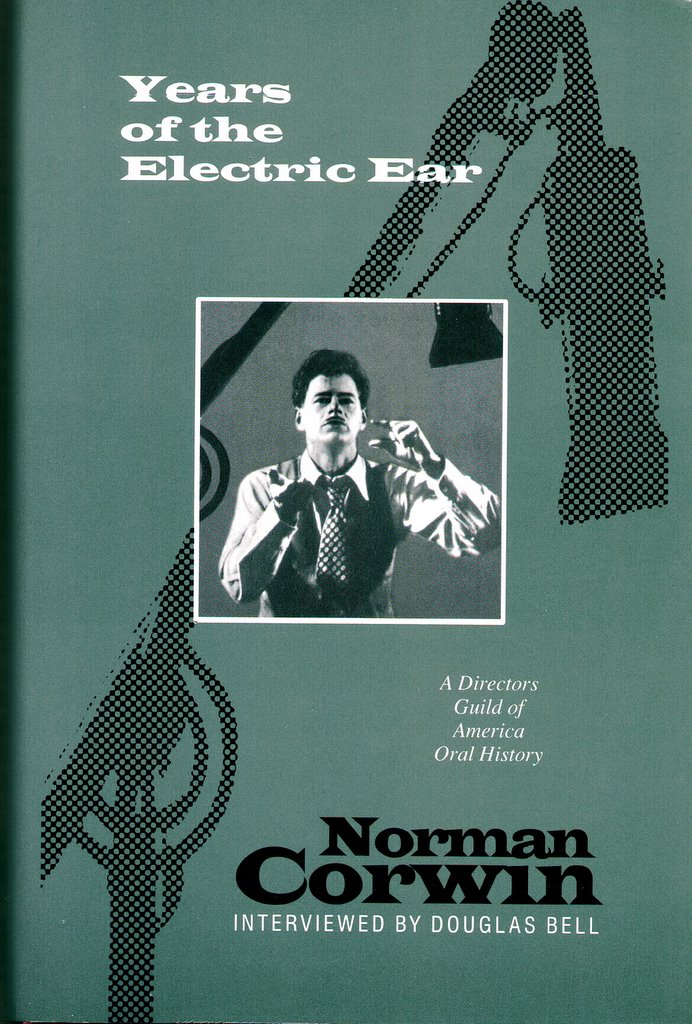

 Well, it is time to light the candles, open that bottle of champagne, and count the ways in which we love . . . Mrs. Living- stone’s husband? Comedian Jack Benny, I mean, who would have turned thirty-nine all over again on this Valentine’s Day. Americans may declare their love for the man by
 Well, it is high yuletide by now, but some of us are still not ready for the annual gift exchange. Finding the right presents for those we love or feel obligated to honor with more or less well-chosen stocking stuffers sure can be a challenge and a chore. It can also be a great joy—but that just doesn’t make for compelling drama or brisk comedy. On this day, 22 December, in 1937, US radio’s foremost satirist, Fred Allen, told listeners of Santa Claus’s own difficulties administering holiday cheer, experiences so disheartening that the man in the red suit threatened to go on strike.
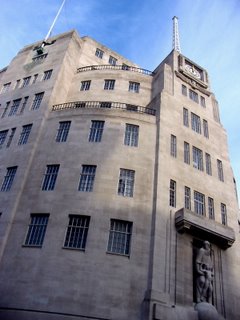 Government radio is a cross between a museum and a religious school, dispensing classics and credo, but not especially concerned with new works. Commercial radio is a department store, carrying in stock a few luxury items, a lot of supposedly essential commodities and perhaps too many cheap brands of goods. The radio [as imagined and desired by some who write for the medium] is an artist’s studio, dedicated to creation alone. As such, it is not yet able to stand on its own, and its product must be exhibited in the museum or the gallery of the department store.
 Harry Heuser