Of โ€œhistorical valueโ€: Hitlerโ€™s โ€œBestโ€ Straight Talk and Other Continuity Types

As soon as I decided to make radio plays written in the United States in the 1930s, โ€˜40s and early โ€˜50s the subject of my doctoral study, I set out to scour New York City University libraries for scripts published during that period. My degree is in English, and I was keen not to approach broadcasting as a purely historical subject. The play texts and my readings of them were to be central to my engagement with the narrative-drama hybridity that is peculiar to radio storytelling. Whenever possible, I tried to match script with recordingโ€”but, to justify my study as a literary subject, I was determined to examine as many print sources as possible. One text that promised to provide a valuable sample of 1930s broadcast writing was Radio Continuity Types, a 1938 anthology compiled and edited by Sherman Paxton Lawton.

Back in the late 1990s, when I started my research, I was too focused, too narrow-minded to consider anything that seemed to lie outside the scope of my study as I had defined it for myself, somewhat prematurely. Instead, I copied what I deemed useful and dutifully returned the books I had borrowed, many of which were on interlibrary loan and therefore not in my hands for long. It was only recently that I added Radio Continuity Types to my personal library of radio related volumesโ€”and I was curious to find out what I had overlooked during my initial review of this book . . .

Radio Continuity Types is divided into five main sections: Dramatic Continuities, Talk Continuities, Hybrid Continuities, Novelties and Specialties, and Variety Shows. Clearly, the first section was then most interesting to me. It mainly contains scripts for daytime serials, many of which I had never heard of, let alone listened to: Roses and Drums, Dangerous Paradise, Todayโ€™s Children. There are chapters from Ultra-Violet, a thriller serial by Fran Striker, samples of childrenโ€™s adventures like Jack Armstrong and Bobby Benson, as well as an early script from Gosden and Correllโ€™s Amos โ€˜nโ€™ Andy taken from the period when the programโ€™s format was what Lawton labels โ€œrevolving plot drama.โ€

Aside from a melodrama written for The Wonder Show and starring Orson Welles, I got little use out of Lawtonโ€™s book, mainly because I concentrated on complete 30-minute or hour-long plays rather than on serials I could only consider as fragments. Besides, I was not eager to perpetuate the notion of radio entertainment as being juvenile or strictly commercial.

Anyway. Looking at the book now, I am struck by Lawtonโ€™s choices. Never mind the weather report on page 346 or Madam Sylviaโ€™s salad recipe. How about the editorโ€™s selection of โ€œOccasional speechesโ€? Historically significant among them are Franklin D. Rooseveltโ€™s first inaugural, a โ€œWelcomingโ€ of Roosevelt by Getulio Vargas, President of Brazil, as well as Prince Edward VIIIโ€™s announcement of his abdication.

No less significant but rather more curious are Lawton’s “Straight Talk” selections of fascist propaganda by Benito Mussolini, Joseph Goebbels and Adolf Hitler: โ€œLong live the National Socialist German Reich!โ€ and โ€œNow and foreverโ€”Germany! Sieg Heil!โ€ Surely, such lines draw attention to themselves in a volume promising readers โ€œsome of the most successful work that has been done in broadcasting.โ€ What, besides calling Goebbelsโ€™s โ€œProclamation on Entry into Austriaโ€ and Hitler’s “I Return” speech (both dated 12 March 1938) โ€œstraightโ€ and โ€œoccasional,โ€ had the editor to say about his selections? And what might these selections tell us about the editor who made them?

In a book on broadcasting published in the US in 1938, neutrality may not be altogether unexpected, as US network radio itself was โ€œneutralโ€; but Lawtonโ€”who headed the department of โ€œRadio and Visual Educationโ€ at Stephens College in Columbia, Missouriโ€”seems to have gone beyond mere representations of โ€œtypes.โ€ Introducing a translation of Hitler’s speech, which comments on the reluctance of โ€œinternational truth-seekersโ€ to regard the new โ€œPan-Germanyโ€ as a choice of its people, Lawton argued it to represent โ€œsome of the best work of a man who has proved the power of radio in the formation of public opinion.” There are no further comments either on technique or intention. No explanation of what is “best” and how it was “proved” to be so. No examination of “power,” “public,” and “opinion.” It is this refusal to contextualize that renders the editor’s stamp of approval suspect.

The โ€œcontinuityโ€ Lawton was concerned with was of the โ€œtypeโ€ written for broadcastingโ€”not the โ€œcontinuityโ€ of democracy or the free world. When he spoke of โ€œhistorical value,โ€ the editor did so as a โ€œjustification for a classificationโ€ of the kind of โ€œcontinuity typesโ€ he compiled (among them โ€œstraight argumentative talksโ€ by Senator Huey Long and Father Coughlin). And when, in his introduction, he speculated about radio in 1951 (โ€œwhen broadcasting [would] be twice as oldโ€ as it was then), he did not consider what consequences the โ€œbestโ€ and โ€œmost efficientโ€ of โ€œstraight talkโ€ might have on the โ€œtypesโ€ that were still โ€œin common useโ€ back in 1938.

Given its definition of โ€œhistorical value,โ€ it hardly surprises that Lawtonโ€™s anthology was not in โ€œcommon useโ€ for long. There was no second edition.
A โ€œkind of monsterโ€: Me[, Fascism] and Orson Welles

It doesnโ€™t happen often that, after watching a 21-century movie based on a 21-century novel, I walk straight into the nearest bookstore to get my hands on a shiny paperback copy of the original, the initial publication of which escaped me as a matter of course. Come to think of it, this never happened before; and that it did happen in the case of Me and Orson Welles has a lot to do with the fact that the film is concerned with the 1930s, with New York City, and with that wunderkind from Wisconsin, the most lionized exponent of American radio drama, into which by now dried up wellspring of entertainment, commerce and propaganda it permits us a rare peek. You might say that I was the target audience for Richard Linklaterโ€™s comedy, which goes a long way in explaining its lack of success at the box office.

And yet, despite the filmโ€™s considerable enticementsโ€”among them its scrupulous attention to verisimilitudinous detail and a nonchalant disregard for those moviegoers who, having been drawn in by Zac Efron, draw a blank whenever references to, say, Les Tremayne or The Columbia Workshop are being tossed into their popcorn littered lapsโ€”it wasnโ€™t my fondness for the subject matter, much less the richness of the material, that convinced me to pick up Robert Kaplowโ€™s novel, first published in 2003. Indeed, it was the glossiness of the treatment that left me with the impression that something had gotten lost or left behind in the process of adaptationโ€”and I was curious to discover what that might be.

On the face of it, the movie is as faithful to the novel as the book is to the history and culture on which it draws.  Much of the dialogue is lifted verbatim from the page, even though the decision not to let the protagonist remain the teller of his own tale constitutes a significant shift in perspective as we now get to experience the events alongside the young man rather than through his mind’s eye.  In one trailer for the film, the voice-over narration is retained, suggesting how much more intimate and intricate this story could have beenโ€”and indeed is in printโ€”and how emotionally uninvolving the adaptation has turned out to be.

Without Samuelsโ€™s narration and with a scene-stealing performance by Christian McKay as Welles, the screen version gives the unguarded protรฉgรฉ, portrayed by the comparatively bland Efron, rather less of a chance to have the final word and to claim center stage, as the sly title suggests, by putting himself first.

The question at the heart of the story, on page and screen alike, is whether successes and failures are born or made.  Prominence or obscurity, life or death, are not so much determined by individual talent, the story drives home, but by the circumstances and relationships in which that talent can or cannot manifest itself.  We know Welles is a phony when he goes around giving the same spiel to each member of the cast who is about to crack up and endanger the opening of the show, insisting that they are โ€œGod-created.โ€  They are, if anything, Welles-created or Welles-undone.

Finding this out the hard wayโ€”however easy it may have looked initiallyโ€”is high school student Richard Samuels who, stumbling onto the scene quite by accicent, becomes a minor player in a major theatrical production of a Shakespearean drama directed by a very young, and very determined, Orson Welles.  Samuelsโ€™s fortunes are made and lost within a single week, at the end of which his name is stricken from the playbill and his life reconsigned to inconspicuity, all on account of that towering ego of the Mercury.

The premise is an intriguing one: a forgotten man who lives to tell how and why he did matter, after allโ€”a handsome stand-in for all of us who blew it at some crucial stage in our lives and careers.  Shrewdly concealing that it was he who nearly ruined the Mercury during dress rehearsal by setting off the sprinklers, Samuels can luxuriate in the belief that he may have inadvertently saved the production by reassuring a superstitious Welles that opening night would run smoothly.

Speculating about the personalities and motives of historical figures, dramas based on true events often insert an imaginary proxy or guide into the scene of the action, a marginal figure through or with whom the audience experiences a past it is invited to assume otherwise real.  And given that Me and Orson Welles goes to considerable length capturing the goings-on at the Mercury Theater, anno 1937, I was quite willing to make that assumption.  Hey, even Joe Cotten looks remarkably like Joseph Cotten (without the charisma, mind).

It was not until I read the novel that I realized that Kaplow and the screenwriters, while ostensibly drawing their figures from life, attributed individual traits and behaviors to different real-life personages.  Whereas actor George Coulouris is having opening night jitters on screen, it was the lesser-known Joseph Holland who experienced same in the novel.

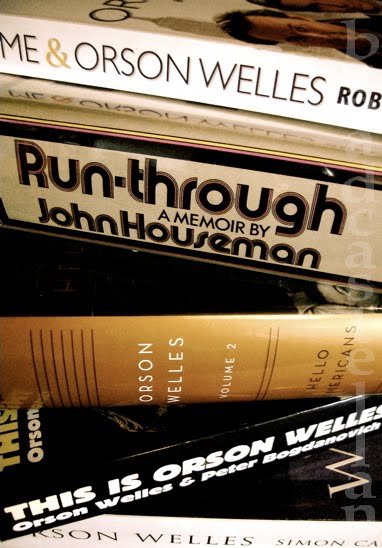
Although quite willing to let bygones be fiction, I consulted Mercury producer John Housemanโ€™s memoir Run-through, which suggests that the apprehensive one was indeed Coulouris.  Housemanโ€™s recollections also reveal that the fictional character of Samuels was based in part on young Arthur Anderson, a regular on radioโ€™s Letโ€™s Pretend program who, like Samuels, played the role of Lucius in the Mercury production.  According to Houseman, it was Anderson who flooded the theater by conducting experiments with the sprinkler valves.

Never mind irrigation; I was trying to arrive at the source of my irritation, which, plainly put, is this: Why research so thoroughly to so little avail? Why be content to present a slight drama peopled with folks whose names, though no longer on the tip of everyoneโ€™s tongue, can be found in the annals of film and theater? The missed opportunityโ€”an opportunity that Welles certainly seizedโ€”of becoming culturally and politically relevant makes itself felt in the character of Sam Leve, the Mercuryโ€™s set designerโ€”a forgotten character reconsidered in the novel but neglected anew in the screenplay.

Andersonโ€™s contributions aside, it is to Leveโ€™s account of the Mercuryโ€™s Julius Caesar that Kaplow was indebted, a debt he acknowledges in the โ€œSpecial thanksโ€ preceding the narrative he fashioned from it.

โ€œ[P]oor downtrodden Sam Leveโ€โ€”as Simon Callow calls him rather patronizingly in his biography of Orson Wellesโ€”was very nearly denied credit for his work on the set.  Featuring prominently in the novel, he is partially vindicated by being given one of the novelโ€™s most poignant speeches, a speech that turns Me and Orson Welles into something larger and grander than an intriguing if inconsequential speculation about a brilliant, egomaniacal boy wonder.

Confiding in Leve, with whom he has no such exchange in the movie, Samuels calls Welles a โ€œkind of monster,โ€ to which Leve replies: โ€œWe live in a world where monsters get their faces on the covers of the magazines.โ€  In this exchange is expressed what mightโ€”and, I believe, shouldโ€”have been the crux of the screen version: the story of a โ€œkind of monster,โ€ a man who professes to turn Julius Caesar into an indictment of fascism, however conceptually flawed (as Callow points out), but who, in his dictatorial stance, refuses to acknowledge Leveโ€™s contributions in the credits of the playbill and shows no qualms in replacing Samuels when the latter begins to assert himself.

โ€œAs in the synagogue we sing the praises of God,โ€ Leve philosophizes in the speech that did not make it into the screenplay, โ€œso in the theatre we sing the dignity of man.โ€  Without becoming overly didactic or metaphorical, Me and Orson Welles, the motion picture, could have put its authenticity to greater, more dignified purpose by not obscuring or trivializing history, by reminding us that Jews like Leve and Samuels were fighting for recognition as the Jewish people of Europe were facing annihilation.

To some degree, the glossy, rather more Gentile film version is complicit in the effacement of Jewish culture by homogenizing the story, by removing the Jewish references and Yiddish expressions that distinguish Kaplowโ€™s novel.  Instead of erasing the historical subtext, the film might have encouraged us to see the Mercuryโ€™s troubled production of Julius Caesar as an ambitious if somewhat ambiguous and perhaps disingenuous reading of the signs of the times, thereby making us consider the role and responsibility of the performing artsโ€”including films like Me and Orson Wellesโ€”in the shaping of history and of our understanding of it.


Related writings
โ€œOn This Day in 1938: The Mercury Players โ€˜dismember Caesarโ€™โ€
โ€œOn This Day in 1937: The Shadow Gets a Voice-overโ€

"2X2L calling CQ. . .": The Night They Made Up Our Minds About Realism

Radio Guide (19 November 1938)

This is just the night for a returnโ€”a return to that old, beloved yet woefully neglected hobbyhorse of mine. You know, the Pegasus of hobbyhorses: the radio. After all, it is the anniversary of the Mercury Theatreโ€™s 1938 โ€œWar of the Worldsโ€ broadcast, a date that lives in infamy for giving those who say that โ€œseeing is believingโ€ an ear-opening poke in the eye. These days, the old Pegasus doesnโ€™t get much of an airing. It may have sprung from the blood of Medusaโ€”but that old Gorgon, television, still has a petrifying grip on our imagination.

What made โ€œThe War of the Worldsโ€ so convincing was that it treated fantasy to the trickery of realism, by turning an old sci-fi yarn into what, too many, sounded like a documentary. As the programโ€™s general editor, John Housemanโ€”who gave up the ghost on Halloween in 1988โ€”recalled about the Mercuryโ€™s holiday offering, not even the script girl had much faith in the material: โ€œItโ€™s all too silly! Weโ€™re going to make fools of ourselves. Absolute idiots.โ€ Instead, the broadcast made fools of thousands by exploiting their pre-war invasion anxieties.

As I put it in Etherized Victorians, broadcast fictions could

tap into what McLuhan argued to be โ€œinherent in the very natureโ€ of radioโ€”the power to turn โ€œpsyche and society into a single echo chamber.โ€

The more urgent concern for broadcasters had always been whether it was proper for radio dramatists to exploit this power at all, especially after the codes of radioโ€™s surface realism had been so forcefully violated by Howard Kochโ€™s dramatization [. . .]. In one of the most disturbing scenes of the play, a speaker identified as a CBS announcer addresses the public to document the end of civilizationโ€”โ€œThis may be the last broadcastโ€โ€”until succumbing to the noxious fumes that spread across Manhattan and extinguish all human life below. ย His body having collapsed at the microphone, a lone voiceโ€”rendered distant and faint by a filterโ€”attempts to establish communication.ย 

It is the voice of a radio operator: โ€œ2X2L calling CQ. . . . 2X2L calling CQ . . . . 2X2L calling CQ . . . New York. Isnโ€™t there anyone on the air? [Isnโ€™t there anyone on the air?] Isnโ€™t there anyone. . . .โ€ ย The Mercury Playersโ€™ โ€œholiday offeringโ€ had not only โ€œdestroyed the Columbia Broadcasting System,โ€ as Welles jested at the conclusion of his infamous Halloween prank, but had pronounced the death of its receiversโ€”the listening public. ย Considering the near panic that ensued, was it advisable to open the realm Esslin called a โ€œregion akin to the world of the dreamโ€ without clearly demarcating it as fantasy by resorting to the spells of Trilby, Chandu, or The Shadow?

After that night, the aural medium as governed by those in charge of the realties of commerce and convenience seemed destined to perpetuate what Trilling referred to as the โ€œchronic American beliefโ€ in the โ€œincompatibility of mind and reality.โ€

Related writings
โ€œโ€˜War of the Worldsโ€™: A Report from the Sensorial Battlefieldโ€
โ€œโ€˜War of the Worldsโ€™: The Election Editionโ€
โ€œThousands Panic When Nelson Eddy Begins to Singโ€

Hand a Swellhead a Pin and Heโ€™ll Make It His Scepter

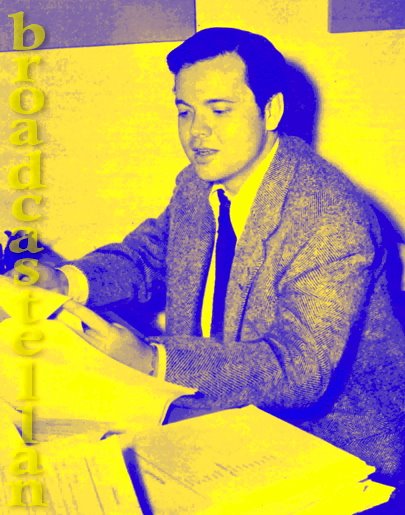
Personally, your editors don’t like Mr. Welles. He is the seven-year-old kid next door who has a vocabulary twice his size. He is the good-looking young man who walks off with your best girl. He is the braggart who says impossible things and then does them. Your editors are average people. Thatโ€™s why they personally are not fond of the man who is too good and knows it and shows it! . . . Your editors donโ€™t like him because everything he does is perfect, from movies to radio plays. But heโ€™s good, drat it, he is!

That is what the readers of a May 1941 issue Movie-Radio Guide were being told about the most talked about man in radioโ€”Orson Welles.

I wouldn’t be surprised if this backhanded compliment had been dictated by the erstwhile Wunderkind himself. However uneven his career, however fickle his fortunes in Hollywood, the kid from Kenosha kept the conceit of his genius alive on the radio, which, immediate and expedient, proved just the medium for putting on airs.

In March of 1943, when comedian Jack Benny was unable to carry on with his weekly broadcasts, Welles was chosen to fill in for “old sniffle snoot.” The format of the Grape Nuts Flakes Program remained intact, and Jackโ€™s gang was at hand to become foilsโ€”or fodderโ€”for the theatrical showman-thespian.

Now, Benny had pretty much perfected the comedy of deflation by creating the persona of a pompous, vain, miserly and slightly delusional performer at whose character flaws listeners felt at ease to laugh even if the act held a distorting mirror to them by accentuating their own failings. It was not so with Welles, for whom self-deflation seemed to have been just another means of boosting his ego.

Whereas Benny presents us with a caricature whose features are not unlike some of our own, Wellesโ€™s persona was always larger than life, and as such untouchable. โ€œI have spent years inflating the balloon that is Welles,โ€ the guest tells Benny regular Dennis Day: โ€œPlease do not puncture it.โ€ Fat chance, really.

On the 21 March 1943 broadcast, Welles was not so much filling in for Benny as he was filling up the studio with his aura, dimming the sunny atmosphere by shrouding it in layers of Orson. It might be a gasโ€”but, aside from Welles’s hilarious take on the Grape-Nuts commercialโ€”it isn’t quite nitrous oxide. As Simon Callow puts it in Orson Welles: Hello Americans,

[p]art of the problem is that, unlike the Jack Benny character, which is preposterous and bears no relations to the real man, this โ€œOrson Wellesโ€ is uncomfortably close to the real one: are we laughing at or with him?

Indeed, the โ€œballoonโ€ act seems โ€œself-serving,โ€ an advertisement for what could be too readily taken for the man himself. Aided by Bennyโ€™s writers, Welles in his grandeur does not have to suffer one scratch from Mary Livingstoneโ€™s barbs (“Gee, I like this guy”) or Eddie Andersonโ€™s retorts (“Mr. Welles, working for you is paradise”). Being that the entire act revolves around him, none of his fellow players gets an opportunity to cut him down to any size other than super. The familiar casting skit, in which Welles rehearses a scene that gives none beside him a chance to get a word in, works far better on the Fred Allen Show, where one genius was pitted against another, where the war of the words and the battle for a line becomes a genuine sparring match.

โ€œOrson Welles is a genius,โ€ Don Wilson concludes the broadcast, โ€œbut this program was written by Bill Morrow and Ed Beloin.โ€ That remark, drowned out by the applause from the studio audience is about the only jab at Welles, who was known for taking all the credit. No, the โ€œballoon that is Wellesโ€ was not in danger of popping, โ€œprickโ€ being a noun in this case. If only Welles had permitted himselfโ€”or been permitted by those who helped to fashion and fix his personaโ€”to accept the pin without turning it into a scepter.


Related recordings
Grape Nuts Flakes Program, 21 March 1943

" . . . from numberless and nameless agonies": The Bill of Rights Remembered

I might as well end this year’s regular programming here at broadcastellan with a bang. This one was sure made an impact, heard by as many as sixty million Americansโ€”at once. Subtitled “A Dramatic Celebration of the American Bill of Rights, Including an Address by Franklin D. Roosevelt,” We Hold These Truths made radio history on this day, 15 December, in 1942. It also made the most of history in the making.

โ€œNo other single dramatic performance [. . . ] ever enjoyed so large an audience,” author Norman Corwin remarked in his notes on the published script. The program was “[w]ritten at the invitation of the US Office of Facts and Figuresโ€ to commemorate the 150th anniversary of the United States Bill of Rights, which came into effect on 15 December 1791,; but it was already in the works when the attack on Pearl Harbor took place.

“In fact,” Corwin later recalled (in Years of the Electric Ear), “I was on a train travelling from New York to Hollywood, still working on the script when the attack on Pearl Harbor took place.” Now that the United States had entered the war, the broadcast became a rallying cry, a reminder of the rights it is the duty of all those who possess them to protect.

โ€œTo many listening Americans,โ€ Movie-Radio Guide summed up in its 3-9 January 1942 issue,

the big โ€œBill of Rightsโ€ program broadcast over the Nationโ€™s networks Monday, Dec. 15, was an utterly unforgettable event. To the many personalities who joined their talents to produce the program it was likewise a memorable privilege. Coming as it did at a time when it could not have meant mere to the nation, the broadcast brought America figuratively to its feet. A transcription of the superb dramatic production [. . .] will be preserved in the archives at Washington.

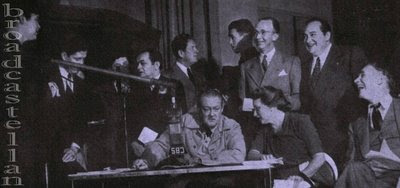
The cast, as shown above, included Orson Welles, Rudy Vallee, Edward G. Robinson, Bob Burns, James Stewart, Walter Brennan, Edward Arnold, as well as (seated) Lionel Barrymore, Marjorie Main, and Walter Huston.

According to the Movie-Radio Guide, “[o]ne of the highlights of the presentation was the performance of James “Jimmy” Stewart.โ€ So moved was he by the reading that, at the close of the broadcast, he โ€œpulled off his earphonesโ€ and โ€œlet down his emotions, excusing himself from the studio and reportedly breaking into tears in private.โ€ No wonder, Stewart was called upon to introduce President Roosevelt, who addressed the public from Washington, DC. Upon this experience, the humble actor remarked: โ€œImagine a corporal introducing a Commander in Chief of the armed forces!โ€

“War of the Worlds”: The Election Edition

View from a London bus, 2005

Teaching undergraduate English in the Bronx while researching my dissertation on old-time radio, I found it difficult if necessary to relate nightly study to daytime work in the classroom. ย I did not want to be one of those educators who think of their ‘job’ as an educator as being at odds withโ€”or in the way ofโ€”an academic careers, success in which is largely dependent on self-promotional efforts rather than years of service.

Reluctant instructors tend to become resentful of their charge, a feeling that is hardly conducive to the far from mutually exclusive activities of teaching and learning. ย Writing this journal has been a way of vindicating my approach, of coming to terms with my inability to squeeze the most out of the degree I earned. ย broadcastellan is not a series of unheard lectures, but a record of my enthusiasms.

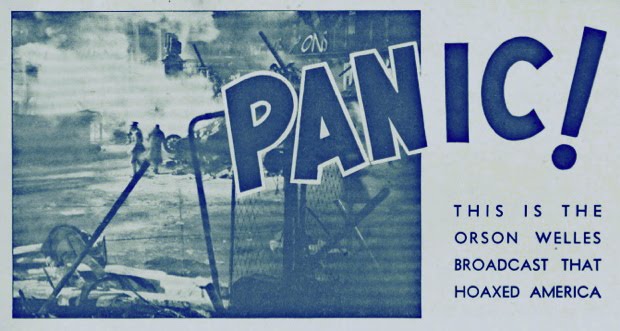
Now, where was I going with this? Ah, yes.  โ€œThe War of the Worlds,โ€ the infamous “Panic Broadcast” that was first heard on this day, 30 October, in 1938. The Mercury Theaterโ€™s iconic dramatization of Wells’s futuristic parable and the resulting Hullabaloo (also the title of a 1940 musical comedy inspired by the event) provided me with a rare opportunity to forge a connection between classroom and study.  โ€œThe Warโ€ was the first recording of a radio play I shared with my students, whose listening experience was followed by the inevitable question whether such a performance could still hornswoggle us today.

Being that one of my enthusiasm is American radio drama, I have already discussed the Mercury Theater production and its rival broadcast on previous occasions. Tonight, though, “The War of the Worlds” comes to a mind that is about as uneasy as the minds of those tuning in back then.

Not surprisingly, most of my students argued that we are too sophisticated nowadays to fall for such claptrap.  There is more access to alternative media, more awareness of what is going on around the world.  However comforting it might be to think so, I have never permitted myself to share this view.  I do not conceive of the past as being inferior to the present by virtue of some supposedly natural progression.

Sure, you might snicker at preposterous styles and passing fads.  You might say, in hindsight, that certain political decisions were wrong and that those living in the past should have seen things coming. In short, there are any number of ways to demonstrate your ostensible superiority to folks back then.  Doing so, however, you should have the honesty to admit that your argument is designed to make yourself feel better about the uncertainties and anxieties of the present.

I do not hold with those who look at past generations as an older, hence inferior, model of themselves.  I reject the notion that there has ever been what is frequently referred to as โ€œinnocentโ€ times.  Retrospection breeds contempt.  Too often, it is an act of distancing yourself from events that the present, if properly inspected, proves to be not altogether beyond the possibility of recurrence.

So, could something akin to the headlines-making broadcast be restaged tonight and elicit a similar response, a response frequently attributed to the threat of war that was about to shatter hopes of stability, peace, and prosperity? Are we not on edge enough now to have reached the point of sustainable gullibility? Or are cynicism and apathy an adequate shield against deception?

Have not many of us lived a myth constructed by those who benefit from our desire to believe in something, be it a falsehood about terror and the war on it, be it the promise of economic progress to which every aspect of our existence is made subordinate? The times, it seems, are ripe for a shake-up.

One reader of the so-called panic broadcast, Peter Lowentrout, suggests that listener belief in an attack from Mars was rooted in a โ€œloss of spirit,โ€ the 1920s and 1930s having been โ€œdecades in which the influence of secularization peaked in our general and elite cultures.โ€ Are we more eager to believe in a hoax if we are incapable of or reluctant to believe in anything else? Or is a return to faith a prerequisite for a susceptibility to apocalyptic visions?

In a way, the โ€œpanicโ€ is itself an historical construct; its extent has been exaggerated to permit us that look of superiority we tend to cast on the past. ย Yet what about the present fear change and its mongers, those who look upon of the presidential candidates as a false Messiah and claim him to be alien to the economic needs of an ailing nation, if not downright hostile to those intent on clinging to a status quo that hardly seems worth maintaining?

What about those who think of ecological crises as a matter of fate or charlatanry rather than challenge and opportunity; and who, by claiming it to be either inevitable or false, go on living as if their individual conduct had no influence on the future of this planet? What about those who are disillusioned by the stock market, yet feel threatened by concepts of alternative living that involve something other than the amassing of greenbacks?

Orson Welles’s introductory remarks, at least, are readily applied to our present condition:

With infinite complacence people went to and fro over the earth about there little affairs, serene in the assurance of their dominion over this small spinning fragment of solar driftwood which by chance or design man has inherited out of the dark mystery of Time and Space.

At present, I find it difficult to think of anything other than the US election, which is what reminded me of the challenge I faced in the classroom, the challenge I am facing when keeping a journal that attempts to keep up with the out-of-date? To find relevance in the past and to relate it to the uncertainties that constitute my present, that is the challenge. ย 

While I have no official say in the matter, I shall have certainty next Wednesday. ย On that day, I may even have renewed confidence in the democratic West; but certain and confident is not who I am tonight . . .

". . . between the zodiac and Orson Welles": A Play Scheduled for Pearl Harbor

Well, it wasnโ€™t exactly business as usual on this day, 7 December, back in 1941. Mind you, lucre-minded broadcasters tried hard to keep the well-oiled machinery of commercial radio running. There were soap operas and there was popular music, interrupted in a fashion rehearsed by โ€œThe War of the Worlds,โ€ by updates about the developments of the attack on Pearl Harbor (previously commemorated here). Unlike on the day now known as 9/11, when advertising came to an immediate standstill to make way for propaganda and regular (that is, commercial) programming ceased for hours and days to come, radio back then was slow to adapt. There was no precedent; and, having ignored the signs of the time, not much preparation.

Minding the business of its sponsors, broadcasters had no master plan for a response to the masterminds behind the plans for the master race and its allies. It was, however briefly, overmastered; or flummoxed, at least. For an industry relying on minute timing, the attack and subsequent declaration of war were most inopportune. Big business was, for the most part, not behind a war that would translate into major financial losses.

Until that day, broadcasters had counted on being inconsequential; it was the commerce stimulated by the sales talk punctuating the chatter and musical interludes proffered โ€œin the public interest,โ€ that mattered.

The Screen Guild was fortunate. After previous crowd pleasers like โ€œPenny Serenadeโ€ and โ€œIf You Could Only Cook,โ€ the Gulf Motor Oil sponsored Hollywood-rehash factory had scheduled a play that just fit the bill. For that fateful night it had prepared a live production of Norman Corwinโ€™s โ€œBetween Americans,โ€ previously staged in June 1941. โ€œBy one of those mystic and infallible arrangements between the zodiac and Orson Welles,โ€ the playwright would recall, this broadcast was the

first uninterrupted half-hour on the CBS network after the bombing of Pearl Harbor. All afternoon the news had come pounding inโ€”comment, short-wave pickups, rumors, analyses, flashes, bulletins. Programs of all kinds were either brushed aside or so riddled by special announcements that they made no sense. But by 7:30 PM EST all available news on the situation was exhausted, and the Screen Guild, which had long ago scheduled “Between Americans” and Welles for this date, was given clear air.

According to Corwin, the greatest living American radio dramatist, indeed the greatest radio playwright of any time anywhere (whose 97th birthday I celebrated here), the โ€œstaggering news of the previous hours made the show far more exciting than it had any right to be.โ€ The studio audience reacted enthusiastically, a response the playwright attributed to the moment, rather than to anything of moment in his play.

A war only four hours old is an emotion, an intoxication, a bewilderment [. . .]. People felt reassured by it. They heard the piece as a statement of faith. They were moved; they laughed extra loud; they applauded like mad when the show was over. I am certain it was Pearl Harbor that made the show so electric that night, and not so much the work of Welles, Corwin, or Harry Ackerman, who directed it.

โ€œBetween Americansโ€ had not been prepared for the day; indeed, it had been produced five months earlier, with actor Ray Collins (whose voice Welles regarded as the best in the business) as narrator. According to Corwin, who is none too fond of the play, there were some 22,000 requests for scripts and rebroadcasts. No wonder, with lines like these:

You ever asked yourself what America means to you? Does it mean 1776? โ€œColumbia, the Gem of the Oceanโ€? Big business? The Bill of Rights? Uncle Sam? Chances are it means none of these things. Chances are it means something very personal to each of you. Something close to your heart, which youโ€™d miss like the very blazes if you were stranded abroad. It might have nothing to do with quotes from Madison or Acts of Congress. It might be just the feeling of crisp autumns in New England and the smell of burning leaves. It might be the memory of the way they smooth off the infield between the games of a double-header. It might be a thing as small as your little finger [that is, a cigarette].

โ€œBig businessโ€ and personal memories. They merge at the moment of listening. Big business counted on that.

The 7 December 1941 program is a fascinating record of an industry coming to terms with the role it was called upon to play. The commercial structure remained remarkably intact; but the play was being shrewdly exploited as “one of the most timely programs ever heard on the Gulf Screen Guild Theater:

Broadcast at any time, we believe this program would make every American’s heart beat a little faster, make him hold his head just a little higher. But since the tragic and foreboding news that came today, this program, โ€œBetween Americans,โ€ now becomes an American Odyssey. In just a moment, our story will begin.

โ€œBut first,โ€ listeners had to hear the words from the sponsor, who had this topical message prepared for the occasion:

Right. And here is an easy way to change from a pessimist into an optimist. If you are wondering now how long you may have to keep your present car, and wondering too if it will last, if it will stay in good condition, just look on the bright side of the picture. Remember, when you give the wearing parts of your car good protection that helps it stay young and act young a long, long time. So, give your automobile the modern method of lubrication . . .

Yes, radio was a well-oiled machine . . . until the rationing of its parts set in.

Open a New Door . . .

Well, this is St. Nicholas Day. Traditionally, it is the day on which children in Germany (among whom I once numbered) put their hands in their boots to find out whether Saint Nick, passing by overnight, left anything within. Preferably candy, and, given the repository, preferably wrapped. Now, it has been several decades since last I observed the custom. These days, as an every so slightly overweight atheist with somewhat of a passion for boots, I would be more pleased to find my footwear polished.
There are still a few holiday customs I like to observe. I shall miss the annual display of tinsel, since we won’t be home long enough to enjoy the spectacle. So, Ms. Colbert, generally to be found up a tree around this time, is going to dangle elsewhere this season.

At least I won’t have to do without the miniature thrills of opening those little doors (or Tรผrchen). This year, my Advent calendar (which I used to make but never get for myself) arrived just in time for the first of those twenty-four minute inspections, a welcome series of opening acts at a time when you are supposed to be closing the door on a rapidly expiring year. How surprised and delighted I was to be receiving a calendar featuring old Krtek, the mole that dug up childhood memories a few months ago on my trip to Prague. How fortunate I am to have a best friend (and fellow web journalist) who remembers . . .

Since this is also the 107th birthday of the aforementioned Agnes Moorehead (1900-1974), radio’s First Lady of Suspense (heard on this day, 6 December, as the “Useful Information Lady” in Orson Welles’s Hello Americans), it is an opportune time to return to my journal and my favorite subject . . . so-called old-time radio drama. The last few days have been rather busy and none too inspired. I did not get to pick a Dickens novel, which I enjoy reading around this time. Nor did I manage to follow this season’s twenty-part radio adaptation of Dombey and Son. The serial is still being broadcast and you may catch up with this week’s chapters at the BBC broadcast archive.

Until my departure for New York City next Friday, I am going to listen to a few recordings of seasonal broadcasts from the 1930s, ’40s, or early 50s (as I have done before). Now, Ms. Moorehead would have made a wonderful Scrooge. Never mind that, as The Mayor of the Town‘s Dickensian housekeeper Marilly, she was still heard humming “O Tannenbaum” well past New Year’s (21 January 1948, to be exact); but, unlike so many actors before and after, foremost among them her costar, the actor pictured in the previous entry into this journal (and heard here doing his celebrated impersonation of Dickens’s old grouch, however incongruously, on the same program [24 December 1942]), the former Margot Lane to Welles’s Shadow was never cast in the role. And Susan Lucci was? As Krtek might say, “Bah, hummock!”

Shadow Players

When I read that Lamont Cranston is being resurrected for another big screen adventure scheduled to begin in 2010, I decided to catch up with one of the earlier Shadow plays. The Shadow, of course, always played well on the radio. On this day, 26 June, in 1938, he was again called into action when a “Blind Beggar Dies” after refusing to share his pittance with a gang of racketeers. The blind beggars alive to such melodrama and asking for more were millions of American radio listeners tuning in to follow the exploits of that “wealthy man about town” who was able to “cloud men’s minds” while opening them to the wonders of non-visual storytelling.

On the screen, the Shadow never quite managed to immaterialize; a previous attempt at delineating The Shadow on the screen, in the form and figure of Alex Baldwin, failed to attract audiences large enough to warrant a franchise.

Considerably less accomplished than the 1994 adaptation was the 1937 feature The Shadow Strikes, which bears little resemblance to the myth conceived for radio (initially as a mere sales gimmick for Street and Smith story magazines, publications popular during the first half of the 20th century).

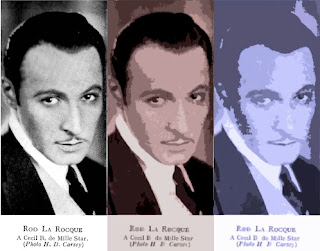
At just about the time when Orson Welles made his debut in the role on radio (as mentioned here), the mysterious crime fighter was impersonated on the screen by silent screen star Rod La Rocque, whose image I came across today while leafing through the recently acquired rarity Alice in Movieland, a gossipy little volume written back in 1927, when La Rocque was still remembered as a major Cecil B. DeMille player by, well, almost everyone:

You would have thought Rod La Rocque and Vilma Banky [the silent screen star with whom La Rocque was about to tie the knot] sure to be recognized at sight anywhere short of the South Pole. But not so!

At a preview of a DeMille picture at a Hollywood theater, seats had been roped off for the stars, as one among whom La Rocque was not being recognized by the usher.

Rod and Vilma crept away. Slow fade-out! I think, however, they did contrive later to annex the two worst seats in the theatre, behind a pillar of something. But all the easier to hold hands.

One of La Rocque’s last movies, The Shadow Strikes, is strictly of the ‘slow fade’ variety, even though the character La Rocque portrayed was so in the 1930s that a follow-up was released half a year later, featuring the same leading man.

Never mind that La Rocque does not get to utter that menacing laugh and is not equipped with mental powers superior to those of other popular crimefighting acts just outside the law, the Falcon, say, or the Saint. The producers of the movie did not even bother to check the spelling of the name of his alter ego when it appeared on the cover of a newspaper.

So, what fate awaits this great figure of 20th-century popular culture? Will he return only to receive a final blow, like a beggar too impoverished to pay up? Will those who watch him on the screen follow him back to the airwaves, into the shadows where he truly belongs?

My Evening with Queen Victoria

Considering that it is St. George’s Day (as well as the anniversary of the birth of the Bard), I am going to stay a little closer to home this time and, forgoing a return to Budapest, report instead on my audience with the Queen. Victoria Regina, I mean, whom last I captured towering over Birmingham’s German Christmas market (pictured) and imagined listening to her Electrophone. Yesterday, we went to An Evening with Queen Victoria, a one-woman show in which British stage, screen, and television actress Prunella Scales, accompanied by a lyric tenor and a pianist (who is also the husband of the play’s creator and director), has toured the new and old world, including England, Australia, Canada and the United States. So, it was bound to make it to Wales, eventually.

Just in time, I might add. Ms. Scales, whose life now spans as many decades as the play, was called upon to read, in character, selections from the queenโ€™s published reminiscences (Leaves from the Journal of Our Life in the Highland) and personal correspondences, from her youthful comments on her German cousins to her reflections on marriage and motherhood, duty, loss, and old age.

Along the way, the star struggled with some of her lines and had to be prompted audibly at one point (Fawlty Powers, I could not help thinking), while the aged pianist, who at one time loudly cleared his throat as if he had quite forgotten that there was a performance going on, played pieces of classical pieces by Rossini, Schumann, and Mendelssohn, which were interpreted with much feeling by the tenor, who thus painted himself into the queen’s portrait. The three of them joined forces to sing โ€œDuties of a Monarch” from Gilbert and Sullivanโ€™s Gondoliers:

Oh, philosophers may sing
Of the troubles of a King,
But of pleasures there are many and of worries there are none;
And the culminating pleasure
That we treasure beyond measure
Is the gratifying feeling that our duty has been done!

The whole royal affair might have faired well on radio, I thought, since it is largely a first-person narrative involving little action, aside from the queen’s efforts to rise from her easy chair to pick up various letters and books, to fetch a cane or wrap herself up as she gradually ages before us. I was not surprised, therefore, to learn that An Evening has indeed been produced for BBC radio.

It was on the air that the Her (Imperial) Majesty had been introduced into the living rooms of America, voiced by Helen Hayes, who inhabited the part on the Broadway stage in Laurence Housman’s Victoria Regina (1934), a play initially banned in England for daring to impersonate British royalty yet living.

An Evening was based largely on actual reminiscences of the monarch, as this somewhat unfortunate line from the leaflet that served as a playbill informed me: “The words of this programme are compiled entirely from Queen Victoria’s own journals and letters, together with some additional material from contemporary sources,” which is like saying that a loaf of bread is whole grain, except for a few preservatives and added flavors, natural or otherwise, however difficult to detect.

A similar claim was made by radio announcer Ernest Chapell, who introduced the 2 June 1939 broadcast of Orson Welles’s Campbell Playhouse by declaring that in order to “complete the true picture of this great queen, Mr. Welles has used still another source, one which only a few years ago was still a closed book, locked away in the official archives of the royal family: the personal diary of Queen Victoria.”

Containing the same material and creating a similar effect, An Evening is essentially a non-dramatic version of Victoria Regina, which Hayes revived once again for her Electric Theater on 14 November 1948, the day the queen’s great-great-great grandson, Prince Charles, was born. Intimate without being indiscreet, informal without being vulgar, both sketches create the quiet sensation of familiarity by bringing alive, in her own words, a woman who is more often thought of as an institution or the name crowning an era.

In an age favoring uncompromising exposรฉs and compromising snapshots, close-ups with which we distance ourselves, such personal introductions are a charming and welcome illusion.