Travelling Through: Landscapes/Landmarks/Legacies

As a frustrated writer, or, rather, as someone who is disenchanted with the business of publishing and of ending up not reaching an audience, I have come to embrace exhibition curating as an alternative to churning out words for pages rarely turned.  I teach curating for the same reason.

Staging an exhibition reminds students of the purpose of research and writing as an act of communication.  Seeing an audience walking into the gallery – or knowing that anyone could stop by and find their research on display – is motivating students and encourages them to value their studies differently.
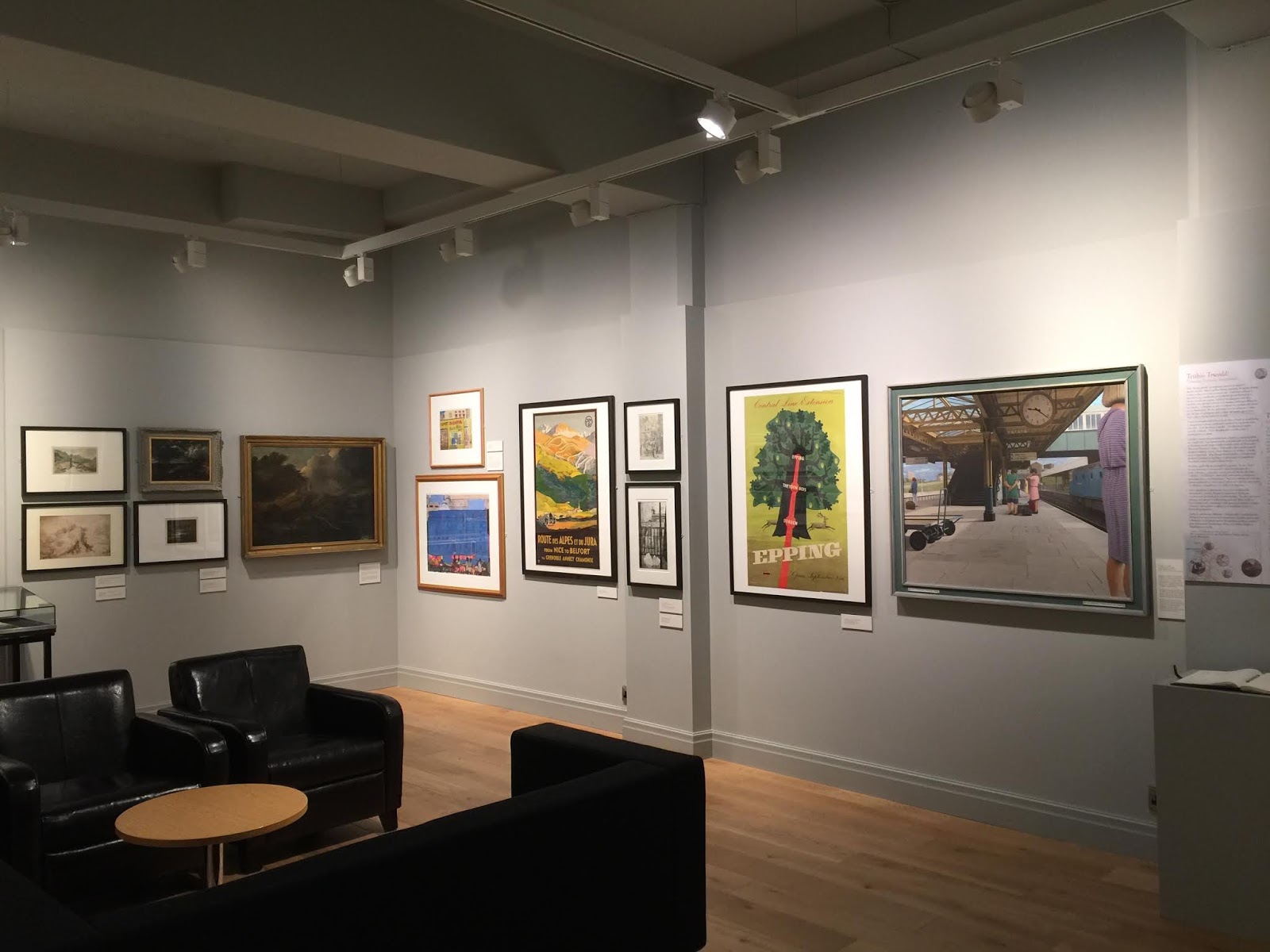
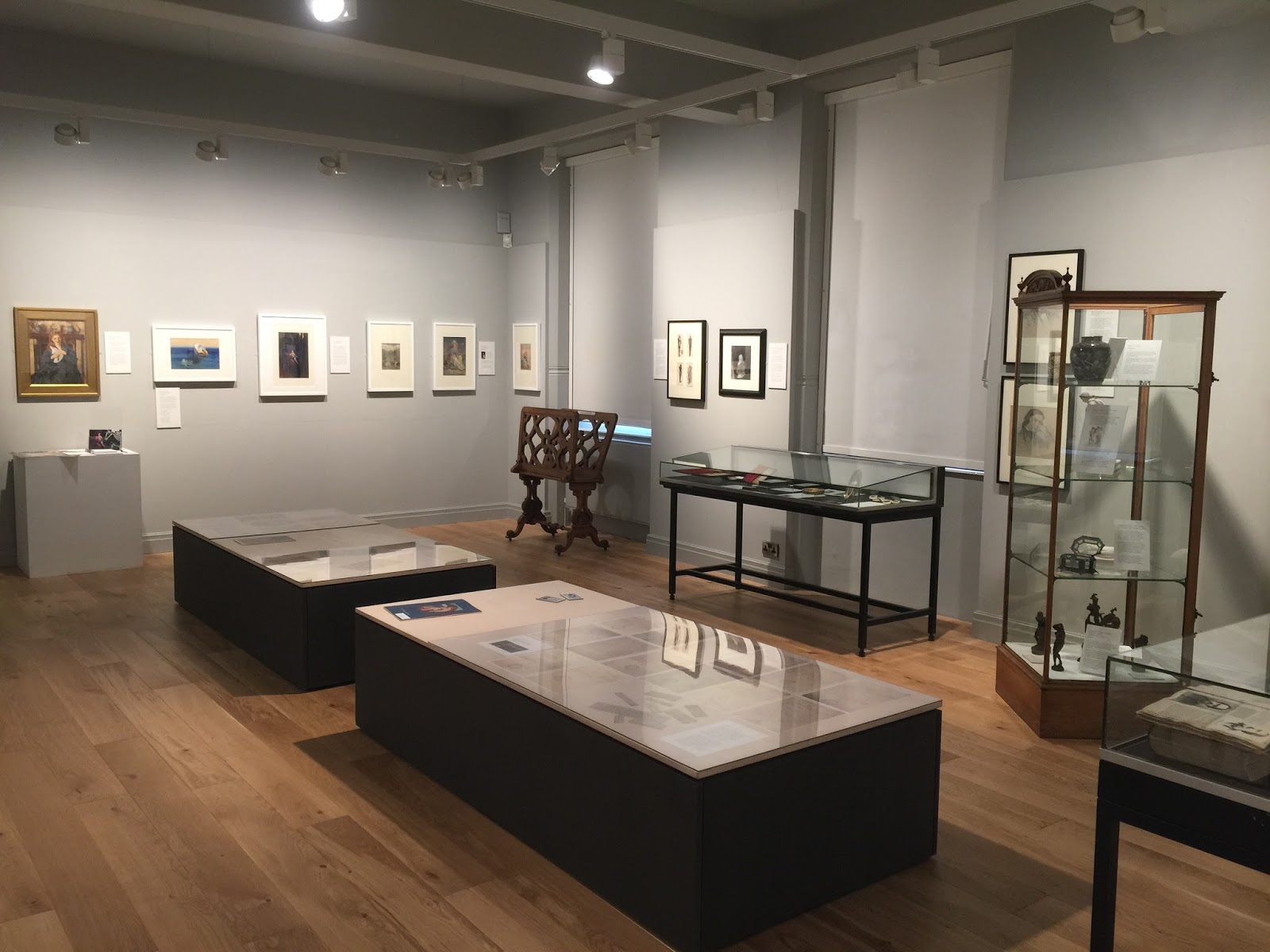
Travelling Through, installation view

As someone who teaches art history, and landscape art in particular, to students whose degree is in art practice, curating also enables me to bridge what they might experience as a gap or disconnect between practice and so-called theory, between their lives as artist and art history at large.

It also gives me a chance to make what I do and who I am feel more connected.
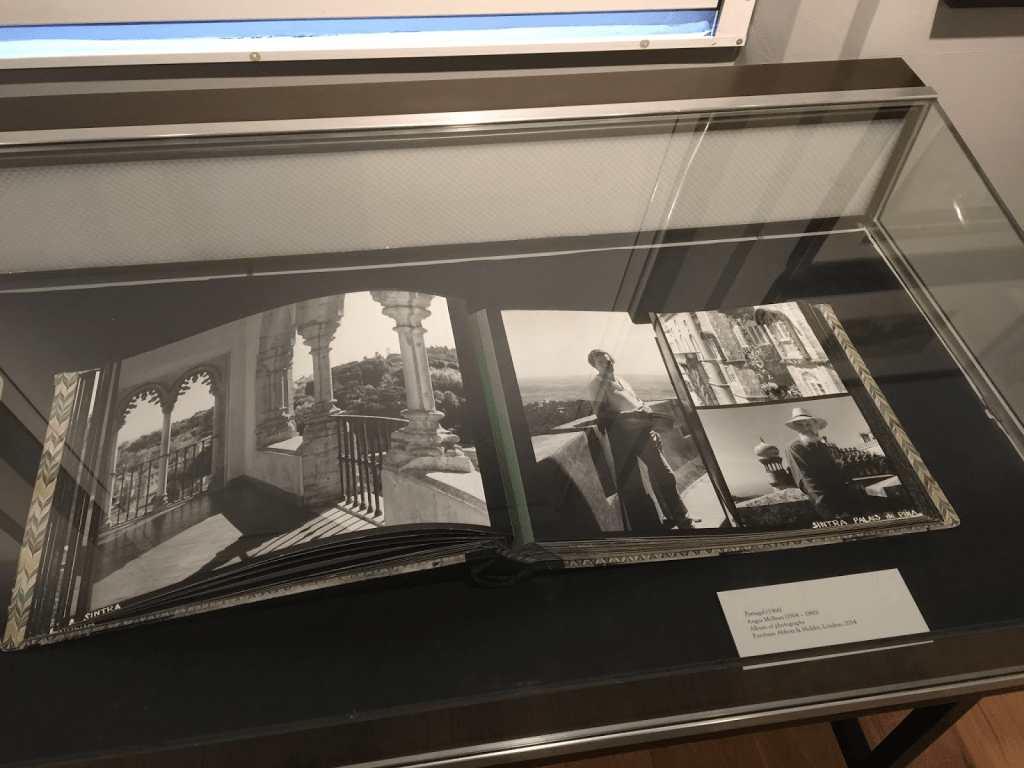
Angus McBean’s personal album of travel photographs featuring McBean and his gay companions (1966)

In my latest interactive and evolving exhibition, Travelling Through: Landscapes/Landmarks/Legacies (on show at the School of Art, Aberystwyth University, Wales until 8 February 2019), I bring together landscape paintings, ceramics, fine art prints, travel posters and luggage labels, which are displayed alongside personal photographs, both by a famous photographer (Angus McBean) and by myself.

Here is how I tried to describe the display of those never before publicly displayed images from my personal photo albums:

Before the age of digital photography, smart phones and social media, snapshots were generally reserved for special occasions.  Travelling was such an occasion.

For this collage, I rummaged through old photo albums and recent digital photographs. When I lived in New York, from 1990 to 2004, I very rarely photographed the city.  All of these images either predate that period or were produced after it. The historic event of 11 September 2001 can be inferred from the presence and absence of a single landmark.

The World Trade Center is prominent in many of my early tourist pictures.  Now, aware of my gradual estrangement from Manhattan, I tend to capture the vanishing of places I knew.
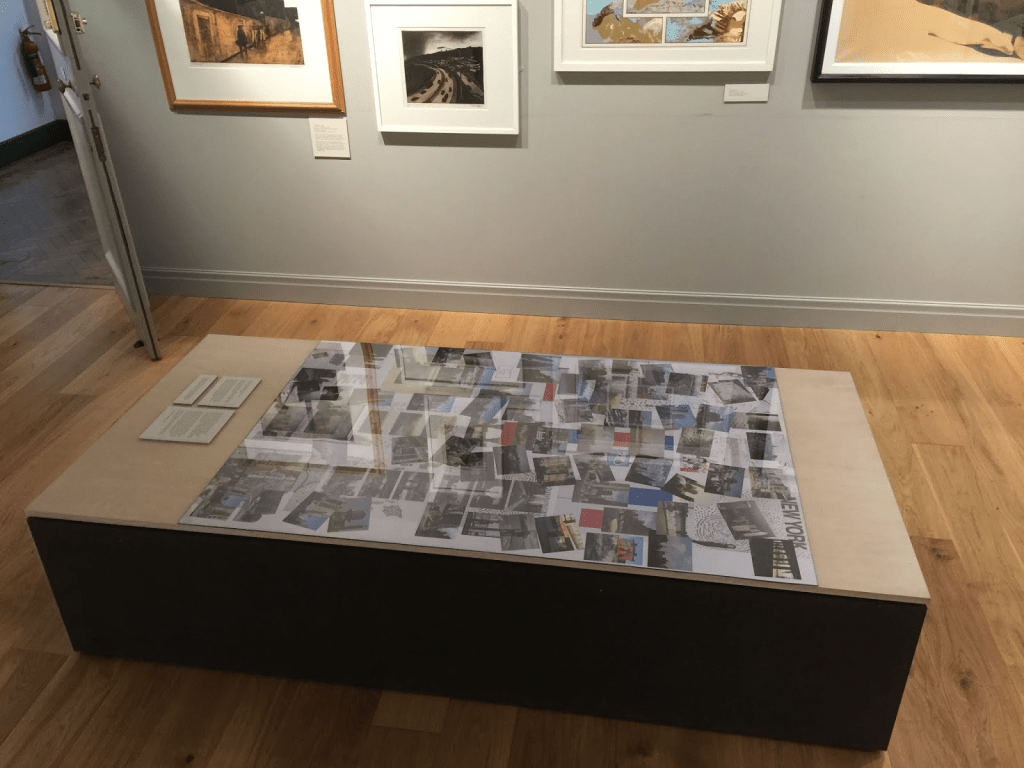
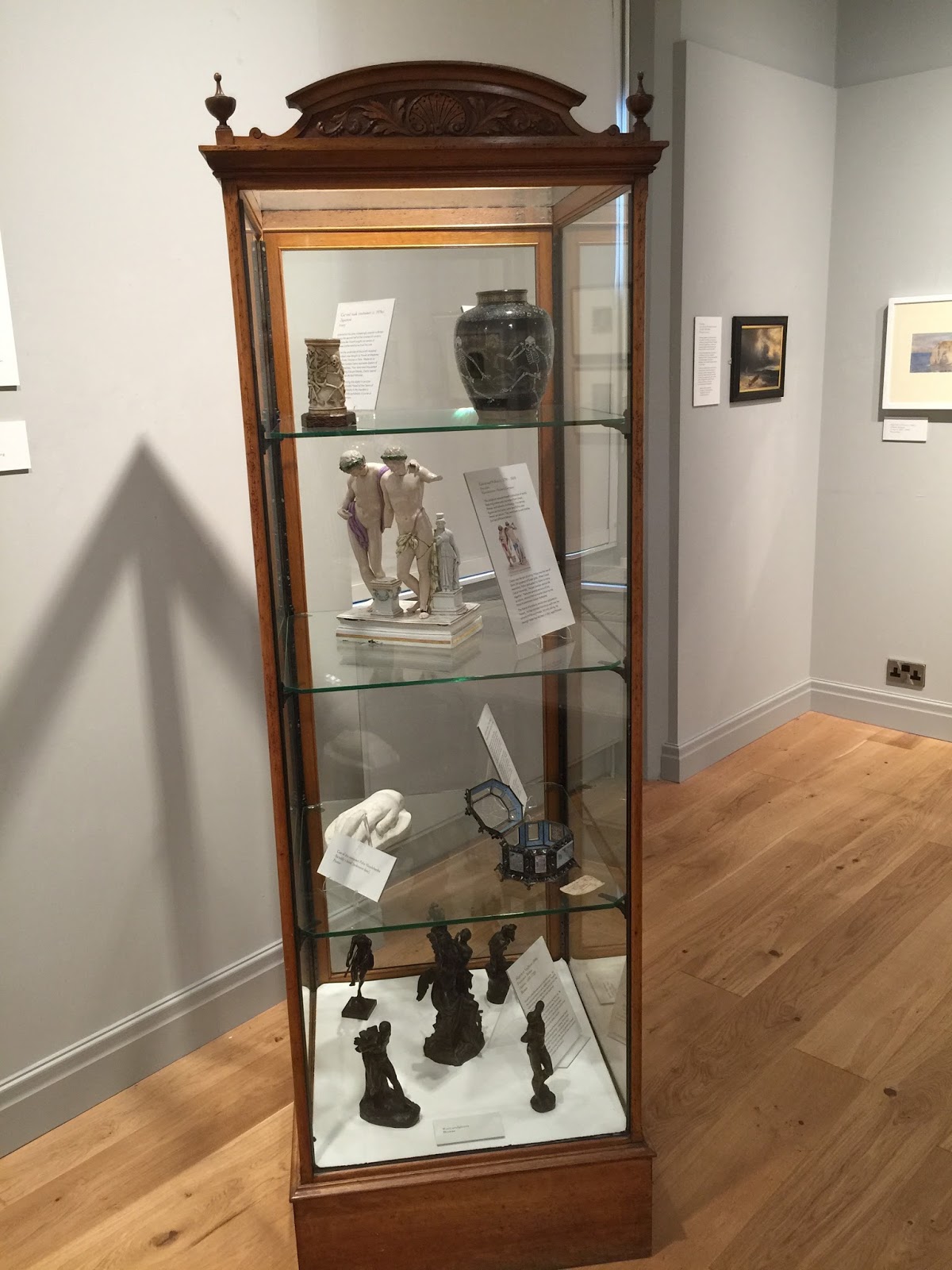
Plinth display of NYC, Travelling Through Me (1985 – 2018), digital and digitised photographs

For this collage, I rummaged through old photo albums and recent digital photographs. When I lived in New York, from 1990 to 2004, I very rarely photographed the city.  All of these images either predate that period or were produced after it. The historic event of 11 September 2001 can be inferred from the presence and absence of a single landmark.

The World Trade Center is prominent in many of my early tourist pictures.  Now, aware of my gradual estrangement from Manhattan, I tend to capture the vanishing of places I knew.
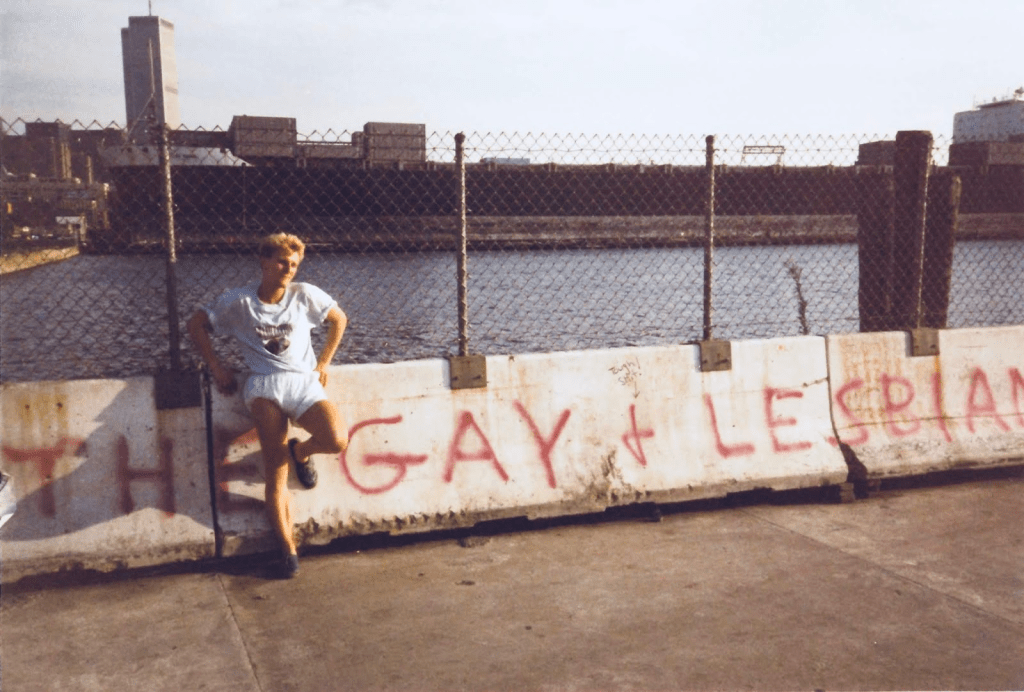
Lost New York City landmarks: Twin Towers and Gay Pier, 1987

Back in the 1980s, New York was not the glamorous metropolis I expected to find as a tourist. My early photographs reflect this experience.  Most are generic views of the cityscape.  Others show that I tentatively developed an alternative vision I now call ‘gothic.’  Yet unlike Rigby Graham, whose responses to landscape are displayed elsewhere in this gallery, I could never quite resist the sights so obviously signposted as attractions.

Like the personal photo album of the queer Welsh-born photographer Angus McBean, also on show in this exhibition, these pages were not produced with public display in mind.  McBean’s album was made at a time when homosexuality was criminalised.  It is a private record of his identity as a gay man.

I came out during my first visit to New York.  The comparative freedom I enjoyed and the liberation I experienced were curtailed by anxiety at the height of the AIDS crisis.

Being away from home can be an opportunity to explore our true selves.  Travelling back with that knowledge can be long and challenging journey.

Harry Heuser, exhibition curator
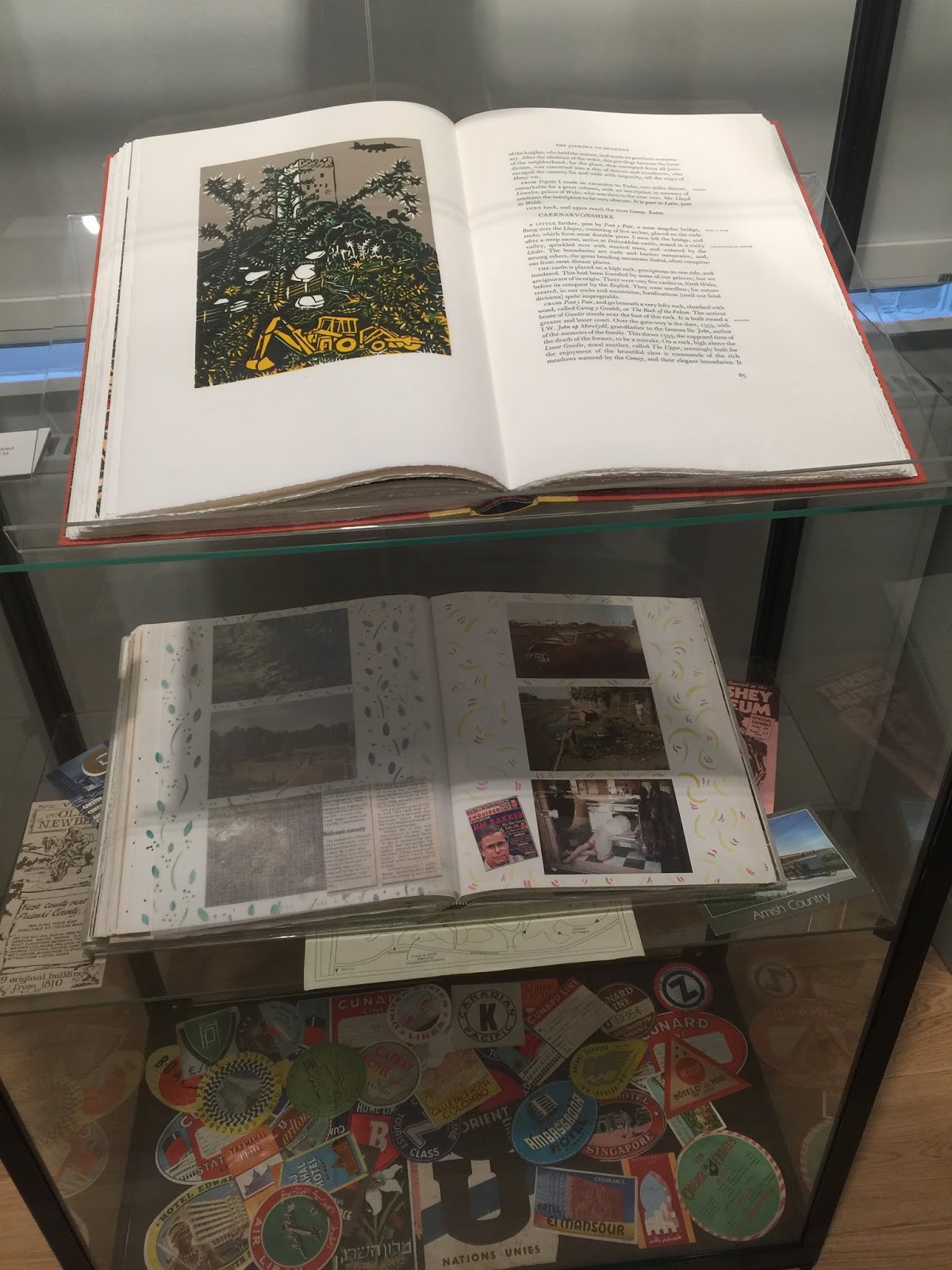
Pennant Tour of Wales featuring illustrations by Rigby Graham, with one of my photo albums and a collage of luggage labels from my collection beneath it.

Mighty Joe Young and I: A Curator’s Statement

Installation view, Recapturing Mighty Joe Young: The Movie! The Memory!! The Make-believe!!!, School of Art, Aberystwyth University, 20 Nov. 2017 to 2 Feb. 2018 

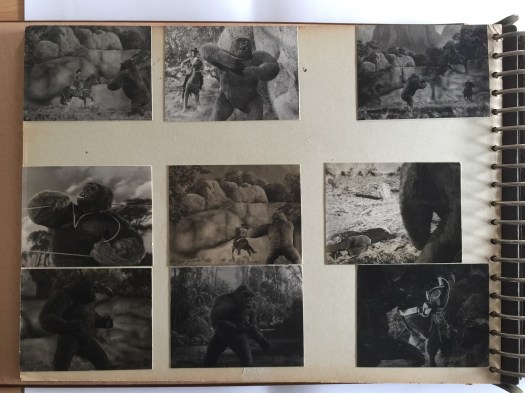
Put on display like a corpse in a glass coffin, the album in the centre of our gallery at Aberystwyth University is a relic of a bygone era of moviemaking.  It features documentarian photographs, production stills, concept drawings and watercolour storyboards.  

These images showcase ingenuity, commemorate teamwork, and highlight the efforts of the many artists involved in creating make-believe. They are shown alongside each other in the album to demonstrate how ideas were realised.

A page from the album in the Aberystwyth University School of Art collection

Why showcase this album here? Why now? Why bother commemorating the production of a relative commercial failure that, by now, is technically outmoded?

My motivation for staging this exhibition is rooted in a queer identity and a sense of belatedness.  Mighty Joe Young – the story of a captured primate exploited for profit and sentenced to death for revolting – affects me with its pathos and its promise of xenophilia triumphant. By accommodating its memorialization in our gallery, I seek to contest notions of cultural relevance and the trivialisation of nostalgic longing as ahistoric sentimentality.

The album defies history by unfolding Joe’s story in fictional time. It captures the film’s production in the sequential order of its narrative, not in the chronological order of its planning and shoot.

Conceived in 1945, filmed over a period of fourteen months, and released in 1949, Mighty Joe Young did not keep up with the times. Its compassion for the outsider and its indictment of consumer culture is an expression of early post-war idealism. Was the right to consume equal to the pursuit of happiness for which GI Joes and Jills had risked their lives? Mighty Joe Young’s climactic orphanage fire suggests otherwise.

‘Mr. Joe Young,’ as the giant yet gentle gorilla is announced in the credits, stands apart from the Atomic Age monsters of the Cold War era in whose destruction we are encouraged to relish. The menace in Mighty Joe Young is not its title character. Mighty Joe poses no threat to the Average Joe. The enduring, transcontinental friendship of Jill and Joe is proposed as an alternative to the fears and desires that tear us apart. 

Lego sculpture by Richard Boalch

Perhaps, this is why Mighty Joe Young was not a commercial success. By the time of the film’s release, red-menaced consumers had been conditioned to accept as the new normal what the film fantastically surmounts. The contemporary press called Mighty Joe Young‘incredible corn.’ 

A banana peel of discarded values, a throwback like Mighty Joe Young– and an album devoted to its making – can make us mindful of lost chances, and of the biases and restraints operative to this day.

Joan Blondell in Dachau

I am no historian. At least not in a traditional facts-and-figures sense. Early in life, I became doubtful of efforts to account for the present by recounting the past of a place or a people. Growing up – and growing up queer – in Germany during the 1970s and 80s, I was not encouraged to find myself in such accounts.  After all, how could I have developed a sense of being part of a national history? The present did not make me feel representative even of my own generation, while the then still recent past was presented to me as the past of a different country. A different people, even. A people whose history was not only done but dusted to the point of decontamination.

Visiting Dachau, June 2015

That many of those people – those old or former Nazis – were all around me and that the beliefs they held did not get discarded like some tarnished badge was apparently too dangerous a fact to instill. Pupils would have turned against their teachers.  Children would have come to distrust their parents. They might even have joined the left-wing activists who were terrorizing Germans for reasons about which we, endangered innocents and latent dangers both, were kept in the dark.

As I have shared here before – though never yet managed adequately to convey – I left Germany in early adulthood because I felt uneasy about my relationship with a country I could not bring myself to embrace as mine. It’s been a quarter of a century since I moved away, first to the US and then to Wales.  For over two decades, I could not even conceive of paying the dreaded fatherland a visit. 

Eventually, or rather suddenly, that changed. In recent years, I have found myself accepting offers to teach German language, history and visual culture, assignments that made me feel like a fraud for being second-hand when imparting knowledge about my birthplace.  I realized that I needed to confront the realities from which I had been anxious to dissociate myself.

Beaten to death, silenced to death”:
A memorial to the homosexuals killed during
the Nazi regime, made in the year I came out.

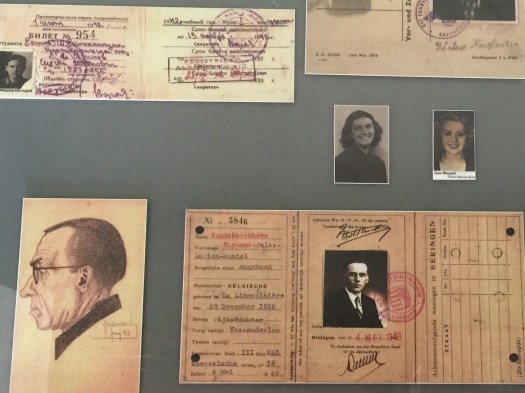
This summer, I visited the Dachau concentration camp for the first time.  There, in the face of monumental horrors, I was drawn to one of the smallest and seemingly most inconsequential object on display: a cigarette card featuring the likeness of 1930s Hollywood actress Joan Blondell.

Dates and figures are no match for such a fragile piece of ephemera. To be sure, the macabre absurdity of finding a mass-manufactured collectible—purchased, no less, at the expense of its collector’s health—preserved at a site that was dedicated to the physical torture of real people and the eradication of individuality could hardly escape me.

But it was not this calculated bathos alone that worked on me.  It was the thought that I, too, would have collected such a card back then, as indeed I do now. Investing such a throwaway object with meaning beyond its value as a temporary keepsake, I can imagine myself holding on to it as a remnant of a world under threat.

Lives taken, identities recovered at Dachau.
Unexpectedly, a picture of Joan Blondell

Looking at that photograph of Joan Blondell at Dachau, it was not difficult for me to conceive that, had I been born some forty years earlier, I might have been sent there, or to any one of the camps where queers like me were held, tortured and killed.  That minor relic, left behind in the oppressive vastness of the Dachau memorial site, speaks to me of the need to take history personal and of the importance of discarding any notion of triviality. For me, it drives history where it needs to hit: home—home, not as a retreat from the world but as a sense of being inextricably enmeshed in it.

Joan Blondell, meanwhile, played her part fighting escapism by starring in “Chicago, Germany,” an early 1940s radio play by Arch Oboler that invited US Americans to imagine what it would be like if the Nazis were to win the war.

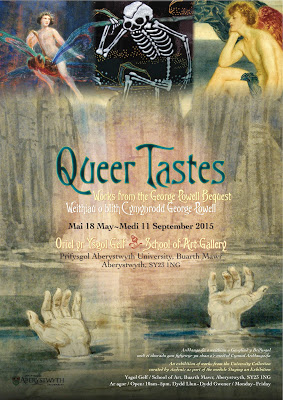
Queer Tastes: Works from the George Powell Bequest

George Powell
Poster design by Neil Holland

Queer Tastes is an exhibition I curated with students of my undergraduate module Staging an Exhibition at the School of Art, Aberystwyth University. Each year, the module culminates in a student-curated show on a given theme.


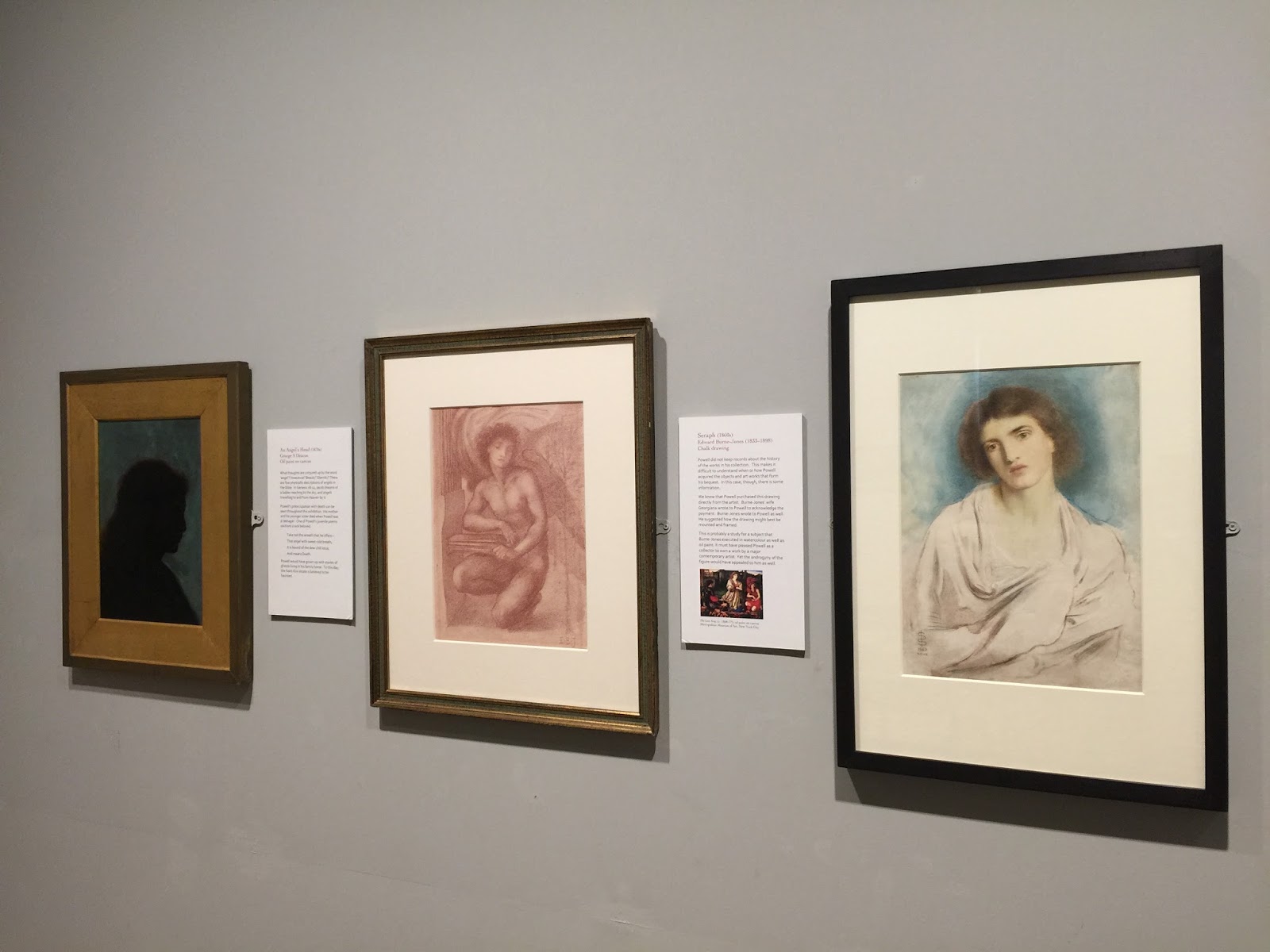
This year’s exhibition, which is open to the public from 18 May to 11 September, explores the identity of the Welsh-English dilettante George Ernest John Powell (1842 – 1882) through the collection that he bequeathed to Aberystwyth University. The objects were selected by students of the School of Art, which holds part of Powell’s bequest.  

The exhibition includes works by Simeon Solomon, Rebecca Solomon, Edward Burne-Jones, Richard Westall and Hubert von Herkomer as well as artefacts and curios ranging from a plaster cast of Felix Mendelssohn-Bartholdy’s hand and a glass casket that allegedly once contained a splinter from Robert Schumann’s coffin.

The Powell family owned the Nant-Eos estate a few miles inland from Aberystwyth. Educated at Eton and Oxford, George Powell spent little time at Nant-Eos, which he would inherit in 1878. It was an unhappy place for him. His parents were estranged. His mother and younger sister died when Powell was a teenager.


Powell was a dreamer, much to his father’s disappointment. Instead of going hunting, the boy wrote poems about death, loss and betrayed love. Eager to get away, Powell travelled to Europe, Russia, North Africa and Iceland. In the company of the poet Algernon Charles Swinburne, Powell spent summers on the Normandy coast. There, he entertained writers and artists in a cottage he named after a bisexually promiscuous character in de Sade’s Philosophy in the Bedroom.

Powell has been called ‘eccentric’, ‘sinister’ and ‘sad’. He has also been labelled ‘homosexual’, a term not used in his day. ‘Queer’ suggests something – or someone – strange or at odds with our views. It asks that we trace our responses to otherness in ourselves.

A man of the world, Powell wanted to be remembered back in Wales as a patron and benefactor. He offered parts of his collection to Aberystwyth Town Council, on provision that a public gallery be created for their display. When the deal fell through, Powell gave the objects you see here to the University of his ‘dear but benighted town’.

Making our possessions public is in a way a ‘coming out’. It invites others to wonder about our past. It also means saying ‘I matter’. Collections like Powell’s encourage us to question how a person’s worth is determined.
Curators: Danielle Harrison, Kayla McInnes, Alice Morshead, Jenny Skemp, Valerija Zudro, with support from Harry Heuser (text and concept) and Neil Holland (staging and design).
Powell’s life and collection are the subject of my essay “‘Please don’t whip me this time’: The Passions of George Powell of Nant-Eos” in the forthcoming anthology Queer Wales (University of Wales Press).


Of Myrt and Marge-inal “interest”; or, Getting It in the “hinterland”

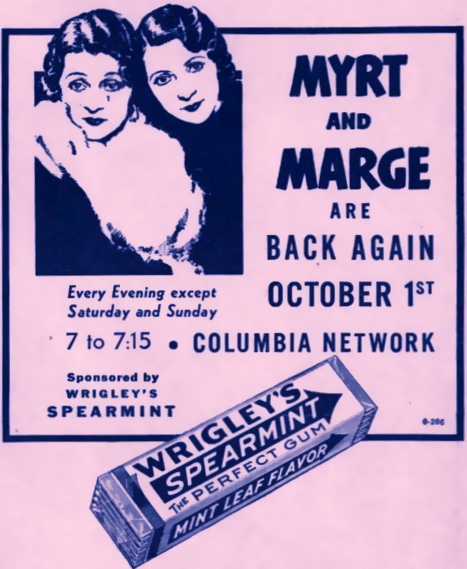
Amos ‘n’ Andy is old-fashioned,” radio critic Darwin L. Teilhet complained as early as 1932. “Its dramatic machinery creaks.”  He much preferred Myrt and Marge, a 42nd Street-smart if way-off-Broadway Melody then in its inaugural season.  To Teilhet, Myrt and Marge was not only “very good serialized melodrama,” it was the “most advanced program of its type now on the air.” 

For all its popularity—and its groundbreaking granddaddy-of-them-all status—Amos ‘n’ Andy sure was “old-fashioned.”  Indeed, its success depended on that comforting, reassuring recognizability—comforting and reassuring, that is, to folks who thought a black face routine less troubling than the effectuation of racial equality.  The early 1930s were highly competitive times of economic hardship, and to hear potential competitors bumbling and make fools of themselves must have been comic relief to the paler faces in the crowd, the faces that mattered most to sponsors.

So, how fresh-faced were Myrt and Marge by comparison? And why was it that, by January 1933, their serialized adventures came pretty close to rivaling Amos ‘n’ Andy in the ratings? Never having been enthusiastic about the latter, I was eager to find out.

As next to nothing is left of the program’s initial run, I had to take the critics’ ear and word for the “it” of listening.  Teilhet, for one, was wowed by the “swift lines,” which he found to be “very different from Amos’ and Andy’s ponderous exchanges.”

Indeed, those “swift lines” translated into swell curves in the critic’s mind.  “Miss [Donna] Damerel [as Marge] provides a sweet and pure sex interest,” Teilhet opined, “which can be safely gulped down by the hinterland without making the children go to bed before their proper hour.”  It took an adult’s imagination of adulterated purity to figure that not all that occurred in the lives of chorines Myrt and Marge was altogether “sweet and pure,” least of all by the puritan standards commercial radio was obliged to uphold.

According to Teilhet, the “tempo” set by the two leads was “hard and glittering.”  Myrt and Marge was quick to respond to the public’s fascination with Al Capone and Little Caesar by turning the backstage drama into an “exciting gangster story.”  It brought a touch of Dillinger to the dilly-dalliance of romantic serials, then still a genre in search of a formula.  By doing so, and by implicating its leads, Myrt and Marge came as close to pre-code Hollywood as network radio could get.

What’s more, Teilhet remarked, that “tempo” was “directly traceable to the vaudeville antecedents” of Myrtle Vail, who created the serial, wrote and starred in it.  “The things she has seen—and experienced,” winked Radio Guide’s Arthur Kent in 1934.  Kent attributed the program’s success to the fact that the title characters were played by actresses who were mother and daughter in real life and that Myrtle Vail had “lived in three great epochs of show business: epochs dominated, respectively, by stage, movies and radio.”  Having “been though it all,” Vail now wrote “the life of the theater as well as her own life into her script.”   Like a true trouper, she carried on even after the death of her co-starring daughter in 1941.

At least on one occasion, the realism was inspired by actual events.  “That tearful episode of Myrt and Marge last week was not the result of an emotionally successful script, m’dears,” readers of Radio Guide’s issue for the week ending 1 February 1936 were told.  “No, it was because the cast almost was overcome by tear gas fumes released when the bank adjoining the CBS studios tested out its automatic vault system.” 

I am surprised that listeners, if not overcome by the vapors, weren’t positively fuming at some of the backstage goings-on.  Perhaps they were overcome, which may account for the lack of documented complaints, radio’s chief tool of self-censoring.  Could they have been oblivious of the program’s other or third “sex interest”—that flaming figure in the dressing room?

What Myrt and Marge brought into American homes, if they didn’t already have one in the closet—and what contributed to renewed interest in the serial, albeit as a mere pop-cultural footnote—was Clarence Tiffingtuffer, the queer sidekick responsible for the gowns worn by the show-busy leads, and for considerable gossip besides.

If listeners were clueless, the hoofers sure weren’t.  When teenager Marge, the newest member of Hayfield Pleasures celebrated precision chorus, feels uncomfortable about being fitted by a man, one of her fellow chorines hisses “Don’t worry, he’ll never harm a hair o’ your head, dearie.”  Rather than being the brunt of it, Clarence dishes out some “swift lines” of his own. “Those gams of yours are practically parenthetical,” he remarks upon the alleged assets in his sartorial care.

Now, belated followers of Myrt and Marge have to make do with a mid-to-late 1940s revival of the serial (although a 1933 film version featuring the radio cast is extant).  Gone are the true-to-life leads; gone, too, is much of what had seemed “different” or “advanced” about the serial back in 1932.  Yet even though we now have to settle for Myrt and Marge-arine, the substitute still retains a flavor of the first outing, as the actor originating the part of Clarence, Ray Hedge, reprises the role he made his own.

I can imagine that, had I been growing up in the early 1930s, Myrt and Marge would have made me feel a little less marginal by moving someone recognizably like me—yet way out there, enjoying a career and a life of make-believe—into the center of the action.  How thrilling it would have been to hear Myrt and Marge take to the soundstage set by their better-known seniors, Gosden and Correll, and listen to them tear down that old minstrel show-on-taxi cab wheels.  With Clarence in their midst, and on my mind, it sure would have sounded like the “most advanced program of its type.”

To be continued, as they say in soap opera land.

"Well, excuse me for living, Anita Bryant"

Most of us have what in common parlance is known as baggage. If you were to rummage through mine, you’d come across a few reels of film. Moving images that get pushed around like a burden too heavy to carry, celluloid that somehow came to deposit itself under the by now leathery skin of my much travelled case. One such movie, to me, is Robert Wise’s I Want to Live (1958). Few moments in film made a greater impression on me than Susan Hayward’s final scenes in this hysterical nightmare of a melodrama, which I first saw when I was a child of seven or eight (we have so few accurate records for experiences such as watching television).

I was staying with my grandmother who saw it fit to sit me in front of the tube all day, flicking between the two available channels, and letting me “gorge and guzzle” like an Augustus Gloop picking the plate of Mike Teavee until I had to be taken back to my parents after developing a fever from the exposure to all those images flashing before me. I have not watched I Want to Live since. Since last night, that is.

Violent and brash, I Want to Live is hardly what you might call family fare; here in Britain, it still carries an advisory label suggesting the age of fifteen as the appropriate time for exposure. How terrifying it was for me, the boy I still know, to witness the execution of a human being, the slow death by poison staged with minute precision. There was that phone that would not ring, that call that would not come. After all these years, I was convinced it would be ringing, after all, if only too late to save the life of Barbara Graham (played by Susan Hayward, pictured above).

As I said, I had not seen this film since that first time. Along the way, I heard it mentioned, gradually realizing it to be an iconic picture, a title in scarlet lettering, the kind of incendiary pulp to which the likes of me are drawn. I knew early on what “the likes of me” were; but I was as yet unfamiliar with the secret language shared among my kind, something understood.

Years later, living in New York, I caught a rerun of the Golden Girls, the sitcom to which I, a non-immigrant German studying in the US, owed much of my colloquial English. There was Sophia Petrillo, locking herself up in the bathroom, upset that her daughter Dorothy does not approve of her wedding (to her Jewish boyfriend, Max Weinstock). The caterer storms in, overhearing the reconciliation of elderly mother and grown-up child. “This is more moving,” he breaks out, “than Susan Hayward’s climactic speech in I Want to Live.” “You’re ready to fly right out of here,” sneers Dorothy’s roommate Blanche at the sight of this Pangbornian display. “Well, excuse me for living, Anita Bryant!” the insulted caterer fires back.

I am with the caterer. In fact, I have been with the caterer and their friend Dorothy since I was about five. Perhaps, this is why I responded so strongly then to what the film claims to be a wrongful sentencing, the incarceration and sacrificing of an exuberant outcast. Not that I am trying to hand out psychoanalytic cheese puffs here.

Still, it was strange to revisit Graham’s final moments last night, so many decades later, seeing myself watching an old movie, still recognizing that boy. What was my grandmother thinking? It struck me that this was the woman who, years later, told me that she knew about the concentration camps and the gassing of the Jews. The same woman who refused to talk to or correspond with me after it had become clear that I was to remain a caterer and would never have that wedding.

There she sat with me, watching a woman going into the gas chamber. Was she reminded of the many deaths she had condoned? Was there a secret chamber of her heart into which no poison could rush? Would she have turned the switch on me and my pink triangular kind?

As if any underscoring of such melodramatic excesses were needed, Graham went out with a bang. Not just metaphorically. The lamp of our movie projector (one of those $500 bulbs) imploded just before she was led to that chamber. There won’t be any screenings for a while, except for those pictures that keep flickering on the back of my eyelids, reels in the baggage to be pushed around until it is time for me to push off . . .

Being Out, Staying In

Well, I know. You can’t catch cold getting caught in the rain. At least, that’s what people keep telling me straight to my weather-beaten face. Meanwhile, I got soaked during one of those torrential New York City downpours a few night’s ago and was not up to meeting an old friend for dinner last night, notwithstanding the fact that my days in the city are numbered and I might have to wait another year for another opportunity to see him. I ended up watching television instead; it’s something I rarely do nowadays, especially while vacationing.

Luckily, I was in for a treat at Turner Classic Movies, whose Screened Out series opened last night with “Algie, the Miner” (1912), a one-reeler concerning an effete Easterner getting the Western treatment to prepare him for the challenge of matrimony. Say—and I say this quoting a line from the subsequently presented comedy-thriller The Monster (1925)—have you “dropped in for some pansy seeds” yet?

Hollywood logic has it that those “seeds” may very well yield hardy perennials; in fact, that is the reason for spreading them in the first place. The conversion myth of growing up straight permitted writers and directors to create outré characters that are both likeable and socially acceptable. Judges according to the mores of early-to-mid 20th-century America, the pansy was an aberration that could be shown to suffer for and snap out of its condition of non-conformity by turning straight. In other words, the pansy was a milquetoasts redeemed by hearty helpings of ham and exorcism.

Otherwise, gender transgressive characters were either buffoons or villains, depending on the state of their sexual (in)activity and their willingness to reform. The Monster, you might say, involves a case of rehabilitation in which feeble Johnny Goodlittle (whose very name suggests the both the need for and possibility of redemption) has to prove his manhood not only by trapping a monster, but by demonstrating himself to be far from one.

The buffoon, by comparison, is a sexually unreformed and consequently frustrated male. Exit Smiling (1926), starring the delightful Beatrice Lillie (in a cross-dressing role), features a supporting player whose Hollywood career depended on such roles: Franklin Pangborn, the Queen of Paramount. “This nervous tension will positively slay me!” his irritable stage actor Cecil Lovelace exclaims when his leading lady is late for the show. On the radio, where his queer voice was heard only infrequently, Mr. Pangborn was simply made out to be “Allergic to Love”.

TCM is also sponsoring the multimedia exhibition Celluloid Skyline, currently (25 May to 22 June 2007) on display at New York City’s Grand Central Station (pictured above). I only had a few moments to walk through before catching a train to the Moving Image museum in Queens, my head not being clear enough to say much more on the subject at present.

Come to think of it, I have yet to post my review of the new Broadway musical Curtains starring the Tony nominated and recently de-closeted David Hyde Pierce. Perhaps I need to stay in more; but it sure feels great to be out . . .

The History [of] Boys: Alan Bennett and the Gay Social Science

I often ask myself whether I am. History,  I mean.  Not that anyone is opening a museum dedicated to my life, a definitive space for finite time as it is now in the works for 1970s pop act Abba.  To be history, I suppose, means to be quite past it; insignificant, irrelevant, outside of what matters now, someone either to be forgotten or to get nostalgic about.  To be part of history, on the other hand of time, means not only to think of oneself in context but to be thought of as belonging to it, as fitting into its continuum. And to make history is to take part in its continual shaping, be it wilful or inadvertent, by bringing something (or someone) about.  So, am I a manifestation of history? Am I making it? Or am I beyond its bounds as determined by those who assume the authority of authoring it in word and image?

Such questions have been whirring through my mind after watching The History Boys, the film adaptation of the acclaimed stage play by Alan Bennett, the well-known British radio raconteur.  The History Boys documents the quest of a group of students who, in an effort to make something of themselves (or to please their folks), try to get into one of Britain’s most influential or prestigious institutions of higher learning by reading (that is, studying) history.

Bennett sets the action, such as it is, in 1983, which means that, by now, those ambitious, playful and bewildered youngsters would be middle-aged men, like myself (pictured), a spinning forth of their fictional lives the film encourages in its “whatever became of” epilogue.

One of them did not make it this far into the 21st century, having given his life for his country (or those governing it on his behalf) by serving in the military.  Most of his classmates, it seems, have gotten little out of their college education, other than the satisfaction of being able to brag about it.  Except for the one, most vulnerable, least sure of himself, who took his schooling to heart and decided to pass it on.  That one, according to the queer history of Mr. Bennett, is the outsider who, unlike his closeted professor, has a chance to be, make, and impart what he has learned about himself.

At first, I was irritated by the imposed pastness of the action, as much as I can relate to the period as one of adolescent confusion.  Why bother to recreate a certain historial age, to impose a make-believe historicity on the growing-up experiences portrayed, thereby diminishing or obscuring their relevance? How would their story play out if were set in the present day, rather than a past that looks, by virtue of being bygone, quaint to those who have not lived it and to those whose vision is warped by nostalgic longing?

Might not such an act of looking back serve a purpose other than to suggest a past beyond change? The history of those boys turned men, individuals who were not always in control of their paths (as accidents shaped them as much as their actions), is not so much over as it is crossing over into the present.

The History Boys strikes me as an old man’s gesture of bridging what is often thought of as a generation gap, a chasm into which recent lessons and those still present to teach them are tossed to be discarded.  It is an encouragement to learn not from books and experience alone, but from intercourse with those around us, those whose stories might not get into the books other than by being thought of while reading.

The body of our histories, like the history of our bodies, cannot be got at from a distance, scrutinized in clinical detachment by ostensibly objective onlookers; it has to be lived, felt and shared in order to matter.  Beyond the groping for bare facts in hopes of an elusive naked truth, beyond the stripping of traditions exposed as lies and the weaving of postmodern thought in a garish display of thinly veiled self-pleasuring, imparting an understanding of history is a mentoring in the half-forgotten sense of the word.

 “Pass the parcel.  That’s sometimes all you can do.  Take it, feel it and pass it on.  Not for me, not for you, but for someone, somewhere, one day.  Pass it on, boys [and girls].”

A Case for Ellery Who?: Detecting Prejudice and Paranoia in the Blogosphere

Well, only a few short hours ago I was writing about the constitutional freedoms that US citizens enjoy and the appeal American writers like Pulitzer Prize winner Marc Connelly made to 1940s radio listeners of the The Free Company (and “The Mole on Lincoln’s Cheek” in particular) to cherish and defend such liberties. I suppose that includes the freedom to sever one’s connections to anyone we realize to be incompatible or determine to be objectionable, regardless of any interests or passions we might otherwise share. Now, I don’t wish to make a Brokeback Mountain out of a molehill; but I have to confess that I am rather dismayed at the length one of my former readers went to in order to disassociate himself from my ramblings, sentiments he previously appreciated and endorsed. Allow me to expound.

I am always eager to read about and hear from others who, like me, are interested in early-to-mid 20th-century American popular culture; they need not be like me in other respects or feel themselves to be other, like me. Now that I am outside the academy and live somewhat remotely, I am thrilled to communicate with those who are drawn to the neglected yet fertile fields of silent movies, pre-code Hollywood, and old-time radio.

As may have become clear to the few who visit this site with some regularity, I am neither nostalgic nor flippant (or camp) in my approach to such marginalized topics. Nor am I an historian. The chief reason for keeping this journal is to share what I think matters to a few, regardless of how immaterial it may be to the many. Just who are these few, I sometimes wonder. And sometimes I get an answer that is disheartening if not, upon reflection, entirely uncommon.

Yesterday, I decided to add another online journal to my short list of links (see right). On said blog, I had left a comment about the sorry state of many old-time radio recordings, a remark that was kindly and publicly acknowledged, and received one in return regarding the career of actress Lurene Tuttle.

Pleased to have come across another old-time radiophile (I dislike lazy acronyms and refuse to stoop to letter combinations like OTR), I sent a message to the Tuttle expert, inviting him to be linked on my page. The response so startled me that I decided to drop today’s feature—much to my regret of disappointing an admirer of screen legend Kay Francis —and write instead about this sad case of blogophobia, the fear of being linked to and associated with someone as repulsive as myself.

I assure you, this is not a case of a bruised ego. I always assumed the most repellent aspect of broadcastellan to be its syntax and diction, its subject being merely inconsequential to most. It turns out, however, that the invitation was rejected as a direct response to . . . my blogroll.

According to the e-missive sent to me, one of the sites listed on the right is so offensive that said Tuttle-tale decided not only to refuse the link, but to erase the two comments I had left on his blog, even if doing so meant having to delete the posts to which they were attached—one of which journal entries having welcomed my “intelligent” remarks (about Vic and Sade) and greeting me as the first reader to leave a response. However obliging, I won’t go so far as to delete my essay about Ms. Tuttle in order to assist in this erasure, an obliterating not only of the former association but of the prejudice behind its severance.

What has this to do with Ellery Queen, apart from the double entendre intended? Well, even during the McCarthy era, in which small-mindedness reached its peak in the US, programs like The Adventures of Ellery Queen encouraged listeners to be open and embracing of those whose constitutionally protected beliefs, creeds, and pursuits of happiness differed from their own. Here, for instance, is the message attached to “One Diamond,” first heard on the Ellery Queen program on 6 May 1948:

This is Ellery Queen, saying goodnight ’till next week, and enlisting all Americans every night and every day in the fight against bad citizenship, bigotry, and discrimination—the crimes which are weakening America.

Should you find this message offensive and the people I chose to include in my blogroll abhorrent, I ask you—kindly but resolutely—to turn away and divest yourself of any associations with broadcastellan you might have sought or tolerated until now.