

As the world awaits news from Ukraine and its people awake daily to the sounds of shelling, many of us, having survived the pandemic that at once isolated and united us, become alive anew to our connectedness to world events and to the urgency, the necessity, of connecting dots in plain sight, and of listening out for tell-tale signs, be it the rumble of tanks or the roar of tyrants. We should have seen this one coming, we might suspect; but such hindsight provides no relief in the face of local destruction and global upheaval.
I am reminded of the events that came to be known as 9/11 – an attack that did not, as some claimed and many felt, hit us ‘out of the blue’ on that bright September morning – and of feeling both helpless and useless in the wake of the terror that would shape history. I was teaching writing in the Bronx, and I was researching radio drama of the 1930s. None of that seemed to matter at a moment when digging in and digging up – literally and figuratively – was felt to be needed to uncover lives lost and recover the history that had gotten us to that point. I kept on teaching writing, and I kept on researching radio – and I strove to find the usefulness and relevance of both. That is, I did not carry on “regardless.”
Instead of retreating into the past of broadcasts decades old, I tried to retrieve messages pertinent to the present. And while we might think that messages are merely repeated rather than being heeded, we may also find that we did receive them and that we are capable of learning from history even as a world leader insists on repeating it.
Take, for instance, Archibald MacLeish’s “The Fall of the City.” First produced and broadcast in the US on 11 April 1937 – with a cast including Orson Welles and Burgess Meredith, and a score by Bernard Herrmann – it was a response to the rise of a dictator who, unchecked and unresisted, conquers a city despite warning voices from the past – the ancient and the dead. In MacLeish’s allegory, the ‘conquerer’ is not a person: it is fear. It is fatalism. It is the surrender of freedom to fascism.
In “The Fall of the City,” a radio announcer (played by Welles in the 1937 production) serves as our eyes, an observer by proxy reporting from the scene of an unnamed city. MacLeish’s plays – from “Air Raid” to “The Trojan Horse” – are never simply plays for the medium of radio but also plays about that medium – about tuning in from a distance, about mediation and reception, and about misinformation and deception. The listeners are implicated, their role in the event of listening reflected upon in the shared act of telling stories and hearing histories in the making.
“The sun is yellow with smoke,” the announcer informs the audience, “the town’s burning…. The war’s at the broken bridge.” It is impossible to listen to those lines now without seeing the cities under siege in Ukraine; and yet, “The Fall of the City” – which was broadcast just two weeks prior to the arial bombing of Guernica in April 1937 but written some months earlier, in 1936 – not about the reality of any particular invasion but about the real threat posed by evasiveness. It caution against giving in to ideas and being enslaved by ideologies, for which it was criticised during the Second World War: “In these last years,” Randall Jarrell, himself a poet, wrote in 1943:
many millions of these people, over the entire world, have died fighting their oppressors. Say to them that they invented their oppressors, wished to believe in them, wished to be free of their freedom; that they lie there.
Jarrell wrote this in the aftermath of air raids, and the war of ideas were not uppermost on his mind.
I do not know whether I am writing at a moment that future records might document to be days or weeks before the start of a Third World War. I know I am writing it in wartime. Unlike in the scenario envisioned by MacLeish, the world is not only watching the atrocities perpetrated by Russians in the towns and cities of Ukraine; it is responding, both to aid Ukrainian civilians (my sister in Germany has welcomed Ukrainian refugees into her home) and to avoid an escalation of military conflict. Unlike the abstract “citizens” of MacLeish’s play, men and women are resisting. Cities do not fall. They are attacked. They are defended. They are fought over. And it is citizens – civilians – that are doing the fighting.
How different this fight is from the defeat as MacLeish conceived it. “The city is doomed,” the Voices of Citizens in his play declare,
The age is his! It’s his century!
Our institutions are obsolete.
He marches a mile while we sit in a meeting.
Opinions and talk!
Deliberative walks beneath the ivy and the creepers!
His doubt comes after the deed or never.
He knows what he wants for his want’s what he he knows.
He’s gone before they say he’s going.
He’s come before you’ve barred your house.
He’s one man: we are but thousands!
Who can defend us from one man?
Bury your arms! Break your standards!
Give him the town while the town stands!
We know the price of such surrender. Putin might have believed that his invasion would meet with little or no resistance, and that the global community, understood as a community, is powerless in the face of his aggression. Putin’s methods date from the past; his mind, however made up it may be, was made up last century. It is no match for what humanity can achieve if we – and that includes the people of Russia – put our minds and methods to it. Right now, his thinking and his tanks, his misfiring strategies and his unwillingness to listen, are being answered by the rallying cries of the present that will help us secure a future.
 The next voice you hear will still be mine; but it will come to you from the metropolis. Tomorrow morning, I am leaving Wales (my man and Montague, the latter, being more compact, pictured in my arm). After a stopover in Manchester, England, it’s off to New York City, my former home of fifteen years. Last time I was there, I found myself in the middle of an old-time radio serial (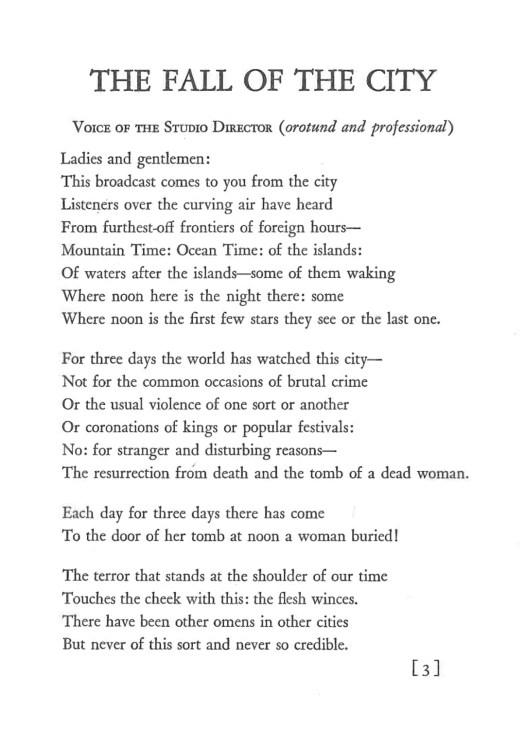
 Harry Heuser