
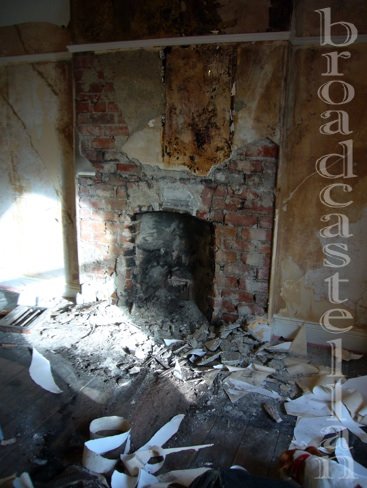
How insignificant, at the moment, seem the influences of the sensible things which are tossed and fall and lie about us, so, or so, in the environment of early childhood. How indelibly, as we afterwards discover, they affect us; with what capricious attractions and associations they figure themselves on the white paper, the smooth wax, of our ingenuous souls, as “with lead in the rock for ever,” giving form and feature, and as it were assigned house-room in our memory, to early experiences of feeling and thought, which abide with us ever afterwards, thus, and not otherwise.
It was Walter Pater’s “The Child in the House” (1878) that gave me the idea for a title; but it was my history of habitation that made me write The House in the Child, a fictionalized autobiography. I received some sort of graduate prize for submitting a fragment of it, a rather generous acknowledgement of the pain it took to attempt its construction—and fail. Now that I am quite preoccupied with the impending move—a subject that, to recycle a line from Charlotte Perkins Gilman’s “Yellow Wallpaper” (1892), “dwells in my mind so”—it occurred to me just how long the concept of dwelling has been on my mind, that maze of memories Pater calls the brain-building.
The House in the Child was never finished; and that is just as it should be, for the house was never finished with me. The foundation for the narrative was a sense of dislocation and the absence of private space—living abroad, with a dinner table as a study, wondering what “home” meant. Thinking about the past, it came home to me that my family had been destroyed by the ambition of building that house. And yet, retreating into my own room (a luxury denied me during much of my adulthood) and the hidden realm of thought, I had done so little to keep the architecture of domesticity from falling apart.
Writing about myself—this most self-serving of literary endeavors—offered me a chance at revision, a chance to think of myself as someone who was not always thinking of himself first. I was not this child, but I might have been:
She points at the colorful map drawn neatly with crayons—red, blue, and green. Mostly red, though, because it makes everything look more significant and urgent somehow, like a warning label. On the map, the house looks like a castle, with chambers and vaults, corridors and hidden passageways. Everything’s angular and crooked, like in a real maze. A map can make any place important even if it really needs no map at all. The new house is much too small, really—too plain, straight, and square. Nobody gets lost in a bungalow. But this drawing was not supposed to make it all clearer and plainer. It was meant to add the mystery and adventure the whole place lacked from the start.
There is still so much to unpack; but she needs to rest for a moment, anyway; and so she sits right here, glancing at this piece of paper.
“Everything’s set up nicely, don’t you think? You kids will love it. No more fighting about space and privacy, no more arguing about what goes where. Now, let me see.”
She plays the game well, slowly following the paths with her finger, studying the map as if it really were the floor plan to an enormous fortress.
Maybe she enjoys this moment because she is just as disenchanted with her new home as . . .
“Ah, here we are. This is your room. Your sister’s room is next to it . . . right here, see? And somewhere down here, in the basement, is the workroom. And you know who’s going to spend most of his free time in there. Then there is our bedroom, straight across this hallway, here. This is what we always wanted, isn’t it? We’re all going to have our own rooms now.”
All except she. She does not have a place to herself, like we all do. What is her place? Where can she go to close the door? She has to sleep with him at night.
Maybe that’s why she keeps staring at the map, examining it as if she were looking for a vacant space to rest her eyes. Maybe she holds on to this plan because it promises a hiding place not to be found elsewhere—not provided for in our house. Maybe that’s why her finger keeps running up and down the paths, back and forth, back and forth, like a mouse trapped in a labyrinth.
Finally, she lets go, gets up, and turns out the light.
“You can always come here, Mutti.” But she has already closed the door—and she did not take the map . . .
 Harry Heuser