Tonight at 8:30 (or Whenever It’s Convenient)

“You canโ€™t do without it. Supposing you wanna hear Jack Benny, see? But you canโ€™t be at home at that hour. So you tell the maid to turn the radio on when Jack Benny comes on, and this automatically goes on with the radio. . . .โ€ That is how big shot Howard Wagner goes on about his new wire recorderโ€”shortly before giving his old employee the ax. The employee is Willy Loman, the scene from Death of a Salesman. It is one of the references that came as a surprise to me yesterday morning when I reread the play I thought I was done with by the time I left college. At the time he wrote this Pulitzer Prize-winning piece, Miller had not long gotten out of the radio game and was rejoicing in his newfound artistic freedom; so he gives the speechโ€”and the speech recording deviceโ€”to the bad guy. Having previously gone on record to dismiss radio as commercial and corrupt, Miller now suggested how the medium was about to get worseโ€”that is, farther removed from live theater, from the immediate, the communal, and the relevant.

This โ€œwonderful machineโ€โ€”for which Mr. Wagner is ready let go of โ€œall [his] hobbiesโ€โ€”is a metaphor for the selfishness of a society that was moving so fast, it could not even give the time of day to its most beloved entertainersโ€”let alone a tired old man like Willy Loman. If Mr. Benny wanted to talk to Howard Wagner, he, like everyone else, had to wait for the hour appointed to him by the big noise.

โ€œYou can come home at twelve oโ€™clock, one oโ€™clock, any time you like, and you get yourself a Coke and sit yourself down, throw the switch, and thereโ€™s Jack Bennyโ€™s program in the middle of the night!โ€โ€”all for โ€œonly a hundred and a half,โ€ an amount for which Willy Loman is willing to work for three weeks and a half.

For decades to come, it was the industry that benefitted most from this new recording technology. Bing Crosby could walk into the studio when it suited his own schedule, rather than having to be there for the public who sat by the radio, as of old, to hear his program go on the air. Nowadays, the Willy Lomans are in charge of scheduling, of making time for whoever vies for their attention.

I would not go so far as to say that I โ€œcanโ€™t do withoutโ€ the latest recording software. It sure makes it easier for me to enjoy more of what I enjoy, though. The BBCโ€™s iPlayer has greatly changed my listening habits and increased the number of plays, documentaries, and musical selections I take in. Currently, I am listening to โ€œThe Better Half,โ€ a cheeky if dated sex comedy by Noel Coward. Written and performed in 1922, the unpublished one-acter about โ€œmodernโ€ marriage (in the traditional sense we canโ€™t seem to get past) was not staged again until 2007. Earlier this week, it had its broadcast debut on BBC Radio 4.

Okay, so the leading lady is not Gertrude Lawrence (star of radioโ€™s Revlon Revue back in 1943)โ€”but at least I wonโ€™t have to listen to Mr. Wagnerโ€™s precious offspring (โ€œListen to that kid whistleโ€) while begging for a moment of his time. After all, most of us donโ€™t get the impression that, as Noel Coward puts it in โ€œThis is a Changing Worldโ€ (with which the radio adaptation of โ€œThe Better Halfโ€ opens), โ€œ[t]ime is your tenderest friend.โ€ So, it feels good to push a few buttons and get the better of it . . .

Related recording
โ€œMeet Gertrude Lawrence,โ€ Biography in Sound (23 January 1955)
โ€œIโ€™m a dime a dozen, and so are you!โ€

Occasionally, people who think of me as some sort of authority approach me with questions of a literary nature. When that happens, I suddenly remember that I am Dr. Heuser, BS, MA, PhD, something that you tend to forget when you spend most of your afternoons in the company of a small dog whose passive vocabulary is limited to words like โ€œwant,โ€ โ€œbasket,โ€ orโ€”a testament to my cleaning skills and the joys of country livingโ€”โ€œspider.โ€ So, I was eager to be of service when a young friend of mine from New England, where I have what you might call a surrogate family, asked me whether I could give her a few pointers on her latest English assignment.

The assignment, as she described it to me, was to compare one of the characters in Death of a Salesman to somebody she knows. I hope she did not think of contacting me because she had me in mind for the title role and expected me to prove her right by confessing that Iโ€™ve been feeling an awful lot like Willy Loman lately. I havenโ€™t. Now, Biff, on the other hand . . .

I first read Death of a Salesman when I was an undergraduate in New York City in the early 1990s, at about the time that my term paper burdened friend was born. Back then, the play confirmed what I had expected all along: that things would not get easier growing older, that, even though the years of our protracted adolescence may well be the worst years of our lives, no matter how we romanticize them later on, there might never come a period of calm, certainty, or happiness. The regrets, though, might be mounting.

That I never revisited the Lomans was, heretofore, not among my regrets. As a matter of fact, I took a dislike to Arthur Miller in the intervening years, ever since I discovered that he was somewhat of a traitor. That is to say he was a reluctant radio playwright who, once he achieved success in the theater, professed to have hated the medium that got him started, the bastard medium that became the subject of my dissertation.

From the late 1930s to the mid-1940sโ€”when radio dramatics were at the peak of their influence on American cultureโ€”Miller made a decent living writing for the Columbia Workshop and Cavalcade of America. He wasnโ€™t toiling away for the Hummerts or writing advertising copy. And even though the Workshop was a sustaining programโ€”that is, one not controlled by advertisingโ€”he went on dismissing radio as a tool for the hucksters. It was a popular view shortly after the war.

Miller was not just father to Willy Loman; he was also one of his sons. Working in commercial radio, he might have seen himself as an adjunctโ€”the product ofโ€”salesmanship, until he finally managed to make a name for himself by writing for the stage. The technique of Death, though, is clearly indebted to his years in radio, to the ways in which aural play can take you right inside the head and heart of a person, unencumbered by walls, by exteriors, by physicality. There are only voicesโ€”and the only dimension is that of time. Not that Miller ever gave credit to radio for that.

Anyway, faced with my friendโ€™s assignment, I did the only responsible thing I could think of and reread Millerโ€™s play. By the time I reached the โ€œRequiem,โ€ I was in tears. Even though he did not take great pride in his careerโ€”a career he did not chooseโ€”there was a lot of Willy Loman in my father, right down to the extramarital affair, the self-deception, the suicide attempts, and the loss of his sonโ€™s respect.

Like most hard-working folks, my father could not cope with the suspicion that he was what Biff calls โ€œa dime a dozenโ€โ€”though he was a childhood hero to me. He got stuck in a line of work that exhausted him, driven by a desire to be “well liked” and anxious to display such tokens of middle-class achievement as are generally read as signs of success. His legacy, likewise, was a disappointment. I turned out to be Biffโ€”privileged to reject the โ€œphony dreamโ€ (โ€œWhy am I trying to become what I donโ€™t want to be?โ€), to be my own kind of failure and make some kind of virtue of it. What I have not yet dealt with is the role I might have played in my fatherโ€™s early death, whether or not my loss of respect for him contributed to the loss of respect he had for himself.

I donโ€™t suppose my words were any great help to my young friend, let alone a reassurance. There was one thing I told her that I would like her to remember, though: โ€œwhatever you write, write what you really feel. Anything else is a waste of timeโ€”for you and your reader.โ€ Clearly, I was not speaking as an academic, to whom every argument is a sales pitch and every paper an opportunity for self-promotion. Else I might have suggested that she align herself with one of the minor, female characters in Deathโ€”โ€œStrudelโ€ to Biffโ€™s brotherโ€”to point up the chauvinism of Millerโ€™s world and defy its marginalization of her sex.


Related writings
โ€œA Half-Dollar and a Dream: Arthur Miller, Scrooge, and a โ€˜big pile of French copperโ€™โ€
Politics and Plumbing
โ€œArthur Miller Asks Americans to “Listen for the Sound of Wings”
โ€œArthur Miller Unleashes a Pussycatโ€

Another Manโ€™s Ptomaine: Was โ€œThe Undertakerโ€™s Taleโ€ Worth Exhuming?

Bury this. Apparently, it was with words not much kinder that the aspiring but already middle-aged storyteller Samuel Clemens was told what to do with โ€œThe Undertakerโ€™s Tale.โ€ Written in 1877, it was not published until this year, nearly a century after the authorโ€™s death. The case of the premature burial has not only been brought to light but, thanks to BBC Radio 4, the disinterred matter has also been exposed to the air (and the breath of reader Hector Elizondo). So, you may ask after being duly impressed by the discovery, does it stink?

To be sure, even the most minor work of a major literary figure is deserving of our attention; and โ€œThe Undertakerโ€™s Taleโ€ is decidedly minor. It derives whatever mild titters it might induce from the premise that one manโ€™s meat is another manโ€™s poison or, to put it another way, one manโ€™s dead body is anotherโ€™s livelihood.

โ€œWe did not drop suddenly upon the subject,โ€ the narrator ushers us into the story told to him by his โ€œpleasant new acquaintance,โ€ the undertaker, โ€œbut wandered into it, in a natural way.โ€ We should expect slow decay, then, rather than a dramatic exitโ€”and, sure enough, there is little to startle or surprise us here.

There isnโ€™t much of a plot eitherโ€”but a lot of them. The eponymous characterโ€”one Mr. Cadaverโ€”is a kind-hearted chap who cheers at the prospect of an epidemic and who fears for his family business whenever the community is thriving. To him and his lovely, lively tribe there can be no joy greater than the timely demise of an unscrupulous vulture (some simulacrum of a Scrooge), whichโ€”death ex machina and Abracacaver!โ€”is just what happens in the end.

In its time, “The Undertaker’s Tale” may have been dismissed as being in poor taste; what is worse, though, is that it is insipid. To bury it was no doubt the right decision as it might have ended Clemens’s literary career before it got underway by poisoning the public’s mind against him. A death sentence of sorts.

It may sound morbid, but, listening to this unengaging trifle, I drifted off in thoughts of home. My future home, that is. No, I am not about to check out; but within a few days now I am going to move to a town known, albeit by very few, as Undertakerโ€™s Paradise.

Back in 2000, the Welsh seaside resort of Aberystwyth served as the setting for a dark comedy thriller with that title. Starring Ben Gazzara, it concerns an undertaker rather more enterprising than Mr. Cadaver in the procuring of bodies. Like Twainโ€™s story before it, the forgotten film is waiting to be dug up and appreciated anew. Unlike Twainโ€™s story, it has no literary pedigree to induce anyone to pick up a shovel. Shame, really. Itโ€™s the better yarn of the two.


Related writings
“Mark Twain, Six Feet Underโ€
“What Those Who Remembered Forgot: Don Knotts (1924-2006) on the Airโ€

” . . . the way of all flesh, material or imaginary”: Conan Doyle at 150

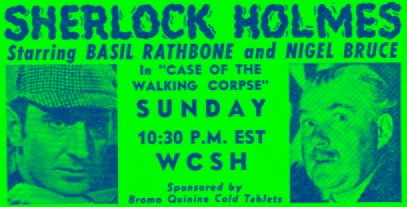
โ€œHad Holmes never existed I could not have done more, though he may perhaps have stood a little in the way of the recognition of my more serious literary work.โ€ That is how Arthur Conan Doyle, not long before his own death in 1930, announced to his readers that he would put an end to his most robust brainchild, the by now all but immortal Sherlock Holmes. Indeed, the figure continues to overshadow every aspect of Dr. Doyleโ€™s career, literary or otherwise. Perhaps, โ€œupstageโ€ is a more precise way of putting it, considering that the venerable sleuth was to enjoy such success in American and British radio drama from the early 1930s to the present day.

โ€œOne likes to think that there is some fantastic limbo for the children of imagination,โ€ Doyle assuaged those among his readers who found it difficult to accept that Holmesโ€™s departure was merely โ€œthe way of all flesh.โ€

To be sure, the earlier incident at the Reichenbach Falls suggested that Holmes was impervious to threats of character assassination, that he could reappear, time and again, in the reminiscences of Doctor Watson. Still, Doyleโ€™s intention to do away with Holmes so early in the detectiveโ€™s literary career had been no mere publicity stunt. Rather than feeling obliged to supply the public with the puzzles they craved, the author felt that his โ€œenergies should not be directed too much into one channel.โ€

One of the lesser-known alternative channels considered by Doyle has just been reopened for inspection. Today, 22 May, on the 150th anniversary of Doyleโ€™s birth in 1859, BBC Radio Scotland aired โ€œVote for Conan Doyle!โ€ a biographical sketch โ€œspecially commissionedโ€ to mark the occasion. In it, writer and Holmes expert Bert Coules relates how, in 1900, Doyle embarked on a career in politics. He decided to stand for parliament; but the devotees of Sherlock Holmes would not stand for it.

Coulesโ€™s play opens right where Doyle had first intended to wash his hands of Holmesโ€”at the Reichenbach Falls. No matter how sincere Doyle was in improving the Empireโ€™s image and the plight of the Britishโ€™s troops during the Second Boer War, the push hardly met with the approval of the reading public. โ€œHow could you!โ€ โ€œHow dare you!โ€ โ€œYou brute!โ€ the public protested.

Although it was not this perceived case of filicide that did him in, Doyle proved unsuccessful in his campaignโ€”and that despite support from Dr. Bell, who served as an inspiration for Holmes. After his defeat, Doyle โ€œbowed to the inevitableโ€”and back the man came.โ€

When the The Case-Book of Sherlock Holmes was published in 1927, Doyle dropped the man once more, albeit in a gentler fashion. To assuage loyal followers, he fancied Holmes and Watson in some โ€œhumble cornerโ€ of the โ€œValhallaโ€ of British literature. Little did he know that the โ€œfantastic limboโ€ in which the two were to linger would be that in-between realm of radio, a sphere removed from both stage and pageโ€”but nearer than either to the infinite โ€œOโ€ between our ears.

It hardly surprises that, Radio Scotlandโ€™s efforts to get out the โ€œVote forโ€ and let us walk โ€œIn the Footsteps of Conan Doyleโ€ aside, most of the programs presumably devoted to Doyle are concerned instead with โ€œThe Voice of Sherlock Holmesโ€ and the โ€œGameโ€ that is โ€œAfootโ€ when thespians like Cedric Hardwicke, John Gielgud, Carleton Hobbs and Clive Merrison approach the original. It is not Doyleโ€™s life that is celebrated in these broadcasts, but Holmesโ€™s afterlife.

True, to the aficionados of Doyle’s fiction, Sherlock Holmes has never been in need of resuscitation. Yet, as Jeffrey Richards remarked in “The Voice” (first aired in 1998),

[r]adio has always been a particularly effective medium for evoking the world of Holmes and Watson. The clatter of horses hoofs on cobbled streets, the howl of the wind on lonely moors, and the sinister creaks and groans of ancient manor houses steeped in history and crime.

The game may be afoot once more when Holmes returns to the screen this year; but, outside the pages that could never quite contain him, it is the โ€œfantastic limboโ€ of radio that kept the Reichenbach Falls survivor afloat. It is for the aural mediumโ€”the Scotland yardstick for fidelity in literary adaptationโ€”that all of his cases have been dramatized and that, in splendid pastiches like โ€œThe Abergavenny Murder,โ€ the figure of Sherlock Holmes has remained within earshot all these years.


Related writings
“โ€˜What monstrous place is this?โ€™: Hardy, Holmes, and the Secrets of Stonehengeโ€
โ€œRadio Rambles: Cornwall, Marconi, and the โ€˜Devil’s Footโ€™โ€
Old Sleuth Re-emerges in New Medium for American Ho(l)mes

Not Quite[,] Louella

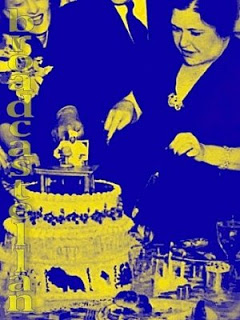
As I add another candle to the cupcake set aside for the celebration of my fourth blogging anniversary and to be consumed in the solitude of my virtual niche, I am once again wondering whether I should not have taken a scandal sheet out of Louella Parsonsโ€™s cookbook. You know, serving it while itโ€™s hot, with a pinch of salt on the side. Dishing it out in a bowl the size of China, a tidbit-craving multitude hanging on your gossip-dripping lips. As the first name in name-dropping, Louella (seen below, cutting her own birthday cake, anno 1941) might have done well as a webjournalist, just as she had on the air, despite a lazy delivery that piled fluffs on fluff and a flat voice that makes Agnes Moorehead sound like a Lorelei by comparison. Her hearsay went over well all the same, its nutritional deficiencies giving none cause for contrition.

On this day, 20 May, in 1945, for instance, Louella rattled off this farraginous list of โ€œexclusivesโ€: that silent screen star Clara Bow was โ€œdesperately ill againโ€ after suffering a โ€œcomplete nervous breakdownโ€; that Abbott and Costello would โ€œnot even speak to each otherโ€ on the set of their latest movie; that the Cary Grant-Betty Hensel romance was โ€œbeginning to totterโ€; and that โ€œforty Hollywood films ha[d] been dubbed in Germanโ€ to โ€œcounteract the dirty work done by Goebbels.โ€ Just as you finally prick up your ears, indiscriminate Lolly snatches the plate from under your nose.

As an item of โ€œlast-minute news,โ€ Louella announced that, with John Garfield going into the navy, his part opposite Lana Turner in The Postman Always Rings Twice was to be played by Van Heflin, who had just received his medical discharge. Doesnโ€™t ring true, does it? Well, thatโ€™s the problem with promising โ€œthe latest.โ€ It rarely is the last word.

Not that being belated renders your copy free from gaffes and inaccuracies, to which my own writing attests. Yet it isnโ€™t the need to be conclusive or the vain hope for the definite that makes me resist what is current and in flux. Iโ€™m just not one to reach for green bananas and speculate what they might taste like tomorrow. I wonโ€™t bite when the gossip is fresh; my teeth are in the riper fruit.

So, there is little in it for me to drop names, and pronto. Rather than playing Louella, I fancy myself another Darwin. Darwin L. Teilhet, that is, a fiction writer and early reviewer of American radio programs; he was born 20 May 1904, 101 years to the day that my journal got underway.

It is easy for me to identify with Teilhet, who loved the so-called blind medium without turning a blind eye to the shortcomings of its offerings. In his column in the Forum for May 1932, for instance, he complained that the โ€œdramatic machineryโ€ of Amos โ€˜nโ€™ Andy โ€œcreaks,โ€ but nonetheless insisted that the declared that the โ€œart of broadcastingโ€ was โ€œentirely too important to be ignored or squelched by derogatory attacks. The time, he argued, was

ripe for the conception of a new genus of critic with the radio as his field.ย 

Intelligently and conscientiously pursued over a period of time, it [the criticism of radio programs] might not only draw to itself a large number of followers among the radio audience but actually have some effect in improving the quality of the programs which are directed at them.

Today, a reviewer of such programs cannot expect to garner any sizeable number of followers, much less to have an effect on what aired decades ago. Tuning in, like virtue, is its own reward; and though the time may not be ripe for the likes of me, it sure seems ripe for the rediscovery of the presumably out-of-date. In these days of economic recession, we might find a return to the low-budget dramatics of radio particularly worthwhile. I, for one, would make the pitch to the networks that abandoned the genre half a century ago.

Time to blow out the candles and get on with it.


Related writings
First entry into this journal
First anniversary
Second anniversary
Third anniversary

In a Cornfield West of Denver, Calling Hogs

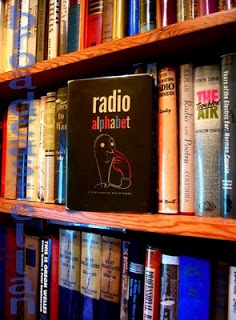
It is almost โ€œlike a bride’s outfitโ€; in it, thereโ€™s โ€œsomething old, something new, something borrowedโ€โ€”although rarely anything โ€œblue.โ€ That is how media critic Gilbert Seldes described the language of broadcasters, the jargon used by those behind the scenes of television, with which the American public was just getting acquainted (rather than walking down the aisle). Seldesโ€™s remark can be found in Radio Alphabet (1946), a lexicon more concerned, at the title implies, with a poor relation of television. Let us say, a wealthy and powerful relation that was about to be abandoned by her suitors and cheated out of her fortunes.

Despite its inclusion of TV terminology, the Alphabet was compiled at a time when radio was at the height of its influence on American culture, shortly before it was reduced to playing the nationโ€™s jukebox and serving as a source of patter. It not only spouted wordsโ€”it begot them. Hence the publication of Radio Alphabet, the latest addition to my library of books on broadcasting (also available online). Before it, along with everything else, is being shoved into a box, awaiting a new home, I am going to pick it up and . . . have a word.

Radio Alphabet is prefaced by โ€œan introductory programโ€โ€”a foreword as broadcast script featuring the voices of many important figures in charge of operations at the Columbia Broadcasting System. Among them, Douglas Coulter, vice-president of the network; William B. Lodge, director of general engineering; William C. Gittinger, vice-president in charge of sales; William C. Ackerman, director of the networkโ€™s reference department; Elmo C. Wilson, director of the research department; Howard A. Chinn, chief audio engineer for CBS; and radio drama director Earle McGill. All of them are announced and quizzed by a โ€œVoiceโ€โ€”a sort of mouthpiece for broadcasting (or CBS, at any rate).

Like any good announcer, the โ€œVoiceโ€ knows how to sell:

Not since Gutenberg’s press has any instrument devised by man added more promise to the dimensions of man’s mind, or more altered the shape of his thinking. ย The press enabled man to speak his mind to man through a code of letters on paper: radio enables man to speak his mind by living voice. ย This expansion, under the somewhat imperative tempo of the radio art, has forced up a new, raw, essential working vocabulary which is steadily spilling over into wider understanding and usage.

Radio’s new operating tongue speaks now and then with fresh if familiar economy and color. ย In the air a pilot on the beam is on his course; on the air an actor or director or conductor on the beam is making his most effective use of the microphone. ย Bite off, bend the needle, west of Denver, soap opera, dead air, old sexton . . . these are new and useful and happy twists of the infinitely flexible mother tongue.

By now, the items in the Alphabet are largely useless; the unhappy twist is that radioโ€™s tongue is tied, its jargon obsolete. However vivid the expressions in this glossary, consulting it makes you aware not only of the life of the medium but of the mortality of words. Although many of them linger in our vocabulary, they are figures of speech whose meanings have become arcane, whose uses are imprecise. These days, for instance, โ€œsoap operaโ€ denotes melodrama, regardless of its financing or commercial purposes. Itโ€™s an expression on life support, a ghost of a word removed from the machine that created it.

Turning the pages of this handsome little volume is not unlike tuning in to those old programs and putting oneโ€™s impressions about them into words. There is that sense of being superannuated and abstruse; but there is also the thrill of rediscovery and the joy of being, in a word, conversantโ€”at least with the subject.

So, what does it mean to have been in a โ€œcornfield,โ€ โ€œwest of Denver,โ€ โ€œcalling hogsโ€? Iโ€™ll let the Radio Alphabet explain it all:

CORNFIELD: A studio setup employing a number of standing microphones.

WEST OF DENVER: Technical troubles which canโ€™t be located.

HOG CALLING CONTEST: A strenuous commercial audition for announcers possessed of pear-shaped tones of voice.

Never Mind "Local Color"โ€”That’s a Bruise!

Last week, my best friend was in town for a visit. Ever since I left our native Germany some twenty years ago to live abroad (first in the US, now in the UK), our time together has been short and rare. I have learned to accept the brevity of our reunions; but treating them as special occasions has often bothered me. Not that it would be a waste of time just to flop and chat; then again, that is what we do apart almost daily while on the phone with each other. So, as if our get-togethers werenโ€™t special enough, I somehow feel obliged to make my friendโ€™s journeys here worthwhile by planning something out of the ordinary.

This time around, though, there was less time and still less money for the โ€œspecial,โ€ given that most of our hours and pounds are being spent on renovating our house in town. Okay, so I tried to pass off a seven-hour roundtrip in a van to pick up a bathtub as a sightseeing tourโ€”but much of my German friendโ€™s visit was passed in the appreciation of local color: the blue bells, the silvery sea, and the lush greenery of nearby Hafod, a Picturesque, man-made landscape that was an inspiration to Britainโ€™s Romantic poets.

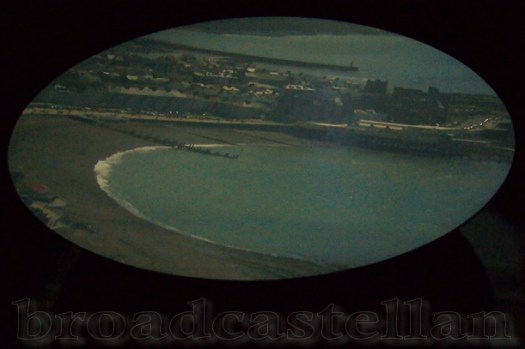
Then there was a hike up Constitution Hill just behind our future home to look through the lens of the camera obscura (pictured), presumably the biggest in the world. Yes, there is plenty to see in Aberystwyth. As one Victorian traveler expressed it, it is worthwhile coming here just to see the sunset.

So much for the daytime highlights. What about evening entertainment? How fortunate, I thought, that the local cinema was screening films of local interestโ€”a Welsh-language picture about a 1970s comedy act that hit it big in the Valleys but dreamed of Vegas (Ryan a Ronnie) and a British biopic about Michael Peterson, a man born in this very town. Not a dignitary, mind, but a celebrity nonethelessโ€”a nonentity of guy who, lacking all other ambitions, reinvented himself as Charles Bronson, thug.

Nicolas Winding Refnโ€™s Bronson (2009) is not a traditional biography. It is no more a character study than Friday the 13th, even though it is more concerned with its own glamour than with the ugliness of its subject. The film does not attempt to debate whether nurture or nature (the radioactive Irish Sea, say) turned a boy into a beast, to explain what went wrong along the way to a maturity unreached.

Bronson makes no mention of Petersonโ€™s birthplace, which, given the violent subject, must be a relief to those engaged in trying to sell the town as a seaside resort. Besides, the home Peterson made for himself is solitary confinement, in which he spent most of his life. Thirty years and countingโ€”without a murder charge to his discredit.

The filmโ€™s homophobia asideโ€”its muscular, naked, supposedly โ€œunadulteratedโ€ violence comes across as less freakish than the cultured, artistic and presumably fey who seek to entrap, educate, or exploit Petersonโ€”Bronson is most disturbing in its refusal either to accuse or excuse the man. It simply displays, thereby giving its yet living subject precisely what itโ€”along with the publicโ€”appears to crave most: celebrity. It is a nightmarish picture of a good-for-nothing who achieves fameโ€”like a roid-raging Paris Hilton (High-security Hilton?)โ€”without doing anything deserving of our notice, let alone our praise.

Bronson is the anti-Elephant Man: โ€œI am not a human being,โ€ he seems to insist, โ€œI am an animal.โ€ He is a sideshow act entirely satisfied with his own conspicuous marginality.

If the film argues anything, it is that our inability to pin Peterson down is what terrifies us most, what compels us to watch and forces the authorities to keep him under lock and key. With this makeshift thesis, the shallow if stylistically intriguing Bronson, which favors art direction over the use of a moral compass, attempts to justify its approach, making a virtue out of its superficiality by denying us access into the mind it is incapable of penetrating.

I took my visitor to see Bronson in hopes of catching a glimpse of our little town and of learning something about its darker past. Instead of shades of local color, though, I was dealt a rather nasty shiner.

The Ironed-Out Curtain; or, From Russia With Love Songs

“I’m in love with a fairy tale / Even though it hurts.” It was with these lyrics, a fiddle, and a disarming smile that Norwegian delegate Alexander Rybak came to be voted winner of the 54th Eurovision Song Contestโ€”an annual spectacle-cum-diplomatic mission reputed to be the worldโ€™s most-watched non-sporting event on television. However intended, the lines aptly capture the attitude of many Europeans toward the contest, just as the entries in the ever expanding competition are a reflection of all that is exasperating, perverse, and wonderful about European Unityโ€”a leveling of cultures for the sake of political stability, national security, and economic opportunity.
This year, forty-two countries qualified for the semi-finales, among them Albania, Andorra, and Azerbaijan, while former, traditional contestants Austria and Italy have opted out of participating in the competition. The friction between East and West has become more pronounced in recent years, leaving a frustrated West to contribute awkwardly self-conscious throwaway songs that further diminished the chance of a winning song from, say, Ireland (a seven-time winner), the United Kingdom, or Germany. It was as if the West chose to cloak itself in a mantle of irony to set itself garishly and haughtily apart from the closely-knit, sheer impenetrable post-Iron curtain it perceived to be obstructing Eurovision.

The collapse of the Soviet Union brought about a shift in the voting, with viewers of Eastern European nations favoring the songs representing neighboring countries, since voting for the representative of oneโ€™s own country is not permitted. For the West, the contest has become both an embarrassment and a liability (the United Kingdom, Germany, France, and Spain being the chief sponsors of the event and guaranteed a place in the finale). The chance of winning the contest based on merit or popularity became tantamount to wishing for a happily-ever-after. Until last night.

This yearโ€™s live event was hosted by Russia, the previous winning nation. Although Russiaโ€™s 2008 victory was not necessarily undeserved, the bloc voting had become so flagrant as to call any success of an Eastern European act into question. The thought that the triumph of the East was by now all but certain became so irksome to organizers and broadcasters in the United Kingdom that long-time commentator Terry Wogan withdrew from the contest and musical composer Andrew Lloyd Webber stepped in to prevent Britain from suffering another abject yet just defeat.

To increase the chances, voting procedures were changed once again, this time combining popular vote (via phone and instant messaging) with the vote of a presumably less partial jury of musical experts. In a reversal of the dreaded trend, the British entry finished fifth, and that despite Lloyd Webberโ€™s low-voltage power ballad and a somewhat flawed performance by the heretofore unknown Jade Ewen. Still, the United Kingdom may have regained the respect of the jurors by deciding to put an end to defeatist silliness and to reconsider the meaning of โ€œSongโ€ in โ€œEurovision Song Contest.โ€

Inspired perhaps by the participation of Baron Lloyd-Webber, the overall quality of the songs and the performers was superior to the dross and folly to which the pop-cultural event had been reduced in the 21st century. Sure, Alexander Rybak was born in the former Soviet Unionโ€”but there is no doubt that Norway won because of the exuberance, charm, and catchiness of its entry, just as neighboring Finland rightly came in last.

โ€œI donโ€™t care if I lose my mind / Iโ€™m already cursed,โ€ the lyrics continue. Thanks to last nightโ€™s event, those words no longer reflect the attitude of Western contestants.

Stepchildren Rejoice; or, Fetching a Grand Ball

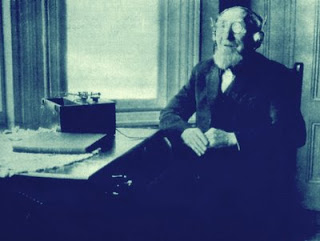
Last night, I felt like an old queen. Granted, that is not an uncommon feeling for me; but the Queen in this case was none other than Victoria, who, in the last years of her reign, enjoyed partaking of live opera without actually having to leave for the theater at which it was presented. Her royal box was a contraption called the Electrophone, a special telephone service that connected subscribers with the theaters from which the sounds of music and drama could be appreciated while being seated in whichever armchair one designated as a listening post. Today, we may be accustomed to liveโ€”or, wardrobe malfunctions notwithstanding, very nearly liveโ€”broadcasts of sounds as well as images; but last nightโ€™s event felt as new and exciting to me as it must have been picking up the electrophone or dialing in to those experimental theater relays during the 1890s and 1920s, respectively.

The caption for the above photograph, taken from the 3rd volume of Radio Broadcast (May to October 1923) reads: โ€œChristian Strohm traveled from Oldes Leben [wherever that might be] to Weimar, Germany, sixty-four years ago to hear the first presentation of an opera composed by Wagner. This year, he heard on a crystal set the same music, broadcasted from WIP, Philadelphia.โ€ What, I wonder, was more thrilling to Herr Strohm or to Queen Victoria: the memory of past pleasures or the reality of present technology?

There we were, gathered at a movie house well over three thousand miles away from the Metropolitan Opera in New York City, taking in a live presentation of Rossiniโ€™s La Cenerentola (based on the fairy tale Cinderella or Aschenputtel, its meaner, dirtier, German ancestor, which renowned child psychologist Bruno Bettelheim rightly preferred over the dainty French and glossy American versions). Our local arts center cinema is the first independent movie theater in Wales to subscribe to those high definition broadcasts from the Met (or elsewhere); and, with the exception of the fact that the cameras fail to capture scenes set in near darkness, the transmission was received without a glitch.

True, I wasnโ€™t seated in my favorite chair. I was in an auditorium, with a few dozen others who had come into town for the occasion, presumably undernourished stepchildren of the great cultural centers of the world. This far-fetched ball was a theatrical experience for which one dresses up (and I, for one, enjoys to do so), at which one meets and mingles at intermission.

The last time I saw a theatrical adaptation of Cinderella I was being squirted by a water gun. This time, I was sipping a glass of wine (included in the price of admission). I was very pleased to learn that, based upon the reception, the local cinema is going to book the entire season of opera broadcasts, beginning in October 2009 with Tosca, followed by Aida and Turandot. Tear your eyes out Clorinda and Tisbe. Every Cinderella has her dayโ€”and every dreaded midnight is over in a flash . . .


Related writings
My Evening with Queen Victoria
โ€œNow on the Air: โ€˜Down the Wiresโ€™โ€ (on the Electrophone)
โ€œโ€˜Oh no he isnโ€™tโ€™ (โ€˜Oh yes he isโ€™): Mickey Rooney in Bristolโ€ (in Cinderella)

Cranky Doodle Dandy: George M. Cohan Feels So Free

Jumping Jehosophat! It sure feels good to rant about our elected governmentโ€”some force that, at times, appears to us (or is conveniently conceived of) as an entity we don’t have much to do with, after the fact or fiction of election, besides the imposition of carrying the burden of enduring it, albeit not without whingeing. Back on this day, 4 May, in 1941, the Columbia Broadcasting System allotted time to remind listeners of the Free Company just what it means to have such a rightโ€”the liberty to voice oneโ€™s views, the โ€œfreedom from police persecution.โ€ The play was โ€œAbove Suspicion.โ€ The dramatist was to be the renowned author Sherwood Anderson, who had died a few weeks before completing the script. In lieu of the finished work, The Free Company, for its tenth and final broadcast, presented its version of โ€œAbove Suspicionโ€ as a tribute to the author.

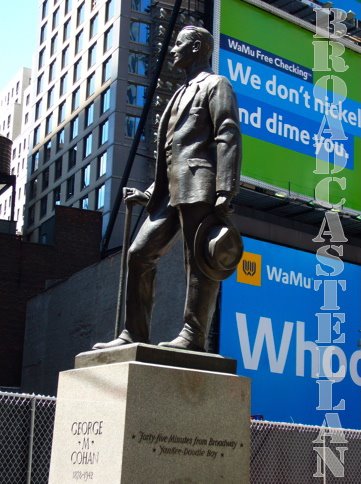
Starred on the program, in one of his rare radio broadcastsโ€”and perhaps his only dramatic role on the airโ€”was the legendary George M. Cohan (whose statue in Times Square, New York City, and tomb in Woodlawn Cemetery, The Bronx, are pictured here). Cohan, who had portrayed Franklin D. Roosevelt in Iโ€™d Rather Be Right was playing a character who fondly recalls Grover Clevelandโ€™s second term, but is more to the right when it comes to big government.

The Free Companyโ€™s didactic play, set in New York City in the mid-1930s, deals with a complicated family reunion as the German-American wife of one Joe Smith (Cohan) welcomes her teenage nephew, Fritz (natch!), from the old country. Fritz’s American cousin, for one, is excited about the visit. Trudy tells as much to Mary, the young woman her mother hired to prepare for the big day:

Trudy.  Mary, I have a cousin.

MARY.  Yeah, I know, this Fritz.

TRUDY.  Have you a cousin?

MARY.  Sure, ten of โ€˜em.

TRUDY.  What are they like?

MARY.  All kinds.  Oneโ€™s a bank cashier and oneโ€™s in jail.

TRUDY.  In jail! What did he do?

MARY.  He was a bank cashier, too [. . .].

Make that โ€œexecutiveโ€ and it almost sounds contemporary. In โ€œAbove Suspicion,โ€ the American characters are not exactly what the title suggests. That is, they arenโ€™t perfect; yet they are not about to conceal either their past or their positions.

Trudyโ€™s father is critical of the government, much to the perturbation of Fritz, who has been conditioned to obey the State unconditionally:

SMITH.  Jumping Jehosophat [chuckles].  Listen, the Stateโ€™s got nothing to do with folksโ€™s private affairs.  Nothing.

FRITZ. Please, Uncle Joe, with all respect.  If the State doesnโ€™t control private affairs, how can the State become strong?

SMITH.  Oh, it will become strong, all right.  You know, sorry, it might become too darn strong, Iโ€™ll say.  And I also say, let the government mind its own dod-blasted business and Iโ€™ll mind mine.

To Fritz, such โ€œradicalโ€ talk is โ€œdangerousโ€; after all, his education is limited to โ€œEnglish, running in gas masks, and the history of [his] country.โ€ He assumes that Mary is a spy and that anyone around him is at risk of persecution. To that, his uncle replies: โ€œDangerous? Well, I wish it was. The trouble is, nobody pays any attention. By gad, all I hope is that the people wake up before the country is stolen right out from under us, thatโ€™s what I hope.โ€

โ€œAbove Suspicionโ€ is a fairly naรฏve celebration of civil liberties threatened by the ascent of a foreign, hostile nation (rather than by forces from within). Still, it is a worthwhile reminder of what is at stake today. Now that the technology is in place to eavesdrop on private conversations (the British government, most aggressive among the so-called free nations when it comes to spying on the electorate, is set to monitor all online exchanges), we can least afford to be complaisant about any change of government that would exploit the uses of such data to suppress the individual.

โ€œDictaphones,โ€ Smith laughs off Fritzโ€™s persecution anxieties.

I wish they would some of those dictaphones here.  Iโ€™d pay all the expenses to have the records sent right straight to the White House.  Thatโ€™s what Iโ€™d do.  Then theyโ€™d know what was going on then.  [laughs]  Theyโ€™d get some results then, hey, momma?

These days, no one is โ€œAbove Suspicion.โ€ Just donโ€™t blame it on Fritz.