"I started Earlyโ€”Took my Dog . . ."

“. . . and visited the Sea.” I have not read the poetic works of Emily Dickinson in many a post-collegiate moon; yet, as wayward as my memory may be, I never forgot those glorious opening lines. You might say that is has long been an ambition of mine to utter them, to experience for myself the magic they evoke; but, until recently, I have failed on three accounts to follow Emily in her excursion. That is, I had no dog to take along; nor did I never live close enough to the sea to approach it on foot, at least not with the certain ease that might induce me to undertake such a venture.

Now that there is Montague in my life and Cardigan Bay practically at our doorsteps, the only thing that prevents me from having such a Dickinsonian moment is a habitual antemeridian tardiness. If โ€œAllโ€™s right with the worldโ€ when โ€œMorningโ€™s at seven,โ€ as Robert Browning famously put it, then I might as well roll over and let it bask in its easterly lit serenity. It is for the early birds to confirm of refute such a Browning version of bliss.

Besides, as Victorian storyteller Cuthbert Bede once remarked, it is โ€œwell worth going to Aberystwith [. . .] if only to see the sun set.โ€ So, Iโ€™m starting late instead and take my dog for evening visits to the sea. No โ€œMermaidsโ€ have yet come out of the โ€œbasementโ€ to greet me; nor any of those bottlenose dolphins that are on just about every brochure or poster designed to boost the townโ€™s tourist industry. They are out there, to be sure; but unlike Ms. Dickinson, Iโ€™m not taking the plunge to get up close and let my โ€œShoes [ . . .] overflow with Pearlโ€ until the rising tide โ€œma[kes] as He would eat me up.โ€

Not with Montague in tow. Dogs are not allowed on the beach this time of year. It is a sound policy, too, given that Montague frequently manages to confound me by squatting down more than once, especially when I am only equipped with a single repository with which to dispose of the issue. Is it any wonder that Iโ€™d much rather start late, preferably under cover of night?

On this sunless Tuesday morning, though, I started just early enough to keep Montagueโ€™s appointment with the veterinarian. No walk along the promenade for the old chap, to whom the change of schedule was no cause for suspicion. Now, I donโ€™t know what possessed me to agree to his being anesthetized to have his teeth cleaned, other than Montagueโ€™s stubborn refusal to permit us to brush them. I trust that, once he has forgiven me for this betrayal of his trust, that we have many more late starts to meet and mate with the sea . . .

โ€œ. . . from a civilized land called Walesโ€: A Puzzlement Involving The King and I

I rose before the sun, and ran on deck to catch an early glimpse of the strange land we were nearing; and as I peered eagerly, not through mist and haze, but straight into the clear, bright, many-tinted ether, there came the first faint, tremulous blush of dawn, behind her rosy veil [ . . .]. A vision of comfort and gladness, that tropical March morning, genial as a July dawn in my own less ardent clime; but the memory of two round, tender arms, and two little dimpled hands, that so lately had made themselves loving fetters round my neck, in the vain hope of holding mamma fast, blinded my outlook; and as, with a nervous tremor and a rude jerk, we came to anchor there, so with a shock and a tremor I came to my hard realities.

With those words, capturing her first impression and anticipation of a โ€œstrange landโ€ as, on 15 March 1862, it came into partial viewโ€”the โ€œoutlookโ€ being โ€œblindedโ€โ€”aboard the steamer Chow Phya, Anna Harriette Leonowens commenced The English Governess at the Siamese Court (1870), the โ€œRecollections of Six Years in the Royal Palace at Bangkok.โ€ The account of her experience was to be followed up by a sensational sequel, Romance of the Harem (1872), both of which volumes became the source for a bestselling novel, Margaret Landonโ€™s Anna and the King of Siam (1944), several film and television adaptations, as well as the enduringly crowd-pleasing musical The King and I.

Conceived for musical comedy star Gertrude Lawrence, the titular โ€œIโ€ is currently impersonated by Shona Lindsay, who, until the end of August 2009, stars in the handsomely designed Aberystwyth Arts Centre Summer Musical Production of the Rodgers and Hammersteinโ€™s classic.

The title of the musical personalizes the story, at once suggesting authenticity and acknowledging bias. Just as it was meant to signal the true star of the original productionโ€”until Yul Brynner stole the showโ€”it seems to fix the perspective, assuming that we, the audience, see Siam and read its ruler through Annaโ€™s eyes. And yet, what makes The King and I something truly wonderfulโ€”and rather more complex than a one-sided missionaryโ€™s taleโ€”is that we get to know and understand not only the Western governess, but the proud โ€œLord and Masterโ€ and his daring slave Tuptim.

Instead of accepting Anna as model or guide, we can all become the โ€œIโ€ in this story of identity, otherness and oppression. Tuptimโ€™s experience, in particular, resonates with anyone who, like myself, has ever been compelled, metaphorically speaking, to โ€œkiss in a shadow,โ€ to love without enjoying equality or protection under the law. Tuptimโ€™s readily translatable story, which has been rejected as fictive and insensitive, is emotionally rather than culturally true.

โ€œTruth is often stranger than fiction,โ€ Leonowens remarked in her preface to Romance of the Harem, insisting on the veracity of her account. Truth is, truth is no stranger to fiction. All history is narrative and, as such, fictionโ€”that is, it is made up, however authentic the fabric, and woven into logical and intelligible patterns. Whoever determines or imposes such patternsโ€”the historian, the novelist, the reporterโ€”is responsible for selecting, evaluating, and shaping a story that, in turn, is capable of shaping us.

Tuptimโ€™s adaptation of Uncle Tomโ€™s Cabin, which strikes us at first strange and laughableโ€”then uncanny and eerily interchangeableโ€”in its inauthentic, allegorical retelling of a fiction that not only made but changed history, is an explanation of and validation for Rodgers and Hammersteinโ€™s sentimental formula. Through the estrangement from the historically and culturally familiar, strange characters become familiar to us, just Leonowens may have been aided rather than mislead by an โ€œoutlookโ€ that was โ€œblindedโ€ by the intimate knowledge of a childโ€™s love.

Strange it was, then, to have historicity or nationality thrust upon me as Anna exclaims, in her undelivered speech to the King, that she hails โ€œfrom a civilized land called Wales.โ€ It was a claim made by Leonowens herself and propagated in accounts like Mrs. Leonowens by John MacNaughton (1915); yet, according to Susan Brownโ€™s โ€œAlternatives to the Missionary Position: Anna Leonowens as Victorian Travel Writerโ€ (1995), โ€œno evidence supportsโ€ the assertion that Leonowens was raised or educated in Wales.

Still, there was an audible if politely subdued cheer in the Aberystwyth Arts Centre auditorium as Anna revealed her fictive origins to us. Granted, I may be more suspicious of nationalism than I am of globalization; but to define Leonowensโ€™s experience with and derive a sense of identity from a singleโ€”and rather ironic reference to homeโ€”seems strangely out of place, considering that the play encourages us to examine ourselves in the reflection or refraction of another culture, however counterfeit or vague. Beside, unlike last yearโ€™s miscast Eliza (in the Arts Centreโ€™s production of My Fair Lady), Anna, as interpreted by Ms. Lindsay, has no trace of a Welsh accent.

As readers and theatergoers, we have been โ€œgetting to know you,โ€ Anna Leonowens, for nearly one and a half centuries now; but the various (auto)biographical accounts are so inconclusive and diverging that it seems futile to insist on โ€œgetting to know all about you,โ€ no matter now much the quest for verifiable truths might be our โ€œcup of tea.โ€ What is a โ€œpuzzlementโ€ to the historians is also the key to the musical, mythical kingdom, an understood realm in which understanding lies beyond the finite boundaries of the factual.


Related writings
“By [David], she’s got it”; or, To Be Fair About the Lady
Delayed Exposure: A Man, a Monument, and a Musical

Related recordings
โ€œMeet Gertrude Lawrence,โ€ Biography in Sound (23 January 1955)
Hear It Now (25 May 1951), which includes recorded auditions for the role of Prince Chulalongkorn in The King and I


โ€œ. . . and all the ships at seaโ€: A Kind of Homecoming

This is not going to be one of those โ€œthe dog ate my homeworkโ€ sort of posts, which are as much an excuse for not writing as they are a woeful excuse for writing anything at all. Besides, I could hardly blame Montague, our terrier, for keeping me from keeping my journal. Rather, it is the home work that has done the biting, gnawing and tearing at the hours I would otherwise earmark for sinking my incisors into stale pop-tartsโ€”you know, those cultural marginalia with which I am wont to occupy my mind.

While I have rarely been all at sea when it comes to the leisurely pursuit of gathering and examining pop-cultural jetsam, my mind does not take to creative recycling when my limbs are aching after having performed some burdensome chore; and these past three months, my limbs have had quite a workout. We have been readying our late-Victorian house in the Welsh seaside town of Aberystwyth for its present trio of occupants, only the four-legged one of whom appears to be as blithe and sprightly as of old, albeit saltier.

We have moved in at last; and even though much remains to be done to make and keep the place shipshape, especially now that the house guests are checking in and up on our work, the sofas and easy chairs are in place from which to let out a defiant โ€œLater!โ€ and take off instead in further explorations of the airwaves or some such neglected channel.

The waves! Even though you would have to climb to the top floor of our house to get a glimpse of the bay, the surf and the seagulls are very much part of the enveloping soundscape. I suspect that the sights and sounds of the sea are going to feature prominently in subsequentโ€”and decidedly more frequentโ€”entries. It was not quite so easy for me to work the business of scraping wallpaper into my reflections; but the sea is another kettle of fish altogether.

So, โ€œGood evening Mr. and Mrs. America, from border to border and coast to coast and all the ships at sea,โ€ as famed newscaster and lexicon-artist Walter Winchell used to sayโ€”and which greeting I extend to Mr., Mrs., and Ms. Internet surfer the world overโ€”โ€œLet’s go to press . . .โ€


Related writings (featuring Walter Winchell or an Impersonator)
โ€œBeing But Blogmad North-Northwestโ€
โ€œAmelia Earhart Is Lateโ€
โ€œOld-time Radio Primer: B Stands for broadcastellanโ€

The โ€œcrazy coonโ€ and the โ€œhighvoiced fagโ€: Jello and the Language of Revolution

Language is to me one of the main pulls of the no longer popular, be it American radio comedy of the 1940s or the serial novels of the Victorian era. That is to say, the absence of the kind of language we refer to as โ€œlanguageโ€ whenever we caution or implore others to mind theirs. Mind you, all manner of โ€œlanguageโ€ escapes me in moments of physical or mental anguish; but, once I hit the keyboard, whatever hit me or made me hit the roof is being subjected to a process of Wordsworthian revision. You know, โ€œemotion recollected in tranquility.โ€

If the revisions come off, what remains of the anger or hurt that prompted me to write has yet the kind of medium rare severity that renders expressed thought neither raw nor bloodless. No matter how many words have been crossed out, the recollection still gets across whatever made me cross in the first place, and that without my being double-crossed by lexical recklessness.

Writing with restraint is not a matter of adopting certain mannerisms to avoid being plain ill-mannered. Obscurity is hardly preferable to obscenity. The trick is to create worthwhile friction without resorting to diction unworthy of the causeโ€”without using the kind of words that just rub others the wrong way. I was certainly rubbed so when, researching old-time radio, I brushed up on Amiri Barakaโ€™s Jello (1970), no doubt the angriest piece of prose ever to be written about the American comedian Jack Benny (seen here, dressing up as Charleyโ€™s Aunt).

Jello was penned at a time when many Americans who grew up listening to Benny retreated into nostalgia rather than face, accept, let alone support the radical cultural changes proposed or, some felt, threatened by the civil rights movement. Baraka confronted this longing for the so-called good old days with a farce in which Bennyโ€™s much put upon valet Rochester refuses the services the public had longโ€”and largely unquestioninglyโ€”come to expect of the well-loved character.

What ensues is a riotโ€”albeit not one of laughsโ€”as Barakaโ€™s โ€œpostuncletomโ€ Rochester lashes out at his former master-employer and insists on forcefully taking the money out of which he believes to have been cheated during the past thirty-five years (according to Baraka’s rewriting of broadcasting history). Having found that โ€œlootโ€ in a bag of Jello, Rochester leaves Benny, Mary Livingstone, and Benny regular Dennis Day to their โ€œhorrible lives!โ€โ€”piled up on the floor like the corpses in a Jacobean revenge tragedy.

The plot of Jello is older than its messageโ€”the call to rise against the forces that made, made tame or threaten to unmake us; and the only startling aspect of Barakaโ€™s play is the aggressive tone in which that message is delivered, delivered, to be sure, to none but those already alive and receptive to his rallying call.

โ€œNo, Mary,โ€ Barakaโ€™s version of Benny insists, โ€œthis is not the script. This is reality. Rochester is some kind of crazy nigger now. Heโ€™s changed. He wants everything.โ€ The language alone signals that we are well beyond the grasp of the titular sponsor, beyond the code adopted in the summer of 1939 by the National Association of Broadcasters, according to which โ€œno language of doubtful proprietyโ€ was to pass the lips of anyone on the air.

As is the case in all attempts at policing language, the underlying thoughtโ€”the unsaid yet upheldโ€”might be more dubious still; and when Baraka picks up the word โ€œnigger,โ€ he gives expression to a hostility that could not be voiced but was played out in and reinforced by many of the networksโ€™ offerings. Indefensible, however, is his use of equally virulent language like โ€œstupid little queenโ€ and โ€œhighvoiced fagโ€ when referring to tenor Dennis Day or โ€œradio-dikey,โ€ as applied to Mary Livingstone. Staging revolution, Baraka is upstaged by revulsion. He has mistaken the virulent for the virile.

In those days and to such a mind, โ€œfagโ€ was just about the most savage term in which to couch oneโ€™s rejection of the unproductive and the non-reproductive alike. It was a monstrous word demonstrative of the fear of emasculation. It is that fearโ€”and that wordโ€”with which power and dignity was being stripped from those whose struggle for equality was just beginning during the days following the Stonewall Riots of 28 June 1969, from those whose fight was impeded by a fear greater and deeper even than racism.

Now, I’m no slandered tenor; but I have been affronted long enough by such verbiage to be tossing vitriol into the blogosphere, to be venting my anger or frustration in linguistically puerile acts of retaliation. If I pick up those words from the dust under which they are not quite buried, I do so to fling them back at anyone using them, whether mindlessly or with designโ€”but especially at those who inflict suffering in the fight to end their own. Our protests and protestations would be more persuasive by far if only we paid heed to the words we should strike first.

Related writings
โ€œA Case for Ellery Who?: Detecting Prejudice and Paranoia in the Blogosphereโ€
โ€œMartin Luther Kingfish?: Langston Hughes, Booker T. Washington, and the Problem of Representationโ€
โ€œJack Benny, Urging Americans to Keep Their Wartime Jobs, Catches Rochester Moonlighting in Allenโ€™s Alleyโ€


His Words, Her Voice: Errol Flynn, Olivia de Havilland, and the Resonance of โ€œEnoughโ€

“Oh, I have seen enough and done enough and been places enough and livened my senses enough and dulled my senses enough and probed enough and laughed enough and wept more than most people would suspect.” This line, as long and plodding as a life gone wearisome, was recently uttered by screen legend Olivia de Havilland, now in her 90s. You may well think that, at her age, she had reason enough for saying as much; but Ms. de Havilland was not reminiscing about her own experiences in and beyond Hollywood. She was reciting the words of one of her most virile, dashing, and troubled contemporaries: Errol Flynn, who was born one hundred years ago, on 20 June 1909, and apparently had โ€œenoughโ€ of it all before he turned fifty, a milestone he did not live to enjoy.

In her brief talk with BBC Radio 3โ€™s Night Waves host Matthew Sweet, de Havilland talks candidly, yet ever so decorously, about her swash-buckled, devil-may-careworn co-star, about his temperament, his aspirations, his fears. Hers is an aged voice that has a tone of knowing in it. A mellow, benevolent voice that bespeaks understanding. A voice that comforts in its conveyance not of weariness but of awareness, a life well lived and not yet spent.

I could listen for hours to such a voice. I might not care for, learn from or morally improve by hearing what is saidโ€”but the timbre gives a meaning to โ€œenoughโ€ that the forty-something Flynn never lived to express or have impressed upon him. It is the โ€œenoughโ€ of serenity, the โ€œenoughโ€ of gratitude, the โ€œenoughโ€ of not asking for more and yet not asking less . . . or stop asking at all.

My own life is marked and marred by a certain lack of inquisitiveness, it sometimes strikes me. Being blasรฉ is one of the first masks we don not to let on that we donโ€™t know enough, that we know as much, but donโ€™t know enough simply to ask. I wore such a mask of vainglory when I set out in life, the dullest of lives it seemed to me. My fellow employees had a nickname for me then.

It was my moustache that inspired it. Errol Flynn they called me. Little did they know that, even at age 20, I felt that I had โ€œenoughโ€ even though I so keenly felt that I had not had much of anything at all. I simply had enough of not even coming close to the glass of which I might one day have had my fill; but, for three long years, I did not have sense enough to leave that dulling life behind. No voice could talk me out of that barren existence but my own.

It was not easy for me to regain a sense of curiosity; it was as if the pores beneath the mask had been clogged after being concealed so long, my skin no longer alive to the breeze and its promises. I had brushed off more than I dared to absorb. One morning, I took a walk around Central Park with one of Errol Flynnโ€™s leading ladies, Viveca Lindfors, and was neither startled nor thrilled; nor did I not seize the opportunity to inquire about her past or permit her to draw me into her presence as she offered me advice and assistance.

Instead, I preserved the sound of her voice on the tape of my answering machineโ€”like a butterfly beyond the magic of flightโ€”her words saying that she had enough of me was dispensing of my humble services as her dog walker. I am left with canned breath, quite beyond the chance of living what might have been a great story.

Enough of my regrets. I can only hope that, when next I feel that I had โ€œenough,โ€ the word will sound as if it were uttered in what I shall henceforth refer to as a de Havilland sense, with dignity, insight and calmโ€”and an acceptance that is not resignation.

Radio at the Movies: Torch Singer (1933)

โ€œYoo-hoo, is anybody?โ€ I guess that, from time to time, many of us amateur journalists feel compelled to ask the question so catchily phrased by the matriarch of the Goldbergs. At least Molly Goldberg could hope for a response from her friend and neighbor Mrs. Bloom, to whom her shouts into the dumb waiter shaft were directed. To Mrs. Goldberg, โ€œanybodyโ€ was a certain someone. Many who approached the World Wide Web as their means of telecommuning have given up on waiting for a reply to their โ€œYoo-hoos,โ€ or, instead, have taken the resounding silence for an answer equivalent to โ€œnope.โ€

According to a 2008 survey conducted by Technorati (which, earlier this month, was referred to in a New York Times article on the blogging phenomenon), 95 percent of all online journals have been essentially abandoned. Tens of millions who saw blogging as an opportunity to cast their thoughts broadly and make their voices heard by the multitudes decided that, once this vast crowd of followers did not, well, immaterialize, their words were wasted on the one or another for whose arrival they would not be dumb enough to wait and to whose apparently exclusive tastes they would not lower themselves to cater.

Like broadcasting before it, the blogosphere lures those creative spirits who might otherwise be dispirited nobodies with that one-in-a-million chance at fame while its ability to connect us to the one-in-a-million willing to connect with us frequently goes unappreciated. As public performers, we wonโ€™t settle for โ€œanybodyโ€โ€”but we seem more inclined to aim at the elusive everyone than the dependable someone. One of the most intriguing motion pictures to address our narrow-mindedness about broadcasting is the Depression-era melodrama Torch Singer (1933), one of those startlingly unconventional, non-classic Hollywood pictures referred to as Pre-Code.

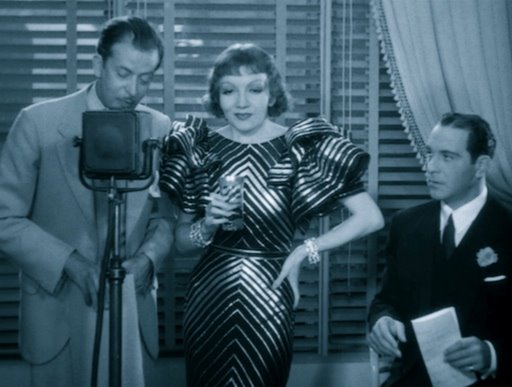
Torch Singer stars Claudette Colbert as an unwed mother (that is Pre-Code for you) who, failing to find employment, is forced to give up her infant daughter. After that intimate bond is severed, the motherless child of a childless mother avenges herself on an impersonal, dehumanizing society by tantalizing those who made her suffer, selling the mere appeal of sex to the highest bidder. โ€œGive Me Liberty or Give Me Love,โ€ she warbles, achieving neither. Her body having been robbed of its fruit and the warmth of nestling, she turns her voice into a commodity, first by making a(nother) name for herself a nightclub singer, then by accepting the offer to become a disembodied siren on the radio.

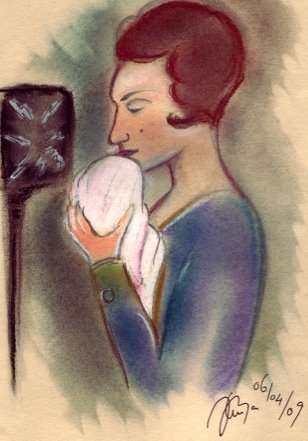
When a newly hired storyteller for a childrenโ€™s program is struck dumb with mike fright, the reckless Torch Singer takes over as the fictitious โ€œAunt Jenny,โ€ comforter by proxy, singing lullabies so far removed from any cradle that they are devoid of sincerity, all the while tickled by her own moxie as she promotes the sponsorโ€™s kiddie beverage, long drink in hand.

This perversion of motherhood comes to an end when she realizes that it is possible to subvert the medium instead and seize the microphone to reach the child she gave up for adoption. Rather than performing for everyone and no one, she now sings directly to her daughter, devising a contest that would compel radio listening kids to call in and claim their birthday surprises, thereby revealing their identity to her. Once taken into her own hands, the very medium that seemed to have promised nothing but the belated fame for which she never cared becomes the means through which she can reestablish the intimacy she long believed to be past recapturing.

Its melodramatic shortcomings notwithstanding, Torch Singer serves as a compelling reminder that the media, as extensions or offshoots of telecommunication, have not lostโ€”and should never be divested ofโ€”their potential to establish point-to-point connections far more meaningful than the often disappointing stabs at mass exposure in which we are apt to lose sight of one another.

Related writings
โ€œBetween You, Molly and Me: Should We Settle for Squirrels?โ€
โ€œWireless Women, Clueless Men (Part Five): Gertrude Berg, Everybody’s Mamaโ€


โ€œ. . . just born to do itโ€: A Baby Crierโ€™s Audition

โ€œZiss is mine shtory, ja? Zo, bleeze, vill you be stumm and let me finish,โ€ Tante Ilse burst out in her inimitable take on the English language. When she got that way, sheโ€™d assault her adopted tongue like an ill-tempered schnauzer tears at a bunch of newly arrived letters. If you were quick enough, you could just gather the pieces and make out the message intended. Tante Ilse was becoming a little impatient with me. Okay, so I was the impatient one. My finger kept hovering over the red button, and I was anxious to get the tape rolling again. Recording her story was a project that had been going on for several weeks already, ever since I found out that Ilse Hiss, my dear old, bratwurst and sauerkraut-loving great-aunt had a past in show business. Strictly speaking, it was the no-show business. Yes, Tante Ilse had once been a voice on the radio, even though hers wasnโ€™t much of a speaking part. She had been a professional baby crier. A baby crier! Who among those of us not old enough to remember tuning in to the Barbours of One Manโ€™s Family had ever heard of such a bewildering offspring of the dramatic arts!

I just had to ask; and even though I didnโ€™t have to twist her arm to get the whole story, Tante Ilse refused to reminisce about her radio days in any way straightforward or logical; least of all, chronological. I still didnโ€™t quite understand how she had gotten into radio in the first place. โ€œAnd by crying!โ€ I marveled, โ€œHow did you even know there was a market for it?โ€

โ€œAch, der market. Dat vas just a little Hungarian delicatessen, a block away. Right over there, where zey built zat, zat shkyshcratcher. Pfui! I did most of my grocery shopping zere. When it vas a market, of course. You would have loffed dat shtore!โ€ As exasperating as such detours could be, attempting to get Tante Ilse back on track by explaining just what I meant by โ€œmarketโ€ would have been the worst thing to do at that moment. Besides, in a roundabout fashion, Tante Ilse appeared to have gotten to the beginning at last, when, to my great surprise and still greater relief, she added: โ€œAnd datโ€™s where it all shtarted.โ€

It was back in the mid-1940s, shortly after the end of the war. Tante Ilse had long found out that the sidewalks of Manhattan were not paved with precious metal; she had been pounding them long enough. Her brother Heini (my grandfather) had disappeared somewhere, leaving her to fend for herself, sowing, cleaning, taking whatever job she could find. Yorkville was a German enclave then; but Tante Ilse did not want to be reminded of the Heimat and was suspicious of those among her neighbors still proud to be the sprout of a Kraut. Her pride and her principles kept her from borrowing as much as a cup of sugar.

Things might have been worse if it hadnโ€™t been for the housing shortage and the My-Sister-Eileen deal she had going on with a typist who moved into the room vacated by Opa Heini; except that this particular Eileen was no relation and paid handsomely for her share of Tante Ilseโ€™s place. Incidentally, that share eventually became my room when I arrived in New York in the 1980s, when I followed the โ€œAuswanderer,โ€ the expatriates in my family.

Unfortunately, the typist also took work home; and the noise she made on that old Adler of hers often drove Tante Ilse to distractionโ€”and straight out of her quarters. Now, before you say Iโ€™m getting to be even worse than my periphrastic relative, let me point out that, on that fateful evening, the noises produced on the old Adler precipitated my great-aunt right to the spot where it all began. The Hungarian market, where Tante Ilse had come to splurge on a bunch of grapes. โ€œCraips. And zour ones, too!โ€ she chuckled. So I pressed the red button and off she went.

She must have been pretty cranky when she got down to Nรฉmethโ€™s deli, what with the crowded walk-up, the summer heat, and the noisy typewriter. A bawling tyke was all she needed as she waited in line to pay for her purchase (and to hear whether there was any news about Mrs. Nรฉmethโ€™s boy, a Private First Class not yet returned from Europe). Sure enough, there was just such a noisemaker in store for her. It was Mrs. Webberโ€™s youngest, rather too young, some whispered, to make recently discharged Mr. Webber a proud father. Apparently, even the issue was beginning to cry foul.

Matters werenโ€™t helped any when Tante Ilse tried to restore serenity by offering Webber (or not) Junior one of those sour berries. โ€œYou never heard zuch bawling,โ€ she insisted, covering her ears as if, nearly half a century on, there still lingered the threat of a reverb in the old neighborhood.

So, what did Tante Ilse do? She leaned over the baby carriage, grinned none too endearingly, and hollered right back. To the surprise of everyone in the store, including her own, she aped the little imp so perfectly that even the mocked one shut up and listened in awe. โ€œDen, der whole shtore was shtill. Nobody could belieff it. Vair vas dat zound coming vrom? Den, dey all looked at me. Vas I a freak or a hero? Dat I donโ€™t know.โ€

โ€œMove over Baby Snooks,โ€ I added, โ€œThe worldโ€™s oldest toddler was born.โ€ I had hoped that the radio reference would encourage her to tell me just how that audition led to a career in broadcasting. โ€œI had a talent, alleright; but vat vas I going to do viz it?โ€ I knew my cue and stopped the recording. I had to wait for the next installment; and Tante Ilse, unlike network radio, followed a most erratic schedule . . .

If you visch, I mean, wish, you may listen to my own reading of Tante Ilse’s story here.

Related writings
The Baby Crier, part one
โ€The Black Sheep and the Baby: A Kind of Christmas Storyโ€

Clash by Day: A D-Day Reminder

It was a crisp, bright afternoon in April when we visited Trebah Garden, one of the most beautiful spots in all of Cornwall. The sun had come out from behind a curtain of threatening clouds and the air was fragrant with a promissory note of summer that even the leafless, wintry trees in the distance were powerless to gainsay. As we walked down the sloping path, past the Rhododendron and Magnolias, beyond the dell of young Gunnera plants that, in time, would grow into a subtropical jungle, we reached a gate that led to a secluded beach. The sea was calm, peaceful the prospect; and even though the name of Trebah had been recorded in the Domesday Book, I felt far removed from the affairs of the world, present and past, as if sheltered in a reserve beyond the reach of history.

When I turned back toward the gate, that sense of detachment was shattered in an instant. I was reminded just how connected I was, even here, with the history of the world. I was yanked out of this perceived Eden by no uncertain notice of our fall: a sign telling me that, from it this secluded spot, thousands went into battle to secure the peace that I had enjoyed.

The memorial at Trebah tells of the 175th Combat Team of the 29th US Infantry Division, some 7,500 strong. On the 1st of June in 1944, those men embarked from that very beach to take part in the D-Day landings and, by carrying out their duty, face all but certain death.

โ€œThis is the hour,โ€ Edna St. Vincent Millay wrote in her โ€œPoem and Prayer for an Invading Army,โ€ recited by Ronald Colman during a special radio broadcast on D-Day,

this is the appointed time.
The sound of the clock falls awful on our ears,
And the sound of the bells, their metal clang and chime,
Tolling, tolling,
For those about to die.
For we know well they will not all come home, to lie
In summer on the beaches.

And yet weep not, you mothers of young men, their wives,
Their sweethearts, all who love them wellโ€”
Fear not the tolling of the solemn bell:
It does not prophesy,
And it cannot foretell;
It only can record;
And it records today the passing of a most uncivil age,
Which had its elegance but lived too well,
And far, o, far too long;
And which, on Historyโ€™s page,
Will be found guilty of injustice and grave wrong.

At Trebah Garden, where a Military Day is still being held each year, I was found guilty of the โ€œgrave wrongโ€ it is to be walking in the splendor of oblivion. I shall not soon forget that sudden admonishment, that unsought clash by day.

Related recording
โ€œPoem and Prayer for an Invading Armyโ€ (6 June 1944)

โ€œ. . . and it was built to lastโ€: A Message from Buchenwald

I rarely hear from my sister; sometimes, months go by without a word between us. I have not seen her in almost a decade. Like all of my relatives, my sister lives in Germany. I was born there. I am a German citizen; yet I have not been โ€œhomeโ€ for nearly twenty years. It was back in 1989, a momentous year for what I cannot bring myself to call โ€œmy country,โ€ that I decided, without any intention of making a political statement about the promises of a united Deutschland, I would leave and not return in anything other than a coffin. I donโ€™t care where my ashes are scattered; it might as well be on German soilโ€”a posthumous mingling of little matter. This afternoon, my sister sent me one of her infrequent e-missives. I was sitting in the living room and had just been catching up with the conclusion of an old thriller I had fallen asleep over the night before. The message concerned US President Obamaโ€™s visit to Buchenwald, the news of which had escaped me.

Just in time, I turned on the television to listen to the Presidentโ€™s speech, and to the words of Buchenwald survivor Elie Wiesel. I was relieved to hear the President talk of the Nazis as โ€œhuman.โ€ His predecessor would no doubt have resorted to โ€œevil.โ€ How much more meaningful is the word โ€œhumanโ€โ€”an acknowledgment of shared responsibility that forces us to relate rather than stand apart from any presumably unmitigated horror, thereby encouraging us to look at ourselves as potentially capable of the acts we are so eager to denounce as โ€œinhuman.โ€

I was stirred, too, by the seemingly incongruous message of Elie Wiesel, who expressed himself at once doubtful and full of hope, who spoke of the futility of war at the very site of triumph over tyranny. Yet how can one avoid resorting to the violence of the paradox, whether used in the despair of reason or for the purpose of achieving the kind of harmony the metaphysical poets knew as โ€œdiscordia concorsโ€? How else, if at all, can one account for the life and deaths at Buchenwald, for the monstrously rational, the efficiently profligate, the methodically mad?

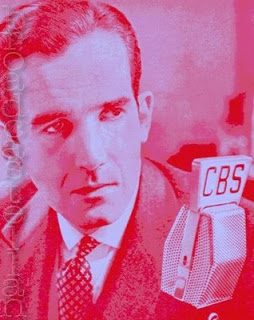
One of the first Americans to have witnessed and documented Buchenwald shortly after its liberation was CBS news commentator Edward R. Murrow. On 15 April 1945, three days after first setting eyes on the concentration camp, Murrow confronted his listeners with a report prefaced by the following disclaimer:

Permit me to tell you what you would have seen and heard had you been with me on Thursday. It will not be pleasant listening. If youโ€™re at lunch, or if you have no appetite to hear what Germans have done, now is a good time to switch off the radio. For I propose to tell you of Buchenwald.

Bringing his eyewitness account to the ears of his fellow Americans, Murrow yokes together the incongruous to evoke the incalculable. Putting his finger on the imbalance of recorded figures and observable facts, he weigh in on the scale of humanityโ€™s failure and thereby succeeds in making the measureless ponderable. Broad statistics are presented alongside minute details. Observations of suffering are contrasted with references to Buchenwald as the โ€œbest concentration camp in Germany,โ€ a camp โ€œthat was built to lastโ€ yet built for annihilation.

Murrow speaks of an orderly pile of bodies, a prominent political figure starved beyond recognition, a warning against pickpockets in a scene of horrendous crime, and a new beginning of Buchenwaldโ€™s internees that coincided with the death of Franklin D. Roosevelt.

At one point, Murrowโ€™s report takes us into a โ€œcleanโ€ kitchen that supplies next to no food:

[The German prisoner, a communist, in charge of the kitchen] showed me the daily ration: one piece of brown bread about as thick as your thumb. On top of it a piece of margarine as big as three sticks of chewing gum. That, and a little stew, was what they received every twenty-four hours. He had a chart on the wall. Very complicated it was. There were little red tabs scattered through it. He said that was to indicate each ten men who died. He had to account for the rations, and, he added, “We’re very efficient here.โ€

โ€œIf I have offended you by this rather mild account of Buchenwald,โ€ Murrow adds, โ€œI am not in the least sorry.โ€ After all, had he not begun his report with the incongruous invitation to โ€œswitch off the radioโ€?

I knew switching off only too well. As a child and adolescent growing up in West Germany, I felt the incongruousness of being a good German keenly. I was raised in a small village in which a synagogue rotted away unnoticed, history and hope debased as a pigsty. At school, classmates echoed their parents by defending Hitler as the builder of the Autobahn; at home, my paternal grandmother openly spoke of her awareness of what was happening to her Jewish neighborsโ€”and then severed her connections by reducing me to the pink triangle I had pinned on myself by coming out.

I have been weighed down by collective guilt. I have lived under the terror of the extreme left and experienced the lure of the ultra-right as a stance of ultimate defiance. I failed to reconcile my responsibilities of facing history with any chance of personal happiness. So I left.

Perhaps I have been on the run ever since; trying to distance myself from the past I made my present an evasion. My life abroad has been, by and large, an existence in the neither here nor there, its escapism more shameful than my inescapable origins. Yet how else can we expect to make a clean start of it if our feet remain stuck in the soil we are anxious to shake?

It was with some unease that I realized just what I had been watching before my sister returned me to the reality of now: a neat puzzle in which every murder is accounted for and executed according to plan; a โ€œvery efficientโ€ murder mystery that reduces horror to a formula borrowed from an old and politically incorrect nursery rhyme; film released, no less, in the year of the death camp liberations. You see, before I listened to the speeches at Buchenwald I had been counting down bodies in And Then They Were None.


Related recording
Edward R. Murrowโ€™s report from Buchenwald (15 April 1945)

Related writings
โ€œThe Wannsee Konferenz Maps Out the Final Solutionโ€
โ€œArthur Miller Asks Americans to “Listen for the Sound of Wings”
โ€œFrom the House of Terrorโ€

Manus Manum . . . Love It: Lever Brothers Get Their Hands on Those Nine Out of Ten

“Ladies and gentlemen. We have grand news for you tonight, for the Lux Radio Theater has moved to Hollywood. And here we are in a theater of our very own. The Lux Radio Theater, Hollywood Boulevard, in the motion picture capital of the world. The curtain rises.โ€

Going up with great fanfare on this day, 1 June, in 1936, that curtain, made of words and music for the listening multitude in homes across the United States, revealed more than a stage.  It showed how an established if stuffy venue for the recycling of Broadway plays could be transformed into a spectacular new showcase for the allied talents at work in motion pictures, network radio, and advertisement.

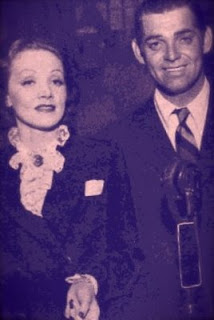
Marlene Dietrich and Clark Gable at the premiere of the revamped Lux Radio Theater program

โ€œFrankly, I was skeptical when the announcement first reached this office,โ€ Radio Guideโ€™s executive vice-president and general manager Curtis Mitchell declared not long after the Hollywood premiere. The program was โ€œan old production as radio shows go,โ€ Mitchell remarked, one that was โ€œrich with the respect and honorsโ€ it had garnered during its first two years on the air. Why meddle with an established formula?

Mitchellโ€™s misgivings were soon allayed. The newly refurbished Lux Radio Theater had not been on the air for more than two weeks; and Radio Guide already rewarded it with a โ€œMedal of Meritโ€โ€”given, so the magazine argued, โ€œbecause its sponsors had the courage to make a daring moveโ€ that, in turn, had โ€œincreased the enjoyment of radio listeners.โ€ Thereโ€™s nothing like a new wrinkle to shake the impression of starchiness.

โ€œI cannot help but feel,โ€ Mitchell continued, that the “two recent performances emanating from Hollywood have lifted it in a new elevation in public esteem. Personally, listening to these famous actors under the direction of Cecil De Mille, all of them broadcasting almost from their own front yards, gave me a new thrill.”

That DeMille had, in fact, no hand in the production did little to diminish the thrill. An open secret rather than a bald lie, the phony title was part of an elaborate illusion. The veteran producer-director brought prestige to the format, attracted an audience with promises of behind-the-scenes tidbits, and sold a lot of soap flakes throughout his tenure; and even if the act wouldnโ€™t wash, he could always rely on the continuity writers to supply the hogwash.

As DeMille reminded listeners on that inaugural broadcast (and as I mentioned on a previous occasion), Lux had โ€œbeen a household word in the DeMille family for 870 years,โ€ his family crest bearing the motto โ€œLux tua vita mea.โ€ Oh, Lever Brother!

Perhaps the motto should have been โ€œManus manum lavat.โ€ After all, that is what the Lux Radio Theater demonstrated most forcibly. In the Lux Radio Theater, one hand washed the other, with a bar of toilet soap always within reach. As I put it in Etherised Victorians, my doctoral study on the subject of radio plays, it

was in its mediation between the ordinary and the supreme that a middlebrow program like Lux served to promote network programming as a commercially effective and culturally sophisticated hub for consumers, sponsors, and related entertainment industries.

With DeMille as nominal producer and Academy Award-winner Louis Silver as musical director, the new productions came at a considerable cost for the sponsor: some $300 a minute, as reported in another issue of Radio Guide for the week ending 1 August 1937. Of the $17,500 spent on โ€œThe Legionnaire and the Lady,โ€ the first Hollywood production, $5000 went to Marlene Dietrich, while co-star Clark Gable received $3,500. Those were tidy sums back the, especially considering that the two leads had not even shown up for rehearsals.

The investment paid off; a single Monday night broadcast reportedly attracted as many listeners as flocked to Americaโ€™s movie theaters on the remaining days of the week. As DeMille put it in his introduction to the first Hollywood broadcast, the audience of the Lux Radio Theater was โ€œgreater than any four walls could encompass.โ€ Besides, the auditorium from which the broadcasts emanated was already crowded with luminaries.

โ€œI see a lot of familiar faces,โ€ DeMille was expected to convince those sitting at home: โ€œThereโ€™s Joan Blondell, Gary Cooper (he stars in my next picture, The Plainsman), Stuart Erwin and his lovely wife June Collier.โ€

Also present were Al Jolson, Ruby Keeler, and Franchot Tone. โ€œAnd I, I think I see Freddie March,โ€ DeMille added in a rather unsuccessful attempt at faking an ad lib. While there is ample room for doubt that any “nine out of ten” of those stars named actually used Lux, as the slogan alleged, they sure made use of theย Lux Radio Theater. It was an excellent promotional platform, a soapbox of giant proportions.

A visit to the Lever Art Gallery in Port Sunlight

As I was reminded on a trip to the Lady Lever Art Gallery in Port Sunlight last year, Lever Brothers had always been adroit at mixing their business with other peopleโ€™s pleasure. Long before the Leverhulmes went west to hitch their wagon on one Hollywood star or another, they had disproved the Wildean maxim that the greatest art is to conceal art and that art, for artโ€™s sake, must be useless.

It is owing to the advertising agents in charge of the Lever account that even the long frowned upon โ€œcommercialโ€ did no longer seem quite such a dirty word.


Related recording

“The Legionnaire and the Lady,โ€ Lux Radio Theater (1 June 1936)

Related blog entries

“Cleaning Up Her Act: Dietrich, Hollywood, and Lola Lolaโ€™s Laundryโ€

Tyrone Power Slips Out to War on a Bar of Soapโ€

โ€œAfter Twenty Years of Pushing Stars and Peddling Soap, a Hollywood Institution Closes Downโ€