A Nose for Business; or, This Woman Has Issues

You know you’ve got money to spare when you can afford to hire someone to do the sneezing for you. Save your nostrils, keep the tissue! Just call Hildegarde Halliday. That is what NBC did back in the 1930s and ‘40s, when Halliday was the Durante of sound effect artists. Radio actors were fortunate to have their proboscis blown by proxy whenever the script demanded the feigning of a common cold or an attack of hay fever. On this day, 20 October, in 1940, stage actress Halliday demonstrated her skill on Behind the Mike, a weekly half-hour that promised to take listeners inside the studio to reveal some of the tricks of the radio dramatic trade. Billed as “radio’s own show,” the aforementioned Behind the Mike dramatized and promoted the business by telling audiences what was involved in putting together a national broadcast, in selling it to a sponsor, or in prepping a studio audience.

“We’ve had many people on this program who make their living from radio in strange ways” announcer Graham McNamee opened the 20 October 1940 broadcast, referring to assorted animal imitators and baby criers (like my fictional Aunt Ilse). “But our next guest makes her living in radio in a way that tops all of them.” Halliday claimed to have “done all kinds of sneezes,” making herself heard on the variety programs headed by Rudy Vallee and Robert Benchley, as well as on daytime serials like Aunt Jenny.

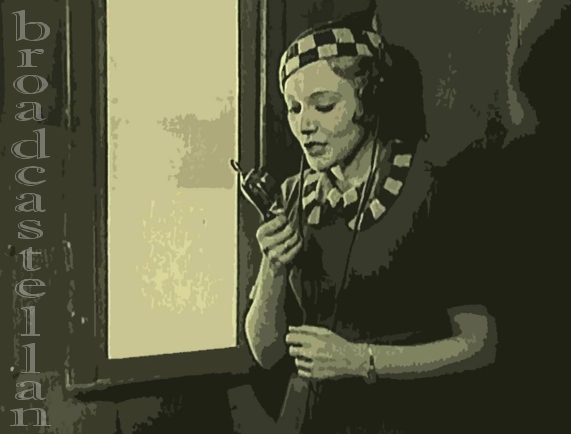
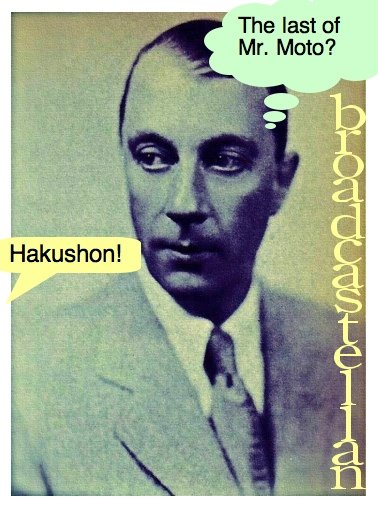
“Oh, I can sneeze like all get-out if I just imagine very hard that I have a cold and chill,” the jovial Halliday tells the host (pictured above). To illustrate the afflatus the afflicted are to her, Halliday enacts in monologue a scene at a cocktail party she attended. Listeners are treated to a severe allergy attack, the sounds of which I know only too well. The sufferer lets out a few terrifying atchoos (a rather feeble onomatopoeic substitute, as it turns out), along with some choice words of political wisdom.

“I hope he doesn’t get besmirched,” the none-too-ladylike sneezer tells her friend, the wife of a congressman. “I always say politics are so common, what with letting everybody vote. No, I don’t know a thing about politics, but I do know what I like.”

Such sentiments are uttered more frequently than “Gesundheit,” no doubt, which is why elected governments are rarely as healthy and sound as they ought to be. And however poorly we are represented due to our lack of care at the sickbed of our democracies, we cannot rely on someone like Hildegarde Halliday to perform the suffering on our behalf . . .
“Whoops,” There They Went

No, I am not referring to the millions of dollars and pounds that have vanished into thin air during the current stock market upheaval. I am just concerning myself with thin air. You know, the kinds of programs and personalities that kept folks from falling into a great depression of their own in the months following the collapse of the stock market back in 1929. Movies and magazines aside, radio was the chief source of entertainment during those bleak days; yet whereas periodicals are generally well archived and films of the period are receiving attention from scholars and pre-code aficionados alike, few of the shows then on the air can still be appreciated today. As a lover of the old cat’s whiskers, I often resort to rivalling media to get an earful of network radio’s earliest offerings.
In September 1930, Theatre Magazine started to acknowledge radio as a source of dramatic entertainment; in his column “Listening Room Only,” novelist Howard Rockey set out to explore the still new medium in its relation to the stage. According to Rockey’s opening remarks for the October edition, the “début” of “Listening Room Only” had repercussions in the “broadcasting studios. “Apparently,” Rockey remarked, “it has been discovered that at least a percentage of the radio audience is possessed of more than moron intelligence.” Although “radio-drama is still at a low ebb, its accomplishments and its potentialities are claiming the serious attention of those who rule the destinies of the microphone.”

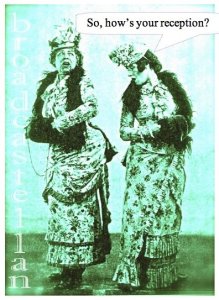
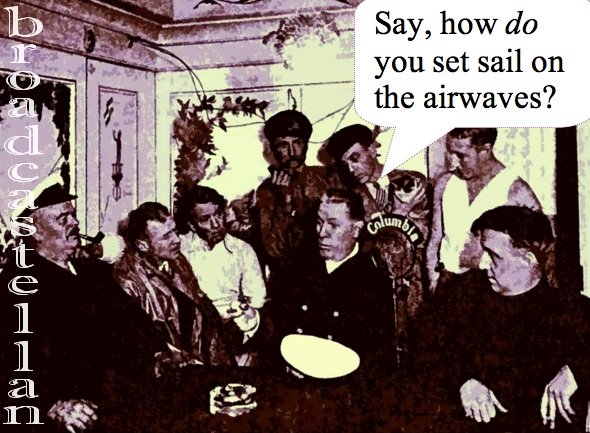
So, what were tuners-in destined to receive back in the fall of 1930? Aside from The Rise of the Goldbergs, few names will sound familiar even to those intimately acquainted with radio dramatics. Producers of radio entertainment still had a lot to learn, particularly since getting shows on the air frequently meant transporting them there from other media. The transfer was often unsuccessful and the results at times unintelligible, as was the case with The Whoops Sisters (pictured above), a comedy sketch “based on a cartoon by Peter Arno—whom Rockey calls the “author of the first radio flop dictated by an audience that could not understand him.”

Rather more successful was Forty Fathom Trawlers. Rockey commends it as

a breathless continuation of sea-tales by James Whipple, a writer commandeered by radio from Hollywood’s script factories. Some of these incidents are original, while others are adaptations of famous nautical stories. Stirring adventures are related about the captain’s table by Brad Sutton, a veteran actor whose stage career goes back to the days when he appeared with Lillian Russell. In the interests of greater realism, one of these instalments was actually broadcast from the cabin of a schooner at sea. The dialogue was sent ashore by short wave, picked up by Columbia and rebroadcast from coast to coast. But so cleverly is the essential background obtained with artificial sound effects that it has been found more effective to play these dramas on a studio stage.

Little remains of Forty-Fathom Trawlers, aside from a couple of scripts (available here) and Whipple’s own comments on the program. Not that any of Whipple’s many other radio efforts ring a bell these days. For NBC, he wrote Dutch Masters Minstrels, The Fortune Teller, The Melodrama Hour, Romance Isle, and Neapolitan Nights; for CBS, he wrote and produced, in addition to Trawlers, series titled Close-ups, Mrs. Murphy’s Boarding House, Around the Samovar, and The La Palina Club Smoker. As news commentator Lowell Thomas remarked in his Foreword to Whipple’s How to Write for Radio (1938), its author wrote and produced “more than two hundred radio programs.”

Forty-Fathom Trawlers must have been an exciting bit of ear-play. While the broadcasting schedules of the networks were awash with such experimental programs, few bothered to preserve them for later generations who find it increasingly difficult to fathom that drama could come flooding into your mind unseen, without having to pass inspection. Ever since television ran the good ship radio aground, those with a passion for the airwaves have had to grab at any bit of flotsam and jetsam coming their way. Reading columns like Rockey’s, I realize that I am barely knee-deep in those waves . . .

Politics and Plumbing

Doesn’t Republican rhetoric sound tired these days? The material isn’t fit for Vaudeville. The same old folksy (make that fauxsy) references to the mythical Joe Sixpack or average Joe, plumbing and otherwise. Shouldn’t that at least be the average José by now? It all strikes me as so 1950s in its white picket-fenced-in parochialism. Tuners-in are treated to the same bromidic anecdotes that are meant to stand for what supposedly matters or to distract from what truly does.

To candidates like McCain and Palin, what matters surely isn’t the presumably average Joe or Jane, at least not as anything other than statistical figures adding up to a sufficient number of votes. What matters to Republicans is the maintaining of a status quo serving those at the top who, if they deem it fit, let a few crumbs fall from the table at which few sit and most serve. Republicans tend to appeal to our meanest instincts, greed and selfishness, for which reason they rely on the lowest common denominators in their campaign speeches and their less-than-reassuring assurances.

No new taxes? “Read my lips,” perchance? The line is familiar, even if the letdown seems to have been forgotten by most. Less government? Tell that to the average Janes whom you deny control of their own bodies and destinies. I, who might have been a US citizen by now had it not been for conservative politics, would rather have big government than a world controlled by large corporations whose profit-marginalization of humanity is not only harming national economies but, what should be more important to us than mammon, our shared, global ecology.

Joe the Plumber? Sure, he exists. That does not make the figure any less of a fiction, a campaign speech commodity. Listening to the final Presidential debate, I was reminded of a certain “expert plumber” who stood up against a ruthless politician clawing himself into office; a cat, no less. Back in 1940, when socialism was not quite the dirty word that it is today, playwright Arthur Miller (a revival of whose All My Sons opens on Broadway tonight) created such fierce opponents in his radio fantasy “The Pussycat and the Expert Plumber Who Was a Man” (previously discussed here).

Tom, the Pussycat in question, is a questionable campaigner who shrouds his feline identity in threats and promises; he gets elected mayor in a nasty contest relying on the exposure of past wrongs in the lives and careers of elected officials, however irrelevant such revelations might be to the act of governing.

Tom aspires to the Presidency . . . until he is confronted by a fearless plumber, a citizen who exposes him for the sly customer he really is. Beaten, Tom returns to his home. The “difference between a man and a cat,” he concludes,

is that a cat will do anything, the worst things, to fill his stomach, but a man . . . a man will actually prefer to stay poor because of an ideal. That’s why I could never be president; because some men are not like cats. Because some men, some useful men, like expert plumbers, are so proud of their usefulness that they don’t need the respect of their neighbors and so they aren’t afraid to speak the truth.

As long as there is cream there will be cats that keep their paws on it while they purr about prosperity for all. Send in some stout-hearted plumbers who refuse to be campaign fodder and, rather than having pulled the fur over their eyes, set out to realize the ideal of draining the arteries in which the cream is clotting. And don’t let cream-licking felines make you believe that an ideal such as this is nothing but the stuff of pipe dreams . . .

Holocaust Ending: The Boy in the Striped Pyjamas

“Enjoy the movie.” That is the response we get when we tell friends and acquaintances that we are on our way to the cinema. And while it is true that we generally seek enjoyment, whether by looking at separated lovers or severed heads, movie-going can be a disconcerting, unsettling event well beyond the shocks and jolts provided by horror and romance. The Boy with the Striped Pyjamas (a British film in its British spelling), is likely to be such an experience to anyone with a pulse and a sense of humanity ready for the tapping. To me, it was nothing short of devastating. I am not resorting to hyperbole when I say that I was rendered speechless; those accompanying me can attest to my disquietude. It has been a decade since last I watched a film (Saving Private Ryan) that has stirred and traumatized me to such a degree that, coming out of the theater, I felt sick to my stomach. No wonder. I had just been coerced into walking straight into the gas chamber of a concentration camp.
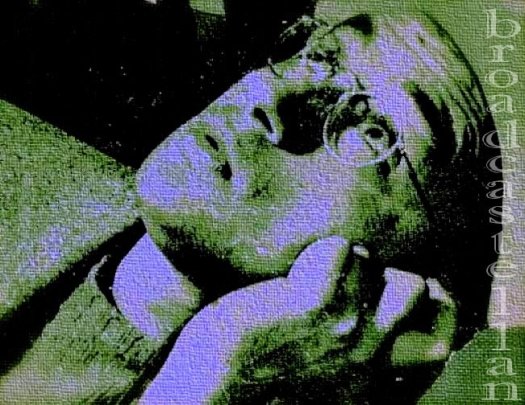
Whimsical and naïve, The Boy with the Striped Pyjamas is a suitably misleading title for a story that is out to challenge and deceive you. It is not your traditional Hollywood response to the horrors of the Third Reich, which is why I refer to the film’s conclusion as a Holocaust ending. Hitchcock might have voiced his objections, as he did in the case of his own Sabotage (previously discussed here); but the dark twist in Mark Herman’s melodrama is no cheap device to rattle your nerves: it is both heart wrenching and thought provoking, as the emotions it elicits will be mixed, depending on whose life, whose position you examine: those engaged in the horror or those consumed by it.

The Boy with the Striped Pyjamas is largely told from the perspective of a child, which is to say that it casts a familiar and much examined world into a twilight of the uncanny—the known revisited as the hazily uncharted in the act of exploration. The Boy is about as un-Hollywood in its exploration of childhood and fascism as Pan’s Labyrinth—and similarly gruesome. In its final scenes, in which terrified parents run through the woods in search of their son, it resembles the horror of a Grimm’s tale before Disney got his fingers on it.

The Boy is uncompromisingly bleak. The title character, as you might have guessed, is a Jewish child in a Nazi concentration camp. As I was reminded on a recent visit to Riga, Latvia, the camp uniform does indeed resemble old-fashioned sleep ware, a comparison all the more poignant if we consider that the camps were the final resting place for most of its inmates.

The central character, though, is the son of a Nazi officer. Eight years old, he is unaware of what is going on beyond the walls of his austere new home, the one to which his family moved from Berlin after his father was assigned with the supervision of the nearby concentration camp. To the boy in his cheerless isolation, the camp is farm, a lively community where he might make new friends. Day after day, he ventures through the woods to the electric fence behind which he descries a boy is own age, a fellow whose life seems mysterious and exciting to him. Why should he accept that his new playmate is separated from him? Why not ignore or overcome this barrier? Why not wear “striped pyjamas” to be just like his new friend?

We have the answers to those questions; history provided them, and everyday life often confirms them. We know what happened. We might even know what is going on right now. Some of us know and are ready to confess to the limits of our humanity, the margins beyond which fall those whom we consider in the abstract of numerals rather than as individuals. The Boy is too intimate a story to be called metaphorical. We are being sentenced to death, and the film’s ending is our own. Facing it, we realize that beyond knowing lies the challenge of understanding.

Banks (for the Memories)

“How do you want it?” the stern-looking woman inquired. “In tens,” I said, because I needed it that way. She was a bank clerk behind a counter; and I was referring to the denomination in which a portion of my savings was to be returned to me. I sounded like a masochist saying it; but, stepping into the money market in tense times such as ours, you must really be a glutton for punishment. As someone who still counts his savings in tens, I am not among the afflicted. Still, what with that whiff of October 1929 in the air and Iceland at the center of an international incident, you’ve got to be in hysterics to be laughing all the way to the vault.

Could an economic bust be a boon for the sit-at-home, dim-the-lights medium of radio? Of all commercial enterprises catering to our need for news and entertainment, it was the wireless that experienced a boom during the Great Depression. Radio profited from the closing of Broadway shows and the demise of Vaudeville. And while programs on the air advertised plenty of products, they came to your home free of charge; unlike today’s cable and satellite receiver, the old cat’s whiskers did not require a subscription. Even the equipment could be assembled cheaply.

Be it Wall Street laying an egg or enemy planes dropping bombs, the poor cousin of television truly comes into its own when the world is in turmoil. To be topical, for once, I am listening to a few classic programs featuring assorted banking woes.

Jack Benny pinching a penny, safecrackers at work in an episode of Gang Busters, or hapless yokels like Lum and Abner offering financial services, radio gave the public an earful of what, for the most part, it didn’t have: money, and the trouble that comes it with, especially when it goes.

Given the prudery of radio entertainment, it is probably safe to assert that misdeeds for dough outnumbered crimes of passion on the air, unless that passion exhausted itself in a peck on the cheek, however embellished it might get in your mind. Mr. Keen may not have been a Tracer of Lost Profits, but radio thrillers were nonetheless teeming with have-nots trying to get some without resorting to the legalized gambling known as the stock market.

“Please, would you come to the bank with me. Please,” a woman urges, with distress in her voice.

I, I’ve asked so many people, but they won’t listen to me. You, will you come to the bank with me? No, don’t turn your head. Please don’t go away. Listen, if I tell you very carefully why I want you to come to the bank with me, you will come, won’t you?

Another terrified investor? A demented clerk trying to get you to open an account? Well, wait and hear. It is the opening of a Lights Out! thriller cheekily titled “Come to the Bank” (17 November 1942). As playwright Arch Oboler explains, it is “the story of a woman who, for strange reasons soon apparent, is determined to get us to the bank.” These days, as empty bank vaults are about as spine-chilling a setting as a crowded morgue, the above plea makes for an intriguing premise indeed, especially if the concept of a presumably solid depository and a final resting place are being equated.

“Come to the Bank” is the account of a woman robbed of her savings as well as her sanity, insisting as she is that the missing man she cared for is “entombed” in the wall of the titular institution. “This is your last warning,” a psychiatrist tells her, “You are to stay away from the bank. You are to behave yourself as the good, intelligent citizen you normally are.” If he were alive today, shrewd Mr. O would milk his scenario for all it is worth.

Pitch-Hitting; or, When Dietrich’s Not Herself

My grandmother refused to listen. She would walk out of the room whenever Marlene Dietrich appeared on the small screen. “She betrayed our country,” Oma would say, referring to Dietrich’s departure for Hollywood about the time the fascists came into power. Actually, Dietrich left a few years earlier; but the Nazis sure failed to lure her back. What a loss it is to turn a deaf ear to what aforementioned radio actor Joe Julian called “an exotic accent” and a “strong voice-presence.” Working with her in Dietrich’s lost radio series Café Istanbul (1952), Julian got a “glimpse behind the public image” and discovered
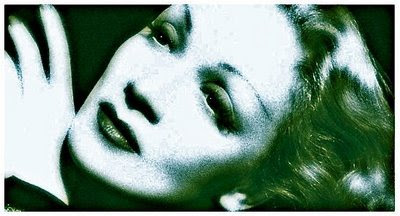
a woman of strength, warmth, and intelligence, yet so spontaneous that when, during a rehearsal, she overheard one of the actors express doubt that the rest of her body [she was in her early fifties by then] was as youthful as her famous legs, she ripped open her blouse to prove him wrong.

On this day, 8 October, in 1939, Dietrich could provide no such proof of her health and vitality. Scheduled to appear on the Screen Guild program that night, she was forced to call in sick due to a severe cold that, according to Roger Prior, host of the show, had halted the shooting of Dietrich’s comeback feature Destry Rides Again. The star had tried to honor her commitment, but had lost her voice entirely during rehearsals. In what must be one of the most inept voice-overs in Hollywood history, the Screen Guild producers replaced her with . . . Zasu Pitts.

It was all for laughs, of course. After all, Pitts’s voice had about as much sex appeal as fingernails being painstakingly filed . . . with a blackboard. And by casting Pitts opposite the less-than-expressive Gary Cooper, the Guild made the most of this emergency situation. “Is that Marlene Dietrich?” Cooper inquired. The affirmative only produced a terse “Well, so long.” Trying to explain the situation, Prior informed Cooper that “Zasu has Marlene Dietrich’s lines.” “Not from where I’m standing,” Cooper retorted. Together with Bob Hope and the actress billed as “Marlene Zasu Dietrich Pitts”, he nonetheless condescended to co-star in the sketch “The Girl of the Woolly West; or, She Was Wearing Slacks, So She Died Like a Man.” It sure made audience’s anxious for Dietrich’s return.

Nine years later to the day, on 8 October 1948, Dietrich was once again sick—and scheduled to appear on the air. This time, though, she was able to perform her role, cast as she was as the ailing Madame Bovary in the Ford Theater presentation of the novel as adapted by NBC staff writers Emerson Crocker and Brainerd Duffield . Sure, you’ve got to take Madame Bovary with “a pinch of power”; but you won’t be sorry to hear Dietrich breathe her last on the occasion. Besides, who could expect fidelity in the case of Emma Bovary?

“If some of Flaubert’s delicate delineation of character was missing from ‘Bovary’-on-the-air,” critic Saul Carson remarked, “Marlene Dietrich more than made up for this loss in literary flavor by her superb acting in the lead role.” Hardly carrying the chief burden, Dietrich was supported that night by Van Heflin and Claude Rains. “Too often, film stars rely on their screen reputations to cover slipshod work in radio,” Carson conceded; “but these people performed as artists who respected the medium as well as the vehicle.”

If Dietrich’s in it, just about any vehicle will do for me. Unfortunately, the extant recording does about as much justice to her timbre as Zasu Pitts. As for you, grandma, who saw trains depart for the concentration camps without making a noise, I’m just sorry that fascist propaganda robbed you of your senses . . .

He Calls Them As He Hears Them: Joseph Julian Remembers

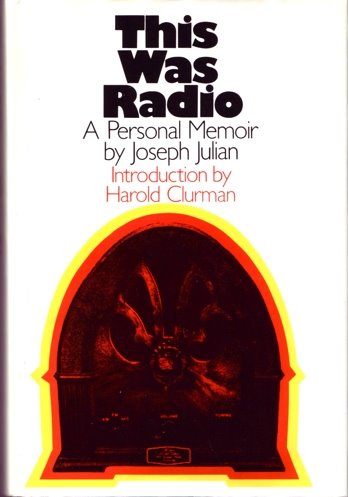
“The small but rich body of radio literature, which [Norman Corwin] brought so lovingly to life, lies languishing in a few libraries and second-hand book shops, under the titles Thirteen by Corwin and More by Corwin—a great shame and deprivation for the present generation!” My sentiments, entirely. Not my words, though, which is why I had to slap quotation marks on them. The man who said so was Joseph Julian, a once highly acclaimed and sought-after radio actor who starred in a number of plays written and directed by Corwin during the early-to-mid 1940s. Today, Julian’s memoir, a copy of which I recently added to my own library of out-of-print books on broadcasting, is one among those “languishing” volumes, a forgotten voice from a medium whose dramatic potentialities have remained largely unsounded since the late 1950s.

This Was Radio came out in the mid-1970s, a time widely deemed ripe for a reassessment of the aural medium and its derelict theater of the mind. Rather than waxing nostalgic—thereby squeezing the last few bucks out of a defunct business which, back then, most American adults still recalled experiencing first-ear, and fondly at that—Julian takes readers on a trip down memory lane that leads into neighbourhoods they would not get to hear about on an official tour.

His Corwinian class acts aside, Julian appeared on thriller programs like The Falcon, The Shadow, Inner Sanctum, Mr. Keen, Broadway Is My Beat, and The Mysterious Traveler. He was first heard on The March of Time, but as an also-ran-off-the-mouth, in re-enactments that called for crowd scenes. Briefly, he served as a sound man, during which stint he learned what noise a human body produces when it is turned inside out.

I can imagine just what kind of sounds emanated from Julian when he learned that the same thing was happening to his career. An established actor by the early 1940s, Julian remained highly successful throughout the decade, until, in 1950, his name appeared in Red Channels. His career as a radio actor declined rapidly; by 1953, his annual income had dwindled to a mere $1630.

Barred from work at CBS, Julian fired back by filing a lawsuit for libel. Character witnesses during Julian’s 1954 trial were Edward R. Morrow (last talked of here) and the aforementioned Morton Wishengrad. It was “an ugly period in American life and in mine,” Julian comments. His “urge” was “to skip over it”; but he felt a

responsibility as a victim to record some of what [he] went through. A whole new generation hardly knows that such a thing ever happened. But the fact is it could easily happen again if we relax our vigilance in defending our freedoms. Control of broadcasting is one of the first major objectives of those who would take them away.

His lawsuit was dismissed; thereafter, Julian virtually unemployed until William Fitelson, a theatrical lawyer and executive producer of the Theater Guild’s US Steel Hour television series staged one of the actor’s own plays in December 1954. Julian’s fortunes changed as quickly as they had declined; and he once again “getting calls for radio acting jobs.”

Without bitterness, Julian tells it as it is. About Myrna Loy, for instance, he remarks that, “if she had to win [her radio] role in a competitive audition with radio actresses, she wouldn’t have been there. Her voice, isolated from her other attributes, was dull and flat. She was selling her name, not her art.” More problematic still was it to perform a dramatic scene with Veronica Lake, who had such a weak, wispy voice” that the sound engineer could not get her and Julian “in proper balance.”

Lake was handed a “separate microphone across the stage” so that the engineer could “could mechanically raise her voice level to mine.” However effective for listeners at home, her faraway whispers had Julian straining to hear his cues. “Especially since they had her facing front so the audience could see her famous peek-a-boo hairdo. Hardly the way to play an intimate love scene with a lady!”

Of the notorious Hummerts, who “grimly dominated their empire” of soap operas, Julian remarks:

There was something darkly foreboding about [them].  Their stiff presence always evoked a sense of insecurity.  And with good reason.  They had a reputation for firing actors who incurred their slightest displeasure.  And authors.  When Mrs. Hummert once told a writer that she wanted “God” on every page of a script, and his answer was “Who will we get to play Him?” he was fired on the spot.  And whey you were fired from one of their shows it was a catastrophe.  It meant being banned from all their nine or ten others that might be on the air at any given time.

Call him fortunate or not, Julian continued to act on the air well into the medium’s decline. On this day, 4 October, in 1959, he was heard on Suspense, one of radio’s last remaining drama anthologies, in the routine thriller “Room 203.” It is a far cry from Julian’s greatest work; but these days, almost any cry uttered on radio seems distant.

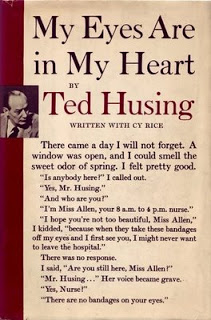
Blind Medium: My Eyes Are in My Heart (1959) by Ted Husing

Sometimes, when my heart is not in in, my mind’s eye begins to stray. That was what happened a while back when I tried To Please a Lady. Tried to follow it, that is. The Lady in question is one of Barbara Stanwyck’s decidedly lesser vehicles, and the horsepower on display in it is not likely to get my heart a-racing. Still, as previously reported, it has what it takes to get me excited about even the dullest of features: a radio angle. When I spotted announcer Ted Husing in one of the racetrack scenes, I started to reread my notes on Ten Years Before the Mike, his autobiography. I do not own a copy of that one; and, looking for it online, I realized that the chances of my adding it to my library are fairly slim at the moment.
During my search, I did come across another book by Husing, one of which I had not been aware. Nor had I been aware, seeing Husing on the screen, that he was plagued by something he was hiding from the world, tormented all the more by keeping everyone around him in the dark. At the time To Please a Lady was shot, in 1950, Husing was suffering from dizzy spells and began dragging his right foot. Years of denial and secrecy led to several accidents, all of them the result of a tumor that grew, undiagnosed, on Husing’s brain. Six years on, having finally faced an operation, one of the biggest and highest-paid voices in radio lost his eyesight and the will to live.

All this and more is shared in Husing’s second autobiography, My Eyes Are in My Heart (1959). While much of his life in broadcasting had already been recounted in his first, the two decades that had elapsed between the publications—and the misfortune that befell its author—make the later reminiscences not only more retrospective but also more introspective. “My values then were superficial,” Husing reflects. “Since then, I have learned to separate the real from the false. But this took many years, much suffering and much re-evaluation.”

Like many people who enjoyed a life and career that is considered a success based on obvious measures of fortune and fame, Husing shows himself remorseful, believing his affliction to have been a punishment, and a just one at that. For having been ashamed that his parents spoke with a pronounced German accent, for instance. For not having been a good husband and father. For having been too enamored with celebrity.

Now, I’ve never bought this kind of argument. If such retribution existed, it would appear that any disabled person is a sinner at heart. Luckily, Husing keeps his humility well in check, telling many an amusing anecdote about his decades in broadcasting, dropping names like a traveller, eager to be the envy of his friends, drops picture postcards into a mailbox hundreds of miles from home. Has he really been responsible for the discovery or promotion of entertainers including Rudy Vallee, Guy Lombardo, Bing Crosby, and Desi Arnaz?

Ted Husing was chiefly known as a sports announcer. “Actually,” though, as he points out, he “logged far more broadcasting time on music and special events.” Today, his name does not ring a bell resonant enough to make the multitudes pay attention; but, back in the 1930s, ’40, and ‘50s, that bell could open the doors to the swankiest New York City nightclubs. Never mind those places. What makes My Eyes Are in My Heart such a fascinating book is the insight it provides into a by now lost world of broadcasting during what is often referred to as radio’s golden age. Reminiscing about the life of radio and his life in it, Husing not only knows but is what he talks of: a blind medium.

As for a certain tough to please Lady . . . she does not even get a mention.

Beyond M: Max Ophüls’s Lachende Erben (1933)

Heinz Rühmann in Lachende Erben (1933)

“One excellent test of the civilization of a country,” Victorian poet and novelist George Meredith remarked, is the “flourishing of the Comic idea and Comedy; and the test of true Comedy is that it shall awaken thoughtful laughter.” To him, the “equality of the sexes” was, above all else, the requisite for “[g]ood comedies.” In this respect, the Germans were “rather monstrous—never a laugh of men and women in concert.”

While not entirely convinced by Meredith’s argument, I have often deplored the state of humor and wit in German film. The Germans are by no means a people of agelasts (non-laughers), let alone misogelasts (laugh-haters); but their comedy is generally crude or hostile. It tends to be discriminatory rather than discriminating. Those who displease us—and I have to include myself among the Germans, as much as I have distanced myself from Germany these past two decades—are being “ausgelacht,” that is, laughed out, as if banned from our midst, and stripped of their dignity.

German laughter is often elicited by the misfortune of others. And while such bemusement is not alien to Americans and the British, it is telling that English had no word for such a response to the world until it imported Schadenfreude. Laughing off the thought that what befalls others may happen to us may be an expression of fear; but I am not sure whether it is a fear of otherness or the fear that we might well find ourselves in the position of the ridiculed sufferer. What, to pick up Meredith’s idea, can a German movie produced in 1933 tell us about a civilization about to reach its darkest age?

Americans or the British might find it difficult to comment on the state German film comedy of the 1930s, considering how few of these films are known beyond Germany; far more familiar to them are earlier melodramas, ranging from gothic horror and dystopia to social realism. Even if the name of a highly regarded filmmaker like Max Ophüls is attached, German Lustspiele (comedies) are virtually uncharted territory for international audiences not in need of a regional map. Ophüls Lachende Erben (“Laughing Heirs”) is distinctly German; yet, to my surprise, it also has all the wit and charm of a 1930s Paramount comedy.

As a talkie, Lachende Erben makes full use of dialects, of which there are so many in German that it caused me great distress as a child to whom moving a mere fifteen miles or so meant being confronted to a language foreign to my ears and tongue. In Ophüls comedy, though, modern technology, from trains to telephones, is shown to bridge and unite the nation without obliterating regional differences. What keeps people apart, instead, is an obsession with the international language of finance.

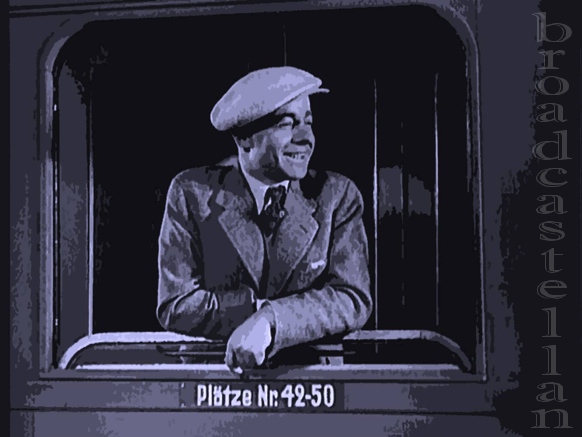
The world depicted in Lachende Erben is a decidedly modern one; and the challenge is to master modernity without sacrificing humanity to it. It is the world of advertising, of commerce and industry. A train speeds through the German countryside in the opening scene; on board are Peter (Heinz Rühmann; pictured above) and Gina (Lien Deyers; seen right)—and, as far away from their destination, their destiny, they might be, the two are bound to come together at last. Along the way, in keeping with the by then already classic boy-meets-girl formula, there are numerous complications.

After all, Peter and Gina are in rivalling camps, representatives of competing wine merchants. Peter is an advertising man, but enough of a dreamer to brave the occupational hazard of falling in love with the competition. Gina has her own thoughts on the subject; impressed by Peter’s cockiness, she very nearly engages him as an adman; but when he loses his edge to please her, she gives him the brush-off.

Still more difficult is it for Peter to refrain from drinking the wine he is expected to peddle. Yet that is just what his uncle’s will stipulates. Reading, as it were, from the beyond and heard through a gramophone, the departed informs his unsmiling heirs that Peter is to inherit the Bockelmann fortune if he can manage to remain sober for an entire month. This becomes as much a test of Peter’s stamina as it is an opportunity for greedy relatives to deprive him of his inheritance. Resigned to throw away his fortune by reaching for his uncle’s wine, it is Peter who has the last laugh.

Lachende Erben nicely balances wit and humor, sentiment and satire. It is a comedy rooted in the belief that unity can be achieved through a respect for difference, that, while the world is getting smaller, there is room enough at the table for all—and wine, women and song besides. Perhaps it all looked a little more spacious since the women in this comedy were unencumbered by children, an independence at odds with Nazi dictum.

As a crowded nation on the verge of conquering new territory, Germany became preoccupied with Lebensraum (living space), and thoughts of cooperation made way for war and genocide, for a false harmony achieved through the suppression of diversity. The room was widened forcefully, but seats at the table were becoming exclusive. Max Ophüls (along with Ernst Lubitsch and the aforementioned Douglas Sirk) was one of the creative minds who chose to desert it, taking with them the hope of comedy that, in Meredith’s terms, might have prevented Germany from failing the test of civilization. The heirs who took his place had little to laugh at and gave the world less.

Cruikshank Running Away With Dickens: Oliver Twist (1909)

The Oxford English Dictionary devotes an astonishing number of pages to the definition and history of the word “old.” Thus far, I have not been entered as an example. To be sure, whether or not something or someone is “old” depends largely on the age and attitude of the beholder; but it also depends on the history and evolution of what is being beheld and judged. Based on the history of film alone, one can safely describe Vitagraph’s “Oliver Twist” as “old” without incurring many objections as to the subjectiveness of the chosen adjective. After all, “Oliver Twist” was released back in 1909. At the time, some of the first readers of Dickens’s serial novel still numbered among the living. They might have looked upon those images in motion as a novel approach to an old favorite, while we, who have come to realize that technology dates faster than art, look at it as a creaky and inadequate translation.

The thought of film as a bridge between us and the early Victorian age is awe-inspiring; not that extant constructions rising above that gap are particularly trustworthy, considering the cardboard sets and threadbare production values of films like “Oliver Twist.” Directed by Englishman J. Stuart Blackton, it is all but nine minutes long; and as such, it is more or less a synopsis of the novel.

Indeed, it is rather less. Here we have the richly descriptive words of Dickens, a master of penning indelible if none-too-intricately sketched word-portraits, translated into the moving images that are, to this date, the competitors of moving English. Intertitles are sparse, an economy of words that turns the spectacle into a set of tableaux in the service of a moral whose statement even a sentimentalist like Dickens might well reject as rather too obvious and prosaic.

Owing to the film industry’s raiding of the Dickens canon, the author’s original illustrator, Cruikshank, appears to have run away with the show. In film, now and then, the word is largely an adjunct to the image, reversing the precedent set by the illustrated novel, itself the product of modern printing technology. Without any close-ups and a style of emoting that makes Lana Turner’s acting look like the epitome of realism, “Oliver Twist,” unlike Dickens’s Oliver Twist, can no longer engross us as anything but a curio to be marveled at and studied. Unless, of course, one thinks of those sitting in the auditorium back then, finding their books to be projected onto a screen in the most peculiar form of translation, with authors and actors alike removed from the scene.

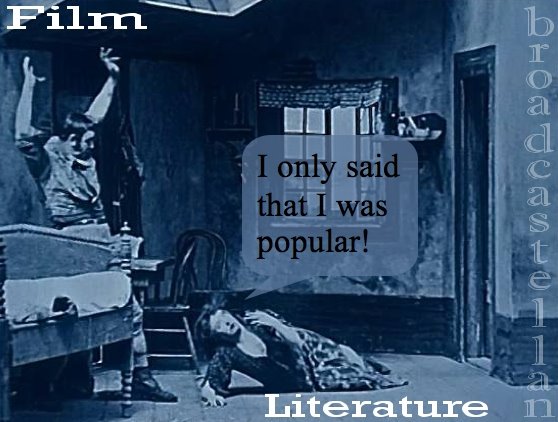
What a comfort it might have been to pick up the novel anew and give it life in one’s own breath, to learn that Oliver’s story was the story of modern, industrial society in which even the living things of our imaginings are reduced to commodities. Nancy is literature, I kept thinking, and the thieving Bill Sikes is film. It will require a screening of Frank Lloyd’s 1922 version, starring Lon Chaney and Jackie Coogan, to adjust this image; I am very much looking forward to the latter, being that our friend, the aforementioned silent film composer and (radio) dramatist Neil Brand, showed me his studio as he was in the process of scoring the film. 

Both versions, along with a lantern show of “Gabriel Grub” (from an episode in Pickwick Papers), are included in the collection Dickens Before Sound, compiled and preserved by the British Film Institute. At the sight of this feast in small doses, nutritiously dubious as some may be, I can hardly refrain from echoing Oliver’s familiar plea for “more.”