The Touchables

The folks who proved that they had made their mark in Hollywood by leaving it in the cement slabs in front of Graumanโ€™s Chinese Theatre had one thing in common. Besides having the stature of a movie star or Tinseltown personality, I mean. They could all stand up, bend down, and exert whatever pressure is required to produce those imprints. Even Charlie McCarthy, apparently. I always thought that it might please the supposed untouchables to be commemorated in a medium that is not as telltale about our inescapable senescence as a photograph or moving image. Many of us can stand up far longer than we can stand looking in the mirror.

Then again, the moving hands of time are readable in our footprints. Shirley Templeโ€™s tiny imprint reminds us that, on 14 March 1935, she was at the height of a career that diminished as she increased in size. Still, the prints are meant to bespeak immortality. We donโ€™t get to see the tracks of Christopher Reeveโ€™s wheelchair, for instance. Nor is Zsa Zsa likely to be given the honor now to join those ladies in cement. These prints are all solid, no matter how much the concrete crumbles. The stars have bodiesโ€”and they are able and sound . . .

There is something reassuring in that solidityโ€”if it werenโ€™t for those cracks, and the puzzled looks I come across in the crowd gathered here to take pictures, mainly of themselves in front of a Hollywood landmark. Who was Rudy โ€œMy Time Is Your Timeโ€ Vallee, anyway? Norma Talmadge, whoโ€™s she? What were the Ritz Brothers all about? And who was that Sid fellow for whom they left those cryptic messages?

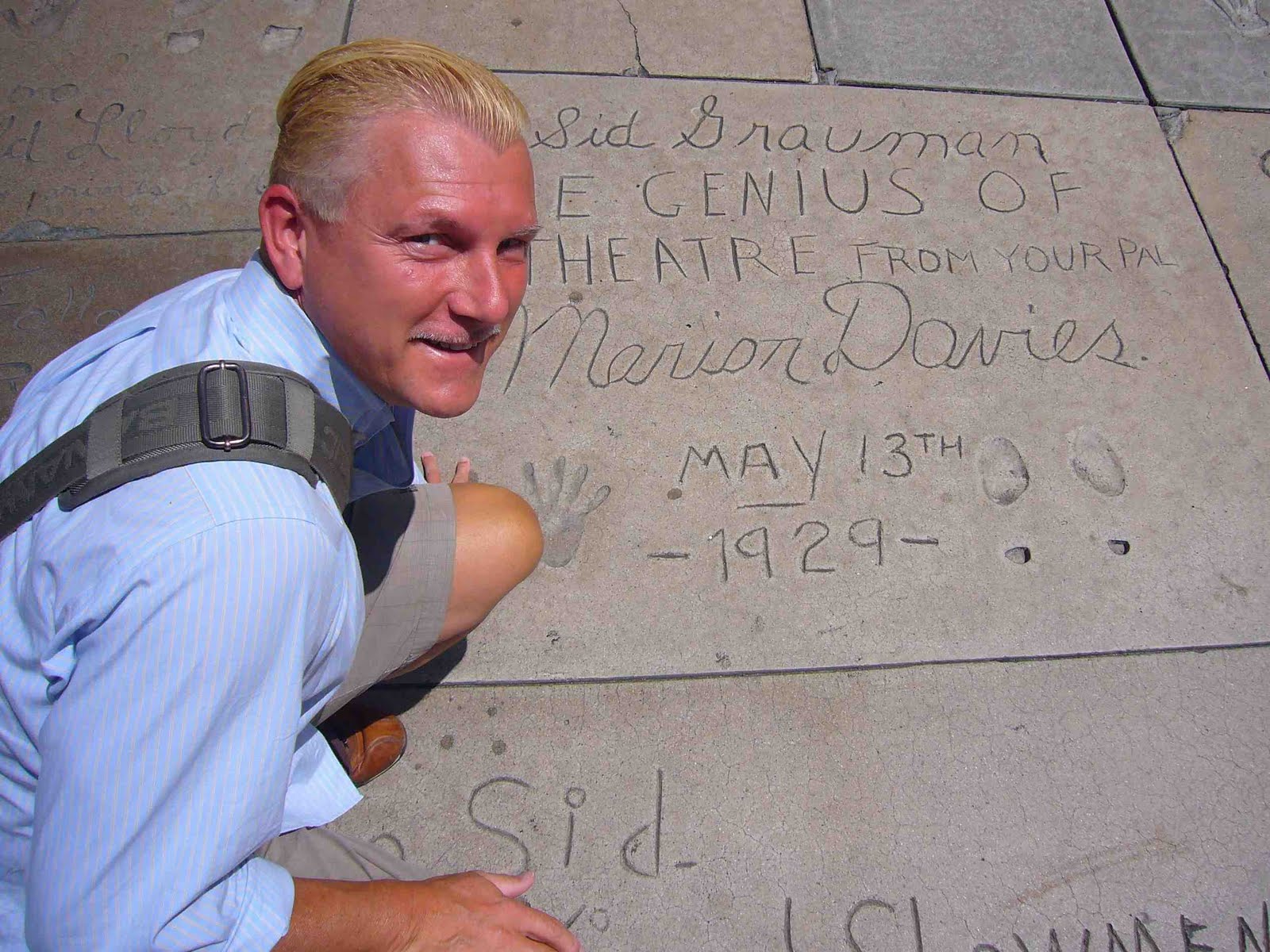
I got the space to myself as I have my picture taken with Marion Daviesโ€™s dainty indentations (dated 1929), my palm covering the hollow. No one is likely to pull a Lucy now; the Duke is still standing. Most walk right pastโ€”no, overโ€”Ezio Pinza, whose block of concrete has become a mere steppingstone. Not a soul stoops to Monty Woolley. Heโ€™s the actor to whom my dog owes his name (Iโ€™m telling no one). I, too, I am out of touch.

There is one imprint, though, that keeps impressing after nearly sixty years. You can tell from the grime in the handprints of Marilyn Monroe just how many visitors have bowed down to approximate her posture, crouching over to show that they still look up to her. Screen partner Jane Russellโ€™s palms are eloquently untainted by comparison. Marilynโ€”and we call her by her first name in recognition of her vulnerabilityโ€”would be dead within ten years after being immortalized at Graumanโ€™s. Our reaching out to her now is a belated, selfish gesture. You canโ€™t expect rectitude from a crowd bent on lowering themselves for a photo opportunity. Remaining upright here means to be indifferent.

โ€œWipe your mucky paws,โ€ I want to cry out. Yet these cultural touchstones are unlike other memorials to the untouchables. Here, we touch what we deem worth preserving. We bestow genuine stature with our own hands. We grasp at the chance to grease the Hollywood machine with our grubby palms, to fashion destinies with our filthy fingers. Since greatness does not rub off, most of us leave little more than a smudge. There is humanity in the residue of perspiration.

โ€œThe terror of the unforeseenโ€; or, Missing The Plot

While not entirely lacking in fancy or imagination, I generally avoid speculating about roads not taken, avoid taking in prospects retrospectively by asking โ€œWhat if . . . ?โ€ What if I had never gone to America? What if I had not left again some fifteen years later? What if what I had left had not been a country whose majority had just re-elected George W. Bush? While I would not go so far or sink so low as to substitute that โ€œWhat ifโ€ with a nonchalant โ€œSo what,โ€ I much rather ask โ€œWhat now?โ€ or justify whatever decision I made with a defiant โ€œSo there!โ€

I suppose dismissing the value of such speculations by arguing that any alternate of myself would not be myself at all is a way to avoid accusing myself of not always having chosen the best or most sensible path. Perhaps, a little foresight might have worked wonders greater than could ever be performed by getting myself worked up wondering, in hindsight, what I might have been; but to compound the failure to see the future with the failure of facing up to the past as is strikes me as perversely self-destructive . . .

Now, this is not about me sighing for what might have been. Since I donโ€™t ask โ€œWhat if,โ€ such regrets rarely present themselvesโ€”itself ample justification for not indulging in morosely remorseful constructions of alternate biographies. This is about the alternate history I took with me on that trip back in early November 2004, when I left America for a new life in a part of the old world I had never seen let alone set foot on. The book in my hand luggage was Philip Rothโ€™s The Plot Against Americaโ€”which, I thought, was just the volume for the occasion, just right for the moment of leaving behind what had been home to me and what, owing to the hysterical war-on-terror politics in the shaping of which I had no right to take part, had felt increasingly less like the freest, the friendliest, much less the only place to be.

In The Plot Against America, Roth considers what might have happened if Charles A. Lindbergh had defeated Franklin D. Roosevelt in 1941 to become President, largely on the strength of a persuasive if falseโ€”and unfulfillableโ€”promise of โ€œan independent destiny for America.โ€

Roth conceives of an alternate 22 June 1941, five months after Lindberghโ€™s inauguration, while yet adhering to the historical fact that it was the day on which the Treaty of Non-Aggression between Germany and the Soviet Union was broken when the former nation embarked upon Operation Barbarossa in an attempt to conquer the latter.

On that 22 June in AR (Anno Roth) 1941, Lindbergh, as President, addresses his countrymen and women by expressing himself โ€œgratefulโ€ that Hitler was waging a war against โ€œSoviet Bolshevism,โ€ a war that โ€œwould otherwise have had to be fought by American troops.โ€ Listening with dread to that address over the radio are the central characters of Rothโ€™s nightmarish revision, a Jewish family from New Jersey who are terrorized by the thought that the pursuit of an ostensibly โ€œindependent destiny for Americaโ€ means the alignment with a regime engaged in the Holocaust, that putting America first means putting an end to their civil liberties, which means โ€œdestroying everything that America stands for.โ€

โ€œThe terror of the unforeseen,โ€ Roth writes, โ€œis what the science of history hides, turning a disaster into an epic.โ€ Good histories, including alternate ones, may yet provoke terror by not swaddling in the paper logic of hindsight causalities what, however palpable, is yet uncertain and unascertainable as events unfold, and by reminding us not to mistake the unforeseen with the unforeseeable.

I remember opening The Plot sitting at a New York airport named after another American president and finding myself distracted by a German family visibly disquieted by the bookโ€™s cover art. There, staring at them was a swastika, the symbol of the terror that could have been foreseen. I was so self-conscious of this act of provocation that I was unable to read on; and once I had arrived in Wales, I was too absorbed in my own altered stateโ€”the detachment from what I had known and beenโ€”to have much use for any engagement with any alternate past one.

This week, for no particular reason, I picked up the book anew, and I read it as a commentary on two historical pastsโ€”1941 and a 2004 (mis)informed by 11 September 2001โ€”that somehow seems too comfortably remote, the anxieties that had given rise to its creation and my purchase of it being past as well. I can now amuse myself by pointing out that the day I read the abovementioned passage in Rothโ€™s book coincided not only with the anniversary of that imaginary radio address but also with the birthday of Lindberghโ€™s spouse Anne; I can appreciate references to popular radio programs (โ€œYou should be on Information Pleaseโ€) and personalities like Walter Winchell that render The Plot verisimilitudinous, conveniently to extract them for the sake of yet another cursory entry into this essentially escapist journal whose raison d’รชtre was the sense of homelessness and estrangement I felt when I arrived in Britain on the eve of Guy Fawkes, that celebrated plot against King and Parliament.

What if I had not mislaidโ€”and not even missedโ€”The Plot all these years? What if I had avoided the impulse of discontinuity, of creating for myself a virtual space and time capsule of extra-historic hence fictitious isolation and had made more of an effort instead to participate in the real debates that are shaping my future? By refusing to ask myself โ€œWhat if . . .?โ€ as I belatedly re-enter The Plot I seem to be defusing Rothโ€™s argument, fully aware that, by doing so, I may well expose myself toโ€”rather than becoming exempt fromโ€”that certain โ€œterrorโ€ of not foreseeing.

Cinegram No. 21 (Because It’s Some Holiday or Other)

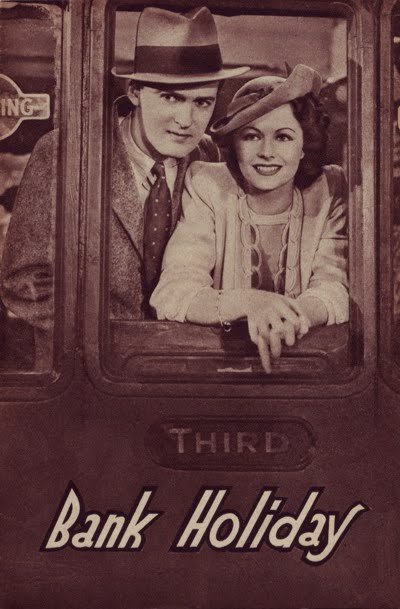
Itโ€™s one of those days. I am reaching into my box of memorabilia, building paper bridges between the now and then. As I turn away from this little blue boxโ€”and from the scanner that transforms a printed image into a digital oneโ€”my eye catches another image, a framed poster on the wall of my study. And, once again, I become carried away, absorbed in the thoughts these two collectorโ€™s itemsโ€”one British, one Americanโ€”help to conjure, rather than in the appreciation of either. Besides, I have since retreated into our backyard to bask in the sunlight of a glorious spring afternoon. Thereโ€™s time for all that, today. It is, after all, a holiday. Just what kind, though, I begin to wonder and allow the question to irritate me like ants running away with the picnic.

Now, you might say that a holiday by any other name smells just as sweet; but, if you ask me, โ€œBank Holidayโ€ stinks. That is what the British insist on callingโ€”or at any rate, are reduced to callingโ€”some of their red letter days, including this one. Granted, considering the state of our financial system or individual finances, we might well be sitting round in a brown study, ruminating on our latter days in the red; but arenโ€™t there any cultural cornerstones, historical milestones, or ancestral gravestones we ought to have our mindโ€™s eye on?

We receive little encouragement from the dates as marked in our calendars. Here in Britain, weโ€™ve got May Bank Holidays, and Spring Bank Holidays, and August Bank Holidaysโ€”and none of us are exactly laughing all the way to the nearest money-lending institution. Okay, we are not being pestered with notices demanding our immediate attention, but we donโ€™t express our gratitude for not getting any bills by calling this a Post Office Holiday.

Not that all holidays are mere occasions for slipping into something comfortable or taking it off again at the beach; but we wouldnโ€™t go so far, surely, as to declare Black Tuesday a day of observance by marking the anniversary of Wall Street laying an egg with a leisurely pancake breakfast. Sure, the banks are closed today; but is that what we are asked to celebrate?

How fortunate are those across the pond who can do as they please on Memorial Day. They may be decorating cakes instead of graves, but at least there is enough of a clue in the name to invite contemplation, encourage research or inspire gratitude. There is far more of a chance of drawing a blank if youโ€™ve got nothing but โ€œBankโ€ to draw on. If no consensus can be arrived at, if no joining of hands or thoughts is to be imposed, let any Bank Holiday become a blank oneโ€”and place on each celebrant the burden of making it meaningful . . .

Cinegram No. 14 (Because You Canโ€™t Rely on Air Mail These Days)

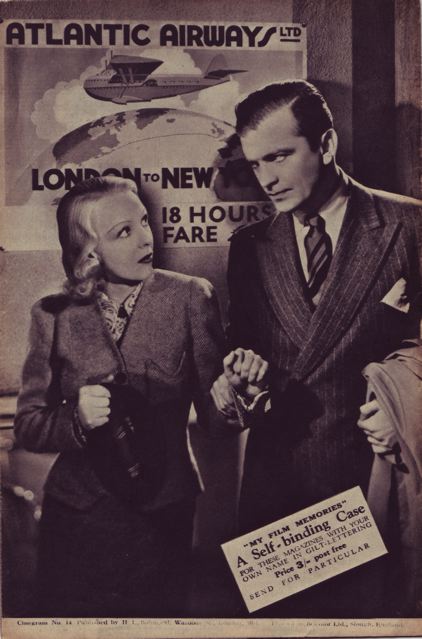
I am taking the passing ash cloud as an occasion to dust off my collection of Cinegrams, a late-1930s to early 1940s series of British movie programs I recently set out to acquire. Immemorabilia, you might call them. Not quite first-rate souvenirs of, for the most part, less-than-classic films like The Return of the Scarlet Pimpernel, or worse. These cheaply printed ephemera were designedโ€”quite pointlessly, it seemsโ€”to encourage folks to keep alive their memories of something that may well have been forgettable to begin with. Sure, why not pay a little extra for a few stills of a picture that wasnโ€™t much to look at while in motion? And why not pay still more to keep your โ€œFilm Memoriesโ€ in a self-binding case, with your name on itโ€” in gilt-lettering, no less? That was the offer made to British moviegoers anno 1937, who purchased Cinegram No. 14 to prevent Non-Stop New York from seeming all too fleeting.

Perhaps, I am confusing โ€œforgettableโ€ with โ€œforgotten.โ€ Non-Stop New York which is readily available online, has a lot going for it, quite apart from being a fast-paced romantic vehicle for John Loder and Anna Lee, helmed by Leeโ€™s husband, Robert Stevenson, who would go on to make Flubber and Mary Poppins soar at the box office.

Efficiently if somewhat routinely lensed, this Gaumont-British production might have served as a project for the companyโ€™s most notable director, Alfred Hitchcock. Substituting airlanes for tracks, itโ€™s the The Lady Vanishes in the realm of the birds. Except that, in this case, the ladyโ€”the young and innocent girl who knew too muchโ€”refuses to vanish, which makes the man whose secret she knows all the more eager to see to her disappearance.

The main attraction of Non-Stop New York is not its contrived plot, its charming leads or its rich assortment of goons and ganefs. Rather, it is the filmโ€™s setting, the futuristic plane aboard which this pursuit reaches its thrilling climax. It is a large, multi-story aircraft resembling a luxury linerโ€”right down to the outdoor deck on which windblown lovers kiss by moonlight and villains go for the kill. Thereโ€™s plenty of room for some old-fashioned hide and seek, as passengers are not crowded together but retreat into the privacy of their own cabins. Quite an extravagance, this, considering that the imagined travel time of eighteen hours hardly warrants accommodations fit for on a sea voyage, which mode of transatlantic crossing yet served as a point of reference to the production designers who conceived the vessel.

It took Christopher Columbus ten weeks to cross the Atlantic Ocean, Cinegram No. 14 educated its readers. โ€œToday, ten hours seem to be sufficient to complete the same journey.โ€ Set in the seemingly foreseeable future of 1939, Non-Stop New York

anticipates the regular air service which before long [that is, after the end of the wartime air raids that, even in the age of Guernica, purveyors of escapist entertainment did not trouble themselves to predict] will be flying regularly across the North Atlantic and carrying passengers overnight between London and New York. Already survey flights are being carried out by Imperial Airways and Pan American Airways and these flights have shown that such a service is not longer a dream of the fiction writer, but something which to-morrow will be as commonplace as the many daily services of to-day between London and Paris.

The first experimental flights were made in the Summer of 1937. The British company made a series of flights with two of the Empire class flying boats, the โ€œCaledoniaโ€ and the โ€œCambria.โ€ The terminal points of these flights were Southampton and New York and the route followed was by way of Foynes, on the west coast of Ireland across the Atlantic, 1992 miles, to Botwood, Newfoundland. From there the flying boats went to New York by way of Montreal.

In all, 5 two-way crossings were made and these were carried out without incident and with such certainty that they reached the other side of the Atlantic within a few minutes of schedule.

On the last eastward journey the โ€œCambriaโ€ set up an all time record, making the 1992 miles in 10 hrs. 33 min. or at an average speed of nearly 190 m.p.h.

These flying boats will not be used for the Atlantic service when passengers are carried but it is probably that flying boats of the same type, but with greater power and greater ranger will be used. These flying boats may have a cruising speed of 250 m.p.h., and carry 20-30 passengers in a degree of comfort equal to that of the present luxury liner.

With its promise of a jet-setting tomorrow, a title like Non-Stop New York must have sounded thrilling to picture-goers anno 1937, albeit not nearly as thrilling as such a promise is to any present-day passenger awaiting the all-clear for departure at one of Britainโ€™s dormant airportsโ€”among them a friend of ours whose plans for a birthday celebration in Gotham are being pulverized by the largest export of a cash-strapped nation to whom volcanic activity appears to be a natural substitute for banking.

Movies like Non-Stop New York and collectibles such as Cinegram No. 14 remind me that, in living memory, long distance air travel was rare and special indeed. They remind me as well of one momentous April morning in 1985โ€”some quarter century agoโ€”when my younger self first boarded a transatlantic flight to the exhilarating and treacherous metropolis that was New York City. Back then, we still applauded the captain who returned us safely to earth; nowadays, we merely moan when we are grounded for whatever strikes us non-stoppers as too long . . .

Listen, Learn, and Log

I am hardly the go-getter type. My goals are even more modest than my needs, which is to say that a full and fulfilling present day matters more to me than any future success for the prediction and preparation of which I lack the foresight. Among my few ambitions is it to amass volumes enough to have one of the most comprehensive private libraries devoted to turning the volume upโ€”to American and, to a lesser degree, British radio and to the dramatics of the air in particular: published scripts, contemporary criticism, and latter-day assessments of the so-called โ€œgolden ageโ€ of radio.

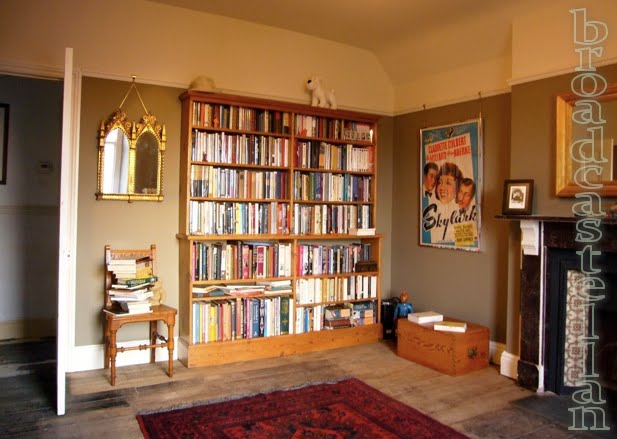
Until now, matters were complicated by the fact that I never had my own shelves on which to store such records of radioโ€™s past. Well, Iโ€™ve got the bookshelves set up in my room at last. Nearly five months after moving into our new old house, I once again enjoy ready access to the appreciable if generally unappreciated literature of the air.

Back in November 1923, a critic of Radio Broadcast magazine observed that since libraries and radio have similar aims, it was

surprising that they have not cooperated nearly as fully as they might. Much of the radio broadcasting is instructive and entertaining; and so is it with the books on the library shelves. Radio is ever improving the musical and literary tastes of thousands of listeners-in, who, having their interest aroused, may find increased pleasure from music or literatureโ€”and the libraries can supply the latter.

Some twenty years later, what there was of radio literature hardly reflected the programs enjoyed by millions on radio. Calling it a โ€œsad observation,โ€ Sherman H. Dryer remarked in Radio in Wartime (1942) that

in the twenty-five years of its life few serious or critical books have been written about radio. The literature of radio is divided into two main parts: anthologies of โ€œbestโ€ broadcasts, or vocational textsโ€”How to Write for Radio, Radio Direction, How to Become an Announcer.

To these two kinds of books, Dryerโ€”among a few others like Robert Landry, Francis Chase, and Charles Siepmannโ€”added a small number of critical studies on radio broadcasting; and, two decades later, there emerged a market for nostalgia and history.

As Max J. Herzberg put it in Radio and English Teaching (1941), radio โ€œneed not be a substitute for the library; it can result in more and not less frequent use of books.โ€

I find that, tuning in, I not only turn to books on radio, but go in search of related material, original sources and histories. In other words, radio does not merely compel me to set up a shelf for books devoted to the subject; it continues to educate me about Western culture, the histories in which it dealt and out of which it arose. Looking at the faces of long forgotten performers and reading about their once famous acts tells me a lot about the boundaries and hazards of any pursuit of happiness defined by popularity and the statistical apparatus relied upon for its measurement.

The by now unpopular culture of radio dramatics has proven an academic and professional cul-de-sac for me; but my interest in and commitment to its study has remained nearly undiminished. As I said, I am not very ambitiousโ€”which is precisely why I feel free to continue the pursuit of what doesnโ€™t seem to get me anywhere . . .

This, by the way, is my 701st entry into the broadcastellan journal.

They Also Sell Books: W-WOW! at Partners & Crime

Legend has it that, when asked what Cecil B. DeMille was doing for a living, his five-year-old grand-daughter replied: โ€œHe sells soap.โ€ Back then, in 1944, the famous Hollywood director-producer was known to million of Americans as host and nominal producer of the Lux Radio Theater, from the squeaky clean boards of which venue he was heard slipping (or forcefully squeezing) many a none-too-subtle reference to the sponsorโ€™s products into the behind-the-scenes addresses and rehearsed chats with Tinseltownโ€™s luminaries, lines scripted for him by unsung writers selling out in the business of making radio sell.

No doubt, the program generated sizeable business for Lever Brothers; otherwise, the theatrical spin cycle conceived to bang the drum for those Lads of the Lather would not have stayed afloat for two decades, much to the delight of the great (and only proverbially) unwashed. For all its entertainment value, commercial radio was designed to hawk, peddle and tout; and although the spiel heard between the acts of wireless theatricals like Lux has long been superseded by the show and sell of television and the Internet, old radio programs still pay off, no matter how freely they are now shared on the web. In a manner of speaking, they still sell, albeit on a far smaller and downright intimate scale.

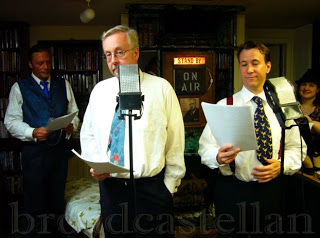
Take W-WOW! Radio. Now in its fourteenth season, the opening of which I attended last month, the W-WOW! Mystery Hour can be spentโ€”heard and seenโ€”on the first Saturday of every month (July and August excepting) from a glorified store room at the back of one of the few remaining independent and specialty booksellers in Manhattan: Partners & Crime down on Greenwich Avenue in the West Village. The commercials recited by the cast are by now the stuff of nostalgia, hilarity, and contention (“In a coast-to-coast test of hundreds of people who smoked only Camels for thirty days, noted throat specialists noted not one single case of throat irritation due to smoking Camels“); but the readings continue to draw prospective customers like myself.

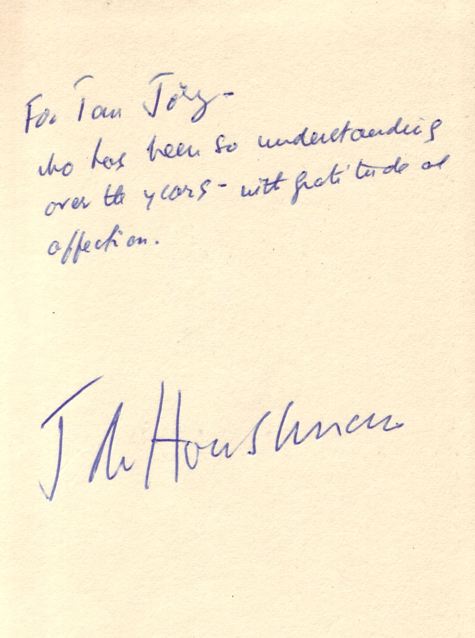
Whenever I am in town, I make a point of making a tour of those stores, even though said tour is getting shorter and more sentimental every year. There are rewards, nonetheless. Two of my latest acquisitions, Susan Wareโ€™s 2005 โ€œradio biographyโ€ of the shrewdly if winningly commercial Mary Margaret McBride and John Housemanโ€™s 1972 autobiography Run-through (signed by the author, no less) were sitting on the shelves of Mercer Street Books (pictured) and brought home for about $8 apiece. The latter volume is likely to be of interest to anyone attending the W-WOW! production scheduled for this Saturday, 3 October, when the W-WOW! players are presenting the Mercury Theatre on the Air version of Dracula as adapted by none other than John Houseman.

As Houseman puts it, the Mercuryโ€™s โ€œDraculaโ€โ€”the seriesโ€™s inaugural broadcastโ€”is โ€œnot the corrupt movie version but the original Bram Stoker novel in its full Gothic horror.โ€ Indeed, Housemanโ€™s outstanding adaptation is a challenge worthy of W-WOW!โ€™s voice talent and just the kind of material special effects artist DeLisa White (pictured above, on the right and to the back of those she so ably backs) will sink her teeth into, or whatever sharp and blunt instruments she has at her disposal to make your hair stand on end.

Rather more run-of-the-mill were the scripts chosen for W-WOW!โ€™s September production, which, regrettably, was devoid of vamps. You know, those double-crossing, tough-talking dames that enliven tongue-in-cheek thrillers like The Saint (โ€œLadies Never Lie . . . Muchโ€ or โ€œThe Alive Dead Husband,โ€ 7 January 1951) and Richard Diamond (โ€œThe Butcher Shop Case,โ€ 7 March 1951 and 9 March 1952), a story penned by Blake “Pink Panther” Edwards and involving a protection racket. The former opened encouragingly, with a wife pretending to have killed a husband who turned out to be yet living, if not for long; but, as it turned out, the dame had less lines than any of the ladies currently in prime time, or any other time for that matter. Sure, crime paid on the air; but sex, or any vague promise of same, sells even better.

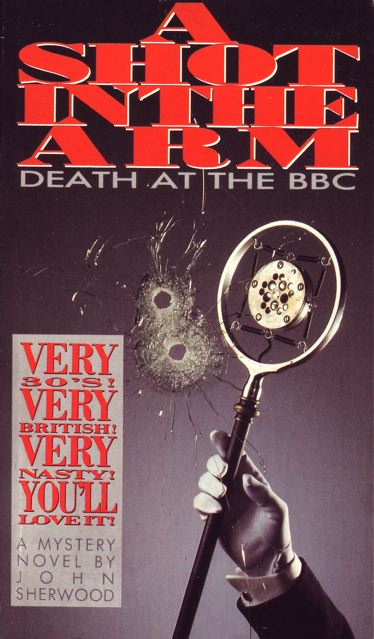
That said, I still walked out of Partners & Crime with a book in my hand. As I passed through the store on my way out, an out-of-print copy of A Shot in the Arm caught my eye and refused to let go. Subtitled โ€œDeath at the BBC,โ€ John Sherwoodโ€™s 1982 mystery novel, set in Broadcasting House anno 1937 and featuring Lord Reith, the dictatorial Baron who ran the place, is just the kind of stuff I am so readily sold on, as I am on browsing in whatever bookstores are still standing offlineโ€”if only to give those who are still in the business of vending rare volumes a much-deserved shot in the open and outstretched arm.

Related recordings
“Ladies Never Lie . . . Much,” The Saint (7 January 1951)
“The Butcher Case,” Richard Diamond (7 January 1950)
“The Butcher Case,” Richard Diamond (9 March 1951)

โ€œ. . . reduced, blended, modernisedโ€: The Wireless Reconstitution of Printed Matter

Nearly two centuries ago, young Rebecca Sharp marked her entrance into the world by hurling a book out of a coach window. That book, reluctantly gifted to her by the proprietress of Miss Pinkertonโ€™s academy for young ladies, was Johnsonโ€™s dictionary, a volume for which Ms. Sharp had little use, given that she was rarely at a loss for words. By the time her story became known, in 1847, words in print had become a rather less precious commodity, especially after the British stamp tax was abolished in 1835, which, in turn, made the emergence of the penny press possible. Publications were becoming more frequentโ€”and decidedly more frivolous.

Gone were the days when a teenager like Mary Jones, whose story I encountered on a trip to the Welsh town of Bala last weekend, walked twenty-five miles, barefooted, for the privilege of owning a Bible. Sure, I enjoy the occasional daytrip to Hay-on-Wye, the renowned โ€œTown of Booksโ€ near the English border where, earlier this month, I snatched up a copy of the BBCโ€™s 1952 Year Book (pictured). Still, ever since the time of the great Victorian novelists, the reading public has been walking no further than the local lending library or wherever periodicals were sold to catch up on the latest fictions and follow the exploits of heroines like Becky Sharp in monthly installments.

In Victorian times, the demand for stories was so great that poorly paid writers were expected to churn them out with ever greater rapidity, which left those associated with the literary trade to ponder new ways of meeting the supply. In Gissingโ€™s New Grub Street (1891), a young woman assisting her scholarly papa is startled by an

advertisement in the newspaper, headed โ€œLiterary Machineโ€; had it then been invented at last, some automaton to [. . .] turn out books and articles? Alas! The machine was only one for holding volumes conveniently, that the work of literary manufacture might be physically lightened. But surely before long some Edison would make the true automaton; the problem must be comparatively such a simple one. Only to throw in a given number of old books, and have them reduced, blended, modernised into a single one for todayโ€™s consumption.

Barbara Cartland notwithstanding, such a โ€œtrue automatonโ€ has not yet hit the market; but the recycling of old stories for a modern audience had already become a veritable industry by the beginning of the second quarter of the 20th century, during which โ€œgolden ageโ€ the wireless served as both home theater and ersatz library for the entertainment and distraction craving multitudes.

A medium ofโ€”and only potentially forโ€”modernity, radio has always culled much of its material from the past, โ€œReturn with us nowโ€ being one of the phrases most associated with aural storytelling. It is a phenomenon that led me to write my doctoral study Etherized Victorians, in which I relate the demise of American radio dramatics to the failure to establish or encourage its own, autochthonous, that is, strictly aural life form.

Sure, the works of Victorian authors are in the public domain; as such, they are cheap, plentiful, and, which is convenient as well, fairly innocuous. And yet, for reasons other than economics, they strike us as radiogenic. Like the train whistle of the horse-drawn carriage, they seem to be the very stuff of radioโ€”a medium that was quaint and antiquated from the onset, when television was announced as being โ€œjust around the corner.โ€

Perhaps, the followers of Becky Sharp should not toss out their books yet; as American radio playwright Robert Lewis Shayon pointed out, the business of adaptation is fraught with โ€œartistic problems and dangers.โ€ He argued that he โ€œwould rather be briefed on a novelโ€™s outline, told something about its untransferable qualities, and have one scene accurately and fully done than be given a fast, ragged, frustrating whirl down plot-skeleton alley.โ€

It was precisely for this circumscribed path, though, that American handbooks like James Whippleโ€™s How to Write for Radio (1938) or Josephina Niggliโ€™s Pointers on Radio Writing (1946) prepared prospective adapters, reminding them that, for the sake of action, they needed to โ€œretain just sufficient characters and situations to present the skeleton plotโ€ and that they could not โ€œafford to waste even thirty seconds on beautiful descriptive passages.โ€

As I pointed out in Etherized, broadcast writers were advised to โ€œfree [themselves] first from the enchantment of the authorโ€™s styleโ€ and to โ€œoutline the action from memory.โ€ Illustrating the technique, Niggli reduced Jane Eyreโ€”one of the most frequently radio-readied narrativesโ€”to a number of plot points, โ€œbald statementsโ€ designed to โ€œeliminate the non-essential.โ€ Only the dialogue of the original text was to be restored whenever possible, although here, too, paraphrases were generally required to clarify action or to shorten scenes. Indeed, as Waldo Abbotโ€™s Handbook of Broadcasting (1941) recommended, dialogue had to be โ€œinvented to take care of essential description.โ€

To this day, radio dramatics in Britain, where non-visual broadcasting has remained a viable means of telling stories, the BBC relies on 19th-century classics to fill much of its schedule. The detective stories of Conan Doyle aside, BBC Radio 7 has just presented adaptations of Thackerayโ€™s Vanity Fair (1847-48), featuring the aforementioned Ms. Sharp, and currently reruns Trollope’s Barchester Chronicles (1855-67). The skeletons are rather more complete, though, as both novels were radio-dramatized in twenty installments, and, in the case of Trollopeโ€™s six-novel series, in hour-long parts.

BBC Radio 4, meanwhile, has recently aired serializations of Trollope’s Orley Farm (1862), Wilkie Collinsโ€™s Armadale (1866) and Mary Elizabeth Braddonโ€™s Lady Audleyโ€™s Secret (1862). Next week, it is presenting both Charlotte Brontรซโ€™s Villette and Elizabeth Gaskellโ€™s Ruth (both 1853), the former in ten fifteen minute chapters, the latter in three hour-long parts.

Radio playwright True Boardman once complained that adaptations for the aural medium bear as close a relation to the original as โ€œpowdered milk does to the stuff that comes out of cows.โ€ They are culture reconstituted. โ€œ[R]educed, blended, [and] modernisedโ€œ, they donโ€™t get a chance to curdle . . .

Note: Etherised Victorians was itself ‘reduced and blended,’ and published as Immaterial Culture in 2013.


Related writings (on Victorian literature, culture and their recycling)
โ€œHattie Tatty Coram Girl: A Casting Note on the BBCโ€™s Little Dorritโ€
โ€œValentine Vox Pop; or, Revisiting the Un-Classicsโ€
“Curtains Up and ‘Down the Wires'”
Eyrebrushing: The BBC’s Dull New Copy of Charlotte Brontรซ’s Bold Portrait”

So to Speke

When not at work on our new old houseโ€”where the floorboards are up in anticipation of central heatingโ€”we are on the road and down narrow country lanes to get our calloused hands on the pieces of antique furniture that we acquired, in 21st-century style, by way of online auction. In order to create the illusion that we are getting out of the house, rather than just something into it, and to put our own restoration project into a perspective from which it looks more dollhouse than madhouse, we make stopovers at nearby National Trust properties like Chirk Castle or Speke Hall.

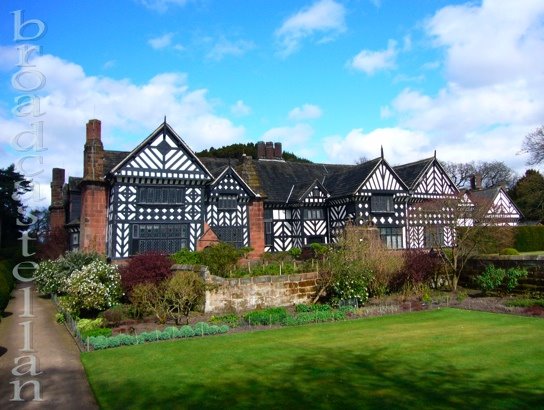
The latter (pictured here) is a Tudor mansion that, like some superannuated craft, sits sidelined along Liverpoolโ€™s John Lennon Airport, formerly known as RAF Speke. The architecture of the Hall, from the openings under the eaves that allowed those within to spy on the potentially hostile droppers-in without to the hole into which a Catholic priest could be lowered to escape Protestant persecution, bespeaks a history of keeping mum.

Situated though it is far from Speke, and being fictional besides, what came to mind was Audley Court, a mystery house with a Tudor past and Victorian interior that served as the setting of Mary Elizabeth Braddonโ€™s sensational crime novel Lady Audleyโ€™s Secret. The hugely popular thriller was first serialized beginning in 1861 and subsequently adapted for the stage. Resuscitated for a ten-part serial currently aired on BBC Radio 4, the eponymous โ€œladyโ€โ€”a gold digger, bigamist, and arsonist whose ambitions are famously diagnosed as the mark of โ€œlatent insanityโ€โ€”can now be eavesdropped on as she, sounding rather more demure than she appeared to my mindโ€™s ear when reading the novel, attempts to keep up appearances, even if it means having to make her first husband, a gold digger in his own right, disappear down a well.

As if the house, Audley Court, did not have a checkered past of its ownโ€”

a house in which you incontinently lost yourself if ever you were so rash as to attempt to penetrate its mysteries alone; a house in which no one room had any sympathy with another, every chamber running off at a tangent into an inner chamber, and through that down some narrow staircase leading to a door which, in its turn, led back into that very part of the house from which you thought yourself the furthest; a house that could never have been planned by any mortal architect, but must have been the handiwork of that good old builder, Time, who, adding a room one year, and knocking down a room another year, [ … ] had contrived, in some eleven centuries, to run up such a mansion as was not elsewhere to be met with throughout the county […].

โ€œOf course,โ€ the narrator insists,

in such a house there were secret chambers; the little daughter of the present owner, Sir Michael Audley, had fallen by accident upon the discovery of one. ย A board had rattled under her feet in the great nursery where she played, and on attention being drawn to it, it was found to be loose, and so removed, revealed a ladder, leading to a hiding-place between the floor of the nursery and the ceiling of the room belowโ€”a hiding-place so small that he who had hid there must have crouched on his hands and knees or lain at full length, and yet large enough to contain a quaint old carved oak chest, half filled with priests’ vestments, which had been hidden away, no doubt, in those cruel days when the life of a man was in danger if he was discovered to have harbored a Roman Catholic priest, or to have mass said in his house.

Loose floorboards weโ€™ve got plenty in our own domicile, and room enough for a holy manhole below. It being a late-Victorian townhouse, though, the hidden story we laid bare is that of the upstairs-downstairs variety. At the back, in the part of the house where the servants labored and lived, there once was a separate staircase, long since dismantled. It was by way of those steep steps that the maid, having performed her chores out of the familyโ€™s sight and earshot, withdrew, latently insane or otherwise, into the modest quarters allotted to her.

I wonder whether she read Lady Audleyโ€™s Secret, if indeed she found time to read at all, and whether she read it as a cautionary tale or an inspirational oneโ€”as the story of a woman who dared to rewrite her own destiny:

No more dependency, no more drudgery, no more humiliations,โ€ Lucy exclaimed secretly, โ€œevery trace of the old life melted awayโ€”every clue to identity buried and forgottenโ€”except […]

… that wedding ring, wrapped in paper.  Itโ€™s enough to make a priest turn in his hole.

Together . . . to Gaza? The Media and the Worthy Cause

The British Broadcasting Corporation has had its share of problems lately, what with its use of licensee fees to indulge celebrity clowns in their juvenile follies.  Now, the BBC, which is a non-profit public service broadcaster established by Royal Charter, is coming under attack for what the paying multitudes do not get to see and hear, specifically for its refusal to broadcast a Disasters Emergency Committee appeal for aid to Gaza.  According to the BBC, the decision was made to โ€œavoid any risk of compromising public confidence in the BBC’s impartiality in the context of an ongoing news story.โ€  To be sure, if the story were not โ€œongoing,โ€ the need for financial support could hardly be argued to be quite as pressing.

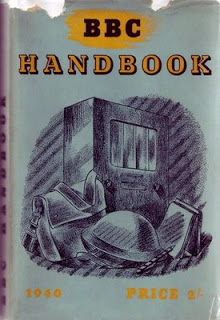
In its long history, the BBC has often made its facilities available for the making of appeals and thereby assisted in the raising of funds for causes deemed worthy by those who approached the microphone for that purpose.  Indeed, BBC radio used to schedule weekly โ€œGood Causeโ€ broadcasts to create or increase public awareness of crises big and small.  Listener pledges were duly recorded in the annual BBC Handbook.

From the 1940 edition I glean, for instance, that on this day, 29 January, in 1939, two โ€œscholarsโ€ raised the amount of ยฃ1,310 for a London orphanage.  Later that year, an โ€œunknown crippleโ€ raised ยฃ768, while singer-comedienne Gracie Fieldsโ€™s speech on behalf of the Manchester Royal Infirmary brought in ยฃ2,315.  The pleas were not all in the name of infants and invalids, either.  The Student Movement House generated funds by using BBC microphones, as did the Hedingham Scout Training Scheme.

While money for Gaza remains unraised, the decision not to get involved in the conflict raises questions as to the role of the BBC, its ethics, and its ostensible partiality.  Just what constitutes a โ€œworthyโ€ cause? Does the support for the civilian casualties of war signal an endorsement of the government of the nation at war? Is it possible to separate humanitarian aid from politics?

It strikes me that the attempt to staying well out of it is going to influence history as much as it would to make airtime available for an appeal. In other words, the saving of lives need not be hindered by the pledged commitment to report news rather than make it.

Impartiality and service in the public interest were principles to which the US networks were expected to adhere as well, however different their operations were from those of the BBC.  In 1941, the FCC prohibited a station or network from speaking โ€œin its own person,โ€ from editorializing, e.g. urging voters to support a particular Presidential candidate; it ruled that โ€œthe broadcaster cannot be an advocateโ€; but this did not mean that airtime, which could be bought to advertise wares and services, could not be purchased as well for the promotion of ideas, ideals, and ideologies.

The broadcasting of Franklin D. Rooseveltโ€™s fireside chats or his public addresses on behalf of the March of Dimes and the War Loan Drives did not imply the broadcasters’ favoring of the man or the cause.

On this day in 1944, all four major networks allotted time for the special America Salutes the Presidentโ€™s Birthday. ย Never mind that it was not even FDRโ€™s birthday until a day later. The cause was the fight against infantile paralysis; but that did not prevent Bob Hope from making a few jokes at the expense of the Republicans, who, he quipped, had all โ€œmailed their dimes to President Roosevelt in Washington. ย Itโ€™s the only chance they get to see any change in the White House.โ€

A little change can bring about big changes; but, as a result of the BBCโ€™s position on โ€œimpartiality,โ€ much of that change seems to remain in the pockets of the public it presumes to inform rather than influence.


Related writings

Go Tell Auntie: Listener Complaints Create Drama at BBC
Election Day Special: Could This Hollywood Heavy Push You to the Polls?

Filling in the Blanks

Iโ€™ve had quite a few โ€œsilent nightsโ€ here at broadcastellan lately (to use an old broadcasting term); and yet, I have been preparing all along for the weeks and months to come, those dark and cheerless days of mid-winter when keeping up with the out-of-date can be a real comfort. Not that the conditions here in our cottage have been altogether favorable to such pursuits, given that we had to deal with a number of blackouts and five days without heating oil, during which the โ€œroom temperatureโ€ (a phrase stricken from my active vocabulary henceforth) dropped below 40F. Not even a swig of brandy to warm me. I have given up swigging for whatever duration I deem fit after imbibing rather too copiously during the New Yearโ€™s Eve celebrations down in Bristol.

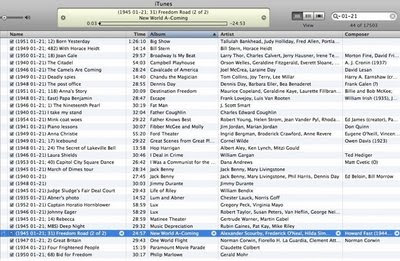
Those are not the blanks (let alone the ones in my short-term memory) that I intend to fill here. The gaps in question are in my iTunes library, which currently contains some 17500 files ranging from the recent BBC adaptation of Anthony Trollopeโ€™s Orley Farm to World War I recordings. The vast majority of these files are American radio programs. They are readily gathered these days; but the work involved in cataloguing them for ready retrieval can be problematic and time consuming. For now, I am not lacking time; at least not until our long planned and much delayed move into town, real estate crisis be damned. Anyway . . .

For the past few weeks, I have been filling in each of the fields as shown above, verifying dates, checking the names of performers, comparing the sound quality of duplicate files, and researching the source materials for adaptations. It took a while to arrive at a convenient system. When I started the project anew (after the crash of an earlier Mac), I made the mistake of entering the date after the title of the broadcast (entries in lower case denoting descriptive ones).

As a result, I could not readily listen to a serial in the order in which its chapters were presented. I would have been at a loss to follow and follow up todayโ€™s installment of Chandu the Magician (1949), as if having missing out on the chance of getting my hands on Chandu’s “Assyrian money-changer” by sending in a White King toilet soap box top sixty years ago were not difficult enough to bear.

The effort should pay off, though, as it allows me to select more carefully the programs worth my time. On this day, 21 January, the highlights, to me, are the second part of โ€œFreedom Roadโ€ (1945), a dramatization of Howard Fast’s historical novel about the post-Civil War era (currently in my online library); Norman Corwinโ€™s examination of life in post-World War II Britain on the previously discussed One World Flight (1947), a documentary featuring an introduction by Fiorello La Guardia and a brief commentary by author-playwright-broadcaster J. B. Priestley pop-psychologizing the causes of human conflict; and the aforementioned debut of The Fat Man (1946). Not that Iโ€™d turn a deaf ear to Ingrid Bergman in Anna Christie as produced by the Ford Theater (1949) or to the Campbell Playhouse presentation of A. J. Croninโ€™s Citadel (1940).

And then there is another address by Father Coughlin (1940), about whose Shrine a fellow web-journalist sporting Canary Feathers in his cap had much to say recently in his personal reminiscence.

Listing, though, is to me almost always less satisfying than listening; it is also far less difficult and engaging. Listening often results in research, in comparing adaptation to source, in reading up on the performers, or in finding contemporary reviews. About the 21 January 1946 premiere of I Deal in Crime, for instance, broadcast critic Jack Gould complained that it “creeps along at a snailโ€™s pace” and that Ted Hediger’s monologue-crowded narrative style was “not helped” by William Gargan’s “rather lackadaisical” delivery.

While he did not have instant access to thousands of such programs, Gould nevertheless noted the sameness of such nominal thrillers and their “stock situations.” To him, Paul Whiteman’s Forever Tops was the “real lift” of the evening’s new offerings on ABC, a reference that compels me to find a recording of that broadcast . . . .

In this way I spend many an hour before once again sending another missive into the niche of space I, as keeper of past broadcasts, have grandiloquently styled broadcastellan.