Beyond M: Douglas Sirk’s Zu Neuen Ufern (1937)

No, I don’t mean “N”—even though “N” for Nazis would be a good way to begin any survey of German films produced in the years following the release of Fritz Lang’s classic thriller. The aforementioned Blaue Engel aside, M is perhaps the only German film of the 1930s and ‘40s with which cinéasts the world over can be expected to be familiar. That much more attention is paid to German silent films than to any talking picture produced in Germany before Fassbinder achieved international success is owing, to some degree, to the Teutonic tongue and the aversion Americans have to dubbing and subtitling.

Another reason for the relative obscurity of classic German cinema is that the US set the standard for commercially viable motion pictures after the silent era came to an end; and few international films could rival the production values to which moviegoers growing up with MGM or Paramount spectacles were accustomed.

Politics, of course, are another key factor. Fassbinder’s 1970s melodramas no doubt appealed to many disenchanted Americans due to their working-class, liberal tendencies, which for an intriguing alternative to the newly emerging, vacuous blockbusters that carried on the tradition of formulaic filmmaking after the production code had been retired in the mid-1960s.

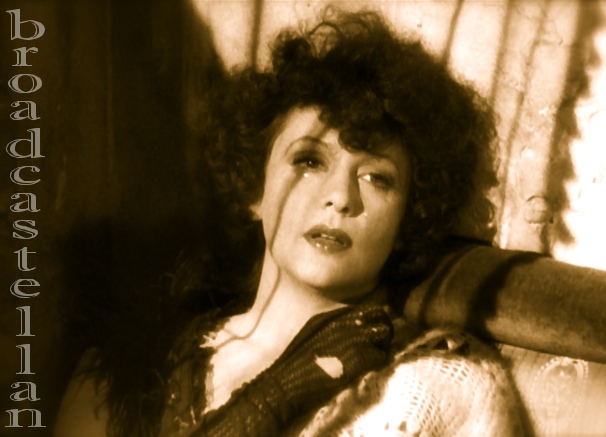
Fassbinder and Werner Herzog aside, what happened between M and Das Boot (1980), the first truly popular German post-World War II film in the US? Or, to narrow it down to the period between the end of the Weimar Republic in 1933 and the establishment of the Federal Republic of Germany in 1949, what kinds of films were produced in Germany when the Reich lost most of its artistic talents to the United States? Over then next few months I am going to look at a number of German movies of that era, beginning with Zu Neuen Ufern (1937) starring the aforementioned Zarah Leander.

Zu Neuen Ufern (meaning “To New Shores”) is a costume drama directed and co-written (or, rather, adapted) by a filmmaker who would become one of Hollywood’s foremost melodramatists: Douglas Sirk (then working under his German name, Detlef Sierck), an artist admired and understood by Fassbinder, who not only emulated Sierck but made him relevant to a 70s audience.

When Zu Neuen Ufern was released in New York—in the German enclave of Yorkville—a New York Times reviewer remarked upon Sierck’s “smooth” direction of a movie full of “highly interesting scenes.” What makes the film most interesting today is not its smoothly plotted series of incidents but its brooding theme of lost liberty and constraint.

The film is set in early Victorian England and New South Wales; one is a prison of conventions, the other a penal colony. Leander’s character, the scandalous yet popular actress Gloria Vane, has taken the blame for a forgery committed by her financially desperate lover, Sir Albert Finsbury, and is sentenced to serve seven years in an Australian penitentiary.

The only way to shorten the sentence is for the prisoners to correct the shortage of women by accepting the marriage proposal of an eligible local. Gloria reluctantly condescends to being wed to an Australian farmer—only to back down and go in search of her lover, who fled to Australia prior to Gloria’s trial and has remained ignorant of her fate.

Having achieved success in the military, Albert is about to marry the governor’s daughter. Gloria, who has learned about the wedding, confesses to Albert that her love for him has been exhausted, upon which the hapless lover commits suicide . . . on the very day of the wedding the thought of which he can no longer endure. Finally recognizing the kindness of the farmer responsible for her release from the prison to which she, in a moment of utter despair, vainly attempts to regain entrance, Gloria marries her liberator.

High melodrama, in short, but admirably underplayed by the remarkably restraint Leander, who does not give her scenes the full treatment for which her compatriot, Garbo, became famous. Its sensational plot notwithstanding, Zu Neuen Ufern is neither cheap nor hysterical. Underscored by Leander’s songs—the haunting “Ich steh’ im Regen” and the sly “Yes, Sir!”—the theme is that of futile longing, of wishing to belong and not being able to exert one’s free will in the pursuit of happiness. It is the nightmare vision of an artist at odds with an increasingly restrictive regime. Sierck was looking for a new “Ufer” and an artistic world beyond UFA, the Nazi-sanctioned studio that produced his films.

To be ”vom anderen Ufer” is a colloquial German term for being beyond traditional marriage, for being set apart if not forcefully transported to the other side for one’s deviance from or defiance of the norm. Neither shore provides a safe harbor. Meanwhile, a common word used in Nazi Germany for aberration in art and nature, “entartet.” is uttered by an unsavory character complaining about the thinness of the female prisoners he has come to inspect in hopes of matrimony.

Sierck seems to adopt the language to pervert the perverse in the society from which the film is only superficially removed. Putting his heroine on display in court, on the stage, and behind bars, he constructs a theater of desire in which a valiant creature like Gloria Vane—who at one point is being pelted with rubbish for singing with feeling after she spots her lost love in the audience—struggles to keep her integrity at the loss of liberty and love.

Douglas Sirk eventually achieved great success on Western shores, yet was forced throughout his career to remain guarded in rendering what could, at best, be an Imitation of Life. In Zu Neuen Ufern, that imitation is the compromise Gloria finds in turning a marriage of convenience into an alternative for solitude, imprisonment, or death.

” … from hell to breakfast”: H. V. Kaltenborn Reporting

Listening selectively to US broadcast recordings of the 1930s, ‘40s, and ‘50s—the period often referred to as the radio’s golden age—I often neglect the kind of program that, during the late 1930s was fast gaining in significance as millions of Americans, many of whom were immigrants from Europe and Russia, were following reports from the Old World they had left. On this day, 22 September, in 1939, news commentator H. V. Kaltenborn kept CBS listeners abreast of the situation in Europe, paying special attention to the politically unstable kingdom of Romania.

As I learned yesterday, reading My Eyes Are in My Heart by aforementioned radio announcer Ted Husing, the King and Queen of Romania were savvy people not averse to selling out or forging lucrative alliances. On a tour of the United States back in 1926, Queen Maria of Romania, made a splash in the advertising world, agreeing to appear on radio, promote products, and be seen shopping in certain stores, all for the right sum of money.

Romania had one particularly valuable commodity, and the country, still neutral in the fall of 1939 was keen on keeping good relations with the nation that was about to swallow the continent. On 21 September, premier Armand Călinescu was assassinated by Romania’s fascist Iron Guard and Gheorghe Argeşanu, former Minister of War, was named as his successor. Here is how Kaltenborn (whose German title would have been Baron von Kaltenborn-Stachau, had he not been born and raised in Wisconsin) described the situation to American listeners:

That means that they are going to have a military government, as strong a government as King Carol [II] could possibly create, and it needs to be strong in view of the situation faced by imperiled Romania. Russian armies are menacing from the north.  German armies are menacing from the west.

While Russia was anxious to regain territory lost to Romania after Germany needed Romanian oil, Kaltenborn explained; and in trying not to offend either giant, Romania was on the brink of becoming another Poland.

Speaking rapidly and with animation, Kaltenborn occasionally stumbled in his commentary; he generally used notes rather than a prepared script, a technique that lent urgency to his reportage.

By 1939, he was a veteran, his beginnings in broadcasting dating back to 1922 (as you will learn listening to this Recollections tribute from 3 April 1957). As early as 1926, he had remarked upon “Radio’s Responsibility as a Molder of Public Opinion,” upon radio’s role as the Fifth Estate. “Public opinion is the king of America, and radio must assume a more conscious responsibility as democracy’s kingmaker,” he had cautioned.

World War II had only just begun; but news analysts like Kaltenborn were preparing the ignorant, the indifferent, and the isolationists for the inevitable, however tentative and cautious they were in their warnings:

I spent a good part of yesterday in Washington, I interviewed members of the Cabinet, outstanding leaders of the Senate, some of the most outspoken leaders of the opposition to lifting the embargo [against sending military aid to European countries facing threats from Germany and Russia, an embargo maintained as part the US Neutrality Act that FDR had urged Congress to repeal on 21 September], and got a picture of the atmosphere of Washington.  There is general apprehension in Washington that somehow, in some way, in spite of our not wanting it, that the country may be pushed towards war.

“Let those who seek to retain the present embargo position,” Kaltenborn insisted,

be wholly consistent and seek new legislation to cut off cloth and copper and meat and wheat and a thousand other articles from all the nations at war.  I seek a greater consistency through the repeal of the embargo provisions and a return to international law.

Kaltenborn then read a bulletin from the United Press, which stated that the isolationists in the Senate intended to fight the President on the embargo repeal “from hell to breakfast.”

Recordings of broadcast news and commentaries like this (which you may find in this invaluable Old Time Radio Researchers Group compilation), bring to life a time of fear and uncertainty without an awareness of which classic radio plays like “The War of the Worlds” cannot be fully understood.

To Hear, to Belong, to Submit: The Volksempfänger Turns 75

Nowadays, the concept of not having a voice is so alien to most of us Westerners that we fool ourselves into believing that what we are saying is of consequence, that because words are sent into the world they may also change it. We are too used by now to telecommune via phone or internet that the one-sidedness of broadcasting strikes us as downright barbaric. Why listen and be still when we can chatter and twitter, why take in a thought when we can put out a great deal of thoughtlessness with the greatest of ease? Publishing online or opining about world events on our slick mobiles, we are apt to believe that we have the world at our lips and by the ear. We are given gadgets—or, rather, we purchase them at considerable cost—that encourage us to exhaust ourselves in gossip while permitting others to check that our talk is indeed idle.

The talking disease is the talking cure of our modern society: the comforting illusion of having the power to say anything, anytime serves a system that, if our words mattered, would have to resort to more drastic acts of silencing.

Back in early 1930s Germany, Bertolt Brecht rejected radio as a distribution apparatus, a machine through which the few addressed the many, generally in the guise of speaking on their behalf. The German for broadcasting itself is misleading.  “Rundfunk” (literally, sparking around) hardly captures the one-sidedness of transmission. Brecht was looking forward to the day in which broadcasting could be a system of exchange, the kind of wireless telephony now available to us, at least technologically speaking.

Instead, German radio cut off all means of response other than compliance. It removed from the dial any voices that might utter second opinions. Effectively, it removed the dial itself by tuning the public to the official channel, and to that channel alone. Today, 18 August, the Volksempfänger turns 75. It was not simply the furniture of fascism.  It was its furnisher.

The Volksempfänger (the people’s receiver) fed Germans with whatever was in the interest of the Reich, that is, the governing body rather than anybody being thus governed. This privilege of being talked down to, of being shouted at and being shouted down, was offered at a discount—a discount that ended dissent in the bargain. Dictatorships, after all, depend on dictation.

Brecht had reason to be wary of broadcasting, a means of listening that precluded response. Does not the German language suggest that the German people are prone to being led by the ear? The German for “hearing” is “hören,” a related form of which is “horchen.” Both are the root of a great many words, and some weighty ones at that.

Take “gehören,” for instance, which means to belong, while “verhören” means to interrogate. “Hörig sein,” in turn, means “to be submissive,” and “gehorchen” means to obey. “Auf jemanden hören” means to pay heed. Remove the “jemand” (the anybody), and you have “aufhören,” which means to end, as free speech did when the Volksempfänger became cheaply available to anybody.

Today, we have the opportunity to receive as well as broadcast. We can take in hundreds of channels and put out millions of words. It calms many of us to the point of not speaking up. We can, therefore we don’t. A system that does not take the microphone away from us, that permits us to air our concerns, must be fair system. Why listen to anyone who tells us otherwise? Well, “Wer nicht hören will muss fühlen,” a German saying goes. Its meaning? Those who don’t listen shall feel the consequences.

Scotland Backyard

Right now, there are some 17,500 files in my iTunes library, ranging from 2 ½-hour productions of Shakespeare’s Cymbeline and Tom Stoppard’s Rock ‘n’ Roll to clips of speeches by Himmler and Goebbels.  I was a little concerned about those speeches when last I traveled to the US.  Just days prior to my departure, it was announced that, outrageous as it sounds, the US reserves the right to inspect any laptop and download its content for inspection.  What might those Nazi soundbytes have told some officious, uniformed ignoramus about myself, my politics, and my objectives once on American soil?

Anyway, I don’t even know just what kinds of trash or treasure are stored in my archive of sounds, given the vast number of recordings on my hard drive.  Most of these files I assume to have little or no connection to my everyday life here in Wales.  Much of it is commercial and, commercials aside, rather generic pulp.

Last weekend, though, while going through and editing those titles in my library, I came across a surname of a character in a thriller program that reminded me of a framed drawing on display in our living room.  How strange it seems, pulling the blinds in the morning (if I get up that early) to be looking at the image of an axe murder; but there he is, the notorious Buck Ruxton, right before my eyes whenever I glance to the left of our view of the Welsh hills.  And there he is again, in my virtual library, alongside Our Miss Brooks and The Lone Ranger.

The play in question was produced in the late 1940s or early 1950s as part of the syndicated series The Secrets of Scotland Yard.  It tells of an Indian physician who murdered his wife and chopped her into what the narrator describes as “two hundred all but unidentifiable parts.”  When last I was up in Lancaster, the English town where the not-so-good doctor lived and practiced, I even came across a pub named after him.

Now, we happen to have in our collection two of Eric Fraser’s original ink drawings for the “Case of the Jealous Doctor,” an article about the Ruxton case that was published in the 12 November 1949 issue of Leader Magazine.  The case itself dates back to 1935.  Fraser, as you can see, relished in the sensational character of the murder and the trial, but, unlike the producers of Secrets of Scotland Yard approached his commission with a wry, dark sense of humor.

Listening to the dramatization, I was amazed just how minutely the murder—its background, execution, cover-up and detection—was being reconstructed.  To be sure, it features one of the worst impersonations of an Indian, which is about as sensitive as the Leader article in its claim that, “behind” the Ruxton case “lay the failure of an Oriental to adapt himself to the Western world.”  In other respects, though, the writers and producers of the radio play seem determined to be as painstakingly accurate as possible.

I don’t suppose any American listener to Secrets (produced in Britain, but sold to international markets) would have appreciated this kind of attention to historical, regional detail.  Nor would I, had I not heard about the murder after being subjected to the image.  I would have assumed this radio play to be just another piece of sensational melodrama whose kernel of truth is drowned in a bucket of blood.

Most of all, though, I marvel at the link between the drawing and the recording.  Perhaps, I am still compartmentalizing my worlds too much, keeping apart what is distinct yet kindred.  I strikes me that, whatever subject you pursue, whatever object you admire, remote it may seem from your present surroundings (an apartness, perhaps, that attracted you to the subject to begin with), should not be assumed to have no relation to your everyday.

Sometimes it takes more of an effort to make the connection, and sometimes the efforts seem not worth your making; but every so often (as in this instance, or the time we went in search of a rock in a painting that now hangs in our bedroom or spotted that actress in a Hitchcock movie whose likeness we have on a piece of paper), you—or, I should say, I—get this thrill of being able to relate to an artifact in unexpected, even intimate ways.  It is then that I most appreciate the work of all those nameless or forgotten artists, writers, and researchers engaged in producing what you might dismiss as impersonal or workaday . . .

They [Got] What They Wanted: or, We Postpone This Wedding

Starting next week, I shall once again take in a few shows on and off Broadway. In the meantime, I do what millions of small-townspeople used to do during the 1930s, ‘40s, and early ‘50s—I listen to theater. Since the 1920, such makeshift-believe had been coming straight from the New York stage, whether as on-air promotion or educational features. Aside from installing an announcer in the wings to translate the goings-on and comings-in, it took the producers of broadcast theatricals some time to figure out what could work for an audience unable to follow the action with their own eyes. When that was accomplished, in came the censors to determine what could come to their ears. The censors were in the business of anticipating what could possibly offend a small minority of self-righteous and sententious tuners-in who would wield their mighty pen to complain, causing radio stations to dread having risked their license for the sake of the arts.

Few established playwrights attempted to re-write for radio. One who dared was Kenyon Nicholson, whose Barker, starring Walter Huston and Claudette Colbert delighted Broadway audiences back in 1927 (and radio audiences nearly a decade later). On this day, 19 May, in 1946, the Theatre Guild on the Air presented his version of Sidney Howard’s They Knew What They Wanted, with John Garfield as Joe, Leo Carillo as Tony, and June Havoc (pictured) as Amy.

Now, I have never seen a stage production of the Pulitzer Prize-winning They Knew; nor have I read it. Like most tuning in that evening, I would not have known about the tinkering that went on so that the story involving a doomed mail-order May-December romance could be delivered into American living rooms—were it not for Nicholson’s own account of what it entailed to get They Knew past the censors.

Nicholson got to share his experience adapting They Knew, one of his “favorite plays,” in a foreword to his script, which was published in an anthology of plays produced by the Theatre Guild on the Air. According to the inexperienced adapter, his “enthusiasm for the job lessened somewhat” as soon as he began to undertake the revision:

“Radio is understandably squeamish when it comes to matters of illicit love, cuckolded husbands, illegitimate babies, and such; and, as these taboo subjects are the very core of Mr. Howard’s plot, I realized what a ticklish job I had undertaken.”

After all, Messrs. Chase and Landry remind us, as the result of a single listener complaint about this adaptation of Eugene O’Neill’s Beyond the Horizon, which retained expressions like “hell” and “for god’s sake,” several NBC Blue affiliates were cited by the FCC and ordered to defend their decision to air such an offensive program. Nicholson was nonetheless determined “that there could be no compromise. Distortion of motivation as a concession to Mr. and Mrs. Grundy of the listening public would be a desecration of Mr. Howard’s fine play.”

It was with “fear and trembling” that Nicholson submitted his script. Recalling its reception, he expressed himself “surprised to find the only alteration suggested by the Censor was that Joe seduce Amy before her marriage to old Tony.”

The “only alteration”? Is not the “before” in the remark of the pregnant Amy—”I must have been crazy, that night before the wedding”—precisely the kind of “compromise” and “[d]istortion” the playwright determined not to accept? Nicholson dismisses this change altogether too nonchalantly as a “brave effort to whitewash the guilty pair!” Rather, it is the playwright’s whitewashing of his own guilt in this half-hearted confession about his none too “brave” deed.

The censors sure knew what they did not want those to hear who never knew what they did not get.

Secondary Childhood; or, Pandas to Ponder

Wili and Wali at Penrhyn Castle

It is not dotage but a momentary state of doting. Not the reliving of one’s own youth, however romanticized, but an imagining—or experiencing—of what it means to be very young while looking at objects or confronted with performances not created with me in mind. Not reverie, in short, but empathy. That is what I call “secondary childhood”—the state of being elsewhere in time and space, being young there while being here and quite otherwise. Listening to so-called old time radio programs produced in the US, for instance, I am keenly aware that I am entering worlds once inhabited by millions of children born in a country other than my German birthplace, past generations whose reflections are lost to us and, all too frequently, even to them—worlds the passage to which might have been blocked and obscured over time, but that might nonetheless be recoverable.

This recovery effort is quite distinct from the nostalgia of which I am so wary, the attempt of forcing oneself back through that passage and, failing to do so, creating one through which one may yet squeeze wistfully into a niche of one’s own making. It is quite another thing, to me, to set out to gain access to the worlds of other people’s childhoods, to tune in with one’s child’s mind open. I try not to make assumptions about audiences and their responses; instead, I try to become that audience by permitting myself to be played with so as to figure out how a game or play works.

Penrhyn Castle

As I have had previously occasion to share after a trip to Prague, I enjoy looking at old toys. Visiting the grand and rather austere neo-Norman castle of Penrhyn last weekend, on an excursion to the north of Wales, I was surprised to find, housed in that forbidding fantasy fortress, a corner devoted to a collection of dolls. Now, it seems perverse to be so drawn to the two stuffed animals pictured above, stuffed as Penrhyn is with exquisite furniture and impressive works of art (a Rembrandt, no less). I gather it was the bathos of it, the relief after having had greatness thrust upon me to be surprised by these unassuming and, by comparison, prematurely timeworn objects.

Turns out, the twin pandas in the straw hats are Wili and Wali, marionettes who co-starred in a long-running Welsh children’s program titled Lili Lon (1959-75). Upon returning to mid-Wales, where I now live, I immediately went online in search of the two; but, aside from a history of their creators, little can be found about them. I have become so accustomed to YouTubing the past that I was surprised to find no trace of Wili and Wali. No doubt, they still dwell in the memories of thousands who shared their adventures. I was not among them; yet, as is often the case when I come across titles of lost radio programs or fragments thereof, I imagine myself enjoying what is beyond my reach . . .

I Was a Communist for Tallulah Bankhead

Memento Park, Budapest

Radio has always promoted other media, despite the competition it faced from print and screen. To some degree, this led to its decline as a dramatic medium. Producers made eyes at the pictures, neglecting to develop techniques that would ensure radio’s future as a viable alternative to visual storytelling. Television had been around the corner virtually from the beginnings of broadcasting; even in the 1920s, radio insiders were expecting its advent. So, the old wireless was often seen as little more than a placeholder for television, an interim tool for advertisers eagerly awaiting the day on which they no longer had to spell out what they could show to the crowd.

One of the last big hurrahs of radio during the early 1950s was The Big Show, a variety program hosted by actress Tallulah Bankhead (last revisited here). Sure, Bankhead promoted the movies—but on this day, 29 April, in 1951, she doubtlessly had something else in mind when she expressed herself “privileged to hear a portion of a truly great new Warner Bros. picture, starring Frank Lovejoy.”

According to Joel Lobenthal’s biography of the actress, Bankhead had a “phobia about communism,” largely owing to her Catholic upbringing. Yet, as George Baxt, a theatrical agent involved in booking talent for the program, tells it in The Tallulah Bankhead Murder Case, a mystery set during those Big Show nights, her show struggled as a result of this anxiety and the forms it took.

Not Bankhead’s anxieties—the measures taken by fierce anti-Communists to blacklist (or at least graylist) allegedly subversive players. By the early 1950s, even comedienne Judy Holliday was considered suspicious, which did not stop Bankhead from welcoming her on the Big Show on several occasions.

By playing a scene from a soon-to-be-released spy thriller titled I Was a Communist for the FBI, Bankhead fought for the life of the Big Show, now that even she, the fierce anti-Communist, had come under attack. As Bankhead pointed out, I Was a Communist was a dramatization of the Saturday Evening Post stories based on experience of counterspy Matt Cvetic, whom Lovejoy “deem[ed] it an honor” to portray.

“It certainly brought home to me the patriotic devotion and the sheer guts that Matt needed to take that nine-year beating.” At this point, a voice is heard, off-mike, telling Lovejoy that “someone had to do it.” That someone, speaking to the listening audience, was none other than Matt Cvetic:

Well, Frank, maybe we’d better wait until the job is done before we start taking bows.  The job is far from finished.  We’re just beginning to fight back against the deadly, ruthless, highly organized Soviet-controlled conspiracy.  So, we’ve got a lot of fighting yet to do before we can rid ourselves of this greatest threat to the world of free men.  We’ve got to fight.  All of us.  All the time.

“Amen to that,” Bankhead responded enthusiastically as the crowd in the studio applauded. Threatened by the blacklisters and the menace of television, Ms. Bankhead knew she had to fight—for the good of the country and the good of her show. The Big Show went off the air a year later, just as the aforementioned radio version of I Was a Communist began its syndicated run . . .

Give Me Liberty and Give Me Love

So, Carole Lombard and Clark Gable got married on this day, 29 March, back in 1939. Ginger Rogers tied the proverbial knot with someone or other in 1929; dear Molly Sugden, whom most folks today know as Mrs. Slocombe, a woman closest to her pussy, was Being Served, be it well or ill, with a license to wed in 1958; and the to me unspeakable ex-Prime Minister Tony Blair proved that he had popped the question fruitfully by walking down the aisle with someone named Cherie. It is a time-honored institution, no doubt; and one that has protected many a woman before her sex was granted the right to vote; but it is concept I find difficult to honor and impossible to obey nonetheless (which explains my love for the first three quarters of the average screwball comedy, the genre in which Lombard excelled).

Republicans should be appalled by the very idea of such sanctioning from above—but they are generally too narrow-minded to realize or mind, having little regard for what lies outside the norm protected by law, the norm that is a mere construct of law.

Let’s face it, what has government to do with the union of two consenting adults, whether for the purpose of business, procreation, or recreation? It is, or ought to be, a legally binding contract that, even if is was got into romantically or else for reasons of stability intended for the safety of the issues that may (or very well may not) result from such a bond, and thus a matter of business, however romanticized.

As Francis Bacon put it, the

most ordinary cause of a single life, is liberty, especially in certain self-pleasing and humorous minds, which are so sensible of every restraint, as they will go near to think their girdles and garters, to be bonds and shackles. Unmarried men are best friends, best masters, best servants; but not always best subjects; for they are light to run away; and almost all fugitives, are of that condition.

Even the most fleeting acquaintance with historical facts will tell you that marriage is chiefly a matter of politics and trade. Love does not require securities, even it it is often without granted rights and legal protection. Indeed, some of the strongest relationships and greatest partnerships were forged in the face of and as a response to oppression and persecution. I have little respect and less love for an institution which itself is not merely the product but the cause of oppression. Keep the rice and boil it!

"A two-headed Zulu could do it": Irwin Shaw and the Radio

This being the birthday of novelist Irwin Shaw (1913-1984), I dusted off my copy of The Troubled Air (1951) to pay tribute to a radio writer who successfully channelled his anger and frustration by feeding it to the press, a rival medium that was only too pleased to get the dirt on broadcasting. Like his previously mentioned short story “Main Currents of American Thought,” published in 1939, The Troubled Air is a blistering commentary on the business to which Shaw was introduced by radio writer-producer Himan Brown, for whom he penned the aural comic strip The Gumps. For details on the novelist’s experience in radio, I refer you to Michael Shnayerson’s insightful 1989 biography; here, I am drawing on a few passages of The Troubled Air to document a hack-turned-published author’s urge to let off steam at a time (the McCarthy era) when the old radio mill seemed on the verge of blowing up.

Clement Archer, a former history teacher with hopes of becoming a playwright, enters radio after being persuaded by one of his students that a “ two-headed Zulu could do it. As long as you can type fast enough, you have nothing to worry about.” Archer has his doubts:

“My natural prose style,” he [tells his student], “is something of a cross between Macaulay and the editorial page of the New York Times, and my idea of how people should behave in fiction comes mostly from James Joyce and Proust. And I never had Bright’s disease and I never tried to seduce a twenty-year-old immigrant, and I actually believe that the innocent always suffer and the evil always prosper in real life. So I can’t say I feel boyishly confident about my equipment on a Monday morning when I sit down and know I have to write five fifteen-minute heart-breaking episodes before Friday. I have a lovely idea for next week. Little Catherine (the name of the program was Young Catherine Jorgenson, Visitor from Abroad) is going to California and she’s going to get caught in an earthquake and be arrested for looting when she goes into a burning building to rescue an old miser in a wheelchair. Ought to be good for ten programs, what with the arrest, the examination by the police, the meeting with the cynical newspaper reporter who is reformed by her, and the trial.

In fact, life in radio’s fiction factory turns out to be “murderously hard work.” After years of it, Archer gets a break at last when he becomes the producer-director of University Town, a series of anthology drama under the sponsorship of a drug company. When his actors and musicians are accused of Communist affiliations by Blueprint, a “belligerent” and “mysteriously” financed magazine “dedicated to exposing radical activities in the radio and movie industries,” the advertising agency in charge of the program gives Archer two weeks to find out from the five people involved—a Jewish immigrant composer, an aging actress, a gorgeous ingénue, a black comedian, as well as Archer’s best friend and former student—whether the accusations are false.

When asked by Archer why drastic measures such as the firing of his composer were deemed necessary, the agency representatives responds by arguing that radio

is not at the moment in a strong position. In fact, it is not putting it too vigorously to say that the medium is fighting for its life. A new form of entertainment, television, is gaining enormous momentum, capturing our clients and our audience; the economic situation of the country is uncertain and advertisers are retrenching everywhere—the old days when we could do anything and get away with every—are gone, perhaps forever.

Being supportive of his creative team, Archer is denounced as a Red sympathizer, even though the communists denounce him equally. His phone is tapped, his career is finished, his marriage in turmoil and a friendship exposed as a fraud.

Shaw was hardly alone in denouncing the industry in which he had worked; but, unlike former gag writer Herman Wouk (from whose satire Aurora Dawn I quoted here), he could not bring himself to make light of the experience.

Will It Go Her Way?: Some Seriously Belated Oscar Predictions

As usual, I am slow to catch up. A few years ago, the BBC relinquished the rights to televising the Oscars; and since we are not subscribing to the premium channel that does air them, I am relying on the old wireless to transport me to the events. So, here I am listening to … the 17th Academy Awards (as broadcast on 15 Mar. 1945). Considering that Claudette Colbert is nominated for Since You Went Away, I just had to tune in. Also among the nominees, for his supporting role in the same picture, is Monty Woolley, the man to whom my terrier owes his name. This year, the event is broadcast nationally for the first time in its entirety. The host is Bob Hope; it was rival radio comic Jack Benny last time. There will be scenes from the nominated pictures, which are going to be explained to us radio listeners. While the president of the Academy, Walter Wanger, is saying a few words (at sixty minutes, this is a rather overblown affair), I might as well share my predictions with you.

As much as I enjoyed Since You Went Away, my money is on Double Indemnity in the Best Picture category. Gaslight is just a one dark note affair, and I don’t think that Wilson, which I haven’t seen, or Going My Way got much of a chance. Stanwyck should get the trophy for Best Actress; but, as you may know, I am partial to Colbert, who hasn’t won in a decade. Besides, she’s delivered a beautifully restrained performance, rather than going all maudlin or hysterical.

Hush, the ceremony is getting under way. It is broadcast live from Grauman’s Chinese. Hope just quipped that he never knew it was a theater, but thought “that it was where Darryl Zanuck had his laundry done.” He can joke; after all, he is being honored with a lifetime membership in the Academy of Motion Picture Arts and Sciences for his many services to the Academy (“Now I know how Roosevelt feels”).

Could Agnes Moorehead win this time for Mrs. Parkington, her second Best Supporting Actress nomination? I certainly like her radio acting. Did you catch “Sorry, Wrong Number”? Mark my word: if it ever gets adapted for the screen, she’s sure to get the Oscar for that role. She also was terrific in the brief scenes she had in Since You Went Away, in which Joseph Cotten’s character refers to hers as the voice that haunted him across the Atlantic. I don’t think Angela Lansbury has got much of a chance in this category; Hollywood doesn’t quite know what to do with her. Maybe she’ll find her medium one day.

Gosh, can you imagine all those stars in one big auditorium? According to Hope, “it’s informal dress”—“they only had to send Bing Crosby home twice.” Now, the winner for Short Subjects (Cartoon) is announced; the award goes to Fred Quimby’s “Mouse Trouble”—what’s next, rats winning best animated feature?—and Max Steiner just scored for scoring Since You Went Away.

I know this makes me sound like a nance, but I’d be terribly upset if Art Direction (Color), did not go to the team behind Mitchell Leisen’s Lady in the Dark; the film faces tougher competition in the Cinematography (Color) category, though, where it is up against Kismet and Meet Me in St. Louis. For Black and White, Joseph LaShelle for Laura should come out on top. I was rooting for Leisen’s No Time for Love and its clever dream sequence to win the Oscar for Art Direction (Black and White), which just lost to Gaslight.

Hang on, there is some mix-up about the trophies. Sure sounds unscripted. In fact, Hope, the old pro at the microphone, seems to have forgotten the audience outside the theater, folks like me who don’t get to see what’s going on. At least we are being treated to a few notes from the twelve nominated songs and the voices of Judy Garland, Rita Hayworth, Dinah Shore, Bing Crosby and Frank Sinatra.

Meanwhile, I am testing out my second sight. Best Director is going to be either Wilder or Hitchcock, who faced such tough competition a few years back when Rebecca lost, rightly, to The Grapes of Wrath. A shame, really, that Tallulah wasn’t even nominated for Life Boat, for the Original Motion Picture Story of which John Steinbeck is likely to get awarded. Original Screenplay, of course, will go to Preston Sturges, who, after all is nominated twice (for Hail the Conquering Hero and Miracle of Morgan’s Creek). And if the Screenplay Oscar doesn’t go to Raymond Chandler and Billy Wilder, then I don’t know what what is . . .