The Man in "The Open Boat": Stephen Crane, War Correspondent

I’m happy to report that he is back.  Not that I had time to report the incidence.  This afternoon, Montague, our Jack Russell terrier, snuck through the seasonally thinned hedge and, driven by the promises of chicken and cows in the cool air, dashed off into the field—for which offense, any farmer has the right to shoot him. It seems that my responsibility toward the imp “has not created in [him] a sense of obligation.” I don’t mean to break his spirit; but I am trying hard to counter his instincts, especially those laws of nature that run counter to the ones we make for (or against) ourselves and others.

Instincts, spirit, laws of nature. That takes me to the anniversary I meant to celebrate: the birth of Stephen Crane, journalist, short-story writer and novelist who emerged from his mother’s busy womb (he was one of fourteen) on this day, 1 November, in 1871. Crane died before he reached his thirtieth year; but along the way he turned in his reports, turning out stories about ordinary people in extraordinary situations. One of which, “The Open Boat” was, in turn, adapted for radio. Dramatized by E. Jack Newman for the adventure-thriller series Escape, “The Open Boat” was tossed into the airwaves on 19 July 1953.

Somber, stark and unsentimental, it is a story of survival, a realist’s story of a small community of men exposed to the elements and realizing just how little they seem to matter beyond the confines of the dinghy in which they find themselves. Far from naturalist or objective, these observations are served with—and are in the service of—irony, conveying a lesson brought home with somewhat greater economy by Crane’s equally famous poem:

A man said to the universe:
“Sir I exist!”
“However,” replied the universe,
“The fact has not created in me
A sense of obligation.”

Escape artist Newman clearly had a sense of obligation toward Crane’s universe; the changes to the original are numerous, but do little harm to the “Boat.” Adaptations are often less than subtle in their hacking and rehashing; as such, they are questionable, indeed objectionable, to someone who, like me, studied, taught and respects such works, someone eager to attack those chomping at them like a dog would a herd of cows indifferent to what he assumes to be his domain. It should be gratifying, then, to come across a dramatization that preserves Crane’s prose, at times word for word, aside from a few mild curses the radio censors would not allow even in the name of fidelity. Yet perhaps one can be rather too faithful and thus overly timid in one’s approach to adapting literature.

Had Newman been less duteous, for instance, he might have turned “The Open Boat” back into the report as which it first reached the American public on 7 January 1897. After all, it was Crane himself who, along with three others, was aboard that dinghy. “Based on a true story.” I guess I owe it to the folks running the Lifetime channel that I have grown suspicious of any drama thrust at me with such a preface. Why should such a label do so much (if not all of) the creative work, readily applied to render even an artistically negligible production significant? To blame for this practice is the old and rather tired pitting of fact against fiction, in which the latter is too often looked upon as the inferior or spurious offspring of the former.

Crane prefixed his story with a similar label, reapplied by Newman; but its authenticity, a sense of witnessing and partaking, can be impressed on its audience otherwise, in a reportorial style as only radio can bring it to storytelling. To achieve this, the narrator might recall the incident in the first person of Crane himself, the correspondent aboard the arms-carrying Commodore, sunk on 2 January, in 1897, on its way to Cuba. It would have accounted for the narrating voice (of William Conrad, in Newman’s dramatization) and added urgency to the account. It would return the story to its author in the very act of taking it from him and taking liberties with it.

Were I to rework Crane’s narrative, I might even refresh its irony by alluding to the current debate on global ecology, on the boat we’re all in, facing nature that is neither “cruel, nor beneficent, nor treacherous, nor wise,” but “indifferent, flatly indifferent” to our insistence on governing it, a seemingly tamed, domesticated environment turning on us like a cur. Translators, as they say, are traitors; but those who simply repeat words without making them worth your while, without making them work for you by making your mind work with them, are traders in spoiled goods. Indeed, by not investing anew in a seemingly old boat, they betray the very nature of literature as a vessel of shared ideas.

Carl Sandburg Makes a Confession

Well, I didn’t get a pumpkin to carve and, the weather excepting, there is no sign of Halloween around the house. As a German, I did not grow up with the custom; before they realized how to make a killing by marketing this un-holy day, something that did not happen until the 1990s, my country(wo)men skipped the dressing up, parading, and trick-or-treating and went straight to the cemetery to remember the dead, November 1 being a national holiday.

Halloween struck me as an odd mixture of carnival (when Germans do put on costumes to make a spectacle of themselves) and the feast of St. Martins (when, on November 11, their children light lanterns and go caroling from door to door begging for candy); except that, rather than symbolically splitting St. Martin’s mantle in the spirit of charity, some folks in Hollywood decided it was high time to slice open a few random souls in the spirit of Friday, the 13th.

At any rate, donning fanciful guises, stepping into the crowd to be gawked at or approaching the public in hopes of a swift, sweet and easy pay-off is not just a Halloween tradition. It pretty much sums up the advertising racket. On this day, 31 October, in 1939, American poet Carl Sandburg went so far as to assume the role of a quiz show panelist to spread the word about his latest work.

Mind you, that show was Information, Please!, the most longhair or highbrow of all the popular quiz programs on the air. As I argued in a previous entry in the broadcastellan journal, Information, Please! had an ingenious formula that attracted both to the erudite and the illiterate, since questions were sent in by the audience for the express purpose of stumping the so-called experts.

The regular (and rather generously remunerated) panelists—Franklin P. Adams, John Kieran, and Oscar Levant (all pictured above)—were joined by a special guest expert, a noted author, film director, explorer, politician or actor. Would the public succeed in cutting those luminaries down to size? Would these articulate, gifted celebrities falter behind the microphone? That, along with the ensuing banter, accounted for the appeal and success of the program.

The people? No, Mr. Sandburg did not seem to mind them. Indeed, he was so eager to present himself as one of the commoners that the first question posed to him by master of ceremonies Clifton Fadiman, the literary critic of the New Yorker, extracted somewhat of a confession: “What notorious living American author was thrown out on account of his ignorance of arithmetic when he tried to break into the West Point Military Academy?” “Should I answer ‘me’ or give my name?” the poet inquired and, when encouraged to recount the incident, affirmed that he was indeed the “notorious” one, his attempt to enter West Point having been foiled some forty years earlier, back in 1899.

A little while later in the program, Sandburg is again given a question relating to his own life when asked whether he knew of a poem (a word used loosely, since even advertising slogans were deemed acceptable as answers) featuring a description or mere mention of fog. “Little ridiculous,” Sandburg chuckled with a note of embarrassment in his voice. After all, he was being prompted to recall one of his own works describing just such a weather condition (“Fog”):

The fog comes
on little cat feet. 

It sits looking
over harbor and city
on silent haunches
and then moves on.

Again, the author let listeners in on a secret: it had taken him just “about five minutes” to compose those lines—yet, to his professed astonishment, they were not only the best known in all his works, but practically the only ones the general public could recall.

While managing to mention John Wilkes Booth in one of their answers, another nod to Sandburg’s Lincoln biography, panelists did rather poorly that night, failing to recall how the regretful Miss Otis met her death or from which ports Gulliver embarked on his travels, and struggling to come up with five flowers with “masculine names,” Mr. Sandburg advancing “frankincense.” I gather this bit of silliness might have been a relief to its author, considering that there weren’t as many occasions to plant a pun in a serious (and eventually Pulitzer Prize-winning) history than there are opportunities to plant a plug for such a tome in a quiz program.

Dylan Thomas, the Man Who Sounded Dreams

To “begin at the beginning”: 27 October 1914. Birth of Dylan Thomas, the poet who put the town of Llareggub on the map—an imaginary, sound-wrought community whose Welsh enough sounding name takes on an everyday crudeness when reflected upon in the mirror, a curse of the visual that the ear does not appreciate. Nor could it have been uttered on national radio back in the late 1940s, when Thomas began to work on the play that would, after years of revisions, become “Under Milk Wood.” Yet it is far from muted, this “Play for Voices,” which eventually went on the air in January 1954, just weeks after Thomas’s binge drinking-induced death in New York City.

“To begin at the beginning.” It is with this sound plan of action that Thomas’s narrator ushers us into the world of “Under Milk Wood,” a fourth-dimensional non-space, the anti-matter of a dreamscape unfolding in time. Listen, and you “can hear the dew falling, and the hushed town breathing. Only your eyes are unclosed to see the black and folded town fast, and slow, asleep. And you alone can hear the invisible starfall, the darkest-before-dawn minutely dewgrazed stir of the black, dab-filled sea [. . .].”

“Time passes. Listen. Time passes,” we are reminded. “Come closer now,” the voice beckons. “Only you can hear and see, behind the eyes of the sleepers, the movements and countries and mazes and colors and dismays and rainbows and tunes and wishes and flight and fall and despair and big seas of their dreams.” It is an irresistible invitation, this: to close ones eyes and conceive of imaginings beyond images. “Under Milk Wood” is a play unfit to be seen.

It certainly wasn’t suited for the big screen, as I found out in my attempt to celebrate the anniversary of Thomas’s birth this evening. I rarely shut down the projector before a film has flickered out; but I was grateful to a friend of ours who interrupted Andrew Sinclair’s 1972 adaptation, a tawdry spectacle of ill-conceived literal-mindedness. Starring Burton and featuring Elizabeth Taylor, the film shows us horses and cats and false teeth in a glass whenever Thomas speaks of them (and “cocklewomen” at work when he tells us they are sleeping). It offers visuals for visions, a prosaic fidelity that is the very death of poetry.

I decided not to pick up where we had left off. Instead, I’ll turn down the lights and listen to the 1954 radio version (also narrated by Burton). I might drift off; but I will let it happen and even will this mingling of dreams, allowing Thomas’s word-made world to stream in and out of my consciousness, catching his redolent names and hyphenate-strung metaphors only to let them sink in the “black, dab-filled sea” amid the coasting boats of my unguarded thoughts.

For years, while researching my study on so-called old-time radio, I have been resentful of Thomas’s reputation among the radio dramatists. It irks me still that so much attention is being paid to this one piece, a zooming in on Llareggub that did not lead to a sustained effort in charting radio’s vast and varied soundscapes or to a widespread awareness of radio as a poetic medium. “Under Milk Wood” has been singled out and set apart as literature, glorified at the expense of a great number of unheralded and silenced performances.

Tonight, I am going to stifle this resentment—an anger rightly aimed at blinkered critics, not at the poet at play—and slide between the eyelids of Thomas’s dreamers to ease my way into that town made of time, a town made by those taking a moment, and by them only.

Moby-Dick, Squeezed into a Can of Sardines

Well, call me . . . whatever you like, but I am prickly when it comes to the protection of endangered species; those of the literary kind, I mean. Take Moby-Dick, for instance. Go ahead, so many have taken it before you, ripped out its guts and turned it into some cautionary tale warning against blind ambition and nature-defying obsession. Moral lessons are like sardines: readily tinned and easily stored until dispensed; but they become offensive when examined closely and exposed for much longer than it takes to swallow them.

Not far from where I live now, in the Welsh town of Fishguard (pictured), Gregory Peck was once seen impersonating the mad Captain Ahab, who, in the eyes and minds of many non-readers, became the scene-chomping villain in control of Herman Melville’s tough-to-steer vessel of a book. On this day, 19 October, in 1946, Moby-Dick was being chopped to pieces for the airwaves. It had come under the knife of Ernest Kinoy. who did this sort of hack job on a weekly basis; the remains were tossed onto the soundstage of the Columbia Workshop, ready to be delivered to American homes like a quick if none too nutritious meal.

Radio was a regular cannery row back then. Now, the Workshop was a classier establishment than most of radio’s story factories. As I last mentioned here, it was billed as “radio’s foremost laboratory of writing and production technique.” Its producers knew better than to present the entire volume in a twenty-five minute synopsis. A little better, that is. Instead, as if inspired by the hyphen that harpoons the original title, they allotted two installments for its audio-dramatic rend(er)ing of the old mammal. They had done as much in their treatments of Hamlet and Alice in Wonderland (as well as its sequel). They were still a thousand nautical miles away from approaching what E. M. Forster referred to as “the song” of the book.

As Forster remarked, Moby-Dick is “an easy book, as long as we read it as a yarn or an account of whaling interspersed with snatches of poetry. But as soon as we catch the song in it, it grows difficult and immensely important.” The “prophetic song” of Moby-Dick “flows athwart the action and the surface morality like an undercurrent. It lies outside words.” It certainly “lies outside” the domain of sound effects and choric shanties—the readily reproduced impressions of the sea.

I wonder whether Hemingway was listening in or taking notes that day (and on 26 October, when the Workshop presumed to have done justice to—or simply be done with—the book ). On radio, at least, Moby-Dick sounded like an extended version of The Old Man and the Sea, written a century later. Aside from the famous opening line and the hunt for the titular creature (which takes up the three concluding chapters of Melville’s 135-chapters-spanning tome), little blubber and less bone remains of Moby-Dick; or, The Whale, a book known to many and read by few.

To those picking it up for the first time, the humanity and gentle mankindliness of Moby-Dick—especially its tenth chapter—must come as a surprise. What has happened to popular culture in America that it balks at such pre-Wildean sentiment but gorges instead on the book’s supposed machismo appeal? Is it possible, perhaps, to take another look at this Brokeback Mountain of a whale?

“All my books are botches,” Melville declared to Nathaniel Hawthorne, to whom the book is inscribed. They most certainly are, once they fall into the hands of adaptors like Mr. Kinoy.

Morlock Guys and Eloi Dolls: The Domestic Battles of the Man Who Envisioned the War of the Worlds

I came across a peculiar piece of schlock science today. An evolutionary theorist has uttered the prediction that, within about 100,000 years from now, the human race may develop into two separate and unequal breeds, a scenario akin to the one H. G. Wells created in his sci-fi thriller The Time Machine over a century ago. Our descendants will either be nasty, brutish and short, or else graceful, fragile and overcultivated, enslaved by technology and a fear of Hobbsian life in the state of nature. In other words, a world of Morlock and Eloi.
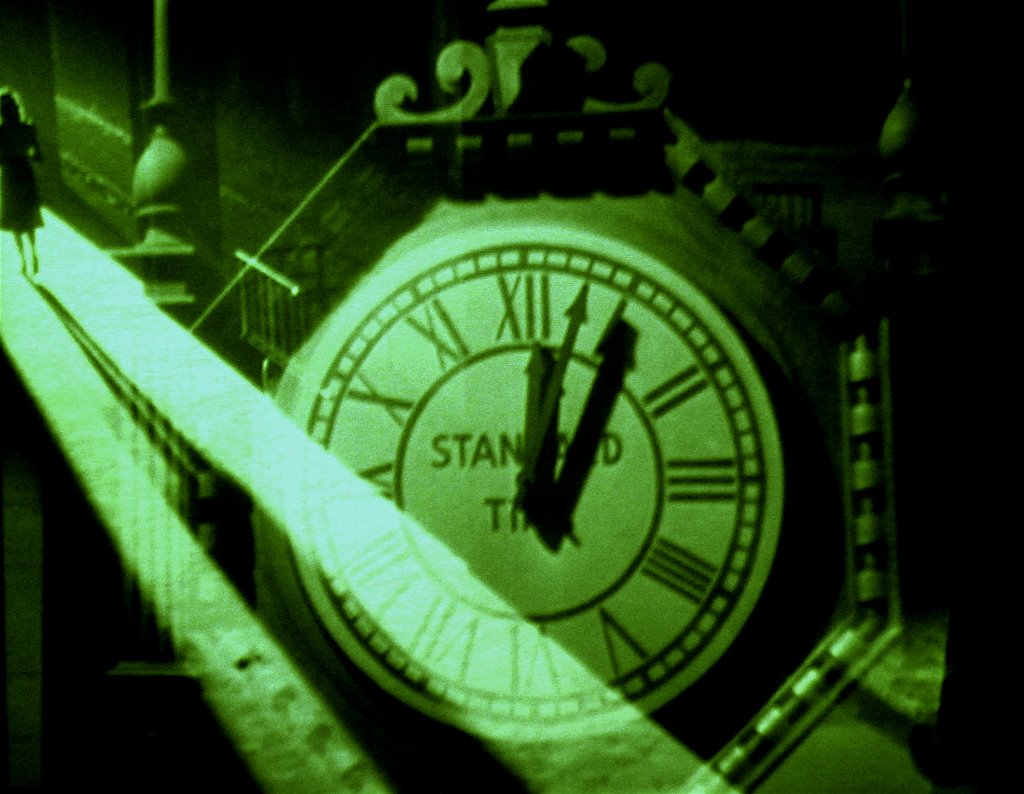
Wells’s fictions strike me as rather more urgent and compelling than such a pseudo-scientific hypothesizing about the shape of things to come. As Orson Welles and his collaborators drove home when they brought The War of the Worlds to radio (as discussed here), they invite us to translate the grim visions of the future into a commentary on the none-too-bright world of today. If the time machine had not returned home, the ride would be pretty much wasted.

In some of his smartest if lesser-known novels, Wells dispensed with the creation of seemingly distant worlds as stand-ins for close and contemporary ones. Instead, he documented what was separate and unequal in his own society, examining the clash of classes and the battle of the sexes. One such Wellsian commentaries, which I am currently reading, is Ann Veronica (1909), an incisive comedy about women’s struggle for equality.

I owe this discovery, and quite a few others besides, to my daily excursions into the realm of —another trip not worth taking if you are not prepared to transport something back with you into your here and now. It was a remark made by Lost Horizon author James Hilton on the NBC University Theater that brought Ann Veronica to my attention.

On 3 April 1949, Hilton shared his thoughts on Jane Eyre with the listeners of the NBC University Theater, which presented a dramatization of the novel (as discussed here) with Deborah Kerr in the title role.

Considering how frothy the conclusion of the new four-part BBC television adaptation of Jane Eyre turned out to be last Sunday, Hilton’s lecture may serve as a reminder of the original’s “shocking” and groundbreaking qualities as the “first great novel that emancipated woman emotionally by portraying her not merely as the passive recipient of man’s favor, but as the possessor of rightful and independent passion of which she need not be ashamed.” This “battle” of Jane Eyre and her heirs, so Hilton, continued into the twentieth century, until Wells “fired the last shot” with Ann Veronica.

I just had to find out how that shot was going off, even though I could hardly agree that it was to be the last. I am grateful to Hilton for having brought Ann Veronica to my attention, happy to be following its rebellious heroine in her quest to grow up an equal to the men around her. “She wanted to live,” Wells’s narrator sums it up; but

all the world about her seemed to be—how can one put it?—in wrappers, like a house when people leave it in the summer. The blinds were all drawn, the sunlight kept out, one could not tell what colours these grey swathings hid.

Ann Veronica “wanted to know,” but was little helped by a father who held that women were creatures “either too bad for a modern vocabulary, and then frequently most undesirably desirable, or too pure and good for life.” Anxious to mingle with socialists and suffragettes, she very much resented being cast as an Eloi in a sheltered upper-middle class world apart from if beleaguered by the hoi polloi many of her class regarded as terrifyingly Morlockian.

To be sure, that feeling of being segregated, set aside or typecast, can hit you at any time in your life; nor are societal conventions oppressive to women only, as Wells demonstrated in another one of his remarkable comedies, The History of Mr. Polly. Like young Ann Veronica, the middle-aged Mr. Polly is eager to escape the strictures of a narrowly defined existence, a life of many divisions and few diversions.

On this day, 17 October, in 1948, the NBC University Theater presented Mr. Polly starring Boris Karloff, an actor whose career in film was similarly circumscribed by the (di)visions of men who profit from such classifications (as I remarked here exactly one year ago). It feels right to return to Wells now, whose gleefully staged domestic battles are often overlooked in favor of his more somber epic ones. I, for one, don’t require the thrills and frills of an elaborate Halloween party to appreciate an attempt to unmask human nature.

Loaded Trifles: Killing Time, Wasting Life, and Assassinating George W. Bush

Well, “It doesn’t matter, does it?” That is a pivotal and oft-repeated line in Pulitzer Prize winning novelist J. P. Marquand’s Thank You, Mr. Moto (1936), the aforementioned thriller I finally put down tonight. Does it matter? The novel, I mean. Was it just a way of passing some dull hours before, in a few minutes from now, the Death of a President—the assassination of George W. Bush, no less—is being televised here in Britain, a media event you may look at as just another opportunity to “kill time”? I have always been revolted by the phrase “killing time.” Sure, I take in plenty of popular culture; but I do not consider my engagement with such alleged trifles to be quite so destructive. Instead of getting away with murder, I try to come away with something rather more meaningful and life affirming.

Last night, after watching another instalment of the four-part adaptation of Jane Eyre, one more glossy take on the classic novel (previously reviewed here) to which I am warming against my better judgment of the original, I had a glance at Reader, I Married Him. It is a documentary that borrows its title from the most famous line of Jane Eyre—the very line denied me by this latest adaptation, since those at work on visualizing the novel decided to drop the first-person narration that served actresses like Ingrid Bergman, Madeleine Carroll, or Deborah Kerr so well in radio versions of this bold if bogus autobiography.

Now, the common argument for (or against) pageturners like Jane Eyre—and the lesser works inspired by or ransacking it—is that they provide vicarious relief. They allow those reading (or viewing or listening) to leave their restricting bodies and circumstances and become fictional characters who are daring and courageous despite the recognizable shortcomings that enable us to identify with them in the first place.

Escapism is often thought of as beneficial or at any rate innocuous. It gives hope to those who deem themselves beyond escaping, those swallowed up by the mundane and too feeble or frightened to realize that the everyday is all we’ve got. Others contend that this losing oneself in make-believe mainly serves the interests of those who would rather preserve the status quo and encourage alternate realities where everyday life ought to be.

What use is any novel, any film or play, if it only leads away from the present like a cul-de-sac littered with dreams deferred? What can we take away from novels before we put them away to grab another? Is a novel or film or radio play worth our while if it does nothing but help us to while away the hours?

Luckily, I am not the kind of person who is ever bored, even though I might spend an entire day doing what many would think of as nothing at all. Early in adulthood I decided that killing time is a deadly pursuit. I left behind my former self, my miserable nine-to-five job, and turned my back on my native country because such a lethal rejection of life began to disturb and depress me. It roused me to move to the United States, where I learned in time to live for the day rather than wait for a presumably better tomorrow, a period consumed by watching diverting films and reading distracting books.

No, I did not gain this courage from reading any piece of fiction; but since escaping home I have stopped perceiving any work of fiction as being escapist. Unless I put it aside as something not worth my while, I generally manage to find something in cultural pop, however devoid of fizz, that reflects or refreshes me. Making time for such works is no longer a fast getaway but a gradual getting at something. Weaving myself in and out of fictions, I no longer find myself sneaking out of what I think of as my own life.

Now, before I witness the assassination of George W. Bush—which I will not accept as wishful thinking—I am going to share a few lines that I took away from Thank You, Mr. Moto, words be thought of long after the plot and characters have become a blur in the vapor of experience pulverized by time. The first lines are uttered by the American narrator, the second by the one who makes him change his “it doesn’t really matter” attitude toward life:

I could see myself as others may have seen me [. . .] a stranger in a strange country, living in a fool’s Paradise; and I could see myself as something uglier than that.  I could see myself as one of those misfits who cumber the earth, like spoiled children, incapable of adjustment to the life where they were placed and indulging instead in illusory futilities of existence which certainly were no part of life.  I could see myself as one of those unfortunates, unable to face incontrovertible fact, constantly escaping from reality, and at the same time endeavouring to gain applause.  That vision of myself made me lonely, empty.  More than that, it filled me with distaste. 

You can be as much of a fatalist as you like, but don’t forget there are times when you can do something.  There are times when anyone can make fate change a little [. . .].  People may be altered by circumstances but they can alter circumstances too. At any rate I’ve taught you that.

The novel hasn’t exactly taught me anything; but the relevance of these lines, so obviously designed to validate the novel as something other than a time-waster, has not escaped me. They have returned me to my own story, my inescapable past, my retreat abroad, and my current remoteness from much that I once believed to be giving life meaning. You’ve got to be prepared to sustain a few injuries when handling such loaded trifles.

Playing, Dead and Alive: Tennyson, the Internet, and the Radio Racket

Well, the afternoon is about as lively as a cancelled séance whose medium walked out due to death in the family. For the past few days, picking up where I left off a long time ago, I’ve been flicking through two sets of an English literature anthology. Rather than tossing out the old for the new, something I’d be happy to do with a pair of shoes, I’ve been comparing the volumes, pondering the expulsion or demotion of canonical authors whose once prominent works have been removed from subsequent editions. One such author now represented by fewer works is Victorian poet laureate Alfred, Lord Tennyson.

Now, reading Tennyson on a gloomy day does little to brighten the mood; but the following lines, from “In the Valley of Cauteretz” (1864), seem worth reviving, if only to remind me of my present state of mind.

The speaker of the poem, whom we may or may not take to be Tennyson himself, returns to a stream he once visited with a friend, now dead:

Thy living voice to me was as the voice of the dead,
And all along the valley, by rock and cave and tree,
The voice of the dead was a living voice to me.

Tennyson may have been revisited by the memories of his dead friend Arthur Hallam; but to me these lines somehow echo my own noisy yet quiet present, conjuring up my life among the voices of the past, my dwelling and revelling in recorded speech. Why do many of the radio voices I replay each day, transcribed sounds of live broadcasts featuring people now living no longer, sound so much more alive or closer to me than the voices of the present day?

Radio, back in the 1940s, when thousands of men were dying in battle far from home, was complicit in this sense of being visited by those gone or lost, a conjuring act achieved by a mere twist of the dial. Radio often presented itself as a spiritual medium, a modern device capable of annihilating space as well as time. On this day, 2 October, in 1944, for instance, Walter Huston introduced a play about the life of Thomas Paine by remarking that the words of this man called “Common Sense” still speak the

thoughts of many of us even today, in the year of 1944. And because of many other thoughts that this man put into words, we, in these troubled times, reach across the years to shake hands with him, to shake hands with Thomas Paine.

Sure, Thomas Paine sounds an awful lot like Edward G. Robinson, in whose hands lay Robert L. Richards’s script for that broadcast of “The Voice on the Stairs,” produced by the Cavalcade of America. Still, the phonic handshake was neither phoney nor merely symbolic; it was an act symptomatic of radio’s exploitation of our sense of revenance when we hear a voice from the past.

I am reminded of a friend of mine (the one with whom I went to the mystery book store a while back) who threw out her answering machine after playing back the voice of her dead father, still calling for her from the sonic loop of an old tape recording. When we look at pictures of dead people, the subject does not spring to life in the process of beholding; instead, pictures of the past or dead tend to serve as memento mori. They are a representation that does not quite render present, a reminder that is merely an aid to the act of calling to mind, whereas a recorded voice—sound being alive for the duration of its occurrence—streams through the ear canal into the now of our presence before fading into memory. Emanating from the living or the dead, it comes to life anew with each listening.

Dead, alive? The living dead? Or, speaking Tennyson, “Death in Life”? Perhaps I have dwelled among these sonic revenants for too long, becoming in turn, like Widmark’s character in the Inner Sanctum thriller “The Shadow of Death” (also cast on this day, back in 1945), dead to the world. Being engaged in this kind of séance, in the retrieval and re-presentation of past voices, I at times sense being shut out from and slipping out of touch with the living. Just like being caught in the internet, living in a world of sound is, after all, only the exposure to an echo of life—a reverberation produced by the clashing bones of a life stripped of flesh.

Mr. Benny Gets the Key to Baldpate

Well, I feel rather less prickly than yesterday. My cold seems to be on its way out and, having spent some time out of doors in the warmth of the autumn sun, I feel somewhat more serene and benevolent. Speaking of doors (a transition more creaky than the farce I am writing about today): Having complained previously (and elsewhere) about the conventional and therefore superfluous adaptation of Jane Eyre now flickering in weekly installments on British television, I am going to mark the anniversary of a decidedly more inspired variation on what was once a similarly familiar work of fiction, Seven Keys to Baldpate, a crowd-pleaser that was revived for radio on this day, 26 September, in 1938.

Granted, it is easier to rework a piece that does not warrant the reverence befitting a literary classic such as Jane Eyre, a respect that can be artistically stifling when it comes to revisiting or revising what seems to demand fidelity rather than felicitous tinkering. A mystery novel conceived by Earl Derr Biggers, the creator of Charlie Chan, Seven Keys opened many more doors after going through the smithy of theater legend George M. Cohan. Unlike Biggers, Mr. Cohan did not play it straight, but turned the thriller into what he then sold as a “Mysterious Melodramatic Farce”—starring himself.

In Cohan’s farce, the thriller writer Bill Magee accepts the $5000 challenge of a friend who dares him to pen a novel within twenty-four hours. To achieve this, the author is being given what he believes to be peace and quiet—the only key to a remote resort shut down for the winter.

During his night at Baldpate Inn, the supposedly single guest is disturbed by an assortment of singular strangers, lunatics and villains, until his friend shows up to confess that the bizarre goings-on were a practical joke designed to illustrate the ridiculousness of the author’s improbable plots. The epilogue of Seven Keys discloses, however, that the action of the play was a dramatization of the novel Magee actually managed to complete that night. He won the wager by fictionalizing the challenge.

Opening on 22 September in 1913, the play became an immediate and oft-restaged favorite with American theatregoers. It was subsequently adapted for screen and radio. When, some twenty-five years after its premiere, the producers of the Cecil B. DeMille hosted Lux Radio Theatre got their hands on this potboiler, they slyly revamped it as a commercial property fit for the latest medium of dramatic expression.

In his introductory remarks, DeMille promises the listener a “special treatment” of the play—and that, for once, was no overstatement. As I have discussed at length in Etherized Victorians, my study on old-time radio, the broadcast revision is not so much a rehash as it is an media-savvy update of the original.

Whereas Cohan’s version celebrates the victory of popular entertainment, of readily digested pulp fictions churned out for a quick buck, Lux writer-adaptor George Wells transforms Seven Keys into a radio story—a story about radio that parodies the anxiety of former vaudevillians-turned-broadcast artists to achieve lasting success, to be remembered long after the shows in which they starred week after week had gone off the air—to become cultural icons despite their invisibility. And those keys to uncertainty were handed to the man who had been through it all and stayed on top by knocking himself down, fall guy comedian Jack Benny.

Instead of a successful novelist, the artist now up for a crazy night at Baldpate is Jack Benny, as “himself,” a frustrated thespian who accepts the challenge of developing a suitable dramatic vehicle for himself after having been turned down for serious dramatic parts time and again. Benny’s challenger is no other than Mr. DeMille, who, in a rare stunt, not only introduces and narrates the play, but acts in it, and that without having to drop his director-producer persona. Throw in a few Lux Flakes and it comes out a clever bit of promotion all round.

The unpretentious yet self-conscious reworking of a play as old hat as Baldpate into a comment on the recycling business of radio entertainment—and a demonstration of how to lather, rinse, and repeat successfully—is one of Lux‘s most ingenious and engaging productions.

The Next Voice You Hear; or, Blogging Away

The next voice you hear will still be mine; but it will come to you from the metropolis. Tomorrow morning, I am leaving Wales (my man and Montague, the latter, being more compact, pictured in my arm). After a stopover in Manchester, England, it’s off to New York City, my former home of fifteen years. Last time I was there, I found myself in the middle of an old-time radio serial (I Love a Mystery), the keeping up with which turned out to be somewhat of a chore, appreciated by too few. I also did not enjoy wireless access and was piggybacking wherever I could, a haphazard signal chasing that complicated the webjournalistic experience.

This time around I will suspend all regular programming and write instead about popular culture in relation to Gotham. I am planning to visit and report from various New York City locations where radio drama was produced, is being presented these days, or has been set. I’ll also conduct tours of second-hand bookstores, cultural sites that are fast becoming extinct in the corporately co-opted rental space for advertising opportunities that is today’s cityscape. In short, it will be an old-time radio travelogue.

I might also write about any play or movie I get to see while in town. Unfortunately, the Film Forum has decided upon a retrospective of swashbucklers, as well as a series of Buster Keaton features. Since I don’t care much about either (and went to see Keaton’s The General only a few weeks ago, with silent film music composer Neil Brand at the piano), I don’t think I’ll spend much time at the local movie houses, most of which play the fare that you get to see anywhere else in the western world or the non-hostile elsewhere. I’ll stack up on a few good DVDs while there, snatching whatever bargain I can get my hands on.

I might also flick through the US channels I miss here in the UK, such as the Independent Film Channel, Sundance, and Turner Classic Movies, which has scheduled a Carole Lombard day on August 17, and catch up on some of the television series I’ve read about on the web journals I regularly peruse. I might also take in a few Broadway or Off-Broadway shows. Whatever comes my way or catches my eye, you’ll read about it here.

So, to borrow from Archibald MacLeish’s “The Fall of the City” (previously discussed here), the next “broadcast comes to you from the city,” technology and the general vagaries of life permitting. I hope you’ll tune in.

Many Happy Reruns: Herman Melville and M. R. James

Well, August is coming across a lot like autumn. Fierce winds, cool temperatures, and short intervals of rain put an end to the July heat here in Ceredigion, Wales. Undoubtedly, I will return to hothouse climes next week, when I am back in New York City, where, on this day, 1 August, in 1819, a child was born that would eventually become one of the most celebrated authors of the 19th century: Herman Melville. Moby-Dick, his most famous work—a story everyone knows but a book hardly anyone reads—was filmed, starring Gregory Peck, not far away from here in the Welsh town of Fishguard, where, last summer, I had the misfortune to drown a cellular phone.

Losing a chance to keep in touch with humanity—that is not altogether un-Melvillian. Melville’s yarns, apart from his early Omoo and Typee, are not primarily seafaring adventures. They are stories of the forlorn, of friendlessness and frustrated ambitions. Teaching American literature in New York, I once assigned Melville’s novel Redburn, a devastatingly triste tale of a young man unable to establish meaningful and fulfilling personal relationships. It is a subject to which Melville returned frequently in his work, his Kafkaesque story “Bartleby, the Scrivener” being a prime example. It is also a fine example of literature being well served by radio; and such instances are quite rare.

Those adapting literature for the airwaves were often asked to synopsize popular pieces of 19th-century fiction, to produce hurried rehashes that rarely captured the varied aspects, let alone the experience of epic tomes like Moby-Dick. The far shorter story of “Bartleby,” however, was well translated for radio by the creative team of Jerome Lawrence and Robert E. Lee. As the host of the series, Ronald Colman, told listeners of Favorite Story back in the late 1940s (the series was transcribed and syndicated, rather than broadcast live on network radio), “The Strange Mr. Bartleby” was an obscure work of fiction. It was owing to actor Robert Montgomery, who allegedly chose it as his favorite, that the story was picked up by Favorite Story and dramatized starring William Conrad and Hans Conried (as Bartleby).

As a short story, it is far more suitable for a twenty-minute dramatization than the novels that were generally bowdlerized in the process. Despite the changed title (the word “scrivener” being deemed rather too quaint and alienating, no doubt), Favorite Story‘s rendering of “Bartleby”—a dark tale in which communication failure is having a “dead letter” day—is probably the most satisfying and faithful Melville adaptation heard on American radio.

A similar success in adaptation may be reported in the case of another author born on this day (in 1862), a spinner of a very different sort of yarn: M. R. James, who shares his first name with our terrier, Montague (pictured). Still somewhat outside the canon of western literature—a canon that now includes Frankenstein and Dracula—James is a highly regarded teller of antiquarian ghost stories.

A decade before it was adapted for the movies, his “Casting the Runes” was readied for radio by Irving Ravetch and John Dunkel. With a score composed by the recently deceased Cy Feuer (commemorated here), it was heard on the thriller anthology Escape on 19 November 1947. Unlike Tourneur’s Night of the Demon, which exists in two versions and points up the Curse of visualizing terror as horror, the sound-only adaptation is both literate and liberating, depending on the listener’s imagination rather than showy yet inadequate special effects.

was often and not unjustly accused of playing fast and loose with literary classics. It reduced novels like Moby-Dick to skeletons best left in the closets of those who were commissioned to strip the meat from the bones of such meaty fictions. Shorter works like “Bartleby” and “Casting the Runes,” concentrating on one central idea and exploring a key situation involving a few main characters, fared considerably better on the air. These two plays are worthy of the men who conceived them without a microphone in mind.