

Well, if I said it once, I’ve said it a thousand times. Maybe I should say it a thousand times more and keep on saying it. Recently, the British equivalent of the destructive piece of ill equipment now installed at the White House managed to revive what might very well put an end to civilization: nuclear energy. As I looked across the fields at the green hills of Wales, some of which vistas are spoiled by clusters of wind farms, I thought what I would do if an atomic power station were to rise there. I don’t suppose leaving behind the deceptive serenity that is our garden (pictured above) would be forceful enough a statement, since moving would not bring about any change for the environment that is going to suffer at the greedy hands of narrow minds who think that today’s economy is more important than the ecology of tomorrow.
I can and will get passionate about nuclear energy, and, in this one matter, I accept neither counter-argument nor levity. That is why I fail to get much of enjoyment out of “The Undecided Molecule,” a “rhymed fantasy concerning dangerous developments among the elements” that was presented on US radio on this day, 17 July, in 1945. With a cast including Groucho Marx, Vincent Price, and Sylvia Sidney, it was given a lavish production by Columbia Presents Corwin under the direction of its author, Norman Corwin—the very man who just a few days ago offered me further advice regarding my writings about old-time radio.
“The Undecided Molecule” is a courtroom drama, of sorts. At the center of it is X, the titular molecule charged with endangering the universe by failing to find its place in the animal, vegetable, or mineral kingdoms. At the suggestion of the Defense, the representatives of each kingdom are called forward to assist X in making up its mind.
Now, the play is a charming piece of nonsense, nonsense of the kind made meaningful and literarily respectable by Victorian poet Edward Lear. To call it utter “nonsense,” in short, does not in any way belittle such joyful wordplay. And yet, I feel that Corwin’s play is belittling a matter of life and death. To do so was not his intention, as he assures readers of one of his anthologies of radio plays, in which the script of “The Undecided Molecule” was published.
“The atomic bomb was several weeks east of Hiroshima when this was first broadcast,” Corwin pointed out; “so it wasn’t that which got me writing about Mr. X.” Yet the testing of such nuclear might in New Mexico was already a thing of the past when the play went on the radioactive air. However they were conceived or intended, these cheerful lines are burdened by a history of destruction:
Oh, dear! Oh, dear!
The cosmic alarm!
Which means, I fear,
Some woeful harm
Is afoot or awing
In the universe.
Some deplorable thing,
Some active curse
Like a falling sky
Or a new star-cluster,
Been banged up by
A cluster-buster.
Thus cries Corwin’s Vice President in Charge of Physiochemistry when the alarm is sounded that the order of the universe has been disturbed. It is a wake-up call that might be suggesting
[. . .] a dried-up sea
Or another Ice Age for a spell,
Or maybe it’s only a freezing hell.
On the other hand it might possibly be
That Hitler is alive and well.
Hitler, of course, was good and dead. Two months earlier, Corwin had invited Americans to dance around his grave. It was in this atmosphere of relief that the Atomic Age was welcomed and the trifle of Uranium comically exploited. Soon after, this new instrument of horror and psycho-terror would inaugurate the cold war with a blast some believed could end all wars. How disillusioned many who fought the Second World War must have felt when they realized that there was no end to destruction, the preparation, prevention and clean up of which is such lucrative business. I was reminded of this last night, watching the post-war drama The Best Years of Our Lives. I am reminded of it now, as I look out into the fields, in awe of molested molecules that might decide our future or what there is of it.
In “The Undecided Molecule,” things turn out all right for the kingdoms of nature; but the matter is rather too heavy to be made light of in this way. With nuclear trouble mounting, it seems dangerous to make a molehill out of a molecule.
 Well, I don’t know. About my last poll, I mean. With this survey, the responses to which are captured below, I wanted to raise questions about the ways in which the mass media reflect our everyday lives or fail to do so. Can we rely on the media to represent—to talk to and tell of—those who are exposed to them? Will future generations watch archive footage of Big Brother or Desperate Housewives in order to learn about life in America during these early years of the 21st century? To what extent can popular culture serve as a time capsule by means of which scholars yet unborn might presume to enter our minds and mine our psyche?
 However bland its offerings may strike those whose senses have been dulled by long exposure to pictures that leave little to the imagination, radio in the pre-television age (the 1930s, ‘40s, and early ‘50s) was not nearly as concerned about offending minorities as television is today. It was indifferent to millions whom sponsors did not consider relevant, either because those millions were unlikely to become potential consumers of the products advertised or because their business was not deemed desirable as it clashed with the image in light of which advertisers wanted goods and services to be received.
 There is violence in the phrase. And for once I can sense it. Silence being “broken,” I mean. For the next two months or so, my life will be less quiet than I have come to live and like it of late. There will be old friends visiting in July and September, there will be travels in good company, and there will be reunions in New York and in New England this August. I shall endeavor to keep my journal all the while; but journals like this are so much easier to keep in the monotone and silence of a retiring life, a life which need not be tired or tiresome as long as there are thoughts to be spun from whatever impulses and impressions there are to be got and gathered in the everyday. Such contemplative quiet, which to some might spell disquietude, was experienced by Henry David Thoreau, who was born on this day, 12 July, in 1817.
 The afternoon couldn’t be any less gloomy. The sky is of a deep blue, the air is fresh, and—until the health hazard that is Tony Blair gets his death wish to turn the West of Britain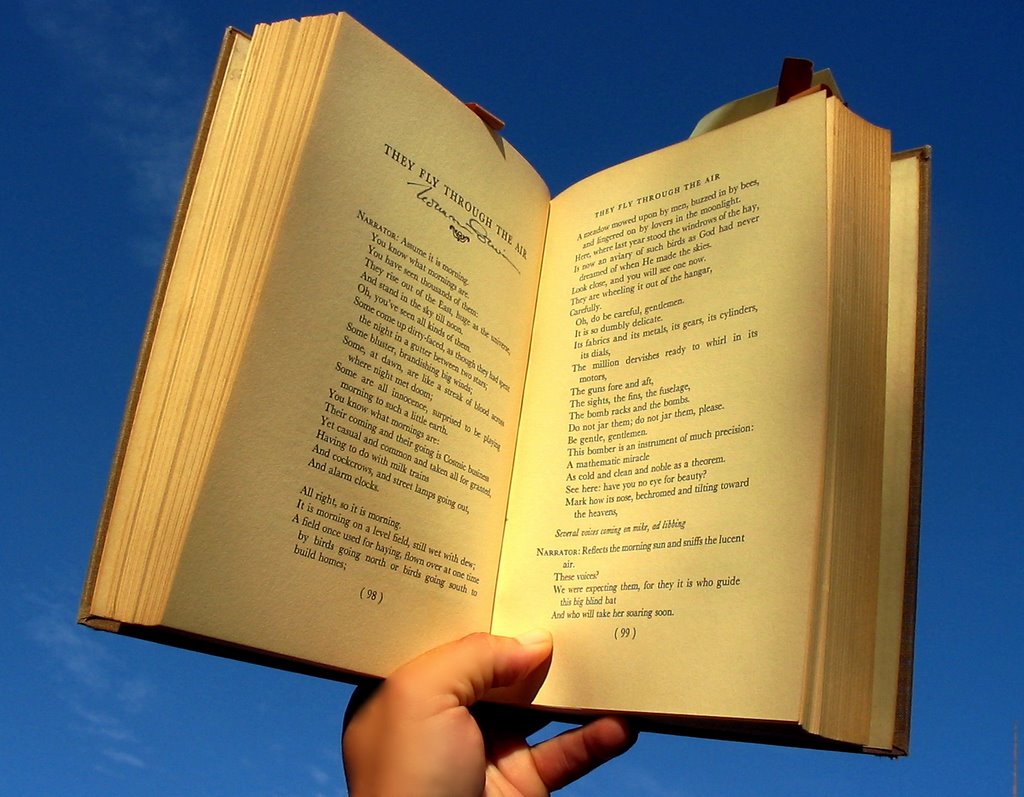

 Mine is not an illustrious one. There are a few others who fared well enough with it; but none among them are my relations. It is uncommon enough to catch my eye or ear whenever it is mentioned, even though my own is frequently misspelled or mispronounced. My surname, I mean. As I shared a while ago
  Harry Heuser