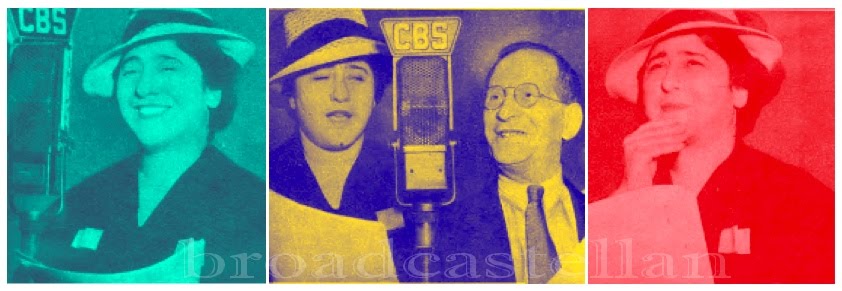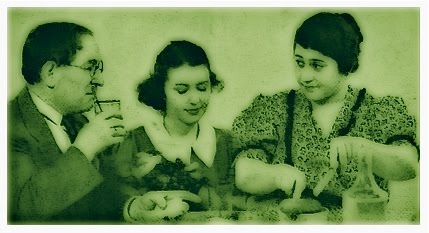
“Mike”; for the Love of It

“What is there to say about what one loves except: I love it, and to keep on saying it?” Roland Barthes famously remarked. Sometimes, getting to the stage of saying even that much requires quite a bit of effort; and sometimes you donโ€™t get to say it at all. Love may be where you find it, but it may also be the very act of discovery. The objective rather than the object. The pursuit whose outcome is uncertain. Methodical, systematic, diligent. Sure, research, if it is to bear fruit, should be all that. And yet, it is also a labor of love. It can be ill timed and unappreciated. If nothing comes of it, you might call it unrequited. It may be all-consuming, impolitic and quixotic. Still, itโ€™s a quest. Itโ€™s passion, for the love of Mike!

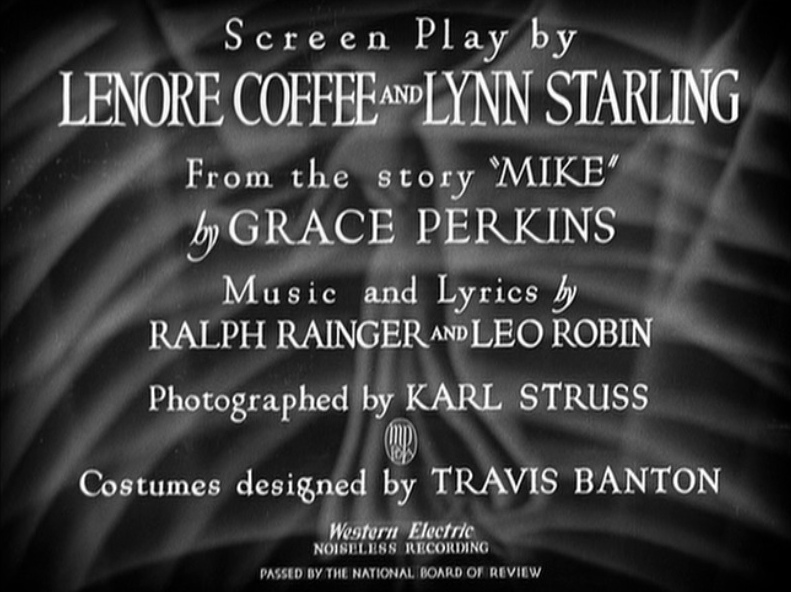
โ€œMikeโ€ has been given me a tough time. It all began as a wildly improbable romance acted out by my favorite leading lady. It was nearly a decade ago, in the late spring of 2001, that I first encountered the name. โ€œMikeโ€ is a reference in the opening credits of the film Torch Singer, a 1933 melodrama starring Claudette Colbert. Having long been an admirer of Ms. Colbertโ€”who, incidentally made her screen debut in the 1927 comedy For the Love of Mike, a silent film now lostโ€”I was anxious to catch up with another one of her lesser-known efforts when it was screened at New York Cityโ€™s Film Forum, an art house cinema I love for its retrospectives of classicโ€”and not quite so classicโ€”Hollywood fare.

Until its release on DVD in 2009, Alexander Hallโ€™s Torch Singer was pretty much a forgotten film, one of those fascinatingly irregular products of the Pre-Code era, films that strike us, in the Code-mindedness with which we are conditioned to approach old movies, as being about as incongruous, discomfiting and politically incorrect as a blackface routine at a Nelson Mandela tribute or a pecan pie eating contest at a Weight Watchers meeting. Many of these talkies, shot between 1929 and 1934, survive only in heavily censored copies, at times re-cut and refitted with what we now understand to be traditional Hollywood endings.

Torch Singer, which tells the Depression era story of a fallen woman who takes over a childrenโ€™s program and, through it, reestablishes contact with the illegitimate daughter she could not support without falling, has, apart from its scandalous subject matter, such an irresistible radio angle that I was anxious to discuss it in Etherized Victorians, the dissertation on American radio drama I was then in the process of researching.

Intent on presenting radio drama as a literary rather than historical or pop-cultural subject, I was particularly interested in published scripts, articles by noted writers with a past in broadcasting, and fictions documenting the central role the โ€œEnormous Radioโ€ played in American culture during the 1920s, โ€˜30s, and โ€˜40s. I thought about dedicating a chapter of my study to stories in which studios serve as settings, microphones feature as characters, and broadcasts are integral to the plot.

Torch Singer is just such a storyโ€”and, as the opening credits told me, one with a past in print. Written by Lenore Coffee and Lynn Starling, the screenplay is based on the story โ€œMikeโ€ by Grace Perkins; but that was all I had to go on when I began my search. No publisher, no date, no clues at all about the print source in which โ€œMikeโ€ first came before the public.


Little could be gleaned from Perkinsโ€™s New York Times obituaryโ€”somewhat overshadowed by the announcement of the death of Enrico Carusoโ€™s wife Dorothyโ€”other than that she died not long after assisting Madame Chiang Kai-shek in writing The Sure Victory (1955); that she had married Fulton Oursler, senior editor of Readerโ€™s Digest and author of the radio serial The Greatest Story Ever Told; and that she had penned a number of novels published serially in popular magazines of the 1930s. That sure complicated matters as I went on to turn the yellowed pages of many once popular journals of the period in hopes of coming across the elusive โ€œMike.โ€

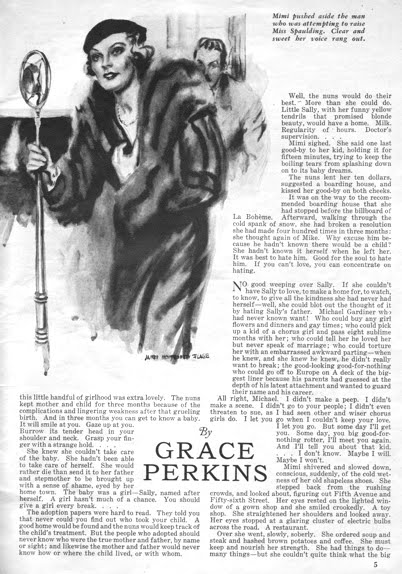
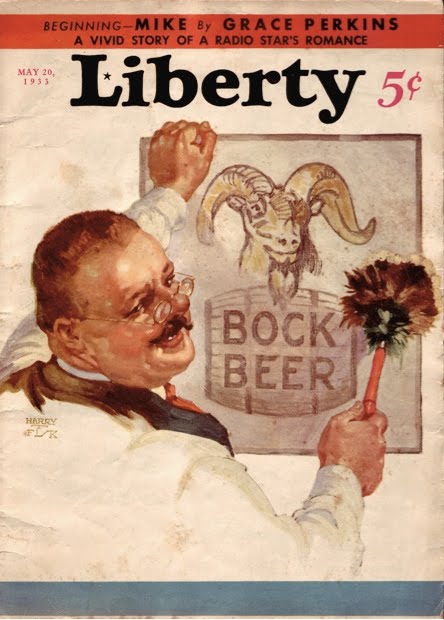
Finally, years after my degree was in the bagโ€”and what a deep receptacle that turned out to beโ€”I found โ€œMikeโ€ between the pages of the 20 May 1933 issue of Liberty; or the better half of โ€œMike,โ€ at least, as this is a serialized narrative. Never mind; I am not that interested anyway in the storyโ€™s other Mike, the man who deserted our heroine and with whom she is reunited in the end. At last, I got my hands on this โ€œRevealing Story of a Radio Starโ€™s Romance,โ€ the story of the โ€œnotorious Mimi Benton,โ€ a hard-drinking mantrap whoโ€™d likely โ€œend up in the gutter,โ€ but went on the air insteadโ€”and โ€œright into your homes! Yes, sir, and talked to your children time and time again!โ€

โ€œMike,โ€ like Torch Singer, is a fiction that speaks to Depression-weary Americans who, dependent on handouts, bereft of status and influence, came to realizeโ€”and romanticizeโ€”what else they lost in the Roaring Twenties when the wireless, initially a means of point-to-point communication, became a medium that, as I put it in my dissertation,

not merely controlled but prevented discourse. Instead of interacting with one another, Depression-era Americans were just sitting around in the parlor, John Dos Passos observed, โ€œlistening drowsily to disconnected voices, stale scraps of last yearโ€™s jazz, unfinished litanies advertising unnamed products that dribble senselessly from the radio,โ€ only to become receptive to President Rooseveltโ€™s deceptively communal โ€œyouandmeโ€ from the fireside.

Rather than โ€œlistening drowsily,โ€ disenfranchised Mimi Benton, anathema to corporate sponsors, reclaims the medium by claiming the microphone for her own quest and, with it, seizes the opportunity to restore an intimate bond that society forced her to sever. These days, Mimi Benton would probably start a campaign on Facebook or blog her heart outโ€”unless she chose to lose herself in virtual realities or clutch a Tamagotchi, giving up a quest in which the medium can only be a means, not an end.


Related writings
โ€œRadio at the Movies: Torch Singer (1933)โ€
โ€œRadio at the Movies: Manslaughter (1922)โ€

โ€œMore Easily,โ€ My Eye; or, Kaltenborn and the Dragon

โ€œEducation comes more easily through the ear than through the eye,โ€ H. V. Kaltenborn declared back in 1926. He had to believe that, or needed to convince others of it, at least. After all, the newspaper editor had embarked on a new career that was entirely dependent on the publicโ€™s ability to listen and learn when he, as early as 1921, first stepped behind a microphone to throw his disembodied voice onto the airwaves, eventually to become Americaโ€™s foremost radio commentator. Writing about โ€œRadioโ€™s Responsibility as a Molder of Public Opinion,โ€ Kaltenborn argued education to be the mediumโ€™s โ€œgreatest opportunity.โ€ And even though the opportunity seized most eagerly was advertising, some sixty American colleges and universities were broadcasting educational programs during those early, pre-network days of the โ€œFifth Estate.โ€

Kaltenborn reasoned that education by radio was superior to traditional correspondence courses since the aural medium could make up for the โ€œimperfect contact between student and teacherโ€ through โ€œthe appeal of voice and personality.โ€ Among the subjects particular suited to radio he numbered โ€œliterature, oral English, foreign languages, history, and music,โ€ but added that any class not requiring special โ€œapparatus or laboratory work [could] be taught on the air.โ€

Not that a polyglot like H(ans) V(on), whose father was born in Germany, had any use for such on-air instructions, but a number of local stations (KFAB, Nebraska, and WMBQ, Brooklyn, among them) broadcast introductory courses in German during the early to mid-1930s. According to Waldo Abbot, who, in the 1930s, directed the University of Michiganโ€™s educational broadcasts heard over WJR, Detroit, nearly four hundred stations in the US accepted foreign language programs, many of which were geared toward non-English communities, be they German, Albanian or Mesquakie. In 1942, as Variety radio editor Robert Landry pointed out, some two hundred local stations in the US were broadcasting in thirty languages other than English, at which time in history the efficacy of services in the public interest was being hotly debated.

Growing up in West Germany, I frequently tuned in to the English language Broadcasting Service of the British Forces (BFBS) and, lying in bed at night, twisted the dial in search of faraway international stations. Yet as much as the chatter of different, distant voices intrigued me, I was not so much enlightened as I was enchanted; and rather than translating what I heard, I was transported by it. I may have had an ear for language, but whatever came my way by way of the airwaves back then was mostly in one ear and out of the other.

Even when language poses no barrier to understanding, I do not assimilate spoken utterances as readily as written words. I was raised in the age of television and, to some degree, by that medium. So insurmountable was the visual bias that I have never been able entirely to rely on my ear when it comes to taking even the simplest instructions. I discovered early on, for instance, that it was difficult for me to write down a number taken from dictation; to this day, I struggle to piece together words that are being spelled out for me. My chirographic transcriptions of speech are often incomplete or frustratingly inaccurate.

Yes, I have long been keenly aware of the pigโ€™s ear that nature made of my senses. I learned that those cartilaginous funnels couldnโ€™t be relied upon to make, let alone fill, a purse, silken or otherwise. My head being thoroughly porcine, I nonetheless chose radio as the subject for my doctoral studyโ€”if only to give my eyes an earful.

If only education came โ€œmore easilyโ€ to me โ€œthrough the ear than through the eye,โ€ now that I am once again putting my ear for language to the test. Iโ€™ve been living in Wales for over five years now, but, insofar as I had occasion to mingle with the locals, I have communicated exclusively in English. Contrary to a travel guide one of my German friends showed me upon visiting, Welsh is by no means a language in extremis, even if its rejuvenescence is largely owing to the resuscitative measures of nationalist politics. Taking our recent move from a remote cottage in the country to a house in town as an incentive, I decided to grab the red dragon by its forked tongue at last. I started taking classes. โ€œDwi โ€˜n dysgu Cymraeg.โ€

To augment my weekly lessons, I am listening to recordings of the BBCโ€™s Catchphrase program, a late-20th-century radio series designed to introduce English speakers to the Welsh language. While it is a comfort to me that fleeting speech is reproducible at the touch of a button or key, I am still finding it difficult to take in and recall what I am hearing, particularly as I am being asked to learn โ€œparrot fashion,โ€ to play and replay by ear without being given a table or chart that would allow me to discern a grammatical pattern. Much of what I have heard still sounds to me what the Germans call Kauderwelschโ€”or plain gibberish.

Though I am not quite licked yet, the Welsh ddraig keeps sticking out its tongue to make a mockery of my efforts. Itโ€™s no use slaying it by ear. I simply wasnโ€™t bornโ€”nor am I Kaltenbornโ€”to do it.


Related writings
โ€œโ€˜. . . from hell to breakfastโ€™: H. V. Kaltenborn Reportingโ€
โ€œโ€˜Alone Togetherโ€™: A Portrait of the Artist as an Artistโ€™s Spouseโ€

A โ€œkind of monsterโ€: Me[, Fascism] and Orson Welles

It doesnโ€™t happen often that, after watching a 21-century movie based on a 21-century novel, I walk straight into the nearest bookstore to get my hands on a shiny paperback copy of the original, the initial publication of which escaped me as a matter of course. Come to think of it, this never happened before; and that it did happen in the case of Me and Orson Welles has a lot to do with the fact that the film is concerned with the 1930s, with New York City, and with that wunderkind from Wisconsin, the most lionized exponent of American radio drama, into which by now dried up wellspring of entertainment, commerce and propaganda it permits us a rare peek. You might say that I was the target audience for Richard Linklaterโ€™s comedy, which goes a long way in explaining its lack of success at the box office.

And yet, despite the filmโ€™s considerable enticementsโ€”among them its scrupulous attention to verisimilitudinous detail and a nonchalant disregard for those moviegoers who, having been drawn in by Zac Efron, draw a blank whenever references to, say, Les Tremayne or The Columbia Workshop are being tossed into their popcorn littered lapsโ€”it wasnโ€™t my fondness for the subject matter, much less the richness of the material, that convinced me to pick up Robert Kaplowโ€™s novel, first published in 2003. Indeed, it was the glossiness of the treatment that left me with the impression that something had gotten lost or left behind in the process of adaptationโ€”and I was curious to discover what that might be.

On the face of it, the movie is as faithful to the novel as the book is to the history and culture on which it draws.  Much of the dialogue is lifted verbatim from the page, even though the decision not to let the protagonist remain the teller of his own tale constitutes a significant shift in perspective as we now get to experience the events alongside the young man rather than through his mind’s eye.  In one trailer for the film, the voice-over narration is retained, suggesting how much more intimate and intricate this story could have beenโ€”and indeed is in printโ€”and how emotionally uninvolving the adaptation has turned out to be.

Without Samuelsโ€™s narration and with a scene-stealing performance by Christian McKay as Welles, the screen version gives the unguarded protรฉgรฉ, portrayed by the comparatively bland Efron, rather less of a chance to have the final word and to claim center stage, as the sly title suggests, by putting himself first.

The question at the heart of the story, on page and screen alike, is whether successes and failures are born or made.  Prominence or obscurity, life or death, are not so much determined by individual talent, the story drives home, but by the circumstances and relationships in which that talent can or cannot manifest itself.  We know Welles is a phony when he goes around giving the same spiel to each member of the cast who is about to crack up and endanger the opening of the show, insisting that they are โ€œGod-created.โ€  They are, if anything, Welles-created or Welles-undone.

Finding this out the hard wayโ€”however easy it may have looked initiallyโ€”is high school student Richard Samuels who, stumbling onto the scene quite by accicent, becomes a minor player in a major theatrical production of a Shakespearean drama directed by a very young, and very determined, Orson Welles.  Samuelsโ€™s fortunes are made and lost within a single week, at the end of which his name is stricken from the playbill and his life reconsigned to inconspicuity, all on account of that towering ego of the Mercury.

The premise is an intriguing one: a forgotten man who lives to tell how and why he did matter, after allโ€”a handsome stand-in for all of us who blew it at some crucial stage in our lives and careers.  Shrewdly concealing that it was he who nearly ruined the Mercury during dress rehearsal by setting off the sprinklers, Samuels can luxuriate in the belief that he may have inadvertently saved the production by reassuring a superstitious Welles that opening night would run smoothly.

Speculating about the personalities and motives of historical figures, dramas based on true events often insert an imaginary proxy or guide into the scene of the action, a marginal figure through or with whom the audience experiences a past it is invited to assume otherwise real.  And given that Me and Orson Welles goes to considerable length capturing the goings-on at the Mercury Theater, anno 1937, I was quite willing to make that assumption.  Hey, even Joe Cotten looks remarkably like Joseph Cotten (without the charisma, mind).

It was not until I read the novel that I realized that Kaplow and the screenwriters, while ostensibly drawing their figures from life, attributed individual traits and behaviors to different real-life personages.  Whereas actor George Coulouris is having opening night jitters on screen, it was the lesser-known Joseph Holland who experienced same in the novel.

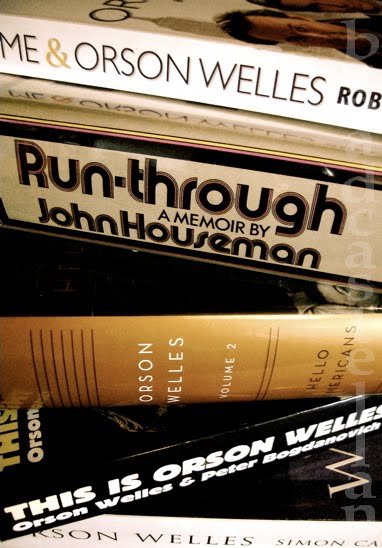
Although quite willing to let bygones be fiction, I consulted Mercury producer John Housemanโ€™s memoir Run-through, which suggests that the apprehensive one was indeed Coulouris.  Housemanโ€™s recollections also reveal that the fictional character of Samuels was based in part on young Arthur Anderson, a regular on radioโ€™s Letโ€™s Pretend program who, like Samuels, played the role of Lucius in the Mercury production.  According to Houseman, it was Anderson who flooded the theater by conducting experiments with the sprinkler valves.

Never mind irrigation; I was trying to arrive at the source of my irritation, which, plainly put, is this: Why research so thoroughly to so little avail? Why be content to present a slight drama peopled with folks whose names, though no longer on the tip of everyoneโ€™s tongue, can be found in the annals of film and theater? The missed opportunityโ€”an opportunity that Welles certainly seizedโ€”of becoming culturally and politically relevant makes itself felt in the character of Sam Leve, the Mercuryโ€™s set designerโ€”a forgotten character reconsidered in the novel but neglected anew in the screenplay.

Andersonโ€™s contributions aside, it is to Leveโ€™s account of the Mercuryโ€™s Julius Caesar that Kaplow was indebted, a debt he acknowledges in the โ€œSpecial thanksโ€ preceding the narrative he fashioned from it.

โ€œ[P]oor downtrodden Sam Leveโ€โ€”as Simon Callow calls him rather patronizingly in his biography of Orson Wellesโ€”was very nearly denied credit for his work on the set.  Featuring prominently in the novel, he is partially vindicated by being given one of the novelโ€™s most poignant speeches, a speech that turns Me and Orson Welles into something larger and grander than an intriguing if inconsequential speculation about a brilliant, egomaniacal boy wonder.

Confiding in Leve, with whom he has no such exchange in the movie, Samuels calls Welles a โ€œkind of monster,โ€ to which Leve replies: โ€œWe live in a world where monsters get their faces on the covers of the magazines.โ€  In this exchange is expressed what mightโ€”and, I believe, shouldโ€”have been the crux of the screen version: the story of a โ€œkind of monster,โ€ a man who professes to turn Julius Caesar into an indictment of fascism, however conceptually flawed (as Callow points out), but who, in his dictatorial stance, refuses to acknowledge Leveโ€™s contributions in the credits of the playbill and shows no qualms in replacing Samuels when the latter begins to assert himself.

โ€œAs in the synagogue we sing the praises of God,โ€ Leve philosophizes in the speech that did not make it into the screenplay, โ€œso in the theatre we sing the dignity of man.โ€  Without becoming overly didactic or metaphorical, Me and Orson Welles, the motion picture, could have put its authenticity to greater, more dignified purpose by not obscuring or trivializing history, by reminding us that Jews like Leve and Samuels were fighting for recognition as the Jewish people of Europe were facing annihilation.

To some degree, the glossy, rather more Gentile film version is complicit in the effacement of Jewish culture by homogenizing the story, by removing the Jewish references and Yiddish expressions that distinguish Kaplowโ€™s novel.  Instead of erasing the historical subtext, the film might have encouraged us to see the Mercuryโ€™s troubled production of Julius Caesar as an ambitious if somewhat ambiguous and perhaps disingenuous reading of the signs of the times, thereby making us consider the role and responsibility of the performing artsโ€”including films like Me and Orson Wellesโ€”in the shaping of history and of our understanding of it.


Related writings
โ€œOn This Day in 1938: The Mercury Players โ€˜dismember Caesarโ€™โ€
โ€œOn This Day in 1937: The Shadow Gets a Voice-overโ€

โ€œMarching backwardsโ€: โ€œThe Great Tennessee Monkey Trialโ€ Is Back on the Air

The Darwin bicentenary is drawing to a close. Throughout the year, exhibitions were staged all over Britain to commemorate the achievements of the scientist and the controversy his theories wrought; numerous plays and documentaries were presented on stage, screen and radio, including a new production of Inherit the Wind (1955), currently on at the Old Vic. I was hoping to catch up with it when next I am in London; but, just like last month, I my hopes went the way of all dodos as only those survive the box office onslaught who see it fit to book early.

Not that setting foot on the stage of the Darwin debate requires any great effort or investment once you are in the great metropolis. During my last visit to the kingdomโ€™s capital, I found myselfโ€”that is to say, I was caught unawares as I walked through the halls of the Royal Academy of Artsโ€”in the very spot where, back in 1858, the papers that evolved into The Origin of Species were first presented.

This week, BBC Radio 4 is transporting us back to a rather less dignified scene down in Dayton, Tennessee, where, in the summer of 1925, the theory of evolution was being put on trial, with Clarence Darrow taking the floor for the defense. Peter Goodchild, a writer-producer who served as researcher for and became editor of the British television series on which the American broadcast institution Nova was modeled, adapted court transcripts to recreate the media event billed, somewhat prematurely, as the “trial of the century.”

Like the LA Theatre Works production before it, this new Radio Wales/Cymru presentation boasts a pedigree cast including tyro octogenarians Jerry Hardin as Judge John Raulston and Ed Asner as William Jennings Bryan, John de Lancie as Clarence Darrow, Stacy Keach as Dudley Field Malone, and Neil Patrick Harris as young biology teacher John Scopes, the knowing if rather naive lawbreaker at the nominal center of the proceedings who gets to tell us about it all.

โ€œI was enjoying myself,โ€ the defendant nostalgically recalls his life and times, anno 1925, as he ushers us into the courtroom, for the ensuing drama in which he was little more than a supporting player. โ€œIt was the year of the Charleston,โ€ of Louis Armstrongโ€™s first recordings, โ€œthe year The Great Gatsby was written.โ€ Not that marching backwards to the so-called โ€œMonkey trialโ€ isโ€”or should ever becomeโ€”the stuff of wistful reminiscences. โ€œBut, in the same year, Hitler wrote Mein Kampf, Scopes adds, โ€œand in Tennessee, they passed the Butler Act.โ€

Darrow called the ban on evolution as a high school subjectโ€”and any subsequent criminalization of intellectual discourse and expressed beliefsโ€”the โ€œsetting of man against man and creed against creedโ€ that, if unchallenged, would go on โ€œuntil with flying banners and beating drums, we are marching backwards to the 16th century.”

He was not, of course, referring to the Renaissance; rather, he was dreading a rebirth of the age of witch-hunts, superstitions and religious persecution. โ€œWe have the purpose of preventing bigots and ignoramuses from controlling the education of the United States, and you know it, and that is all,โ€ Darrow declared.

It is a line you wonโ€™t hear in the play; yet, however condensed it might be, the radio dramatization is as close as we get nowadays to the experience of listening to the trial back in 1925, when it was remote broadcast over WGN, Chicago, at the considerable cost of $1000 per day for wire charges. According to Slate and Cookโ€™s It Sounds Impossible, the courtroom was โ€œrearranged to accommodate the microphones,โ€ which only heightened the theatricality of the event.

I have never thought of radio drama as ersatz; in this case, certainly, getting an earful of the Darrow-Bryan exchange does not sound like a booby prize for having missed out on the staging and fictionalization of the trial as Inherit the Wind.


Related post
โ€œInherit the . . . Air: Dialing for Darwin on His 200th Birthdayโ€

Listen, Learn, and Log

I am hardly the go-getter type. My goals are even more modest than my needs, which is to say that a full and fulfilling present day matters more to me than any future success for the prediction and preparation of which I lack the foresight. Among my few ambitions is it to amass volumes enough to have one of the most comprehensive private libraries devoted to turning the volume upโ€”to American and, to a lesser degree, British radio and to the dramatics of the air in particular: published scripts, contemporary criticism, and latter-day assessments of the so-called โ€œgolden ageโ€ of radio.

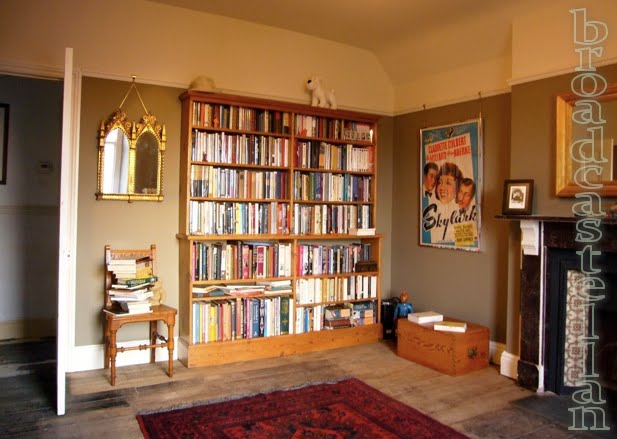
Until now, matters were complicated by the fact that I never had my own shelves on which to store such records of radioโ€™s past. Well, Iโ€™ve got the bookshelves set up in my room at last. Nearly five months after moving into our new old house, I once again enjoy ready access to the appreciable if generally unappreciated literature of the air.

Back in November 1923, a critic of Radio Broadcast magazine observed that since libraries and radio have similar aims, it was

surprising that they have not cooperated nearly as fully as they might. Much of the radio broadcasting is instructive and entertaining; and so is it with the books on the library shelves. Radio is ever improving the musical and literary tastes of thousands of listeners-in, who, having their interest aroused, may find increased pleasure from music or literatureโ€”and the libraries can supply the latter.

Some twenty years later, what there was of radio literature hardly reflected the programs enjoyed by millions on radio. Calling it a โ€œsad observation,โ€ Sherman H. Dryer remarked in Radio in Wartime (1942) that

in the twenty-five years of its life few serious or critical books have been written about radio. The literature of radio is divided into two main parts: anthologies of โ€œbestโ€ broadcasts, or vocational textsโ€”How to Write for Radio, Radio Direction, How to Become an Announcer.

To these two kinds of books, Dryerโ€”among a few others like Robert Landry, Francis Chase, and Charles Siepmannโ€”added a small number of critical studies on radio broadcasting; and, two decades later, there emerged a market for nostalgia and history.

As Max J. Herzberg put it in Radio and English Teaching (1941), radio โ€œneed not be a substitute for the library; it can result in more and not less frequent use of books.โ€

I find that, tuning in, I not only turn to books on radio, but go in search of related material, original sources and histories. In other words, radio does not merely compel me to set up a shelf for books devoted to the subject; it continues to educate me about Western culture, the histories in which it dealt and out of which it arose. Looking at the faces of long forgotten performers and reading about their once famous acts tells me a lot about the boundaries and hazards of any pursuit of happiness defined by popularity and the statistical apparatus relied upon for its measurement.

The by now unpopular culture of radio dramatics has proven an academic and professional cul-de-sac for me; but my interest in and commitment to its study has remained nearly undiminished. As I said, I am not very ambitiousโ€”which is precisely why I feel free to continue the pursuit of what doesnโ€™t seem to get me anywhere . . .

This, by the way, is my 701st entry into the broadcastellan journal.

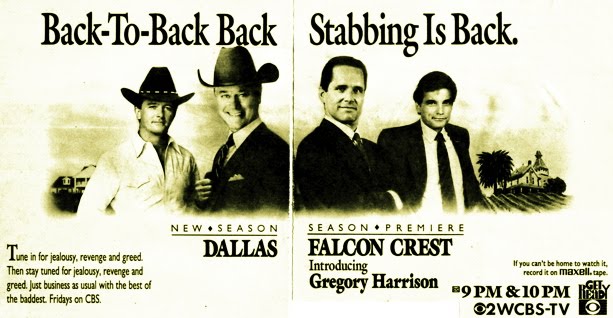
Back to Back-to-Back; or, Serialization of Schemes

A long time (well, okay, make that โ€˜about four and a half yearsโ€™) ago I came to the realization that the key to keeping an online journalโ€”and oneโ€™s fingers regularly on the keyboard in its serviceโ€”is serialization: some kind of evolving plot that, like life and Stella Dallas on a diet, keeps thickening and thinning from Monday till Doomsday until the inevitable sundown that not even Guiding Light could outshine.

Despite this realization, though, I have never managed to make a success of stringing together the latest on my follies and failures, mainly because I did not set out to make my person the axis around which this less than celestial body of essays spins. That, in recent months, the revolutions have ground to a near halt and affairs have become all but devolutionary is largely owing to the series of friction that is my one life to live beyond these virtual pages. These days, writing in installments begins and ends in โ€˜stall,โ€™ which is the least I tend to do best.

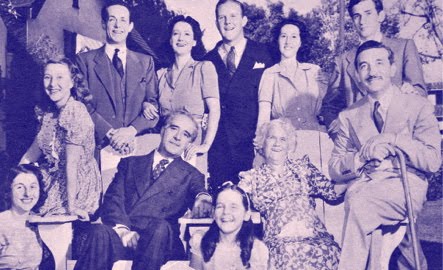
The cast of One Man’s Family

Not that the contemplation of the presumably out-of-date lends itself to frequent updates. I mean, whatโ€™s the point of being current when your harvest is raisins? For the love of ribbon mikes, how many times can you run away with the A & P Gypsies and still expect anyone to follow the run-down caravan in which you survey the bygone scene? Good for how many yarns are the bewildering progeny of the Happiness Boys, that old โ€œInterwoven Pair,โ€ until any attempt at catching up with the catโ€™s whiskers and its litter unravels like knitting gone kittyโ€™s corner? Why go on circulating gossip from the Make Believe Ballroom as the world turns the radio off?

Clearly, there is room for a chorus line of doubt when I now announce the beginning of a new chapter in the cancellation dodging saga of broadcastellan. Anyone hoping for a weekly quintuplet of All My Mindโ€™s Children should be advised that this is going to be more a case of One Manโ€™s Family Planning . . .

"2X2L calling CQ. . .": The Night They Made Up Our Minds About Realism

Radio Guide (19 November 1938)

This is just the night for a returnโ€”a return to that old, beloved yet woefully neglected hobbyhorse of mine. You know, the Pegasus of hobbyhorses: the radio. After all, it is the anniversary of the Mercury Theatreโ€™s 1938 โ€œWar of the Worldsโ€ broadcast, a date that lives in infamy for giving those who say that โ€œseeing is believingโ€ an ear-opening poke in the eye. These days, the old Pegasus doesnโ€™t get much of an airing. It may have sprung from the blood of Medusaโ€”but that old Gorgon, television, still has a petrifying grip on our imagination.

What made โ€œThe War of the Worldsโ€ so convincing was that it treated fantasy to the trickery of realism, by turning an old sci-fi yarn into what, too many, sounded like a documentary. As the programโ€™s general editor, John Housemanโ€”who gave up the ghost on Halloween in 1988โ€”recalled about the Mercuryโ€™s holiday offering, not even the script girl had much faith in the material: โ€œItโ€™s all too silly! Weโ€™re going to make fools of ourselves. Absolute idiots.โ€ Instead, the broadcast made fools of thousands by exploiting their pre-war invasion anxieties.

As I put it in Etherized Victorians, broadcast fictions could

tap into what McLuhan argued to be โ€œinherent in the very natureโ€ of radioโ€”the power to turn โ€œpsyche and society into a single echo chamber.โ€

The more urgent concern for broadcasters had always been whether it was proper for radio dramatists to exploit this power at all, especially after the codes of radioโ€™s surface realism had been so forcefully violated by Howard Kochโ€™s dramatization [. . .]. In one of the most disturbing scenes of the play, a speaker identified as a CBS announcer addresses the public to document the end of civilizationโ€”โ€œThis may be the last broadcastโ€โ€”until succumbing to the noxious fumes that spread across Manhattan and extinguish all human life below. ย His body having collapsed at the microphone, a lone voiceโ€”rendered distant and faint by a filterโ€”attempts to establish communication.ย 

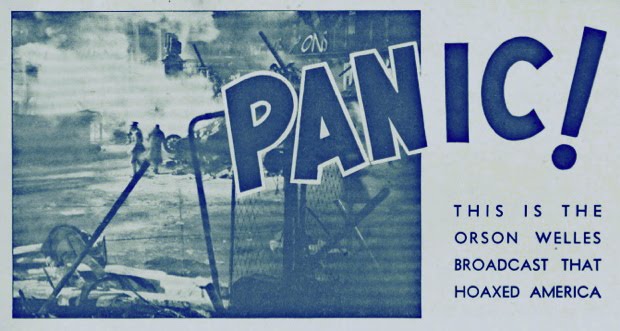
It is the voice of a radio operator: โ€œ2X2L calling CQ. . . . 2X2L calling CQ . . . . 2X2L calling CQ . . . New York. Isnโ€™t there anyone on the air? [Isnโ€™t there anyone on the air?] Isnโ€™t there anyone. . . .โ€ ย The Mercury Playersโ€™ โ€œholiday offeringโ€ had not only โ€œdestroyed the Columbia Broadcasting System,โ€ as Welles jested at the conclusion of his infamous Halloween prank, but had pronounced the death of its receiversโ€”the listening public. ย Considering the near panic that ensued, was it advisable to open the realm Esslin called a โ€œregion akin to the world of the dreamโ€ without clearly demarcating it as fantasy by resorting to the spells of Trilby, Chandu, or The Shadow?

After that night, the aural medium as governed by those in charge of the realties of commerce and convenience seemed destined to perpetuate what Trilling referred to as the โ€œchronic American beliefโ€ in the โ€œincompatibility of mind and reality.โ€

Related writings
โ€œโ€˜War of the Worldsโ€™: A Report from the Sensorial Battlefieldโ€
โ€œโ€˜War of the Worldsโ€™: The Election Editionโ€
โ€œThousands Panic When Nelson Eddy Begins to Singโ€

They Also Sell Books: W-WOW! at Partners & Crime

Legend has it that, when asked what Cecil B. DeMille was doing for a living, his five-year-old grand-daughter replied: โ€œHe sells soap.โ€ Back then, in 1944, the famous Hollywood director-producer was known to million of Americans as host and nominal producer of the Lux Radio Theater, from the squeaky clean boards of which venue he was heard slipping (or forcefully squeezing) many a none-too-subtle reference to the sponsorโ€™s products into the behind-the-scenes addresses and rehearsed chats with Tinseltownโ€™s luminaries, lines scripted for him by unsung writers selling out in the business of making radio sell.

No doubt, the program generated sizeable business for Lever Brothers; otherwise, the theatrical spin cycle conceived to bang the drum for those Lads of the Lather would not have stayed afloat for two decades, much to the delight of the great (and only proverbially) unwashed. For all its entertainment value, commercial radio was designed to hawk, peddle and tout; and although the spiel heard between the acts of wireless theatricals like Lux has long been superseded by the show and sell of television and the Internet, old radio programs still pay off, no matter how freely they are now shared on the web. In a manner of speaking, they still sell, albeit on a far smaller and downright intimate scale.

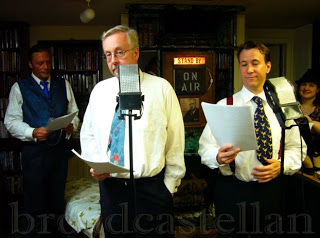
Take W-WOW! Radio. Now in its fourteenth season, the opening of which I attended last month, the W-WOW! Mystery Hour can be spentโ€”heard and seenโ€”on the first Saturday of every month (July and August excepting) from a glorified store room at the back of one of the few remaining independent and specialty booksellers in Manhattan: Partners & Crime down on Greenwich Avenue in the West Village. The commercials recited by the cast are by now the stuff of nostalgia, hilarity, and contention (“In a coast-to-coast test of hundreds of people who smoked only Camels for thirty days, noted throat specialists noted not one single case of throat irritation due to smoking Camels“); but the readings continue to draw prospective customers like myself.

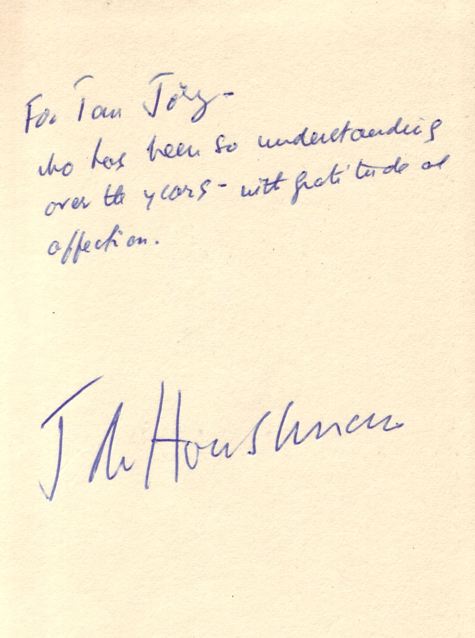
Whenever I am in town, I make a point of making a tour of those stores, even though said tour is getting shorter and more sentimental every year. There are rewards, nonetheless. Two of my latest acquisitions, Susan Wareโ€™s 2005 โ€œradio biographyโ€ of the shrewdly if winningly commercial Mary Margaret McBride and John Housemanโ€™s 1972 autobiography Run-through (signed by the author, no less) were sitting on the shelves of Mercer Street Books (pictured) and brought home for about $8 apiece. The latter volume is likely to be of interest to anyone attending the W-WOW! production scheduled for this Saturday, 3 October, when the W-WOW! players are presenting the Mercury Theatre on the Air version of Dracula as adapted by none other than John Houseman.

As Houseman puts it, the Mercuryโ€™s โ€œDraculaโ€โ€”the seriesโ€™s inaugural broadcastโ€”is โ€œnot the corrupt movie version but the original Bram Stoker novel in its full Gothic horror.โ€ Indeed, Housemanโ€™s outstanding adaptation is a challenge worthy of W-WOW!โ€™s voice talent and just the kind of material special effects artist DeLisa White (pictured above, on the right and to the back of those she so ably backs) will sink her teeth into, or whatever sharp and blunt instruments she has at her disposal to make your hair stand on end.

Rather more run-of-the-mill were the scripts chosen for W-WOW!โ€™s September production, which, regrettably, was devoid of vamps. You know, those double-crossing, tough-talking dames that enliven tongue-in-cheek thrillers like The Saint (โ€œLadies Never Lie . . . Muchโ€ or โ€œThe Alive Dead Husband,โ€ 7 January 1951) and Richard Diamond (โ€œThe Butcher Shop Case,โ€ 7 March 1951 and 9 March 1952), a story penned by Blake “Pink Panther” Edwards and involving a protection racket. The former opened encouragingly, with a wife pretending to have killed a husband who turned out to be yet living, if not for long; but, as it turned out, the dame had less lines than any of the ladies currently in prime time, or any other time for that matter. Sure, crime paid on the air; but sex, or any vague promise of same, sells even better.

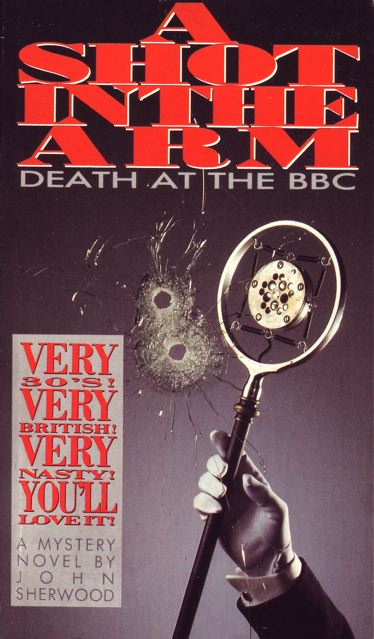
That said, I still walked out of Partners & Crime with a book in my hand. As I passed through the store on my way out, an out-of-print copy of A Shot in the Arm caught my eye and refused to let go. Subtitled โ€œDeath at the BBC,โ€ John Sherwoodโ€™s 1982 mystery novel, set in Broadcasting House anno 1937 and featuring Lord Reith, the dictatorial Baron who ran the place, is just the kind of stuff I am so readily sold on, as I am on browsing in whatever bookstores are still standing offlineโ€”if only to give those who are still in the business of vending rare volumes a much-deserved shot in the open and outstretched arm.

Related recordings
“Ladies Never Lie . . . Much,” The Saint (7 January 1951)
“The Butcher Case,” Richard Diamond (7 January 1950)
“The Butcher Case,” Richard Diamond (9 March 1951)

Yoo-hoo! Isn’t anybody anymore?

Remembering Gertrude Berg, that is. Having been to Fleischmanns last year (without spotting her tombstone there), I was thrilled to be catching Aviva Kempnerโ€™s much reviewed if ultimately unsatisfying documentary Yoo-Hoo, Mrs. Goldberg at the Quad Cinema in Manhattan last week. After all, it is not a film you are likely to see in Europe (or, for that matter, in any US multiplex); and I doubt whether it will ever be released in Wales, my present home. Who, after all, remembers (or ever had the opportunity of) tuning in to The Goldbergs, or The Rise of the Goldbergs, as Bergโ€™s program was initially called in the days before television?

Kempnerโ€™s filmic memorial to Berg and her creationโ€”heard on radio and seen on stage, television and the moviesโ€”aims at countering the oblivion to which the writer-producer-actress and her signature character have long been consigned; but, judging from the elderly, Jewish audience among which I found myself, aside from my good friend, Brian, Mrs. Goldberg is not likely to find new admirers through Kempnerโ€™s polite and downright reverent re-introduction, however deserving she may be of praise.

โ€œWhy, for all her popularity and apparent influence, is Gertrude Berg so little remembered today?โ€ Paul Farhi of the Washington Post asked back in July 2009. It is a question Kempner does not trouble herself to answer, other than with a resounding โ€œWhy indeed?โ€ Predating but overshadowed by I Love Lucy, The Goldbergs come across as little more than a noteworthy, ethnic curiosity, a historical footnote, the stuff of nostalgia. At least, Kempnerโ€™s documentary, which New York Post critic V. A. Musetto called โ€œfawning and formulaic,โ€ did little to convince me otherwiseโ€”and I donโ€™t need convincing.

โ€œUlleright, ulleright!โ€ For all its shortcomings, Yoo-Hoo, Mrs. Goldberg is still a welcome and overdue tribute to of a long overlooked icon of American popular cultureโ€”and an enterprising, emancipated woman at that; but it is also a rather perfunctory and historically questionable piece of bio-cinematography, replete with a poorly reenacted scene from Bergโ€™s earliest radio script.

Except for a few tantalizing clips of Edward R. Murrow’s interview with Berg on Person to Person and those seemingly random excerpts from The Goldbergs kinescopes, the documentary, like most pieces of ocular proof, is at a loss to fill the screen, resorting to images only remotely related to the subject; or, else, to talking heads like Ed Asnerโ€™s and Ruth Bader Ginsburg (who recalls being addressed as Mrs. Goldberg). Meanwhile, the snippets from Bergโ€™s radio and television broadcasts are often unintelligible, if it werenโ€™t for the subtitles. The result is about as funny as a translated jokeโ€”and certainly not remotely as amusing or charming as Bergโ€™s glossy autobiography Molly and Me (1961).

Here, for instance, is how autobiographer Berg made the connection between her parentage and her wireless offspring. Those watching Kempnerโ€™s documentary never get to hear about it. To them, Molly is a kindly woman leaning out of a window, chatting to her neighborsโ€”and an audience long since dispersedโ€”or praising the miracle of Sanka Coffee, instead of yelling โ€œYoo-hoo, is anybody?โ€ into a telephonic darkness just beyond her Bronx apartment:

My father was a special fan of the dumbwaiter and when radio was invented, he gave up the shaftway only because of the better coverage. But until that time it was through the dumbwaiter that he got to know everybody, not by their names, but by their locations. He predicted divorce for Mr. and Mrs. 5-D because of their nightly arguments; he knew that Mrs. 3-Aโ€™s son was going to leave home before even Mrs. 3-A. It didnโ€™t take second sight; all it took was a good ear and a comfortable chair near the dumbwaiter door.

Kempnerโ€™s film is so reverent and nostalgic, it sentimentalizes the already saccharine confection of Mother Goldberg, whose Jewish Amos โ€˜nโ€™ Andyisms enliven the early scripts for her radio serial, extant only in print, before the series-turned-daytime serial settled for at times โ€œsoap-operaishโ€ melodrama.

โ€œ[E]verything about The Goldbergs changed but the theme song, โ€˜Toselliโ€™s Serenade,โ€™โ€ Berg explains in Molly and Me. Those encountering Molly in Kempnerโ€™s documentary are unlikely to see Molly as an early Lucy, or, come to think of it, as a prototype for linguistically challenged immigrant Ricky Ricardo.

โ€œSo come down a liddle after,โ€ Mrs. Goldberg once yoo-hooed to her neighbor, Mrs. Bloom, โ€œmaybe veโ€™ll go to a mofieโ€”is playing de Four Horsemen in de Apoplexies.โ€ Well, you almost got it, Molly. Apoplexies are the kind of movie theaters that leave you angry at your lack of choices. Too bad that even the exceedingly rare art house simplexes are not likely to rescue you from the fate of being trampled to death by the pale horse of apathy.


Related writings
The House of [Broken] Glass
Wireless Women, Clueless Men: Gertrude Berg, Everybody’s Mama
On This Day in 1941: Molly Goldberg Nearly Chickens Out

“Chew that bacon good and slow”: Our Town Like You’ve Never Seen It

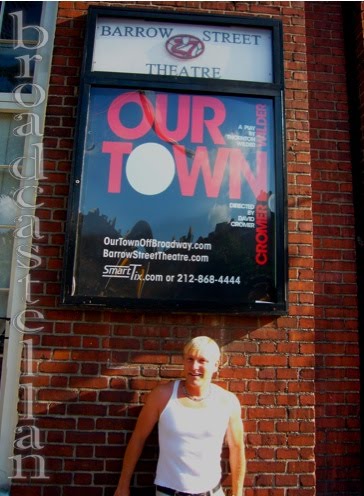
Okay, so Iโ€™ve been cutting a few corners during my present, month-long stay in New York City; but I wasnโ€™t about to cut Groverโ€™s Corners. Our Town, that is, a new production of which is playing at the Barrow Street Theatre in Greenwich Village. These days, there isnโ€™t much on Broadway to tempt me into letting go of whatever is left in my wallet. I mean, Shrek the Musical? Whatโ€™s next, Pac-Man of the Opera? A concert version of Saved by the Bell? Secret Squirrel on Ice? I am all for revisiting the familiarโ€”a tendency to which this journal attestsโ€”as long as I feel that such recyclings are worth my impecunious (hence increasingly persnickety) whileโ€”and theatrical retreads of The Addams Family, 9 to 5 or Spider-Man are not. Come to think of it, I had never seen a performance of Thornton Wilderโ€™s Pulitzer Prize-winning Our Town, which I always thought of as the ideal radio play. Well, let me tell you, David Cromer sure made me see it differently.

Our Town was produced on the air at least three times, even though the Lux Radio Theatre version (6 May 1940) is a reworking of the screenplay, replete with a tacky, tagged-on Hollywood ending and ample space for commercial copy between the acts. Wilderโ€™s 1938 play is decidedly radiogenic in its installation of a narrator (or Stage Manager) and its insistence of doing away with props or scenery. The Barrow Street Theater production seemed to be in keeping with the playwrightโ€™s instructions; and I was all prepared to watch it with my eyes closed.

There are two tables on the small stage; and the props do not amount to more than a hill of string beans. The Stage Manager points into the audience, inviting us to envision a small town in New Hampshire, anno 1901:

Along here’s a row of stores. ย Hitching posts and horse blocks in front of them. First automobile’s going to come along in about five years belonged to Banker Cartwright, our richest citizen . . . lives in the big white house up on the hill.

Here’s the grocery store and here’s Mr. Morgan’s drugstore. ย Most everybody in town manages to look into those two stores once a day.

Public School’s over yonder. ย High School’s still farther over. ย Quarter of nine mornings, noontimes, and three o’clock afternoons, the hull town can hear the yelling and screaming from those schoolyards.

Some eyes followed the pointed finger in my direction, faces in the crowd briefly looking past me in hopes of making out the Methodist and Unitarian churches just behind my back. Now, Iโ€™m not saying that the actors were not worth looking at, Jennifer Grace as Emily Webb being particularly charming. Still, at the end of the first act, I could not figure out what Frank Scheck of the New York Post referred to as โ€œrevolutionary staging.โ€ Two tables, eight chairs, string beans?

By act three, I understood. David Cromer defies Wilderโ€™s instructions (โ€œNo curtain. No sceneryโ€)โ€”and to startling effect. I never thought that the smell of bacon could be so overwhelming, so urgent and direct. Sure, it has often made my mouth waterโ€”but my eyes? Whether or not you are a staunch vegetarian, there is reality in the scent, just as there is a revelation behind that curtain. Our Town may be a wonderful piece of pantomime; but Cromer deserves some props.

โ€œOh, Mama, just look me one minute though you really saw me,โ€ the dead Emily implores the unseeing childhood vision of her mother. โ€œMama, just for a moment we’re happy. Let’s look at one another.โ€ Seeing this fragrant scene acted out made me realize anew the importance of coming to all of oneโ€™s senses, of partaking by taking in, of grabbing hold of the moment (which we Germans call an Augenblick, a glance) by beholding what could be gone at the blink of an eye.


Related recordings
“Our Town,” Campbell Playhouse (12 May 1939)
“Our Town,” Lux Radio Theatre (6 May 1940)