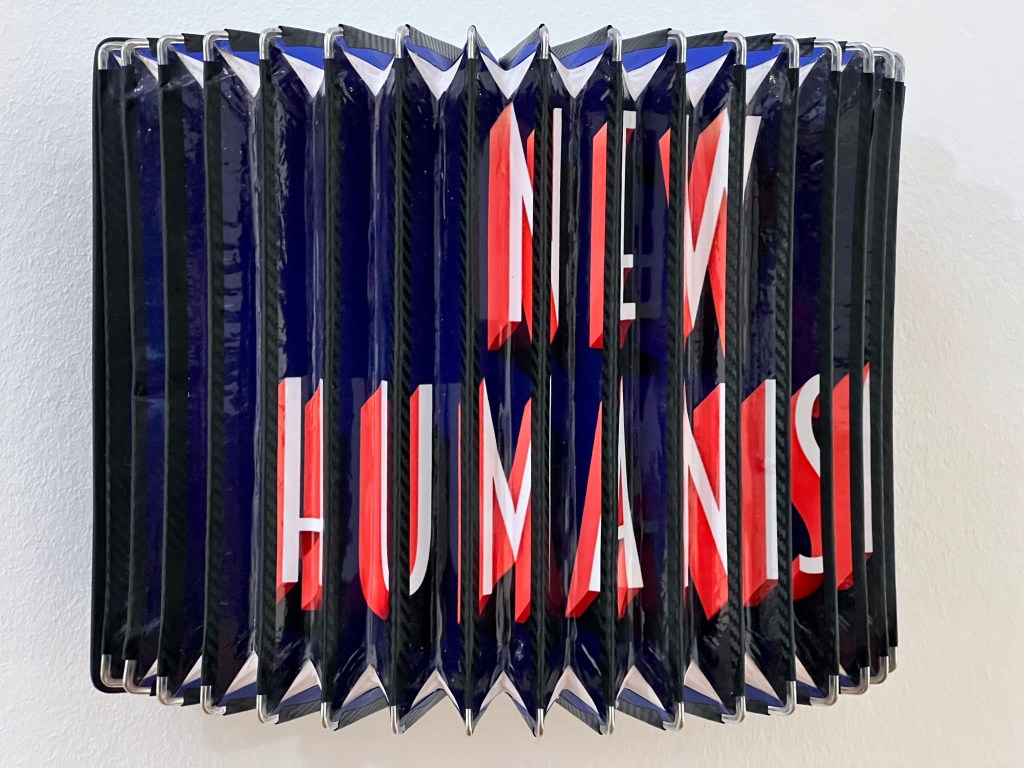
Pável Aguilar, Acordeones Anticoloniales (2022), “New Humanism”; installation view, Museum Ludwig; photograph by Harry Heuser
Get out much? Going places? Ready to take the part of “tourist”? Loaded with loathsome connotations, “tourist” has become a tainted word associated with a lack of regard for the cultures and customs of people who are forced to host the multitudes heading south for a few rays of sunshine and a dip in the sea, or whatever the local attractions the attractiveness of which the locals are promptly deprived by strangers that temporarily lay claim to them.
I am a “visitor,” not a “tourist.” That is a distinction I have always insisted on making when the latter label is affixed to me by New Yorkers, native or otherwise, who assume that my non-native tongue will stop wagging eventually to lick stamps set aside for picture postcards showing sights in the absence of which, once my “vagabond shoes” are back where they presumably belong, I am destined to suffer those “little town blues.”
To my mind, “visitor” better represents the close relationship that I—made in Germany, remade in/by NYC and based in Wales, as my Instagram profile proclaims—have with certain places, including Manhattan, whose sounds I recorded during my first visit in 1985 so that I might envelop myself in the metropolitan air by playing them back in the smalltown confines of my parents’ house.
Not that returning to places we once called home always feel like a homecoming, as my visit to that house in December 2022, after an absence of thirty-four years, persuasively drove home.
It was on that trip to the motherland that I went back as well, albeit not for the first time, to Museum Ludwig, the opening of which in 1986 I had greeted as a sign that Cologne had finally moved out of the shadow of the cathedral that towers over the cityscape like a two-fingered salute.
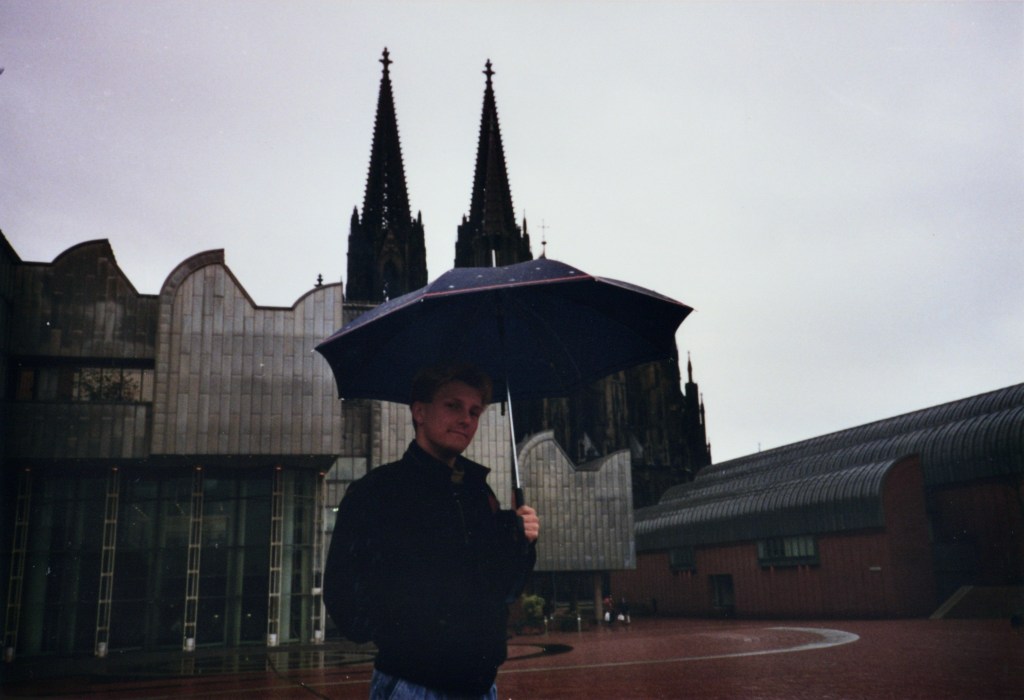
In front of Wallraf-Richartz Museum and Museum Ludwig, with Cologne Cathedral in the background, 20 Nov. 1988
Coming back, I was relieved to find that, during my absence, Museum Ludwig had not stood still and was still committed to engaging with the here and now, as its exhibition series Hier und Jetzt promises to do. Especially reassuring to me was the series’ 2022/23 iteration Anti-colonial Interventions (8 Oct. 2022 – 5 Feb. 2023). “Identity and Otherness” had long been a thematic strand of my art history teaching, whose attention to the marginalized derives from a personal history of dislocation, estrangement, and longing.
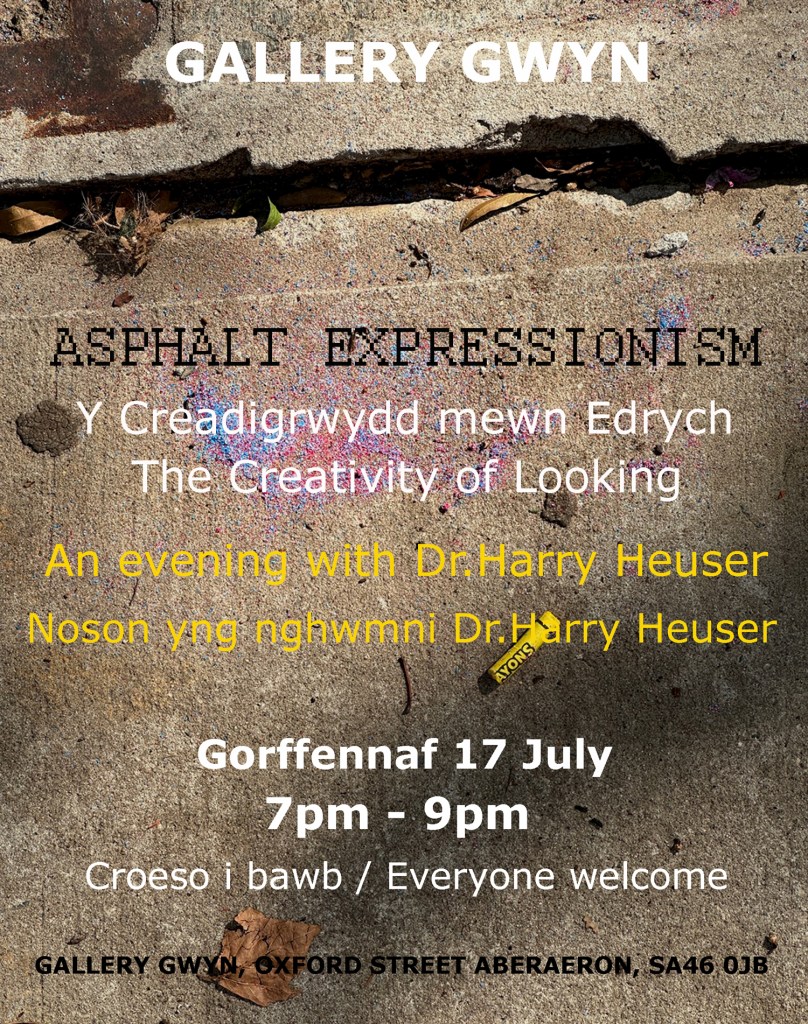
I have been asked, at some point during the run of my exhibition at Gallery Gwyn, to give a talk. I requested that the event be announced as ‘an evening with.’ Asphalt Expressionism was intended to be inclusive and interactive, and the scheduled get-together, likewise, should promote exchange. A conversazione, perhaps, but not a lecture.
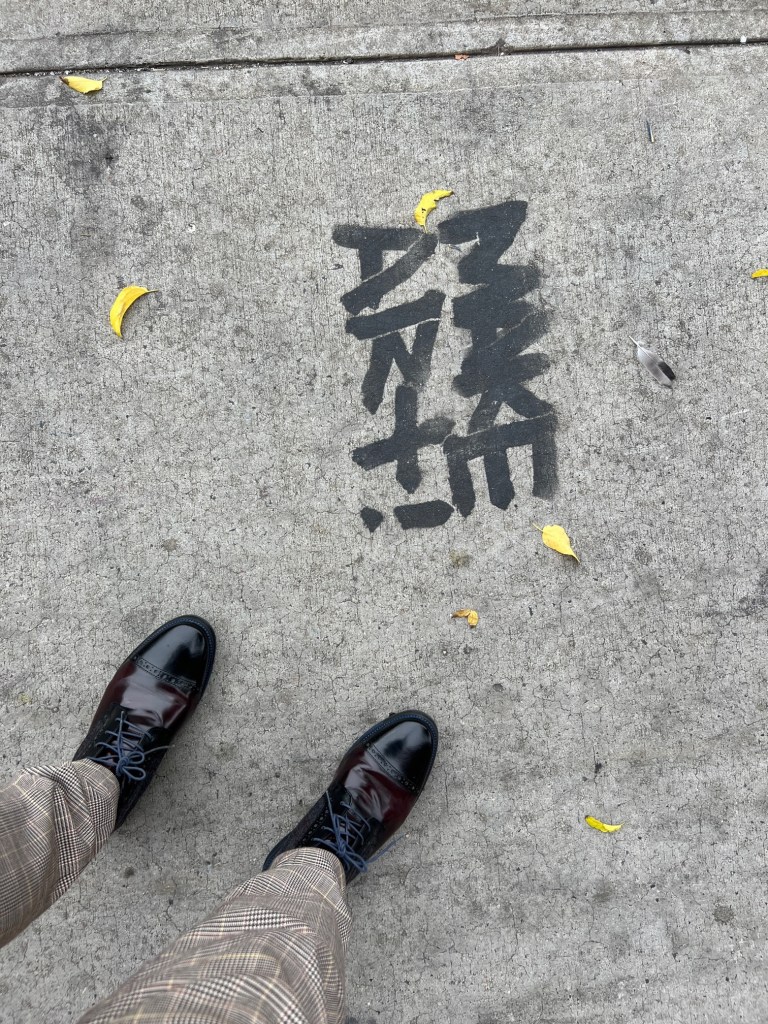
Given that the smartphone is my primary means of creating the images huddled under the fanciful umbrella of Asphalt Expressionism—a series of digital photographs of New York City sidewalks—reference to the ubiquitous technology strikes me as an effective way of connecting with those who, phone no doubt in hand, might be joining me that evening.
To say that I had misgivings about visiting the Heidi Horten Collection during a recent stay in Vienna is an understatement, especially in light of the scandal surrounding the scrapped auction of Horten’s jewelry, misappropriated as it was from Jewish families from whose disenfranchisement Horten and her husband demonstrably profited.
The Heidi Horten Collection. All photographs: Harry Heuser
“Christie’s Cancels Sale of Jewelry Connected to Nazi-Era Fortune,” a 31 August 2023 headline in the New York Times read. According to the article, the “decision follow[ed] a backlash from Jewish organizations after the auction house generated $202 million” in an earlier sale of Horten’s hoarded treasures.
My views on the Heidi Horten Collection—just like my viewing of the temporary exhibition “Rendez-Vous: Picasso, Chagall, Klein and Their Times” then on show there—were no doubt skewed. And yet, I am certain that I would have felt just as disturbed and affronted had I been unaware of the controversy.
“Notice anything different since your last visit?” asked a friend of mine—himself a former New Yorker now living in the wasteland of discarded values that is the Sunshine State of emergency known as Florida. We were chatting on the phone some time after my arrival in the estival Big Apple, a stew seasoned with the smoke of Canadian wildfires.
Yorkville, 9 July 2023
I had not been in town for about eight months, so I was bound to spot some change beyond the odd coin left in my wallet. My bank account was taking a sustained beating while I was trying to enjoy a few drinks with friends at my favorite watering holes. But that was to be expected.
West Village, 12 July 2023
Apart from air pollution, price hikes and the relentless bulldozing of neighborhood community, continuity and character wrought by the wrecking of the architecture for a glimpse of which we will soon have to refer to painting by Edward Hopper—nothing new there, either—what struck me most was an outbreak different from but related to the pandemic that, in the form of COVID-19 testing tents on Manhattan street corners, still dominated the sidewalks in the autumn of 2022. At one of them, I had tested positive for the first time.
Chalk drawing on the pavement at Union Square. Not that I need an invitation.
Inhale. Exhale. Inhale. Exhale. I must try that some time without using a brown paper bag. Just kidding – but only just. It’s been a breathless few weeks. Now that I am coming up for air, I’d like to say, if it were not such a hackneyed phrase, that I have returned from my long and long-delayed New York trip with a suitcase full of memories. Not that I care to be reminded about my luggage, given that, owing to an absent-mindedness brought on by physical exhaustion and an acute state of all-over-the-placeness, my carry-on case continued its journey by rail without me.
Argh. Among other things, the valise gone astray contained a rare copy of Mr. Fortune Finds a Pig (1943), a curiosity of a mystery about which, had I not, through my negligence, forfeited the opportunity of its perusal, I would have liked to say considerably more here, especially given that its story is set in Wales, whereto its English author, H. C. Bailey (1878–1961) retired at the end of his career.
My copy of the novel, before it got lost in transit.
While in New York, I did a bit of research at the New York Public Library’s Billy Rose Theatre Division on lost recordings of Bailey’s “Mr. Fortune” stories, nineteen of which were adapted for US radio in the mid-1930s and are extant as scripts. More about that, and the pig, some other time, the lost-and-found department of Transport for Wales permitting. Never mind flying. Pigs might travel by rail.
Pardon the rustling of mental notes; but as recounted here previously, fortune did not exactly smile on me during my stay in New York, entirely overshadowed as it was, at least initially, by my former partner’s heart attack and my bout of Covid, which barred me from the ICU and turned my legs to lead as I dragged myself from one testing site to another.
Rasp. Not that my sojourns in the metropolis are ever an unalloyed joy, tinged as they invariably are with a sense of loss and estrangement. Each year, the city I knew most closely when I lived there from 1990 to 2004, is becoming less familiar, less recognizable, and generally less worth revisiting, especially since what was particular and once characteristic is gradually being replaced by the generic and corporate.
The pandemic has speeded up this process, with many of the remaining one-of-a-kind sites going under in a sump of sameness. A few years ago, when I researched the career of the English printmaker Stanley Anderson for a catalogue raisonné and a series of exhibitions, I was struck by the sense of dislocation some of his etchings communicate. A kindred spirit, I am alive to Anderson’s visual commentaries on a world that was vanishing – or was made to disappear – before his very eyes.
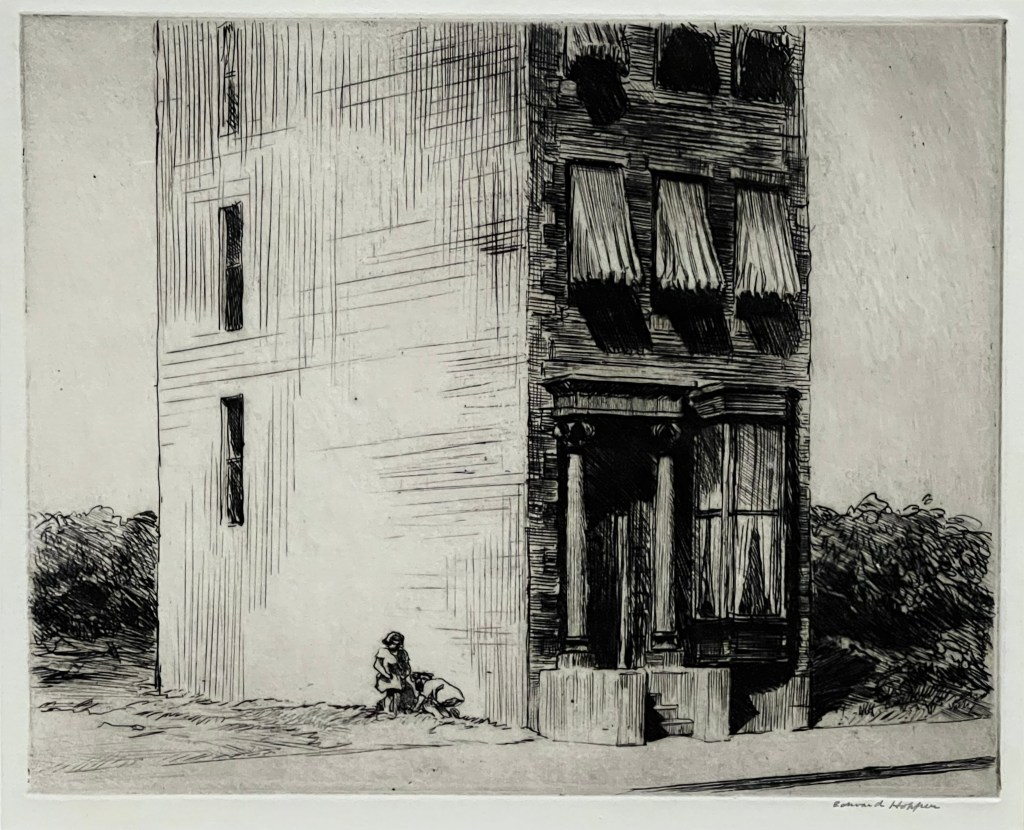
Edward Hopper, The Lonely House (1920)
I was reminded of Anderson’s alternative views of 1920s London – of construction sites and demolitions – when I came across the etching The Lonely House (1920) in the exhibition Edward Hopper’s New York at the Whitney. New York City, as the show’s curators put it with platitudinous generality, “underwent tremendous development” during Hopper’s lifetime; and instead of focussing his attention on landmarks that are more likely to stay in place than the architecturally commonplace – an assumption proven false decades later by the pulverization of the World Trade Center, an act of religious fanaticism bringing home that iconoclasm on any scale demands the iconic – Hopper “turned his attention” to “unsung utilitarian structures” and was “drawn to the collisions of the new and old” that “captured the paradoxes of the changing city.”
However, it is not visuals alone that vanish or material culture only that is subject to erasure. Sounds, too, face neglect and extinction. Unless they are voices or musical compositions, aural environments are largely unheard of in most records of our experiences, public or private. Sounds may survive as a backing track to our home videos, but rarely do they become the main event, the real thing of our conscious engagement with sensed reality.
Well, it ain’t over ‘til the proverbial — and stereotypically plus-sized — diva, binary or otherwise, puts down her lozenges to launch a final attack on the lorgnette-clutching, socially-distanced crowds. In as plain a variety of English as I can bring myself to adopt: we haven’t heard the last of COVID-19. Done as we might think we are with the pandemic the US President declared over, the virus continues to catch us unawares and mess with our lives.
It sure is messing with mine right now, in a number of ways. Almost immediately on arrival in New York City two weeks ago, I caught some resilient variant of the bug I had managed to steer clear of for so long. And it caught up with me despite all vaccinations and boosters, having taken advantage of the first opportunity to have my last antiviral top-up just two days before my departure.
Imperative mood
This is my first return visit to my old Manhattan neighborhood in three years … but clearly things did not go as planned or hoped for. What makes matters worse is that I had intended to be of some use to an old friend and former domestic partner, who, just days prior to my arrival, suffered a massive heart attack and has been in intensive care ever since. Here I am, stuck in his apartment, just a 20-minute walk away from the hospital that is now off limits. No doubt, millions of New Yorkers felt like that during lockdown — when everything and everyone close by was suddenly out of reach.
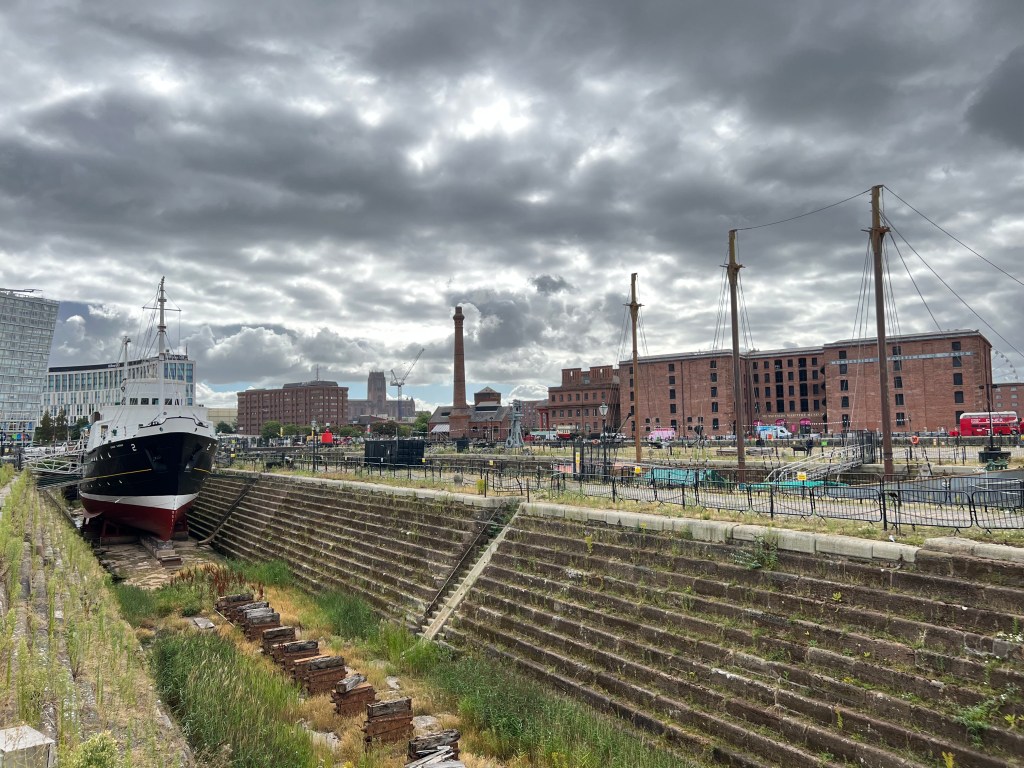
Navigating the docklands on my way to Tate Liverpool
Just what is a landscape? It is with this question that I open the undergraduate art history module Looking into Landscape, which I have been teaching at Aberystwyth University since 2016. In 2014, I leaped at the opportunity of trialling the module in China, where the history of art engaging with the natural and human-made environment spans many more centuries than it does in the West, and where it bears little resemblance to what Westerners tend to regard as “landscape” when referring to artistic practices rather than the outdoors. Landscape, that is, as a genre distinct from portraiture or still life.
But I am not lecturing. Actually, I am on research leave, which will take me back to New York – after a three-year absence from my old neighborhood and the favorite haunts that may well have become unrecognizable or ceased to exist in the interim – in preparation for my exhibition Asphalt Expressionism, about which I shall have – and have to have – more to say in subsequent posts as I ponder just what I have gotten myself into this time.
To some extent, Asphalt Expressionism – a belated follow-up to my 2018 exhibition Travelling Through: Landscapes/Landmarks/Legacies – is a response to the question “Just what is a landscape?” It aims to explore, in a series of photographs snapped with my phone camera, the terrain of Manhattan from the perspective of a walker looking down on the pavement rather than ahead, taking in the sights. It is an alternative approach, a looking away from what is privileged or deemed worth seeing. It is also an alternative to the tourist’s selfie, as my feet will stand in for my face in pictures that say “I was here.”
Downtown Manhattan, 11 September 2019
Unlike selfies, my photographs will not be shared first, let alone exclusively via social media, from the platforms and forums of which I have largely absented myself. Do these images belong in a gallery? Do they need to be printed and displayed to have a life, to find eyes and minds other than mine to serve other than dead ends?
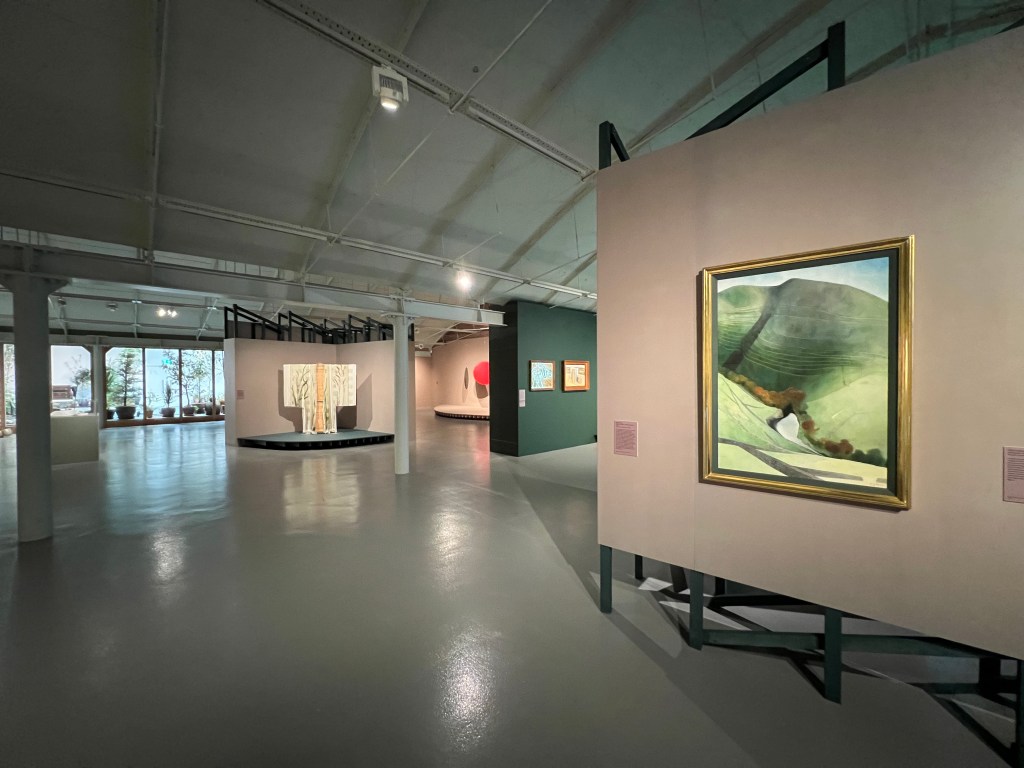
Is the gallery the habitat for creative practices engaging with the act and art of living? I asked myself just that the other day when I went to Liverpool in order to experience – or, as it turned out, in hopes of experiencing – the exhibition Radical Landscapes. The show, at Tate Liverpool, invites audiences to consider many of the forms that responses to the environment can take and how those responses may be motivated, whether it is primarily to make a living or to fight for the survival of the planet.
Displayed among the commodifiable images of the countryside were sculptures, textiles, installations, photographs – among them early efforts by Angus McBean, whose later works are currently on show in the exhibition I staged with students at Aberystwyth University – videos of performance art, as well as living plants and early twentieth-century scientific wood-and-papier-mâché models thereof. So, the question arose, again and again, “Just what is a landscape?” How is that term defined here?
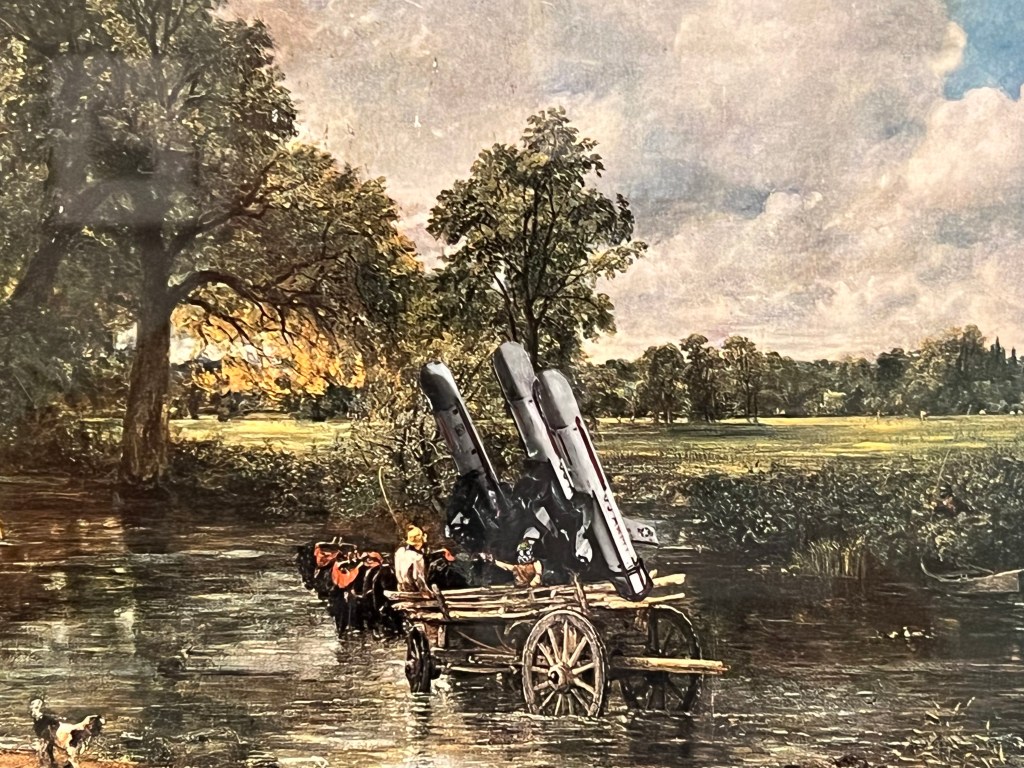
The dissatisfaction I felt walking through Radical Landscapes – well worth the walk though it is – is not so much that it does define its territory so loosely. It is that it still insisted on calling all those responses “landscapes” and declaring them to be “radical.” “Radical Landscapes” is not an oxymoron – Peter Kennard’s Haywain with Cruise Missiles (1980) makes that plain – but it is certainly a misnomer.
Curators Darren Pih and Laura Bruni doprovide some indications of how the theme or subject of their project was delimited by throwing a few descriptors into the mix, via the exhibition’s subtitle: Art, Identity and Activism. Still, much of what is on show, from oils to soil, is not genre landscape. What is radical in the creative practice of adapting to our changing environment or adopting ways of making the future survivable is activism, which may or may not yield a physical by-product displayable in a gallery space. You cannot expect to be walking a line in, say, Peru – or any line that, through radical thinking and doing, has temporarily been withdrawn between art and life or between objects and objectives – by looking at line, color and form in a cube, white or otherwise.
Peter Kennard, Haywain with Cruise Missiles (1980) detail
There is evidence of radical engagement with land on the walls, mainly in the form of documentarian photographs. But those images only remind us how galleries, by educating us about what is or was out there, also distances us from those radical approaches. In the foreword to the exhibition catalogue, Helen Legg, Director of Tate Liverpool, makes the claim that the “gallery space for this exhibition has become inverted, with the outdoors brought inside: living sculptures, film, painting, photography and immersive installations transform the gallery into a new fertile terrain.” For the most part, this is not achieved. Radical Landscape is no New York Earth Room. You can smell the difference. Nor does it hand out shovels or seed.
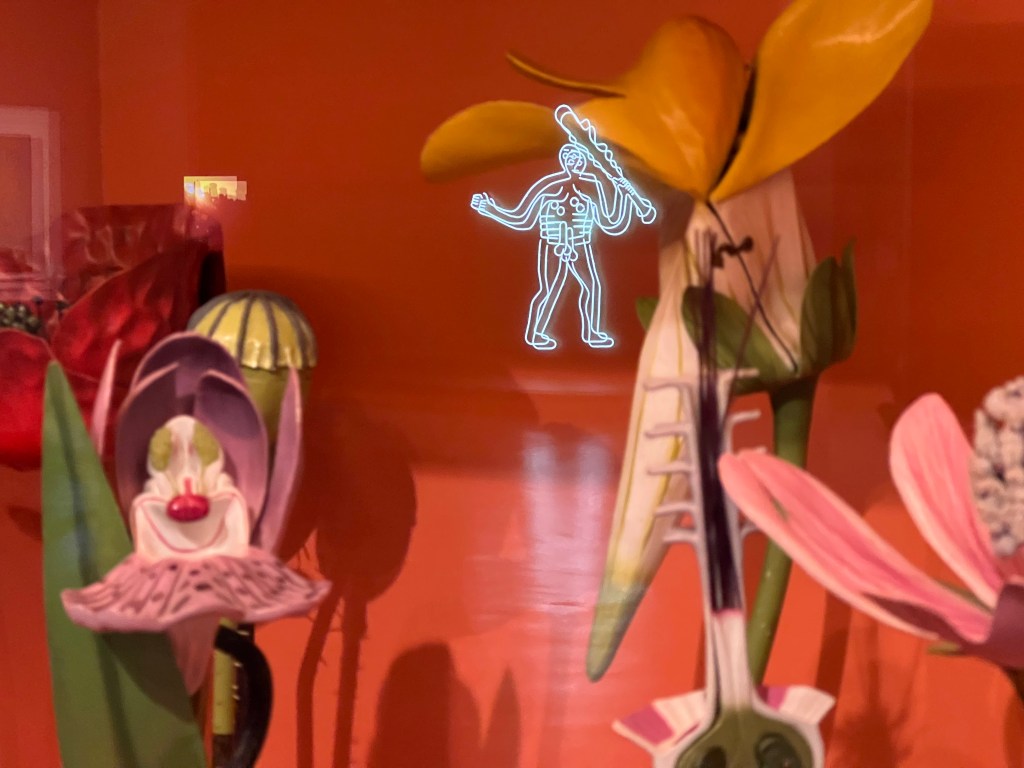
Thoroughly researched and contextualised though it is, there is nothing curatorially radical about Radical Landscapes. While the large spaces and open plan display enable stimulating interventions and juxtaposition – such as seeing Jeremy Deller’s Cerne Abbas (2019) reflected in the glass behind which other objects are mounted on the walls – it nonetheless rehearses what is part of the history it puts on view: the Enclosure Acts that, during the Industrial Revolution, did away with common land and restricts access to most of what remains of the British countryside. We can still see the countryside to which we have no access, but we can no longer experience it – unless we take radical action and trespass, invade, occupy or appropriate what has been taken from us so long ago that we are often no longer aware of that loss and the consequences of our detachment, the aftermath of which involves crises of identity and climate.
Jeremy Deller’s Cerne Abbas (2019) reflected in a display of flower models by R. Brendel and Co.
Similarly, Radical Landscapes takes from the field of creative practice – from the domain that the radical insist on being public – and parcels out what now can only be contemplated at a remove, not lived. “Developed,” as Legg reminds us, “in the midst of the Covid-19 pandemic, when access to fresh air and green space took on special significance,” Radical Landscapes casts those venturing out to experience it as witnesses, not as participants. We end up looking at where life ends by ending up as art – at historical practices preoccupied with land whose future we are shaping by our actions and apathy alike.
I started college in the spring of 1991. I had been visiting New York City since April the previous year, returning only once to my native Germany to avoid exceeding the six consecutive months I could legally stay in the US on a tourist visa. The few weeks I spent in the recently reunited Vaterland that October had been difficult to endure, and for years I had nightmares about not getting back to the place I thought of as my elective home, the realities of the recession, the AIDS crisis, Gulf War jingoism and anti-liberal politics notwithstanding.
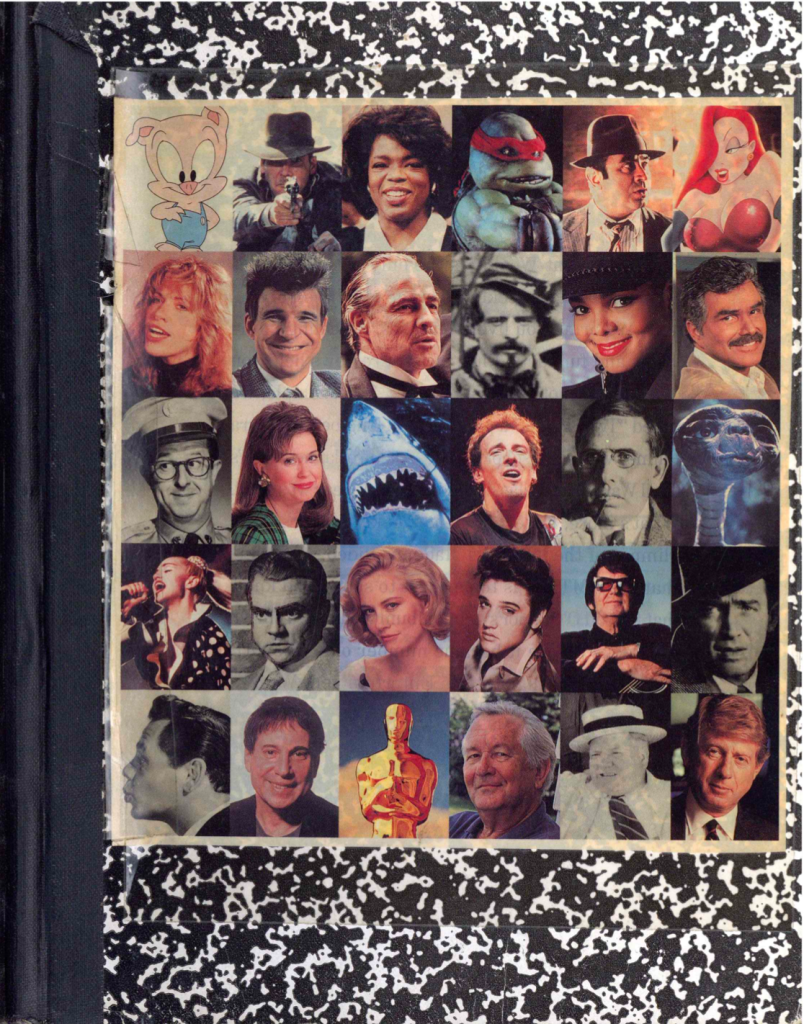
The cover of my 1991 journal, with an image collage borrowed from a copy of Entertainment Weekly
I was determined not to repeat the experience of that involuntary hiatus once the next six-month period would come to an end. A close friend, who worked at Lehman College in the Bronx, suggested that I become a student and generously offered to pay my tuition for the first year. We decided that, instead of entering a four-year college such as Lehman, I should first enroll in classes at Borough of Manhattan Community College (BMCC), an option that would cut those “foreign” tuition fees in half.
Having gotten by thus far on my better than rudimentary German high school English, I had doubts nonetheless about my fitness for college. My first English instructor, Ms. Padol, was both exacting and reassuring. She worked hard to make her students try harder. Not only did she give us bi-weekly essay assignments, and the chance to revise them, but also made us keep a journal, which she would collect at random during the semester.
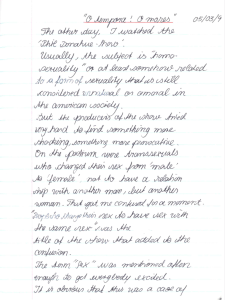
“This requirement for my English class comes almost as a relief,” I started my first entry, titled “A journal!” That it was only “almost: a relief was, as I wrote, owing to the fact that, whatever my attitudes toward my birthplace, I felt “so much more comfortable in my native language.” Back then, I still kept my diary in German.
What I missed more than the ability of putting thoughts into words was the joy of wordplay. “My English vocabulary does not really allow such extravaganzas,” I explained, “and even though the message comes through – in case there is any – the product itself seems to be dull and boring to read.” This reflects my thoughts on writing to this day. To paraphrase Gertrude Stein, I write to entertain myself and strangers.
In the days of the lockdown – which were also a time of heightened introspection – I scanned the old journal to remind myself what I chose to entertain notions of back in 1991. Many entries now require footnotes, if indeed they are worthy of them: who now recalls the stir caused by Kitty Kelley’s Nancy Reagan biography? Not that I had actually read the book. “Nobody will use this book in a history class,” I declared. Being “a compilation of anecdotes” it had “no value as a biography.” Autobiography, being predicated on the personal, cannot be similarly invalidated, as I would later argue after taking a graduate course in ‘self life writing’ with Nancy K. Miller at Lehman. What I knew even in 1991 was that a journal was not a diary.
Unlike the diary, the journal provided me with a chance to develop a writerly persona. I was playing the stranger, and what my reader, Ms. Padol, may have perceived to be my outsider perspective on what, in one entry, I called the “American waste of life” was in part my rehearsal of the part I thought my reader had reason to expect from me. However motivated or contrived, that performance tells me more about myself than any posed photograph could.
In an entry dated 3 May and titled “O tempora! O mores!” I shared my experience watching Donahue, a popular talk show at the time, named after its host. The broadcast in question was “People Who Change Their Sex to Have Sex with the Same Sex,” the sensationalism of which offering served as an opportunity to air my queer views as well as the closet of a journal that, for all its queerness, opened by lexically straightening my life by declaring my partner to be a “roommate.”
After expressing my initial confusion about the title and my indignation about the “exploitation” of the subject, I considered my complicity as a spectator and confronted the narrow-mindedness of my binary thinking:
Like the audience in the studio I asked myself why anybody would go through such a procedure only to have a lesbian relationship.
But then I realized that this is really a very shallow, stupid and yet typical question that shows how narrow-minded people are.
It also reflects ongoing intolerance in this society.
The woman in question made it clear that there is a difference between sexual identity and sexual preference. When a man feels that he is really a woman most people think that he consequently must be a homosexual.
I refer to myself in the journal as gay. What I did not say was how difficult it had been for me to define that identity, that, as a pre-teen boy I had identified as female and that, as a teenager, I had suffered the cruelty of the nickname “battle of the sexes,” in part due to what I know know (but had to look up again just now) as “gynecomastia”: the development of breast tissue I was at such pains to conceal that the advent of swimming classes, locker rooms and summer holidays alike filled me with dread. I had been a boy who feared being sexually attractive to the same sex by being perceived as being of the opposite sex.
Reading my journal and reading myself writing it thirty years later, I realise how green – and how Marjorie Taylor Green – we can be, whether in our lack of understanding or our surfeit of self-absorption, when it comes to reflecting on the long way we have supposedly come, at what cost and at whose expense. We have returned to the Identity Politics of the early 1990s, which I did not know by that term back then but which now teach in an art history context; and we are once again coming face to face with the specter of othering and the challenge of responding constructively to difference. I hope that some of those struggling now have teachers like Ms. Padol who make them keep a journal that encourage them to create a persona that does not hide the self we must constantly negotiate for ourselves.
There is no record online of a Ms. Padol having worked at BMCC. Then again, there is no record of my adjunct teaching at Lehman College from around 1994 to 2001, or at Hunter College and CUNY Graduate Center thereafter. The work of adjuncts, and of teachers in general, lives on mostly in the minds and memory of the students they shaped.
I was more surprised at not finding any references online to that particular Donahue broadcast, except for a few mentions in television listings – two, to be exact. The immediate pre-internet years, that age of transition from analog to digital culture, are a time within living memory to the access of which a minor record such as my English 101 journal can serve as an aide-memoire. Whatever the evidentiary or argumentative shortcomings of anecdotes, by which I do not mean the Kitty Kelleyian hearsay I dismissed as being “of no value,” historically speaking, they can be antidotes to histories that repeat themselves due to our lack of self-reflexiveness.
Those of us who have been there, and who feel that they are there all over again – in that age in which the literalness of political correctness was pitted against the pettiness of illiberal thinking – can draw on our recollections and our collective sense of déjà vu to turn our frustration at the sight of sameness into opportunities for making some small difference: we are returning so that those who are there for the first time may find ways of moving on. Instead of repeating the question in exasperation, we need answers to “What were we thinking?”
I am somewhat of a ‘jacket potato,’ as my mother-in-law recently labelled a certain garden-variety of vegetables, soi-disant, that ostensibly thrive in domestic interiors. A book-jacket potato, perhaps; but straitjacket comes to mind as well in these sport-jackets-are-for-hangers days of sitting none-too-pretty.
Not that, in my case, being pomme-de-terrestrial is a recent development. When I was a child, my mother-by-law used to admonish me for being what in my native tongue is called a Stubenhocker: someone not readily dissuaded from following an inclination not to venture beyond the threshold.
I was that all right; but persuading in other than laid hands-on ways was complicated by the fact that I grew up in one of the most unappealing and polluted parts of flat-as-tarmac North Rhine-Westphalia. There’s a pre-industrial reference to that region in the opening paragraph of Candide, which the editors of Norton’s explain thus to the reader: ‘Westphalia is a province of western Germany, near Holland, and the lower Rhineland. Flat, boggy, and drab, it is noted chiefly for its excellent ham.’ Voltaire himself, so the editors note, described the region as ‘vast, sad, sterile, detestable countryside.’ A frank enough assessment to cure any ham of homesickness.
Creating a new virtual home for myself was one of the projects this summer; and my Sitzfleisch (buttocks to you) was sorely tested as I was scanning items from my ephemera collection for online display. Take these luggage labels, for instance, which I exhibited as part of my (Im)memorabilia exhibition back in 2014 and reserved another spot for in Travelling Through in 2018. Their erstwhile collector, whose Latvia-to-London history of wartime displacement is still waiting to be told, probably did not visit most of these places and ‘palaces,’ but the labels may well have been a source of vicarious enjoyment as the trading of Glanzbilder – glossy pictures sold in sheets at the local kiosk for trading among pocket-money possessed youngsters – was for my former self in bleak Westphalia.
But I am in danger of veering off-topic, self-imposed and accommodating as it is. I was speaking travel – a language that’s beginning to sound a lot like Latin. There is so little of it this year that the aforementioned outing to Hay-on-Wye seemed like an exploratory mission to a Shangri-La of normalcy. To think that, in 2019, I started out in Sydney and ended up in Lisbon, with extended visits to my old neighborhood in Manhattan and trips to Amsterdam, London, and Florence in between. It’s the Stubenhocker in me that shall pull me through the pandemic; that, and lexical acrobatics.
I picked up some examples of these former suitcase adornments and searched online for the places they advertise. Are any of them still operating, I wondered? Or might this year have dealt a final blow to yet another pile of real and conceptual bricks in the service of an industry that, for decades, naturalised and solidified our bourgeois divisions of home and abroad, work and leisure, of holiday and everyday?
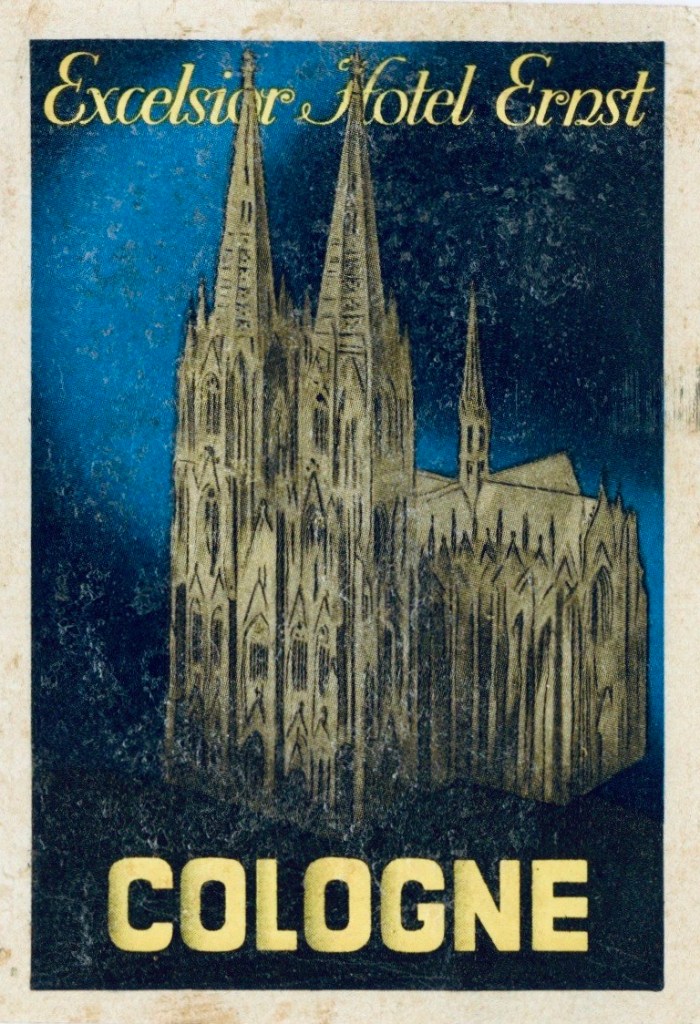
Luggage label, Excelsior Hotel Ernst, Cologne, Germany
Cologne Cathedral caught my eye – natch – and brought back memories of countless walks past that sooty Gothic spire rising next to the main train station that was my terminal for entering and exiting the ancient city of Köln. It’s a sight that, decades later, became a lingering presence in my Gothic Imagination lectures – the cathedral, I mean, not the station, although, come to think of it, the back then equally sooty and rather more mysteries-filled and fantasy-fueling Hauptbahnhof haunts my teaching as well.
The Excelsior Hotel Ernst was – and is – about as likely a place for me to flop as is the Tomb of the Three Magi that is housed in the cathedral nearby. The only five-star hotel in the old part of the city, it is so close to Dom, in fact, as to warrant its domination of the label design. On its booking website, the establishment claims to have been privately owned since 1863; but the original building, which predates the 1880 completion of the permanent construction site that is the cathedral, was torn down in 1909. Two decades later, the rebuilt hotel was reserved for the British army, which occupied it and much else besides until 1926. Another two decades after that, it was still standing, albeit not without damage, having survived, like the battered Dom, the air raids of the Second World War. And, yes, it weathered the economic fallout of COVID-19, opening again in May 2020 after a brief shutdown. The fragile label, meanwhile, has lost little of its gloss.
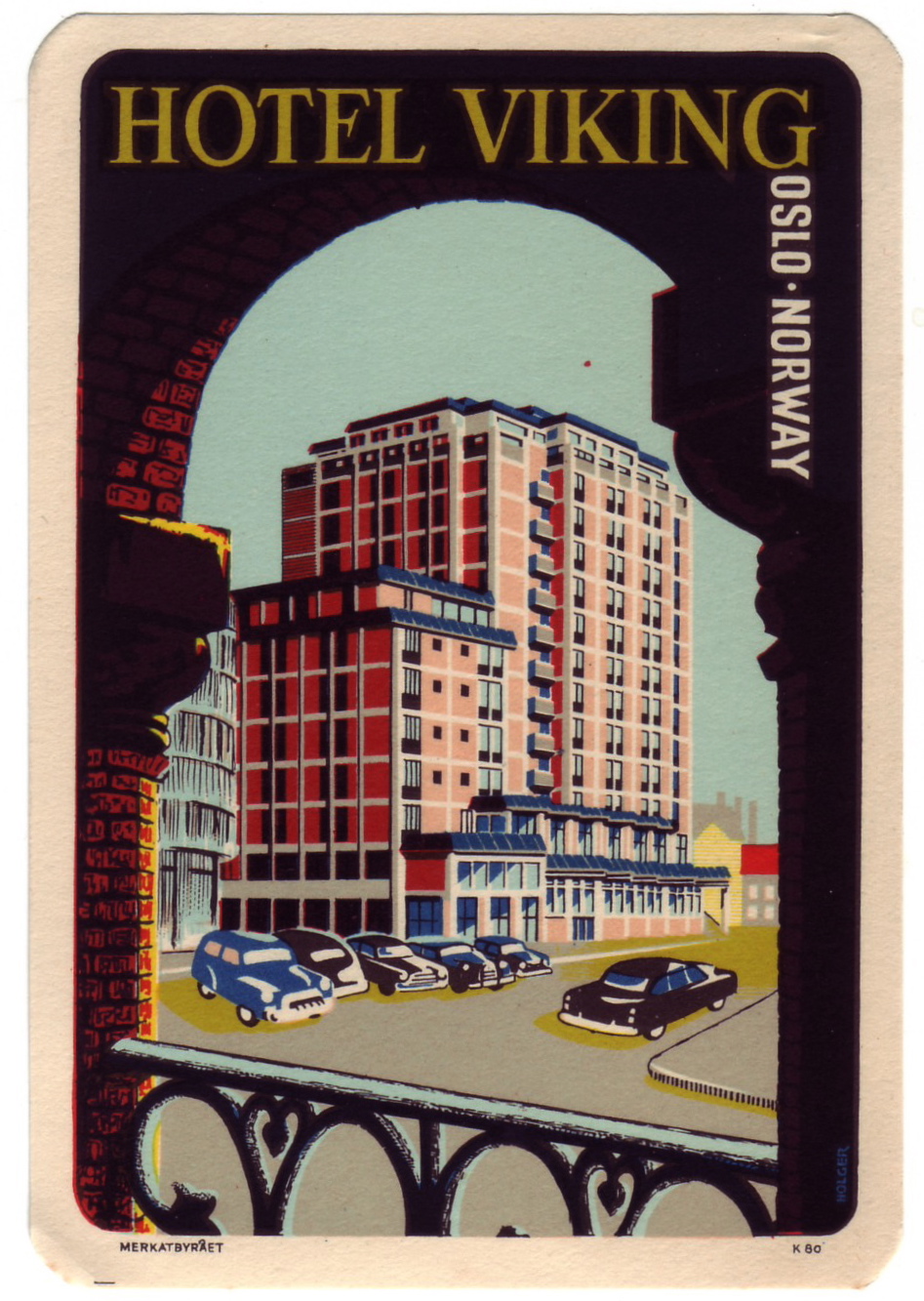
Luggage label, Hotel Viking (now Hotel Royal Christiania), Oslo, Norway
Resisting my cultural conditioning – the notion of vacationing, in my German childhood, being associated with going down south – I picked up the label promoting the Hotel Viking in Oslo. It opened in 1951, an influx of visitors being expected in 1952, the year Oslo hosted the Winter Olympics; it was the first year in which Germany (both East and West) were permitted to participate since Berlin hosted in 1936. Norwegians were not likely to relish the idea of uniformed German delegates and their concomitant supporters invading their capital. The label design frames the new site in a traditional context, suggesting that, even when viewed from more venerable landmarks, it is a sight to behold. The hotel, now called the Royal Christiania – thus declaring itself traditional by referencing the erstwhile name of the city – is still open for business. The label drives home that the hotel was modern by declaring it to be approachable by car; these days, advertisers are less likely to turn the parking space into a feature.
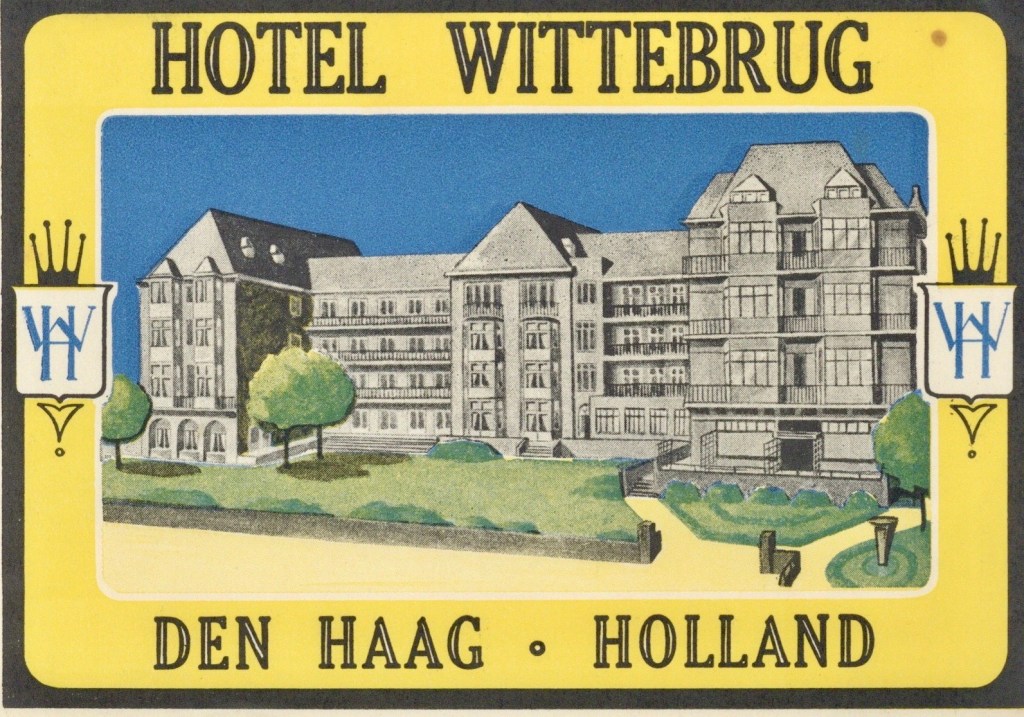
Luggage label, Hotel Wittebrug, Den Haag, Netherlands
Now, I have never been to Oslo; but on one of my most recent trips to the continent – if ‘recent’ is the word – my husband and I took the train from Amsterdam to spent a few hours in Den Haag, where I had never been until then. I now lecture in landscape art, so seeing paintings of that genre right where they were created in the seventeenth-century Dutch Republic was as thrilling to me as the fantasy of time travel, dismissed as such pictures were by eighteenth-century academics, and many now still under their influence, as prosaic. However, I would have looked in vain for the Hotel Wittebrug, which was torn down in 1972.
The labels are the stuff of daydreams for me at the moment; but they certainly invite further research. Who designed them, and when? How does the design correspond with, or misrepresent, the site depicted? It is a project for someone who, like me, does not believe in the label ‘fine art’ and is not dismissive of products of culture that, like seventeenth-century Dutch landscapes, were commodities sold and bought on the market long before they ended up, removed from our everyday, in pay-to-enter venues set apart for our veneration of them and of the collections that now hold them.
Handling these flimsy pieces of paper now, I am reminded most of all of what I am missing while the world is a world away. Being out of touch does not quite feel as joyous when the sense of touch cannot be exercised occasionally by hugging an old friend or holding onto what seems more echt, or genuine, if it can be had, momentarily, for the holding …
As a frustrated writer, or, rather, as someone who is disenchanted with the business of publishing and of ending up not reaching an audience, I have come to embrace exhibition curating as an alternative to churning out words for pages rarely turned. I teach curating for the same reason.
Staging an exhibition reminds students of the purpose of research and writing as an act of communication. Seeing an audience walking into the gallery – or knowing that anyone could stop by and find their research on display – is motivating students and encourages them to value their studies differently.
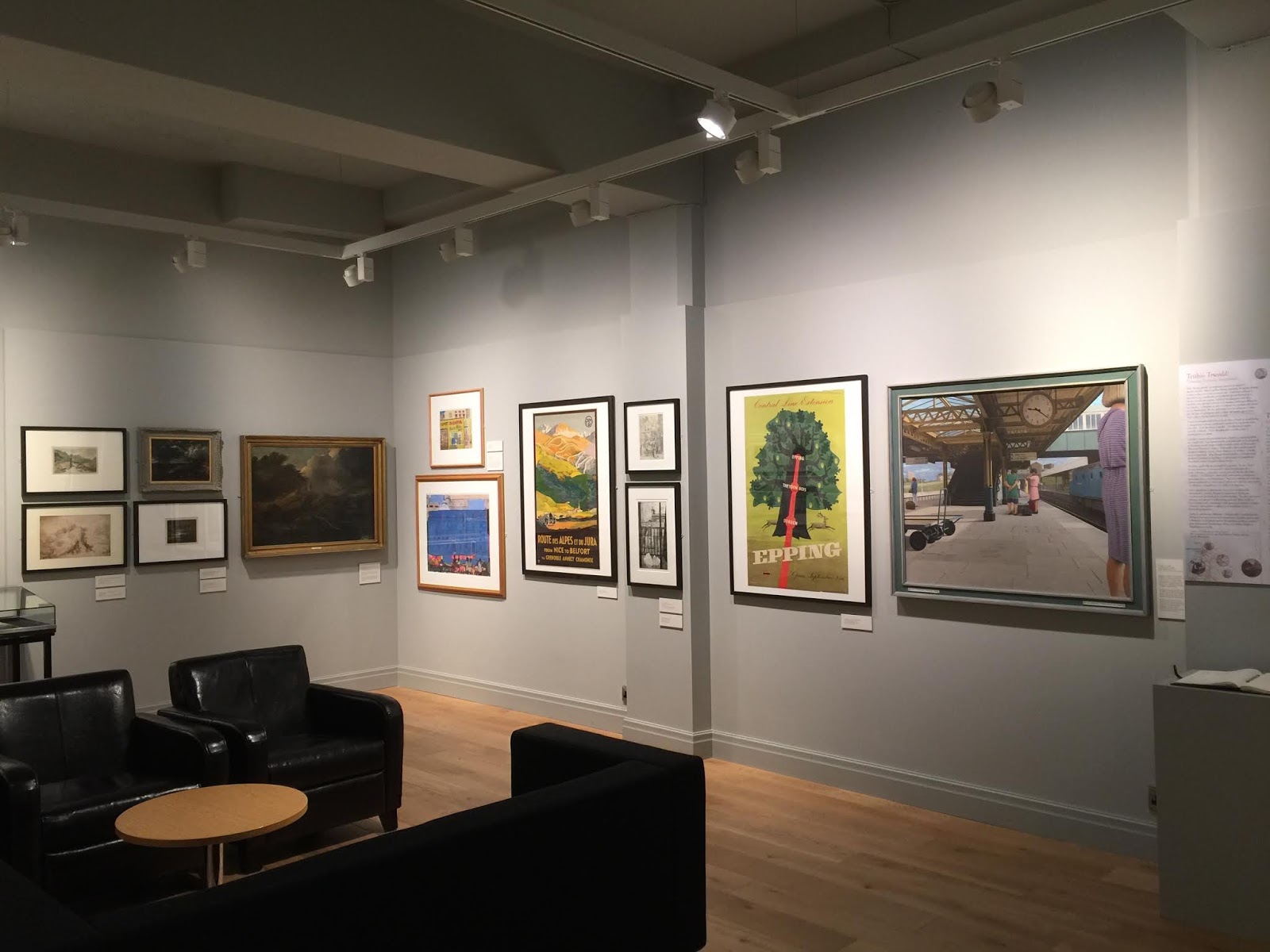
Travelling Through, installation view
As someone who teaches art history, and landscape art in particular, to students whose degree is in art practice, curating also enables me to bridge what they might experience as a gap or disconnect between practice and so-called theory, between their lives as artist and art history at large.
It also gives me a chance to make what I do and who I am feel more connected.
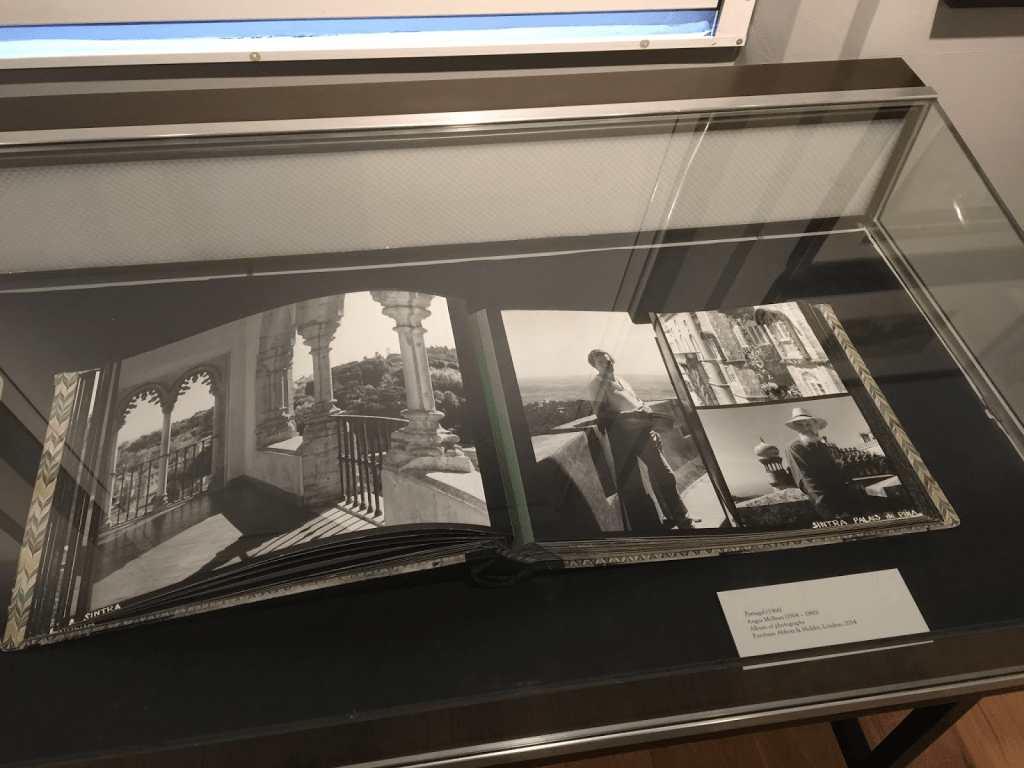
Angus McBean’s personal album of travel photographs featuring McBean and his gay companions (1966)
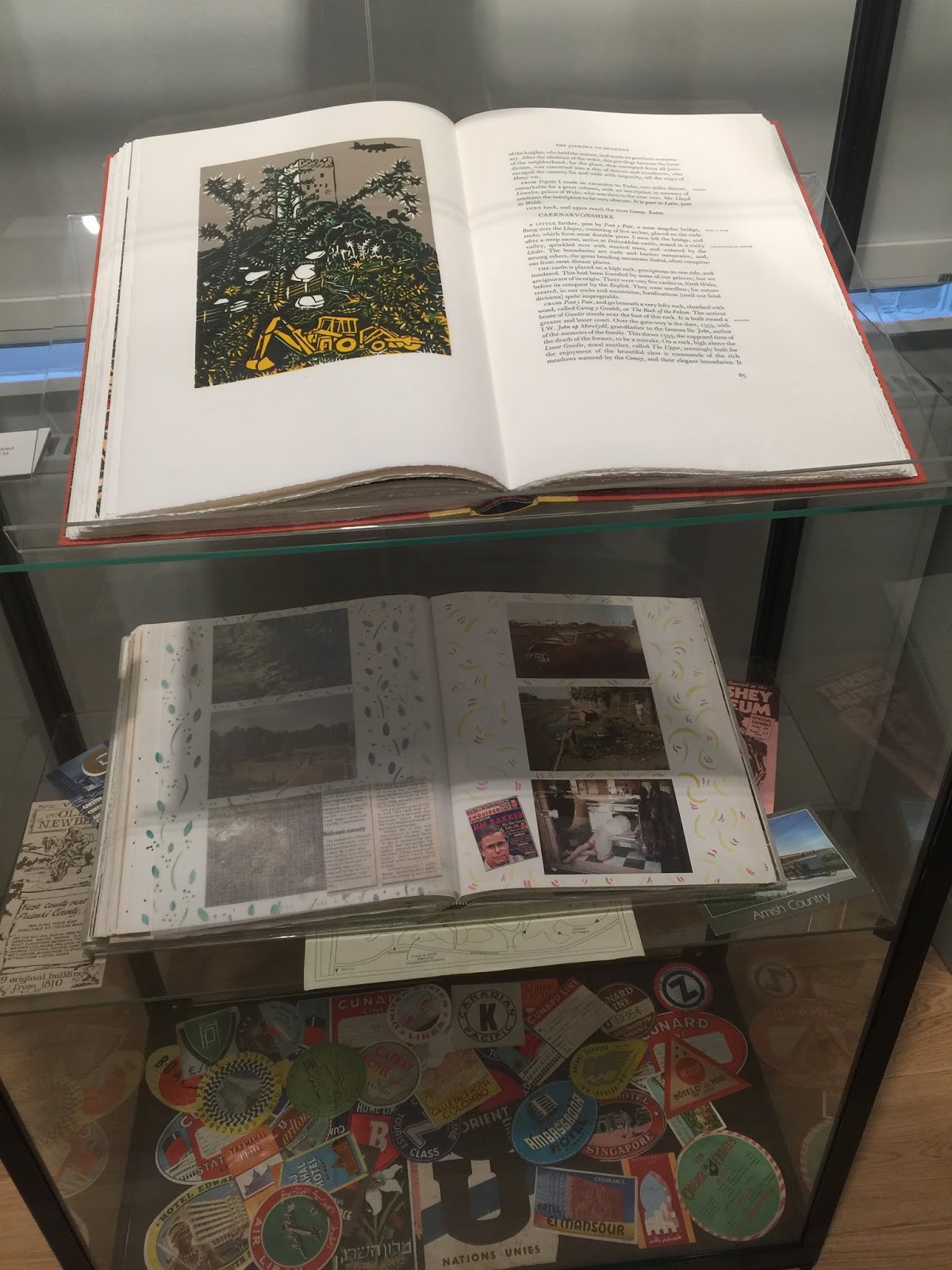
In my latest interactive and evolving exhibition, Travelling Through: Landscapes/Landmarks/Legacies (on show at the School of Art, Aberystwyth University, Wales until 8 February 2019), I bring together landscape paintings, ceramics, fine art prints, travel posters and luggage labels, which are displayed alongside personal photographs, both by a famous photographer (Angus McBean) and by myself.
Here is how I tried to describe the display of those never before publicly displayed images from my personal photo albums:
Before the age of digital photography, smart phones and social media, snapshots were generally reserved for special occasions. Travelling was such an occasion.
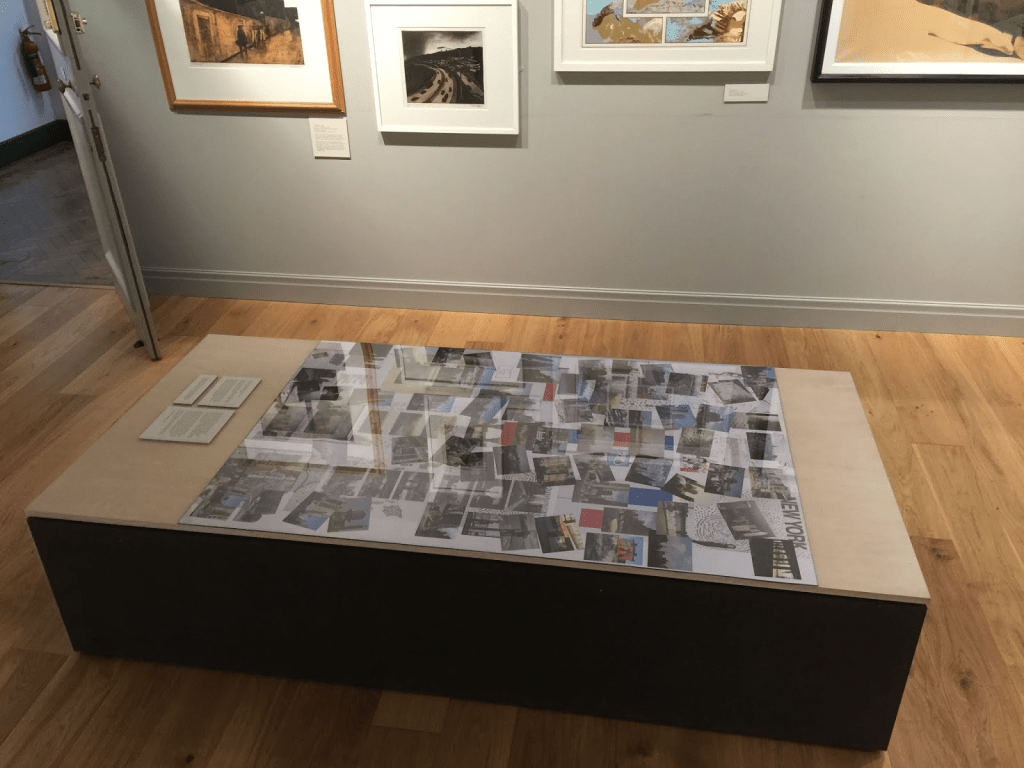
For this collage, I rummaged through old photo albums and recent digital photographs. When I lived in New York, from 1990 to 2004, I very rarely photographed the city. All of these images either predate that period or were produced after it. The historic event of 11 September 2001 can be inferred from the presence and absence of a single landmark.
The World Trade Center is prominent in many of my early tourist pictures. Now, aware of my gradual estrangement from Manhattan, I tend to capture the vanishing of places I knew.
Plinth display of NYC, Travelling Through Me (1985 – 2018), digital and digitised photographs
For this collage, I rummaged through old photo albums and recent digital photographs. When I lived in New York, from 1990 to 2004, I very rarely photographed the city. All of these images either predate that period or were produced after it. The historic event of 11 September 2001 can be inferred from the presence and absence of a single landmark.
The World Trade Center is prominent in many of my early tourist pictures. Now, aware of my gradual estrangement from Manhattan, I tend to capture the vanishing of places I knew.
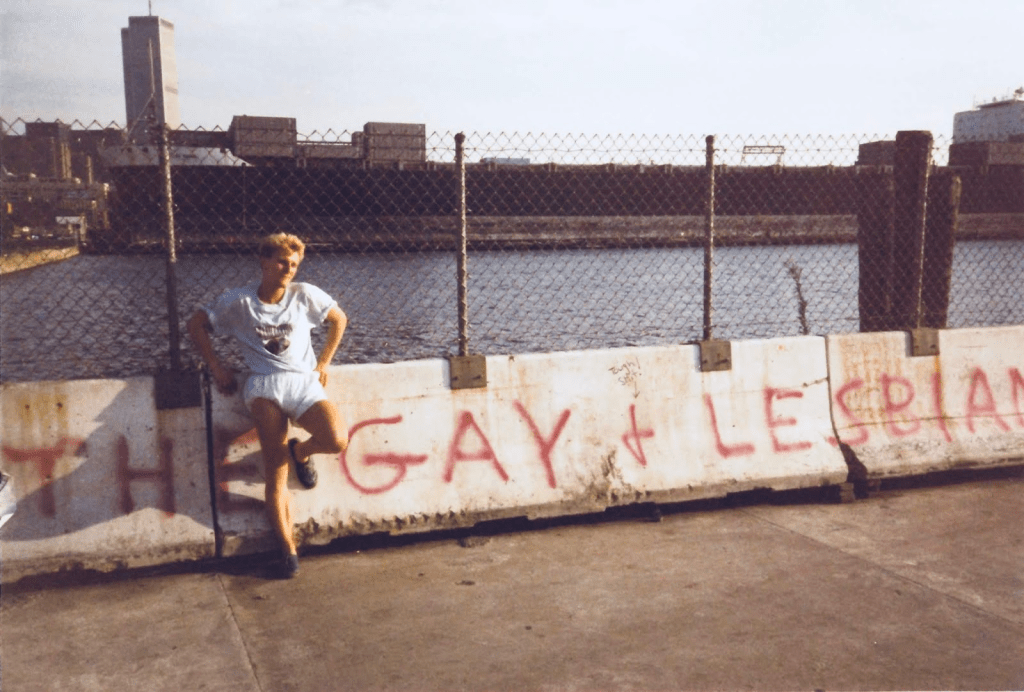
Lost New York City landmarks: Twin Towers and Gay Pier, 1987
Back in the 1980s, New York was not the glamorous metropolis I expected to find as a tourist. My early photographs reflect this experience. Most are generic views of the cityscape. Others show that I tentatively developed an alternative vision I now call ‘gothic.’ Yet unlike Rigby Graham, whose responses to landscape are displayed elsewhere in this gallery, I could never quite resist the sights so obviously signposted as attractions.
Like the personal photo album of the queer Welsh-born photographer Angus McBean, also on show in this exhibition, these pages were not produced with public display in mind. McBean’s album was made at a time when homosexuality was criminalised. It is a private record of his identity as a gay man.
I came out during my first visit to New York. The comparative freedom I enjoyed and the liberation I experienced were curtailed by anxiety at the height of the AIDS crisis.
Being away from home can be an opportunity to explore our true selves. Travelling back with that knowledge can be long and challenging journey.
Harry Heuser, exhibition curator
Pennant Tour of Wales featuring illustrations by Rigby Graham, with one of my photo albums and a collage of luggage labels from my collection beneath it.






 Harry Heuser
