โ€œThe First Radio Play Printed in Americaโ€: โ€œSue โ€˜Emโ€ (1925) and the Ensuing Question of Legitimacy

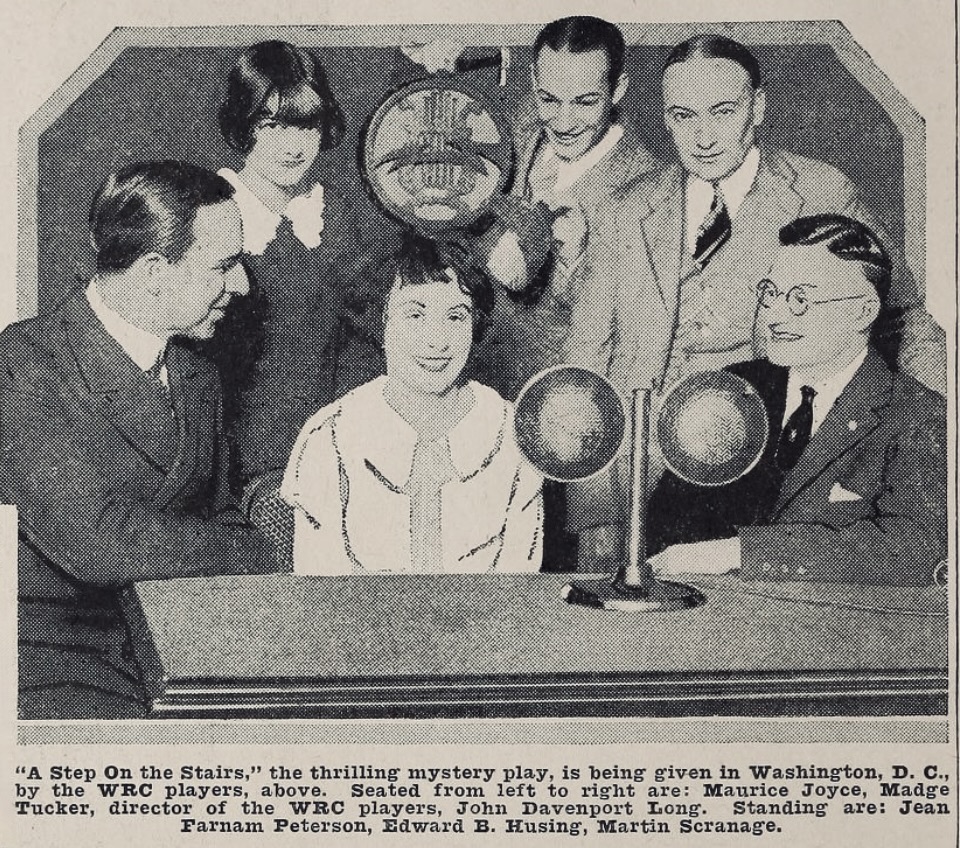
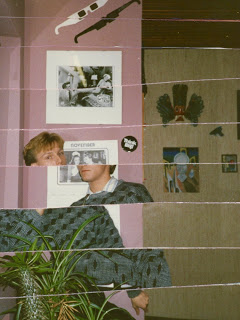
A photograph published in the April 1926 issue of Radio Broadcast
showing a young John Huston (left) and fellow members of the Provincetown Players

Here I go again.  Another broadcasting centenary, another radio โ€œfirst.โ€  This โ€œFirst,โ€ mind, is wrapped in quotation marks, as the claim is not mine.  I am not going to dispute it, either, or challenge someone else to have the last word in the old โ€œWhoโ€™s on First?โ€ routine.  I have been there before.

Picture it: Early 2024.  I am commemorating the one-hundredth anniversary of radio โ€œdramaโ€ at an event I staged with British playwright Lucy Gough at the National Library of Wales.  I set out by acknowledging the widely held assumption that Comedy of Danger by playwright-novelist Richard Hughes was the โ€œfirstโ€ original radio play to be broadcast โ€ฆ anywhere.

The claim served as a hook.  It was designed to underscore the international significance of the event.  At the same time, I tried to justify its happening in Wales by drawing attention to the playโ€™s Welsh setting and the playwrightโ€™s affinity with the country.  More important to me than arriving at a definitive answer to the vexed question of whether Comedy of Danger should be regarded as the โ€œfirstโ€ of its kind are the shifting definitions of the term โ€œradio playโ€ on which, to my mind, hinges the answer to that questionโ€”or rather, its unanswerability and ultimate pointlessness.

After all, it is difficult to say what is โ€œfirstโ€ in any field if the field itself is not clearly delimited first, or if the field is so limitless that it defies delineation in the first place.  In the case of โ€œradio play,โ€ Hรถrspiel (play for listening) or radio dramaโ€”relatively arcane though this field of study may beโ€”definitions not only vary greatly but are often not even attempted.

When is a play a radio play? That is a question I have been asking for a long time in my musings on the wireless, and it is a question I keep asking myself.  โ€œWhen is a play a radio playโ€ strikes me as a more useful way of framing the debate than the more obvious question โ€œWhat is a radio play?โ€ because the former encourages us to avoid the most perfunctory of answers: A radio play is a play written for and/or heard on the radio.  

Sure, on the surface it barely scratches, that statement sounds reasonable enough.  But are all plays written and produced for radio broadcasting radio plays by default? Is it the medium, then, that makes a playโ€”any playโ€”a radio play?

Not that โ€œradioโ€ as we understand or know it these days bears a close resemblance to โ€œradioโ€โ€”as a receiver set, a system, and a phenomenonโ€”anno 1925, the year when Sue โ€˜Em, proclaimed by its publisher to be the โ€œfirst radio play printedโ€ in the USA, successfully made a play for first place in a radio playwrighting contest.

Continue reading “โ€œThe First Radio Play Printed in Americaโ€: โ€œSue โ€˜Emโ€ (1925) and the Ensuing Question of Legitimacy”

โ€œA Radio Tragedyโ€; or, Making a Song and Dance about Past Novel Experiences

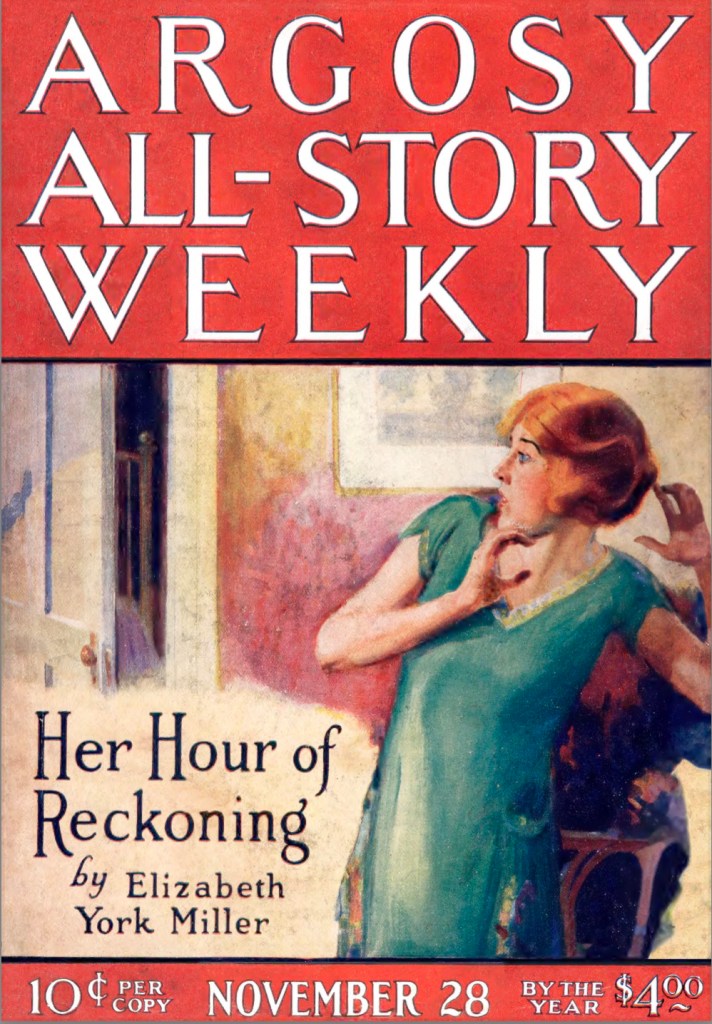
The issue of Argosy in which “A Radio Tragedy” appeared.

Flicking at random, as is my wont when unwinding, through digital copies of decades-old magazines, I came across a poem so trifling as to catch my attention.  To be sure, the lightweight verse in question is titled โ€œA Radio Tragedy,โ€ which makes it stand out for a reader who is also a writer on the subject.

Penned by one John McColl, an occasional contributor of lines, rhyming or otherwise, to 1920s magazines such as The Saturday Evening Post, โ€œA Radio Tragedyโ€ appeared in the 28 November 1925 issue of Argosy All-Story Weekly, a US American periodical then in its fifth decade.  

Unlike print publishing, broadcasting was still a new phenomenon at the time.  As I put it in Immaterial Culture, radio in those pre-network days was yet transitioning from “a ham-and-DXer playground to the bread and butter of virtual bill- boarders, from the site of an amateur cult to a scene of consumer culture involving, by 1930, over six hundred stations and sixty million listeners.”

Continue reading “โ€œA Radio Tragedyโ€; or, Making a Song and Dance about Past Novel Experiences”

The Avant-Garde and Our Disregard: Network Radio as a Modernist Misfit

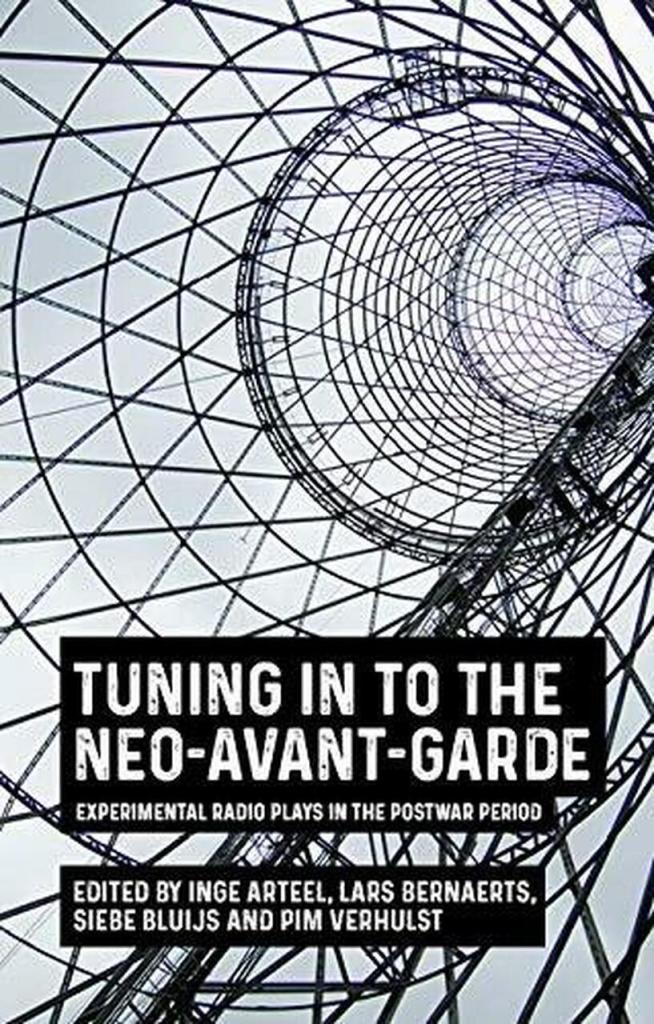
My copy of Tuning in to the Neo-Avant-Garde: Experimental Radio Plays in the Postwar Period arrived in the mail today.  Chapter 3 bears the somewhat cumbersome title โ€œA Forefront in the Aftermath? Recorded Sound and the State of Audio Play on Post-โ€˜Golden Ageโ€™ US Network Radio.โ€  My contribution to the volume, it is a sequel of sorts to Immaterial Culture, in which I sought to engage with radio plays written and produced in the United States between 1929 and 1954 โ€“ before sitting in front of the television became a national pastime in the US. The chapter looks at plays written and produced in the wake of that so-called ‘golden age of radio.’

In status and quality of production but not initially in quantity, radio plays in the United States decreased rapidly in the 1950s.  The โ€˜Aftermathโ€™ referred to in my title meant an adjustment to the political developments and economic realities of post-Second World War society.  It reflects at once victory and defeat, opportunity and opportunism: the redefinition of the Pursuit of Happiness in terms of consumer culture, the concrete threat of anti-Communism, and the effect both had on the production, distribution and the experience of aural art.

In my writing, as in my teaching, I tend to be concerned primarily with definitions and the questioning of terminology. What is โ€˜radioโ€™ about radio plays, for instance? And what, if anything, makes them โ€˜avant-gardeโ€™ rather than merely โ€˜experimentalโ€™?  

Addressing the conflation of โ€“ or the disregard for โ€“ production and broadcasting in discussions of radio plays qua texts, โ€œA Forefront in the Aftermath?โ€ considers the questions whether a radio play not โ€˜heard over the radioโ€™ is still a radio play and whether aural play can meaningfully be termed โ€˜avant-gardeโ€™ without regard to the conditions under which it is produced and the system in which it becomes enmeshed.  

When, in 2018, I was invited to submit a proposal for the conference Tuning in to the Neo-Avant-garde, I set out by mulling over the term โ€˜neo-avant-gardeโ€™ to determine whether I could make a meaningful contribution to the discussion.  As someone who has devoted a doctoral study, an obscure book, and several hundred blog posts to mid-twentieth century US radio culture, I harbored doubts about the aptness of the label โ€˜neo-avant-gardeโ€™ in the context of my endeavor to keep up with texts presumably well past their sell-by date: plays created for and broadcast on US American network radio priorto 1954 โ€“ the year that the TV dinner came on the market to drive home that radio was no longer fresh, the year that retired radio satirist Fred Allen, reflecting on his career in broadcasting, declared that radio had been โ€˜abandoned like the bones at a barbecue.โ€™  โ€œA Forefront in the Aftermathโ€ examines the leftovers โ€“ and it has a bone to pick with those who glean selectively.

Examining recordings of US network radio broadcasts dating from, roughly, the first decade after the end of the Second World War, alongside commercial records and tape recording exchanges, my essay seeks to demonstrate how experimental โ€˜radio playโ€™ โ€“ as distinguished from the broader term โ€˜audio playโ€™ โ€“ was defined and circumscribed by the system of network broadcasting.  The creative possibilities of recorded sound, in particular, where never fully explored.

It is no coincidence that, just as New York City was becoming the centre of the Western art world โ€“ and sound recording was gaining recognition as art โ€“ radio ceased to be regarded as a medium for artistic experimentation, which it had been, to some extent, in the 1930s and early 1940s.  Experimentation, once in the service of left-wing, anti-fascist causes, had no utility for broadcasters when such an agenda no longer served to unify the US American public against foreign powers, as wartime propaganda had done.

In recent years, modernist scholars have tried to claim the output of the popular medium for modernism.  Calling the guarded play of popular culture โ€˜avant-gardeโ€™  โ€“ after decades of disregard โ€“ is part of that misguided and rather disingenuous effort.  The fact that US network radio does not fit modernist narratives suggests that constructs such as modernism are not fit for the purpose of catching up with the unclassifiable products of the past.

That’s No Lady. That’s an Executive: Robert Hardy Andrews’s Legend of a Lady (1949)

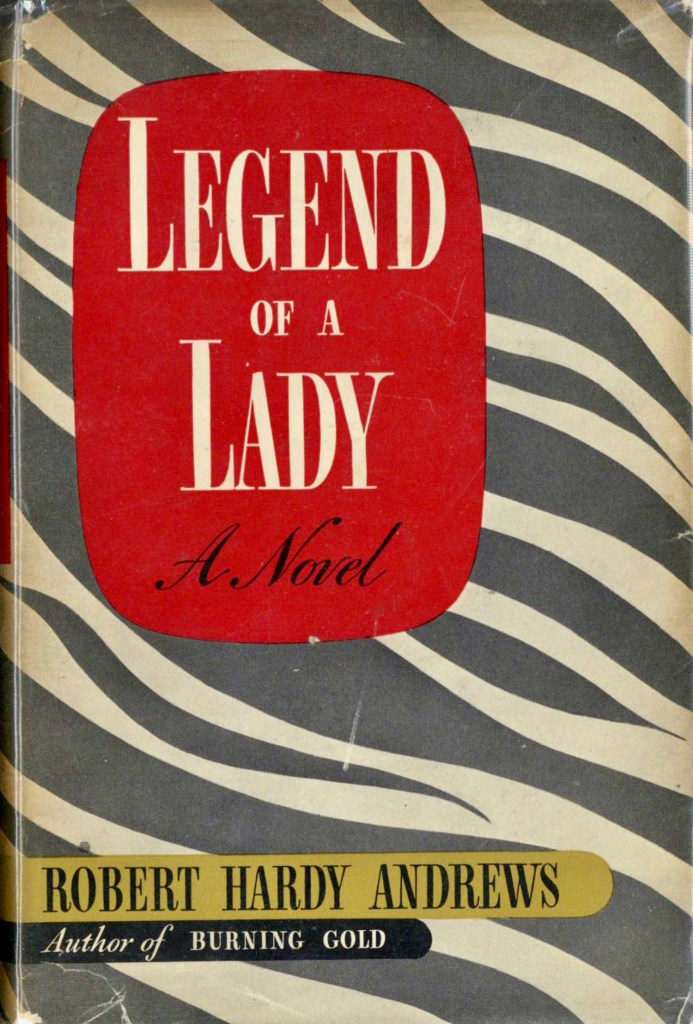
Dust jacket of my copy of Legend of a Lady, which I added to my library in June 2020

In โ€œโ€˜Hawkers of feces? Costermongers of shit?โ€™: Exits and Recantations,โ€ the final chapter of Immaterial Culture, I briefly discuss how creative talent working in the US broadcasting industry during the 1930s and 1940s tended to recall their experience upon closing the door to the world of radio in order to pursue careers they deemed more lofty and worthy.  Few had anything positive to say about that world, and their reminiscences range from ridicule to vitriol.

Within a year or two after the end of the Second World War, attacks on the radio industry became widespread and popular; most notable among them was The Hucksters, a novel by Frederic Wakeman, a former employee of the advertising agency Lord & Thomas.  Between 1937 and 1945, Wakeman had developed radio programs and sales campaigns for corporate sponsors, an experience that apparently convinced him to conclude there was โ€˜no need to caricature radio.  All you have to do,โ€™ the authorโ€™s fictional spokesperson sneers, โ€˜is listen to it.โ€™

Such โ€˜parting shots,โ€™ as I call them in Immaterial Culture, resonated with an audience that, after years of fighting and home front sacrifices, found it sobering that Democratic ideals, the Four Freedoms and the Pursuit of Happiness were being reduced to the right โ€“ and duty โ€“ to consume.  After a period of relative restraint, post-war radio went all out to spread such a message, until television took over and made that message stick with pictures showing the latest goods to get and guard against Communism.

Following โ€“ and no doubt encouraged by โ€“ the commercial success of The Hucksters, the soap opera writer Robert Hardy Andrews published Legend of a Lady, a novel set, like Wakemanโ€™s fictional exposรฉ, in the world of advertising.  Andrews probably calculated that like The Hucksters and owing to it Legend would be adapted for the screen, as his novel Windfall had been.

Unlike in The Hucksters, the industry setting is secondary in Legend of a Lady.  Andrews has less to say about radio than he has about women in the workforce.  And what he has to say on that subject the dust jacket duly proclaims: โ€˜Legend of a Lady is the story of pretty, fragile Rita Martin, who beneath her charming exterior is hell-bent for personal success and who tramples with small, well-shod feet on all who stand in her way.โ€™  The publisher insisted that โ€˜it would be hard to find a more interesting and appalling character.โ€™

I did not read the blurb beforehand, and, knowing little about the novel other than the milieu in which it is set, I was not quite prepared for the treatment the title character receives not only by the men around her but by the author. The Legend of the Lady, which I finished reading yesterday, thinking it might be just the stuff for a reboot of my blog, opens intriguingly, and with cinematic potential, as the Lady in question picks up โ€˜her famous white-enameled portable typewriter in small but strong handsโ€™ and throws it โ€˜through the glass in the office widow,โ€™ right down onto Madison Avenue, the artificial heart of the advertising industry.

This is Mad Women, I thought, and looked forward to learning, in flashback, how a โ€˜small but strongโ€™ female executive gets to weaponise a tool of the trade instead of dutifully sitting in front of it like so many stereotypical office gals.  Legend of a Lady is โ€˜appallingโ€™ indeed, reminding readers that dangerous women may be deceptively diminutive, that they are after the jobs held by their male counterparts, and that, rest assured, dear conservative reader, they will pay for it.  In the end, Rita Martin, a single mother trying to gain independence from her husband and making a living during the Great Depression, exists an office โ€˜she would never enter again.โ€™  Along the way, she loses everything โ€“spoiler alert โ€“ from her sanity to her son.

The blurb promises fireworks, but what Legend of a Lady delivers is arson.  It is intent on reducing to ashes the aspirational โ€˜legendโ€™ of women who aim to control their destiny in post-war America.  The world of soap opera writing and production serves as mere a backdrop to render such ambitions all the more misguided: soap operas are no more real than the claim that working for them is a meaningful goal.  As a writer of serials for mass consumption, Robert Hardy Andrews apparently felt threatened and emasculated working in a business in which women achieved some success in executive roles.  In a fiction in which men big and small suffer deaths and fates worth than that at the delicate hand of Rita Martin, Andrews created for himself a neo-romantic alter ego โ€“ the rude, nonchalant freelance writer Tay Crofton, who refuses to be dominated by a woman he would like to claim for himself but does not accept as a partner on her own terms, presumably because she cannot be entrusted with the power she succeeds in wresting from the men around her without as much as raising her voice.

Devoid of the trimmings and trappings of Hollywood storytelling, without glamor or camp, without gowns by Adrian or brows by Crawford, Legend of a Lady serves its misogyny straight up โ€“ but it couches its caution against โ€˜smallโ€™ women in spurious philosophy by claiming that, for men and women alike, there is life outside the proverbial squirrel cage that Andrews relentlessly rattles for his agonizing spin on the battle of the sexes.

Recycling Questions: Just What Is or Ain’t an Adaptation?

As a product of postmodern culture, I lay no claim to originality.  Indeed, I have always been thoroughly unoriginal, and, occasional anxieties of influence notwithstanding, often gleefully so.  As a child, I ripped off comics, tore apart magazines and took whatever images were available to create collages and parodies.  Using an audio tape recorder, I appropriated television programs by inserting my voice into mass-marketed narratives, transforming a saccharine anime like Heidi (1974) into a subversive adolescent fantasy.

My postmodern past (note my de Chirico take on a mass-produced vase)

No evidence of my early experiments is extant today; but adaptation became an enduring fascination and a field of study.  As a student, I wrote essays on adaptations of Frankenstein and on Brechtโ€™s revisitations of Galileo Galilei โ€“ Leben des Galilei (1938/39 and 1955), as well as Galileo (1947).  I produced an MA thesis on translation (โ€œMeister Remasteredโ€) and a PhD dissertation on the relationship between stage, screen, print and radio (“Etherized Victoriansโ€).  The latter I recycled as Immaterial Culture, published in 2013.

Now a lecturer in art history, I have repurposed some of the above and pieced together a Frankenstein’s creature of an undergraduate module I call Adaptation: Versions, Revisions and Cultural Renewal.  In a series of lectures and seminars, the course (at Aberystwyth University) investigates the processes involved in translative practices that range from the reworking of a literary classic into a graphic novel to drawing a moustache on a copy of the Mona Lisa.  It explores relationships between form and content, genre and mode, integrity and hybridity, durability and transience, culture and commerce, as well as art and the environment.

As I state in the syllabus, many products of culture endure by shifting shape: stories are turned into sculptures, plays are reimagined as dramatic canvases and mass-produced ephemera are recycled for art. What survives such transformations? What is lost or gained in translation? What are the connections between โ€“ and interdependencies of โ€“ so-called originals and the works that keep coming after them?

Given the monstrous scope of the course, another question emerges: Just what is not an adaptation? It is a question that becomes more complex if tackled by anyone who, like me, regards originality as a myth.

Much of what is published on the subject is limited to matters of narrative, of what happens when telling becomes showing, or vice versa.  Linda Hutcheonโ€™s study A Theory of Adaptation opens promisingly โ€“ if somewhat patronizingly โ€“ with the following statement: โ€œIf you think adaptation can be understood by using novels and films alone, youโ€™re wrong.  The Victorians had a habit of adapting just about everythingโ€ฆ. We postmoderns have clearly inherited this same habitโ€ฆ.โ€

Hutcheon does not quite deliver on her promise of inclusivity.  Unable or unwilling to break the “habit” of adaptation scholars who came before her, Hutcheonโ€™s study also concentrates on “novels and films,” the word “film” appearing on 229 pages, compared to, say, “painting” on 17 pages, including index and bibliography.   There is no mention at all of collage or assemblage.  Left out are the projects of Dada, Neo-Dada and Pop, as well as the debates about Kitsch, Camp and Pastiche that were central to Postmodernism.

Hutcheonโ€™s definition of “adaptation” is at once too broad and too narrow.  Her brief statements on โ€œWhat Is Not an Adaptation?โ€ are welcome yet imprecise and contradictory.  What is worse, her definition is at times arbitrary.   She states, for instance, that โ€œfan fictionโ€ is not a form of adaptation, offering no explanation for its exclusion.

I agree with Hutcheon that adaptations need to be readable as a version, an acknowledged take on or taking of something we perceive as same yet different.  Adaptations are not copies, and, as spurious as they may sometimes strike us, they are not fakes, either.

Hutcheon distinguishes between parody and adaptation, claiming that the former does not need to be acknowledged.  If unacknowledged, parodies โ€“ or any other form of adaptation โ€“ cannot operate qua adaptation.  They are like irony in that respect.  You just canโ€™t be ironic all by yourself.  Any dance of the index fingers needs an audience.

As I see it, adaptations, be they parodies or pastiche, anarchic or reverent, have to exist as concrete products โ€“ rather than ideas or themes โ€“ that are distinct from yet related to other products with which they engage or from which they openly borrow in more or less creative acts of transformation.

Am I an adaptation?

Hutcheon, who does not insist on a change in medium as a criterion for adaptation, cites a source that identifies as a “new entertainment norm” the “process where integral elements of a fiction get dispersed systematically across multiple delivery channels for the purpose of creating a unified and coordinated entertainment experience.”  The resulting products are not meant to exist independently but serve as a deliberate fragmentation for the sake of maximizing market potential and profits by increasing the potential audience.  Is this still adaptation? Perhaps, if the audience rejects to buy the lot.

Buying the lot is something I rarely do.  I pick and choose, take apart and transform according to my own desires and limitations.  And pick apart I must when I read Hutcheonโ€™s comments on radio drama as a form of “showing” like “all performance media,” at which point her study recommends itself for recycling as pulp.  Anyone who appreciates the hybridity of radio plays would balk at such simplifications.

Trying to make a case for elevating their cultural status, Hutcheon asks: “If adaptations are โ€ฆ such inferior and secondary creations why then are they so omnipresent in our culture and, indeed increasing steadily in number?” Well, junk food is “omnipresent” โ€“ and so are feebly argued studies โ€“ which does not make either any less “inferior.”  Besides, the question is not whether adaptations are good, bad or indifferent.  The question is: what are and what ainโ€™t they?

Immaterial Is the Word for It

“Etherized Victorians,” my doctoral study on American radio plays, had been lying for years in a virtual drawer. A string of rejection letters from publishers made me leave it for dead. ย Then, when I learned about an opportunity to get it out of that coma at last โ€“ with the aid of a reputable academic publisher to boot โ€“ I went for it.ย  I have regretted that decision ever since. ย The anger welled up in me anew when I read “Academics are being hoodwinked into writing books nobody can buy,”ย an article in theย Guardian, which aย colleague of mine hadย shared via Facebook.

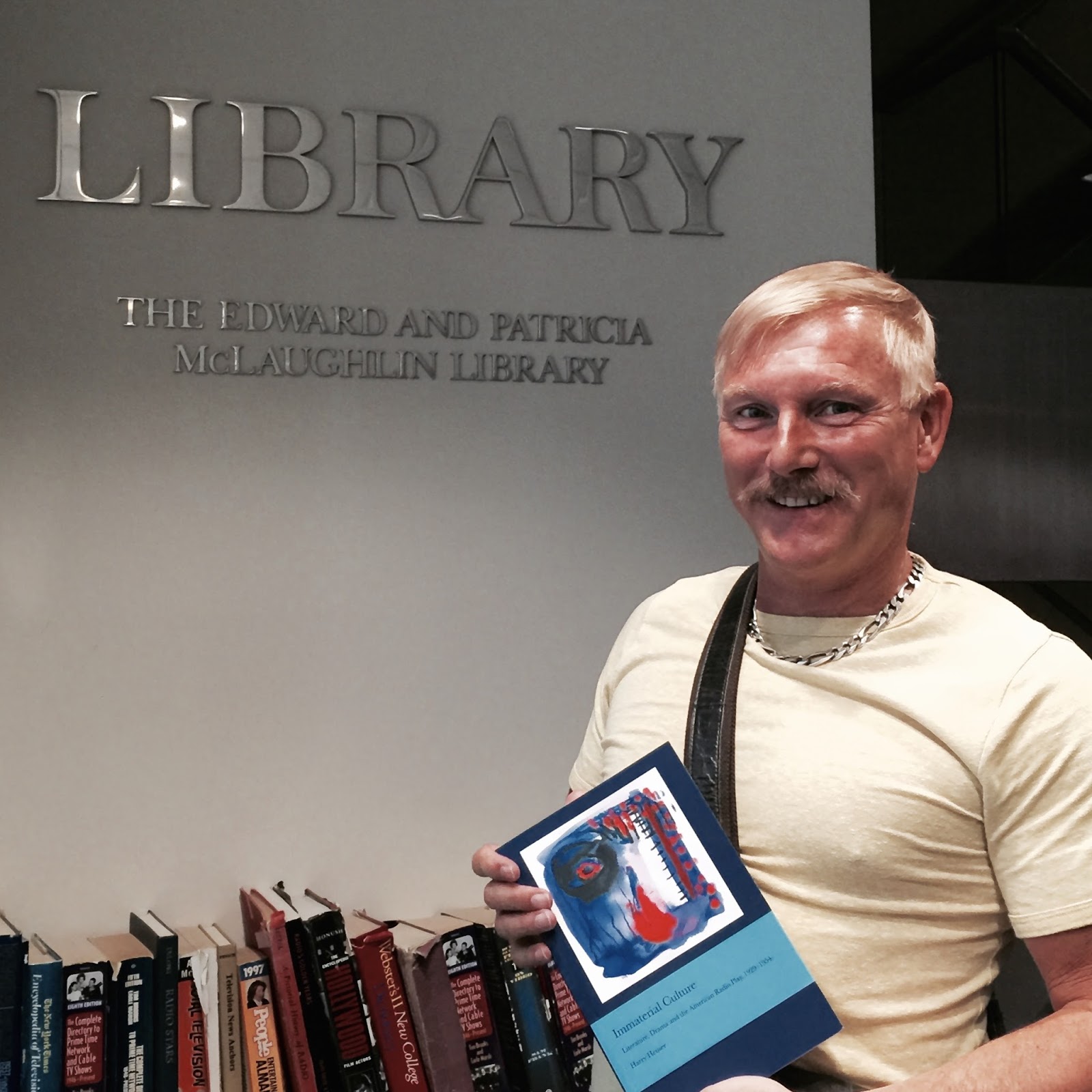
A toothy smile after years of anger and disappointment

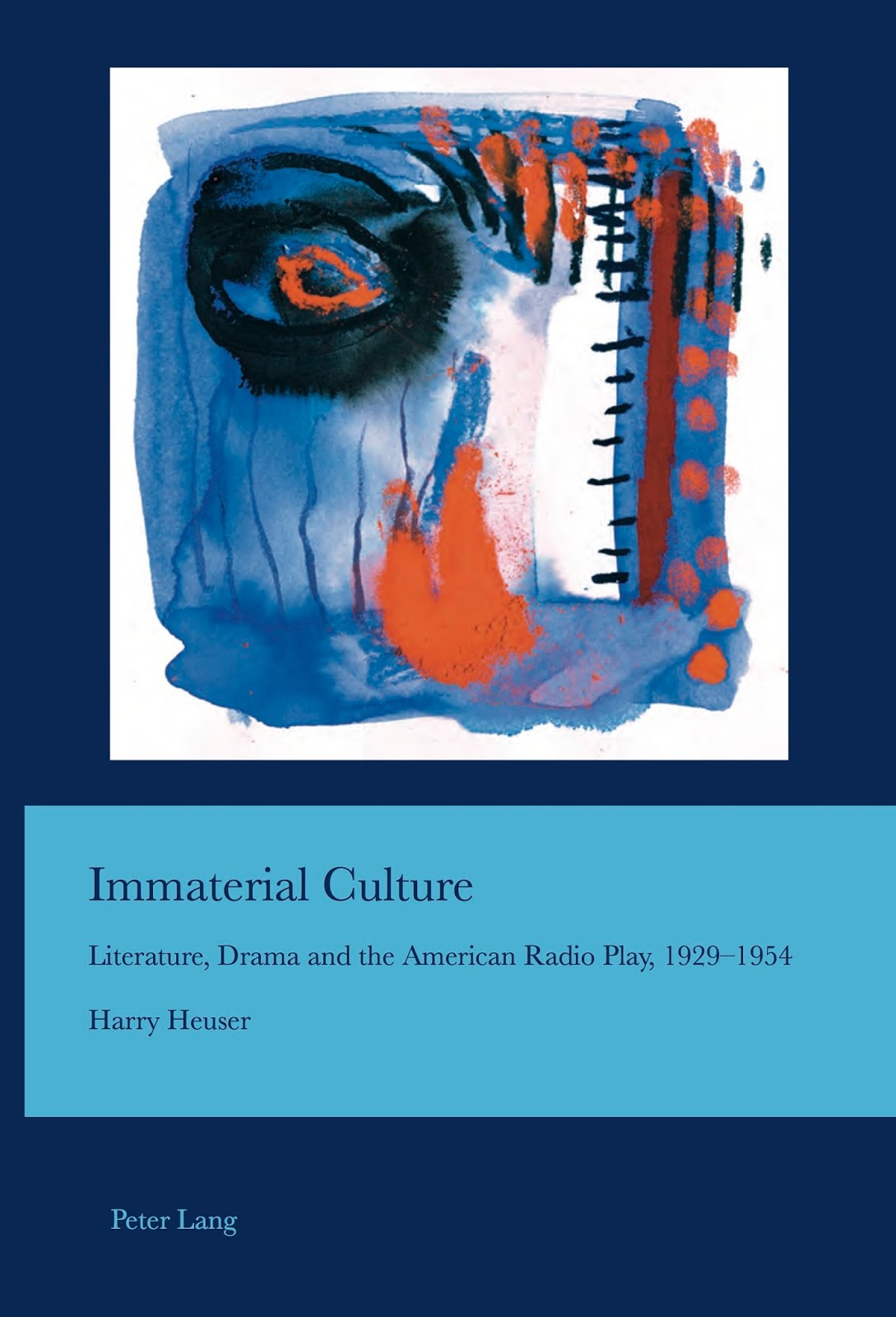
It is not that I believe that should have let my study lie, that it did not deserve to be revived. ย Rather, I feel it deserved a better home than the publisher provided for it. ย Funeral home is more like it. ย To send it there,ย I agreed to pay ยฃ1600 for the production of a book thatย contains no images, except for the cover art that was supplied to me by my artist friend Maria Hayes. ย Besides, I did all the editing, proofreading and indexing myself.ย ย There was no substantial input or support from the publisher, Peter Lang, other than a list of instructions and some rather frustrating feedback on my blurb for the back of the book, which, to my disappointment, has been issued as a paperback only.

Turning “Etherized Victorians” intoย Immaterial Cultureย meant cutting back and stripping bare. It was an instructive experience, painful though it was. ย I renegotiated but was nonetheless obliged to cut about 50,000 words, and I rue the quick decision to get rid of an entire chapter (available online, on my website, but since reworked for a chapter in the anthology Audionarratology: Lessons from Radio Drama). I also had to let go of the list I had compiled of my primary sources, the plays I discussed. ย When I asked for corrections of errors or inaccuracies I spotted close to the deadline, I was first told that no further changes were possible and then threatened with a ยฃ30 per hour editing fee.ย  So much for academic standards.

Peter Lang did nothing, apparently, to promote theย Immaterial Culture. ย Living up to its new name, my studyย did not even show up on Google books.ย  I was mailed a few โ€˜complimentaryโ€™ copies, some of which I sent to a friend with connections to the BBC.ย  Nothing came of that.ย  I also walked one copy up to the theater, film and television department of Aberystwyth University, where I work for next to no pay, thinking I might give a lecture or make a course out of it.ย  I have not heard from the department since.

And who else besides a library or an institution of higher learning would bother to purchase a text that is overpriced at ยฃ 52.00 ($ 84.95), thus too expensive to attract radio drama aficionados? Not that anyone potentially interested would have even heard of the book. ย Apart from one long and highly complimentary review (in German),ย Immaterial Cultureย received no press, despite my filling out a great number of forms to assist in its promotion.

It is disappointingย โ€“ letโ€™s make that โ€˜pointlessโ€™โ€“ ย to write for an audience that proves allusive and impossible to reach. ย So, I decided to donate a copy of the book to the Paley Center for Media in New York City, where I conducted research for it.ย  It would be rewarding and reassuring to me if someone made use of or derived pleasure from my work.ย  Why else โ€˜publishโ€™?

Academic publishing is tantamount to a vanishing act. I much rather carry on a supposed vanity project such as this journal, which is freely accessible to all and sundry, just like the once popular plays for broadcasting about which I go on in Immaterial Culture.

Immaterial Me

My studyย Immaterial Culture: Literature, Drama and the American Radio Play, 1929-1954 has just been published. So, as well as explaining the subject matter of the book and the objectives of its writer, I decided to devote a few journal entries to the story behind its production, to its birth and life in relation to my own journey.ย  There is also the small matter of its afterlife, a matter to which no parent, proud or otherwise, can be entirely indifferent.

Along with my other recent publications and current projects, of which I have said nothing in this journal,ย Immaterial Cultureย has long kept me from materializing here.ย  No doubt, I could have made more effective use ofย broadcastellanย as a promotional vehicle. ย And yet, writing, like listening to radio plays, is a solitary experience; at least it is so for me.

Like the performers behind the microphone, writers are generally removed from the audience for whom their performance is presumably intended, an audience that often seems so abstract as to be no more than a construct.ย  The writer, script reader and listener may be sitting in a crowded room, and that crowd may well matter; but what matters more is the immateriality of the words once they are read or spoken.ย  Words that create images or match stored ones.ย  Words that evoke and awake feelings, stimulate thought.ย  Words that, uttered though they are to the multitude, begin to matter personally and take on a multitude of new lives.

Thatย Immaterial Cultureย is a profoundly personal book will not be readily apparent to anyone reading it.ย  After all, I have refrained from using the first person singular to refer to myself as the reader or interpreter of the plays I discuss.ย  I thought Iโ€™d leave the privilege to say โ€œIโ€ to that โ€œobedient servantโ€ of theย Mercury Theatre, the orotund Orson Welles.ย  Instead, I decided to disappear and let the play scripts and productions I audition take center stage, a prominent position they are often denied.

Talking about old radio plays as if they have no presence, as if they are chiefly of interest to the (broadcast) historian, only makes matters worse. Immaterial Culture, then, is an invitation to listen along, an invitation to talk about American radio plays of the past as one still discusses the material culture of books, motion pictures, theater, and television programs โ€ฆ

โ€œ. . . reduced, blended, modernisedโ€: The Wireless Reconstitution of Printed Matter

Nearly two centuries ago, young Rebecca Sharp marked her entrance into the world by hurling a book out of a coach window. That book, reluctantly gifted to her by the proprietress of Miss Pinkertonโ€™s academy for young ladies, was Johnsonโ€™s dictionary, a volume for which Ms. Sharp had little use, given that she was rarely at a loss for words. By the time her story became known, in 1847, words in print had become a rather less precious commodity, especially after the British stamp tax was abolished in 1835, which, in turn, made the emergence of the penny press possible. Publications were becoming more frequentโ€”and decidedly more frivolous.

Gone were the days when a teenager like Mary Jones, whose story I encountered on a trip to the Welsh town of Bala last weekend, walked twenty-five miles, barefooted, for the privilege of owning a Bible. Sure, I enjoy the occasional daytrip to Hay-on-Wye, the renowned โ€œTown of Booksโ€ near the English border where, earlier this month, I snatched up a copy of the BBCโ€™s 1952 Year Book (pictured). Still, ever since the time of the great Victorian novelists, the reading public has been walking no further than the local lending library or wherever periodicals were sold to catch up on the latest fictions and follow the exploits of heroines like Becky Sharp in monthly installments.

In Victorian times, the demand for stories was so great that poorly paid writers were expected to churn them out with ever greater rapidity, which left those associated with the literary trade to ponder new ways of meeting the supply. In Gissingโ€™s New Grub Street (1891), a young woman assisting her scholarly papa is startled by an

advertisement in the newspaper, headed โ€œLiterary Machineโ€; had it then been invented at last, some automaton to [. . .] turn out books and articles? Alas! The machine was only one for holding volumes conveniently, that the work of literary manufacture might be physically lightened. But surely before long some Edison would make the true automaton; the problem must be comparatively such a simple one. Only to throw in a given number of old books, and have them reduced, blended, modernised into a single one for todayโ€™s consumption.

Barbara Cartland notwithstanding, such a โ€œtrue automatonโ€ has not yet hit the market; but the recycling of old stories for a modern audience had already become a veritable industry by the beginning of the second quarter of the 20th century, during which โ€œgolden ageโ€ the wireless served as both home theater and ersatz library for the entertainment and distraction craving multitudes.

A medium ofโ€”and only potentially forโ€”modernity, radio has always culled much of its material from the past, โ€œReturn with us nowโ€ being one of the phrases most associated with aural storytelling. It is a phenomenon that led me to write my doctoral study Etherized Victorians, in which I relate the demise of American radio dramatics to the failure to establish or encourage its own, autochthonous, that is, strictly aural life form.

Sure, the works of Victorian authors are in the public domain; as such, they are cheap, plentiful, and, which is convenient as well, fairly innocuous. And yet, for reasons other than economics, they strike us as radiogenic. Like the train whistle of the horse-drawn carriage, they seem to be the very stuff of radioโ€”a medium that was quaint and antiquated from the onset, when television was announced as being โ€œjust around the corner.โ€

Perhaps, the followers of Becky Sharp should not toss out their books yet; as American radio playwright Robert Lewis Shayon pointed out, the business of adaptation is fraught with โ€œartistic problems and dangers.โ€ He argued that he โ€œwould rather be briefed on a novelโ€™s outline, told something about its untransferable qualities, and have one scene accurately and fully done than be given a fast, ragged, frustrating whirl down plot-skeleton alley.โ€

It was precisely for this circumscribed path, though, that American handbooks like James Whippleโ€™s How to Write for Radio (1938) or Josephina Niggliโ€™s Pointers on Radio Writing (1946) prepared prospective adapters, reminding them that, for the sake of action, they needed to โ€œretain just sufficient characters and situations to present the skeleton plotโ€ and that they could not โ€œafford to waste even thirty seconds on beautiful descriptive passages.โ€

As I pointed out in Etherized, broadcast writers were advised to โ€œfree [themselves] first from the enchantment of the authorโ€™s styleโ€ and to โ€œoutline the action from memory.โ€ Illustrating the technique, Niggli reduced Jane Eyreโ€”one of the most frequently radio-readied narrativesโ€”to a number of plot points, โ€œbald statementsโ€ designed to โ€œeliminate the non-essential.โ€ Only the dialogue of the original text was to be restored whenever possible, although here, too, paraphrases were generally required to clarify action or to shorten scenes. Indeed, as Waldo Abbotโ€™s Handbook of Broadcasting (1941) recommended, dialogue had to be โ€œinvented to take care of essential description.โ€

To this day, radio dramatics in Britain, where non-visual broadcasting has remained a viable means of telling stories, the BBC relies on 19th-century classics to fill much of its schedule. The detective stories of Conan Doyle aside, BBC Radio 7 has just presented adaptations of Thackerayโ€™s Vanity Fair (1847-48), featuring the aforementioned Ms. Sharp, and currently reruns Trollope’s Barchester Chronicles (1855-67). The skeletons are rather more complete, though, as both novels were radio-dramatized in twenty installments, and, in the case of Trollopeโ€™s six-novel series, in hour-long parts.

BBC Radio 4, meanwhile, has recently aired serializations of Trollope’s Orley Farm (1862), Wilkie Collinsโ€™s Armadale (1866) and Mary Elizabeth Braddonโ€™s Lady Audleyโ€™s Secret (1862). Next week, it is presenting both Charlotte Brontรซโ€™s Villette and Elizabeth Gaskellโ€™s Ruth (both 1853), the former in ten fifteen minute chapters, the latter in three hour-long parts.

Radio playwright True Boardman once complained that adaptations for the aural medium bear as close a relation to the original as โ€œpowdered milk does to the stuff that comes out of cows.โ€ They are culture reconstituted. โ€œ[R]educed, blended, [and] modernisedโ€œ, they donโ€™t get a chance to curdle . . .

Note: Etherised Victorians was itself ‘reduced and blended,’ and published as Immaterial Culture in 2013.


Related writings (on Victorian literature, culture and their recycling)
โ€œHattie Tatty Coram Girl: A Casting Note on the BBCโ€™s Little Dorritโ€
โ€œValentine Vox Pop; or, Revisiting the Un-Classicsโ€
“Curtains Up and ‘Down the Wires'”
Eyrebrushing: The BBC’s Dull New Copy of Charlotte Brontรซ’s Bold Portrait”