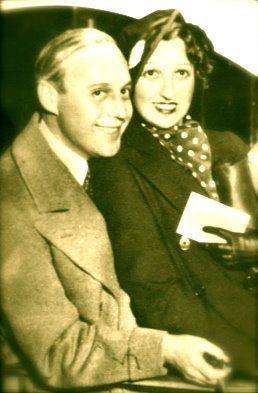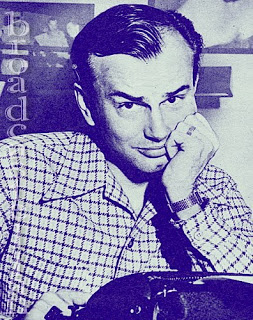
The House That Jack Sat

โ€œFrankly, Iโ€™m a little worried,โ€ comedian Jack Paar confided in announcer Hy Averback on this day, 17 August, in 1947. He was, after all, merely a โ€œsummer replacement,โ€ a โ€œfellow who broadcasts during the hot weather to give the other actors time to count the money theyโ€™ve made all winter.โ€ For the past twelve weeks, Paar had been sitting in for his first-namesake, skinflint Jack Benny, and had held warm that cozy place on the summer sun dial quite nicely at that. Still, while the reception had been far from icy, his โ€œbrief summer careerโ€ was fast coming to an end as radio was โ€œgetting ready for the winter again.โ€

Unintelligible as they might seem to most of todayโ€™s readers, there were tell-tale signs: Edgar Bergen โ€œrepainting Charlie McCarthy,โ€ Fibber McGee โ€œwaxing Harlow Wilcox,โ€ and Phil Harris switching to โ€œantifreeze, with an olive.โ€

Resigned as he was to his autumnal fate, the soon-to-be displaced replacement did not go gentle into the night; instead, he took it upon himself to find his โ€œwinter replacementโ€ by staging a talent contest.

The first applicants auditioning for Paar are a midget sister act. The sisters do not impress Paar much, even though his assessment suggests that he was not quite at home in the non-visual medium. I mean, having bags under his eyes didnโ€™t send Fred Allen packing; nor did being a trifle wooden hurt Charlie McCarthyโ€™s career.

PAAR. ย Maybe I was listening wrong. ย Did you say you do card tricks with mice?

ACT 2. ย Yes. ย Here. ย Pick a mouse.

PAAR. ย [ . . .] Donโ€™t you do any of the conventional magicianโ€™s tricks, like, maybe, sawing a woman in half?

ACT 2. ย Oh, but monsieur, I shall never saw a woman in half again. ย I was never so humiliated. ย I was on the stage of the Orpheum Theater, you see . . .

PAAR. ย You mean, something went wrong with the trick?

ACT 2. ย Oh, yes. I donโ€™t know how it happened, but I was sawing this woman in half when, all of a sudden, I heard . . . blup, blup, blup, blip . . .

PAAR. ย Poor Simone Simon.

The third act is somewhat more promising or, at any rate, more familiar. It is, donโ€™t you know, Jack. Benny, that is, โ€œcomedian and violin virtuoso.โ€

โ€œI was the original Jack Armstrong, the All-American Boy,โ€ Benny insists as he lists his spurious radio credentials. โ€œWhen you were a boy, we didnโ€™t have all of America,โ€ Paar retorts. To prove that, until his season ended some twelve weeks ago, he was โ€œone of the funniest men in radio,โ€ the self-important Benny reads some lines from one of his scripts. So convinced was he of his own genius, that he did not bother to fill in the blanks left by his absentee sidekicks:

Thank you, Don. ย Well, hello Mary. ย Phil, you gotta do something about that band. ย Sing, Dennis. ย Rochester, answer the door. ย Yikes. ย Well, what do you know, itโ€™s Ronnie and Benita. ย But I think. ย But I. ย But. ย But. ย But. ย Bu . . . weโ€™re a little late. ย So, good night, folks.

Whether boasting Benny looked in on his replacement to give the latter a boost or to let listeners know that the spot was still his, I donโ€™t know; but rarely has a reminder of being replaceable made a comedian on hiatus sound so incomparable.

Meanwhile, just to remind myself that summer ainโ€™t over yet, even though it sure feels like autumn here on the Welsh coast, I booked a trip to visit the old place. Yes, hold your wax, Harlow, beginning next week, I am back in New York. Itโ€™s a neat trick, considering that the new place weโ€™ve been doing up still demandss so much of our attention and time. Displacement activity, you say? I should be scratching paint rather than scrape pennies and scram? Aw, go pick (on) a mouse!

Related recording
Jack Paar (17 August 1947)
The โ€œcrazy coonโ€ and the โ€œhighvoiced fagโ€: Jello and the Language of Revolution

Language is to me one of the main pulls of the no longer popular, be it American radio comedy of the 1940s or the serial novels of the Victorian era. That is to say, the absence of the kind of language we refer to as โ€œlanguageโ€ whenever we caution or implore others to mind theirs. Mind you, all manner of โ€œlanguageโ€ escapes me in moments of physical or mental anguish; but, once I hit the keyboard, whatever hit me or made me hit the roof is being subjected to a process of Wordsworthian revision. You know, โ€œemotion recollected in tranquility.โ€

If the revisions come off, what remains of the anger or hurt that prompted me to write has yet the kind of medium rare severity that renders expressed thought neither raw nor bloodless. No matter how many words have been crossed out, the recollection still gets across whatever made me cross in the first place, and that without my being double-crossed by lexical recklessness.

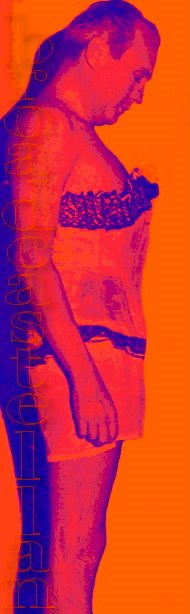
Writing with restraint is not a matter of adopting certain mannerisms to avoid being plain ill-mannered. Obscurity is hardly preferable to obscenity. The trick is to create worthwhile friction without resorting to diction unworthy of the causeโ€”without using the kind of words that just rub others the wrong way. I was certainly rubbed so when, researching old-time radio, I brushed up on Amiri Barakaโ€™s Jello (1970), no doubt the angriest piece of prose ever to be written about the American comedian Jack Benny (seen here, dressing up as Charleyโ€™s Aunt).

Jello was penned at a time when many Americans who grew up listening to Benny retreated into nostalgia rather than face, accept, let alone support the radical cultural changes proposed or, some felt, threatened by the civil rights movement. Baraka confronted this longing for the so-called good old days with a farce in which Bennyโ€™s much put upon valet Rochester refuses the services the public had longโ€”and largely unquestioninglyโ€”come to expect of the well-loved character.

What ensues is a riotโ€”albeit not one of laughsโ€”as Barakaโ€™s โ€œpostuncletomโ€ Rochester lashes out at his former master-employer and insists on forcefully taking the money out of which he believes to have been cheated during the past thirty-five years (according to Baraka’s rewriting of broadcasting history). Having found that โ€œlootโ€ in a bag of Jello, Rochester leaves Benny, Mary Livingstone, and Benny regular Dennis Day to their โ€œhorrible lives!โ€โ€”piled up on the floor like the corpses in a Jacobean revenge tragedy.

The plot of Jello is older than its messageโ€”the call to rise against the forces that made, made tame or threaten to unmake us; and the only startling aspect of Barakaโ€™s play is the aggressive tone in which that message is delivered, delivered, to be sure, to none but those already alive and receptive to his rallying call.

โ€œNo, Mary,โ€ Barakaโ€™s version of Benny insists, โ€œthis is not the script. This is reality. Rochester is some kind of crazy nigger now. Heโ€™s changed. He wants everything.โ€ The language alone signals that we are well beyond the grasp of the titular sponsor, beyond the code adopted in the summer of 1939 by the National Association of Broadcasters, according to which โ€œno language of doubtful proprietyโ€ was to pass the lips of anyone on the air.

As is the case in all attempts at policing language, the underlying thoughtโ€”the unsaid yet upheldโ€”might be more dubious still; and when Baraka picks up the word โ€œnigger,โ€ he gives expression to a hostility that could not be voiced but was played out in and reinforced by many of the networksโ€™ offerings. Indefensible, however, is his use of equally virulent language like โ€œstupid little queenโ€ and โ€œhighvoiced fagโ€ when referring to tenor Dennis Day or โ€œradio-dikey,โ€ as applied to Mary Livingstone. Staging revolution, Baraka is upstaged by revulsion. He has mistaken the virulent for the virile.

In those days and to such a mind, โ€œfagโ€ was just about the most savage term in which to couch oneโ€™s rejection of the unproductive and the non-reproductive alike. It was a monstrous word demonstrative of the fear of emasculation. It is that fearโ€”and that wordโ€”with which power and dignity was being stripped from those whose struggle for equality was just beginning during the days following the Stonewall Riots of 28 June 1969, from those whose fight was impeded by a fear greater and deeper even than racism.

Now, I’m no slandered tenor; but I have been affronted long enough by such verbiage to be tossing vitriol into the blogosphere, to be venting my anger or frustration in linguistically puerile acts of retaliation. If I pick up those words from the dust under which they are not quite buried, I do so to fling them back at anyone using them, whether mindlessly or with designโ€”but especially at those who inflict suffering in the fight to end their own. Our protests and protestations would be more persuasive by far if only we paid heed to the words we should strike first.

Related writings
โ€œA Case for Ellery Who?: Detecting Prejudice and Paranoia in the Blogosphereโ€
โ€œMartin Luther Kingfish?: Langston Hughes, Booker T. Washington, and the Problem of Representationโ€
โ€œJack Benny, Urging Americans to Keep Their Wartime Jobs, Catches Rochester Moonlighting in Allenโ€™s Alleyโ€


โ€œ. . . that same young man in that same brown suitโ€: A "Jackass" Takes a Bow

For the life of me, I canโ€™t turn a phrase. At least, not at a speed that would encourage anyone to keep up with me. I canโ€™t seem to cut a line short enough to make it worthwhile anyoneโ€™s time or spin it fast enough to lasso in the crowds. By the time Iโ€™m done editing myself, everyone else has left the spot I failed to hit. As a matter of fact, I am still editing what you are reading now. I would have failed miserably in the days when radio demanded rapid-fire gags at a rate that prematurely aged funnymen like Lou Holtz, who had drawers full of them, and wrecked the nerves of his assistants (among them, the young Herman Wouk, aformentioned). “Take all the words in all the full-length pictures produced in Hollywood in a year,” Erik Barnouw calculated in 1939, “and you do not have enough words to keep radio in the United States going for twenty-four hours.”

Comedians and the largely anonymous writers who fed them their lines sure had to work fast; yet, energy aside, they also needed stamina to sustain an act through the seasons. Sure, you can get almost anyone to โ€œWanna buy a duckโ€; but to make it something other than a lame one and not to end up with egg on your face after a few weeks, let alone decades, requires some convincing.

That said, quite a number of comedians, most of them seasoned vaudevillians, enjoyed a long career on the air, a durability that, with a few exceptions, is foreign to today’s short-attention-spanned YouTubeans whose mental databases have been outsourced and replaced by all sorts of gadgetry (or re-call centers) designed to make us forget anything other than to heed those reminders of how to pay dearly, if conveniently, for our carefully nurtured deficiencies. Their mental faculties scattered along the hard drive, future generations may well be on too short a term with the world even to get a running gag. (As I was saying, my syntax just wouldnโ€™t do for broadcasting.)

Celebrating his seventh year on the air, on this day, 30 April, in 1939, was Jack Benny, that perennial middle-age dodger from Waukegan. โ€œExactly seven years ago today a young man walked into a small New York broadcasting studio and spoke into a microphone for the first time,โ€ announcer Don Wilson (pictured, above, to the right of comedian Jerry Colonna) told those tuning in to the Jell-O Program. There he stood, โ€œthat same young man in that same brown suit,โ€ still shaking before every broadcast. “And that’s what worries me,” Benny confessed, “Now I shake and I’m not nervous.”

From the opening tune, โ€œMan About Townโ€โ€”the title of Bennyโ€™s latest filmโ€”the broadcast was to be a half-hour of . . . depreciation, an invitation for Benny’s writers to go to town at the man’s expense. That, in shorthand, is the Benny formula, an instantly recognizable persona that contemporary critics Jack Gaver and Dave Stanley termed the “whipping boy of the airwaves.” Benny’s first words on the air (uttered on 2 May rather than 30 April 1930) already signalled the fashion, but it also reminds us how successfully “that same young man in that same brown suit” retailored his act over the years:

Ladies and gentlemen, this is Jack Benny talking, and making my first appearance on the air professionally. ย By that I mean I’m finally getting paid, which of course will be a great relief to my creditors. ย I, uh, I think you don’t know why I’m here. ย I’m supposed to be a sort of a master of ceremonies and tell you all the things will happen, which would happen anyway. ย I must introduce the different artists who could easily introduce themselves, and also talk about the Canada Dry made-to-order by the glass, which is a waste of time as you know all about it. ย You drink it, like it, and don’t want to hear about it. ย So, ladies and gentlemen, a master of ceremonies is really a fellow who is unemployed and gets paid for it.

Gradually, such self-consciousness would become tempered with no uncertain vaingloriousness, and Benny (and his writers) left it to fellow cast members and rival comedians to make the fall guy trip. On the seventh anniversary program, even Fred Allen sent a wire, which Mary Livingstone somewhat less than dutifully read to Benny:

Livingstone. ย Dear Jackass.

Benny. ย Gimme that wire. ย Mmm. ย Thatโ€™s โ€œDear Jack. As this is your seventh anniversary . . .”

The joke, however slight when quoted out of context, depends for its punch on a listener’s familiarity with the Benny-Allen feud. Audiences expected an acerbic note from a rivalโ€”but to be hearing it from those who worked with Benny, and on the occasion of his taking a bow to boot, gave the line a certain kick, one that was always directed at Benny’s posterior and conveniently administered by those nearest to him. Jackass? Benny was a regular piรฑata. The more direct the hit, the more likely the chances of hitting the jack(ass)pot.

Meanwhile, the anniversary of that celebratory broadcast is past . . . and I am still editing.

Ham and Accents

โ€œGood evening, ladies and gentlemen. The Lady Astor Screen Guild Players have a surprise for you tonight.โ€ Such a promise may well have sounded hollow to many of those tuning in to the Guild program broadcast on this day, 27 March, back in 1944. That it was grandiloquently voiced by the avuncular-verging-on-the-oleaginous Truman Bradley, whom American radio listeners knew as a voice of commerce, hardly imbued such a potential ruse with sincerity. And yet, the program is indeed a surprise, and a welcome one at that. The broadcast is a rarity in scripted radio comedy: one of those occasions when ham is not only sliced generously but consumed with gusto. Granted, I may be somewhat of a hypergelast, the kind of fellow Victorian poet-novelist George Meredith denounced as a fool who laughs excessively. Still, believe me when I say in a voice that has nothing to advertise but its own taste, poor or otherwise: this is one is a riot.
Affable character actor Jean Hersholt, then President of the Motion Picture Relief Fund and star of his own sentimental radio series (Doctor Christian), takes over from the announcer to introduce the players for the evening. You can buy a line from a man like Hersholt. His is a thick, honest-to-goodness accent that sounds trustworthy compared to whatever slips from the trained tongues of promotion.

Tonight, he tells us, โ€œwe have Barbara Stanwyck, Basil Rathbone, and director Michael Curtiz, three of filmdomโ€™s outstanding personalities who will offer. . . .โ€ At this moment, Hersholt is cut short by the one who generally occupies that spot, the man entrusted with the dearly paid-for delivery of cheap assurances.

โ€œUh, just a minute, Jean,” Bradley interjects, “I thought that Jack Benny was supposed to be one of the guests here tonight.โ€ This exchange sets up the slight comedy known as โ€œHam for Sale,โ€ a fine vehicle for Jack Benny, the master of comic deflation, the jokester known for his largely unfulfilled aspirations as a thespian and classical musician.

According to Hersholt, Benny got โ€œa little temperamentalโ€; so he will not be heard on the program. Hersholtโ€™s recollections give way to a dramatized account of Bennyโ€™s response to the proposed broadcast. โ€œI havenโ€™t got anything against you, Jack. But youโ€™re a comedian; and, frankly, I donโ€™t think you have enough dramatic ability to play the lead opposite Miss Stanwyck.โ€ Upon which the slighted comedian sets out to win the part.

The hilarity generated by โ€œHam for Saleโ€ is not so much scripted than delivered. Greatly responsible for the kicks youโ€™ll get out of this broadcast is the highly regarded, Oscar-winning director of Casablanca, whose Hungarian accent is so pronounced and to radio listenersโ€™ surprising, that it causes Benny to ad-lib and Stanwyck to scream with utterly infectious laughter.

According to Herbert Spencerโ€™s โ€œThe Physiology of Laughterโ€ (1860), mankind (or, homo ridens) response in this way when expectations are suddenly disappointed and an excess of energy in our nervous system is discharged in the muscular reflex of laughing. It seems that, as an actress, Stanwyck expected Curtiz to have a great, controlling presence; instead, while to some extent in on it all, he became the hapless brunt of Bennyโ€™s jokes: โ€œBetween Hersholt and you, I donโ€™t understand anything.โ€ Perhaps, it is the kind of โ€œsudden gloryโ€ Thomas Hobbes denounced as a โ€œsign of pusillanimity.โ€ But it sure feels good to salt this โ€œHamโ€ with your own tears.

It wasnโ€™t exactly a fresh cut. The sketch had already been presented once before (on 20 October 1940), with Benny trying the patience of Edward Arnold, Ernst Lubitsch, and Claudette Colbert. Yet Colbert appeared to have been too controlled an actress to let anything interfere with her live performance that evening; nor did Lubitschโ€™s accent trigger as many not altogether intentional laughs as that of his fellow director. It is Stanwyckโ€™s reaction to Curtizโ€™s line readings (just hear him exclaim “stop interrupting”) and Bennyโ€™s extemporising to the occasion that makes โ€œHam for Saleโ€ such an irreverent piece of Schadenfreude.

Relentless and immoderate, laughter here is a response to the โ€œmechanicalโ€ (in Bergsonโ€™s sense), to the orderly and overly rehearsedโ€”the minutely timed, predictable fare that so frequently went for on-air refreshment.

Mr. Benny Gets the Key to Baldpate

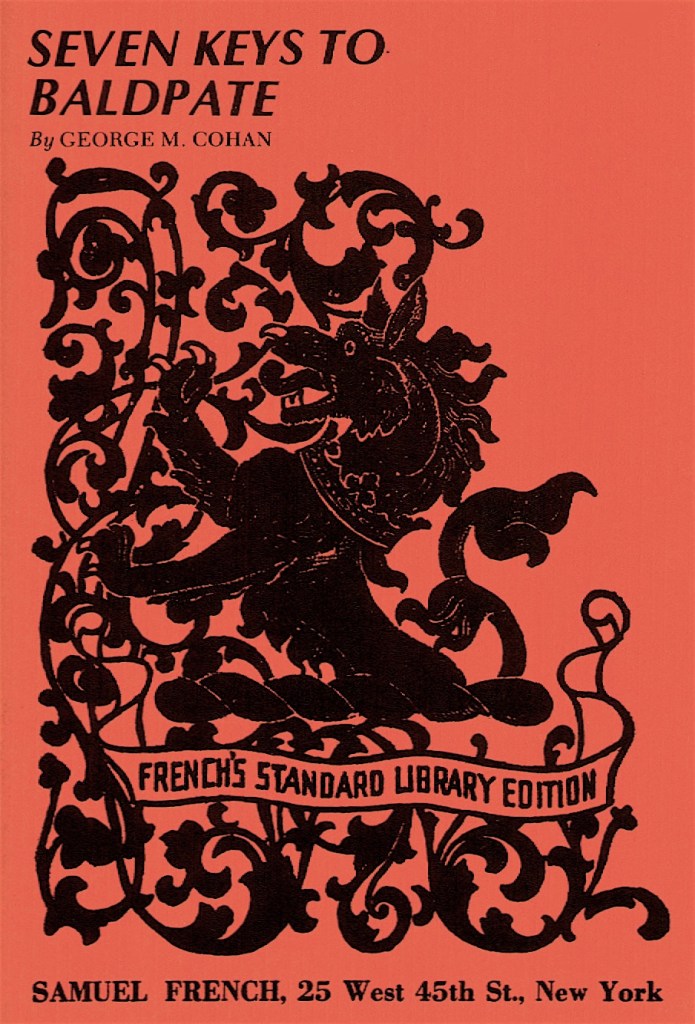
Well, I feel rather less prickly than yesterday. My cold seems to be on its way out and, having spent some time out of doors in the warmth of the autumn sun, I feel somewhat more serene and benevolent. Speaking of doors (a transition more creaky than the farce I am writing about today): Having complained previously (and elsewhere) about the conventional and therefore superfluous adaptation of Jane Eyre now flickering in weekly installments on British television, I am going to mark the anniversary of a decidedly more inspired variation on what was once a similarly familiar work of fiction, Seven Keys to Baldpate, a crowd-pleaser that was revived for radio on this day, 26 September, in 1938.

Granted, it is easier to rework a piece that does not warrant the reverence befitting a literary classic such as Jane Eyre, a respect that can be artistically stifling when it comes to revisiting or revising what seems to demand fidelity rather than felicitous tinkering. A mystery novel conceived by Earl Derr Biggers, the creator of Charlie Chan, Seven Keys opened many more doors after going through the smithy of theater legend George M. Cohan. Unlike Biggers, Mr. Cohan did not play it straight, but turned the thriller into what he then sold as a “Mysterious Melodramatic Farce”โ€”starring himself.

In Cohan’s farce, the thriller writer Bill Magee accepts the $5000 challenge of a friend who dares him to pen a novel within twenty-four hours. To achieve this, the author is being given what he believes to be peace and quietโ€”the only key to a remote resort shut down for the winter.

During his night at Baldpate Inn, the supposedly single guest is disturbed by an assortment of singular strangers, lunatics and villains, until his friend shows up to confess that the bizarre goings-on were a practical joke designed to illustrate the ridiculousness of the author’s improbable plots. The epilogue of Seven Keys discloses, however, that the action of the play was a dramatization of the novel Magee actually managed to complete that night. He won the wager by fictionalizing the challenge.

Opening on 22 September in 1913, the play became an immediate and oft-restaged favorite with American theatregoers. It was subsequently adapted for screen and radio. When, some twenty-five years after its premiere, the producers of the Cecil B. DeMille hosted Lux Radio Theatre got their hands on this potboiler, they slyly revamped it as a commercial property fit for the latest medium of dramatic expression.

In his introductory remarks, DeMille promises the listener a “special treatment” of the playโ€”and that, for once, was no overstatement. As I have discussed at length in Etherized Victorians, my study on old-time radio, the broadcast revision is not so much a rehash as it is an media-savvy update of the original.

Whereas Cohan’s version celebrates the victory of popular entertainment, of readily digested pulp fictions churned out for a quick buck, Lux writer-adaptor George Wells transforms Seven Keys into a radio storyโ€”a story about radio that parodies the anxiety of former vaudevillians-turned-broadcast artists to achieve lasting success, to be remembered long after the shows in which they starred week after week had gone off the airโ€”to become cultural icons despite their invisibility. And those keys to uncertainty were handed to the man who had been through it all and stayed on top by knocking himself down, fall guy comedian Jack Benny.

Instead of a successful novelist, the artist now up for a crazy night at Baldpate is Jack Benny, as “himself,โ€ a frustrated thespian who accepts the challenge of developing a suitable dramatic vehicle for himself after having been turned down for serious dramatic parts time and again. Benny’s challenger is no other than Mr. DeMille, who, in a rare stunt, not only introduces and narrates the play, but acts in it, and that without having to drop his director-producer persona. Throw in a few Lux Flakes and it comes out a clever bit of promotion all round.

The unpretentious yet self-conscious reworking of a play as old hat as Baldpate into a comment on the recycling business of radio entertainmentโ€”and a demonstration of how to lather, rinse, and repeat successfullyโ€”is one of Lux‘s most ingenious and engaging productions.

Old-time Radio Primer: F Stands for Free

The dictionaries only manage to define it by telling us what it is not. It is such a troublesome little word, yet so attractive. “Free,” I mean. It has a lot to do with commercial broadcastingโ€”the wireless with strings attachedโ€”which is why I am taking the liberty to include it in my old-time radio primer.ย  The state of being “free” is generally thought of as the absence of some restricting force or entity. However positive, it is a want we are wont to capture by negation. You are free to skip this line, by the way, unless, of course, you are somehow compelled to read on. Am I encroaching on your liberties by subjecting you to yet another sentence, by sentencing you to yet another subject? Go on, it is complimentary. And considering that wars are being fought over it, it is hardly a matter of no matter.

“Free” is so overused, misused and corrupted a lexical commodity that you have every reason to grow suspicious of anything offered on such termsโ€”particularly that tautological fallacy of the “free gift” (with every purchase, no less). Eventually, you begin to wonder whether a word that only exists as an opposite, and exists only to be turned into that opposite, has any meaning at all.

If being free is the sensation of doing or being without, then freedom might very well be poverty, deprivation, and thraldom. Even if it is understood to mean doing or being without something on your own accord, you might want to take a moment of your spare time to consider how did you arrive at that accord, that agreement, without being under some forceful influence, and thus not free?

Here is the obligatory verse. It, too, is free this time:

“Free” is what looks good . . .
because you like the sound of it.
“Free” is what tastes good . . .
even if it smells funny.
“Free” is what feels good . . .
although it makes no sense at all.

In America, radio was being touted as a purveyor of gratis entertainment. And gratis deserves gratitude. You didn’t have to drop a nickel into the machine for every song or program you wanted to hear, even though the machine itself was no mean crystal set, but one of those expensive new console models that looked so nice in the advertisement and, the salesperson said, would fit so well into your living room. After all, you wouldn’t want to look cheap when handing out treats to your important dinner guests (the business kind, who could do something for you).

How comforting the thought that the entertainment at least was being paid for by someone who was also charitable enough to take care of all those who toiled and performed for your amusement over at the broadcasting studio, those big and expensive-looking facilities like the ones over at Radio City, which you’d love to visit some day, if only you had enough time or money for a trip to New York.

No need to get sarcastic. You are under no obligation to tune in tomorrow, as the announcer keeps insisting, although you sure would like to know whether Superman, “bombarded by livid bolts of atomic energy, and buried now for almost an hour,” will manage to save Metropolis or whether that “girl from a mining town in the West” can really “find happiness as the wife of a wealthy and titled Englishman”โ€”especially now that she was being threatened by Lord Henry’s evil twin. Yes, you could turn it off. The freedom of it!

Sure, they’ve all got something to sell. That’s nothing, if hours of carefree listening can be had for just thatโ€”nothing. That’s why Jack Benny could make you laugh on the Lucky Strike Program last night and Nelson Eddy sang for you and the Chase and Sanborn people (the thought of which reminds you to get coffee at the market tomorrowโ€”and to make it Sanka, just to show them)! It’s a free market.

So what if those who offered this free service really took it from you in the first place and used it for their own purposes! So what if they expected a little somethingโ€”or rather a lotโ€”in return for taking over the airwaves you quite forgot were free. You could always write a letter and complain, if it got out of hand. That was your right, as a taxpayer.

Perhaps we ought to remove the word from our vocabulary. It seems so much easier than striving for something so elusive. Feel free to differ.

On this Day in 1938 and 1949: Jack Benny Lays an Egg and Hatches It Well

Well, you can’t expect profundities from someone who sports a fake mustache and spots of white paint on his pelt, someone who traipses along the hedgerows in slippers and underwear to go in search of a sound. Easter or not, it was one of those days on which reason lays an egg.

Even if you didn’t observe the self-denial rituals of the season, you can gather that the bleak and lean months are over. You might catch The Easter Parade on television, for instance, or step into a dyed egg that hasn’t been hunted down. You might come to realize that Lent is so yesterday by noticing how the chocolate bunnies have suddenly disappeared from the shop windows, making way for Mother’s Day reminders; or, if you, like me, moved far from the fattening crowd, you can tell it’s time for a feast when the lambs are getting bold or anxious enough to bolt and too big to make it back into the fold once it gets tangled up in wires and brambles, as was the misfortune of the lost one above. Is it just me, or does the woolly one bear a resemblance to American Idol finalist Elliot Yamin?

Now, I am neither shepherd nor hunter. I was busy spring-cleaning, freshening up the paint on my bedroom walls (hence the aforementioned spots), when I got distracted by the noisy lament of the latent dish across the way. Protecting one’s patch of green from being chomped up by hunting down the voracious herbivore that will soon be someone else’s dinner is, though a seasonal probability, not exactly a tradition to be cherished. Unlike Jack Benny’s Easter gambols, which took place on this day, 17 April, in 1938, among animals far wilder and people more peculiar than those above described

Gaily attired in a “funny double-breasted suit” and that most radiogenic of footwear–squeaking shoes–Benny decides to cut short his weekly broadcast to take his gang to the circus. The old skinflint even springs for a round of balloons. Resident crooner Kenny Baker is unimpressed by the offer: “Naw, that’s for children. I want a Tom Collins.” You’d appreciate one, too, getting through some of these early routines.

Having feasted their eyes on the sideshow attractions touted as the “most stupendous aggregation of freaks and curiosities this world has ever seen,” they all saunter over to the main tent, only to learn that Benny’s free passes are no good. Leave it to Benny to come up with a solution that does not involve payment, even if it leads him straight into a lion’s cage.

Eleven years later, on 17 April, in 1949, Benny, just returned from New York, was heard Easter-Parading down Wilshire Boulevard. The creaky old routines sure had gotten smoother since 1938, even though success did not stop Benny, whose long-running program had just changed networks, from being troubled by thoughts of cancellation, as this excerpt from his diary reveals:

April 8: Talked to my sponsor today.
April 9: Talked to my sponsor today.
April 10: Talked to my sponsor today.
April 11: Talked to my lawyer today.
April 12: My lawyer talked to my sponsor today.
April 13: My lawyer will be my summer replacement.

As Benny strolls down to La Brea, greeting passers-by in Easter Parade fashion, there are amusing run-ins with a motley crew of recurring characters (including Benny’s frustrated violin teacher Professor LeBlanc and the chirpy Mr. Kitzel; listening in on the wire are nonchalant telephone operators Mabel Flapsaddle and Gertrude Gearshift).

I would fit right in, I think, especially with that fake mustache I just mentioned. It’s not that I am too follicle-challenged to sprout one. I drew it last night to humor my adopted family, the folks in Connecticut and New York for whom I had appeared on camera for a holiday video conference. They had never seen me without facial hair, which I took off a few days ago after a failed attempt at Don-Amecheing it to pencil-thin perfection. In fear of being threatened with a “summer replacement” of my own, I swiftly grabbed the next best pen and transformed myself for my fastidious audience. As it turns out, the ink is of the waterproof and permanent variety. Now, pardon me while I continue my spring cleaning in front of a mirror . . .

On This Day in 1943: Gracie Allen Decides to Replace Jack Benny with "Thirty Minutes of Refinement"

Last night, I finally got to see the so-called highlights of the Academy Awards, an assortment of leftovers that UK channel Sky One tosses to those subscribers who refuse to have juicy bits of trivia over-nighted for a premium. While mercifully abridged, the ceremony was chopped off at all the wrong spots, with more attention being paid to red carpet parading than to the presentation proper, let alone the politics behind the trophy distribution.

I had been looking forward to a few choice moments described by television critic Brent McKee in his online journal, but never got to judge for myself what exactly was the matter with Lauren Bacall, whom I had already presumed dead a few weeks ago. The commercials-riddled presentation made gossip-fest Entertainment Tonight look like an uncompromising piece of investigative journalism. Being accosted by the inane and utterly superfluous commentary provided by a couple of British MC stand-ins, I hardly even got as much as a glimpse of Jon Stewart, whose hosting of the high-profile, low-rated affair received rather mixed reviews.

Just how difficult it is to find a suitable master (or mistress) of ceremonies was played up in this year’s introductory Oscar sketches, in which former presentational misfires like Whoopi Goldberg and David Letterman refused to front once more what amounted to a chorus of disapproval.

What is required of an Academy Awards host is not simply a modicum of charm and wit, as well as a stature that bears a vague semblance to Hollywood star power, but also a persona firm enough not to crack when faced with the shocks and punctures it is likely to sustain during a never entirely predictable live broadcast. Censors and advertisers balk at volatile comics (an energetic personality Robin Williams once used to personify), as much as a large percentage of the statistical presence known as the general public might enjoy their ad-libbing antics.

True, the exposure of certain parts of the human anatomy aside, American broadcasters are no longer quite as squeamish as they once were in their furtive approach to the lexicon of the commoners (even though rap lyrics can still be awarded a prize without being deemed fit to air in their original form). Still, notwithstanding the fact that everyday language seems to have just about shrivelled to the utterance of monosyllabics, the broadcasters’ dictionary of permissible phrases sure used to be much smaller a few decades ago.

On this day, 7 March, in 1960, for instance, Jack Paar returned to host the Tonight Show after an absence of one month, during which he protested NBC’s rejection of a tame bit of toilet humor (some quip about a “water closet”). Today, of course, it is chiefly political correctness that concerns those who suck up the open air of which they are merely lessees while sucking up to the advertisers and corporate entities that condition it.

Sometimes I wonder whether the host is as overrated a figure as the actor who portrays the spectacle that is a James Bond movie. How irreplaceable are the ostensible headliners of any show, even if their names are as closely associated with it as, say, Jack Benny’s was with the Jack Benny Program? Benny learned the hard way on this day in 1943. The perennial 39-year oldโ€”who would later give a young Paar his break when discovering the newcomer while entertaining the troops)โ€”was forced to sit out his own broadcast due to a cold, only a funeral having kept him away during the previous season.

Asked to substitute for him were fellow radio comedians George Burns and Gracie Allen. Yet while George was perfectly willing to pinch-hit for bedridden Benny, his batty wife simply refused to go on the air to take care of the impending vacuum.

Gracie had decided to become an intellectual, and filling in for the lead of an old comedy act just would no longer do. She was scheduled instead to give a piano concert, undaunted by her apparent lack of keyboards-tested talent. None of George’s coaxing would convince her to change her absent mind; besides, she already owned the expensive articles of clothing that George promised to bestow upon her in the event of her much-needed cooperation.

Eventually, Gracie condescended to do the show after all, having discovered a kindred soul in sensitive Dennis Day. Sure, he liked Little Women; but he liked books even better. And when he demonstrated his love for poetry by reciting Rudyard Kipling’s “If” in a pitch that screamed “cultured”โ€”no ifs and buts about itโ€”Gracie could not but seize Benny’s temporarily vacant timeslot, determined to present her “Thirty Minutes of Refinement.”

Now “refinement” was a concept to which violinist Benny himself aspired, but which those in charge of shaping popular radio entertainment mainly derided for profit as some harebrained, longhair attempts at bothering the blissfully ignorant with unnecessary uplift.

Wireless Women, Clueless Men: Minerva Pious, Alleyway Dialectician

Well, it is time to light the candles, open that bottle of champagne, and count the ways in which we love . . . Mrs. Living- stone’s husband? Comedian Jack Benny, I mean, who would have turned thirty-nine all over again on this Valentine’s Day. Americans may declare their love for the man by signing the Jack Benny Stamp petition. A licked backside! Now, that is more respect than the pompous miser got on his own show.

So, in keeping with this lack of reverenceโ€”and my commemoration of the dames, gals, and ladies of radioโ€”I will give Benny the brush and stroll down Allen’s Alley, the imaginary neighborhood whose denizens were quizzed each week by Benny’s archrival, the partner of Mrs. Portland Hoffa. โ€œShall we go?โ€ Portland used to ask, cheerfully, to which Fred Allen would reply something like “As the bathtub said to the open faucet: I think I shall run over.”

One of the people you’ll find on Allenโ€™s Alley is Pansy Nussbaum, a Jewish housewife played with great zest by Russian-born actress Minerva Pious (shown above, with Allen, in a picture taken from Mary Jane Higby’s Tune in Tomorrow). Mrs. Nussbaum, whom Pious also impersonated on the big screen (in the 1945 comedy It’s in the Bag), was the “heroine of millions who listen to Fred Allenโ€™s programs,” radio dramatist Norman Corwin remarked. Having cast her as a hard-boiled Brooklyn crime-solver in his comedy-mystery “Murder in Studio One,” Corwin was appreciative of Pious’s vocal versatility, adding that she could also be a “fire-spitting cowgirl, a “swooning Southern belle with six telescoped names,” or a “femme fatale from the Paris salons of Pierre Ginsburgh.”

In other “woids,” Pious was a first-rate dialect comedienne. And even though her heavy-accented caricature of a linguistically challenged, half-assimilated Jew was resented by some proto-politically correct critics, Pious brought so much heart and spirit to her weekly chats with Allen that her verbal stereotyping seemed good-natured, inoffensive, and indeed endearing to those who heard themselves in her laments and grievances.

As old-time radio aficionado Jim Harmon once put it, “Mrs. Nussbaum had less of the schmaltz and charm of Gertrude Berg’s Molly Goldberg” (discussed in the previous entry), and “more of Allen’s own sometimes acid wit.” Mrs. Nussbaum was no “Triumph, the Insult Comic Dog,” mind you; but, well past hearts, flowers, and Valentine’s cards, she did find considerable relief in complaining about whatever she was forced to put up with: wartime food rationings, the post-war housing shortage, or long-time husband, Pierre. Mainly, “mine husband, Pierre.”

When Allen knocked on her door exclaiming “Ahh, Mrs. Nussbaum,” the exasperated wife often had a smart answer revealing her Jewish state of mind: “You’re expecting maybe Weinstein Churchill” or “Turaluralura Bankhead,” or “Cecil B. Schlemil,” or “Mrs. Ronald Goldman?” A former beauty contest winner (“At Rockaway Beach, for 1925, I am Miss Undertow”), she claimed to have had her share of admirers who showered her with presents (“costume jewelry and coldcuts”). For a while, Pansy was torn between two playboys. What a “dilemmel”; but, long story short, after a weekend of deliberation at Lake Rest-a-Bissel she ended up with a “woim” by the name of Pierre.

Eventually, Pierre wormed himself into Pansy’s heart. Her marriage was by no means a loveless affair, even though it all began rather unconventionally, as a fluke. โ€œThanks to the telephone, today I am Mrs. Pierre Nussbaum,” she gushed during another one of Allen’s visits to the Alley. According to this account of her youth, she had been no catch: “On Halloween I am sitting home alone bobbing for red beets. Suddenly the phone is ringing. I am saying hello.” A “voice is saying, ‘Cookie, I am loving you. Will you marry me?'” And what did she reply? “Foist I am saying, ‘Positively!’ Later, I am blushing.” So, a confused Allen inquires, “why be so grateful to the telephone company?” “They are giving Pierre a wrong number.”

A telecommunications screw-up and a clueless suitor. Now, that’s as close to romance as Pansy Nussbaumโ€”nee Pom Pom Schwartzโ€”was destined to get. So, Valentine’s, Schmellentine’s! Minerva Pious was the one who lamented on behalf of all of us who have a Pierre of our own snoring on the sofa. We were expecting maybe Russell Kraut?

On This Day in 1942: Death Upsets the Pudding Trade

Only a few days ago I commemorated my 100th entry into the broadcastellan journal by going in search of fellow old-time radio bloggers. Not a week later, the subject has become considerably more prominent among bloggers with an entire classroom of neophytes posting their thoughts on radioโ€™s โ€œimagined communityโ€ and reviewing individual programs selected by their instructor. It remains to be seen whether the thought-sharing extends beyond the virtual college annex, or just how long the on-air engagement with โ€œyesterdayโ€™s internetโ€ (as Gerald Nachman called the radio) will last. “Tired of the everyday routine? Ever dream of a life of romantic adventure? Want to get away from it all?” Just hop over to technorati and type in โ€œThree Skeleton Key,โ€ the title of the first radio play on the group’s listening list.

Speaking of “everyday routine,” it was hardly business as usual on Jack Benny’s Jell-O program on this day, 18 January, in 1942. “Jack Benny will not be with us tonight,โ€ announcer Don Wilson informed those tuning in for some fun and laughter. Instead, the half-hour was filled with song and band music, with the reassurance that Jack would be back on the following Sunday to entertain America. Was the beloved comedian out sick, as he would be for five weeks in 1943, when George Burns and Orson Welles guest-hosted the show?

No, it was the violent death of glamorous, 33-year old motion picture actress Carole Lombard, Benny’s co-star in the Lubitsch comedy To Be or Not to Be, then in post-production. Lombardโ€™s death on 16 Januaryโ€”and Bennyโ€™s cancellation of his scheduled performance two days laterโ€”were solemn reminders how the war, into which the US had just entered in December, would alter the everyday lives of all Americans, service(wo)men, celebrities, and civilians alike. The Academy Award-nominated actress had been returning from a War Bond Drive in Indianapolis when her plane crashed and killed all passengers on board. For her contribution to the war effort, Lombard was later awarded the Presidential Medal of Freedom.

To be sure, there were no references to Lombardโ€™s death during the 18 January broadcast, news unlikely to have a favorable impact on the sale of gelatine puddings, the manufacturers of which sponsored the popular program. On the following Sunday, Bennyโ€™s writers even found humor in dealing with the comedianโ€™s fictive car crash.

For one night, though, Benny’s conspicuous absence spoke volumes louder than this speech in Hamlet, the play from which Lombardโ€™s last movie borrowed its title and which presented the miser from Waukegan in a preposterous impersonation of the miserable prince (pictured above). Asked to explain just what โ€œseemsโ€ to be the matter with him, Hamlet replies:

โ€˜Tis not alone my inky cloak, [. . .],
Nor customary suits of solemn black,
Nor windy suspiration of forced breath,
No, not the fruitful river in the eye,
Nor the dejected haviour of the visage,
Together with all forms, moods, shows of grief
That can denote me truly. These indeed โ€œseem,โ€
For they are actions that a man might play;
But I have that within which passeth showโ€”
These but the trappings and the suits of woe.

Comedy can do only so much to combat grief, solemn speeches so little to capture it. Beyond the domain of the airwaves, the rest is silence.