His Name Was Montague

Holding on to Montague

Twelve years ago I introduced Montague on the pages of this journal.  Today, it was time to bid farewell.

Montague, a stout, furry Jack Russell terrier, developed a cancerous growth in his snout and the last few weeks were (mostly) painful for him; he quickly lost his eyesight, his hearing, and his sense of smell, even though, until the very last day, he still ate with relish as much as he could swallow with ease.

I stroked the sedated dog in his basket as the veterinarian administered the lethal injection; his heart was so strong that it required two injections to put an end to his suffering.  It even made me doubt, momentarily, whether he could not have pulled through after all.

I had never experienced dying before; that is saying a lot, considering that, in my youth, I worked in a hospital for twenty months and have been around since then for decades.

Adopted and at first reserved, Montague was the only dog ever to live with me.  Given his past, shadowy though it is to me, he was cautious and not overly attached to anyone in particular; so it would not be right to call him โ€˜myโ€™ first dog.  He let my husband, me โ€“ and friends and relatives โ€“ take care of him as he saw fit; and I was glad of it.

He’ll stay in that carpet.

I had to go to work after the veterinarian appointment.  It was a gloomy Saturday, the day that Storm Callum caused the worst flooding in Wales in thirty years. When I walked to the School of Art, where I work, I heard organ music play in a nearby chapel.  I do not recall having heard music coming out of that place before, at least not in my presence, atheist that I am.  It felt like something out of Victorian melodrama; not that I, being late as usual, had time to dwell on the peculiar aptness of the music as a soundtrack for the moment.

On the previous day, my latest exhibition, โ€œTravelling Through,โ€ opened at the School of Art Museum and Galleries at Aberystwyth University.  The wistful, melancholy title has added meaning on this day of loss.

I am prone to sentimentality; but, in this age of meanness,  discord and accelerating indifference, I am glad to be feeling sorrow โ€“ though some may sneer that I simply feel sorry for myself โ€“ along with the need to let it be known; not in the hope of letting it dissipate but of making it resonate.

Farewell, Montague.ย  Little though I know, you taught me a lot.

Some Like it . . . How? Youth, Vampires, and Marilyn Monroe

Del Coronado mirage

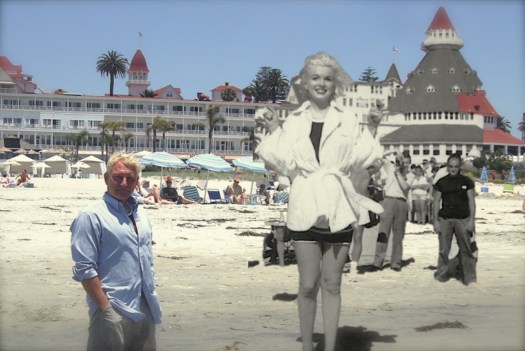
There I stood, in the shimmering sands of Coronado Beach, California. I had come, of course, to see the famous Hotelโ€”and to share the views once taken in by Marilyn Monroe during the filming of Some Like It Hot. Marilyn was here. Now I was.

Footsteps. Sand. The old hourglass. I wonโ€™t indulge in such clichรฉs here; but there is something pathetic about this kind of out-of-sightseeing, this belated catching up and impossible reaching out to which I am prone. The inclination to seek out what is long gone is more than morbid curiosity: it is an approach to life as a retreat from living in which even the here-and-now becomes dreamlike and chimerical. How did this get to be my way of not facing the world?

Marilyn Monroe died before I was born; yet her life and times became a fascination of my teenage years.ย ย Mine were not erotic fantasies.ย ย I did not long for her body.ย ย Nor did I think of her as being gone.ย ย She was never absent for long from the television screen, ever present on the iconic posters I pinned onto the wall above my bed.ย ย Records spinning on the old turntable, her voice filled my room. I had no regrets about never being able to meet her in the flesh; rather, it was a relief.

The wonder of her incorporeal existence made living in the body I loathed more tolerable; and it made the physical relationships I dreaded easier to contemplate in the abstract.  Marilynโ€”and we call her by her first name because she is more familiar than famous, more girl than goddessโ€”was not some facile paradox: โ€œI Wanna Be Loved by Youโ€ and โ€œIโ€™m Through with Loveโ€ she sings in the same movie, expressing the hurt and hunger that are far from mutually exclusive.

Our teenage selves are preoccupied with the demands that both nature and society make on us, propositions and impositions captured in that horrible phrase haunting and taunting us until death: โ€œgrown up.โ€  As a response to and rejection of the implied threatโ€”the finality and premature stunting of our infinite potentialitiesโ€”Marilynโ€™s afterlife was as much a reproof of society as it was a society-proof alternative: a twilight life, expired and undying, bright though snuffed out, a fragile, indomitable spirit-presence in whose shadowy glow I could luxuriate, just as many a young person nowadays revels in the gothic gloom inhabited by zombies and vampires, except that my imaginings transported rather than dispirited me.

No doubt, this twisted bent of casting myself into times preceding my birth is born of a desire to bring forth alternate selves of mine without having to bear the vagaries of the present or the uncertainties of the future.  Like a life presumably squandered in reverie, bending the past to our will is a testament to a vestigial will powerโ€”or would-be powerโ€”in which the retrospective becomes invested with the prospect of an ever glimmering what if . . .

Come On Up, Eileen; or, Wonderful Yorkville

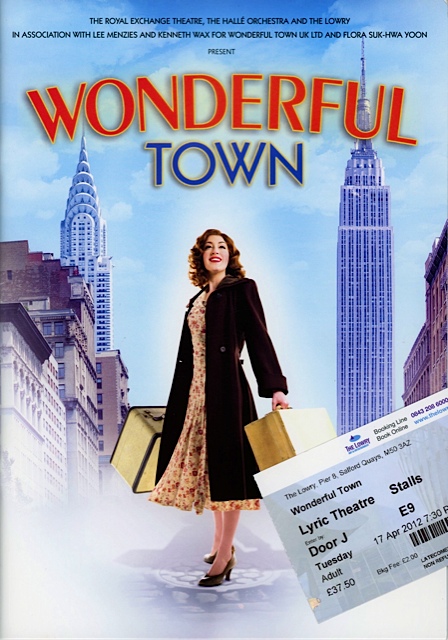
A few weeks ago, my better half and I were up in Manchester, England, to do research for an upcoming exhibition.ย  While there, we had the good fortune of catching a production of Leonard Bernsteinโ€™sย Wonderful Townย starring Welsh girl gone West End Connie Fisher as Ruth.ย  Though not quite the real thing, this revival of a Broadway musical version of a play (turned movie, turned sitcom) based on a series of magazine stories inspired by the personal recollections of an Ohioan in Gotham did manage to evoke some of the magic and the madness of life in the titular burg.ย  And now that Iโ€™m back, the residential misadventures of Eileen and her sister come to mind each time I walk down Second Avenue in my old Upper East Side neighborhood.ย  Like the McKenney siblings, whose Greenwich Village basement flat was shaken by blasts heralding a subway line then under construction, folks up here in Yorkville have been dealing for years with the pre-math of just such a subterranean project: the noise, the dirt, the traffic jams, the shut down stores, the narrowed sidewalks, the fenced in pedestrian passageways that make you feel like a laboratory rat . . . and the rats themselves.


Yes, Second Avenue (pictured) is looking rather worseโ€”and far less flashyโ€”than it did when the street was lined not with gold, but with gals who may or may not have a ticker made of that precious metal; you know, ladies whose line, like the subwayโ€™s, is well below. ย Wonderful Townย is not without hints of darkness, but, as in many musicals of the 1940 and ’50s, the shadier urbanites are colorful caricatures rather than delicately shaded characters. ย And if Wonderfulย is now not as well liked as it was when it premiered, this may be owing to the fact that, even though the characters are based on real people, the assembled Christopher Street portraits are cleaned up so thoroughly as to make them look like stock figures in a formulaic pastiche. ย That said, the musical still offers a glimpse at life during the Great Depression and remains translatableโ€”and relatableโ€”to anyone who can read between all those half erased lines of none-of-your-business.

Not that I need to step out of my old apartment to get that sinking Ruth and Eileen feeling.ย  The two women struggled to find work and put up with a lot while waiting for a break, a wait that, in Eileenโ€™s case, ended at the age of 26 in a fatal car crash.ย  Journalist Ruth McKenney immortalized her sister and sawโ€”orย made us seeโ€”the bright side of their hardship and the squalor down in their dingy, downstairs domicile. ย Indeed, when I first caught up withย My Sister Eileen, sitting in an Upper East Side park listening to a 1948 radio production starring Shirley Booth, I assumed it to be a comment in the post-Second World War housing crisis. ย And it is this crisis that hits home today.

If ever I write another autobiographyโ€”the one I penned somewhat prematurely at age 14 was discarded once it had served its purpose of communicating my pubescent angst to the girls in my class, whom I knew it was pointless for me to pursueโ€”I might take a lesson from Ruth and look on the proverbial if sometimes elusive silver lining when I reflect on this morningโ€™s knock on the door. ย An eviction notice was posted on it and my old apartment is once again contested territory.ย  I am writing thisโ€”whileย culture beckons unheededโ€”sitting at the shaky dinner table that, for many years, was stacked with books, student essays, and the drafts of my MA thesis and PhD dissertation. ย No, this town would not feel half as wonderful to me if it werenโ€™t for that table, this apartment, and for the friendship that made it possibleโ€”and indeed desirableโ€”to come back for a visit, year after year . . .

Better the DeMille You Know

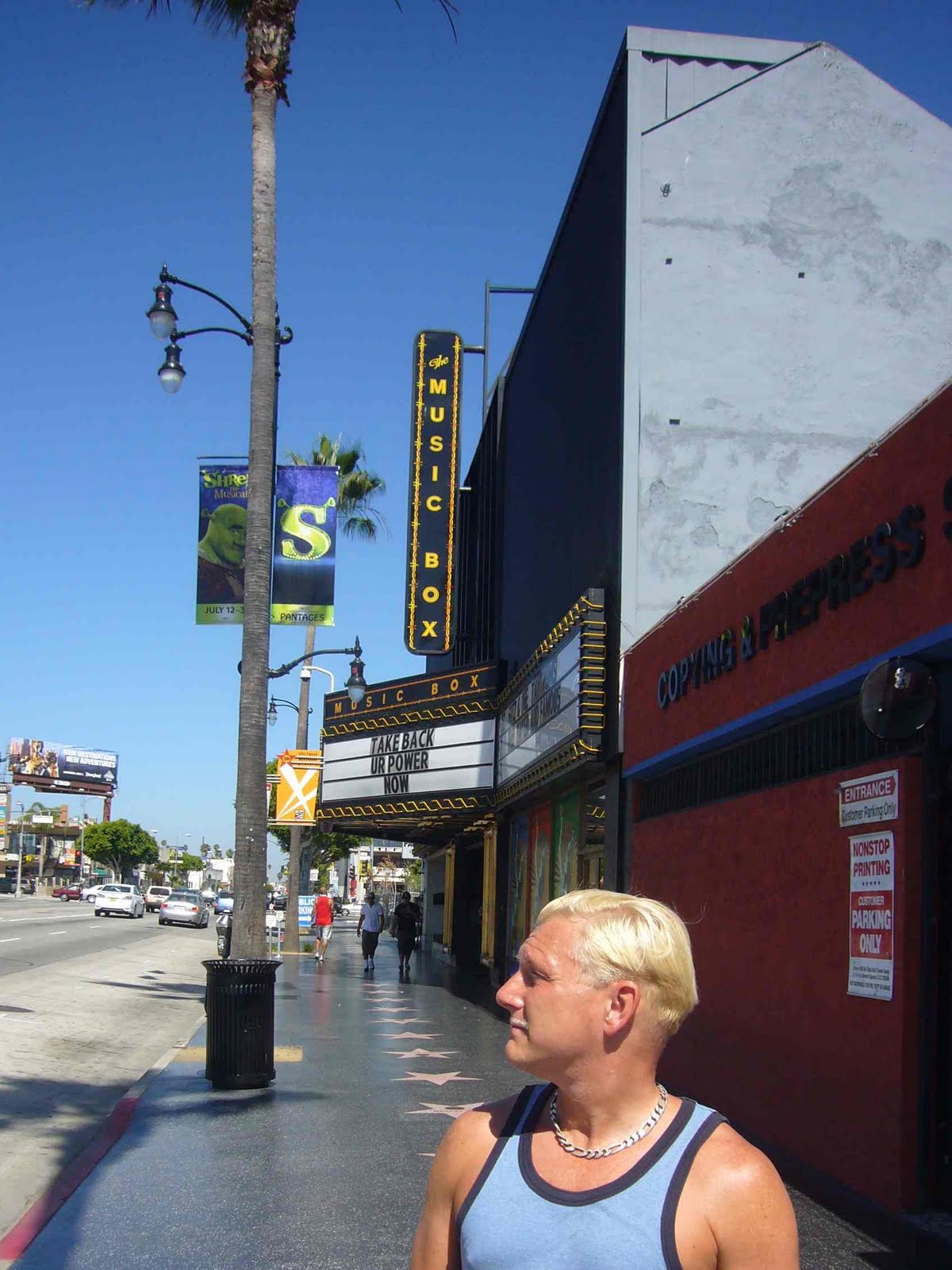
โ€œTake Back UR Power Now,โ€ the letters on the marquee read. I am standing in front of the Music Box Theater on Hollywood Boulevard. Whose power? I wonder. Who took it? Who lost it? And just who is telling meโ€”or anyone else readingโ€”to seize it? Take it from me, perhaps? Do I have it? Did I ever have it? Am I supposed to have it? If so, to do what with? Storm the box office? Take to the stage? Tear down the building and plant a tree? A windmill? Hold it. Is this one of those tiresomely postmodern Barbara Krugerisms? As my friend Clifton once put it, โ€œI could look [it] up . . . but it’s more fun to speculate.โ€

The imperative โ€œNowโ€ intrigues me. It strikes me as incongruous, anachronistic. And, yes, antagonistic. It does not seem to denote the โ€œNowโ€ of 2011, my โ€œNowโ€ on this bright, sunny afternoon spent in one of the most frivolous locales in the western hemisphere. The look of the venue, the somewhat run-down surroundings, the slogan and its lettering transport me back to the early, bleak, violent, recession-shaken 1990s. Why am I thinking race relations? Could this not just as well be some hackneyed Tea Party catchphrase? Or else, a sign of things to come . . .

The time is ripe for warping. Iโ€™ve just been to Graumanโ€™s Chinese, placing my palms into the imprints left by stars long gone out. Iโ€™ve been taking in all those names on the Walk of Fame, and it felt like treading on gravestones. And I arrived here, at the Music Box, transported by a longing, by the kind of nostalgia I am so wary of.

I did not expect to be reminded of the 1990s, to be taken aback instead of simply being taken back, if that were ever achieved โ€˜simply.โ€™ Sure, I was prepared to be late. Seventy-five years late, to be exact. If it were in my power, I would be standing here, back in line with hundreds of other enthusiasts, to take a gander at Marlene Dietrich, Myrna Loy, Ruby Keeler, or Claudette Colbert. Not on the screen, mind, but live and in person. The Music Box, after all, was once the venue for the Lux Radio Theater, a Monday afternoon extravaganza hosted by showman-director Cecil B. DeMille. Merle Oberon, Marion Davies, Joan Crawford. Back in the summer of 1936, they were all here. I am in awe.

That is why I have come to this spotโ€”on a Monday afternoon, no less, as I would later realize. I was dreaming. Now I feel tired out, and a little bit stupid, having caught myself chasing after ghosts. It is as if I had been hoping to get hold of the breeze stirred up by some wispy number long since mothballed. The spirit of the place does not โ€œsend me,โ€ as swooning teenagers used to call it (the state of swooning, I mean). If anything, it sends me back to where I started this reverie. It takes me back into the ether, the mythical non-space I can fill, at will, with the voices of Marlene Dietrich, Myrna Loy, Ruby Keeler . . . as they were performing for millions of listeners, broadcasting live from the Music Box stage. It takes me back.

Wait. When was it again that I discovered these recordings for myself? The early 1990s. Well, what do you know! I guess, looking at that marquee, I have been forced to catch up with myself, and I find that self wanting, historically lost to the world. Years spent circling in representations of a past not alive to my being. Is it time to take back whatever I squandered? Is there still time? Do I have the energy to matter, the power to mean? I wonder . . .

The Couple in Grandmother’s Bed

I have said nothing yet about my trip to Germany.  It was not any old sightseeing tour, mind; nor was it a carefully mapped out homecoming, which makes it all the more difficult to capture in a few indifferent words.  The thing is, I had not been to my native country in over two decades; and, during that time, not going back to what folks presume to be my home evolved into a programmatic, defining rejection of the notion that home equals country of origin.  I vowed never to return, except in a pine box. 

Ella and I

That I did go back at last, in the similarly confining encasement that is the cabin of a budget airline craft, required a great deal of preliminary introspectionโ€”and a leap over the shadow to which I had tried to relegate my past.

The department at the university where I teach was taking students to Berlin for its annual outing.  Previously, I had been on the departmental trip to Budapest; and while that adventure was an adulterated delight, owing to transportation problems in the form of a broken bus and a missed flight, I thought that it would be petty to stick to my principles and stay put while my partner, as head of the School, was joining our students and colleagues for a week in the town known for Cabaret, communism, and Currywurst.  Besides, Berlin is too far from my native Rhineland to be thought of as โ€œhomeโ€ or trigger unwanted back-where-I-come-from reminiscences.  So, to Berlin I agreed to go . . .

Now, a few days before we were scheduled to depart for the German capitalโ€”which hadnโ€™t been capital at the time I left former West Germany for the East Coast of the United Statesโ€”I received one of those infrequent e-missives from the fatherland that are reserved mainly for anniversaries, holidays, and assorted disasters.  My sisterโ€™s message read that my grandmother had contracted a virus while hospitalized for a fractureโ€”her first hospitalization in well over half a centuryโ€”and that, unless I acted posthaste, I might never see her alive again.

Unlike the mater of my father (both deceased), my maternal grandmother had kept in touch with me during my years abroad.  She had learned, decidedโ€”or perhaps never thought twiceโ€”to accept me, which, given her youth in fascist Germany, is a triumph of spirit over doctrine.  For years, she had been sending her regards to my same-sex partners, companions my other grandmother thought best accommodated behind barbed wire, if they were to be granted living space at all.

So, a few days before I was scheduled to depart for Berlin, I booked a flight to Dรผsseldorf to see Oma.  I suffered a great deal of anxiety going by myself, going to see relatives I had abandoned years ago and walking down streets I had known during what, not in retrospect only, was an unhappy youth.

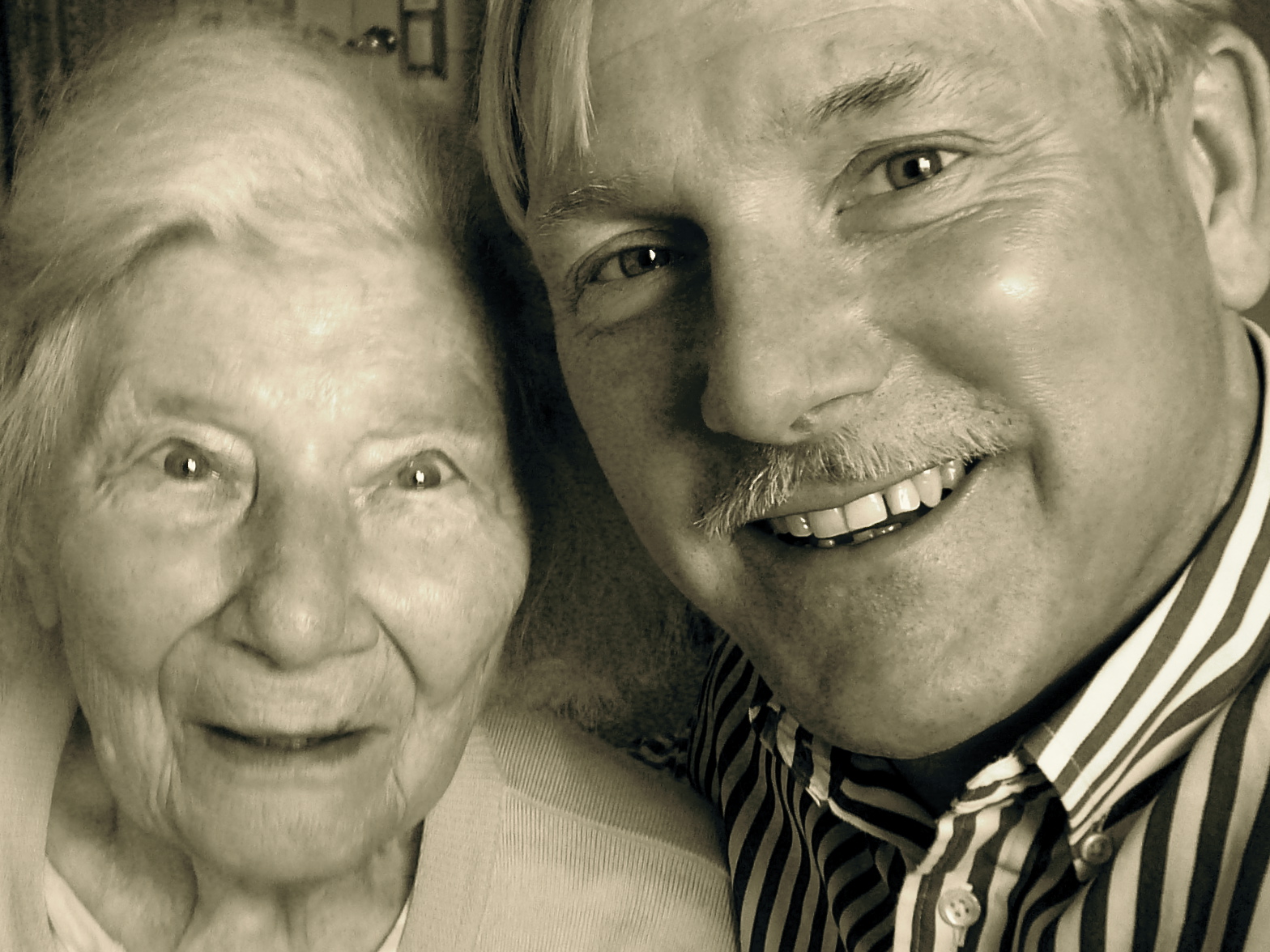
Luckily, I had friends on whom I could count: a cousin came to collect me from the rather remote airport and old friends offered quarters and shoulders should my visit prove overwhelming . . . or my arrival too late.  Such comforts notwithstanding, it was disconcerting to visit Ella at the hospital, especially since it involved having to wear a protective mask that obscured my face so that she did not recognize me.  I had not announced my visit lest she might think that, if even the prodigal grandson was coming to see her, her condition must truly be touch-and-go.  It was sobering to be greeted like a stranger, but also deserved, I thoughtโ€”until at last there was a look of recognition in her eyes and a warm smile radiating from her lips.

Not having booked a hotel room, I stayed in grandmotherโ€™s apartment that night.  There I was, sleeping in the bed of a woman who might not see another morning and who, as it turned out, would never sleep in it again, though live she did.

We all have our security blankets, I suppose.  Mine is made out of immaterial stuff, a fabric as gossamer and yet as tangible as the air on a sultry summer’s evening as I had known it well to the west of Wales.  Lying there, alone in Ellaโ€™s bed, I surrounded myself with voices at once strange and familiar; voices of a safe, distant pastโ€”a past that was none of mine.

On a night rendered restless by thoughts of loss and futilityโ€”a life in danger and a life wasted in the refusal to be facedโ€”I belatedly tuned in The Couple Next Door, a late-1950s serialized radio sitcom.  Written by and starring Peg Lynch, whom I had once seen performing one of her husband-and-wife sketches during an old-time radio convention, The Couple controlled the crowds with which my thoughts were teeming.  It comforted like no cotton coverlet could, warmed like no drop of Scotch.  Though not soundly, I did sleep that night, wrapped up as I was in a cocoon of sound . . . a quilt to muffle the guilt I felt for not returning sooner and for being defined instead by a quarter century of negation . . .

Mother, She Wrote

โ€œThere’s no family uniting instinct, anyhow; it’s habit and sentiment and material convenience hold families together after adolescence. There’s always friction, conflict, unwilling concessions. Always!โ€ Growing up in a familial household whose microclimate was marked by the extremes of hot-temperedness and bone-chilling calculation, I amassed enough empirical evidence to convince me that this observationโ€”made by one of the characters in Ann Veronica (1909), H. G. Wellsโ€™s assault on Victorian conventionsโ€”is worth reconsidering. It is not enough to say that there is no โ€œfamily uniting instinct.โ€ What is likely the case during adolescence, rather than afterwards, is that the drive designed to keep us from destroying ourselves becomes the one that drives us away from each other. Depending on the test to which habit, sentiment and convenience are put, this might well constitute a family disuniting instinct.

Not even a motherโ€™s inherent disposition toward her childโ€”to which no analogous response exists in the offspring, particularly once the expediencies that appear to increase its chances of survival are being called into questionโ€”is equal to the impulse of self-preservation. I was twenty when I made that discovery; the discovery that there was no love lost between my mother and myself, or, rather, that whatever love or nurturing instinct, on her part, there had been was lost irretrievably.

Years ago, I tried to capture and let go of that moment in a work of fiction:

An early evening in late October. She stands in the dimly lit hallway, a dinner fork in her right hand, blocking the door, the path back inside. The memory of what caused the fight is erased forever by its emotional impact, its lasting consequences. The implement, picked up from the dining table during an argument (some trifle, no doubt, of a nettlesomeย disagreement), has not yet touched any food today.

In one variant of this recollection, she simply stands there, defending herself. She wants to end the discussion on her terms. In another version (which is the more comforting, thus probably the more distorted one) she keeps attacking with fierce stabs, brandishing the fork as if it were a sword. Was it self-control that kept her from taking the knife instead? She is right-handed, after all.ย 

Though never hitting its target, the fork, brandished or not, becomes indeed an effective weapon in this fight. Itโ€™s an immediate symbol, a sudden and unmistakable reminder that it is in her hands to refuse nourishment, to withhold the care she has been expected to provide for so many years, and to drive the overgrown child from the parental tableโ€”and out of the house.ย 

โ€œGet out. Now!โ€

She is in control and knows it. She will win this, too, even though the length of the skirmish and the vehemence of the resistance are taxing her mettle. It has been taxed plenty. In this house, coexistence has always been subject to contest, as if decisions about a game of cards, a piece of furniture moved from its usual spot, or even the distribution of a single piece of pie were fundamental matters of survival. In this house, anything could be weaponized. In this house, which since the day of its conception has been a challenge to the ideals of domesticity and concord, has slowly worn down the respect and dignity of its inhabitants, and forced its dwellers into corners of seclusion, scheming and shame, it is only plaster and mortar that keeps those walled within from hurling bricks at each other.ย 

โ€œI want you out of here. Now. Get out. Out.โ€ Her terse wordsโ€”intelligent missiles launched in quick succession at the climactic stage of a traumatizing blitzโ€”penetrate instantly, successfully obliterating any doubt as to the severity of her anguish, and, second thoughts thus laid waste to, even the remotest possibility of reconciliation.

This time she really means it. She screams, screeches, and hisses, her words barely escaping her clenched teeth. It is frightening and pathetic at once, this sudden theatrical turn, an over-the-top rendition of the old generation gap standard. Yet somewhere underneath the brilliant colors of this textbook illustration of parent-child conflict and adolescent rebellion is a murky layer of something far more disquieting and unseemlyโ€”something downright oedipal.

Words, exquisitely vile, surface and come within reach but remain untransmitted, untransmissible. Addressing her in that way is a taboo too strong to be broken even in a moment of desperate savagery. Instead, the longing for revenge, for a reciprocal demonstration of the pain she, too, is capable of inflicting, will feed a thousand dreams.

Ultimately, it is fear that becomes overpowering. There is more than rage in her expression. It is manifest loathing. Two decades of motherhood have taken their toll.

At last, she slams the door. A frantic attempt to climb back inside, through the open bathroom window, fails when she, with a quick turn at the handle, erects a barrier of glass and metal.

The slippery steps leading to the front doorโ€”now away from itโ€”feel like blocks of ice, a bitterness stinging through thin polyester dress socks. There was no time to put on shoes. This is a time to evacuate. Humiliated, cold, and terrified. Thrown out of the house.

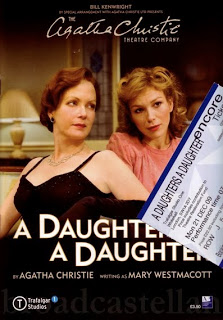
Now, contrary to what these fictionalized recollections suggest, Iโ€™m not one to cry over spilt motherโ€™s milk; besides, I did return homeโ€”through that doorโ€”and stayed at my parentsโ€™ house for another excruciating two years. It would have been far smarter and far more dignified to let go and move on. I had clearly outstayed my welcome. The realization came to me again the other night when I went to see the A Daughterโ€™s a Daughter, a cool examination of what may happen to close family ties once both mother and child reach maturity. The playwright, who resorted to the pseudonymous disguise of Mary Westmacott, was none other than mystery novelist Agatha Christie.

So, I oughtnโ€™t to have been surprised by the lack of sentiment in the portrayal of a parent-child relationship that goes sour once the expiration date has passed. Think Grey Gardens without the cats. After all, in guessing games like And Then There Were None and The ABC Murders, Christie reduced human suffering to a countdown. And when she went back to the nursery, it was mainly to borrow rhymes that provided titles for some of her most memorable imaginary murders, the ruthless precision of which was a kind of voodoo doll to me during my troubled adolescence.

Still, I was surprised by the chill of the unassuming yet memorable drama acted out by Jenny Seagrove and Honeysuckle Weeks in Londonโ€™s Trafalgar Studios that December evening. I was surprised by a playโ€”staged for the first time since its weeklong run in 1956โ€”that was not merely unsentimental but unfolded without the apparently requisite hysterics that characterize Hollywoodโ€™s traditional approaches to the subject.

To be sure, A Daughterโ€™s a Daughter is hardly unconventional. It is not A Daughterโ€™s a Daughterโ€™s a Daughter. Modest rather than modernist, controlled more than contrived, it is assured and unselfconscious, a confidence to which the apparent tautology of the title attests. Yes, a daughterโ€™s a daughterโ€”and just what acts of filial devotion or maternal sacrifice does that entail? How far can the umbilical bond be stretched into adulthood until someoneโ€™s going to snap?

The central characters in Christieโ€™s play reassure anyone who got away from mother or let go of a child that, whatever anyone tells youโ€”least of all arch conservatives who urge you to trust in family because itโ€™s cheaper than social reformโ€”survival must mean an embrace of change and a change of embraces.


Related writings
โ€œIstanbul (Not Constantinople); or, There’s No Boat โ€˜Sailing to Byzantiumโ€™โ€
โ€œCaught At Last: Some Personal Notes on The Mousetrapโ€
โ€œEarwitness for the Prosecutionโ€
โ€œOn This Day in 1890 and 1934: Agatha Christie and Mutual Are Born, Ill-conceived Partnership and Issue to Followโ€

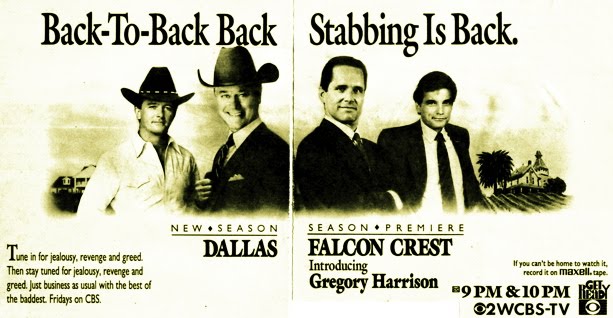
Back to Back-to-Back; or, Serialization of Schemes

A long time (well, okay, make that โ€˜about four and a half yearsโ€™) ago I came to the realization that the key to keeping an online journalโ€”and oneโ€™s fingers regularly on the keyboard in its serviceโ€”is serialization: some kind of evolving plot that, like life and Stella Dallas on a diet, keeps thickening and thinning from Monday till Doomsday until the inevitable sundown that not even Guiding Light could outshine.

Despite this realization, though, I have never managed to make a success of stringing together the latest on my follies and failures, mainly because I did not set out to make my person the axis around which this less than celestial body of essays spins. That, in recent months, the revolutions have ground to a near halt and affairs have become all but devolutionary is largely owing to the series of friction that is my one life to live beyond these virtual pages. These days, writing in installments begins and ends in โ€˜stall,โ€™ which is the least I tend to do best.

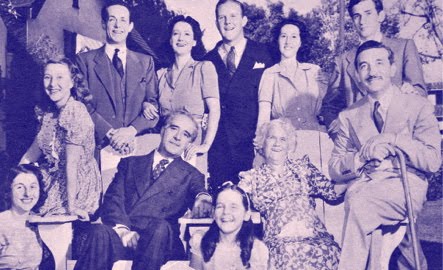
The cast of One Man’s Family

Not that the contemplation of the presumably out-of-date lends itself to frequent updates. I mean, whatโ€™s the point of being current when your harvest is raisins? For the love of ribbon mikes, how many times can you run away with the A & P Gypsies and still expect anyone to follow the run-down caravan in which you survey the bygone scene? Good for how many yarns are the bewildering progeny of the Happiness Boys, that old โ€œInterwoven Pair,โ€ until any attempt at catching up with the catโ€™s whiskers and its litter unravels like knitting gone kittyโ€™s corner? Why go on circulating gossip from the Make Believe Ballroom as the world turns the radio off?

Clearly, there is room for a chorus line of doubt when I now announce the beginning of a new chapter in the cancellation dodging saga of broadcastellan. Anyone hoping for a weekly quintuplet of All My Mindโ€™s Children should be advised that this is going to be more a case of One Manโ€™s Family Planning . . .

โ€œ. . . and all the ships at seaโ€: A Kind of Homecoming

This is not going to be one of those โ€œthe dog ate my homeworkโ€ sort of posts, which are as much an excuse for not writing as they are a woeful excuse for writing anything at all. Besides, I could hardly blame Montague, our terrier, for keeping me from keeping my journal. Rather, it is the home work that has done the biting, gnawing and tearing at the hours I would otherwise earmark for sinking my incisors into stale pop-tartsโ€”you know, those cultural marginalia with which I am wont to occupy my mind.

While I have rarely been all at sea when it comes to the leisurely pursuit of gathering and examining pop-cultural jetsam, my mind does not take to creative recycling when my limbs are aching after having performed some burdensome chore; and these past three months, my limbs have had quite a workout. We have been readying our late-Victorian house in the Welsh seaside town of Aberystwyth for its present trio of occupants, only the four-legged one of whom appears to be as blithe and sprightly as of old, albeit saltier.

We have moved in at last; and even though much remains to be done to make and keep the place shipshape, especially now that the house guests are checking in and up on our work, the sofas and easy chairs are in place from which to let out a defiant โ€œLater!โ€ and take off instead in further explorations of the airwaves or some such neglected channel.

The waves! Even though you would have to climb to the top floor of our house to get a glimpse of the bay, the surf and the seagulls are very much part of the enveloping soundscape. I suspect that the sights and sounds of the sea are going to feature prominently in subsequentโ€”and decidedly more frequentโ€”entries. It was not quite so easy for me to work the business of scraping wallpaper into my reflections; but the sea is another kettle of fish altogether.

So, โ€œGood evening Mr. and Mrs. America, from border to border and coast to coast and all the ships at sea,โ€ as famed newscaster and lexicon-artist Walter Winchell used to sayโ€”and which greeting I extend to Mr., Mrs., and Ms. Internet surfer the world overโ€”โ€œLet’s go to press . . .โ€


Related writings (featuring Walter Winchell or an Impersonator)
โ€œBeing But Blogmad North-Northwestโ€
โ€œAmelia Earhart Is Lateโ€
โ€œOld-time Radio Primer: B Stands for broadcastellanโ€

โ€œIโ€™m a dime a dozen, and so are you!โ€

Occasionally, people who think of me as some sort of authority approach me with questions of a literary nature. When that happens, I suddenly remember that I am Dr. Heuser, BS, MA, PhD, something that you tend to forget when you spend most of your afternoons in the company of a small dog whose passive vocabulary is limited to words like โ€œwant,โ€ โ€œbasket,โ€ orโ€”a testament to my cleaning skills and the joys of country livingโ€”โ€œspider.โ€ So, I was eager to be of service when a young friend of mine from New England, where I have what you might call a surrogate family, asked me whether I could give her a few pointers on her latest English assignment.

The assignment, as she described it to me, was to compare one of the characters in Death of a Salesman to somebody she knows. I hope she did not think of contacting me because she had me in mind for the title role and expected me to prove her right by confessing that Iโ€™ve been feeling an awful lot like Willy Loman lately. I havenโ€™t. Now, Biff, on the other hand . . .

I first read Death of a Salesman when I was an undergraduate in New York City in the early 1990s, at about the time that my term paper burdened friend was born. Back then, the play confirmed what I had expected all along: that things would not get easier growing older, that, even though the years of our protracted adolescence may well be the worst years of our lives, no matter how we romanticize them later on, there might never come a period of calm, certainty, or happiness. The regrets, though, might be mounting.

That I never revisited the Lomans was, heretofore, not among my regrets. As a matter of fact, I took a dislike to Arthur Miller in the intervening years, ever since I discovered that he was somewhat of a traitor. That is to say he was a reluctant radio playwright who, once he achieved success in the theater, professed to have hated the medium that got him started, the bastard medium that became the subject of my dissertation.

From the late 1930s to the mid-1940sโ€”when radio dramatics were at the peak of their influence on American cultureโ€”Miller made a decent living writing for the Columbia Workshop and Cavalcade of America. He wasnโ€™t toiling away for the Hummerts or writing advertising copy. And even though the Workshop was a sustaining programโ€”that is, one not controlled by advertisingโ€”he went on dismissing radio as a tool for the hucksters. It was a popular view shortly after the war.

Miller was not just father to Willy Loman; he was also one of his sons. Working in commercial radio, he might have seen himself as an adjunctโ€”the product ofโ€”salesmanship, until he finally managed to make a name for himself by writing for the stage. The technique of Death, though, is clearly indebted to his years in radio, to the ways in which aural play can take you right inside the head and heart of a person, unencumbered by walls, by exteriors, by physicality. There are only voicesโ€”and the only dimension is that of time. Not that Miller ever gave credit to radio for that.

Anyway, faced with my friendโ€™s assignment, I did the only responsible thing I could think of and reread Millerโ€™s play. By the time I reached the โ€œRequiem,โ€ I was in tears. Even though he did not take great pride in his careerโ€”a career he did not chooseโ€”there was a lot of Willy Loman in my father, right down to the extramarital affair, the self-deception, the suicide attempts, and the loss of his sonโ€™s respect.

Like most hard-working folks, my father could not cope with the suspicion that he was what Biff calls โ€œa dime a dozenโ€โ€”though he was a childhood hero to me. He got stuck in a line of work that exhausted him, driven by a desire to be “well liked” and anxious to display such tokens of middle-class achievement as are generally read as signs of success. His legacy, likewise, was a disappointment. I turned out to be Biffโ€”privileged to reject the โ€œphony dreamโ€ (โ€œWhy am I trying to become what I donโ€™t want to be?โ€), to be my own kind of failure and make some kind of virtue of it. What I have not yet dealt with is the role I might have played in my fatherโ€™s early death, whether or not my loss of respect for him contributed to the loss of respect he had for himself.

I donโ€™t suppose my words were any great help to my young friend, let alone a reassurance. There was one thing I told her that I would like her to remember, though: โ€œwhatever you write, write what you really feel. Anything else is a waste of timeโ€”for you and your reader.โ€ Clearly, I was not speaking as an academic, to whom every argument is a sales pitch and every paper an opportunity for self-promotion. Else I might have suggested that she align herself with one of the minor, female characters in Deathโ€”โ€œStrudelโ€ to Biffโ€™s brotherโ€”to point up the chauvinism of Millerโ€™s world and defy its marginalization of her sex.


Related writings
โ€œA Half-Dollar and a Dream: Arthur Miller, Scrooge, and a โ€˜big pile of French copperโ€™โ€
Politics and Plumbing
โ€œArthur Miller Asks Americans to “Listen for the Sound of Wings”
โ€œArthur Miller Unleashes a Pussycatโ€

Craig’s Other Wife

โ€œApril is the cruellest month,โ€ T. S. Eliot wrote (in his opening lines for โ€œThe Waste Landโ€)โ€”โ€œmixing / Memory and desire.โ€ I somehow felt the cruelty of this mixture more keenly this year, being that the seasonal rebirth coincides with activities amounting to more than spring cleaning, a project that triggered memories of a less than happy home and anxieties about moving. The first month of renovating our house in town has passed; and even though another month will go by before our relocation, I am desirous to move on and continue with this journal without mentioning or alluding to our future domicile (pictured) in every post. So, during the month of May, I shall try to refrain from making any references to the place.

Not that the house is done with me yet. It is, to bowdlerize the title of a ghost story by Bulwer-Lytton, the House in the Brain (“Accursed be the house, and restless be the dwellers therein”). Never mind such literary allusions. Onomastics alone suggest that I should dwell on the subject, being that my last name is pronounced H O I Z E Rโ€”which sounds just like the German plural for house (Hรคuser). An architect or real estate agent could not ask for a better one.

To be sure, I have hardly exhausted the subject of moving, building, and dwelling; but whatever it is that I had on my mind shall, for the time being, remain unsaid. After all, as Heidegger reminds me, the word โ€œbauenโ€ [building] derives from โ€œbuan, bhu, beo,โ€ and, originally, โ€œbin,โ€ the first person singular of โ€œseinโ€ [to be]. To let is be and move on seems to me the soundest mode of living . . . and the safest way of keeping this journal alive . . .