
“Yoo-hoo, is anybody?” I guess that, from time to time, many of us amateur journalists feel compelled to ask the question so catchily phrased by the matriarch of the Goldbergs. At least Molly Goldberg could hope for a response from her friend and neighbor Mrs. Bloom, to whom her shouts into the dumb waiter shaft were directed. To Mrs. Goldberg, “anybody” was a certain someone. Many who approached the World Wide Web as their means of telecommuning have given up on waiting for a reply to their “Yoo-hoos,” or, instead, have taken the resounding silence for an answer equivalent to “nope.”

According to a 2008 survey conducted by Technorati (which, earlier this month, was referred to in a New York Times article on the blogging phenomenon), 95 percent of all online journals have been essentially abandoned. Tens of millions who saw blogging as an opportunity to cast their thoughts broadly and make their voices heard by the multitudes decided that, once this vast crowd of followers did not, well, immaterialize, their words were wasted on the one or another for whose arrival they would not be dumb enough to wait and to whose apparently exclusive tastes they would not lower themselves to cater.
Like broadcasting before it, the blogosphere lures those creative spirits who might otherwise be dispirited nobodies with that one-in-a-million chance at fame while its ability to connect us to the one-in-a-million willing to connect with us frequently goes unappreciated. As public performers, we won’t settle for “anybody”—but we seem more inclined to aim at the elusive everyone than the dependable someone. One of the most intriguing motion pictures to address our narrow-mindedness about broadcasting is the Depression-era melodrama Torch Singer (1933), one of those startlingly unconventional, non-classic Hollywood pictures referred to as Pre-Code.
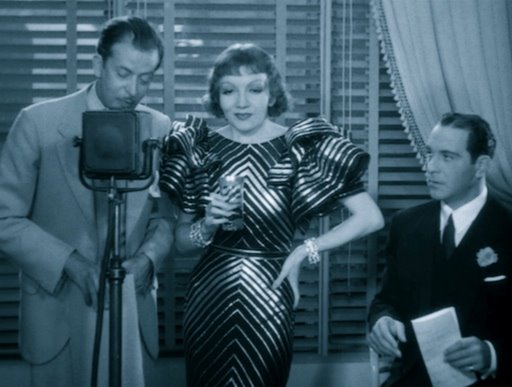
Torch Singer stars Claudette Colbert as an unwed mother (that is Pre-Code for you) who, failing to find employment, is forced to give up her infant daughter. After that intimate bond is severed, the motherless child of a childless mother avenges herself on an impersonal, dehumanizing society by tantalizing those who made her suffer, selling the mere appeal of sex to the highest bidder. “Give Me Liberty or Give Me Love,” she warbles, achieving neither. Her body having been robbed of its fruit and the warmth of nestling, she turns her voice into a commodity, first by making a(nother) name for herself a nightclub singer, then by accepting the offer to become a disembodied siren on the radio.
When a newly hired storyteller for a children’s program is struck dumb with mike fright, the reckless Torch Singer takes over as the fictitious “Aunt Jenny,” comforter by proxy, singing lullabies so far removed from any cradle that they are devoid of sincerity, all the while tickled by her own moxie as she promotes the sponsor’s kiddie beverage, long drink in hand.

This perversion of motherhood comes to an end when she realizes that it is possible to subvert the medium instead and seize the microphone to reach the child she gave up for adoption. Rather than performing for everyone and no one, she now sings directly to her daughter, devising a contest that would compel radio listening kids to call in and claim their birthday surprises, thereby revealing their identity to her. Once taken into her own hands, the very medium that seemed to have promised nothing but the belated fame for which she never cared becomes the means through which she can reestablish the intimacy she long believed to be past recapturing.
Its melodramatic shortcomings notwithstanding, Torch Singer serves as a compelling reminder that the media, as extensions or offshoots of telecommunication, have not lost—and should never be divested of—their potential to establish point-to-point connections far more meaningful than the often disappointing stabs at mass exposure in which we are apt to lose sight of one another.
Related writings
“Between You, Molly and Me: Should We Settle for Squirrels?”
“Wireless Women, Clueless Men (Part Five): Gertrude Berg, Everybody’s Mama”
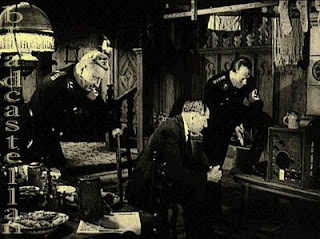 Placing Mitchell Leisen alongside Hollywood’s top flight directors is likely to raise eyebrows among those whose brows are already well elevated. Most others will simply shrug their cold shoulders in“Who he? indifference, a stance with which I, whose shoulders are wont to brush against the dusty shelves and musty vaults of popular culture, am thoroughly familiar by now. Respected for his knack of striking box-office gold but dismissed by his peers, the former art director was not among the auteurs whose works are read as art chiefly because it is easier to conceive of artistic expression as a non-collective achievement: something that bears the clearly distinguishable signature of a single individual. Their careful design aside, little seems to bespeak the Leisen touch, which is as light as it is assured. Stylish and slick in the best Paramount tradition, a Leisen picture stunningly sets the stage under the pretense of drama; otherwise, it has few pretensions.
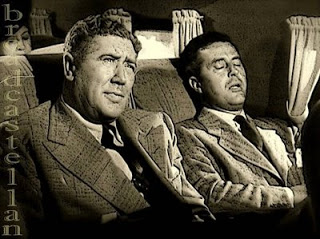 Leisen was not about to denounce the medium he had romanced in two of his earlier revues, The Big Broadcast of 1937 and its 1938 follow-up. Instead, Golden Earrings confronts nationalistic, state-run radio with a distinctly American voice of commercial broadcasting. In the narrative frame, the English officer is seen relating his story to Quentin Reynolds (pictured here with Milland), a news commentator known for his on-air missives to Doktor Goebbels and Herr Schickelgruber.

 She played tougher than anyone else in pictures, and she was better at it. She could get a guy to fall for her and a fall guy to do anything for her, be it to lie, cheat, or kill. To please her was a dangerous game; but to displease her was a deadly one. She could make puppets of men;


 Harry Heuser