
Eur[e]vision

I donโ€™t often indulge in morning afterthoughts. I mightโ€”and frequently doโ€”revise what I said (or, rather, how I said it); but I generally just take time, and one time only, to say my piece instead of doling it out piecemeal. Unlike the producers of much of the (un)popular culture I go on about here, I donโ€™t make a virtue of saying โ€œAs I was sayingโ€ or make my fortune, say, by milking the cash cow of regurgitation. To my thinking, which is, I realize, incompatible with web journalism, each entry into this journal, however piffling, should be completeโ€”a composition, traditionally called essay, that has a beginning, middle and end, a framework that gives whatever I write a raison d’รชtre for ending up here to begin with.

Although I resist following up for the sake of building a following, it does not follow that my last word in any one post is the last word on any one subjectโ€”especially if the subject is as inexhaustible as the Eurovision Song Contest, which festival of song, spectacle and politics compelled me previously to go on as follows: โ€œIt [a Eurovision song] is, at best, ambassadorialโ€”and the outlandish accent of the German envoy makes for a curious diplomatic statement indeed.โ€

Diplomatic blunder, my foot. My native Germany did win, after all, coming in first for the first time since 1982, when Germany was still divided by a wall so eloquent that, growing up, I did not consider whatever lay to the east of it German at all. Apparently, this yearโ€™s German singer-delegate Lena Meyer-Landrut, born some time after that wall came down, did not step on anyoneโ€™s toes with her idiosyncratic rendition of โ€œSatellite,โ€ a catchy little number whose inane English lyrics she nearly reduced to gibberish.

Her aforementioned insistence on turning toenails into โ€œtoenatesโ€ intrigued a number of bemused or irritated viewers to go online in search of answers, only to be directed straight to broadcastellan. Perhaps, the United Kingdom should have fought tooth and nates instead of articulating each tiresome syllable of their entry into the competition, a song so cheesy that it did not come altogether undeservedly last, even if European politics surely factored into the voting.

Britain never embraced European unity wholeheartedlyโ€”and those in the thick of the economic crisis now challenging the ideal of Europe may well resent it. Is it a coincidence that the votes were cast in favor of the entrant representing the biggest economy in Europe, a country in the heart of the European continent?

While not content, perhaps, to orbit round that center of gravity, other nations may yet feel that it behoves them to acknowledge the star quality of Germany, which, according to contest rules, is called upon to stage the spectacle in 2011. After all, why shouldnโ€™t the wealthiest neighbor be host of a competition some countries, including Hungary and the Czech Republic, declared themselves too cash-strapped even to enter this year.

I may not have been back on native soil since those early days of German reunification, but there was yet some national pride aroused in me as โ€œSatelliteโ€ was declared the winner of the contest by the judges and juries of thirty-eight nations competing in Oslo this year along with Deutschland.

That said, seeing a German citizen draped in a German flag as she approaches the stage to take home a coveted prize, however deserved, still makes me somewhat uneasy. Given our place in world history, the expression of national pride strikes me as unbecoming of us, to say the least. I was keenly aware, too, that there were no points awarded to Germany by the people of Israel.

Will I ever stop being or seeing myself as a satellite and, instead of circling around Germany, get round to dealing with my troubled relationship with the country I cannot bring myself to call home? That, after the ball was over, formed itself as a sobering afterthought. And that, for the time being, is the beginning, middle, and end of it. Truth is, I take comfort putting a neat frame around pictures that are hazy, disturbing or none too pretty.
โ€œThat radical thingโ€: The Rise and Risibility of Broadcast Reception

โ€œWhat is the future of the radio business in the United States? Is it to be like the telephone, the automobile, or the phonograph business, a thing that will rise suddenly to almost universal acceptance by the public and support great manufacturing plants?โ€ These aspects of the โ€œCommercial Side of Radioโ€ were mooted back in May 1922, when they were raised in the first issue of Radio Broadcast. Clearly, broadcast reception was not simply a matter of technology. It required the establishment of a new industry devoted to giving receptive audiences something to receive and to making their reception a favorable one. There was room yet for doubt that radio was here to stay and take pride of place in the parlor.

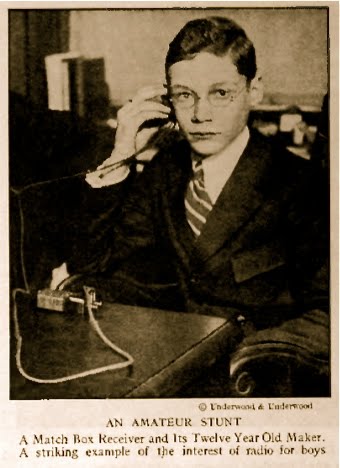
Enter the satirist, ready to poke fun at enthusiasts and skeptics alike. Among those who could not pass up this opportunity was one Harry M. Doty, who, in 1922, wrote and published โ€œTiddville and the Radio,โ€ a โ€œRural Comedy in One Actโ€ involving a group of yokels who gather to take in their first radio broadcast, a demonstrationโ€”or wireless receptionโ€”prepared for them by a young โ€œradio fan.โ€

As much as Mrs. Simpson, his mother, regrets that โ€œ[t]here’s no such thing as getting any work out of him around the house or farm nowadays,โ€ there is some comfort to be gleaned from the possibility that โ€œsome day or other he may be a great electrician like Mr. Edison or Mr. Marconi who invented the wireless telephone.โ€

Those assembled in Mrs. Simpsonโ€™s sitting room are representatives of the older generation, folks somewhat behind the times and, whether resisting change or willing to catch up, do not quite know what to make of or do with the newfangled apparatus.

There is uncertainty as to the nature of broadcasting, whether or not the receiver is a telephone capable of transmitting the voices of the audience. โ€œWhy,โ€ exclaims one concerned listener, โ€œif this sort oโ€™ thing keeps up, a body wonโ€™t dare to do a thing because if they talk, them air waves or whatever scatter it all over creation for folks to listen to.โ€

Another is having a peabrainwave. โ€œThat radical thingโ€ (โ€œIt isnโ€™t a radical, itโ€™s a radio,โ€ the boy corrects) was capable of carrying messages from places thousands of miles away, it should also be possible to carry them โ€œstraight upโ€ and communicate with those dearly departed we hope to have gotten there.

โ€œI never heard of one of these machines getting messages from above excepting from an airship,โ€ the young radio fan remarks. Besides, the โ€œgovernment allows only a few of the larger stations to send messages. All I can do is to receive ’em.โ€

Anxiety and puzzlement give way to grumbling: โ€œDo you mean to tell me that when you’re usin’ that thing, all you can do is to listen to what somebody else is sayinโ€™ and never have a chance say a word back?โ€ Who would put up with such โ€œone-sided conversationsโ€?

Not those present, all of whom voice their objections. An academic is concerned that staying at home to be entertainedโ€”rather than entertainingโ€”would mean an end to social gatherings such as Tiddvilleโ€™s choral club, whereas the local pastor is troubled by the thought that, if sermons were broadcast, local churches would have to close, leaving one member of the party to wonder about the future of community โ€œstrawberry festivals and oyster suppers.โ€ And what of wedding ceremonies, if couples could not make their vows be heard?

By the time the receiver picks up the transmission of a prizefight, everyoneโ€™s had enough of โ€œthat machine,โ€ even though they condescend to tuning in a concert so that a latecomer to their gathering may partake of this demonstration.

However crude, this sketch perfectly mirrors the radical changes brought about by the radio: the decline of local theatricals, the shift from a culture of making home entertainment to one of consuming what was centrally produced, and the demise or marginalization of the amateur broadcasters to whom radio telephony had been something other than a one-sided conversation.

Doty, who wrote a number of plays for amateur performers, might well have been among those who had reason to be wary of broadcast entertainment. He may not have aligned himself with the rustics, but he understood and accommodated them. In the Note that prefaces his comedy, he states:

A radio outfit is not absolutely necessary for the presentation of this play although one may be used if it can be obtained. With one or two small boxes, wires, receivers, or horn, etc., a representation of the radio apparatus can be easily made.

A comedy about radio reception without a radio receiver? It wasnโ€™t that, anno 1922, radios were mere oddities; if they were not fast becoming commodities, Dotyโ€™s topical comedy would be pointless. Still, radios were hard to come by. As stated in the aforementioned issue of Radio Broadcast, ever since broadcasting stations like KDKA, Pittsburgh, were providing entertainment โ€œfor public consumption,โ€ thereby giving consumers a โ€œreason to buy radio telephone receiving sets,โ€ manufacturers had

never been able to catch up with the demand. The manufacturers of radio receivers and accessories are much in the situation that munition makers were when the war broke. They are suddenly confronted with a tremendous and imperative demand for apparatus. It is a matter of several months at best to arrange for the quantity production of radio receiving apparatus if the type to be manufactured were settled, but the types are no more settled than were the types of airplanes in the war.

Whether it meant war for amateur players and hobbyists, whether it was ammunition for lampoonists or opportunists, radio broadcasting had arrived. Eventually, even Tiddville rubes would buy Cunningham tubes, and from small hayseed homes antennae would sprout. The era of streamlined, national broadcasting was yet several years off, but “[t]hat radical thing” had surely arrived.

Time and the Airwaves: Notes on a Priestley Season

Both BBC Radio 4 and 7 are in the thick of a J. B. Priestley festival, a spate of programs ranging from serial dramatizations of early novels (The Good Companions and Bright Day) and adaptations of key plays (Time and the Conways and An Inspector Calls), to readings from his travelogue English Journey and a documentary about the writerโ€™s troubled radio days. Now, I donโ€™t know just what might be the occasion for such a retrospective, since nothing on the calendar coincides with the dates of Priestleyโ€™s birth or death. Perhaps, it is the connection with the 70th anniversary of the evacuation of Dunkirk, an event on which Priestley embroidered in June 1941 for one of his Postscript broadcasts, that recalled him to the minds of those in charge of BBC radio programming.
Never mind the wherefores and whys. Any chance of catching up with Priestley is welcome, especially when the invitation is extended by way of the wireless, the means and medium by which his voice and words reached vast audiences during the 1930s and early 1940s, both in the United Kingdom and the United States.

For all his experience as a broadcaster, though, Priestley, who was not so highbrow as to high-hat the mass market of motion pictures, never explored radio as a playwrightโ€™s medium, as a potential everymanโ€™s theater on whose boards to try his combined radiogenic skills of novelist, dramatist, and essayist for the purpose of constructing the kind of aural plays that are radioโ€™s most significant contribution to twentieth-century literatureโ€”the plays of ideas.

Priestley prominently installed a wireless set in Dangerous Corner, a stage thriller whose characters gather to listen to a thriller broadcast. Later, he read his controversial wartime commentaries (titled Postscripts) to a vast radio audience. He even went on one of Rudy Valleeโ€™s variety programs to discuss the fourth dimension. Yet the medium that relied entirely on that dimension, to the contemplation of which he devoted many of his stage playsโ€”Time and the Conways and I Have Been Here Before among themโ€”did not intrigue Priestley to make time and create plays especially for the air.

To be sure, his falling out with the BBC in 1941 (as outlined in Martin Wainwrightโ€™s radio documentary about the Postscript broadcasts) did little to foster Priestleyโ€™s appreciation of the radiodramatic arts. Yet the indifference is apparent long before his relationship with Auntie soured. When interviewed for the 1 September 1939 issue of the Radio Times about his novel Let the People Sing, which was to be read serially on the BBC before it appeared in print, Priestley dismissed the idea that he had written it with broadcasting in mind:

“I realised, of course, that the theme must appeal to the big majority. But apart from that, I thought it better to let myself go and leave the BBC to make it into twelve radio episodes. It would otherwise have cramped my style.”

To Priestley, the โ€œexperimentโ€ of broadcasting his novel lay in the marketing โ€œgambleโ€ of making it publicly available prior to publication, a challenge of turning publishing conventions upside down by effectively turning the printed book into a sort of postscript. Clearly, he looked upon radio a means of distribution rather than a medium of artistic expression.

Reading I Have Been Here Before and listening to the radio adaptation of Time and the Conways, I realized now little either is suited to the time art of aural play. Whereas the Hรถrspiel or audio play invites the utter disregard for the dramatic unities of time and space, Priestley relied on the latter to make time visible or apparent for us on the stage.

The Conways, like the characters of Dangerous Corner before them, are brought before us in two temporal versions, a contrast designed to explore how destinies depend on single moments in timeโ€”moments in which an utterance or an action brings about changeโ€”and how such moments might be recaptured or rewritten to prevent time from being, in Hamletโ€™s words, โ€œout of joint.โ€

โ€œTimeโ€™s only a dream,โ€ Alan Conway insists. โ€œTime doesnโ€™t destroy anything. It merely moves us onโ€”in this lifeโ€”from one peep-hole to the next.โ€ Our past selves are โ€œreal and existing. Weโ€™re seeing another bit of the viewโ€”a bad bit, if you likeโ€”but the whole landscapeโ€™s still there.โ€

In Priestleyโ€™s plays, it is the scenery, the landscape of stagecraft, that remains there, โ€œwholeโ€ and virtually unchanged. The unity of space is adhered to so as to show up changes in attitudes and relationships and to maintain cohesion in the absence or disruption of continuity.

In radioโ€™s lyrical time plays, by comparison, neither time nor place need be of any moment. It is the moment alone that matters on the air, an urgency that Priestley, the essayist and wartime commentator, must surely have sensed.  Priestley, the novelist and playwright did or could not.  Too few ever did.  To this day, a whole aural landscape is biding its time . . .

Dunkirk 70 / Roosevelt 69

This week marks the 70th anniversary of โ€œOperation Dynamo,โ€ an ad hoc rescue mission involving small civilian ships coming to the aid of French and British soldiers who had been forced into retreat at Dunkerque during the for Allied troops disastrous Battle of Dunkirk. The operation, which became known as โ€œThe Miracle of the Little Ships,โ€ was recreated today as more than sixty British vessels, sailing from Kent, arrived on the shores of northern France.

During the course of a single week, nearly 340,000 soldiers were brought to safety, however temporary. Many civilians who had what became known as โ€œDunkirk spiritโ€ were recruited after listening to BBC appeals on behalf of the British admiralty for aid from โ€œuncertified second handsโ€โ€”fishermen, owners of small pleasure crafts, any and all, as the BBC announcer put it, โ€œwho have had charge of motor boats and [had] good knowledge of coastal navigation.โ€

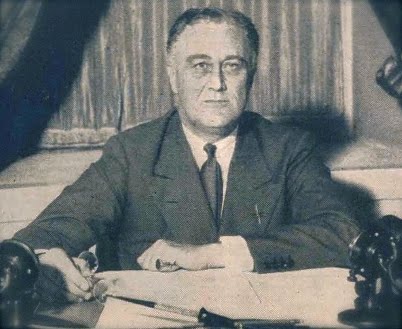
Eager to maintain its neutrality prior to the attack on Pearl Harbor, America was understandably lacking in such public โ€œspirit,โ€ frequent outcries against Nazi atrocities notwithstanding; but even long after entering the war, the US government kept on struggling to explain or justify the need for sacrifices and (wo)manpower to a people living thousands of miles from the theaters of war. On this day, 27 May, in 1941, one year after the operation at Dunkirk began, US President Franklin Delano Roosevelt came before the American public in another one of his Fireside Chats.

Although the nation was โ€œ[e]xpect[ing] all individuals [. . .] to play their full parts without stint and without selfishness,โ€ the Roosevelt administration took considerable pains to explain the significance of the war, the need for โ€œtoil and taxes,โ€ to civilians who, not long recovered from the Great Depression, were struggling to make a living.

If Hitlerโ€™s โ€œplan to strangle the United States of America and the Dominion of Canadaโ€ remained unchecked, FDR warned the public,

American laborer would have to compete with slave labor in the rest of the world. Minimum wages, maximum hours? Nonsense! Wages and hours would be fixed by Hitler. The dignity and power and standard of living of the American worker and farmer would be gone. Trade unions would become historical relics and collective bargaining a joke.

Crucial to Americaโ€™s freedom was the security of the oceans and ports. If, as FDR put it, the โ€œAxis powers fail[ed] to gain control of the seas,โ€™ their โ€œdreams of world-dominationโ€ would โ€œgo by the board,โ€ and the โ€œcriminal leaders who started this war [would] suffer inevitable disaster.โ€

The Presidentโ€™s addressโ€”broadcast at 9:30 EST over CBS stations including WABC, WJAS, WJAS, WIBX, WMMN, WNBF, WGBI and WJRโ€”departs only slightly from the script, published in the 31 May 1941 issue of the Department of State Bulletin. Whatever changes were made were either designed to strengthen the appeal or else to prevent the urgency of the situation from coming across as so devastating as to imply that any efforts by the civilian population were utterly futile.

The address, as scripted, was designed to remind the American public that the US navy needed to be strengthened, alerting listeners that, of late, there had been โ€œ[g]reat numbersโ€ of โ€œsinkingsโ€ that had โ€œbeen actually within the waters of the Western Hemisphere.โ€

The blunt truth is thisโ€”and I reveal this with the full knowledge of the British Government: the present rate of Nazi sinkings of merchant ships is more than three times as high as the capacity of British shipyards to replace them; it is more than twice the combined British and American output of merchant ships today.

In address as delivered, this passage was rendered slightly more tentative as โ€œThe blunt truth of this seems to be,โ€ a subtle change that not so much suggests there was room for doubt as it creates the impression that the great man behind the microphone was weighing the facts he laid bare, that the devastating and devastatingly โ€œblunt truthโ€ was being carefully considered rather than dictated as absolute.

No mention was made of the โ€œMiracle of Dunkirk,โ€ that remarkable demonstration of spirit and resilience. More than a flotilla of โ€œlittle shipsโ€ was required to defend the US from the potential aggression of the Axis powers. The challenge of American propaganda geared toward US civilians was to make the situation relevant to individuals remote from the battlefields, to motivate and, indeed, create a home front.
In Britain, where โ€œignorant armies clashedโ€ just beyond the narrow English Channel and where the battlefields were the backyards, there was less of a need to drive home why the fight against the Axis was worth fighting.

In the US, the driving home had to be achieved by breaking down the perfectly sound barriers of that great American fortress called home, by making use of the one medium firmly entrenched in virtually every American household, an osmotic means of communication capable of permeating walls and penetrating minds. Radio served as an extension to the world; but it was more than an ear trumpet. It was also a stethoscope auscultating the hearts of the listener.

As FDR, who so persuasively employed it in his Fireside Chats, was well aware, the most effective medium with which to imbue the American public with something akin to โ€œDunkirk spiritโ€ was the miracle not of โ€œlittle shipsโ€ but of the all-engulfing airwavesโ€”and the big broadcastsโ€”that helped to keep America afloat.

โ€œThe Hut-Sut is their dreamโ€; or, Accent on Eurovision

Eddie Cantor

Folks flicking through the May 25-30 issue of Radio-Movie Guide back in 1941 were told about a โ€œNew Song Sensation,โ€ a novelty number written by Ted McMichael (of the Merry Macs), Jack Owens and Leo V. Killion. The identification of the tunesmiths aside, this was probably no news at all to Americaโ€™s avid dial twisters. Published only a few weeks earlier, the โ€œSensationโ€ in question had already โ€œfeatured on the air by Kate Smith, Bob Hope and Alec Templeton.โ€ In fact, as early as 23 April, listeners to Eddie Cantorโ€™s Itโ€™s Time to Smile program would have been exposed to what was tongue-in-cheekily billed as a โ€œSwedish Serenadeโ€ overheard by an illiterate boy who โ€œshould have been in schoolโ€:

Hut-Sut Rawlson on the rillerah and a brawla, brawla sooit,
Hut-Sut Rawlson on the rillerah and a brawla sooit.
Hut-Sut Rawlson on the rillerah and a brawla, brawla sooit,
Hut-Sut Rawlson on the rillerah and a brawla sooit.

According to Radio-Movie Guide, Benny Goodman was so keen on the ditty that he wanted to โ€œbuy an interest in its profit for five thousand dollars.โ€ It is easy to see the attraction of such novelty nonsense at a time when news from Europe were similarly bewildering yet decidedly less diverting. And before we tut-tut a nation at war for going gaga over a trifle such as โ€œThe Hut Sut Songโ€ while being gleefully indifferent toโ€”or woefully ignorant ofโ€”the world, we might consider the musical offerings conceived for the current Eurovision Song Contest, an annual agit-pop extravaganza that, in this, its fifty-fifth year, is playing itself out against the somber backdrop of the European fiscal crisis.

Much of Europe may be cash-strapped and debt-ridden, but the thirty-nine nations competing in Oslo this year have it yet in their means to bestow points and favors upon one anotherโ€”or to withhold them. Even the least affluent countries of greater Europe may take comfort as well in the potentiality of turning freshly minted tunes into pop-cultural currency. Europe is less concerned, it seems, with the phrases it must coin to achieve such a feat.

The emphasis on rhyme over reason is apparent in traditional Eurovision song contest titlesโ€”and winnersโ€”like โ€œBoom Bang-a-Bang” (United Kingdom, 1969), โ€œDing-A-Dongโ€ (Netherlands, 1975), and โ€œDiggi-loo, Diggi-leyโ€ (Norway, 1984). It is an orchestrated retreat to the banks of a mythical โ€œrillerah,โ€ a clean plunge into a stream of pure nonsense beyond the realities of the Babel that is Europe. Might an agreement to be agreeably meaningless be a key to intercultural understanding?

โ€œThe Hut Sut Songโ€ came with its own dictionary:

Now the Rawlson is a Swedish town, the rillerah is a stream.
The brawla is the boy and girl,
The Hut-Sut is their dream.

By comparison, most Eurovision entries, which, in the past, included โ€œVolare,โ€ โ€œWaterloo,โ€ and some inconsequentiality or other performed by Celine Dion, do not make much of an effort to render themselves intelligible. While by and large performed in some approximation of English, todayโ€™s Eurovision songs are, for the most part, incomprehensible rather than nonsensical, as if members of the vastly, perhaps inordinately or at any rate prematurely expanded union were determined to avail themselves of the English language as a means of keeping apart instead of coming together, inarticulate English being the universal diversifier.

Eurovision songs have always sufferedโ€”or, you might well argue, benefitedโ€”from less-than-sophisticated lyrics. Take these lines from this yearโ€™s Armenian entry, performed by one Eva Rivas: “I began to cry a lot / And she gave me apricots.” Which begs the question, I told a friend the other day: if she had only laughed a little, might she have gotten . . . peanut brittle? Well, perhaps not. Apricots are a symbol of Armenian nationality.

In its well-nigh incomprehensible delivery, โ€œSatelliteโ€ takes the cake, though. According to British bookies and the internet downloads on which they rely to establish the odds, the quirky, bouncy little song representing my native Germanyโ€”where it became an instant successโ€”is second in popularity only to the entry from Azerbaijan (which, as the contest rules have it, lies within the boundaries of Europe).

A Danish-German-American collaboration, โ€œSatelliteโ€ scores high in both the “bad lyrics” and “strange accent” categories, proving, as only a Eurovision song can, that those categories are not mutually exclusive:

I went everywhere for you
I even did my hair for you
I bought new underwear that’s blue
And I wore it just the other day.

The singer, Lena Meyer-Landrut hails from Hanover. Not that this should lead us to expect any pronounced British connections in her house. Still, being a graduating high school student, she ought to have a firmer grasp on the English language. At least, her origins and education cannot account forโ€”or explain awayโ€”references to painted โ€œtoenatesโ€ and underwear โ€œthay blue.โ€ Since, after weeks of tryouts and rehearsals, she still can’t, er, โ€œnateโ€ those undemanding lyrics, her accent is clearly an affectation. Could it be anything else?

Just what kind of โ€œHut-Sutโ€ are European โ€œbrawlaโ€ dreaming of these days as they insist on diving, seemingly pell-mell, into the turbid โ€œrillerahโ€ they make of English? Not of a unity achieved through universality, I reckon. Perhaps, they are simply getting back at the native speakers by twisting their tongue in ways that are as likely to alienate as to amuse, and are having the last laugh by turning this recklessly appropriated language into Europop gold with which to pay back the British for steadfastly refusing to adopt the sinking Euro. The apricot stones-filled cheek!

Whether โ€œSatelliteโ€โ€”or Germanyโ€”wins this Saturday has perhaps more to do with the recent bailout of Greece than with the merits of the song or the quality of the performance. Then again, a Eurovision song, however frivolous, is generally looked upon as something larger than its number of bum notes and odd intonations. It is, at best, ambassadorialโ€”and the outlandish accent of the German envoy makes for a curious diplomatic statement indeed.

“You Were Wonderful,” Lena Horne

When I heard of the passing of Lena Horne, the words โ€œYou Were Wonderfulโ€ came immediately to mind. Expressive of enthusiasm and regret, they sound fit for a tribute. However, by placing the emphasis on the first word, we may temper our applauseโ€”or the patronising cheers of othersโ€”with a note of reproach, implying that while Horneโ€™s performances were marvellous, indeed, the system in which she was stuck and by which her career was stunted during the 1940s was decidedly less so. No simple cheer of mine, โ€œYou Were Wonderfulโ€ is also the title of a radio thriller that not only gave Horne an opportunity to bring her enchanting voice to the far from color-blind medium of radio but to voice what many disenchanted black listeners were wondering about: Why fight for a victory that, of all Americans, will benefit us least? As title, play, and cheer, โ€œYou Were Wonderfulโ€โ€”captures all that is discouraging in those seemingly uncomplicated words of encouragement.

Written by Robert L. Richards, โ€œYou Were Wonderfulโ€ aired over CBS on 9 November 1944 as part of the Suspense series, many of whose wartime offerings were meant to serve as something other than escapist fare. As I argued in Etherized Victorians, stories about irresponsible Americans redeeming themselves for the cause were broadcast nearly as frequently as plays designed to illustrate the insidiousness of the enemy. Despite victories on all fronts, listeners needed to be convinced that the war was far from over and that the publicโ€™s indifference and hubris could endanger the war effort, that both vigilance and dedication were required of even the most war-weary citizen. โ€œYou Were Wonderfulโ€ played such a role.

When a performer in a third-rate nightclub in Buenos Aires suddenly collapses on stage and dies, a famous American entertainer (Horne) is rather too eager replace her. โ€œIโ€™m a singer, not a sob sister,โ€ she declares icily, thawing for a tantalizing rendition of โ€œEmbraceable You.โ€

The very name of the mysterious substitute, Lorna Dean, encourages listeners to conceive of โ€œYou Were Wonderfulโ€ in relation to the perennially popular heroine Lorna Doone, or the Victorian melodramatic heritage in general, and to consider the potential affinities between the fictional singer and her impersonatrix, Lena Horne, suggesting the story to be that of an outcast struggling to redeem herself against all odds.

One of the regulars at the nightclub is Johnny (Wally Maher), an seemingly disillusioned American who declares that his country did not do much for him that was worth getting โ€œknocked off for.โ€ Still, he seems patriotic enough to become suspicious of the singerโ€™s motivations, especially after the club falls into the hands of a new manager, an Austrian who requests that his star performer deliver specific tunes at specified times. The absence of a narrator signalling perspective promotes audience detachment, a skeptical listening-in on the two central characters as they question each other while all along compromising themselves.

When questioned about her unquestioning compliance, Lorna Dean replies:

Iโ€™m an entertainer because I like it. ย And because itโ€™s the only way I can make enough money to live halfway like a human being. ย With money I can do what I want toโ€”more or less. I can live where I want to, go where I want to, be like other peopleโ€”more or less. ย Do you know what even that much freedom means to somebody like me, Johnny?

However restrained, such a critique of the civil rights accorded to and realized by African-Americans, uttered by a Negro star of Horneโ€™s magnitude, was uncommonly bold for 1940s radio entertainment, especially considering that Suspense was at that time a commercially sponsored program.

โ€œ[W]e are not normally a part of radio drama, except as comedy relief,โ€ Langston Hughes once remarked, reflecting on his own experience in 1940s broadcasting. A comment on this situation, Richardsโ€™s writingโ€”as interpreted by Horneโ€”raises the question whether Horneโ€™s outspoken character could truly be the heroine of โ€œYou Were Wonderful.โ€

Talking in the see-if-I-care twang of a 1930s gang moll, Lorna is becoming increasingly suspect, so that the questionable defense of her apparently selfish behavior serves to render her positively un-American. When told that her command performances are shortwaved to a German submarine and contain a hidden code to ready Nazis for an attack on American ships, she claims to have known this all along.

The conclusion of the play discloses the singerโ€™s selfishness to have been an act. Risking her life, Lorna Dean defies instructions and, deliberately switching tunes, proudly performs โ€œAmerica (My Country โ€˜Tis of Thee)โ€ instead.

About to be shot for her insubordination, Lorna is rescued by the patron who questioned her integrity, a man who now reveals himself to be a US undercover agent. When asked why she embarked upon this perilous one-woman mission, the singer declares: โ€œJust to get in my licks at the master race.โ€

โ€œYou Were Wonderful,โ€ which, like many wartime programs was shortwaved to the troops overseas, could thus be read as a vindication of the entertainment industry, an assurance to the GIs that their efforts had the unwavering support of all Americans, and a reminder to minorities, soldiers and civilians alike, that even a democracy marred by inequality and intolerance was preferable to Aryan rule.

Ever since the Detroit race riots of June 1943, during which police shot and killed seventeen African-Americans, it had become apparent that unconditional servitude from citizens too long disenfranchised could not be taken for granted. With โ€œYou Were Wonderful,โ€ Horne was assigned the task of assuring her fellow Negro Americans of a freedom she herself had to waitโ€”and struggleโ€”decades rightfully to enjoy.

Had it not been for this assignment, Lena Horne may never have been given the chance to act in a leading role in one of radioโ€™s most prominent cycles of plays. Yes, โ€œYou Were Wonderful,โ€ Lena Horneโ€”and any tribute worthy of you must also be an indictment.

โ€œ. . . there must come a special understandingโ€: To Corwin at 100

Today, American journalist and radio playwright Norman Corwin turns 100. Whether that makes him the oldest living writer to have had a career in radio I leave it to fact-checkers and record book keepers to determine. I do know that, seventy years ago, he was already the best. Oldest. Best. Why not dispense with superlatives? Corwin has been set apart for too long. Instead, an appreciation of his work calls for the positive and the comparative, as his plays deserve to be regarded at last alongside the prose and poetry of his better-known literary contemporaries.

No survey of 20th-century American literature can be deemed representative, let alone definitive, without the inclusion of some of Corwinโ€™s Whitmanesque performances. What has kept him from being ranked among the relevant and influential writers of the 1940s, and of the war years in particular, is the fact that, during those years, Corwin wrote chiefly for a medium that, however relevant and influential, wasโ€”and continues to beโ€”treated like a ghetto of the arts in America.

You might argue that the metaphor is not altogether apt, especially if you bear in mind the distinguished authors and playwrights who did turn toโ€”or agreed to be pulled intoโ€”broadcasting during the Second World War; among them poets Archibald MacLeish, Edna St. Vincent Millay, and Stephen Vincent Benรฉt, as well as dramatists like Maxwell Anderson, Marc Connelly, and Sherwood Anderson. And yet, even their scripts are rarely acknowledged to be contributions to literature, the American airwaves being thought of as a cultural site quite beyond that field.

At best, dramatic writings for radio are handled as historical documents that, by virtue of being propagandist or populist, could hardly be regarded as having artistic merit or integrity. As something otherโ€”and lessโ€”than literature, they were as quickly obliterated as they were produced, stricken from the records so as not to tarnish the reputation of erstwhile writer-recruits most of whom exited the radio camp well before V-J Day.

Norman Corwin never deserted that camp. Rather, the camp was shut down, raided by McCarthy, all but razed to make way for television. Sporadic returns to the old playing field notwithstanding, he was forced to move on. Yes, the air wasโ€”and isโ€”Corwinโ€™s playground. For all their wartimeliness, his 1940s plays were never mere means to an end, even if end is understood to mean an end to the war that gave them a reason for being.

To gain an understanding of that past is not the only good reason for being in the presence of Corwin today. Rather than promoting uniformity, which is a chief aim of propaganda, Corwinโ€™s plays challenge the commonplace, encourage independent thinking and the voicing of ideas thus arrived at. Take โ€œTo Tim at Twenty,โ€ for instance. It is hardly one of Corwinโ€™s most complex, ambitious or experimental works for radio; in a note to a fellow writer, published in Norman Corwinโ€™s Letters (1994), the playwright himself described it as โ€œthe lowest common denominator of simplicity.โ€ Simplicity, in this case, is an achievement. Quietly startling, โ€œTo Tim at Twentyโ€ bespeaks the humanity, intellect, and dignity of its author.

Written for the CBS Forecast series, a string of pilot broadcasts designed to test audience responses to potential new programs, the play first aired on 19 August 1940, when it starred Charles Laughton, for whom โ€œTo Timโ€ was expressly written, and Elsa Lanchester. Newly arrived in California, Corwin was staying at the coupleโ€™s Brentwood home at the time.

As he shared in a letter to his sister-in-law, he felt โ€œkind of lonelyโ€ in Hollywood, and was โ€œgetting tired of singlehood.โ€ In times of warโ€”and to Laughton and Lanchester August 1940 was wartimeโ€”the thought of growing up and raising a family is compounded by the realization that the future is darkly uncertain instead of rich in potentialities. So, Mr. Corwin wrote a letter.

To Tim at Twenty is an epistolary play, a radiodramatic genre of partially dramatized speeches addressed to an implied audience. The proxy listener, in this case the unheard Tim, suited Corwin since indirection made whatever was conveyed come across as something other than an act of overt indoctrination. The addressee also provided him with a veil behind which to enact his personal conflicts as he contemplated his maturity, mortality, and legacy.

The letter writer is Timโ€™s father, a British gunner spending a sleepless night in the โ€œbarracks of an RAF squadron on the northeast coast of Englandโ€; as the narrator-announcer informs us, he is โ€œleaving at dawn on a mission from which there can be no return.โ€

Once the United States entered the war, lesser writers, melodramatist Arch Oboler among them, would use this kind of set-up to remind American civilians of the sacrifices made for them overseas, of the bravery that must be honored and matched at the home front. Tim, we expect, is asked to honor his fatherโ€™s memory. Instead, the letter he is to receive tells him that the men of his fatherโ€™s generation โ€œhavenโ€™t made out any too wellโ€ in the business of โ€œthe running of the earth.โ€

At the time the letter is composed, Tim is just five years old. His father made a โ€œspecial pointโ€ of asking his wife โ€œnot to deliverโ€ it until 1955, at which time he might have had the โ€œman to manโ€ talk with his son that war denied him.

Sentimental, seemingly pacifist messages were not unheard of at the time. They were welcomed by isolationists who counted on big business as usualโ€”and commercial radio, which shunned the controversial, was very big business indeed; but โ€œTo Tim at Twentyโ€ suggests something alien to those determined to preserve the status quo. Instead, the belated address of the Englishmen, who knows better than to have faith in things as they are, is meant to instill his sonโ€”and Corwinโ€™s listenersโ€”with a โ€œfuller appreciation of women.โ€ To Marshall, they are authorities of humanity superior to men because โ€œthere must come a special understanding of the dignity of life to those who grow it in their vitals.โ€

As the dramatic flashbacks reveal, the lessons he shares with his son were taught Marshall by his wife, who suggested that the voices of the many might have drowned the shrill cries of the few, the โ€œwanton willsโ€ that were not countered by โ€œmanโ€™s vast raw materials of love and tenderness and courageโ€ in time to avoid deadly conflict. โ€œThere are several kinds of valor,โ€ Tim is to learn from his dead father, โ€œand the least is the kind that comes out of the hysteria of battle.โ€

I suspect that it was easier to write this message in 1940 than it was to understand it in 1955, when Americaโ€™s leader was a five-star general, when superpowered dominance was the manly objective of the day and the โ€œappreciation of womenโ€ was more a matter of the male gaze than of political influence or workforce equality. By then, there was no place for Corwin in network radio.

Since his climactic โ€œNote of Triumphโ€ in 1945, to which nearly half of the US population was estimated to have tuned in, his voice has been heard by a comparatively fewโ€”the fortunate few who, by lending him an ear, are gaining a “special understanding.”

โ€œBecause there is always someone left outโ€: Bennett, Biography, and the Habit [of Framing] Art

I might as well come right out with it, dissentient, fractious and uncharitable as it may sound. I donโ€™t like Alan Bennettโ€”popular British playwright, memoirist, and frequent reciter of his own wordsโ€”whose latest work for the stage, The Habit of Art, was beamed from Londonโ€™s National Theatre into movie houses around the world this month. He irritates me. Why, then, did I number among the sizeable crowd this satellite event drew at our local cinema? Truth is, I kind of like that he irritatesโ€”unless he does it with the sound of his voice, a querulous whine the exposure to which theater audiences, unlike radio listeners, are generally spared. In The Habit of Art, Bennett does itโ€”that is, doesnโ€™t do it for meโ€”in the way he packages or frames what I think he is trying to capture.

At this stage in his career, Bennett is about as stuffy as an old whoopee cushion. Once in a while, he stands up to lecture, letting his charactersโ€”all stand-ins for himselfโ€”disseminate lines that stand out not merely by virtue of their brilliance but by the less-than-virtue of being borrowed for the occasion as if they were quotations taken from what could have been the draft of an unpublished essay. Then, sitting down again, he, in his frightfully British way of rendering himself human and opening up to usโ€”and of confusing secrets with secretionsโ€”carries on about bodily functions as if he were out to revive the Carry On series. The habit? O, fart!

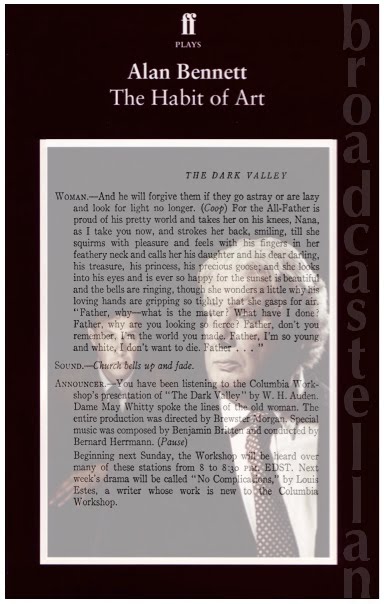
โ€œThatโ€™s Auden farting, not me,โ€ one of Bennettโ€™s characters, Fitz, insists after doing so audibly. Whether caught breaking wind or urinating in the kitchen sink, thatโ€™s still W. H. Auden, the distinguished poet, with whose short yet (since?) intimate friendship to composer Benjamin Britten the play is ostensibly concerned. Ostensibly, because Bennett is not about to humor those curious about the private lives of two fellow gay artists, reunited in 1972 to discuss a collaboration that does not come off, by delivering some kind of Sunshine Boys routine. In its roundabout way, The Habit of Art refuses to be about any one thing. It isnโ€™t Auden letting go. Itโ€™s an actor portraying him in a rehearsal of a play whose Author, also on the scene, seems unsure about just what it is all aboutโ€”or at least unable to convince his players.

To say what he needs to say, Bennettโ€™s Author feels compelled to move a biographer into the frame of what he is anxious to preserve as his composition; Bennett does the same in order to explore that frame and explode it. In other words, Bennett is rehearsing his failureโ€”or inability or unwillingnessโ€”to restrain himself for the sake of art by acting out passages from his decidedly golden notebook.

A kind of Greek Chorus, the biographer is the Authorโ€™s device, just as the sensitive, defensive Author is Bennettโ€™s. That is, the device is similar, but the purpose is different. In Bennettโ€™s play, the unassuming actor assuming the part of the interviewing, interjecting biographer is aware of being a device and resents it. Since his character is based on a real person (radio broadcaster Humphrey Carpenter), the actor wants his role to come across as real even as he is made to walk in and out of Audenโ€™s quarters like the Stage Manager in Our Town. Nothing seems real here aside from Bennettโ€™s artistic struggle.

Although the actor does not have to emit gas to prove his characterโ€™s humanity, heโ€”that is, the biographer in spite of his extra-autobiographical selfโ€”is confronted with Audenโ€™s request for a sex act the performance of which was the job of the callboy for whom the biographer is briefly mistaken. Enter the callboy proper. He, not Auden or Britten, is the character referred to, albeit obliquely, in the Authorโ€™s play Calibanโ€™s Day, the troubled rehearsal into the midst of which we are plonked.

Meanwhile, Fitz, the less than letter-perfect actor set to play Auden, is not amused by this Caliban, nor by Calibanโ€™s Day, a dramatic monstrosity that also features talking furniture (โ€œI am a chair and in New York / I seated his guests and took in their talkโ€) and an exchange between Audenโ€™s Words and Brittenโ€™s Music, performed, in the absence of the two unfortunate thespians assigned those parts, by the jovial Stage Manager and her hapless assistant.

It is through Fitz that Bennett responds to the frustrations of theatergoers eagerโ€”if increasingly less soโ€”to get closer to a poet whom, after witnessing this closed-door run-through of what is about to go on public display, it would be nigh on impossible to romanticize as bohemian: โ€œThereโ€™s no nobility to him,โ€ Fitz protests, โ€œWhereโ€”this is what the audience will be thinkingโ€”where is the poetry?โ€

Not that I was expecting, even from an audiophile like Bennett, any reference to โ€œThe Dark Valley,โ€ Audenโ€™s 1940 contribution to The Columbia Workshop. Dramatically underscored by Brittenโ€™s music, Audenโ€™s monologue for radio is a collaborative effort that speaks, more directly and poignantly than Bennett, of love, death, and the secrecy that is the death of love:

Under the midnight stone
Love was buried by thieves.
The robbed hearts weep alone.
The damned rustle like leaves.

Taking center stage instead is a professional sex worker. Bennettโ€™s Author does his utmost to justify the callboyโ€™s presence, insisting that his request performance is neither uncalled for nor gratuitous. As the only surviving witness of that fictionalized meeting between Auden and Britten, the young man is recalled from obscurity to tell us what he would want to get out of the exchange if he, a Caliban among Prosperos, were to have his day:

I want to figure. He goes on about stuff being cosy, England and that. But itโ€™s not England thatโ€™s cosy. Itโ€™s art, literature, him, you, the lot of you. Because thereโ€™s always someone left out. You all have a map. I donโ€™t have a map. I donโ€™t even know what I donโ€™t know. I want to get in. I want to join. I want to know.

Neither the Author, whom we are not encouraged to take seriously, nor Bennett, in all his tongue-in-cheekiness, convinces me that the boy truly wants to be in the know; above all, he wants to be known. And, for some reasonโ€”a touch of Death in Venice, Habit with its built-in commentary suggestsโ€”Bennett lets the youth voice his demands on behalf of all the faceless boys that Britten and Auden may have privately enjoyed while enjoying critical success.

But the boyโ€”played by a self-conscious twenty-nine-year oldโ€”does not figure. If anything, he disfigures. He, like anyone who ever catered to Audenโ€™s bodily needs, cleaned his kitchen sink or inspected his carcass, is generally โ€œleft outโ€ for a reason. After all, is it really such a revelation that an artist may be rankly human, that, stripped of the artistry for which he is known, he stands before us as homo mephiticus?

Bennett, to borrow a line from myself, is โ€œlike a boar chasing Adonis for the sweat on his thighs.โ€ That we are unknowable to each other is old hat. To add that, if we do get to know what others did not mean to share, we might end up with moreโ€”or lessโ€”than we need to know is hat decomposing.

Bennett means to share, though. He means to share what it means to create, to critique, and collaborate, what it means to be old, what it means to be gay, what it means to be public, to be private, to be popular, to be British, to be human. Now artsy, now fartsy, he means to let it all out, and say, too, how difficult it is to say anything, let alone everything and the kitchen sink. Yet, as Scream 3 drove home back in 2000, postmodern self-reflexivity is as dead as a nail in a mortuaryโ€™s door, a door that, if left open, releases nothing but the ptomaine wafting our way when storytelling is permitted to keep turning and feasting on itself.

However breezy this exercise in framing and dismantling may be, nothing quite this undisciplined and self-indulgent can be any longer mistaken for fresh air. Itโ€™s just a hard-to-kick habit of art, and a rather bad one at that.

Cinegram No. 14 (Because You Canโ€™t Rely on Air Mail These Days)

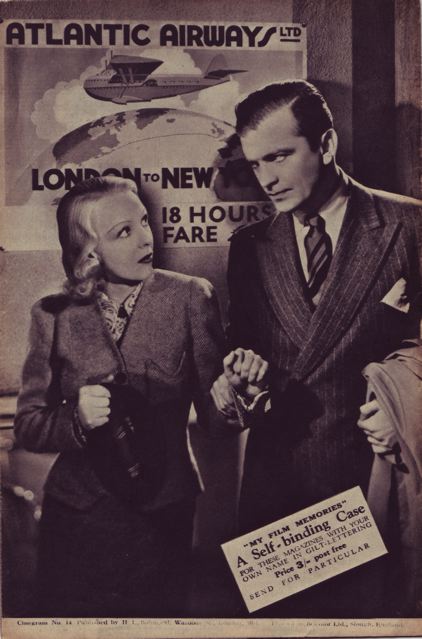
I am taking the passing ash cloud as an occasion to dust off my collection of Cinegrams, a late-1930s to early 1940s series of British movie programs I recently set out to acquire. Immemorabilia, you might call them. Not quite first-rate souvenirs of, for the most part, less-than-classic films like The Return of the Scarlet Pimpernel, or worse. These cheaply printed ephemera were designedโ€”quite pointlessly, it seemsโ€”to encourage folks to keep alive their memories of something that may well have been forgettable to begin with. Sure, why not pay a little extra for a few stills of a picture that wasnโ€™t much to look at while in motion? And why not pay still more to keep your โ€œFilm Memoriesโ€ in a self-binding case, with your name on itโ€” in gilt-lettering, no less? That was the offer made to British moviegoers anno 1937, who purchased Cinegram No. 14 to prevent Non-Stop New York from seeming all too fleeting.

Perhaps, I am confusing โ€œforgettableโ€ with โ€œforgotten.โ€ Non-Stop New York which is readily available online, has a lot going for it, quite apart from being a fast-paced romantic vehicle for John Loder and Anna Lee, helmed by Leeโ€™s husband, Robert Stevenson, who would go on to make Flubber and Mary Poppins soar at the box office.

Efficiently if somewhat routinely lensed, this Gaumont-British production might have served as a project for the companyโ€™s most notable director, Alfred Hitchcock. Substituting airlanes for tracks, itโ€™s the The Lady Vanishes in the realm of the birds. Except that, in this case, the ladyโ€”the young and innocent girl who knew too muchโ€”refuses to vanish, which makes the man whose secret she knows all the more eager to see to her disappearance.

The main attraction of Non-Stop New York is not its contrived plot, its charming leads or its rich assortment of goons and ganefs. Rather, it is the filmโ€™s setting, the futuristic plane aboard which this pursuit reaches its thrilling climax. It is a large, multi-story aircraft resembling a luxury linerโ€”right down to the outdoor deck on which windblown lovers kiss by moonlight and villains go for the kill. Thereโ€™s plenty of room for some old-fashioned hide and seek, as passengers are not crowded together but retreat into the privacy of their own cabins. Quite an extravagance, this, considering that the imagined travel time of eighteen hours hardly warrants accommodations fit for on a sea voyage, which mode of transatlantic crossing yet served as a point of reference to the production designers who conceived the vessel.

It took Christopher Columbus ten weeks to cross the Atlantic Ocean, Cinegram No. 14 educated its readers. โ€œToday, ten hours seem to be sufficient to complete the same journey.โ€ Set in the seemingly foreseeable future of 1939, Non-Stop New York

anticipates the regular air service which before long [that is, after the end of the wartime air raids that, even in the age of Guernica, purveyors of escapist entertainment did not trouble themselves to predict] will be flying regularly across the North Atlantic and carrying passengers overnight between London and New York. Already survey flights are being carried out by Imperial Airways and Pan American Airways and these flights have shown that such a service is not longer a dream of the fiction writer, but something which to-morrow will be as commonplace as the many daily services of to-day between London and Paris.

The first experimental flights were made in the Summer of 1937. The British company made a series of flights with two of the Empire class flying boats, the โ€œCaledoniaโ€ and the โ€œCambria.โ€ The terminal points of these flights were Southampton and New York and the route followed was by way of Foynes, on the west coast of Ireland across the Atlantic, 1992 miles, to Botwood, Newfoundland. From there the flying boats went to New York by way of Montreal.

In all, 5 two-way crossings were made and these were carried out without incident and with such certainty that they reached the other side of the Atlantic within a few minutes of schedule.

On the last eastward journey the โ€œCambriaโ€ set up an all time record, making the 1992 miles in 10 hrs. 33 min. or at an average speed of nearly 190 m.p.h.

These flying boats will not be used for the Atlantic service when passengers are carried but it is probably that flying boats of the same type, but with greater power and greater ranger will be used. These flying boats may have a cruising speed of 250 m.p.h., and carry 20-30 passengers in a degree of comfort equal to that of the present luxury liner.

With its promise of a jet-setting tomorrow, a title like Non-Stop New York must have sounded thrilling to picture-goers anno 1937, albeit not nearly as thrilling as such a promise is to any present-day passenger awaiting the all-clear for departure at one of Britainโ€™s dormant airportsโ€”among them a friend of ours whose plans for a birthday celebration in Gotham are being pulverized by the largest export of a cash-strapped nation to whom volcanic activity appears to be a natural substitute for banking.

Movies like Non-Stop New York and collectibles such as Cinegram No. 14 remind me that, in living memory, long distance air travel was rare and special indeed. They remind me as well of one momentous April morning in 1985โ€”some quarter century agoโ€”when my younger self first boarded a transatlantic flight to the exhilarating and treacherous metropolis that was New York City. Back then, we still applauded the captain who returned us safely to earth; nowadays, we merely moan when we are grounded for whatever strikes us non-stoppers as too long . . .

“Mike”; for the Love of It

“What is there to say about what one loves except: I love it, and to keep on saying it?” Roland Barthes famously remarked. Sometimes, getting to the stage of saying even that much requires quite a bit of effort; and sometimes you donโ€™t get to say it at all. Love may be where you find it, but it may also be the very act of discovery. The objective rather than the object. The pursuit whose outcome is uncertain. Methodical, systematic, diligent. Sure, research, if it is to bear fruit, should be all that. And yet, it is also a labor of love. It can be ill timed and unappreciated. If nothing comes of it, you might call it unrequited. It may be all-consuming, impolitic and quixotic. Still, itโ€™s a quest. Itโ€™s passion, for the love of Mike!

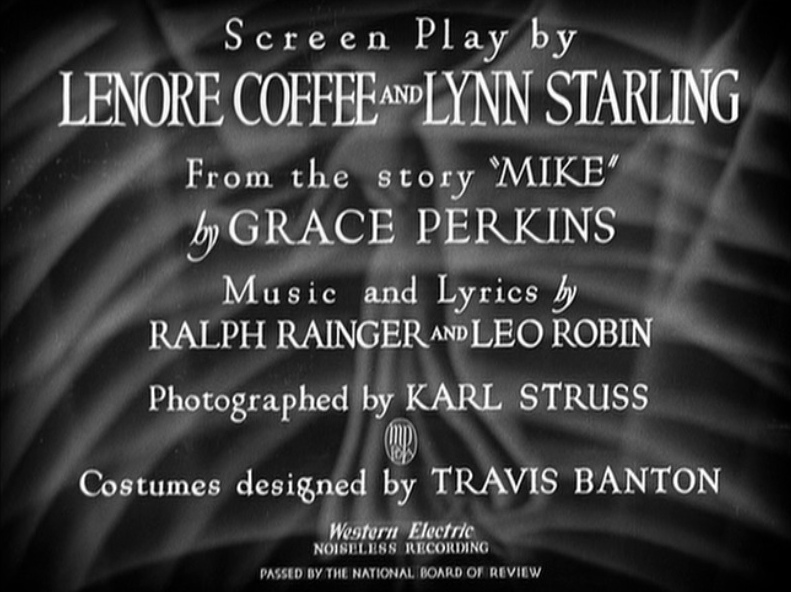
โ€œMikeโ€ has been given me a tough time. It all began as a wildly improbable romance acted out by my favorite leading lady. It was nearly a decade ago, in the late spring of 2001, that I first encountered the name. โ€œMikeโ€ is a reference in the opening credits of the film Torch Singer, a 1933 melodrama starring Claudette Colbert. Having long been an admirer of Ms. Colbertโ€”who, incidentally made her screen debut in the 1927 comedy For the Love of Mike, a silent film now lostโ€”I was anxious to catch up with another one of her lesser-known efforts when it was screened at New York Cityโ€™s Film Forum, an art house cinema I love for its retrospectives of classicโ€”and not quite so classicโ€”Hollywood fare.

Until its release on DVD in 2009, Alexander Hallโ€™s Torch Singer was pretty much a forgotten film, one of those fascinatingly irregular products of the Pre-Code era, films that strike us, in the Code-mindedness with which we are conditioned to approach old movies, as being about as incongruous, discomfiting and politically incorrect as a blackface routine at a Nelson Mandela tribute or a pecan pie eating contest at a Weight Watchers meeting. Many of these talkies, shot between 1929 and 1934, survive only in heavily censored copies, at times re-cut and refitted with what we now understand to be traditional Hollywood endings.

Torch Singer, which tells the Depression era story of a fallen woman who takes over a childrenโ€™s program and, through it, reestablishes contact with the illegitimate daughter she could not support without falling, has, apart from its scandalous subject matter, such an irresistible radio angle that I was anxious to discuss it in Etherized Victorians, the dissertation on American radio drama I was then in the process of researching.

Intent on presenting radio drama as a literary rather than historical or pop-cultural subject, I was particularly interested in published scripts, articles by noted writers with a past in broadcasting, and fictions documenting the central role the โ€œEnormous Radioโ€ played in American culture during the 1920s, โ€˜30s, and โ€˜40s. I thought about dedicating a chapter of my study to stories in which studios serve as settings, microphones feature as characters, and broadcasts are integral to the plot.

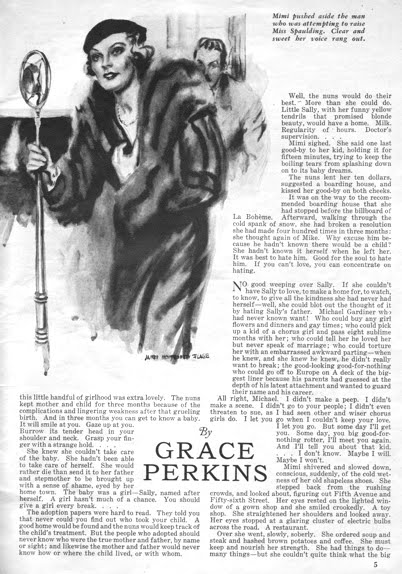
Torch Singer is just such a storyโ€”and, as the opening credits told me, one with a past in print. Written by Lenore Coffee and Lynn Starling, the screenplay is based on the story โ€œMikeโ€ by Grace Perkins; but that was all I had to go on when I began my search. No publisher, no date, no clues at all about the print source in which โ€œMikeโ€ first came before the public.


Little could be gleaned from Perkinsโ€™s New York Times obituaryโ€”somewhat overshadowed by the announcement of the death of Enrico Carusoโ€™s wife Dorothyโ€”other than that she died not long after assisting Madame Chiang Kai-shek in writing The Sure Victory (1955); that she had married Fulton Oursler, senior editor of Readerโ€™s Digest and author of the radio serial The Greatest Story Ever Told; and that she had penned a number of novels published serially in popular magazines of the 1930s. That sure complicated matters as I went on to turn the yellowed pages of many once popular journals of the period in hopes of coming across the elusive โ€œMike.โ€

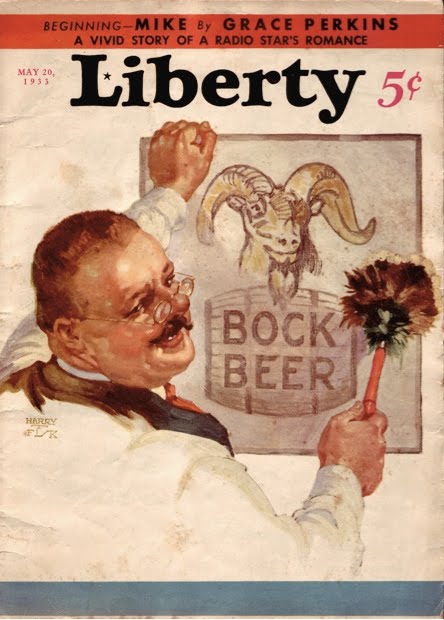
Finally, years after my degree was in the bagโ€”and what a deep receptacle that turned out to beโ€”I found โ€œMikeโ€ between the pages of the 20 May 1933 issue of Liberty; or the better half of โ€œMike,โ€ at least, as this is a serialized narrative. Never mind; I am not that interested anyway in the storyโ€™s other Mike, the man who deserted our heroine and with whom she is reunited in the end. At last, I got my hands on this โ€œRevealing Story of a Radio Starโ€™s Romance,โ€ the story of the โ€œnotorious Mimi Benton,โ€ a hard-drinking mantrap whoโ€™d likely โ€œend up in the gutter,โ€ but went on the air insteadโ€”and โ€œright into your homes! Yes, sir, and talked to your children time and time again!โ€

โ€œMike,โ€ like Torch Singer, is a fiction that speaks to Depression-weary Americans who, dependent on handouts, bereft of status and influence, came to realizeโ€”and romanticizeโ€”what else they lost in the Roaring Twenties when the wireless, initially a means of point-to-point communication, became a medium that, as I put it in my dissertation,

not merely controlled but prevented discourse. Instead of interacting with one another, Depression-era Americans were just sitting around in the parlor, John Dos Passos observed, โ€œlistening drowsily to disconnected voices, stale scraps of last yearโ€™s jazz, unfinished litanies advertising unnamed products that dribble senselessly from the radio,โ€ only to become receptive to President Rooseveltโ€™s deceptively communal โ€œyouandmeโ€ from the fireside.

Rather than โ€œlistening drowsily,โ€ disenfranchised Mimi Benton, anathema to corporate sponsors, reclaims the medium by claiming the microphone for her own quest and, with it, seizes the opportunity to restore an intimate bond that society forced her to sever. These days, Mimi Benton would probably start a campaign on Facebook or blog her heart outโ€”unless she chose to lose herself in virtual realities or clutch a Tamagotchi, giving up a quest in which the medium can only be a means, not an end.


Related writings
โ€œRadio at the Movies: Torch Singer (1933)โ€
โ€œRadio at the Movies: Manslaughter (1922)โ€