
 However disheartening California’s majority rule in favor of amending the state constitution so as to protect an institution for which millions of divorced Americans have shown little respect, 5 November 2008 is still a day to inspire confidence in a democracy’s ability to refine and redefine itself, to let go of old prejudices so often upheld as time-honored traditions. To update and appropriate On a Note of Triumph, Norman Corwin’s cautiously optimistic radio play in commemoration of VE Day: “Seems like free men [and women] have done it again!” Perhaps, it seems even more of a victory to those living in Europe and elsewhere around the world.
Like many non-Americans anxious for change in Washington, I stayed up all night to keep track of the election results. Watching the BBC coverage, I was struck by the enthusiastic response to the outcome, even though it should come as no surprise that most people around the world are relieved to see the Republican rule of proud indifference come to an end.
I was tickled by David Dimbleby’s hilariously awkward interview with the cantankerous Gore Vidal, who refused to explain his enthusiasm about the Obama victory to an audience he assumed to be ignorant of America’s civil rights movement and the Republican mindset that impeded it. Perhaps, the world does not understand what it means to be an American; but now, for the first time since 11 September 2001, the world is once again eager to learn and willing to empathize.
Here in Britain, 5 November marks the anniversary known as Guy Fawkes Day, or Bonfire Night, when the threats of extremism and self-righteousness go up in smoke. Generally, it is the figure of Gunpowder Plotter Guido Fawkes that is burned in effigy. Tonight, though it may well be the Republican legacy that the British are eager to consign to the flames. Change, after all, is only a dirty word to those incapable of coming clean about a past that is far from spotless. And, given the state of our global economy and, more importantly, our globe, mend our ways we must.
Today, 5 November, also marks a personal anniversary. It was on this day, four years ago, that, after nearly fifteen years of living, working and studying in the US, I left Manhattan to impose myself on the Welsh and the British at large. I intended the departure date to coincide with the previous election, thinking that the result might either be so decisively against my kind as to eclipse any misgivings about moving and—allowing me to wash my hands of a country whose people were reckless enough to re-elect George W. Bush—or so encouraging and propitious as to send me off into uncharted territory with a sense of hope and a feeling of elation.
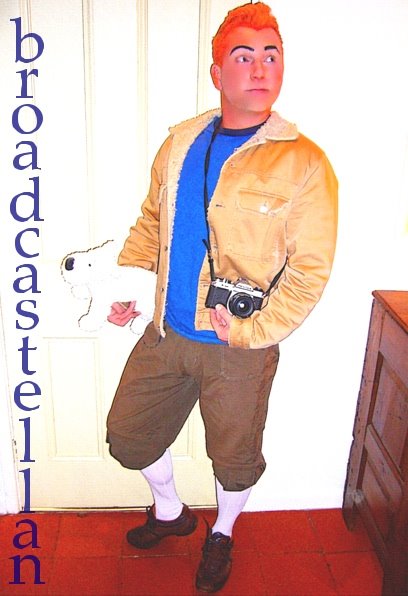
It turned out to be the former, of course; but that did not keep me from visiting to Manhattan and from feeling very much at home there. You may not read the anxiety into the above picture, one of the first photographs taken of me after my move to Wales, a Principality theretofore unknown to me.
Before moving, I had shed nearly twenty percent of my body weight, as if resolved to let go of my past or determined to leave behind what could not be retrieved, as if I were trying to convince myself that I needed to regain weight on British soil in order to make it British. If you look at the image of me posted in the previous entry into this journal, you will notice that I did regain the weight, largely owing to Welsh meat and home cooking.
I owe it to my partner, with whom I am yet barred from forming a legally recognized union amounting to matrimony, that I am feeling at home in our remote cottage halfway up in the Welsh hills, a place that, the wilds of the rain forest or the Congo notwithstanding, could hardly be more different from life in Manhattan. How wonderful it is to be celebrating this historic moment of harmony as a very intimate part of my own journey . . .


 “The next programme contains some strong language which some listeners may find offensive.” That disclaimer, apparently, is not enough to keep old Auntie (the BBC) out of trouble with the strongest censors out there: the public. Several thousand listeners (or, roughly, one percent of those who tuned in) voiced their complaints about a broadcast in which British pop-culture personalities Russell Brand and Jonathan Ross made prank phone calls to Andrew Sachs, an actor mainly remembered for being a cast member of Fawlty Towers. It all happened on 18 October—but the force of those faded soundwaves is just beginning to make itself felt in a sweep of ever more dramatic repercussions. Never mind rolling waves. It’s heads now.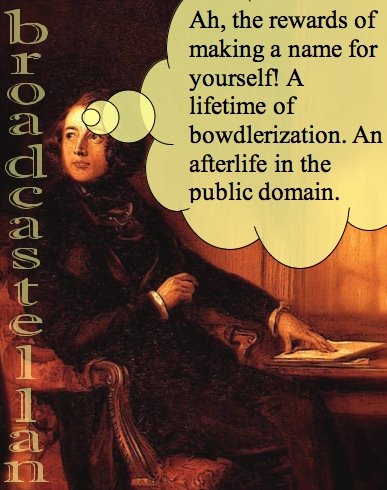


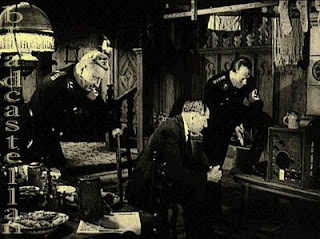 Placing Mitchell Leisen alongside Hollywood’s top flight directors is likely to raise eyebrows among those whose brows are already well elevated. Most others will simply shrug their cold shoulders in“Who he? indifference, a stance with which I, whose shoulders are wont to brush against the dusty shelves and musty vaults of popular culture, am thoroughly familiar by now. Respected for his knack of striking box-office gold but dismissed by his peers, the former art director was not among the auteurs whose works are read as art chiefly because it is easier to conceive of artistic expression as a non-collective achievement: something that bears the clearly distinguishable signature of a single individual. Their careful design aside, little seems to bespeak the Leisen touch, which is as light as it is assured. Stylish and slick in the best Paramount tradition, a Leisen picture stunningly sets the stage under the pretense of drama; otherwise, it has few pretensions.
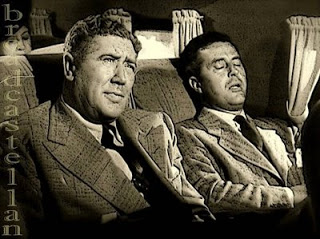 Leisen was not about to denounce the medium he had romanced in two of his earlier revues, The Big Broadcast of 1937 and its 1938 follow-up. Instead, Golden Earrings confronts nationalistic, state-run radio with a distinctly American voice of commercial broadcasting. In the narrative frame, the English officer is seen relating his story to Quentin Reynolds (pictured here with Milland), a news commentator known for his on-air missives to Doktor Goebbels and Herr Schickelgruber.
 Harry Heuser