
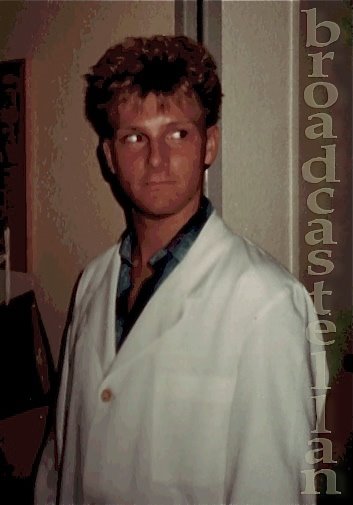
 Like many a woebegone youth of my generation—once known as the No Future generation—I entered the crumbling empire of Evelyn Waugh’s fictions by way of that lush, languid serial adaptation of Brideshead Revisited. It wasn’t so much what I saw as what I had missed that made me pick up the book. Owing to my mother’s loyalty to Dynasty, which aired opposite Brideshead on West German television back in the early 1980s, I was obliged to fill whatever holes our weekly appointment with the Carringtons had blasted into Waugh’s plot. Even more circuitous was my subsequent introduction to A Handful of Dust (1934).
In keeping with the title—and in poor housekeeping besides—a tatty paperback of it had been cast to steady a wonky table in the community room of a nurse’s residence at the hospital where I carried out such duties as were imposed on me during the mandatory twenty-month stretch of civil service any boy not inclined to be trained for military action was expected to fulfill.
For twenty months, I, who ought to have been eating strawberries with Charles Ryder, served canteen slop and sanitized bedpans at a Cologne hospital. Was there ever a locality less deserving of the name it gave to the art of concealing our stenches, of which Romantic poet Samuel Taylor Coleridge once “counted two and seventy” in Cologne alone? My head was not held very high during those days, which probably led me to investigate just what propped up that misshapen piece of furniture. For once, though, I had reason to lament being downcast. A Handful of Dust turned out to be a rare find.
Counting the weeks to my release, I could sympathized with its anti-hero, the hapless Tony Last, trapped as he was in the wilds of the Amazon, forced to read the works of Charles Dickens to the one man who could have returned him to civilization but, enjoying his literary escapes, refused to release him—a scenario familiar to regular listeners of thriller anthologies Suspense and Escape.) Like Mr. Last, I had gotten myself in an awful fix—and up a creek that smelled the part.
So, when I think of Evelyn Waugh’s early fictions now, at a time in my life when I can more closely associate with his later Ordeal of Gilbert Pinfold, what comes to mind is the comparative misery of my youth and the pleasures derived from the incongruities at the heart of his late-1920s and 1930s novels, satires like Decline and Fall (1928), Vile Bodies (1930), and Black Mischief (1932). While not inclined to relive those days by revisiting such titles, I could not turn down the chance of another Scoop (1937), the first installment of a two-part adaptation of which is being presented this week by BBC Radio 4.
Ever topical, Scoop is a satire on journalism, war and the money to be made in the Hearstian enterprise of making the news that sells. Finding himself in the midst of it all is William Boot, whose sole contribution to the field of journalism is a “bi-weekly half-column devoted to Nature.” Decidedly not mightier than the sword, his pen produced lines like “Feather-footed through the plashy fen passes the questing vole. . . .” Not the rugged, muscular prose you’d expect from a war correspondent.
It was all a deuced mistake, of course, this business of sending Boot to report on the crisis in Ishmaelia, a “hitherto happy commonwealth” whose Westernized natives no longer “publicly eat human flesh, uncooked, in Lent, without special and costly dispensation from their bishop.” The chap who was meant and eager to go among them was William’s namesake, one John Courteney Boot, a fashionable novelist who “kept his name sweet in intellectual circles with unprofitable but modish works on history and travel,” works like “Waste of Time, a studiously modest description of some harrowing months among the Patagonian Indians.”
Absurd situations and wicked caricatures aside, it is Waugh’s prose—the pith of impish phrases like “studiously modest”—that makes a novel like Scoop such a font of literary Schadenfreude. “Amusingly unkind,” the London Times Literary Supplement called it. As it turns out, the joke’s on us once the narration is removed.
Condensing the wild plot in suitably madcap speed, Jeremy Front’s radio adaptation retains little of the narration, sacrificing not only wit but clarity to boot. What is left of the Waugh’s exposition may well lead the listener to believe that John, not William, is the central character. Indeed, like Waugh’s dimwitted Lord Copper, head of the Megalopolitan Newpaper Corporation, listeners are apt to (con)fuse the two.
Unlike Front, Waugh takes great pains to set up the farcical plot, dropping first one Boot, then another, and makes it clear just how the unequal pair are matched:
“The fashionable John Courtney Boot was a remote cousin [of William],” Waugh’s narrator informs us, but they “had never met.” Too eager to get on with the story, Front omits these line, relying solely on the juxtaposition of the two characters, who, during those first few minutes of the play, are little more than names to us.
However bootless the lament, I wish those stepping into the wooden O of radio today would put themselves in the shoes of their listener. Before experimenting with fancy footwork, they should consult a few classics to arrive at the proper balance between dialogue and narration. Otherwise, a potential Scoop can seem like such a Waste of Time—especially to those whose concentration is impaired by plot-obstructive reminiscences . . .
Related recordings
“The Man Who Liked Dickens,” Suspense (9 Oct. 1947)
“The Man Who Liked Dickens,” Escape (21 December 1952)
 Before settling down for a small-screening of Inherit the Wind, I twisted the dial in search of the man from whose contemporaries we inherited the debate it depicts: Charles Darwin, born, like Abraham Lincoln, on this day, 12 February 1809. Like Lincoln, Darwin was a liberator among folks who resisted free thinking, a man whose ideas not only broadened minds but roused the ire of the close-minded–stick in the muds who resented being traced to the mud primordial, dreaded having what they conceived of as being set in stone washed away in the flux of evolution, and resolved instead to keep humanity from evolving. On BBC radio, at least, Darwin is the man of the hour. His youthful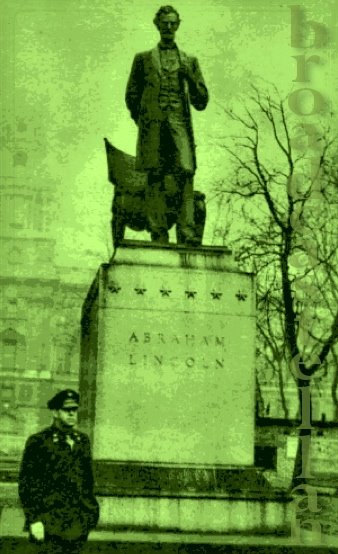
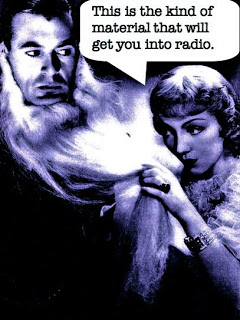 “Our guest stars might well have been tailored for the celebrated parts of Peter and Ellie,” host Orson Welles remarked as he raised the curtain on the Campbell Playhouse production of “It Happened One Night,” heard on this day, 28 January, in 1940. Quite a bold bit of barking, that. After all, the pants once worn by bare-chested Clark Gable were handed down to William Powell, who was debonair rather than brawny. “Mr. William Powell surely needs no alteration at all,” Welles insisted, even though the material required considerable trimming. Meanwhile, the part of Ellie, the “spoiled and spirited heiress” whom Peter cuts down to size until he suits her, was inherited by Miriam Hopkins. It had “certainly never been more faultlessly imagined than tonight,” Welles declared. Indeed, as I was
  I enjoy spending time by myself. It’s a good thing I do, considering that I am pretty much on my own in my enthusiasm for old and largely obscure radio programs, especially those that I only get to hear about. Listening, like reading, is a solitary experience; to share your thoughts about what went on in your head can be as difficult and frustrating as it is to put into words the visions and voices of a dream. Besides, unless you are talking to somebody who gets paid to listen, your dreams and reveries are rarely as stimulating to others as they are to yourself. This isn’t exactly a dream, much less one come true—but it’s a jolly good facsimile thereof.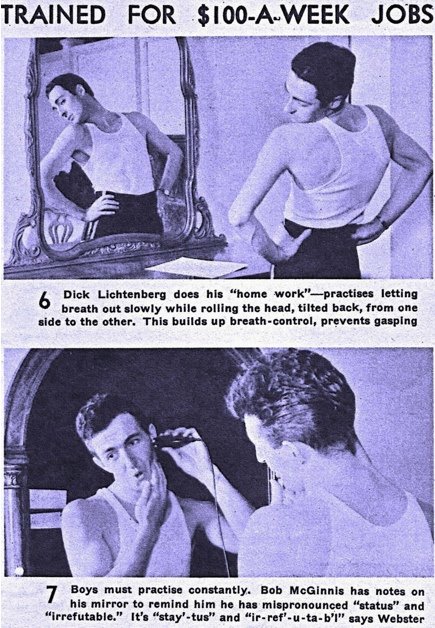
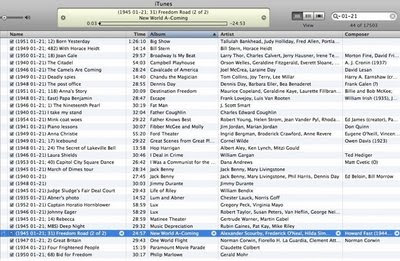 I’ve had quite a few “silent nights” here at broadcastellan lately (to use an old broadcasting term); and yet, I have been preparing all along for the weeks and months to come, those dark and cheerless days of mid-winter when keeping up with the out-of-date can be a real comfort. Not that the conditions here in our cottage have been altogether favorable to such pursuits, given that we had to deal with a number of blackouts and five days without heating oil, during which the “room temperature” (a phrase stricken from my active vocabulary henceforth) dropped below 40F. Not even a swig of brandy to warm me. I have given up swigging for whatever duration I deem fit after imbibing rather too copiously during
  Harry Heuser