For the Love of Brian; or, The Gospel According to Judith Iscariot

In a few weeks, all going according to plan, I shall be moving west, to the Welsh seaside town of Aberystwythโ€”a short move long in the making. Once in town and halfway settled, I shall set out to uncovering whatever pop-cultural past it hasโ€”you know, Liz Taylor slept here, Ben Gazzara filmed there; that sort of thing. When it comes to broadcasting, the prized hobbyhorse in my imaginary stables, no connection shall be too tangible to warrant my far-fetching it.

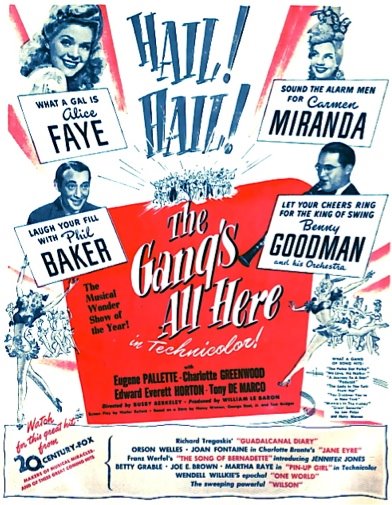
The other day, I missed out on a fine opportunity to introduce the place when BBC Radio Wales aired โ€œAberystwyth Mon Amour,โ€ an adaptation of the comedy-noir thriller by Malcolm Pryce, the first in a series that continued fancifully with Last Tango in Aberystwyth and Donโ€™t Cry for Me Aberystwyth. Dazzled by the likes of Carmen Miranda and Lucille Ball, I neglected to study the Radio Times for something of local interest.

Some travel notes and theater reviews aside, my life in Wales has not as yet been a significant aspect of my writings. All the same, it gave life to this journal. Not long after relocating here from New York City, when I did not seem to figure in the landscape, let alone signify in the culture, I decided in my isolation and estrangement to share what I knew or cared to rememberโ€”and it has been a comfort to me.

A few years ago, I posed here with my copy of The Unbearable Lightness of Being in Aberystwyth. Back then, what felt unbearable was the burden of my own lightness, the feather-weightiness of my existence in the relative obscurity of a rural community to which I could or would not relate. Being here did not exactly feel light; but the town made some effort to lighten up a bit today.

After thirty years, Aberystwyth lifted a ban on the screening of the supposedly blasphemous Monty Python satire Life of Brian, currently ranked among the top 250 films on the Internet Movie Database. According to the BBC, its decriminalizing will be celebrated with a charity event attended by three members of the cast: Terry Jones, Michael Palin, and Sue Jones-Davies. It was Jones-Daviesโ€”the love of Brian, Judith Iscariotโ€”who made it happen. After all, she is the mayor of the town now; and by lifting the ban on her screen image, she also improved the image of Aberystwyth as a place that isnโ€™t too heavy-handed in its dealings with the lighthearted and the irreverent. Thatโ€™s some relief to me . . .


Related writings
โ€œMining Culture: The Welsh in Hollywoodโ€
โ€œLittle Town Blues; or, Melting Awayโ€
How Screened Was My Valley: A Festival of Fflics (October 25-27)

All Coming Out in the Time Machine Wash

Staying out of touch has never been easier. Weโ€™ve all got our personal teleporters to spirit us away from the here and now. Technology is making it possible for us to remove ourselves from our communities, to stay at home not watching the world go by. Instead, we can revel in bygone worlds. Hundreds of satellite channels are serving up seconds. Before you know it, you quite forgot what time it is that you just passed. Isnโ€™t it high time for Sally Jessy Raphaรซl to stop gabbing? Eight years ago she went off the air; but there she is, chatting away on British television, her owl glasses unscratched by the sand of time.
Keep your finger on the remote control long enough and youโ€™ll come across The Lone Ranger pursuing evildoers in perpetuity as if his name really were the Long-ranger. And there, cigarette holder in hand as in days of smoke-shrouded yore, is glamorous Lana Turner in the cliffhanger of Falcon Crest‘s second season; and these days, the hiatus will only last a few hours. Breakfast time will tell who ended up in that coffin (after twenty-five years, it will be new to me all over again).

โ€œI donโ€™t ask you to prepare for a new worldโ€”because I realize that a new world is here now.โ€ H. G. Wells said that during one of his 1940s radio addresses. I caught up with him listening to Philip Osmentโ€™s adaptation of The Time Machine, into which you might still enter online before that portal closes on 28 February. I have recorded it, for future listening. The new world here now is a world in which time is out of joint, as old Hamlet might have said. As a species, we might well be running out of time; but that only encourages us to amble in the continuum. We keep on moseying in the fourth dimension so as not to face the things to come. Such are the hazards of the Time Machine Age.

The Internet? Itโ€™s a regular world wide cobweb! A sticky tangle of threads from which it is difficult to extricate ourselves once we get caught. That, for the moment, must suffice to account for my spasmodic writings this month. I am spending a great deal of time flicking through magazines like Radio-Movie Guide, hundreds of which have been digitized and are being freely shared online.

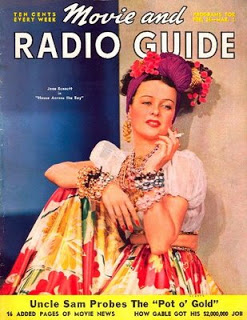
From the above issue (24 February to 1 March 1940), for instance, I learned what Myrna Loyโ€™s masseuse rushed home to before Loy bought a portable radio to find out for herself (I Love a Mystery), how the Pot oโ€™ Gold became a matter for the Department of Justice, or what John Kieran let slip on Information Please (โ€œI frequently carry books on my person in strange placesโ€).

Yes, keeping up with the out-of-date has sure gotten easier. Getting back has not . . .

Fat Lies Tuesday; or, Time to Love and Time to Hate

This is a day for disguises, and a night of unmasking. A time to let yourself go, and a time to let go of something. A night to make an ass of yourself, and a morning to mark yourself with ash. Shrove Tuesday, Mardi Gras, Fastnacht. Back where I come fromโ€”Germanyโ€™s Rhinelandโ€”carnival is a major holiday, an interlude set aside for delusions, for letting powerless misrule themselves: laborers parading in the streets without demanding higher wages, farmers nominating mock kings and drag queens to preside over their revels; women storming the houses of local government to perform the ritual of emasculation by cutting off the ties that hang from the necks of the ruling sex. It is a riotous spectacle designed to preserve what is; a staged and sanctioned ersatz rebellion that exhausts itself in hangovers.
Sometimes, the disillusionment creeps up on you only gradually. Upon reflection, that wondrous โ€œwhat ifโ€ begins to sound more like sobering โ€œas if!โ€ You may have had a good timeโ€”but, when it comes right down to it, youโ€™ve been had.

As a political instrument, the radio is not unlike Mardi Gras. Tuning in after a dayโ€™s work is a carnivalesque experienceโ€”the partaking of a communal pancake made from the eggs with which you didnโ€™t dare to pelt those who own most of the chicken. It is the allotted substitute for the half-forgotten voice that those content to listen tend to deny themselves. Broadcasting was, after all, an industry in the service of keeping things as they are or as they ought to beโ€”according to those who operate (within) it.

Radioโ€™s most prominent voices belonged to the fools and the trickstersโ€”Ed Wynn, Baron Munchausen, and the irreverent, imaginary Charlie McCarthy; but during the lean years of depression and war, a period when the medium was at its most influential, radio also coaxed listeners into making sacrifices by driving home their frugality or fortitude could make a difference.

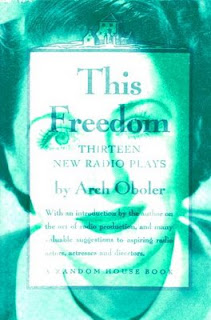
One such Atwater-Lent offering was โ€œThe Women Stayed at Home,โ€ first heard on this day, 24 February, in 1940. It was written by Arch Oboler, the mediumโ€™s foremost melodramatist. If one contemporary source is to be believed, Oboler penned more than four hundred plays between 1935 and 1940 alone. The bulk of his output may be classified either as schlock or as propaganda; except that much of his work is not either, it is both.

There is jolly little cheer in โ€œThe Women Stayed at Home,โ€ starring Norma Shearer, whose 1939 screen success The Women may well have suggested the title. Not that, aside from the performer and the spurious message of female empowerment, there are any similarities between those two vehicles. The opening scene of the latter is the “wind-wept” coast of an unspecified country:

It is night. For once the sea is calm. It waits ominously upon the edge offshore where sits a woman and an old man. For a long time they have sat quietly, but now woman speaks to the old man, and her words lift out to the sea on the rush of the wind. . . .

The woman is Celia. The old man is one of usโ€”a listener. Shortly after her wedding, Celiaโ€™s fisherman husband perishes at sea. When war breaks out, she feels that she has nothing for which to live or fight. Being refused a chance to be of use to the community, she decides to drown herself. In the attempt, she happens upon a body in the water, the body of a man yet livingโ€”a โ€œman from an enemy boat.โ€

Torn between her civic duty and her moral responsibility, Celia decides to be a nurse to Carl, the German stranger whose needs and gratitude imbue her with a sense of purpose that gradually turns into love. Aware of having placed Celia in a precarious position, Carl disappears; but Celia, no longer lonely, is convinced that he will return to her one day.

There was a market for such sentiment prior to the attack on Pearl Harbor, when the isolationist lobby was still strong and outspoken responses to fascism were rarely heard on the air. In 1942, when the play was published, Oboler tried to justify its inclusion in This Freedom by arguing that โ€œafter a while, you find yourself hating too muchโ€โ€”a justification clearly tagged on since, back in 1940, even a prominent writer like Oboler could not get away with overtly opposing the policy of neutrality by inciting anger and directing it toward a foreign national target.

When the play was revived almost exactly four years later, in February 1944, the situation had long changed and the playwright was quick to adjust the message to suit the occasion that was Everything for the Boys, a variety program for American servicemen. Oboler had turned into a staunch advocate of hatred. That is, he argued it to be more effective to make Americans hate the enemy than love their own country. It was hate that got things done.

The pseudo-pacifist โ€œWomen,โ€ now headed by Mercedes McCambridge, became a patriotic morale booster set in Norway under German occupation. The stranger washed ashore is now a British flyer (played by Ronald Colman). Celiaโ€™s dilemma: whether to hide the man or nurse him back to fighting form. After he is gone, a newly invigorated Celia declares: “I like to think that he knows Iโ€™m fighting now, too. For the good people. Some day the fighting will be over. It must end. Heโ€™ll come back to me. Iโ€™ll never be lonely any more.”

โ€œThe Women Stayed at Homeโ€ is clearly of the ready-mix, on demand variety; but it takes a comparative taste test to expose both versions as sham. Real conflict is reduced to melodramatic opportunity; genuine emotion whipped up to achieve whatever was expedient. Sure, there was a time to love and a time to hateโ€”and Arch Oboler had just the words to paint the sign of the times in whatever color suited the mood.

When anti-war laments were popular, Oboler taught them be mindful of how Johnny Got His Gun and what good it did him. He introduced Americans to a โ€œSteel” worker ashamed of being in the service of making war. โ€œThe Women Stayed at Homeโ€ betrays the opportunist who knew how to keep the pot boiling, a trader in sentiment who did not hesitate to discard supposedly outmoded principles like so many rotten eggs.

Whatever you give up for Lent, keep your integrity.


Related recordings
โ€The Women Stayed at Home,โ€ Everymanโ€™s Theater (24 Feb. 1940)
โ€œThe Women Stayed at Home,โ€ Everything for the Boys (22 February 1944)

Related Writings
โ€œSenseless: One Soldier’s Fight to Speak Against Warโ€ (on Obolerโ€™s adaptation of Johnny Got His Gun)
โ€œBette Davis Gives Birth to Arch Oboler’s โ€˜Americanโ€™โ€
โ€œโ€˜. . . originally written for Bette Davisโ€™: Arch Obolerโ€™s โ€˜Alter Egoโ€™โ€
โ€œHollywood Star Kay Francis Makes Paralysis Sound Like Paradiseโ€
โ€œMercedes McCambridge, Airwaves Advocateโ€

Under That Hat: The Life and Breath of Carmen Miranda

So iconic is this technicolorful Latina that she might not strike you, on the face of it, as the ideal subject for a sound-only documentary; but there she is, the life of Russell Daviesโ€™s โ€œCarmen Miranda: The Lady in the Tutti Frutti Hat.โ€ Once you remove that hat, you will find much to tip yours to as you listen to Ruby Wax, assisted by biographers Helena Solberg and Martha Gil-Montero, unravel the story of Maria do Carmo Miranda da Cunha, born one hundred years ago in the small town of Marco de Canaveses, Portugal. As Carmen Miranda, she came to represent not just her non-native Brazil, to which her family emigrated, but the whole of Latin America; and while what she became was larger-than-life, the โ€œBrazilian bombshellโ€ was not quite so large as to coverโ€”or levelโ€”quite so much ground. It is the leveling that those proud of their origins and culture resentโ€”and Brazilians, in particular, came to dismiss Hollywoodโ€™s All South-American girl as inauthentic, irregular, and downright ignominious.

The United States, of course, was counting on what it hoped to be a Pan-American appeal; it is what made the former millinerโ€™s apprentice such a sought-after commodity during the Second World War. At the end of the war, she was reputedly the highest paid woman in the United States.

A romance born of hardship and ingenuity, a glittering success tarnished by rejection, an identity challenged by dislocation and enfranchisement, a glamorous life culminating in early death, the one-of-a-kind yet kind of universal story of โ€œThe Lady in the Tutti Frutti Hatโ€ is the stuff of legend. Sure enough, that is what, according to the Internet Movie Database is what is about to come out of Hollywood any day now: Maracas: The Carmen Miranda Story.

The samba-infused first installment of this three-parter makes ample use of original recordings to highlight the performerโ€™s early musical career. Considering that the next chapter is going to transport listeners from Rio to Hollywood, I wonder whether it is going to draw on the one source that, aside from shellac, is best suited to the mediumโ€”the sounds of Carmen Mirandaโ€™s life on the air: her samba lesson for Orson Welles; her dramatic scenes with Charlie McCarthy, or her joking with Tallulah Bankhead, Judy Holliday and Rex Harrison on The Big Show. Never mind that hat. She was the Lady with the Tutti Frutti voice, which is why she had her own radio program down south.

Carmen Miranda died on 4 August 1955, within hours after suffering a heart attack while performing on Jimmy Duranteโ€™s live television program. Could it be that our demand for visuals, our insistence to be shown what can be heard and felt more keenly in darkness, is what caused Carmen Mirandaโ€™s heart to stop its rhythmic beatings? A program like โ€œThe Lady in the Tutti Frutti Hatโ€ offers us a chance to bring her into our presence, take her in as the voice, the breath that gave her life. We only need to make the effort to be all ears . . .


Related recordings
Hello Americans (15 November 1942)
The Charlie McCarthy Show (23 November 1947)
The Big Show (25 March 1951)

The Whole Ball of Wax: โ€œLife With Lucy and Desiโ€

โ€œShe wasnโ€™t the nicest person all the time,โ€ biographer Tom Gilbert puts it mildly; but to say even that much apparently triggers complaints from many Lucy lovers, to whom journalist Mariella Frostrup apologizes in advance. Frostrupโ€™s voice is enough to win anyone over, even though it might make at once forgive and forget what she is saying. Hers has been called the โ€œsexiest female voice on [British] TVโ€โ€”and the hot medium of radio only accentuates her seductive powers. So, where was I?

Right, โ€œLife With Lucy and Desi.โ€ It wasnโ€™t all love and laughterโ€”especially not for children. Actress Morgan Brittany recalls a scene on the set of Yours, Mine and Ours (1968) in which Ball lost her temper when one of the kids dared to laugh and ruin a difficult take. Native Americans in traditional garb and images of birds likewise irritated her, as did bodily contact. โ€œShe didnโ€™t like people being near her,โ€ Gilbert observes.

She wasnโ€™t funny, and she wasnโ€™t all that nice. Thatโ€™s what those stepping behind the microphone for a new hour-long BBC radio documentary have to say about the โ€œrealโ€ Lucille Ball, comedienne, businesswoman, and small-screen icon. Not exactly a revelation, to be sure; but you might expect less after reading the blurb on the BBCโ€™s webpage for the program, which revises history by calling I Love Lucy โ€œa zany television series which ran for twenty five years.โ€ Well, letโ€™s not heckle and jibe. The anecdotal impressions of those who can justly claim to have seen both sides of Ms. Ball make โ€œLife With Lucy and Desiโ€ a diverting biographical sketch, however moth-balled the gossip some twenty years after the actress’s death.

She seemed somewhat out of touch as well, even though she got to run the run-down RKO and signed off on Star Trek, a program she assumed, as Gilbert asserts, to be about performers entertaining the troops during the Second World War.

โ€œLifeโ€ is further enlivened by numerous recordings from Ballโ€™s career in television, film and radio. My Favorite Husband, I am pleased to note, has not been left out of this phono-biographic grab bag, even though the snippet from the radio forerunner to I Love Lucy airs without commentary; nor is it always clear what it is that we are hearingโ€”no dates or episode titles are mentionedโ€”the clip from My Favorite Husband, for instance, is not identified as being been taken from the 4 March 1949 episodeโ€”and the selections seem not merely random, but hardly representative of Ballโ€™s finest moments in this or any medium. When you hear her sing โ€œItโ€™s Todayโ€ (from the stage hit turned film dud Mame), youโ€™d wish someone would โ€œstrike the band upโ€ to drown out the wrong notes.

The argument this documentary seems to make is that Lucy would not have been Lucy if Desi had not been Ricky. Ball had talent, Brittany concedes, but might have ended up like โ€œBabyโ€ June Havoc, whom Brittany portrayed in Gyspyโ€”a fine performer who never quite reached stardom and who, though still living, is not nearly so well remembered today as to be celebratedโ€”or critiquedโ€”in a radio documentary of her own. She might just have remained the โ€œQueen of the Bโ€™s.โ€

The inevitable Robert Osborne aside, the lineup of folks who knew or at any rate worked with Ball also includes โ€œLittle Rickyโ€ Keith Thibodeaux, Peter Marshall (who walked out on a chance of working with Ball), Allan Rich (who played a Judge on Life with Lucy; not, as Frostrup has it, on the Lucy Show) and writer Madelyn Davis (formerly Pugh), who still gets fan mail for having created the durable caricatures that were โ€œLucy.โ€

No mention, of course, is made of Hoppla Lucy, viewings of which constitute my earliest television memories (Hoppla Lucy being the title of the German-dubbed Lucy Show). Long before I had breakfast with Lucy when truncated (make that mutilated) episode of her first and finest television series aired on New Yorkโ€™s Fox Five every weekday morning, a truncated version of myself sat down to watch Lucy bake a cake and making a mess of it. I havenโ€™t watched it since, but can still tune in the laugh it produced. Who cares whether or not what I saw was the real Ball. I sure was having one.


Related recordings
My Favorite Husband (4 March 1949)

Related writing
“Havoc in ‘Subway’ Gives Commuters Ideas”
“‘But some people ain’t me!’: Arthur Laurents and ‘The Face’ Behind Gypsy

Re: Boot (A Mental Effort Involving Distant Cousins)

Like many a woebegone youth of my generationโ€”once known as the No Future generationโ€”I entered the crumbling empire of Evelyn Waughโ€™s fictions by way of that lush, languid serial adaptation of Brideshead Revisited. It wasnโ€™t so much what I saw as what I had missed that made me pick up the book. Owing to my motherโ€™s loyalty to Dynasty, which aired opposite Brideshead on West German television back in the early 1980s, I was obliged to fill whatever holes our weekly appointment with the Carringtons had blasted into Waughโ€™s plot. Even more circuitous was my subsequent introduction to A Handful of Dust (1934).

In keeping with the titleโ€”and in poor housekeeping besidesโ€”a tatty paperback of it had been cast to steady a wonky table in the community room of a nurseโ€™s residence at the hospital where I carried out such duties as were imposed on me during the mandatory twenty-month stretch of civil service any boy not inclined to be trained for military action was expected to fulfill.

For twenty months, I, who ought to have been eating strawberries with Charles Ryder, served canteen slop and sanitized bedpans at a Cologne hospital. Was there ever a locality less deserving of the name it gave to the art of concealing our stenches, of which Romantic poet Samuel Taylor Coleridge once “counted two and seventy” in Cologne alone? My head was not held very high during those days, which probably led me to investigate just what propped up that misshapen piece of furniture. For once, though, I had reason to lament being downcast. A Handful of Dust turned out to be a rare find.

Counting the weeks to my release, I could sympathized with its anti-hero, the hapless Tony Last, trapped as he was in the wilds of the Amazon, forced to read the works of Charles Dickens to the one man who could have returned him to civilization but, enjoying his literary escapes, refused to release himโ€”a scenario familiar to regular listeners of thriller anthologies Suspense and Escape.) Like Mr. Last, I had gotten myself in an awful fixโ€”and up a creek that smelled the part.

So, when I think of Evelyn Waugh’s early fictions now, at a time in my life when I can more closely associate with his later Ordeal of Gilbert Pinfold, what comes to mind is the comparative misery of my youth and the pleasures derived from the incongruities at the heart of his late-1920s and 1930s novels, satires like Decline and Fall (1928), Vile Bodies (1930), and Black Mischief (1932). While not inclined to relive those days by revisiting such titles, I could not turn down the chance of another Scoop (1937), the first installment of a two-part adaptation of which is being presented this week by BBC Radio 4.

Ever topical, Scoop is a satire on journalism, war and the money to be made in the Hearstian enterprise of making the news that sells. Finding himself in the midst of it all is William Boot, whose sole contribution to the field of journalism is a โ€œbi-weekly half-column devoted to Nature.โ€ Decidedly not mightier than the sword, his pen produced lines like โ€œFeather-footed through the plashy fen passes the questing vole. . . .โ€ Not the rugged, muscular prose youโ€™d expect from a war correspondent.

It was all a deuced mistake, of course, this business of sending Boot to report on the crisis in Ishmaelia, a โ€œhitherto happy commonwealthโ€ whose Westernized natives no longer โ€œpublicly eat human flesh, uncooked, in Lent, without special and costly dispensation from their bishop.โ€ The chap who was meant and eager to go among them was Williamโ€™s namesake, one John Courteney Boot, a fashionable novelist who โ€œkept his name sweet in intellectual circles with unprofitable but modish works on history and travel,โ€ works like โ€œWaste of Time, a studiously modest description of some harrowing months among the Patagonian Indians.”

Absurd situations and wicked caricatures aside, it is Waughโ€™s proseโ€”the pith of impish phrases like โ€œstudiously modestโ€โ€”that makes a novel like Scoop such a font of literary Schadenfreude. โ€œAmusingly unkind,โ€ the London Times Literary Supplement called it. As it turns out, the jokeโ€™s on us once the narration is removed.

Condensing the wild plot in suitably madcap speed, Jeremy Front’s radio adaptation retains little of the narration, sacrificing not only wit but clarity to boot. What is left of the Waughโ€™s exposition may well lead the listener to believe that John, not William, is the central character. Indeed, like Waughโ€™s dimwitted Lord Copper, head of the Megalopolitan Newpaper Corporation, listeners are apt to (con)fuse the two.

Unlike Front, Waugh takes great pains to set up the farcical plot, dropping first one Boot, then another, and makes it clear just how the unequal pair are matched:

โ€œThe fashionable John Courtney Boot was a remote cousin [of William],โ€ Waughโ€™s narrator informs us, but they โ€œhad never met.โ€ Too eager to get on with the story, Front omits these line, relying solely on the juxtaposition of the two characters, who, during those first few minutes of the play, are little more than names to us.

However bootless the lament, I wish those stepping into the wooden O of radio today would put themselves in the shoes of their listener. Before experimenting with fancy footwork, they should consult a few classics to arrive at the proper balance between dialogue and narration. Otherwise, a potential Scoop can seem like such a Waste of Timeโ€”especially to those whose concentration is impaired by plot-obstructive reminiscences . . .


Related recordings
โ€œThe Man Who Liked Dickens,โ€ Suspense (9 Oct. 1947)
โ€œThe Man Who Liked Dickens,โ€ Escape (21 December 1952)

Inherit the . . . Air: Dialing for Darwin on His 200th Birthday

Before settling down for a small-screening of Inherit the Wind, I twisted the dial in search of the man from whose contemporaries we inherited the debate it depicts: Charles Darwin, born, like Abraham Lincoln, on this day, 12 February 1809. Like Lincoln, Darwin was a liberator among folks who resisted free thinking, a man whose ideas not only broadened minds but roused the ire of the close-minded–stick in the muds who resented being traced to the mud primordial, dreaded having what they conceived of as being set in stone washed away in the flux of evolution, and resolved instead to keep humanity from evolving. On BBC radio, at least, Darwin is the man of the hour. His youthful Beagle Diary is currently being read to us in daily installments; his โ€œVoyages of Descentโ€ with Captain FitzRoy have been newly dramatized; and his theories are the subject of numerous talks and documentaries.

The bicentenary celebrations got underway early at the Natural History Museum in London, where last December I visited an exhibition of artifacts and documents from Darwinโ€™s journeys of discovery, quests that had their origin here in the west of Britain: โ€œIn August quietly wandering about Wales, in February in a different hemisphere; nothing ever in this life ought to surprise me,โ€ young Darwin noted.

Nor should resistance to change. Back in 1935 (as Erik Barnouw reminds us in A Tower in Babel), when the hostile response to Darwin’s theories resulted in a media event known as the Scopes Monkey Trial, station WGN, Chicago, took the microphone straight into the courtroom so that listeners might hear defense attorney Clarence Darrow ask prosecutor William Jennings Bryan, โ€œMr. Bryan, do you believe that the first woman was Eve?โ€

Bryan professed to believe just that; and unable to sway the jurors from thinking otherwise, Darrow lost the caseโ€”a case that, if some politicians had had their way, would not have been made public. It was not just the espousal but the very mention of Darwin’s ideas that was considered a threat. An amendment to ban all broadcasts of โ€œdiscoursesโ€ about Darwin was proposed in the 69th United States Congress. If that amendment had passed, the evolution could not be televised today.

It comes as no surprise either that the two men who penned Inherit the Wind were former broadcast writers; in fictionalizing the trial, they disowned the medium that had imposed so many restrictions upon them, that kept potentially incendiary ideas from being disseminated; that, in the interest of public calmโ€”as opposed to the public interestโ€”was apt to cast aside what it did not dare to cast broadly.

It was not until long after his death that Darrow, once known as the โ€œboy who would argue against everything,โ€ became the subject of a CBS radio documentary; in it, many outspoken thinkersโ€”including Edith Sampson, the first black US delegate appointed to the United Nationsโ€”were heard arguing in his defense.

Perhaps, I am overstating my case when say that Darwin was too hot for radio; yet even when his ideas were presented on the air, they needed to be cooled down so as not to inflame anew. In 1946, a dramatization of his career was attempted for The Human Adventure, an educational program produced by CBS in co-operation with the University of Chicago. As Max Wylie put it in his foreword to a published script from the series, The Human Adventure presented

dramatic interpretations of the progress being made in university research throughout the world, progress in any of the thirty thousand research projects that are now being worked on by scholars and scientists in this country and in the centers of learning throughout the civilized world.

The description does not quite fit the episode in question, which transports listeners to a less civilized, less enlightened past. It opens on a โ€œleisurely day in Londonโ€ anno 1859. On 24 November, to be precise, the very day on which Darwinโ€™s Origin of the Species went on sale. The scene is a bookstore, the dialogue between a young scholar and his formidable aunt who disapproves of Darwinian notions:

When I was a girl, we knew exactly how old the world was. Bishop Ussher proved it in the scriptures. The world, he proved, was created in the year 4004 BC, on a Friday in October at 9 oโ€™clock in the morning.

Not that the lad is particularly up-to-date; โ€œeveryone knows that animals donโ€™t changeโ€ and that โ€œspecies remain exactly as created,โ€ he argues. โ€œEvery kind fixed and separate.โ€ Darwinโ€™s new book was flung at that rickety bandwagon, as the play drives home. โ€œInstantly, overnight, the lines of conflict are drawn. The complaisant, orthodox world, which is Victorian England, erupts into a storm of controversy.โ€

The narrative soon shifts from social agitation to the thrill of exploration and pioneering. It emphasizes the spirit of โ€œAdventureโ€ over the dispiritingly โ€œHumanโ€ by introducing us to the younger Darwin aboard the Beagle, the eager scientist in his laboratory, and the ailing researcher supported by a loving spouse. Without diverging from facts, the drama suggests that Darwinโ€™s theory were not quite so earth-shattering after all, a similar treatise having preceded it that threatened to render Darwinโ€™s own publication redundant. Without omitting a reference to monkeys, the broadcast refuses to acknowledge that its subject matter continued to make zealots go ape.

Defusing Darwinโ€™s prehistoric time bomb, The Human Adventure argued the โ€œstorm of abuse,โ€ the โ€œbitter intemperate, all too human controversyโ€ to be โ€œbehind us now.โ€ The voices of protest give way to a demonstration of how Darwin’s words echo the theories of scientists from around the world, an enlightened world united through science. Science fiction, in short.

NBC, CBS, and Abe

On the eve of the 200th anniversary of Abraham Lincolnโ€™s birth, I am once again lending an ear to the Great Emancipator. Franklin Delano Roosevelt may have been Americaโ€™s โ€œradio presidentโ€; but in the theater of the mind none among the heads of the States was heard talking more often than Honest Abe. On Friday, 12 February 1937, for instance, at least six nationwide broadcasts were dedicated to Lincoln and his legacy. NBC aired the Radio Guild‘s premiere of a biographical play titled โ€œThis Was a Man,โ€ featuring four characters and a โ€œnegro chorus.โ€ Heard over the same network was โ€œLincoln Goes to College,โ€ a recreation of an 1858 debate between Lincoln and Democratic senator Stephen A. Douglas. Try pitching that piece of prime-time drama to network executives nowadays.

Following the Lincoln-Douglas debate was a speech by 1936 presidential candidate Alf Landon, live from the Annual Lincoln Day dinner of the National Republican Club in New York. Meanwhile, CBS was offering talks by Lincoln biographer Ida Tarbell and Glenn Frank, former president of the University of Wisconsin. From Lincolnโ€™s tomb in Springfield, Illinois, the Gettysburg Address was being recited by a war veteran who was privileged to have heard the original speech back in 1863. Not only live and current, the Whitmanesque wireless also kept listeners alive to the past.

Most closely associated with portrayals of Lincoln on American radio is the voice of Raymond Massey, who thrice took on the role in Cavalcade of America presentations of Carl Sandburgโ€™s Abraham Lincoln: The War Years; but more frequently cast was character actor Frank McGlynn.

According to the 14 June 1941 issue of Radio Guide, Lincoln โ€œpop[ped] upโ€ in Lux Radio Theater productions โ€œon the average of seven times each yearโ€; and, in order to โ€œkeep the martyred Presidentโ€™s voice sounding the same,โ€ producers always assigned McGlynn the part he had inhabited in numerous motion pictures ever since the silent era. In the CBS serial Honest Abe, it was Ray Middleton who addressed the audience with the words: “My name is Abraham Lincoln, usually shortened to just Abe Lincoln.” The program ran for an entire year (1940-41).

The long and short of it is that, be it in eulogies, musical variety, or drama, Lincoln was given plenty of airtime on national radio, an institution whose personalities paid homage by visiting memorials erected in his honor (like the London one, next to which singer Morton Downey poses above). Nor were the producers of weekly programs whose broadcast dates did not coincide with the anniversary amiss in acknowledging the nationโ€™s debt to the โ€œCaptain.โ€ On Sunday, 11 February 1945โ€”celebrated as โ€œRace Relations Sundayโ€โ€”Canada Lee was heard in a New World A-Coming adaptation of John Washingtonโ€™s They Knew Lincoln, โ€œTheyโ€ being the black contemporaries who made an impression on young Abe and influenced his politics. Among them, William de Fleurville.

โ€œYes,โ€ Lee related,

in Billyโ€™s barbershop, Lincoln learned all about Haiti. ย And one of the things he did when he got to the White House was to have a bill passed recognizing the independence of Haiti. ย And he did more than that, too. ย Lincoln received the first colored ambassador to the United States, the ambassador from the island home of Billy the Barber. ย And he was accorded all the honors given to any great diplomat in the Capitol of the United States. ย Yes, the people of Harmony have no doubt that Billyโ€™s friendship with ole Abe had more than a lot to do with it.

Six years later, in 1951, Tallulah Bankhead concluded the frivolities of her weekly Big Show broadcast on NBC with a moving recital of Lincolnโ€™s letter to Mrs. Bixby. That same day, The Eternal Light, which aired on NBC under the auspices of the Jewish Theological Seminary of America, presented “The Lincoln Highway.” Drawing on poet-biographer Sandburg’s “complete” works, it created in words and music the โ€œliving arterial highway moving across state lines from coast to coast to the murmur โ€˜Be good to each other, sisters. Donโ€™t fight, brothers.โ€™โ€

Once, the American networks were an extension of that โ€œHighway,โ€ however scarce the minority voices in what they carried. Four score and seven years ago broadcasting got underway in earnest when one of the oldest stations, WGY, Schenectady, went on the air; but what remains now of the venerable institution of radio is in a serious state of neglect. An expanse of billboards, a field of battles lost, the landscape through which it winds is a vast dust bowl of deregulation uniformity.

Related recording
“They Knew Lincoln,” New World A-Coming (11 Feb. 1945)
Toward the close of this Big Show broadcast, Bankhead recites Lincoln’s letter to Mrs. Bixby (11 Feb. 1951)
“Lincoln Highway,” The Eternal Light (11 February 1951)
My Tallulah salute

Related writings
โ€œSpotting ‘The Mole on Lincolnโ€™s Cheek'”
โ€Langston Hughes, Destination Freedom, . . .”
A Mind for Biography: Norman Corwin, ‘Ann Rutledge,’ and . . .”
โ€Carl Sandburg Talks (to) the Peopleโ€
โ€œThe Wannsee Konferenz Maps Out the Final Solutionโ€ (on theย Eternal Lightproduction of โ€œBattle of the Warsaw Ghetto”)

โ€œ. . . canโ€™t help being hereโ€: Edison, the Wireless, and I

No matter how small our voices, how slight our utterances, millions of us carry on making a record of ourselves and circulating it online. Long gone are the days in which autobiography was reserved for the supposed great and good; now, anyone can flaunt the first person singular, step into the forum and exclaim, โ€œHere I am!โ€ or โ€œHear me out.โ€ Sure enough, here I go again. Never mind that my record is spun a little less frequently these days, short on that groove I am so slow to get back into. A case of dyspepsia rather than abject discontent. I sometimes wonder, though, in how far the ready access to self-expression and promotion is enabling us to believe that whatever we do or say is quite worth the sharing, that we need not try harder or trouble ourselves to aspire. Now that we can all have our names in lights, provided we supply our own low-wattage bulbs, are we becoming too apt to settle for the publicly unmemorable?

Back in the earlier decades of the 20th century, when folks were more ready to listen and less likely to be heardโ€”by anyone beyond their circles of associates and relations, that isโ€”exemplars were rather more in demand than they are nowadays. No mere American Idolizing, but a veneration of excellence that inspired attempts at emulation. In the 1930s, a decade that gave rise to superheroes and uber-egosโ€”even a glossy magazine like Radio Guide encouraged its readers to aim higher than that knob with which to twist the dial.

Aside from answering questions like โ€œWhatโ€™s Happening to Amos โ€˜nโ€™ Andy?โ€ or telling readers โ€œWhy Shirley Temple Canโ€™t Broadcast,โ€ the 4 July 1936 issue went so far as to look, jointly with the Edison Foundation,

for the person who will be the greatest benefactor to the human race between 1936 and 1976. We want the man or woman, boy or girl, who will do for the second half of our Twentieth Century what Thomas A. Edison has done for the first half of it. Somewhere in America as you read this, is the second Edison! Is it you? If it is, we want you.

I cannot imagine who would have the nerve to respond to such an appeal and forget all about Amos โ€˜nโ€™ Andy, then rumored to be leaving the airwaves; nor shall I speculate what Edison might have said about this search for a worthy successor, a campaign published in a less-than-scientific periodical devoted to a medium about which, as Alfred Balk reminds us in The Rise of Radio (2006), the enterprising inventor of the phonograph was less than enthusiastic.

While alive, he was rarely talked of in connection with the medium in whose development he figured; yet he often featured in radio broadcasts of the 1930s and โ€˜40s. The Radio Guide in which the above call for genius appeared states that โ€œ[f]our programs on the air today are about Edison,โ€ among them a biography heard over WCPO, Cincinnati.

On this day, 10 February, in 1947, on the eve of his 100th birthday (and some fifteen years after his death) Edison himself was propped behind the microphone, addressing the audience of the Cavalcade of America program. Titled โ€œThe Voice of the Wizard,โ€ the conjuring act was performed by one of the Cavalcadeโ€™s freelance scriptwriters, Erik Barnouw, now best remembered as the foremost chronicler of American broadcasting:

โ€œHello … hello. This is Thomas Alva Edison.โ€ It sounded as if the deaf scientist had picked up the receiver of a spirit telephone to make an urgent point-to-point call:

When I was still on earth, I invented that talk-harnessing machine to show how I felt about … well, occasions in honor of this and that. ย But now […] I feel differently. Because in a way a broadcast like this is the climax of things I worked at. ย In a way I canโ€™t help being here. ย This microphone, and the tubes in your radioโ€”I had a hand in them. ย So, when those tubes light up and bring you a voice from far off, in a way itโ€™s me talking. ย And then many radio programs are recorded, for schools, and for broadcasts overseasโ€”all ideas that I fought for. ย Because the inventions that I cared most about were those that would bring menโ€™s voices across space and time. ย Soโ€”Iโ€™d like to tell you the story behind those inventions. ย A few words for a new age.

As I put it in Etherized Victorians, my dissertation on American radio dramatics, the play bridges, in only a โ€œfew words,โ€ the invention of the telegraph, an instrument that in Edison’s youth was already โ€œbeginning to bind the world closer,โ€ to the institution of American broadcasting and its contributions to a โ€œnew ageโ€ of peace:

You who, in a later age, have sat at crystal sets to pick up Pittsburgh or Kansas City, or who, during dark days of World War II have listened by short-wave to London under air attack, you will understand how a seven-teen-year-old boy felt, sitting at his telegraph instrument in Indianapolis. ย There was already in that room a hint of the radio age […].

As Edison (equipped with the vocal cords of Dane Clark) expressed it in an exchange with his assistant and spouse-to-be, Mary Stilwell (voiced by Donna Reed),

[t]here are barriers between peopleโ€”and countriesโ€”that we almost never break down. Now these things Iโ€™m working on, Maryโ€”theyโ€™re for breaking down barriers. Talking machines, loud-speaking telephones, talking photographyโ€”weโ€™ll have them all! Machines that talk across space and time [….].

The play suggests radio to be at once โ€œtalking machineโ€ and hearing aid, a democratic communications apparatus by means of which โ€œtruthโ€ is enunciated and disseminated. The institution of broadcasting is thus construed as the product and propagator of โ€œthe American Idea,โ€ for which โ€œthe whole world is better off.โ€

We do not have to resort to thaumaturgy or otherworldly telephony to be โ€œtalking across space and timeโ€ these days; but I sometimes wish we were more receptive to the marvel of this means and expressed ourselves more grateful at the potentialities we so often squander by billboarding the trivial. While I can neither โ€œhelp” being prolix nor “being here,” I am making some amends today by refraining from relating just why Shirley Temple could not broadcast …

That โ€œtie of sympathyโ€; or, Five for the Dardos

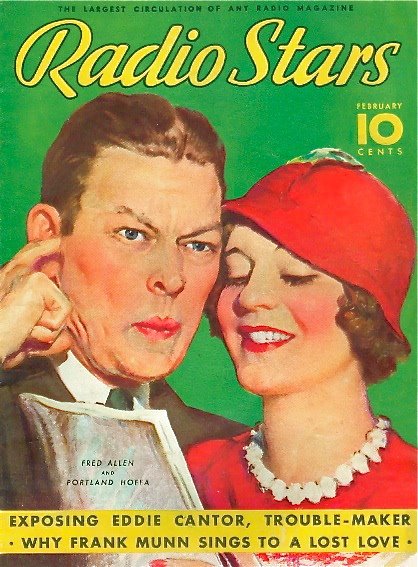
โ€œToday, the real humorist is fast disappearing.โ€ The โ€œTodayโ€ here is 30 January 1949. The voice is that of satirist Fred Allen, who made the claim when called upon to expound on โ€œThe State of American Humorโ€ for the benefit of folks tuning in to NBCโ€™s Living 1949. โ€œYessir,โ€ Allen declared, โ€œthe average comedian is a mouth that speaks the thoughts of othersโ€™ brains. Machine age humor, like the automobile, is turned out on the assembly line.โ€ As a wordsmith who preferred to live by his own wit, Allen was the free spirit in a machine that increasingly generated shoddily assembled audience participation programs, the temporary demand for which ran him out of business that yearโ€”a dead giveaway that executives were not in it for laughs.

Fred Allen

What Allen in his dread of the mechanical and the mercenary could not foresee is that, sixty years on, the โ€œ[m]achine ageโ€ would give those determined to publish the thoughts of their own brains an instrument with which to bypass the assembly lines and make a beeline for the byline that would otherwise be hard to come by; a forum in which freely to exchange ideas instead of turning out commercial copy in exchange for a few pay-per-click pennies; and a means of reaching out to the โ€œrealโ€ among the virtual whose minds are not of the assembly line persuasion.

One way of acknowledging such commercial-free souls and inspiriting kindred is to bestow the Dardos. It might sound like some post-apocalyptic cult; but in truth it is a token

given for recognition of cultural, ethical, literary, and personal values transmitted in the form of creative and original writing. These stamps were created with the intention of promoting fraternization between bloggers, a way of showing affection and gratitude for work that adds value to the Web.

I am certainly grateful to the two journalists who saw it fit to stamp me thus. After all, Ivan (Thrilling Days of Yesteryear) and Jeff (The Easy Ace) are among the few who share my enthusiasm for broadcast history and historic broadcastsโ€”the kind of kilorecycling that has been going on here for nearly nigh on four years. In felicitous low-fidelity, they are committed, as I am, to re-popularizing the post-popular, to tracing the mainstream that has dried up or run its course into a sea of indifference. Their work โ€œadds value to the Webโ€ all right; but that is rather too prosaic a way of putting itโ€”and, as far as my web experience is concerned, an understatement besides.

Thrilling is what Inner Sanctumโ€™s Lipton Tea lady might have termed โ€œbriskโ€ entertainment. It is entirely without additives or artificial sweeteners, which makes taking refreshment there a guiltless pleasure. Ace, meanwhile, tells it โ€œThe Way It Wasโ€; in his matchless on-this-day approach to chronicling โ€œyesteryear,โ€ he easily aces out a less organized mind like mine, which promptly lapsed into a more idiosyncratic mode of relating the past. To relate to them both has been at once โ€œEasyโ€ and โ€œThrilling.โ€

The same can be said for the task at hand. In keeping with the โ€œrules,โ€ I

1) accept the Dardos by displaying it here, along with the names of those who bestowed it and a link to their respective journals; and

2) pass it on to another five blogs I deem worthy of this acknowledgement, contacting each of them to let them know they have been selected.

The five journals I single out here have kept this niche in cyberspace from feeling like a padded cell or isolation ward to me. They are all eligible for the โ€œHelen Trentโ€ award, far from mute testament that because a blogger is โ€œthirty-five or more,โ€ an active life online โ€œneed not be over,โ€ that blogging โ€œcan begin at 35.โ€ The Dardos I bestow upon them because I appreciate their wit, their ebullience and their tenacity; because they do as they please and, by doing so, make me say, โ€œplease, keep doing it.โ€

As Emerson put it, the ‘perception of the comic is a tie of sympathy with other men, a pledge of sanity, and a protection from those perverse tendencies and gloomy insanities in which fine intellects sometimes lose themselves.”

A fine intellect not in danger of gloomy insanities is Doug, who keeps Waking Ambrose. Ambrose Bierce, that is, whose Devil’s Dictionary he translates and updates for the 21st century. Whatโ€™s more, Doug invites all of us to do the same, and, having acknowledged our contributions, regales us with stories and verse, then finds time to make the rounds and drop us a taut line. In all this interactivity, he is a paragon among bloggers.

There are journalist on the web with whom I keep having imaginary conversations. With Elizabeth of Relative Esoterica, whom I picture as a Myrna Loy unencumbered by a William Powell, I discourse on film noir and biography as we listen to the jazz about which she is not only knowledgeable but passionate. We agree that, while it is unwise to be fanatic about anything, it would be wretched not to feel enthusiastic about something or other.

With Clifton of Canary Feathers I converse about the radio programs that enriched his childhoodโ€”be it One Manโ€™s Family or Kaltenmeyerโ€™s Kindergartenโ€”and years in broadcasting as he plays an old but beautifully restored church organ surrounded by cats who flit in and out of a scene brightly lit by . . . a leg lamp. In my daydreams, I can readily dismiss the fact that felines make me sneeze.

With fellow expatriate Fred, he of The Synchronicity of Indeterminacy, I go on about Quiet, Please and the Columbia Workshop as he persuades me to open my mind and ear to contemporary sound artists and aural storytellers. His own stories are a popular and critical success. He might be fascinated by automatonsโ€”but is living proof of that the imaginative thinker need not fear extinction. His journal(s) would have put his aforementioned namesake at ease.

With John, the โ€œurbane paganโ€ of Enchantรฉ, I have had many a conversation; I see him whenever I am back in New York City. A few years ago, he expressed to me his intention of starting a web journal. He finally got underway, and what a way heโ€™s got, casting imaginary musicalsโ€”On the Fritz! (โ€œA sparkling new musical about Prussia’s gayest prince [and greatest king]โ€โ€”or musing about the state of his follicles.

With all of them I feel a certain โ€œtie of sympathy.โ€ That those ties are machine-knit does not make them synthetic. Otherwise, I would hardly be one-hundred percent woolgathering about them . . .